

** TL;DR ** Online review analysis is the strategic process of moving beyond simple star ratings to deeply understand the reasons behind customer feedback. By systematically mining this feedback and tracking sentiment, you can uncover invaluable customer insights that drive product innovation, improve customer retention, and strengthen your reputation management. It transforms raw, often overlooked comments into a data-driven action plan, allowing you to make business decisions based on what your customers are actually telling you, ultimately turning their voice into your competitive advantage.
Think about the last time you bought something online, booked a hotel, or tried a new restaurant. Chances are, you scrolled through the reviews first. You did not just look at the average star rating; you read the comments. You wanted to know why people loved or hated their experience.
Now, flip that scenario. As a business, you are likely collecting reviews, and it is easy to get fixated on that average score. A 4.8-star rating feels great, and a 3.2-star rating feels like a crisis. But what if I told you that the real goldmine is not the number of stars, but the words written beside them? Those paragraphs of praise and complaints hold the blueprint to your business’s future growth, innovation, and customer loyalty.
This process of digging deep into that feedback is called online review analysis. It is the systematic approach to understanding not just if your customers are happy, but why they feel that way. It moves you from passively collecting reviews to actively learning from them. By moving beyond the surface-level metrics, you can transform random comments into a powerful, data-driven strategy.
What is Online Review Analysis?
At its core, online review analysis is the practice of collecting, processing, and interpreting customer feedback from various online platforms to extract meaningful patterns and insights. It is more than just reading comments one by one. It is about aggregating hundreds or thousands of data points to see the bigger picture.
Think of it like this: a single review that says, “The delivery was slow,” is a data point. When your customer review analysis reveals that the word “slow” appears in 30% of your negative reviews over the last three months, that is an insight.
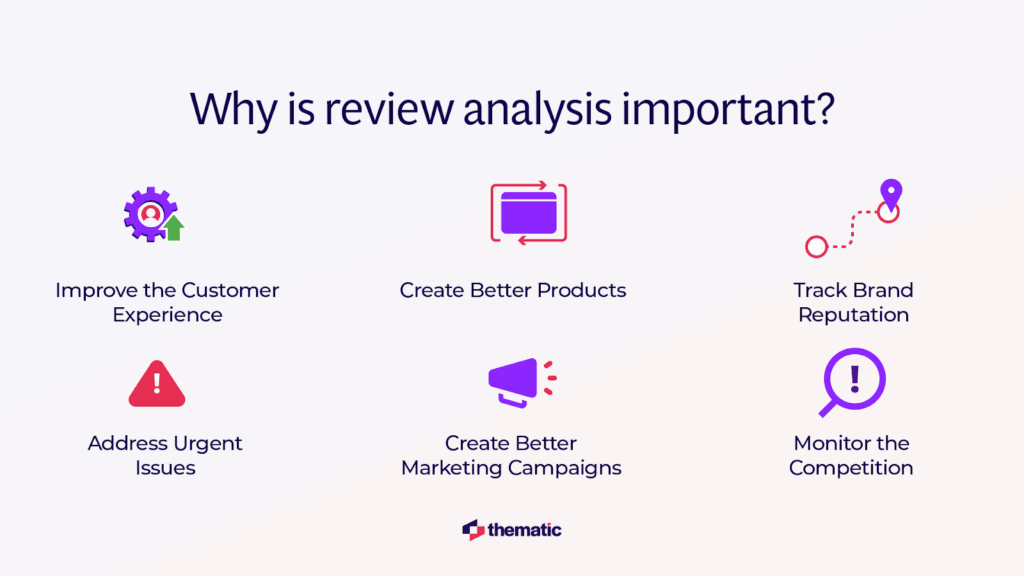
Image Source: Get Thematic
This process often involves feedback mining, which means sifting through all forms of feedback—from formal survey responses to casual social media mentions—to find recurring themes, specific keywords, and underlying emotions. The goal is to stop guessing what your customers want and start knowing it, based on the evidence they provide every single day.
The Tangible Benefits: What Can You Achieve with Customer Review Analysis?
Why go through all this effort? The investment in a systematic online review analysis process pays dividends across your entire organisation. It is not just a marketing tactic; it is a central hub for business intelligence.
First, it directly drives product and service innovation. Your customers are using your product in real-world conditions, and their feedback is a free R&D department. They will tell you which features are clunky, what they wish your product could do, and how you can improve. Secondly, it is the most effective tool for enhancing customer retention.
A study by PwC found that 32% of customers will walk away from a brand they love after just one bad experience. By using sentiment tracking, you can identify a customer who had a negative experience and intervene before they are gone for good, showing them that you listen and care.
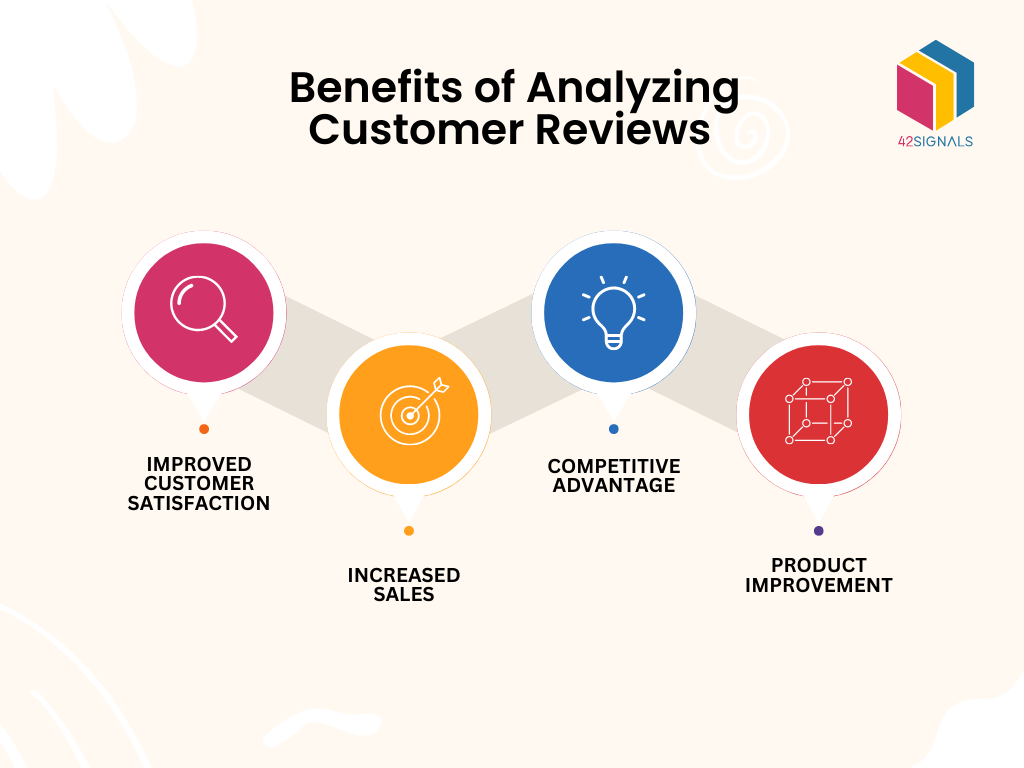
This proactive approach transforms a potential detractor into a loyal advocate. Finally, this process gives you a significant competitive edge. By understanding your own weaknesses and strengths with customer review analysis, as well as those of your competitors, you can position your business to fill gaps in the market that others are ignoring.
The Step-by-Step Guide to Analysing Customer Feedback
Diving into online review analysis can seem daunting, but breaking it down into a repeatable process makes it manageable and effective. Here is a straightforward, four-step framework you can follow.
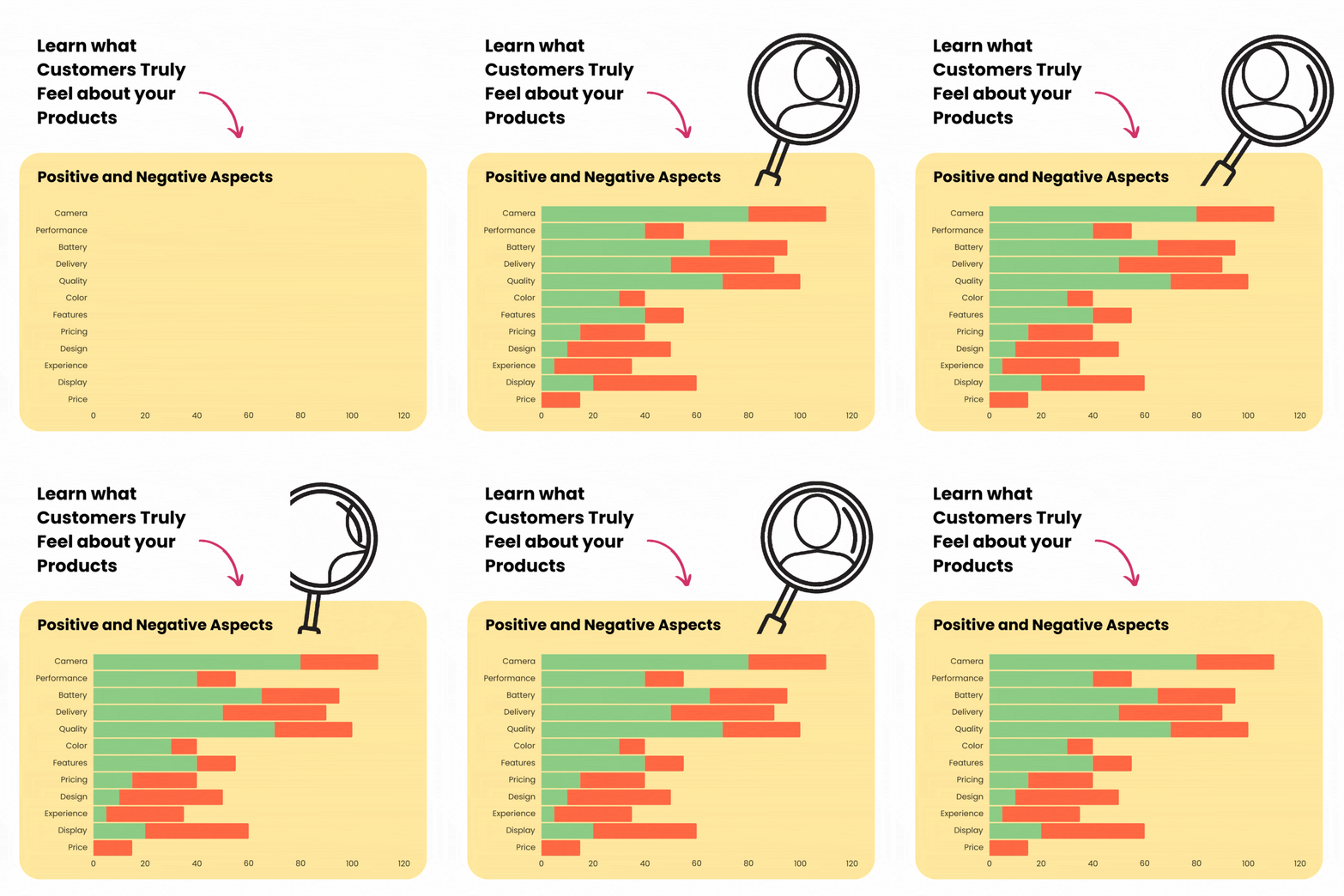
Image Source: Customer Sentiment Analysis
Step 1: Gather Your Reviews from Everywhere
The first step is aggregation. You cannot analyse what you cannot see. Customer feedback is scattered across Google My Business, Yelp, Facebook, industry-specific sites like TripAdvisor or G2Crowd, and even in your own customer support emails.
Use tools or create a system to pull all these conversations into one central dashboard. This gives you a single source of truth and prevents you from missing critical feedback from a less-monitored platform.
Step 2: Clean and Organise the Data
Raw review data is messy. This step involves preparing the data for analysis. You might need to correct typos, remove irrelevant information, and categorise reviews by product line, location, or date.
For instance, you would want to analyse reviews for your flagship product separately from a new launch. This organisation is crucial for feedback mining because it allows you to spot trends that are specific to a particular part of your business, rather than getting a blurred, overall average.
Step 3: Dive Deep into Thematic and Sentiment Analysis
This is where the real discovery happens. Thematic analysis involves identifying common topics or themes across all the reviews. Are fifty customers mentioning that your software’s user interface is confusing? That is a theme. Simultaneously, you conduct customer sentiment analysis.
This means determining the emotional tone behind the words. Is the comment positive, negative, or neutral?
A review saying, “The update is fantastic, it loads so much faster!” has a positive sentiment regarding speed. Another saying, “Since the update, the app crashes constantly,” has a negative sentiment regarding stability. Sentiment tracking over time tells you if a new product launch or policy change is making customers happier or more frustrated.
Step 4: Translate Insights into a Clear Action Plan
An insight without action is just a fun fact. The final, and most important, step is to turn your findings into a strategic plan. If your analysis shows that slow shipping is the top complaint, the action is not just to “note it.”
The action is to present this data to your logistics team, investigate alternative shipping partners, and perhaps update your website’s delivery timelines. Then, you close the loop by informing customers of the change, showing that their feedback was heard and acted upon.
Understanding Emotions with Customer Sentiment Analysis
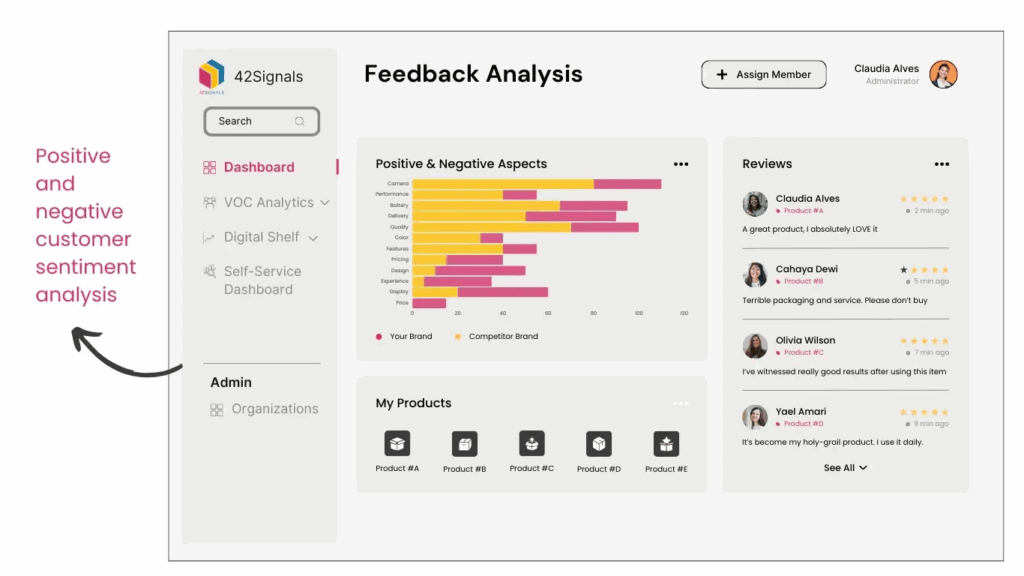
Customer sentiment analysis is a specific and powerful component of the broader review analysis process. It uses technology, often powered by Natural Language Processing (NLP), to automatically detect the emotion or opinion in a piece of text. It classifies feedback into categories like Positive, Negative, Neutral, and sometimes even Frustrated, Happy, or Angry.
Why is this so valuable? Because it helps you quantify feelings. You can move from “it seems like people are upset about the price increase” to “negative sentiment around pricing has increased by 45% since the announcement.” This objectivity is crucial. It removes internal biases and gut feelings from the decision-making process.
For example, your marketing team might be proud of a new ad campaign, but if sentiment tracking reveals that the customer comments on the associated social media post are overwhelmingly negative and confused, you have concrete data to reevaluate the campaign’s messaging before spending more money.
Listening to the Voice of Your Customer
All these processes culminate in one central goal: truly understanding the Voice of the Customer (VoC). Voice of Customer analytics is the formal discipline of capturing and acting on everything your customers are saying about your business. It is the overarching strategy that encompasses online review analysis, survey data, support call logs, and more.
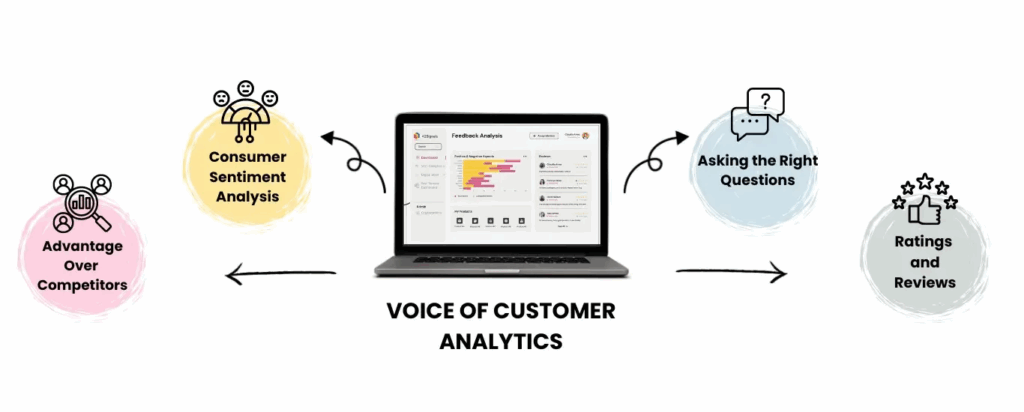
Think of VoC as the big picture. A single review is a single voice. Thematic analysis identifies the choir, and sentiment analysis identifies the emotion in their song. Voice of Customer analytics is the act of conducting the entire orchestra, ensuring every piece of customer feedback is harmonized to give you a clear, accurate, and actionable understanding of your customer’s needs, expectations, and perceptions. It is the key to moving from being a business that simply sells to customers to one that is genuinely built for them.
A Pillar of Modern Reputation Management
In today’s digital world, your online reputation is one of your most valuable assets. Proactive reputation management is no longer about suppressing negative reviews. It is about actively shaping the narrative around your brand. A robust online review analysis system is the engine of modern reputation management.
When you systematically analyse feedback, you stop being reactive. Instead of frantically responding to a one-star review, you can identify a small problem and fix it before it spirals into dozens of negative reviews.

Furthermore, by understanding the common themes in your positive reviews, you can actively promote those strengths in your marketing. For instance, if your analysis shows that customers consistently praise your customer support team, you can create marketing campaigns centred around your award-winning service. This turns your happy customers into your most credible advertisers.
Unlocking Hidden Gems Through Feedback Mining
The term feedback mining perfectly captures the essence of this entire process. It is the deliberate and meticulous search for valuable nuggets of information hidden within a mountain of raw customer data. Like a miner sifting through dirt to find gold, you are sifting through text to find transformative insights.
This involves looking for more than just common complaints. It is about spotting unexpected praise for a minor feature that you could highlight and develop further. It is about identifying a use case for your product that you never envisioned.
Perhaps a customer in a review mentions they use your project management software to plan their wedding. This is a hidden gem. It reveals a potential new market segment you had not considered. Without a dedicated process of feedback mining, these golden opportunities would remain buried, unseen and unused.
Stop Reading and Start Listening
Your customers are talking. They are providing you with free, honest, and incredibly detailed feedback every single day. They are explaining exactly how to make your products better, your service smoother, and your brand stronger. The only question is, are you listening?
Online review analysis is not a complex luxury reserved for massive corporations with huge data teams. It is a fundamental business practice. By embracing a strategy that includes customer review analysis, sentiment tracking, and Voice of Customer analytics, you can make the shift from passively watching your reviews to actively learning from them.
You will make smarter decisions, build deeper customer loyalty, and manage your reputation with confidence. Start the process today. Gather your reviews, look for the patterns, and take that first step toward building a business that is truly driven by the voice of the people who matter most: your customers.
Try 42Signals if you want to see voice of customer analytics in action for your products on several marketplaces.
Ready to Take the Next Step?
See how our solutions can help you achieve your goals and drive measurable results.
Frequently Asked Questions
Analyzing online reviews involves turning customer comments and ratings into practical insights. The process typically includes:
Collecting reviews from all major sources like Amazon, Google, marketplaces, and social platforms.
Cleaning the data to remove bots, duplicated text, or irrelevant comments.
Identifying themes such as quality, delivery, pricing, packaging, or customer service.
Analyzing sentiment to see whether reviews are mostly positive, neutral, or negative.
Spotting patterns such as frequently mentioned problems or frequently praised features.
Comparing with competitors to understand how your product is positioned in the market.
Summarizing insights and pairing them with recommendations for improvement.
Online review analysis helps brands improve products, adjust pricing, enhance customer experience, and tailor marketing messages.
The online review process refers to the journey a customer goes through when leaving feedback on a product or service. It usually involves:
Purchasing or using the product
Receiving a prompt from the platform asking for feedback
Writing a review or giving a rating
Submitting the review
Having the review screened by automated filters or moderation teams
The review being published on the platform
Brands responding or taking action based on the review
For businesses, the process includes collecting, analyzing, responding to, and learning from reviews.
To write a strong review analysis, follow this structure:
Introduce the purpose – State what set of reviews you evaluated and why.
Describe the sources – Mention platforms and the time period covered.
Explain your method – Did you categorize feedback, score sentiment, or look for trends?
Present key findings – Highlight recurring praises, common complaints, and stand-out patterns.
Use supporting data – Include stats like average ratings, top keywords, or issue frequency.
Interpret the meaning – Explain what these findings reveal about customer expectations or product performance.
Recommend next steps – Suggest improvements for products, support, or communication.
A good review analysis goes beyond summarizing — it provides context and actionable insights.
Here are the seven foundational steps used in most analytical processes:
Define the problem or objective
Gather relevant data
Clean and validate the data
Organize or categorize the information
Examine patterns and trends
Interpret the results
Recommend actionable solutions
These steps ensure that the analysis is logical, accurate, and useful for decision-making.