
When Is the Amazon Great Indian Festival Sale 2026?
Expected timing: The Amazon Great Indian Festival Sale 2026 is expected to run from late September to early October, in line with the pattern Amazon has followed in previous years. Exact dates have not yet been confirmed by Amazon.
The sale is timed to open just ahead of Navratri and continues in phases through the Durga Puja and Diwali period. Amazon typically confirms dates a few weeks before the event begins, usually announcing them alongside the bank partnership offers that provide instant card discounts during the sale.
What the pattern looks like in practice:
- Expected start: Late September to early October 2026, a few days before Navratri begins.
- Duration: Multi-week, run in phases rather than as a single fixed window. Different categories and deal tiers unlock across the festive period.
- Prime early access: Prime members consistently get access 24 hours before the sale opens to all customers.
- Announcement timing: Dates are usually confirmed two to three weeks ahead, alongside the bank partner announcement.
How important is the Amazon Great Indian Festival Sale? India’s burgeoning e-commerce landscape is one of the most exciting and dynamic markets in the world today. A country with over a billion people, diverse cultures, and a rapidly growing middle class, India is witnessing an unprecedented digital revolution. The country’s e-commerce sector is expanding at an extraordinary rate, fueled by increasing internet penetration, affordable smartphones, and the widespread availability of low-cost data.
This transformation has given rise to a flourishing digital marketplace, with both global and local players competing for a share of this enormous, yet diverse, customer base.

Image Source: Ikon Market
The Indian e-commerce landscape is not only vast but also incredibly diverse, reflecting the country’s rich cultural heritage and varied consumer needs. It is a melting pot of influences, from the bustling lanes of Mumbai’s fashion districts that are being mirrored in online marketplaces, to the handcrafted products made by rural artisans that are now reaching global audiences.
What makes India’s e-commerce market unique is this blend of tradition and technology, where high-end electronics are sold alongside traditional handicrafts, and where global brands rub shoulders with local entrepreneurs.
One of the most defining features of India’s e-commerce growth is the rapid rise of seasonal sales events that captivate millions of shoppers across the country. These events are not just about offering discounts but are also designed to resonate with the cultural and traditional values of Indian consumers.
Among these, the Amazon Great Indian Festival Sale stands out as a significant event, setting new benchmarks for how global companies can engage with local traditions and customer sentiments.
Official Name and Seasonal Timing
Amazon’s primary annual mega-sale is the “Great Indian Festival.” This flagship event is strategically timed for the major festive period spanning Navratri, Durga Puja, and Diwali, typically in the September-October window. It is distinct from the company’s other key sale, “The Great Republic Day Sale,” which is held in January. The Great Indian Festival often begins with a period of exclusive early access for Amazon Prime members, making membership a significant advantage during this shopping period.
The Cultural Connection: Amazon Great Indian Festival Sale
The Amazon Great Indian Festival Sale is a prime example of how international brands can successfully integrate themselves into the fabric of Indian culture. This annual event is held during India’s festive season, typically around Navratri, Durga Puja, and Diwali – times when Indian families traditionally purchase new goods, whether it be electronics, household items, or gifts for loved ones.
By aligning its sales with this period of heightened consumer spending, Amazon taps into the deep-rooted Indian tradition of festive shopping.
The success of the Amazon Great Indian Festival Sale goes beyond just the discounts it offers; it represents the company’s understanding of the Indian consumer mindset. It’s not just about giving deals but creating an experience that feels personal, local, and relevant to Indian buyers.
The timing, the products, and even the way the event is marketed are all deeply tied to Indian customs and festivals.
Prime Membership: The Key to Unlocking the Best Deals
The Amazon Great Indian Festival is a central pillar of the Amazon Prime membership strategy in India. During the sale, Prime members receive substantial benefits that define the experience:
- Early Access: Members get a 24-48 hour head start on the most coveted deals, crucial for purchasing high-demand items like the latest smartphones and electronics.
- Exclusive Deals & Coupons: Special discounts and enhanced bank offers are frequently reserved for Prime subscribers.
- Amplified Core Benefits: The sale highlights the standard Prime value proposition, including guaranteed fast and free delivery, which is essential during the festive rush.
Beyond Metros: A Pan-India Shopping Phenomenon
Sale reports consistently highlight the event’s deep penetration across the country. While metropolitan cities like Delhi, Mumbai, and Bengaluru drive the highest sales volume, the most rapid growth is seen in Tier 2 and Tier 3 cities such as Lucknow, Ahmedabad, Jaipur, and Coimbatore. This trend underscores the success of Amazon’s logistics investments and confirms that the Great Indian Festival has evolved into a true pan-India shopping festival, democratizing access to products for millions in smaller towns.
The Great Indian Festival vs. The Republic Day Sale
Amazon’s two major sale events in India cater to different seasonal demands:
| Feature | The Great Indian Festival | The Great Republic Day Sale |
|---|---|---|
| Timing | September-October (Festive Season) | January (Post-Holiday Season) |
| Cultural Context | Aligned with Diwali, Durga Puja; tradition of buying new items and gifts. | Aligned with Republic Day; often focused on clearance, new year upgrades. |
| Key Product Categories | Smartphones, Electronics, Fashion, Home Appliances. | Winter Wear, Home & Kitchen, Electronics, Fitness products. |
| Scale | Typically the largest event of the year. | A major sale, but generally smaller in scale than the Great Indian Festival. |
Strategic Positioning: Blending Global with Local
Amazon’s strategy for its Great Indian Festival Sale highlights how global brands can effectively adapt to local markets. While Amazon operates on a global scale, its approach in India is highly localized.
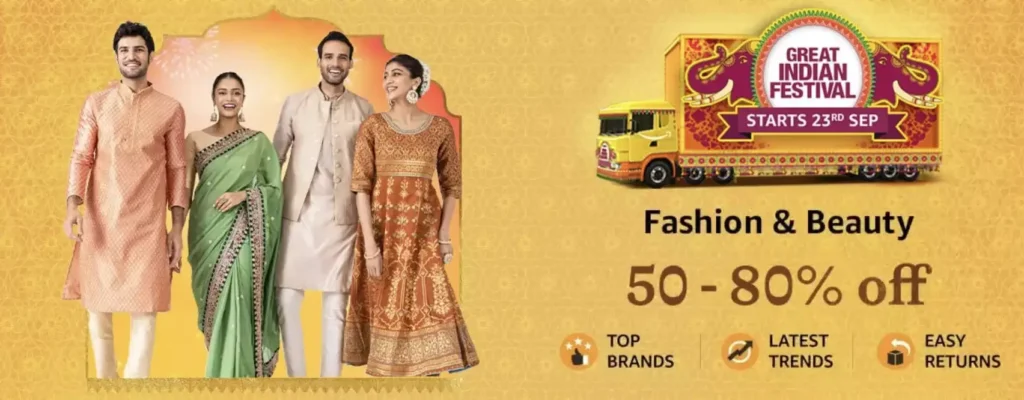
Image Source: Economic Times
The company has designed marketing campaigns that feature well-known Indian celebrities, and it incorporates traditional festive themes that resonate with consumers. These ads are not generic global campaigns but ones that speak directly to Indian consumers, emphasizing the joy and togetherness that come with festivals.
By investing in localized advertising and marketing strategies, Amazon has managed to build a strong emotional connection with Indian shoppers. This cultural adaptation is a critical factor in the company’s success in the Indian market, where consumers appreciate brands that respect and celebrate local traditions.
Driving Sales Through Discounts and Exclusives
One of the most attractive aspects of the Amazon Great Indian Festival Sale is the sheer scale of discounts and exclusive deals it offers. Amazon’s strategic partnerships with major brands, as well as local sellers, allow it to offer exclusive product launches during the sale period.
These limited-time deals are a major draw for consumers, with millions logging in to purchase everything from the latest smartphones to household necessities at a fraction of their usual price.
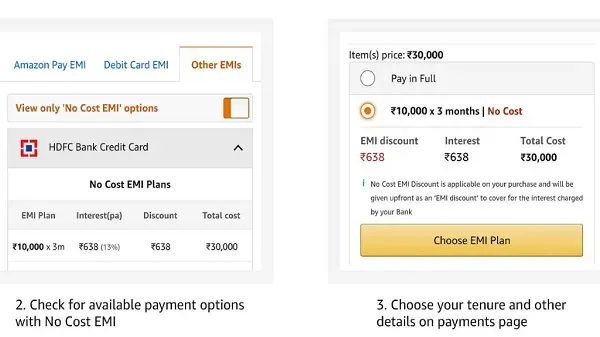
Beyond the discounts, Amazon also capitalizes on offering various financial solutions that are tailored to the Indian market. Recognizing the unique financial habits of Indian consumers, Amazon introduced easy payment options like EMIs (equated monthly installments), cashback offers in partnership with Indian banks, and the ever-popular pay-on-delivery method.
These financing solutions help ease the purchasing process for a wide range of consumers, whether they are buying high-end electronics or daily essentials.
The Role of Prime Membership in Amazon Great Indian Festival Sale
Amazon’s Great Indian Festival Sale has also been a significant driver for its Prime membership program in India. Prime members are given early access to deals, which not only boosts sales during the event but also encourages more consumers to subscribe to Prime for additional benefits.

Image Source: Hindustan Times
The sale serves as a platform for promoting the advantages of Prime membership, such as free shipping, faster deliveries, and exclusive access to content on Amazon Prime Video.
The result has been a steady increase in Prime memberships in India, with more consumers becoming loyal to the platform not just for shopping but for the comprehensive digital ecosystem Amazon offers.
Infrastructure and Logistics: Supporting Massive Demand
To manage the massive influx of orders during the Amazon Great Indian Festival Sale, the company has invested heavily in its infrastructure and logistics network in India. Over the years, Amazon has expanded its warehouse capacities, strengthened its supply chain, and provided training and support to local sellers to ensure that products are delivered on time, even to remote areas. These logistical improvements are crucial, given the geographical diversity of India and the challenges posed by reaching rural consumers.
Amazon’s ability to deliver to every corner of the country, from metropolitan cities to rural villages, has been one of the key factors behind the success of its e-commerce operations in India. The company’s investment in building a robust logistics network has also created new opportunities for sellers in smaller towns and rural areas, giving them access to a vast customer base that they would otherwise have struggled to reach.
The Role of Competition: Flipkart’s Big Billion Days Sale

Image Source: Indian Express
Amazon’s dominance in the Indian e-commerce market is constantly challenged by local competitors like Flipkart, which holds its own annual event, the Big Billion Days Sale. The intense rivalry between Amazon and Flipkart has spurred innovation and growth within the e-commerce sector, benefiting consumers in the process. Both companies are continually trying to outdo each other by offering better deals, faster delivery, and superior customer service. This competition has created a highly dynamic market where consumers have more choices than ever before.
Flipkart’s Big Billion Days Sale, much like Amazon’s Great Indian Festival Sale, is positioned during the festive season, making the two events direct competitors. This rivalry has led to aggressive discounting, as both companies vie for the attention of Indian shoppers, resulting in better prices and more exclusive offers for consumers.
Customer Satisfaction and Testimonials
Year after year, customer testimonials pour in, praising the Amazon Great Indian Festival Sale for its vast product range, prompt deliveries, and excellent customer service. Consumers appreciate the seamless shopping experience that Amazon provides, from easy returns to reliable customer support. These positive reviews reinforce Amazon’s reputation as a trusted e-commerce platform in India.
What This Means If You’re a Brand Selling During GIF
For consumers, the Great Indian Festival Sale is a few weeks of good prices. For brands selling on Amazon India, it compresses a disproportionate share of annual revenue into that same window — and compresses the operational risk with it. Three digital-shelf pressures spike during GIF that barely register the rest of the year.
1. Stockouts kill search rank, and rank does not come back when stock does
The most expensive mistake during a festive sale is running out of stock on a product that is selling well. The lost revenue during the stockout is the visible cost. The hidden cost is larger: Amazon’s ranking algorithm demotes out-of-stock listings, and a product that loses rank during peak traffic does not simply return to its previous position when inventory is restored. It has to rebuild sales velocity from a lower position, against competitors who held stock and kept accumulating the signals that determine rank.
During GIF, this compounds because demand spikes unpredictably by category and the sale runs in phases — a SKU that held comfortably through week one can sell out in hours when its category tier unlocks. Brands that manage this well track availability at SKU level across every channel continuously through the sale period rather than checking inventory reports at end of day.
2. Price wars break MAP, and the damage outlasts the sale
Festive discounting creates cover. When every seller on a listing is legitimately discounting, a seller breaching Minimum Advertised Price is much harder to spot the violation looks like participation. Automated repricing tools make this worse: a reseller’s repricer chasing the lowest offer on a marketplace can drift below the MAP threshold without anyone at the reseller making a decision to do so.
The consequence persists after the sale closes. A price that appeared during GIF becomes the reference point shoppers and competitors anchor to, and authorised retailers who held the line watch sales move to the seller who did not. Brands that come out of a festive period with their pricing structure intact are the ones monitoring MAP compliance across the full reseller network throughout the sale, not auditing it afterwards.
3. Share of search collapses when every competitor bids at once
Organic and paid visibility both tighten during GIF because every brand in the category is competing for the same placements simultaneously. Sponsored placement costs rise as bidding intensifies, and organic positions shift faster than usual as sales velocity reorders rankings day by day. A brand holding a comfortable share of category search results in August can find that share materially reduced by the second week of the sale — often without noticing, because absolute traffic is up even as relative position falls.
This is the pressure most often missed, precisely because the headline numbers look healthy. Tracking share of search relative to competitors through the sale period, rather than tracking your own traffic in isolation, is what separates a brand that grew during GIF from one that simply rode the category tide while losing ground.
The preparation window is where the outcome is decided
All three pressures are easier to prevent than to fix mid-sale. The brands that handle festive periods well treat the four to six weeks before the sale as the actual work:
- Validate stock positions against forecast demand at SKU level, with particular attention to the products most likely to move into a deal tier.
- Confirm MAP compliance across every authorised reseller and every channel before discounting begins, so that violations during the sale are visible against a clean baseline.
- Audit listing content titles, images, A+ modules, key attributes — because errors cost more when traffic is at its annual peak.
- Establish a share-of-search baseline for your priority keywords so that movement during the sale is measurable rather than inferred.
- Set alerting thresholds that surface problems within hours, not in a post-mortem.
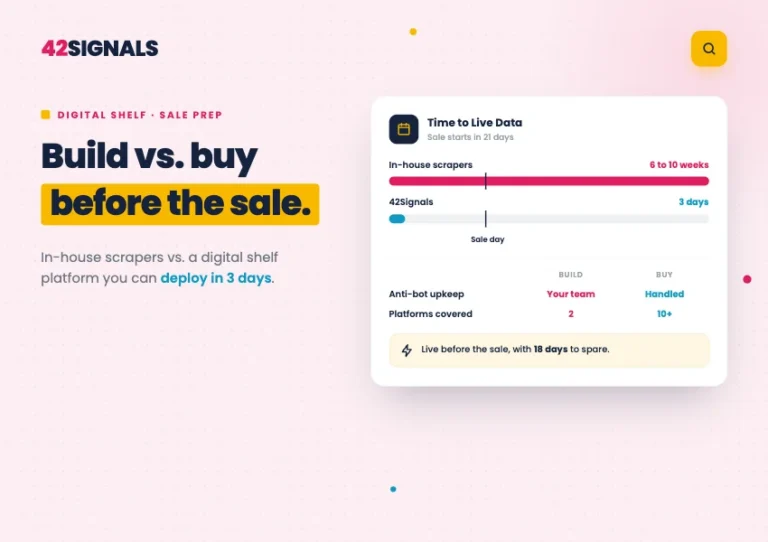
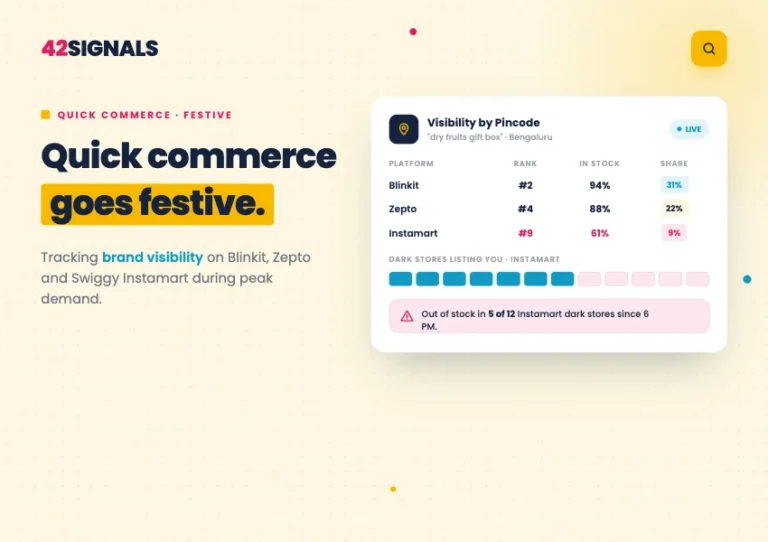
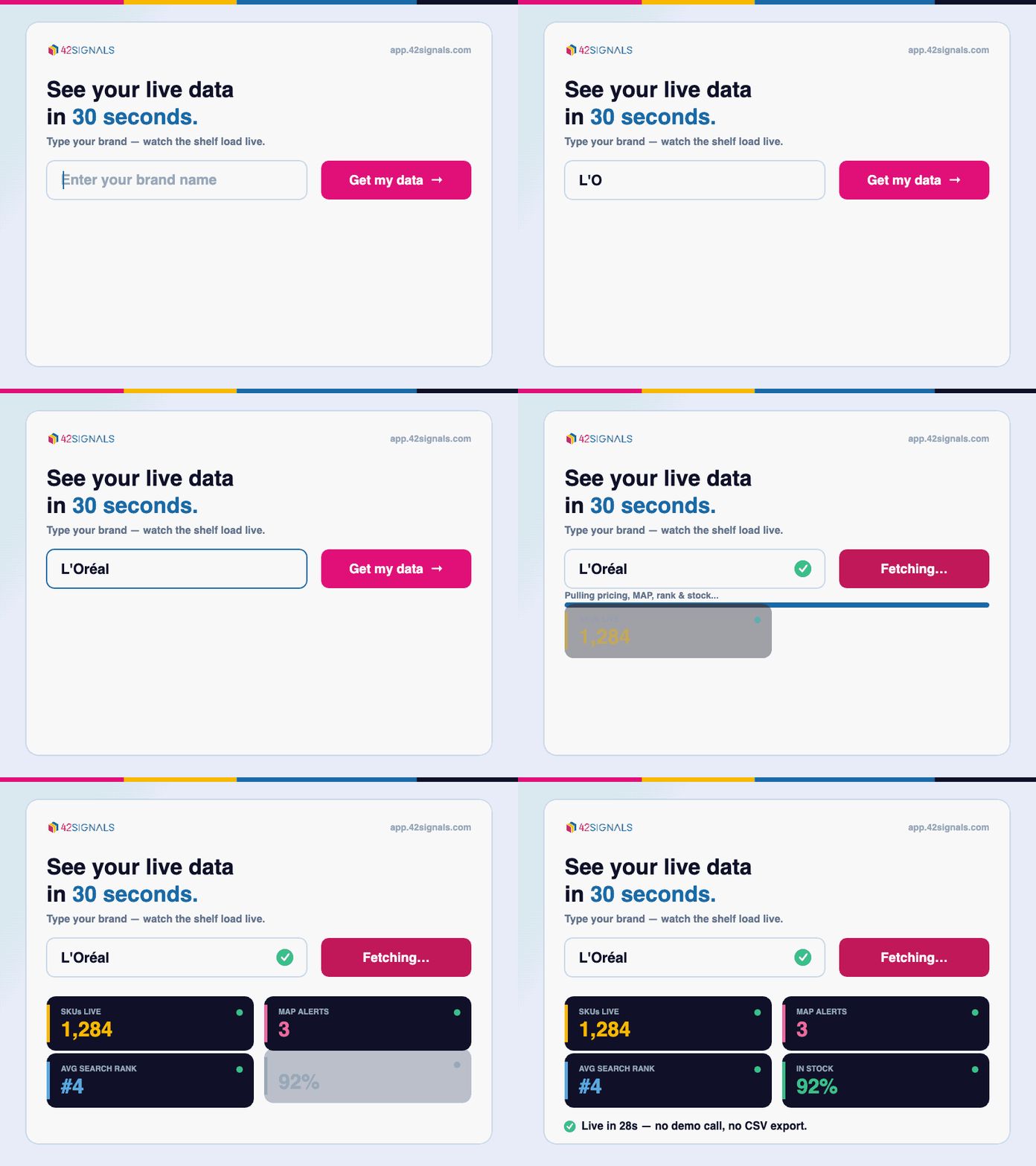
42Signals monitors all four — availability, pricing and MAP compliance, competitor movement, and share of search — across Amazon India, Flipkart, and quick-commerce platforms in real time, so that problems during the festive window surface while there is still time to act on them.
Benefits of Shopping During Major Online Sale Events in India
Shopping during mega-events like the Amazon Great Indian Festival offers several compelling advantages for Indian consumers:
- Substantial Cost Savings: Access to deep discounts, bank cashback, coupon codes, and no-cost EMI options makes high-value items significantly more affordable.
- Wide Selection & New Launches: Sale events feature the year’s most extensive inventory, alongside exclusive product launches and early access to the latest gadgets.
- Convenience and Comparison: Shoppers can avoid crowded stores, compare prices and features across countless brands from home, and make informed decisions using detailed product reviews.
- Attractive Financing Options: Tailored payment solutions like no-cost EMIs and card offers ease budget constraints, facilitating planned and impulse purchases.
- Stocking Up and Gifting: These sales provide a perfect, cost-effective opportunity for bulk buying, annual stocking of essentials, and purchasing festive gifts.
- Trust and Reliability: Shopping from established platforms during these events ensures product authenticity, reliable delivery, and robust customer service policies.
Conclusion on Amazon Great Indian Festival Sale
Amazon’s Great Indian Festival Sale’s success is not just the result of discounts or strategic marketing. It’s a blend of understanding the cultural pulse, adapting to local needs, and providing a seamless shopping experience. Crucial to this success has been the backbone of e-commerce analytics.
For brands, the festive season is where a year of pricing discipline and shelf position is either protected or undone in a few weeks. Book a demo to see what your category looks like heading into the 2026 festive window — availability risk, MAP exposure, and where your share of search sits against your competitors right now.
Frequently Asked Questions (FAQs) on Amazon Great Indian Festival Sale
When is the Amazon Great Indian Festival Sale 2026?
The Amazon Great Indian Festival Sale 2026 is expected to run from late September to early October, following the pattern of previous years, though Amazon has not yet confirmed exact dates. The sale is timed to open ahead of Navratri and continues in phases through the Durga Puja and Diwali period. Amazon typically announces dates two to three weeks in advance, alongside its bank partnership offers. Prime members get access 24 hours before the sale opens to everyone else.
How much discount is there in the Amazon Great Indian Festival Sale?
Discount depth varies significantly by category. Smartphones, televisions, and large appliances historically see the steepest reductions, while fashion and household categories see broader but shallower discounts. The headline ‘up to’ figure usually assumes three stacked layers: the listed sale price, a bank partner instant discount on specific cards, and an exchange or no-cost EMI offer on higher-value items.
What is the difference between the Great Indian Festival Sale and Flipkart’s Big Billion Days?
Both run in the same festive window and compete directly. The Amazon Great Indian Festival Sale typically runs longer and in phases, with Prime members receiving 24-hour early access, and is strongest in electronics and appliances. Flipkart’s Big Billion Days has historically been shorter and more concentrated, with a stronger emphasis on exclusive smartphone launches and early access for Flipkart Plus members. The direct overlap is deliberate — the competitive pressure between them is what drives discount depth in the categories both prioritise.
How do brands prepare their listings for the Great Indian Festival?
Listing preparation for the Great Indian Festival should be complete four to six weeks before the sale opens, because changes made during the sale take time to index and traffic is already peaking. The preparation sequence brands use: audit titles and key attributes against the search terms customers actually use in the category; confirm image sets meet Amazon’s requirements and include the infographic and lifestyle images that drive conversion; check A+ content is live on the highest-revenue SKUs rather than spread thinly across the catalogue; validate that stock positions match forecast demand at SKU level, with particular attention to products likely to enter a deal tier; and establish a share-of-search baseline for priority keywords so that movement during the sale is measurable rather than guessed at. The listings that perform during GIF are the ones that were already optimised in August, not the ones edited in October.
How do you protect search rank during a festive stockout?
The honest answer is that you cannot fully protect rank once a stockout has happened — Amazon demotes out-of-stock listings, and recovery requires rebuilding sales velocity from a lower position. What you can do is limit the damage. First, detect the stockout within hours rather than at the end of the day, because the ranking impact scales with how long the listing sits unavailable. Second, if you have variant listings, ensure at least one variant in the family remains in stock, since the parent listing retains more visibility than one that is entirely unavailable. Third, avoid deactivating the listing, which is worse than being out of stock. Fourth, on restock, expect to support the product with advertising for a period to rebuild velocity, because organic recovery alone is slow during a period when competitors are accumulating sales signals daily. The only reliable protection is not stocking out — which means tracking availability continuously through the sale rather than relying on inventory reports that lag.
How do brands monitor MAP compliance during festive sales?
Festive periods are when MAP violations are hardest to spot and most damaging, because legitimate discounting provides cover and the resulting price becomes an anchor that persists after the sale. Brands that manage this effectively do three things. They establish a clean compliance baseline before discounting begins, so violations during the sale stand out against a known state. They monitor continuously rather than auditing afterwards — a violation caught on day two can be corrected; the same violation found in a post-sale review has already reset customer price expectations. And they capture evidence at the moment of detection, because listings change quickly during a sale and a screenshot taken a week later proves nothing. The practical requirement is monitoring that covers every authorised reseller across every channel simultaneously, with alerting fast enough that enforcement happens during the sale rather than after it.