

Customer experience refers to the perception and impression that a customer has of a company, brand, or organization based on their interactions and experiences with it. It encompasses all the touchpoints and interactions a customer has with a company throughout their journey, from initial awareness and consideration to purchase, usage, and post-purchase support. Let’s understand the need for eCommerce customer experience.
ECommerce Customer Experience
In ecommerce, customer experience (CX) is the holistic sum of all interactions, perceptions, and feelings a customer has throughout their entire journey with an online store. It transcends a single transaction, encompassing every touchpoint from the moment a customer becomes aware of the brand to long after the purchase is delivered. It is the digital equivalent of the ambiance, service, and product quality of a physical store, all rolled into one.
A positive CX is not merely about a functional website; it’s about creating a seamless, efficient, and even delightful journey that meets and exceeds customer expectations at every stage. This journey can be broken down into three critical phases:
1. The Discovery & Consideration Phase: This is where first impressions are formed. Key elements here include:
- User-Friendly Website & Navigation: An intuitive, clean layout that allows customers to find what they need in three clicks or less.
- Blazing-Fast Loading Times: In an era of short attention spans, every second of delay increases bounce rates and frustration. Optimizing for speed, especially on mobile devices, is non-negotiable.
- Intelligent Search & Filters: A powerful search bar with autocomplete suggestions and robust filtering options (by size, color, price, rating, etc.) is crucial for helping customers navigate vast product catalogs efficiently.
- High-Quality, Clear Product Information: This includes multiple high-resolution images, 360-degree views or videos, detailed descriptions, size charts, ingredient lists, and customer-generated photos and videos. The goal is to replicate the “touch and feel” of an in-store experience as closely as possible, reducing purchase uncertainty.
2. The Transaction & Fulfillment Phase: This is the core of the promise, where reliability is key.
- Streamlined & Secure Checkout: A lengthy, complicated checkout is a primary cause of cart abandonment. Offering a guest checkout option, multiple payment methods (including UPI, net banking, credit/debit cards, and cash on delivery in India), and a clear progress bar are essential. Most importantly, the site must display security badges (SSL certificates) to build trust and assure customers their data is safe.
- Transparent Communication: Immediately after ordering, customers should receive a confirmation email with order details. This should be followed by proactive updates at every stage—packing, shipping, and out-for-delivery—via SMS and email. This transparency alleviates anxiety and builds confidence.
- Efficient Shipping & Delivery: Promised delivery timelines must be met consistently. Offering a range of options, from standard to express shipping, caters to different customer needs. The unboxing experience itself is also a part of CX; secure packaging that is also aesthetically pleasing can create a memorable “moment of delight.”
3. The Post-Purchase & Support Phase: This phase is often overlooked but is arguably the most critical for fostering loyalty.
- Responsive & Empathetic Customer Support: Support must be easily accessible through multiple channels (live chat, email, phone). The goal is not just to solve problems but to make the process effortless for the customer. Empowering support agents to go the extra mile can turn a negative situation into a powerfully positive one.
- Hassle-Free Returns & Refunds: A generous and transparent return policy is a powerful trust signal. It reduces the perceived risk of buying online. Making the return process simple and quick, with prompt refunds or exchanges, shows the brand stands behind its products and respects its customers.
- Nurturing the Relationship: The relationship shouldn’t end at delivery. Follow-up emails asking for a review, personalized recommendations based on past purchases, and a loyalty program that rewards repeat customers are all strategies to make customers feel valued and encourage them to return.
Why is this Holistic CX so Vital?
Providing an exceptional ecommerce customer experience is the primary driver of sustainable business growth. It directly impacts:
- Competitive Differentiation: In markets where products and prices are often similar, CX is the ultimate differentiator. A company that provides a frictionless, trustworthy, and enjoyable experience will consistently win over one that simply competes on price.
- Customer Loyalty & Retention: It is far more costly to acquire a new customer than to retain an existing one. A happy customer is a returning customer.
- Customer Lifetime Value (CLV): Loyal customers buy more frequently and have a higher average order value over their lifetime.
- Brand Advocacy: Satisfied customers become brand evangelists. They leave positive reviews, refer friends and family, and defend the brand on social media, providing invaluable organic marketing.
Providing an exceptional ecommerce customer experience is vital for building customer loyalty and increasing sales, so businesses should continually assess and optimize their customer experience strategy.
Why is eCommerce Customer Experience Important?
Ecommerce customer experience is important for several reasons, some of which are:
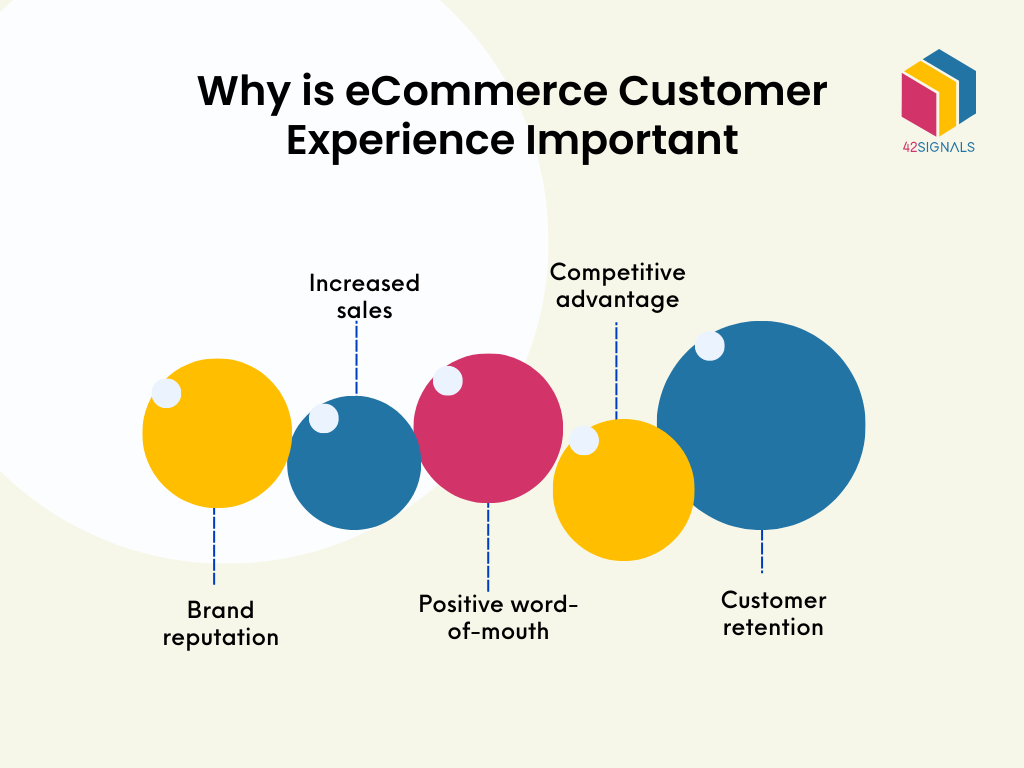
Customer retention: An exceptional customer experience can help build customer loyalty and encourage customers to return for future purchases. This, in turn, leads to increased customer retention and revenue for the business.
Competitive advantage: With so many ecommerce businesses competing for customers, providing an outstanding customer experience can set a business apart from its competitors and help it stand out in the crowded marketplace.
Positive word-of-mouth: Customers who have a positive experience are more likely to recommend the business to others, leading to positive word-of-mouth referrals and potential new customers.
Increased sales: A seamless and enjoyable experience can increase the likelihood of customers making a purchase and even making repeat purchases, which can lead to increased sales and revenue for the business.
Brand reputation: An excellent ecommerce customer experience can enhance the brand reputation create a positive image for the business and help attract new customers and strengthen relationships with existing ones.
Ways to Enhance ECommerce Customer Experience
While a sleek website and quality products are fundamental, the true differentiator in the crowded Indian e-commerce market is a superior customer experience (CX). It’s the sum of all interactions a customer has with your brand, from discovering it online to unboxing the product and beyond. Excelling in this area builds loyalty, drives repeat purchases, and turns customers into brand advocates. Here’s a deeper dive into crucial strategies to enhance that experience.
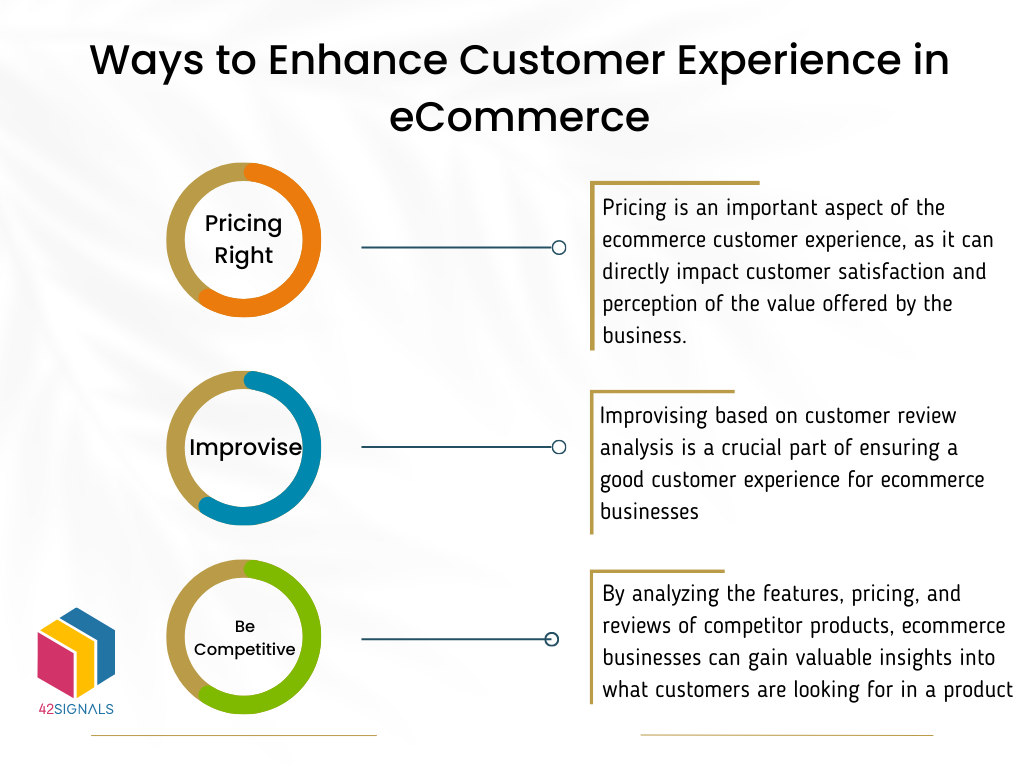
Pricing Right
Pricing is an important aspect of the ecommerce customer experience, as it can directly impact customer satisfaction and perception of the value offered by the business. Here are some ways that the right pricing strategy can help with a good customer experience for an ecommerce business:
- Competitive pricing: Customers expect competitive pricing in ecommerce, and offering products at fair prices compared to competitors can help a business attract and retain customers. A price that is too high compared to competitors may cause customers to look elsewhere, while a price that is too low may raise suspicions about product quality.
- Transparent pricing: Customers appreciate transparency when it comes to pricing, and a business that is upfront about prices and any additional fees can help build trust with customers. This means providing clear information about the total cost of a product, including taxes, shipping, and any other fees.
- Dynamic pricing: Dynamic pricing strategies, such as offering discounts or promotions at certain times, can help create a sense of urgency and excitement around a purchase, leading to increased customer satisfaction and loyalty.
- Personalized pricing: Personalizing pricing based on a customer’s purchase history, preferences, or location can help create a more personalized and tailored customer experience. This can include offering personalized promotions or discounts based on a customer’s past purchases or browsing history.
- Psychological Pricing and Value-Added Bundles: Techniques like charm pricing (e.g., ₹999 instead of ₹1000) are proven to be effective. Furthermore, instead of just discounting a single item, create bundles (e.g., “Buy a laptop + get a bag and mouse at 20% off”). This enhances the perceived value of the offer and can increase the average order value, improving the experience through a feeling of getting a great deal.
The right pricing strategy can help an ecommerce business provide a good customer experience by offering fair and transparent pricing, creating excitement and urgency around purchases, and personalizing the experience for each customer.
Make Improvements
Improvements based on customer review analysis is a crucial part of ensuring a good customer experience for ecommerce businesses. Here is a 4-step review analysis process that can help:
- Identifying pain points: Customer reviews can provide valuable feedback on areas where a business may be falling short in terms of customer experience. By analyzing reviews, businesses can identify pain points that need to be addressed, such as slow shipping times, poor customer service, or confusing website navigation.
- Making improvements: Once pain points have been identified, ecommerce businesses can make improvements to their operations, such as optimizing their website, streamlining the checkout process, or providing better customer service. These improvements can help to enhance the overall customer experience and increase customer satisfaction.
- Monitoring progress: After making improvements, businesses can use customer review analysis to monitor their progress and track customer satisfaction levels over time. This can help them identify areas that still need improvement and make further changes as necessary.
- Building customer trust: Responding to customer reviews, whether positive or negative, shows that the business values customer feedback and is committed to providing an excellent customer experience. This can help to build trust with customers and improve their overall perception of the business.
42Signals can aid this 4-step process and help ecommerce businesses improve their customer experience. It can help in collecting and analyzing reviews from various sources, managing customer feedback, and tracking performance over time.
Data-driven insights from 42Signals can help businesses identify pain points and trends, prioritize areas for improvement, and make effective decisions to enhance the overall customer experience.
Be Competitive in the eCommerce Customer Experience Space
Comparing a product with those of competitors can help ecommerce businesses improve their products and enhance the customer experience. By analyzing the features, pricing, and reviews of competitor products, ecommerce businesses can gain valuable insights into what customers are looking for in a product.
This information can be used to improve the ecommerce customer experience, own products and tailor it to meet customer needs and preferences.
Ecommerce businesses can also identify unique selling points and opportunities for differentiation in the market. Regularly comparing their product with those of competitors can help businesses stay up to date on market trends and changes in customer preferences, enabling them to make changes to their products and strategies in a timely manner.
- Feature and Benefit Comparison: Don’t just know that a competitor sells a similar product; understand how they sell it. Analyze their product descriptions, imagery, and video content. What features are they highlighting? What benefits are they promising? This analysis can reveal gaps in your own listings or uncover an unmet customer need that you can capitalize on. Perhaps competitors are all missing a key detail in their descriptions that you can provide.
- Pricing and Value Analysis: Regularly benchmark your pricing against key competitors for your top-selling items. However, also analyze the total value proposition. If a competitor’s product is ₹100 more but includes free shipping and two-year warranty, their offer might be more attractive. Understanding this helps you position your product effectively—either by competing on price or by justifying a higher price with superior value (e.g., better warranty, included accessories, superior customer support).
- Review Mining for Innovation: Your competitors’ customer reviews are a goldmine of information. Read the 1-star and 3-star reviews for their best-selling products. What are the common complaints? These are direct signals for market gaps. If customers consistently complain that a popular blender is too loud, you can market your product as “The Quiet Powerhouse.” This allows you to innovate and differentiate by solving the very problems your competitors’ customers are facing.
By institutionalizing this process of continuous comparison, you move from being a follower to a market-aware leader, constantly adapting and enhancing your product and ecommerce customer experience to stay ahead of the curve and meet evolving customer expectations.
The Importance of CX
Customer experience is a critical factor in the success of Indian e-commerce businesses. With the rapid growth of e-commerce in India, customers have become increasingly discerning and demand exceptional experiences.
In the highly competitive Indian e-commerce market, businesses that prioritize customer experience can gain a significant advantage over their competitors. By providing a seamless, personalized, and intuitive shopping experience, e-commerce businesses can differentiate themselves from others and attract and retain customers. With the rise of social media and online reviews, customer feedback has become more important than ever before.
Positive reviews and testimonials from satisfied customers can boost a business’s reputation and credibility, while negative reviews can be detrimental to the success of the business.
The importance of customer experience in Indian e-commerce cannot be overstated. By prioritizing customer experience, businesses can gain a competitive advantage, increase customer loyalty and retention, and enhance their brand reputation, leading to long-term success and growth.
Frequently Asked Questions
What is customer experience in e-commerce?
Customer experience (CX) in e-commerce refers to the overall impression and satisfaction a shopper has when interacting with an online store. It includes every touchpoint, such as how easy the website is to navigate, product descriptions and reviews, the checkout process, delivery speed, and customer service. A great e-commerce customer experience builds trust, reduces friction, and encourages repeat purchases.
What are the 5 C’s of ecommerce customer experience?
The 5 C’s of customer experience are guiding principles businesses use to deliver better CX:
- Convenience – Making the buying process fast and easy.
- Consistency – Ensuring the brand provides the same high-quality service across all channels.
- Communication – Keeping customers informed with clear and timely updates.
- Customization – Tailoring experiences based on preferences and behavior.
- Care – Showing genuine attention to customer needs and resolving issues effectively.
These factors help companies create memorable and positive experiences.
What are the 5 C’s of e-commerce?
The 5 C’s of e-commerce typically refer to:
- Customer – Understanding the target audience and their needs.
- Content – Providing valuable and relevant product information.
- Convenience – Offering seamless navigation and quick checkout options.
- Connectivity – Engaging customers across social media, email, and digital channels.
- Conversion – Optimizing every touchpoint to drive purchases and retain customers.
These pillars help e-commerce businesses create strategies that attract and convert shoppers effectively.
What are the 4 components of customer experience?
The four core components of customer experience are:
- Product/Service Quality – The actual value and reliability of what’s being sold.
- Ease of Interaction – How simple and intuitive it is to engage with the brand online or offline.
- Personalization – The degree to which the experience feels tailored to the individual customer.
- Support and Service – The quality of assistance before, during, and after the purchase.
Focusing on these elements helps businesses strengthen loyalty and stand out from competitors.