
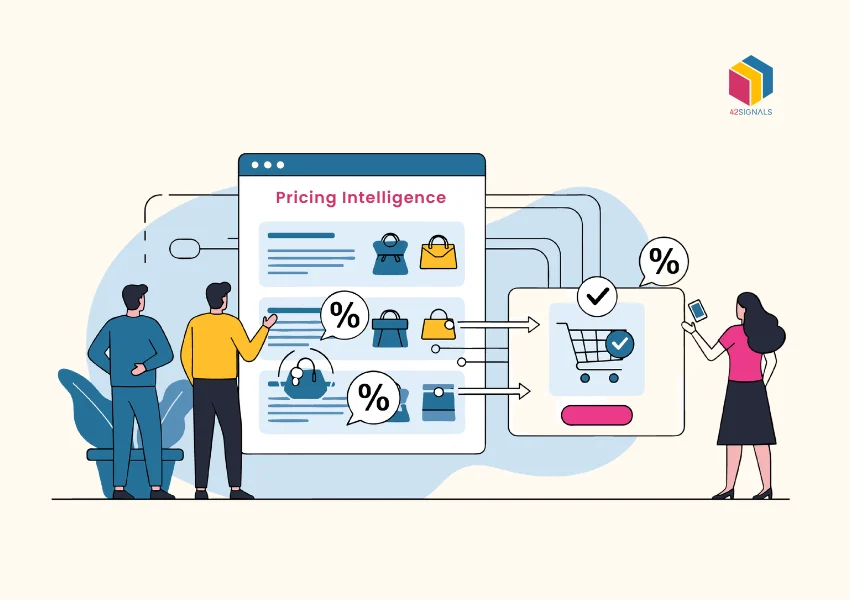
The Power of Price Intelligence
Price intelligence is the practice of continuously collecting and analyzing competitor and market pricing data to enable real-time pricing decisions and is essential for modern e-commerce operations. The article highlights five crucial reasons why e-commerce brands need this technology:
1) Real-Time Agility: It allows brands to track competitor price changes instantly across platforms, preventing losses in Buy Box visibility and conversion rates.
2) Optimizing Profit Margins: By analyzing price elasticity and market benchmarks, it helps identify optimal price points, reducing underpricing and overpricing, which can increase profits by up to 25%.
3) Market Trend Recognition: Pricing data can be converted into pattern recognition to spot emerging demand signals, inventory-clearance events, or supply-chain changes before competitors.
4) Building Customer Trust: Consistent pricing across a brand’s D2C site and marketplaces is vital for customer experience, and price intelligence enforces this parity.
5) MAP Enforcement: It automates the impossible task of manually tracking Minimum Advertised Price (MAP) violations and price parity across hundreds of SKUs and sellers, protecting brand equity and channel relationships. Ultimately, price intelligence shifts pricing from a manual, reactive task to a continuous, strategic operation for protecting margin and growing the business.
What is Price Intelligence?
Price intelligence is the practice of collecting and analysing pricing data from competitors, marketplaces, and category benchmarks to inform real-time pricing decisions. It combines competitor price tracking, market trend analysis, and MAP monitoring to help e-commerce brands protect margins and respond to demand signals faster than manual checks allow.
For brands selling across Amazon, Flipkart, quick commerce platforms, and their own D2C storefronts, price intelligence is no longer a competitive edge — it is operational hygiene. A single unauthorised price drop on one marketplace can trigger algorithmic penalties across the rest, damage brand perception, and erode margin within hours.
42Signals provides this layer of pricing visibility across marketplaces, sellers, and pincodes — giving e-commerce teams the data they need to price competitively without giving up margin. Here are five reasons it belongs in your stack.
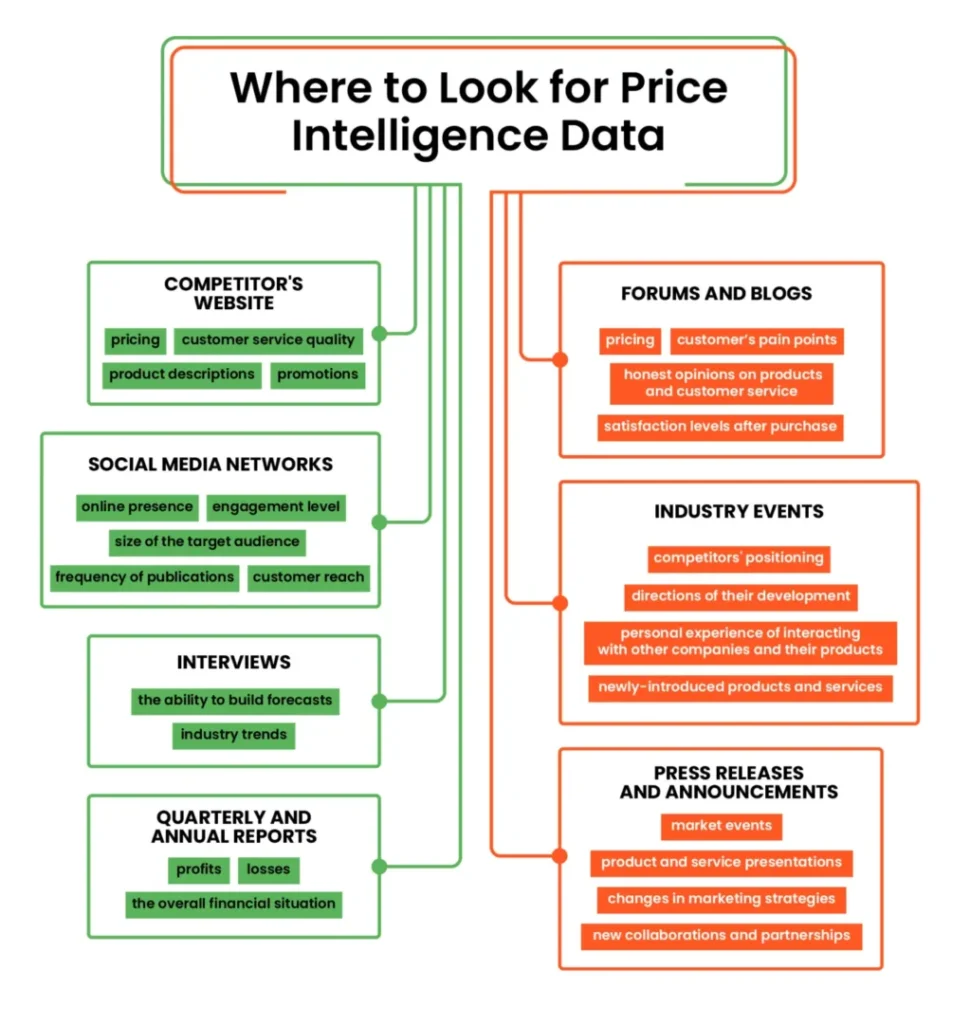
Source: Brandly
Choosing a Price Intelligence Tool: Key Features to Compare
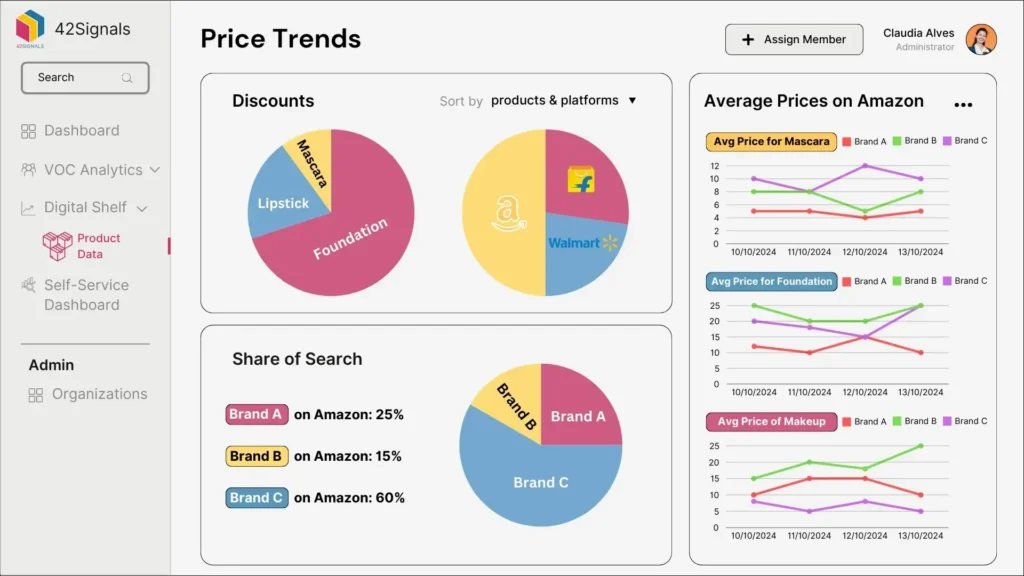
Not all price intelligence platforms are the same. Here is a comparison of features you should evaluate when selecting a solution for your ecommerce brand.
| Feature | What It Does | Why It Matters |
| Real-time monitoring frequency | How often prices are checked (hourly, daily, weekly) | Fast-moving categories (electronics, CPG) require hourly checks; slower categories can manage with daily |
| Marketplace coverage | Which platforms are tracked (Amazon, Flipkart, Myntra, Nykaa, quick commerce, D2C) | If your competitors sell on a platform your tool doesn’t track, you have a blind spot |
| Seller‑level tracking | Distinguishes between different sellers of the same product on a marketplace | Identifies whether a price drop comes from an authorised retailer or a rogue seller violating MAP |
| Price history depth | How far back historical data is stored | Essential for trend analysis, seasonal planning, and defending pricing decisions to leadership |
| MAP violation alerts | Automated flagging when advertised prices fall below your policy threshold | Without this, enforcement is reactive and slow |
| Price parity monitoring | Cross‑channel price consistency checks (Amazon vs. Flipkart vs. D2C) | Prevents channel conflict and customer confusion |
| Dynamic pricing recommendations | Suggests optimal price based on competitor moves, elasticity, and inventory | Moves you from “what happened” to “what to do” |
| API access | Ability to pull pricing data into your own systems (ERP, repricing engine) | Enables automation and custom workflows |
| Pricing model | Subscription tiers (per SKU, per marketplace, flat fee) | Matches tool cost to your scale |
42Signals advantage: Provides all of the above in a unified dashboard, with particular strength in cross‑marketplace tracking (Amazon, Flipkart, quick commerce, D2C) and MAP enforcement at scale.
Track Competitor Prices in Real Time to Stay Strategically Agile
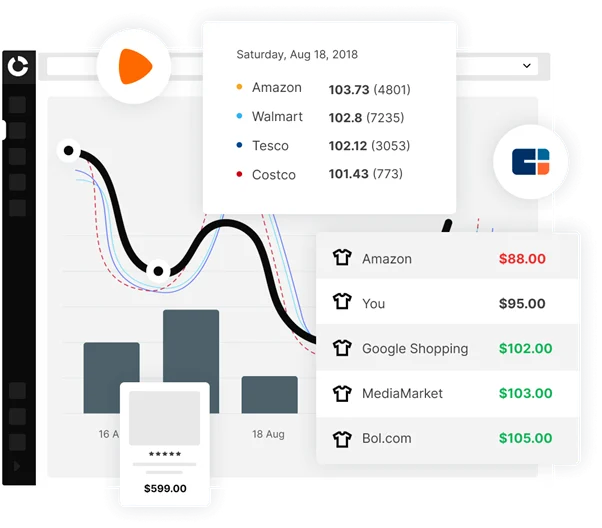
Imagine a competitor slashes the price on a flagship SKU overnight. By the time your category manager checks the marketplace the next morning, you have already lost a full day of Buy Box visibility, your conversion rate has dipped, and Amazon’s algorithm has quietly demoted your listing on price competitiveness signals.
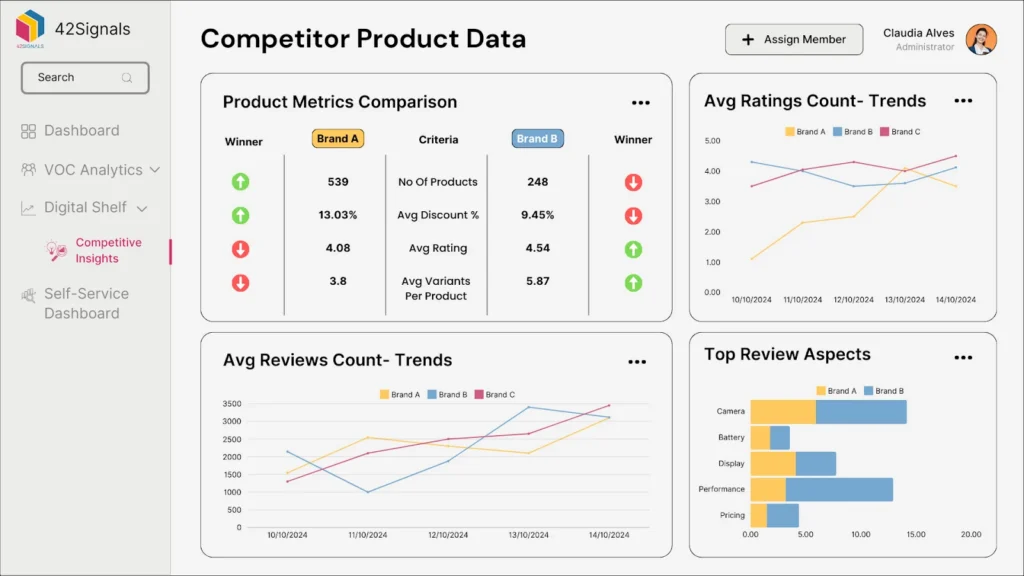
Real-time competitor price tracking closes that window. 42Signals monitors competitor pricing across Amazon, Flipkart, Myntra, Nykaa, and quick commerce platforms continuously, alerting you when a price changes on a SKU you care about. You decide whether to match, hold, or hold-and-bundle — but you decide with current data, not yesterday’s snapshot.
This isn’t only about reacting faster. It’s about building a pricing operation that responds to the market the way the market actually behaves: continuously, asymmetrically, and across hundreds of SKUs at once.
Source: Competera
Find Optimal Price Points to Improve Profit Margins
The right price isn’t the lowest one — it’s the one that captures demand without leaving margin on the table. Understanding the price elasticity of each SKU, segmented by marketplace and region, is what separates a pricing strategy from a discounting habit.
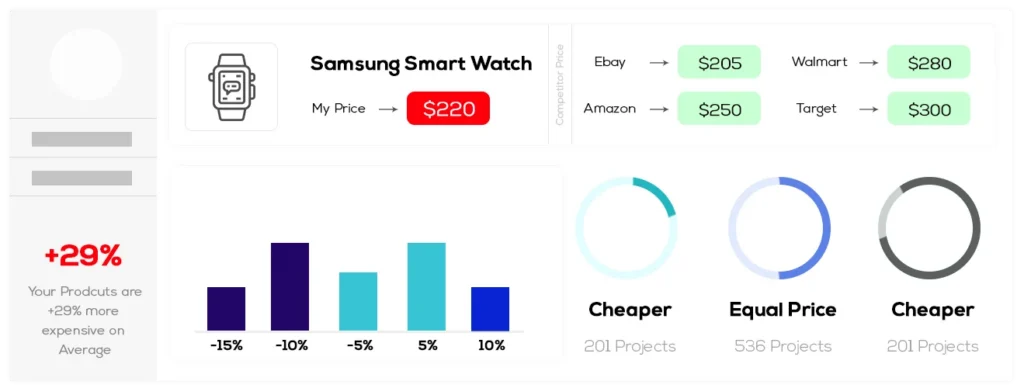
Price intelligence tools surface the data needed to identify those optimal price points. By analysing competitor moves, sell-through rates, and category benchmarks, 42Signals helps category managers spot where they are underpricing (and donating margin) and where they are overpricing (and losing sales).
Across 42Signals’ customer base, brands that move from periodic to real-time price intelligence typically recover meaningful margin in their first quarter through reduced underpricing on slow-moving SKUs and corrected overpricing on hero products.
Source: Xbyte
Studies show that dynamic pricing strategies can increase profits by up to 25% by enabling businesses to adjust prices based on real-time market demand and competitor pricing. 42Signals’ advanced analytics provide you with the insights to identify optimal price points. This not only enhances your sales volume but also safeguards your profit margins. With 42Signals, underpricing and overpricing become issues of the past, as you’re equipped to price your products perfectly in line with market dynamics.
Use Pricing Data to Spot Market Trends Before Competitors Do
Price intelligence is not only a defensive tool. The same data that tells you a competitor dropped their price also tells you that a category is heating up, a seasonal shift is approaching, or a new entrant is buying market share.
42Signals’ market intelligence layer turns raw price movements into pattern recognition. You can see when competitor discounting is concentrated in a sub-category (a demand signal), when it’s spread evenly across SKUs (an inventory-clearance signal), and when it correlates with stock availability changes (a supply-chain signal). Each of these prompts a different response — from your buying team, your marketing team, and your pricing team.
This is where pricing intelligence connects to broader retail stock availability tracking — because pricing without availability context is half the story.
Three Price Intelligence Mistakes That Cost Brands Margin
Even with the right tool, how you use pricing data determines your ROI. Avoid these common mistakes:
Mistake 1: Reacting to every competitor price drop
| The Problem | The Fix |
| A competitor drops price by 2% on a single SKU for 24 hours. Your team immediately matches, giving up margin on all your units. The competitor reverts to original price. You have permanently lowered your price floor. | Before reacting, check: Is this a temporary flash sale? Is this a limited stock clearance? Is this seller even authorised? Set rule‑based thresholds (e.g., “only react if price is >5% lower for >48 hours and seller is top‑3 competitor”). |
Mistake 2: Ignoring stock availability in pricing decisions
| The Problem | The Fix |
| You lower price because a competitor is cheaper. But the competitor is actually out of stock. Your price cut only leaves margin on the table while capturing demand that would have come to you anyway. | Always cross‑reference competitor price changes with stock status. If competitor is OOS, consider holding or even raising price. 42Signals tracks both price and availability in one view. |
Mistake 3: Treating all SKUs the same
| The Problem | The Fix |
| Your pricing strategy applies identical rules to hero products, slow‑movers, and loss leaders. You end up over‑discounting products that don’t need it and under‑protecting high‑margin SKUs. | Segment SKUs into pricing tiers: Tier 1 = high‑margin, low‑elasticity (defend price); Tier 2 = competitive battleground (match selectively); Tier 3 = clearance (aggressive discount). Apply different alert thresholds and response rules to each tier. |
The bottom line: Price intelligence tools provide data. Your strategy and discipline turn that data into profit.
Build Customer Trust Through Consistent, Fair Pricing
Customers comparison-shop. The same shopper who sees your product on Amazon will check Flipkart, your D2C site, and quick commerce within minutes. When prices vary unexpectedly across those channels — or when a product is suddenly cheaper than the one they bought last week — trust erodes.
Price intelligence supports trust in two ways. First, it surfaces price parity violations across your own channels, so customers see consistent pricing wherever they shop. Second, it ensures your competitive positioning is honest: you’re not silently overpriced against the category, and you’re not undercutting yourself into a margin trap.
According to PwC, 73% of consumers say experience is a key factor in their purchasing decisions, and a significant share will pay a premium for it. Consistent, defensible pricing is part of that experience — and at scale, only price intelligence makes it possible.
Enforce MAP and Maintain Price Parity Across Channels
Minimum Advertised Price (MAP) policies are how brands protect channel relationships and brand equity. When a marketplace seller advertises below MAP — even on a single listing — it triggers a chain reaction: authorised retailers complain, Amazon’s algorithm rewards the violator with the Buy Box, and your category-wide pricing benchmark gets dragged down within days.
Manual MAP enforcement breaks at scale. A brand selling 500 SKUs across 200 sellers on three marketplaces is monitoring 300,000 price points — impossible to track by spreadsheet, impossible to enforce in time.
42Signals automates MAP monitoring across every marketplace and seller, flagging violations the moment they appear and surfacing the seller, SKU, and pricing delta in a single alert. The same engine tracks price parity across your own channels — Amazon, Flipkart, quick commerce, and D2C — so a discount intended for one platform doesn’t accidentally leak across the rest.
For D2C brands managing channel partners, this is the difference between a pricing policy and a pricing operation. Explore D2C price parity monitoring to see how brands enforce policy at scale.
Your Weekly Price Intelligence Routine (30 Minutes)
Consistency beats intensity. Use this 30‑minute weekly routine to turn price intelligence into action without overwhelming your team.
| Time | Task | What to Look For | Action |
| 5 min | Review alert dashboard | MAP violations, competitor price drops on hero SKUs, stockout events | Escalate violations; tag competitors with significant moves |
| 10 min | Analyse price positioning of top 20 SKUs | Your price vs. category average vs. lowest competitor | Identify SKUs where gap >10% – decide match, hold, or add value |
| 5 min | Check price parity across channels | D2C vs. Amazon vs. Flipkart vs. quick commerce | Investigate unexplained differences; update channel pricing if needed |
| 5 min | Review historical trends (2‑week lookback) | Patterns: Did a competitor drop price every Thursday? Is a seasonal dip starting? | Plan proactive adjustments for next week |
| 5 min | Document decisions | One sentence per SKU/category explaining pricing action (or hold) | Build institutional memory; share with sales and marketing |
Tool setup tip: Configure 42Signals to send a Monday morning summary email with the most urgent alerts already prioritised. Your team opens one email instead of six dashboards.
Turn Pricing Data Into Margin Protection
Price intelligence has shifted from a competitive advantage to a baseline capability for e-commerce brands. Tracking competitor prices in real time, finding optimal price points, spotting market trends, building customer trust, and enforcing MAP across channels — each of these is a function that can’t be done well manually past a certain SKU count.
42Signals brings all five into a single platform: continuous price monitoring across marketplaces, MAP enforcement, price parity tracking, and the market intelligence layer that turns price data into category strategy.
Book a demo to see how your category looks through a continuous-pricing lens.
Price Intelligence Glossary
| Term | Definition |
| Price intelligence | The practice of collecting and analysing competitor, marketplace, and category pricing data to inform real‑time pricing decisions. |
| Dynamic pricing | Automated price adjustments based on rules (competitor price changes, demand, inventory levels). |
| Price elasticity | The degree to which customer demand changes in response to a price change. High elasticity = small price changes cause large demand shifts. |
| MAP (Minimum Advertised Price) | The lowest price a retailer is allowed to publicly advertise a product. Violations are contractually enforceable. |
| Price parity | Consistent pricing for the same product across different sales channels (Amazon, D2C, Flipkart, physical stores). |
| Buy Box | The default purchasing box on Amazon product pages where customers click “Add to Cart.” Over 80% of sales go through the Buy Box winner. |
| Repricing | The act of automatically or manually adjusting product prices in response to competitor moves or market conditions. |
| Loss leader | A product priced below cost (or very low margin) to attract customers who then buy higher‑margin items. |
| Price benchmark | A reference price used for comparison, often the average or median price across a defined set of competitors. |
| Price positioning | Where your product’s price sits relative to competitors (premium, mid‑range, budget). |
| Algorithmic penalty | A reduction in search ranking or Buy Box eligibility triggered by pricing that Amazon’s algorithm deems uncompetitive. |
| SERP (Search Engine Results Page) | The page of results displayed after a customer searches on Amazon or Google. Higher SERP position = more visibility. |
Frequently Asked Questions
What is pricing and assortment intelligence?
Pricing and assortment intelligence is the combined practice of monitoring competitor prices and tracking which products competitors stock across categories. Pricing intelligence answers “what is the market charging?” while assortment intelligence answers “what is the market selling?” — together they inform pricing decisions, range planning, and competitive positioning across e-commerce channels.
What is a price intelligence tool?
A price intelligence tool is a software platform that continuously collects competitor pricing data from marketplaces and websites, detects MAP violations, alerts users to significant price changes, and surfaces pricing trends across categories. Modern tools like 42Signals combine real-time scraping, automated alerting, dashboards for category managers, and optional repricing rules — replacing manual competitor checks that can’t scale past a few dozen SKUs.
How is price intelligence different from manual competitor price checking?
Manual price checking captures a snapshot. Price intelligence captures continuous data — every price change on every SKU across every marketplace, every seller, and (with pincode-level tracking) every region. Manual checks miss overnight changes, can’t cover hundreds of SKUs, and don’t surface MAP violations until customers or partners complain. Price intelligence platforms automate all of this and feed the data into alerts, dashboards, and downstream pricing decisions.
Which marketplaces can price intelligence tools track?
42Signals tracks pricing across Amazon, Flipkart, Myntra, Nykaa, BigBasket, Blinkit, Zepto, Instamart, and major D2C websites — covering the full Indian e-commerce and quick commerce landscape. Coverage extends to seller-level pricing, pincode-level availability, and historical price trends for trend analysis.