Table of Contents
ToggleWhen discussing customer loyalty in the realm of technology titans, few brands compare to Apple Inc.’s legendary prowess. According to a Bloomberg report, an astonishing 93% of Apple users express intent to remain faithful to the brand in contrast to the mere 80% observed amongst Android enthusiasts. Such dedication results in substantial dividends, reinforcing the notion that fostering customer fidelity remains paramount for thriving in intensely competitive markets.
Let’s analyze different aspects contributing to Apple’s extraordinary brand loyalty and discuss why it holds immense significance for comparable organizations.
Quantifying Customer Loyalty: The Data Behind the Devotion
- Industry-Benchmark Retention: Apple consistently reports an iPhone customer retention rate of over 90% in key markets like the US, far exceeding Android competitors. Reports from analysts like Consumer Intelligence Research Partners (CIRP) frequently cite figures between 90-94%.
- The Ecosystem Lock: This staggering retention isn’t just for phones. The “apple ecosystem loyalty” is powerful; once a user owns multiple Apple devices (iPhone, Mac, iPad, Apple Watch), the likelihood of switching any single product to a non-Apple brand plummets. This creates a formidable barrier to entry for competitors.
- Sentiment as a Leading Indicator: Tools like Voice of Customer (VoC) analytics measure apple consumer sentiment across reviews and social media. Consistently high sentiment scores for reliability, ease of use, and status are leading indicators that predict strong future retention, allowing Apple to anticipate loyalty trends.
The Ecosystem Engine: More Than Just Products
- Technical Synergy: Features like Handoff, Universal Clipboard, and iCloud syncing create genuine productivity benefits. The cost (in time and hassle) of leaving this integrated system is a significant switching barrier.
- Psychological Investment: Customers build a library of purchased apps, music, and movies on iOS, and a history within services like iMessage. This investment, both financial and emotional, deepens the relationship, making the user not just a customer of a product but a resident of an ecosystem.
- Service Integration: Services like iCloud, Apple Music, and Apple Fitness+ are designed to work best with Apple hardware. This moves the value proposition from owning a device to subscribing to a seamless digital lifestyle, increasing customer lifetime value and making attrition less likely.
Competitive Context: Loyalty Leaders Across Categories
| Product Category | High-Loyalty Brands (U.S. Market) | Key Driver of Their Loyalty |
|---|---|---|
| Smartphones / Mobile Phones | Apple (iPhone), Google (Pixel) | Ecosystem integration, brand prestige, perceived reliability. |
| Laptops / Notebooks | Apple (MacBook), Microsoft (Surface) | Build quality & design, macOS vs. Windows preference, ecosystem. |
| Cell Phone Plans | Verizon, T-Mobile | Network reliability and coverage, perceived value of plans. |
| Digital Workplace Solutions | Microsoft (365), Google (Workspace) | Deep enterprise integration, collaboration tool ubiquity. |
| Streaming Audio | Spotify, Apple Music | Personalized algorithm mastery, extensive library, podcast integration. |
| Graphic Design Software | Adobe (Creative Cloud) | Industry-standard tool monopoly, deep workflow integration. |
This context shows that while Apple dominates hardware loyalty through its ecosystem, other brands win loyalty through network effects, industry standards, or algorithmic personalization.
Factors Behind Apple’s Customer Loyalty
Superior Quality and Craftsmanship
Apple products are renowned for impeccable design, intuitiveness, and reliable performance. Investing in an Apple device builds confidence in customers, knowing they can rely on its longevity and top-notch execution. Strengthened emotional connections result from fulfilling these expectations, making Apple’s customer loyalty an integral part of the brand experience.
Seamless User Experience Across Platforms
From Mac computers to iPhones, iPad tablets, and beyond, Apple constructs cohesive ecosystems that provide effortless continuity throughout various components. Thanks to tight integration, users enjoy fluid transitions between devices, resulting in superior productivity and convenience.
Engagement Initiatives and Community Building
Apple excels in engaging fans via events, workshops, and online communities centred around shared interests and passions. Regularly hosting keynotes, releasing exclusive software updates, and facilitating discussions enables customers to feel valued, heard, and connected to others sharing common ground.
Effective Marketing Campaigns
With iconic slogans (“Think Different”) and memorable advertisements, Apple captivated audiences using inventive storytelling methods rooted in authenticity and simplicity. Persuasive messaging instils aspirations in prospective buyers, inspiring curiosity to explore innovative possibilities presented by Apple’s suite of offerings.
Deconstructing the Loyalty Loop: A Systematic Framework
Beyond individual factors, Apple’s loyalty is the result of a self-reinforcing “Loyalty Loop” that systematically captures and retains users.
Reinvestment Cycle (New Product Launches): Loyal customers are the primary, most receptive audience for new product announcements. Their trust reduces perceived risk, driving upgrade cycles and cross-category purchases (e.g., an iPhone user buying an Apple Watch), closing the loop.
Initial Hook (Superior Onboarding): The out-of-box experience—from unboxing to seamless setup—is designed to delight. This immediate positive customer experience sets the tone for the relationship.
Value Reinforcement (Daily Utility & Ecosystem): The user discovers daily value through intuitive UX and, crucially, the multiplying benefits of adding a second Apple product. This stage builds switching costs.
Emotional Connection (Brand Identity & Community): Through iconic marketing, sleek design, and a sense of belonging to an innovative community, the relationship moves from transactional to identity-based, fostering brand advocacy.
Why Does Customer Loyalty Hold Significance for Businesses Like Apple?
Steady Revenue Streams
Repeat customers contribute substantially to stable income sources, reducing volatility associated with fluctuating acquisition costs. Additionally, dedicated clientele tends to exhibit greater tolerance regarding periodic price increments, further solidifying financial security.
Market Expansion Opportunities
Leveraging established patronage encourages word-of-mouth referral networks, leading to incremental sales generated organically through positive endorsements. Enthusiastic supporters also act as influential ambassadors, promoting brand values effectively among wider circles of friends, family members, and colleagues.
Competitive Advantage
Firms benefiting from sizable followership possess insulation against economic downturns, recessionary periods, and disruptive threats posed by emergent rivals. Armed with resilient consumer bases, incumbents can weather adversities more easily than less favored peers vying for relevance and recognition.
Measuring and Maintaining Loyalty: Beyond the Sales Data
- The Role of VoC Analytics: While not publicly detailed, a company of Apple’s scale certainly uses advanced Voice of Customer (VoC) analytics. This involves systematically analyzing millions of data points from support calls, Genius Bar interactions, forum discussions, and social media to detect sentiment shifts, pain points, and emerging desires before they impact retention metrics.
- Beta Programs as a Loyalty Tool: Public beta programs for iOS and macOS are not just for bug testing. They are a brilliant relationship marketing tool that makes loyal users feel like valued insiders and co-creators, deepening their investment in the platform’s success.
- Net Promoter Score (NPS) & Internal Metrics: Apple almost certainly tracks granular internal metrics like NPS at the product and service level. High scores correlate directly with strong customer retention, allowing them to pinpoint strengths and address weaknesses in the experience.
The Business Impact: How Loyalty Translates to Financial Performance
Apple’s legendary customer loyalty is not just a branding trophy; it’s a powerful economic engine with direct, measurable impacts on its bottom line. This quantifies the “why” behind the strategic focus.
- Predictable Revenue and Superior Valuation: A customer retention rate consistently above 90% for the iPhone creates an incredibly stable and predictable revenue base. This predictability reduces risk, lowers customer acquisition costs, and is a key reason investors award Apple a premium valuation. Loyal customers provide a recurring foundation upon which new products and services are launched.
- Fueling the High-Margin Services Engine: The locked-in, loyal user base is the essential substrate for Apple’s fastest-growing segment: Services (iCloud, Apple Music, TV+, Arcade). These high-margin subscriptions rely entirely on a large, retained ecosystem of device users. Apple ecosystem loyalty directly drives higher customer lifetime value.
- Pricing Power and Resilience: A loyal customer base grants Apple greater pricing power. Loyal users are less sensitive to price increases and more likely to purchase higher-tier models (e.g., iPhone Pro), sustaining industry-leading profitability even in competitive or saturated markets.
The Strategic Outlook: Sustaining Customer Loyalty in a Saturated Market
- Deepening Service Value: With hardware innovation margins narrowing, services (Apple TV+, Arcade, Fitness+) become critical. Exceptional, exclusive content and services increase the ecosystem’s value, making the monthly or annual subscription fee a loyalty anchor.
- Hyper-Personalization: Leveraging data (ethically) to offer proactive, personalized device and service recommendations can replicate the “wow” factor of early iPhone days, making each user feel uniquely understood.
- Sustainability as a Trust Driver: For younger demographics (Gen Z), a company’s environmental and social governance (ESG) stance influences loyalty. Apple’s focus on carbon neutrality and recycling is not just PR but a growing component of its brand reputation and trustworthiness.
- Community & Co-Creation: Expanding beyond traditional forums to foster user communities where power users can share workflows, tips, and feedback makes customers feel like active participants in the brand’s evolution, strengthening relationship marketing.
Future Challenges and Customer Loyalty Strategy
- The Saturation Challenge: In mature markets, most potential customers already own a smartphone. Future loyalty will be won by deepening relationships within the existing base through even more compelling services and cross-selling, rather than just attracting new switchers.
- Privacy as a Core Loyalty Pillar: In an era of data concerns, Apple’s aggressive stance on user privacy is a powerful, differentiating loyalty lever. Marketing this as a core brand value attracts and retains privacy-conscious segments.
- Sustainability and Ethical Sourcing: For younger demographics, a company’s environmental and social stance influences loyalty. Apple’s commitments to carbon neutrality and supply chain ethics are becoming increasingly important components of its overall brand reputation and trustworthiness.
- Hyper-Personalization Within the Ecosystem: The next frontier is using on-device intelligence to offer unparalleled, privacy-safe personalization—anticipating user needs across devices and services to make the ecosystem feel uniquely essential to each individual.
Harnessing VoC Analytics to Fortify Your Brand’s Connection with Customers
Voice of Customer (VoC) analytical tools represent powerful resources enabling organizations to extract meaningful insights from vast swaths of user opinions, reviews, and testimonials. By systematically dissecting multifaceted perspectives, companies can pinpoint salient issues warranting immediate redress, comprehend prevailing sentiments underpinning specific products, and detect early warning signals indicative of latent dissatisfaction.
Essentially, Apple’s extraordinary customer loyalty arises from skillfully designing outstanding customer experiences. Other businesses seeking comparable achievement should embrace fundamental concepts mentioned earlier in this piece and employ cutting-edge VoC strategies to reinforce long-lasting relationships.
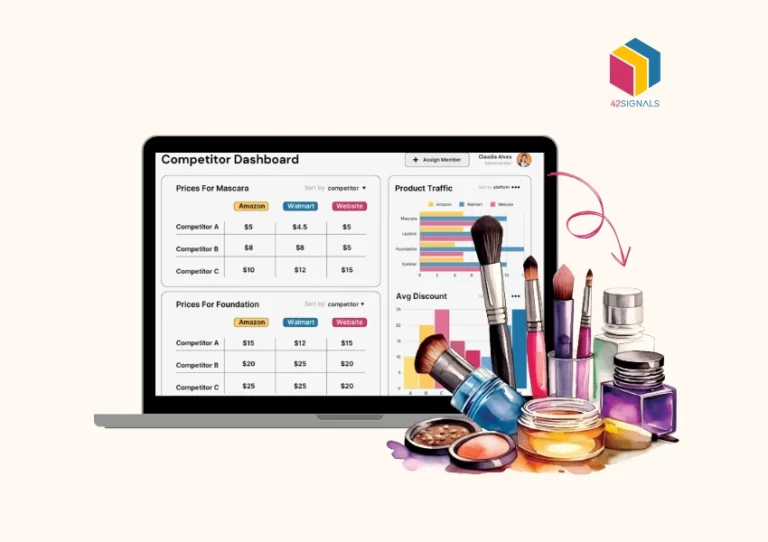
Explore how 42Signals can boost your brand’s esteem with best-in-class Voice of Customer analytics, ultimately sparking significant advancements in customer happiness and dedication.
Frequently Asked Questions on Apple’s Customer Loyalty
Q: What is Apple’s actual customer retention rate?
While Apple doesn’t publish an official corporate rate, independent analysts like CIRP and Bernstein consistently estimate the iPhone retention rate in the U.S. to be between 90-94%.
Q: Does Apple have a traditional loyalty program with points?
No, Apple does not have a points-based loyalty program. Its “loyalty program” is the Apple ecosystem itself. Benefits like seamless integration, exclusive services (iCloud, Apple Music), and prioritized customer service for existing users act as the incentives to stay.
Q: How does Apple build relationships with customers and get feedback?
Apple uses multiple channels for customer relationship building and feedback:
- Direct Support: Genius Bar appointments and support calls.
- Beta Programs: Public beta testing for iOS/macOS, inviting users to preview and report bugs.
- Feedback Assistant: A dedicated app for submitting detailed product feedback.
- Analytics: Aggregated, anonymized usage data from devices (with user consent).
- VoC & Social Listening: Analyzing millions of reviews and social media mentions to gauge broad consumer sentiment.
Q: Why is customer loyalty so important for a company like Apple?
Loyalty provides predictable revenue, reduces customer acquisition costs, and creates a durable competitive moat. For Apple, it specifically:
- Secures a stable base for selling high-margin services.
- Defends against competitors trying to commoditize hardware.
- Turns customers into a powerful, unpaid marketing force through word-of-mouth.
Q: Who are Apple’s primary customer segments?
Apple’s customers span a broad range but can be segmented by behavior:
- Ecosystem Enthusiasts: Highly loyal, own multiple devices, invested in services.
- Aspirational Buyers: Value the brand’s status and design, may start with one product.
- Professionals & Creatives: Rely on specific tools (MacBook Pro, iPad Pro) for work.
- Privacy-Conscious Users: Attracted by Apple’s strong stance on data security.