

Why Quick Commerce Brands Need Pin-Code Level Insights:
Pin-Code Level Insights provide granular, hyper-local data on product demand, sales trends, and consumer behavior at the postal code level, moving far beyond broad city or regional averages. For e-commerce brands, this specificity is crucial for optimizing inventory management, enabling businesses to precisely allocate stock to warehouses closest to high-demand areas, improve demand forecasting accuracy, and tailor marketing campaigns and pricing strategies to specific neighborhoods, ultimately leading to reduced costs, fewer stockouts, and enhanced customer satisfaction.
In an increasingly competitive e-commerce landscape, where consumer preferences shift rapidly and demand can vary significantly from one location to another, businesses must leverage every advantage to stay ahead. One of the most powerful tools in this arsenal is Pin-Code Level Insights.
By providing granular data on product demand and sales trends at the postal code level, businesses can fine-tune their inventory management for e-commerce strategies, ensuring that the right products are available in the right places at the right times.
What are Pin-Code Level Insights?

Image Source: Madras Courier
What Exactly is a PIN Code?
Demystifying the PIN Code: More Than Just a Number
Before diving into analytics, let’s clarify the foundation. A PIN Code, or Postal Index Number, is a unique 6-digit code used by postal services to identify specific geographic regions for efficient mail sorting and delivery.
In the context of e-commerce, a PIN code is the fundamental unit of hyperlocal strategy. It tells a business not just where a customer is, but who that customer is likely to be, based on the demographic and socio-economic patterns of that area.
Why is this simple code so powerful?
- Precision Marketing: Move beyond city-level planning to neighbourhood-level strategy
- Demographic Intelligence: PIN codes often correlate with income levels, lifestyle, and cultural preferences
- Logistical Planning: Essential for determining delivery feasibility, speed, and cost
- Inventory Optimization: Place stock strategically based on hyperlocal demand patterns
At its core, Pin-Code Level Insights refers to the detailed analysis of sales data, consumer preferences, and product demand at the level of individual postal codes. Unlike broader regional or national analyses, this level of insight allows businesses to identify micro-trends and tailor their operations to meet the specific needs of their customers in different locations.
For example, an apparel retailer might discover that certain fashion items are particularly popular in urban areas, while more conservative styles perform better in suburban or rural regions. A cosmetics brand might find that skincare products are in higher demand in regions with harsher climates, while makeup items sell better in warmer areas. These nuanced insights can then inform inventory decisions, marketing strategies, and even product development.
PIN Code Data: What It Is and Where It Comes From
What a PIN code database contains: At a basic level, a PIN code database maps each 6-digit code to a state, district, sub-district, and post office. India Post is the official source and publishes the master database publicly.
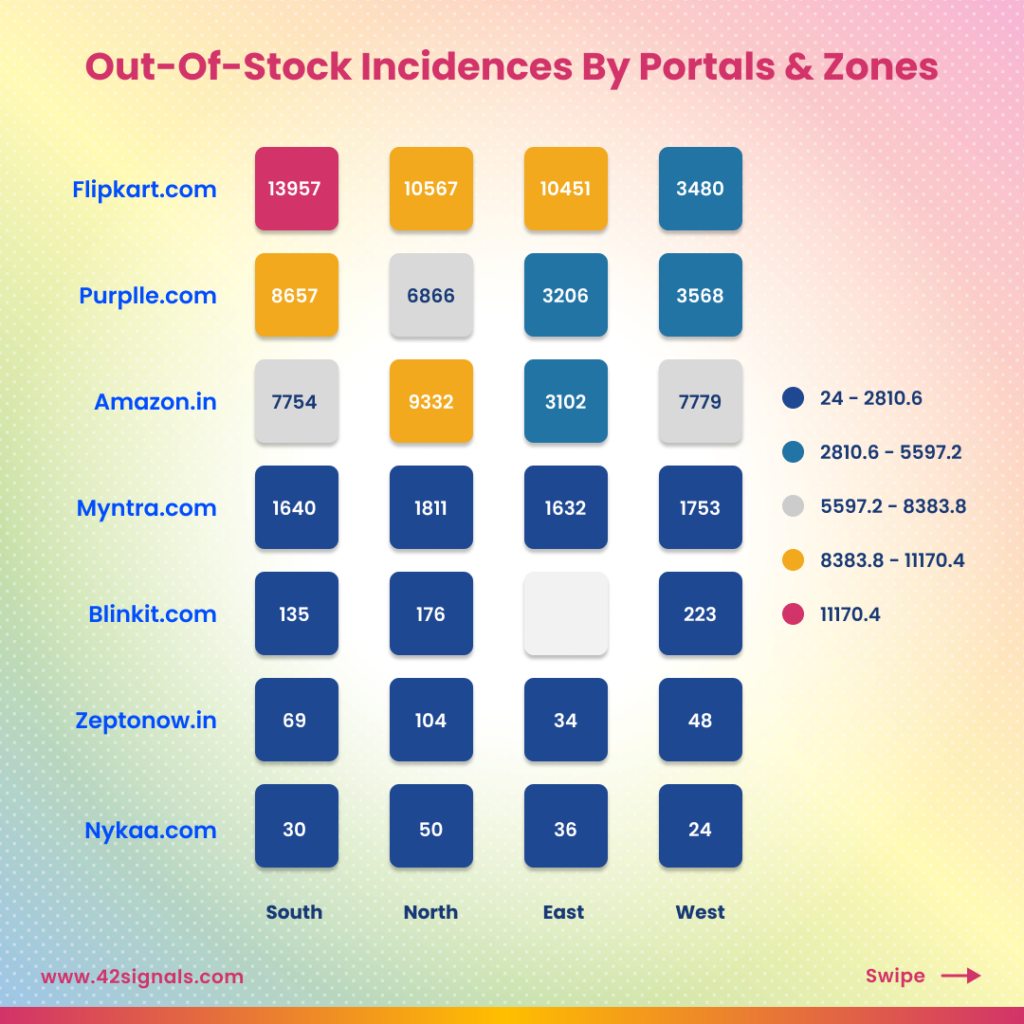
Enriched PIN code data: What 42Signals and similar platforms provide goes beyond the basic geographic mapping. Enriched PIN code data layers on e-commerce sales trends, product demand by category, competitor performance, out-of-stock rates, and consumer behaviour signals — turning a postal code into a market intelligence unit.
PIN code APIs: Several providers offer PIN code lookup APIs that developers can integrate into checkout flows, logistics systems, and ERP platforms. India Post provides a basic API; enriched versions are available through commercial data providers.
In India, PIN codes are allocated and managed by India Post (Department of Posts), under the Ministry of Communications. India Post is the sole authority responsible for assigning new PIN codes and maintaining the official PIN code master database.
The Operational Side: How PIN Codes Drive E-commerce Operations
From Data to Delivery: The Functional Uses of PIN Codes
For e-commerce sellers and platforms, PIN codes are not just for analysis—they are critical for daily operations.
1. Serviceability and Delivery Planning
When a customer enters their PIN code at checkout, the system instantly checks:
- Serviceability: Whether the company delivers to that location.
- Delivery Time: Estimated time based on the nearest warehouse or dark store with dark store analytics.
- Shipping Cost: Calculated based on the distance and logistics network.
2. Seller and Marketplace Management
On platforms like Amazon and Flipkart, sellers define their “Seller PIN Code” or serviceable areas. This determines where their listings are visible and where they can fulfil orders. Strategically selecting high-demand, serviceable PIN codes is a key growth tactic.
3. Inventory Placement
Knowing that PIN codes 400001 (South Mumbai) and 110001 (Central Delhi) have high demand for premium electronics, a seller can pre-position stock in fulfilment centres serving those areas to enable same-day delivery.
How E-Commerce Platforms Use PIN Codes: Serviceability Explained
What serviceability means: When a customer enters their PIN code at checkout on Amazon, Flipkart, Zepto, or JioMart, the platform instantly checks whether the seller or platform delivers to that location, the estimated delivery time from the nearest fulfilment centre or dark store, and the applicable shipping cost. If the PIN code is unserviceable, the product is either hidden or shown as unavailable.
- Flipkart: Sellers on Flipkart define a “serviceable PIN code list” — the set of PIN codes they can fulfil orders to. Expanding this list is a direct growth lever for marketplace sellers.
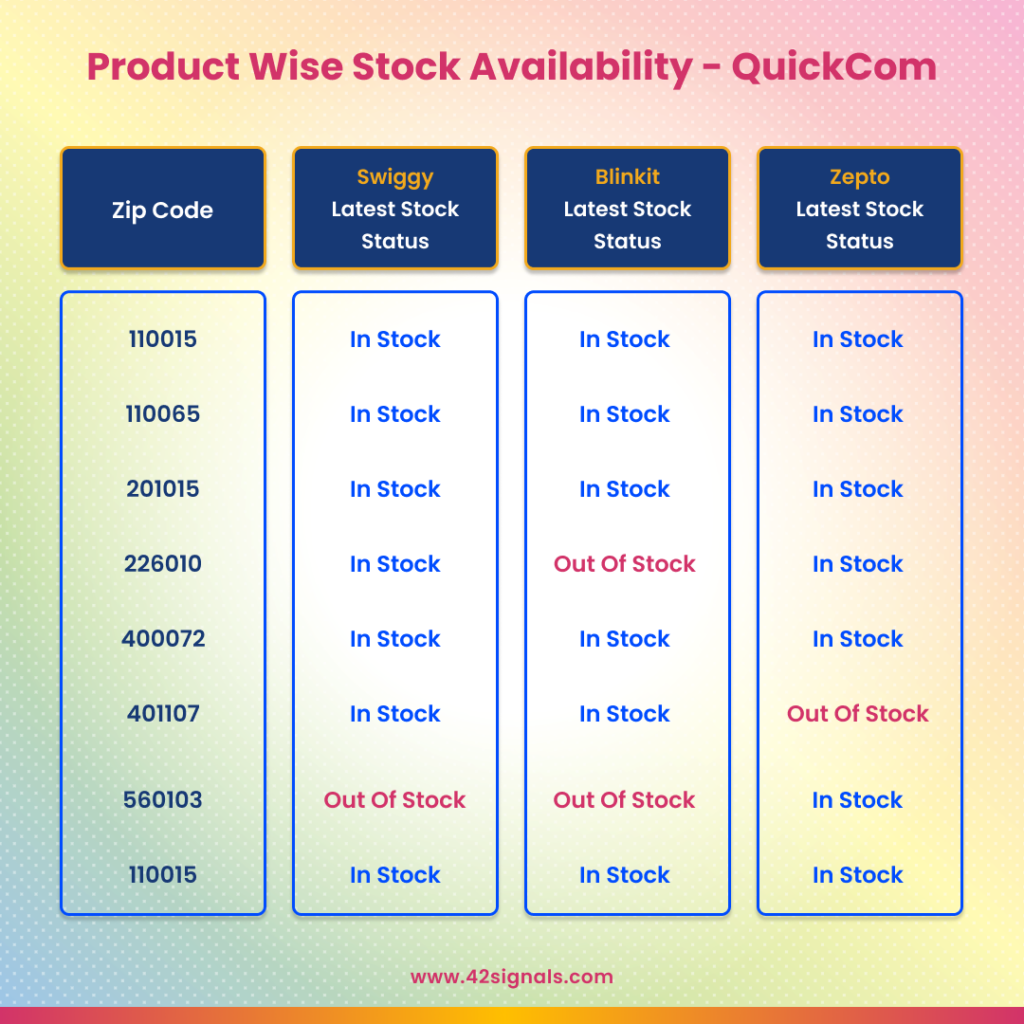
- Zepto / quick commerce: Dark store radius determines serviceable PIN codes in real time. A PIN code that is serviceable today may become unserviceable if a dark store goes out of stock — this is why real-time PIN-code-level data matters for q-commerce brands.
JioMart / hyperlocal platforms: PIN codes determine which local store fulfils the order.
PIN Code Analytics in Action: Real-World Use Cases
Building a PIN Code-Wise E-commerce Store
Imagine a website that personalises based on the user’s PIN code:
- User from 560103 (Whitefield, Bangalore – tech hub): Sees premium laptops, ergonomic chairs
- User from 313001 (Udaipur – tourist destination): Sees traditional crafts, cameras
- User from 110001 (Connaught Place, Delhi – business district): Sees professional attire, productivity tools
Hyperlocal Marketing Campaigns
- Upsell Campaigns: Target high-income PIN codes with premium product lines
- Re-engagement: Focus on PIN codes with high traffic but low conversion
- Competitive Takeover: Identify underserved areas where competitors are weak
District-wise and PIN-code-wise sales reporting
Month-end sales closing reports segmented by PIN code allow operations teams to identify which micro-markets are growing, which are declining, and where to adjust inventory or marketing spend.
Warehouse and logistics planning by PIN code
Mapping order volume by PIN code to fulfilment centre locations reveals whether current warehouse positioning is optimal. For Delhi NCR operations, PIN code-level order density mapping can determine whether a single central warehouse in 110001 (Connaught Place) or distributed dark stores across 110034 (Pitampura), 110092 (Preet Vihar), and 110044 (Badarpur) produces better SLA compliance.
PIN code-level pricing strategy
High-income PIN codes may support premium pricing; price-sensitive PIN codes may require promotional pricing to convert.
Out-of-stock tracking by PIN code
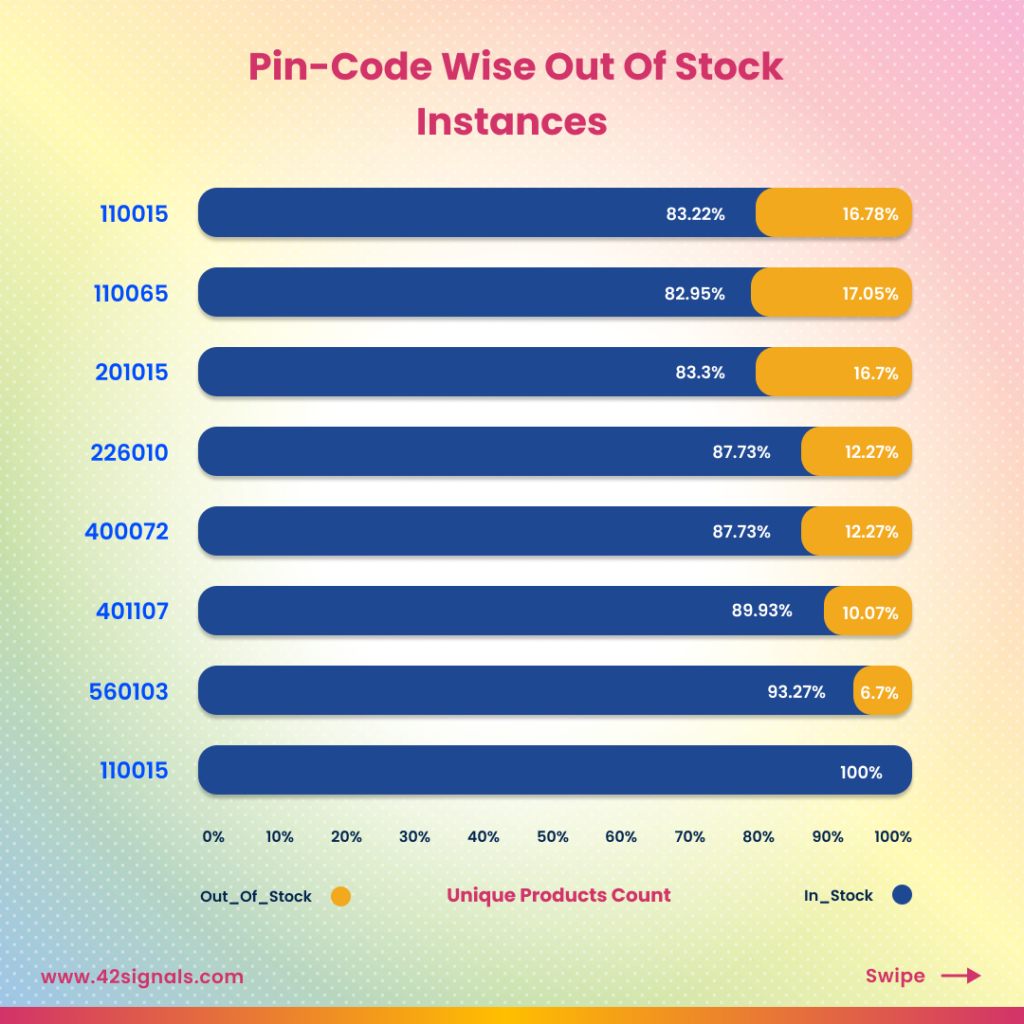
When a product goes out of stock in a specific PIN code cluster, the revenue impact is quantifiable and the restocking priority is clear. Out of stock tracking can help understand and stay on top of inventory issues.
“Selling PIN Codes” – Understanding a Controversial Practice
The Myth and Reality of “Selling PIN Codes”
The search term “selling PIN codes” can be misleading. It generally refers to two distinct practices:
1. Selling Access to PIN Code Databases (The Legitimate Practice)
Companies like 42Signals and others “sell” access to enriched PIN code databases. This isn’t selling the PIN code itself, but rather selling the valuable insights attached to it—data on sales trends, product demand, and consumer behaviour at a hyperlocal level. This is the core of the service your article describes.
2. A Grey-Market Practice (The Illegitimate Practice)
In some contexts, “selling PIN codes” refers to a fraudulent activity where scammers sell:
- Access to bank accounts or OTPs linked to a specific region (PIN code).
- Fake delivery verification methods.
This is an illegal practice and not related to the legitimate use of PIN code data for business intelligence.
PIN Code Strategy for Marketplace Sellers
- Serviceable PIN code selection: Choosing which PIN codes to serve is not just a logistics decision — it is a revenue decision. Sellers who expand into high-demand, under-served PIN codes gain a first-mover advantage before competitors add coverage.
- Demand-led expansion: Use PIN-code-level demand data to identify ZIP codes where search volume and purchase intent is high but current seller coverage is low. These are the highest-ROI expansion targets.
- Competitor PIN code coverage analysis: Tools like 42Signals allow sellers to see which PIN codes competitors are serving with competitor price monitoring and identify gaps — areas where demand exists but the market is underserved.
Origin PIN code: The seller’s warehouse or dispatch location PIN code (origin pincode) determines delivery time estimates shown to customers. Positioning stock in fulfilment centres with origin PIN codes close to high-demand areas reduces delivery time and improves conversion.
Why are Pin-Code Level Insights Necessary for Inventory Management?
Inventory management has always been a balancing act between supply and demand. Too much stock leads to excess inventory costs and potential markdowns, while too little stock results in missed sales opportunities and dissatisfied customers. Pin-Code Level Insights play a crucial role in solving these challenges by providing the following benefits:
Precision in Stock Allocation
With Pin-Code Level Insights, businesses can allocate inventory more precisely, ensuring that each location has optimal stock levels based on local demand. This reduces the risk of stockouts in high-demand areas and overstock in regions where certain products are less popular.
Improved Demand Forecasting
Traditional demand forecasting methods often rely on regional or national averages, which can obscure significant variations in local demand. Pin-Code Level Insights allow businesses to forecast demand with greater accuracy, taking into account the unique preferences and purchasing behaviors of customers in different areas.
Enhanced Customer Experience
By ensuring that popular products are consistently available in the areas where they are most in demand, businesses can improve customer satisfaction and foster loyalty. Customers are more likely to return to a retailer that reliably stocks the products they want.
Cost Efficiency
Effective inventory management is not just about meeting demand; it’s also about controlling costs. By reducing the likelihood of excess inventory and the associated costs of storage, handling, and markdowns, Pin-Code Level Insights help businesses operate more efficiently and profitably.
Competitive PIN Code Analysis
Using tools like 42Signals, track not just your performance but your competitors’ across different PIN codes to:
- Identify their strongholds and weak spots
- Allocate marketing budget more effectively
- Discover untapped market opportunities
Industries Revolutionised by PIN Code Insights
Fashion & Apparel
- Track popularity of styles, colors, and sizes in specific locations
- Example: Winter jackets perform better in northern PIN codes, while lightweight clothing dominates in southern regions
Electronics & Gadgets
- High-end smartphones sell well in affluent urban PIN codes
- Budget models perform better in price-sensitive areas
- Identify tech adoption patterns by neighborhood
Beauty & Cosmetics
- Skincare with high SPF in sunny coastal regions
- Moisturizing products in dry, cold areas
- Luxury beauty in high-income neighborhoods
What Industries Can Benefit from Pin-Code Level Insights?
While Pin-Code Level Insights are particularly valuable in the e-commerce sector, their applications extend across a wide range of industries. Here’s a closer look at how different sectors can benefit:
1. Fashion and Apparel
The fashion industry is characterized by rapidly changing trends and seasonal variations. Pin-Code Level Insights allow retailers to track the popularity of different styles, colors, and sizes in specific locations. For instance, a certain jacket style might be a bestseller in colder regions, while lightweight clothing is more popular in warmer climates. By aligning inventory with these trends, fashion retailers can maximize sales and minimize the risk of unsold stock.
2. Cosmetics and Beauty Products
Consumer preferences in the beauty industry can vary significantly based on factors like climate, culture, and local trends. For example, skincare products with high SPF may be more in demand in sunny regions, while moisturizing products are preferred in colder areas. Pin-Code Level Insights enable beauty brands to stock products that resonate with local consumers, driving sales and improving customer satisfaction.
3. Electronics and Gadgets
The demand for electronics can fluctuate based on factors such as regional income levels, lifestyle, and technological adoption rates. A high-end smartphone might sell well in affluent urban areas, while more budget-friendly models are popular in other regions. By using Pin-Code Level Insights, electronics retailers can tailor their inventory to match the specific needs and purchasing power of customers in different locations.
PIN Code Analytics in Action: Real-World Applications
How to Leverage PIN Code Analytics: A Practical Guide
1. Building a Pincode-Wise E-commerce Store
Imagine an online store that customises its homepage based on the user’s PIN code.
- A user from 560103 (a tech hub in Bangalore) might see premium laptops and ergonomic office chairs.
- A user from 313001 (Udaipur, a tourist destination) might see traditional handicrafts and cameras.
This level of personalisation dramatically increases conversion rates.
2. Pin Code-Level Marketing Campaigns
Run hyper-targeted ads on Google and Meta by uploading customer lists segmented by PIN code. You can create custom audiences for:
- Upsell Campaigns: Target high-income PIN codes with premium product lines.
- Re-engagement Campaigns: Focus on PIN codes with high traffic but low conversion to offer specific discounts.
3. Competitive Analysis by PIN Code
Using a tool like 42Signals, you can track not just your own performance, but your competitors’. Discover which PIN codes are your competitors’ strongholds and where they are underperforming, allowing you to allocate your marketing budget more effectively.
Where Can You Track Pin-Code Level Insights?
To truly harness the power of pin code insights, businesses need advanced analytics tools that can process vast amounts of data and provide actionable insights. This is where 42Signals comes into play.
42Signals offers a comprehensive solution for businesses looking to gain a competitive edge through pin code level Insights. With its robust data analytics platform, 42Signals allows businesses to:
- Monitor Real-Time Sales Trends: 42Signals provides real-time data on what products are selling in specific pin codes, enabling businesses to respond quickly to changes in consumer demand.
- Accurate Demand Forecasting: The platform’s predictive analytics capabilities help businesses forecast future demand at the pin-code level, ensuring that inventory levels are always aligned with market needs.
- Optimize Supply Chain and Distribution: By analyzing location-specific data, 42Signals helps businesses streamline their supply chain operations, reducing transportation costs and improving delivery times.
- Data-Driven Decision Making: 42Signals provides easy-to-use dashboards and visualizations that allow businesses to make informed decisions based on accurate, up-to-date data.
Whether you are a fashion retailer looking to stock the latest trends or a healthcare provider ensuring the availability of essential medications, 42Signals provides the tools you need to succeed.
Conclusion on Pin-code Insights
Pin-Code Level Insights provide the granular data necessary to make informed decisions about inventory management, ensuring that businesses can meet the specific needs of their customers in every location.
With 42Signals’ ecommerce analytics platform, businesses can unlock the full potential of these insights, optimizing their inventory, reducing costs, and enhancing customer satisfaction. In a market where every decision counts, having access to Pin-Code Level Insights through 42Signals can be the difference between thriving and merely surviving. Schedule a demo today!
Frequently Asked Questions on Pin-Code Level Insights
What are “PIN code comments”?
This typically refers to a field in logistics software where a delivery driver can note specific instructions for a location (e.g., “Gate code 3241”, “Call before delivery”). It’s an operational note, not an analytical insight.
What is a “business PIN code”?
This is the PIN code of a company’s registered office or primary warehouse. It’s used for official correspondence and determining tax jurisdictions.
What does “PIN 560103” mean?
This is a specific PIN code for a part of Bangalore, India. In analytics, we would look at the sales data for this specific area to understand the local demand patterns.
What is a PIN code?
A Postal Index Number (PIN) is a 6-digit code that identifies a specific geographic delivery area. In e-commerce, it’s the key to hyperlocal business intelligence, allowing for precise demand forecasting and inventory placement.
What does “selling PIN codes” mean?
Legitimately, it refers to businesses selling access to databases with PIN-code-level insights on sales and demand. Illegitimately, it can refer to fraudulent activities involving bank or verification codes—a practice businesses should avoid.
How do I use a PIN code for my e-commerce business?
Check Serviceability: Use it to define where you can deliver.
Analyze Demand: Use analytics platforms to see what products sell best in which PIN codes.
Personalize Marketing: Create targeted ads and homepage experiences for users from different PIN codes.
Optimize Inventory: Place stock in warehouses closest to high-demand PIN codes for faster, cheaper delivery.
Can I really build a “pincode-wise” e-commerce store?
Yes. With modern analytics and website personalisation tools, you can dynamically change the products, banners, and offers a user sees based on their PIN code, significantly improving relevance and sales.
What is the difference between city-level and PIN-code-level data?
City-level data is like seeing a map of a country. PIN-code-level data is like using Google Street View. It gives you an incredibly detailed, ground-level view of consumer behavior, allowing for precision that city-level data can never provide.
How do I get started with PIN code analytics for my business?
Getting started is a straightforward process:
Data Collection: Begin by aggregating your sales data with customer PIN codes. Most e-commerce platforms and ERP systems can export this information.
PIN Code Enrichment: Use a platform like 42Signals to enrich your raw PIN code data. This attaches crucial demographic, competitive, and market trend information to each code.
Identify Patterns: Analyze the enriched data to identify your top-performing PIN codes, under-served areas, and regional product preferences.
Take Action: Start small by creating targeted marketing campaigns for your top 3-5 high-value PIN codes or adjusting inventory levels for a specific product category that shows strong regional demand.
You don’t need to analyze every PIN code at once. A phased approach, focusing on your most important markets first, allows you to demonstrate ROI quickly and scale your efforts effectively.