

Amazon, the largest online retailer globally, has become the battleground for brands competing to capture the attention and wallets of millions of consumers. Success on Amazon depends on various factors, but pricing strategy sits at the core of most brand efforts. To understand this, let’s jump into Amazon pricing strategy analysis.
As e-commerce continues to evolve, it’s not just about offering the lowest price anymore. Brands now need to navigate complex pricing models, leverage e-commerce data, and adopt dynamic pricing strategies to stay competitive.
Let’s look at how different brands on Amazon are leveraging these tools and technologies to make sales and thrive in the hyper-competitive e-commerce environment.
What is Amazon Pricing Strategy Analysis?
Amazon employs a multi-faceted pricing strategy that combines several approaches to achieve different business objectives:
1. Dynamic Pricing Strategy
Amazon’s most distinctive approach involves changing prices frequently—sometimes every 10 minutes—based on:
- Real-time competitor pricing data
- Demand fluctuations and inventory levels
- Customer browsing and purchase history
- Time of day, seasonality, and market trends
2. Value-Based Pricing for Prime Ecosystem
The Amazon Prime pricing strategy demonstrates value-based pricing at scale. At approximately $139 annually, Prime isn’t priced to maximize immediate profit but to create long-term customer loyalty and increased lifetime value through:
- Free shipping benefits that encourage more frequent purchases
- Access to Prime Video, Music, and other services
- Exclusive deals and early access to sales
3. Penetration Pricing for Market Entry
Amazon often uses penetration price strategy for new products and services. As highlighted in the query about Echo Dot devices: “Amazon sells its latest echo dot smart speakers with alexa digital assistant at a price of under $50. Amazon does not reap big profits from these devices. However, once attracted to Amazon’s IoT platform, customers are more likely to buy additional, more profitable Amazon devices and services.”
This is a classic loss leader strategy designed to:
- Build ecosystem adoption
- Create cross-selling opportunities
- Establish market dominance in emerging categories
What is Dynamic Pricing on Amazon?
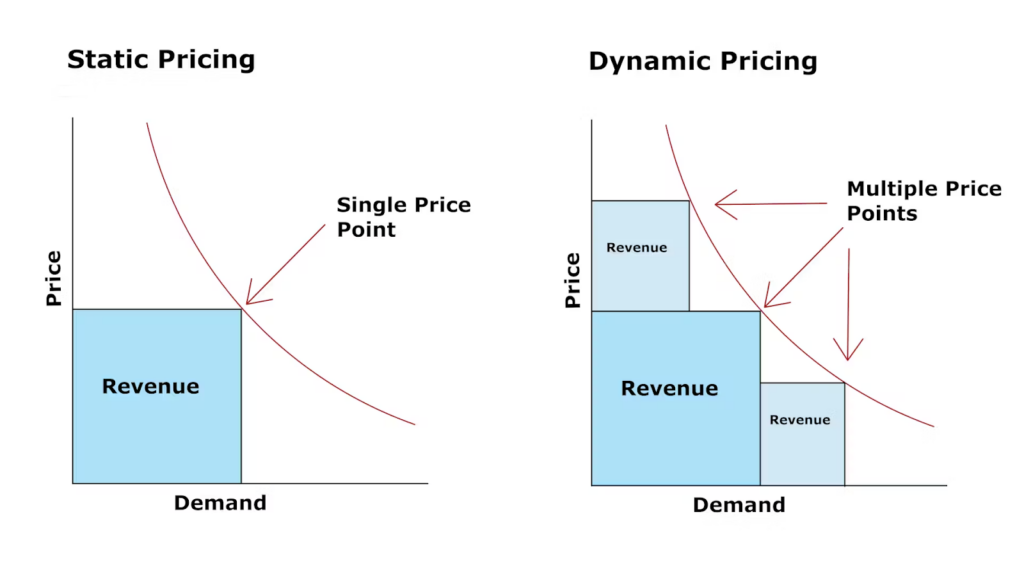
Image Source: Paddle
Dynamic pricing is one of the most effective and widely used tactics on Amazon. This strategy involves adjusting prices in real-time based on market demand, competitor pricing, and other factors.
Amazon itself uses dynamic pricing, frequently changing prices across categories to optimize sales and profits. For brands selling on Amazon, adopting dynamic pricing models has become essential to keep pace.
For example, if a competitor lowers the price of a similar product, a brand using dynamic pricing can automatically reduce its own price to stay competitive.
Conversely, if demand for a product spikes, prices can increase to capture greater revenue. Brands use a combination of e-commerce data, market trends, and real-time analytics to implement dynamic pricing.
Companies like Procter & Gamble and Unilever, which have extensive product ranges on Amazon, use dynamic pricing to ensure their products remain competitive.

Image Source: Advertising Amazon
By analyzing competitors’ prices and fluctuations in demand, these companies can strategically lower or increase prices based on customer behavior, making them more responsive to changes in the e-commerce landscape.
Amazon’s Dynamic Pricing Engine: How It Really Works
The Data Foundation
Amazon’s dynamic pricing strategies are powered by enormous data collection:
- Competitor Monitoring: Tracking prices from thousands of competitors across product categories
- Customer Behavior: Analyzing browsing patterns, wish list additions, and purchase history
- Market Conditions: Incorporating seasonal trends, inventory levels, and promotional calendars
Algorithmic Decision Making
Amazon’s price optimization algorithms consider multiple factors simultaneously:
- Competitive Price Index: How your price compares to key competitors
- Price Elasticity: How sensitive customers are to price changes for each product
- Inventory Velocity: How quickly products are selling and current stock levels
- Customer Segmentation: Different pricing strategies for different customer groups
Amazon Pricing Strategy Analysis
Why Competitive Monitoring is Essential
Amazon competitive pricing isn’t just about matching the lowest price—it’s about strategic positioning. Brands need to understand:
- Price Thresholds: The psychological price points that trigger purchase decisions
- Value Perception: How your brand’s value proposition justifies price premiums
- Competitive Landscape: Who your true competitors are in each product category
Tools for Competitive Price Tracking
Effective Amazon pricing strategy analysis requires the right tools:
- 42Signals: Provides comprehensive competitor tracking and pricing analytics
- Keepa: Tracks historical price data and sales rank
- Jungle Scout: Offers competitor analysis and market intelligence
- Amazon’s Own Tools: Seller Central provides basic competitive data
What Are The Tools for Implementing Dynamic Pricing?
To succeed with dynamic pricing, brands need access to advanced tools that provide real-time insights into competitors’ pricing and consumer behavior.
These tools, often referred to as digital shelf analytics, are crucial for brands trying to maintain a competitive edge on Amazon.
Digital shelf analytics track a variety of metrics, such as price changes, stock levels, customer reviews, and product positioning and is a crucial part of Amazon’s pricing strategy analysis.
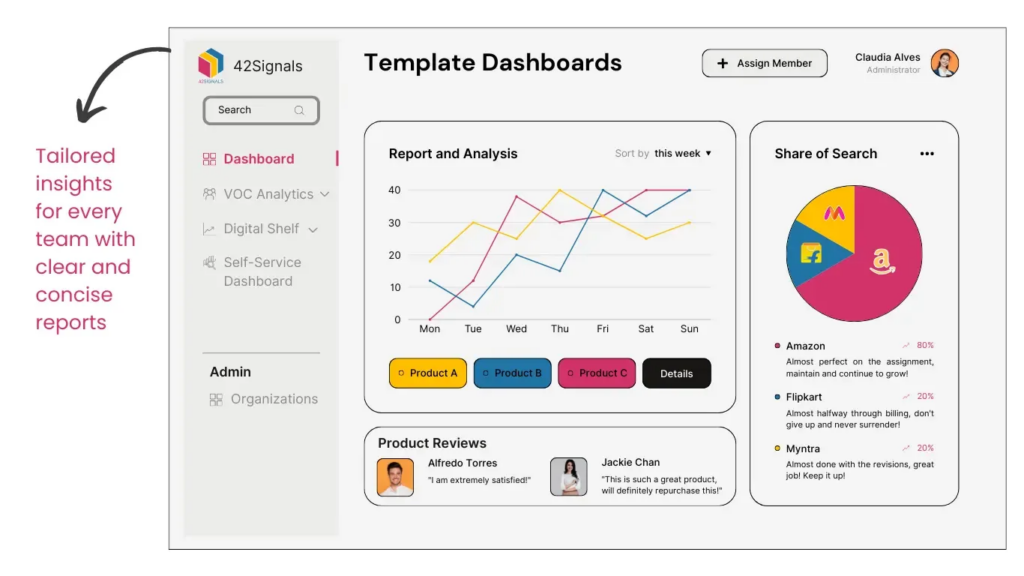
By using this data, brands can make informed decisions about when to adjust their prices and by how much. Tools such as Feedvisor and Pricemoov offer comprehensive solutions that allow brands to gather and interpret this data efficiently.
Advantages of Dynamic Pricing
- Real-time response to market changes: Brands can adjust their prices in response to competitors or changes in demand, ensuring they remain competitive.
- Maximizing revenue opportunities: When demand surges for a product, brands can raise prices to capitalize on the increased interest.
- Increased control over inventory: By dynamically adjusting prices, brands can also manage their inventory levels more effectively. For instance, lowering prices when there’s excess stock can prevent overstocking costs.
How Brands Use E-commerce Data to Make Pricing Decisions?
Pricing on Amazon is no longer just about undercutting the competition. Brands are increasingly leveraging e-commerce data to craft smarter pricing strategies.
E-commerce data is an integral part of the Amazon pricing strategy analysis that provides insights into purchasing behaviors, trends, and competitor actions, enabling brands to adopt more sophisticated pricing models.
Brands like Nike and Adidas, for example, rely heavily on e-commerce data when setting prices for their products on Amazon.
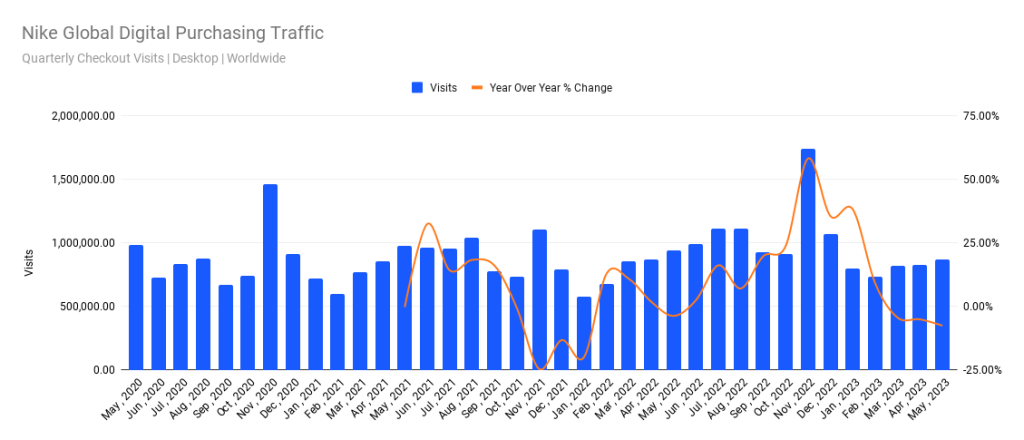
Image Source: Digital Commerce 360
These companies don’t just monitor the competition—they analyze customer behavior and preferences to set their prices at levels that maximize sales and profit margins.
For instance, Nike might use data showing that customers in certain regions are willing to pay more for a particular product, allowing them to adjust prices regionally.
Types of E-commerce Data Brands Are Using for Amazon Pricing Strategy Analysis
- Sales performance data: Understanding how individual products perform across different times, locations, and demographics is crucial. Brands use this data to identify trends and adjust pricing accordingly.
- Competitor pricing data: Keeping tabs on what competitors are charging for similar products helps brands make informed decisions about their own pricing.
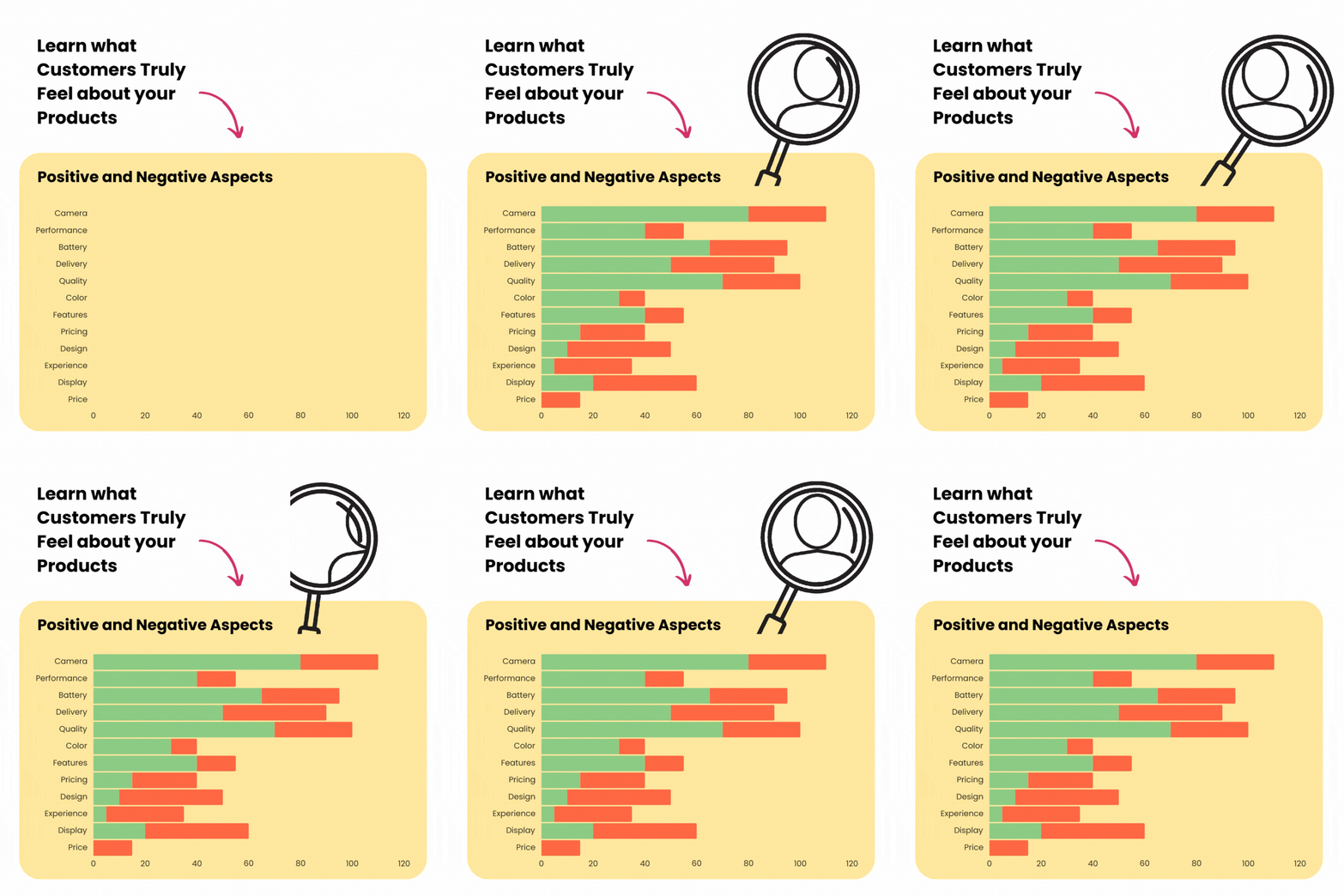
- Customer reviews and ratings: By analyzing customer feedback, brands can make adjustments not just in price but also in product quality and features, ensuring they stay competitive.
Advanced Amazon Pricing Strategy Analysis for Brands
1. MAP Pricing Compliance
MAP pricing on Amazon (Minimum Advertised Price) is crucial for brand protection. Successful implementation requires:
- Clear MAP policies communicated to all resellers
- Consistent enforcement across all distribution channels
- Advanced monitoring to identify violations quickly
- Strategic relationships with authorized sellers
2. Psychological Pricing Optimization
Beyond simple $0.99 endings, sophisticated psychological pricing on Amazon includes:
- Decoy Pricing: Offering multiple variants to make premium options seem more reasonable
- Anchor Pricing: Showing “list price” comparisons to highlight value
- Bundle Pricing: Combining products to obscure individual price perceptions
3. Time-Based Pricing Strategies
Amazon’s variable pricing strategy includes temporal elements:
- Seasonal Adjustments: Price increases during high-demand periods
- Daypart Pricing: Price variations based on time of day shopping patterns
- Event-Based Pricing: Strategic pricing around Prime Day, Black Friday, and other events
The Role of AI in Amazon Pricing Strategy Analysis
Many brands are now incorporating artificial intelligence (AI) to analyze vast amounts of e-commerce data.
AI can process customer buying patterns, predict future trends, and recommend optimal pricing models.
For instance, a company like L’Oreal might use AI-powered tools to forecast demand for a new beauty product and set prices accordingly, maximizing both sales and profitability.
Pricing Models Used by Brands on Amazon
Different brands on Amazon utilize various pricing models to achieve their sales goals. Here are some of the most common pricing strategies and how brands implement them.
1. Penetration Pricing
Penetration pricing involves offering a product at a lower price point to quickly gain market share.

Startups and new brands often use this strategy to attract customers to their listings. The goal is to capture consumer interest by providing an irresistible deal, and then gradually increasing the price once the brand has gained a foothold.
For instance, emerging electronics brands often use penetration pricing to challenge established players like Sony or Samsung. By offering their products at a lower price, they can attract budget-conscious consumers who may later become loyal customers, even if prices rise.
2. Premium Amazon Pricing Strategy Analysis
On the flip side, brands selling luxury or high-end products often use premium pricing strategies.
This involves setting a higher price to create the perception of exclusivity and superior quality.
Many customers associate a higher price with a better product, and brands like Apple and Bose leverage this psychological pricing strategy to maintain their premium brand image.
For these brands, pricing too low could hurt their image, leading to lost sales. By maintaining higher price points, they attract consumers who are willing to pay a premium for what they perceive as superior products.
3. Competitive Pricing
Competitive pricing, where a brand’s price is set in relation to its competitors, is one of the most commonly used pricing models on Amazon.
Brands continuously monitor competitor prices and adjust theirs accordingly to stay competitive.
Companies like Colgate and Crest, for example, are known to employ competitive pricing on Amazon.
These brands consistently keep an eye on each other’s pricing to ensure that their own products are priced in a way that prevents customers from easily switching to a competitor’s product.
4. Psychological Pricing
Psychological pricing involves setting prices that appeal to customers’ emotions rather than logic.
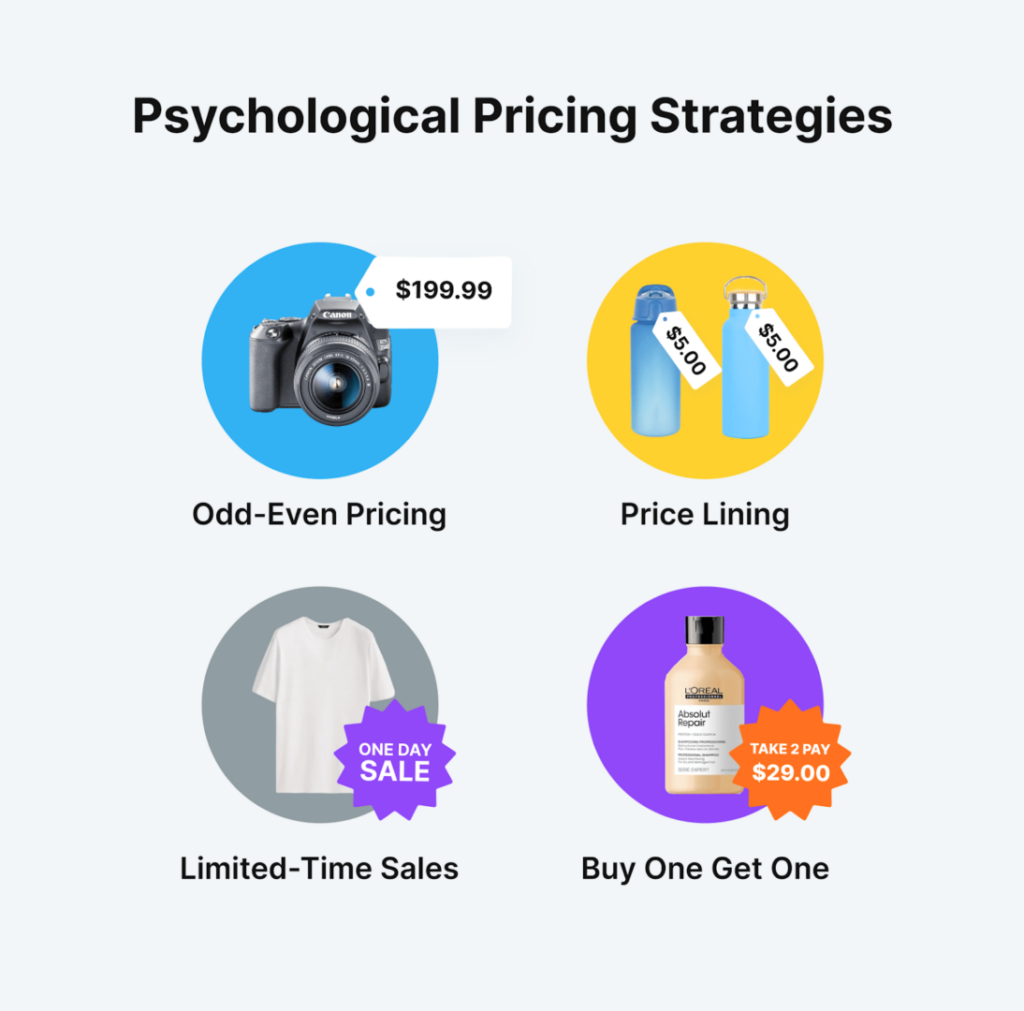
Image Source: Competera
A common tactic is pricing products just below a round number (e.g., $9.99 instead of $10).
While the difference is only a penny, it can make a significant psychological impact on consumers, leading them to perceive the product as being much cheaper.
Brands like AmazonBasics, Amazon’s own private label brand, frequently use psychological pricing tactics to appeal to budget-conscious consumers. Even small price changes can have a big impact on the purchasing decision process.
Amazon Pricing Tools and Technology Stack
Essential Tools for Amazon Price Optimization
- Repricing Software: Tools like Informed.co and RepricerExpress for automated price adjustments
- Competitive Intelligence: Platforms like 42Signals for comprehensive market monitoring
- Profitability Calculators: Tools that factor in FBA fees, advertising costs, and other expenses
- Promotion Management: Systems for optimizing lightning deals and coupon strategies
Building Your Amazon Pricing Technology Stack
A complete Amazon pricing software solution should include:
- Real-time competitor price monitoring
- Historical price trend analysis
- Profit margin calculations
- Inventory and demand forecasting
- Customizable repricing rules
Case Study: How Top Brands Master Amazon Pricing Strategy
Electronics Category: Premium Pricing Strategy
A leading smartphone manufacturer maintains premium pricing through:
- Strong brand equity and customer loyalty
- Limited authorised seller network
- Consistent MAP policy enforcement
- Value-added bundles and accessories
CPG Category: Competitive Pricing Strategy
A major household goods company uses competitive pricing by:
- Monitoring 5 key competitors daily
- Automated repricing within defined margin guardrails
- Strategic couponing during high-competition periods
- Size and bundle variations to avoid direct price comparisons
Private Label Category: Value Pricing Strategy
Amazon’s own brands demonstrate Amazon’s low price strategy through:
- Direct manufacturer relationships eliminate middlemen
- Economy of scale in production and distribution
- Data-driven product selection and pricing
- Prime placement and algorithmic advantages
The Future of Amazon Pricing: 2025 Trends
AI and Machine Learning Evolution
- Predictive Price Optimization: Algorithms that anticipate market movements
- Personalized Pricing: Different prices for different customers based on purchase history
- Cross-Channel Integration: Unified pricing across Amazon, Walmart, and other marketplaces
Regulatory Considerations
- Increased MAP Enforcement Scrutiny: Ensuring compliance without antitrust violations
- Transparency Requirements: More disclosure around pricing algorithms and practices
- International Variations: Different pricing strategies by country and region
Technology Integration
- API-First Solutions: Deeper integration between pricing tools and seller systems
- Real-Time Analytics: Instant insights into pricing performance and opportunities
- Automated Optimization: Hands-off pricing systems with human oversight
Conclusion
Using e-commerce data to inform pricing decisions is essential. Brands must constantly analyze competitors, customer behavior, and market trends.
Pricing models must be aligned with the brand’s overall positioning and goals, whether that’s capturing market share quickly through penetration pricing or maintaining a premium image through higher price points.
The combination of real-time dynamic pricing and a clear understanding of e-commerce tactics can give brands the edge they need to succeed on Amazon.Explore how 42Signals can help you track competitors, monitor market shifts, and fine-tune your pricing models for success. Sign up today!
Frequently Asked Questions on Amazon Pricing Strategy Analysis
What type of pricing strategy is Amazon using with Echo Dot devices?
Amazon uses a loss leader strategy with Echo Dot devices. They sell hardware at or near cost to acquire customers into their ecosystem, then generate profits through:
- Additional device purchases (Ring, Fire TV, etc.)
- Service subscriptions (Prime, Music, Audible)
- E-commerce purchases from locked-in customers
- Voice shopping and Alexa skills ecosystem
How does Amazon’s dynamic pricing affect consumers?
Amazon dynamic pricing creates both benefits and challenges for consumers:
- Benefits: Potential for lower prices during low-demand periods, quick response to competitor discounts
- Challenges: Price confusion, difficulty in price comparison, potential for algorithmic price discrimination
What’s the difference between Amazon’s pricing strategy and Walmart’s?
While both use competitive pricing, key differences include:
- Amazon: More frequent price changes, stronger focus on ecosystem pricing, heavier use of algorithms
- Walmart: More stable pricing, stronger emphasis on everyday low prices, less ecosystem integration
How can small sellers compete with Amazon’s pricing power?
Small sellers can compete through:
- Niche Specialization: Focus on products Amazon doesn’t prioritize
- Value-Added Services: Better customer service, bundled offerings
- Brand Building: Develop loyal customer communities
- Strategic Pricing: Compete on value rather than just price
What tools are best for Amazon price tracking?
The best Amazon pricing tools depend on your needs:
- Comprehensive Analytics: 42Signals for brand protection and market intelligence
- Historical Data: Keepa for price history and sales trends
- Automated Repricing: Informed.co for hands-off price management
- Product Research: Jungle Scout for market opportunity analysis