


Amazon product reviews are a treasure trove of insights that businesses can tap into to understand customer sentiment and behavior. With millions of users providing feedback daily, Amazon product reviews offer direct access to the voice of the customer (VoC).
Analyzing this data is crucial for businesses aiming to improve products, shape marketing strategies, and enhance customer experience. However, the challenge lies in making sense of the vast, often unstructured data.
Let’s look at how to leverage Amazon reviews to uncover customer sentiment effectively.
Why Analyzing Amazon Product Reviews is Essential?

Image Source: Optimal
Understanding customer sentiment through Amazon data is essential because it provides an unfiltered view of how buyers feel about a product.
These reviews contain valuable information—both positive and negative—that reveals product strengths, identifies weaknesses, and offers actionable insights for improvement.
Whether you’re a seller or manufacturer, the ability to listen to your customers and act accordingly can mean the difference between business success and failure.
Moreover, voice of customer analytics has become an integral tool for businesses striving to stay competitive.

Companies need more than just star ratings—they require deeper insights into customers’ thoughts, expectations, and frustrations.
Amazon product reviews offer precisely that, helping businesses keep up with evolving customer preferences.
Key Benefits of Using Amazon Product Reviews for Sentiment Analysis
- Unfiltered Customer Feedback: Amazon reviews are direct, unmediated opinions from actual customers. These reviews provide raw insights into product performance, features, and customer service.
- Beyond Surveys & Focus Groups: Amazon reviews bypass the limitations of structured surveys or moderated focus groups. Customers write spontaneously, often driven by strong positive or negative experiences, capturing raw, visceral reactions that traditional methods might sanitize or miss entirely.
- Authentic Voice & Emotional Language: Reviews are rich with natural language, slang, idioms, and emotional descriptors (“love,” “hate,” “disappointed,” “life-changing”). This provides invaluable context for sentiment analysis models to understand not just what customers feel, but how strongly and why they feel it.
- Holistic View: Feedback covers the entire customer journey – from initial purchase experience and delivery speed, to product unboxing, setup, daily use, durability, and even customer service interactions if issues arise. This offers a 360-degree view of the customer experience.
- Real-Time Data Availability: Reviews are constantly updated, providing fresh data for sentiment analysis that reflects real-time consumer behavior.
- Continuous Feedback Loop: Reviews are posted constantly, creating a live stream of customer sentiment. This enables businesses to monitor reactions to product launches, marketing campaigns, price changes, or competitor actions almost instantaneously.
- Proactive Issue Detection & Crisis Management: Sudden spikes in negative sentiment can serve as early warning systems for product defects, fulfillment problems, or emerging PR crises, allowing companies to react swiftly and mitigate damage before it escalates.
- Measuring Impact: Businesses can track sentiment shifts in near real-time following specific actions (e.g., releasing a software update, changing packaging, launching a new ad) to gauge immediate customer reaction and effectiveness.
- Detailed Product Evaluation: Many reviews go beyond a simple rating by explaining why the customer liked or disliked the product, offering businesses clear directions for improvement.
- Granular Feature-Level Insights: Reviews often dissect products feature-by-feature. Sentiment analysis can pinpoint exactly what aspects drive satisfaction or frustration (e.g., “The camera is amazing, but the battery drains too fast”). This directs R&D and marketing efforts with surgical precision.
- Uncovering the ‘Why’ Behind the Rating: A 3-star rating alone is ambiguous. The accompanying text explains why it’s not 5 stars (e.g., “Great sound, but uncomfortable for long wear”). This qualitative depth transforms a simple metric into actionable intelligence.
- Identifying Use Cases & Context: Reviews reveal how customers actually use the product, often in ways the manufacturer didn’t anticipate. This uncovers new use cases, highlights potential misalignments with target audiences, and informs future product development or marketing messaging.
- Authenticity & Verified Purchase Insights:
- Combating Review Fraud: While not foolproof, the “Verified Purchase” badge significantly increases confidence that the reviewer actually bought and used the product. Sentiment analysis can filter or weight results based on verification status.
- Focusing on Paying Customers: Prioritizing verified reviews ensures insights primarily reflect the sentiment of actual purchasers, whose opinions directly impact sales, retention, and word-of-mouth, rather than casual observers or potentially incentivized reviewers.
- Enhanced Credibility: Using verified data lends greater credibility to the sentiment analysis findings when presented to stakeholders, management, or investors.
What Role Does Customer Sentiment Play in Business Success?
Customer sentiment reflects the emotional tone behind customers’ feedback on Amazon product reviews — whether they feel satisfied, disappointed, or delighted by a product.

Image Source: MonkeyLearn
Businesses can extract actionable insights by studying these emotions, ultimately driving product innovation and improving service delivery.
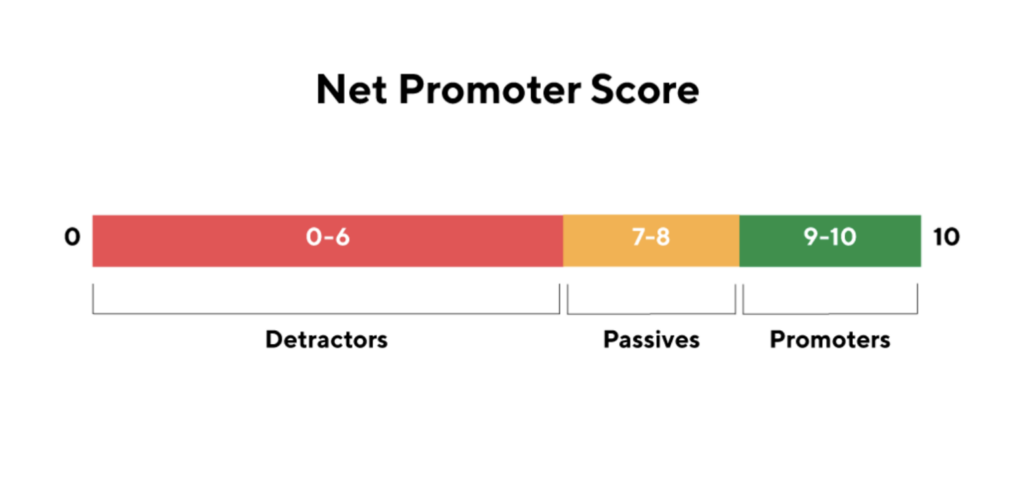
Image Source: Iterable
Analyzing sentiment from Amazon data gives companies a competitive edge in multiple ways:
- Product Improvement: Identify recurring product complaints to make design or feature changes.
- Customer Retention: Detect negative reviews early to respond proactively, preventing churn.
- Marketing Strategies: Use positive feedback in marketing campaigns to highlight product strengths.
- Competitive Analysis: Compare customer sentiment across competing products to understand market dynamics.
How to Perform Sentiment Analysis on Product Reviews: A Step-by-Step Guide
While the concept is powerful, how do you actually implement it? Here’s a breakdown of the process:
- Data Collection: Use APIs or web scraping tools (in compliance with terms of service) to gather large volumes of Amazon reviews, including text, star rating, date, and “Verified Purchase” status.
- Data Cleaning: Prepare the text by removing irrelevant characters, stop words (e.g., “the,” “and”), and standardizing the language.
- Sentiment Scoring: Apply a pre-trained Natural Language Processing (NLP) model to classify the text. This can be:
- Rule-Based: Using a dictionary of positive and negative words.
- Machine Learning-Based: Using models like BERT that understand context (e.g., “This product is sick!” can be positive).
- Aspect-Based Analysis: This advanced technique doesn’t just label a review as “positive.” It identifies specific product aspects (e.g., “battery,” “screen,” “setup”) and assigns sentiment to each. For example, “The battery is terrible, but the screen is amazing.”
- Visualisation & Reporting: The final insights are displayed in an intuitive dashboard, showing sentiment trends over time, top positive/negative aspects, and competitive comparisons.
Paid Amazon Product Reviews: A Double-Edged Sword
Some sellers resort to paid Amazon product reviews to improve their ratings and appear more credible.
While this may seem like a quick way to build social proof, it can backfire if customers detect inauthentic reviews.
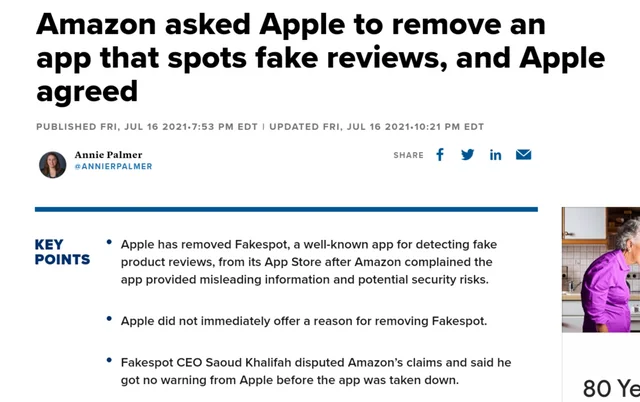
Image Source: Reddit
Not only does it erode trust, but Amazon has also intensified its efforts to crack down on fake reviews, with strict penalties for non-compliance.
That said, genuine product reviews—whether paid or unpaid—still remain a vital part of the purchasing decision process.
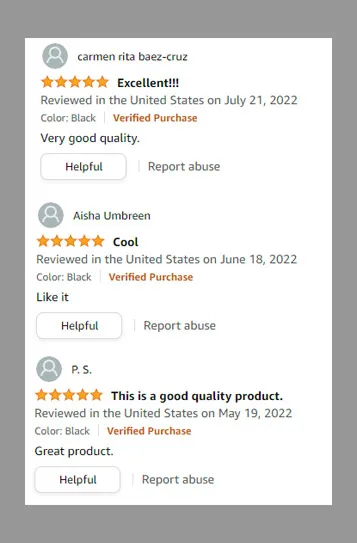
Businesses should focus on building authentic customer relationships rather than manipulating reviews. Incentivizing customers to provide honest feedback, rather than buying reviews, will produce more valuable data for VoC Analytics.
What Are the Methods for Analyzing Amazon Product Reviews?
Using Amazon product reviews effectively requires more than reading a handful of comments.
With the sheer volume of reviews, businesses need scalable strategies to extract meaningful insights.
Here are several approaches to make the most of Amazon data:
1. Text Mining and Natural Language Processing (NLP)
Text mining and NLP tools analyze large datasets, identifying key themes, recurring words, and sentiment patterns. For instance, if “poor battery life” frequently appears in reviews, it signals a specific area requiring improvement.
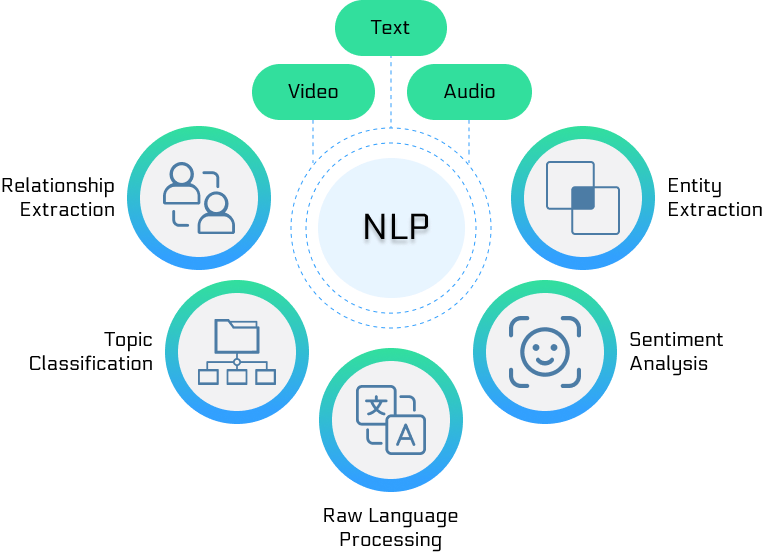
Image Source: Amazinum
NLP can also detect subtle emotional undertones, classifying feedback as positive, neutral, or negative.
2. Sentiment Analysis Algorithms
Sentiment analysis algorithms can automatically assess the emotional polarity of reviews. This approach helps identify trends, such as whether customers are becoming increasingly dissatisfied over time.
By tagging reviews with emotional scores, businesses gain a clearer picture of customer sentiment at scale.
3. Tagging Reviews with Specific Attributes
Tagging Amazon product reviews by product features—such as price, usability, quality, or customer service—enables businesses to focus on relevant aspects.
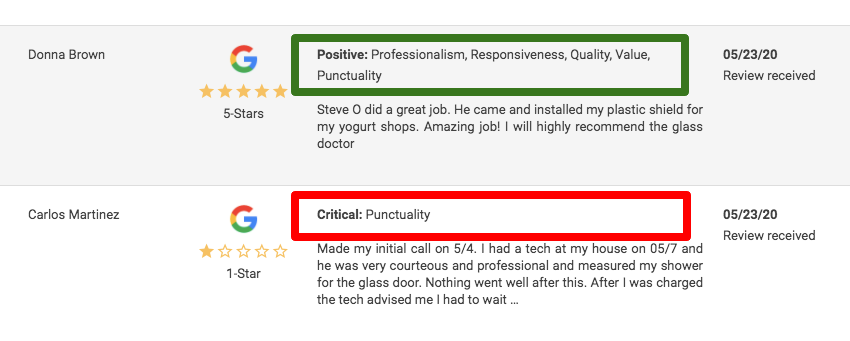
Image Source: Gatherup
For instance, if many customers highlight issues with “shipping speed,” companies can work with logistics partners to address this concern.
4. Manual Review for Deeper Insights
While automation tools provide an overview, manual review of critical feedback is equally important. Teams should investigate negative reviews closely to understand the nuances behind customer complaints.
This process uncovers insights that algorithms may miss, particularly in complex or context-dependent situations.
5. Tracking Review Trends over Time
Monitoring how customer sentiment changes over time allows businesses to assess the impact of product improvements or policy changes.
A surge in negative reviews following a product update, for example, indicates the need for immediate action. Trends also reveal whether competitors are outperforming in certain areas.
Using Sentiment Analysis to Spot and Filter Out Fake Reviews
The scourge of fake and paid reviews can skew your data. Fortunately, sentiment analysis itself can be a powerful tool to detect them. Fake reviews often exhibit distinct patterns:
- Overly Extreme Sentiment: They are disproportionately and generically positive or negative without specific details.
- Lack of Specifics: Genuine reviews often mention specific features, use cases, or minor flaws. Fake reviews are vague.
- Repetitive Language: Bots or paid reviewers often reuse the same phrases across multiple products.
- Unnatural Timing: A sudden spike of 5-star reviews in a short period is a major red flag.
By training your sentiment analysis models to flag these patterns, you can filter out the noise and ensure your insights are based on the authentic voice of the customer.
How Voice of Customer Analytics Complements Review Analysis?
Voice of customer analytics enhances the value of Amazon product reviews by integrating insights from multiple channels, such as social media, customer support interactions, and surveys.
This 360-degree approach provides a holistic view of customer sentiment, helping businesses create a consistent brand experience.
While Amazon reviews are essential, they represent just one part of the customer feedback ecosystem. Integrating Amazon review data with the broader VoC analytics ensures that businesses capture diverse customer perspectives.
For example, if product-related issues emerge in both Amazon reviews and customer service logs, the problem is likely significant and requires immediate attention.
Practical Tips for Leveraging Customer Sentiment from Amazon Reviews
To make the most of Amazon product reviews, consider the following best practices:
- Encourage Honest Reviews: Request feedback from customers organically without resorting to paid reviews. Offering incentives like discounts on future purchases in exchange for reviews can boost engagement.
- Respond to Negative Feedback Promptly: Addressing customer complaints in reviews demonstrates accountability and improves brand reputation. Publicly resolving issues can also influence potential buyers.
- Use Review Insights to Shape Product Development: If customers frequently mention a missing feature, consider incorporating it in the next product iteration. Customer sentiment data is invaluable for refining product design.
- Spot Trends and Act Fast: Regularly monitor sentiment trends and act on feedback quickly to stay ahead of competitors. Early detection of negative sentiment prevents larger crises from unfolding.
- Validate Data with Other Sources: Use Amazon reviews in conjunction with other data sources—like market research or customer support analytics—for a well-rounded understanding of customer sentiment.
Beyond Amazon: Integrating Reviews with Social Media Sentiment
Amazon reviews are critical, but they are only one part of the conversation. To get a true measure of your brand perception, you must also listen to social media.
A product might have glowing reviews on Amazon, but if there’s a viral complaint on Twitter about its durability or a negative unboxing video on TikTok, your overall brand sentiment is taking a hit. By integrating Amazon review analysis with social media sentiment tracking, you gain a 360-degree view. This allows you to:
- Catch emerging PR crises before they impact your sales.
- Understand the difference between the sentiment of buyers (Amazon) and the wider public (social media).
- Run coordinated campaigns, using positive review highlights to counter negative social narratives.
The Impact of Customer Sentiment on Business Growth
Businesses that actively listen to their customers through Amazon reviews often enjoy higher customer satisfaction and loyalty.
When customers see that companies act on their feedback, they develop greater trust and become brand advocates.
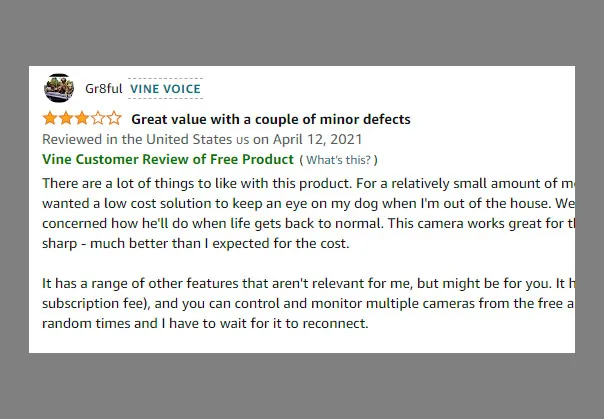
Image Source: Wired
Positive customer sentiment also translates into improved sales, as potential buyers rely heavily on product reviews when making purchasing decisions.
Moreover, companies that effectively utilize customer sentiment to enhance product quality and customer experience gain a distinct competitive advantage. In today’s marketplace, being reactive is no longer enough—businesses must proactively seek out opportunities to improve, based on insights derived from customer reviews.
From Data to Action: A Real-World Case Study
Let’s make this concrete. Imagine a company like Quicken (a budgeting software) analyzing its reviews.
A simple sentiment analysis might show 80% positive reviews. But aspect-based sentiment analysis reveals a more nuanced story:
- Positive Aspect: “Budgeting accuracy” is praised in 45% of positive reviews.
- Negative Aspect: “Steep learning curve” is mentioned in 30% of negative reviews.
The Actionable Insights:
- Marketing: The marketing team can create ads and product pages that lead with the message: “Loved for its unparalleled budgeting accuracy,” directly quoting their customers.
- Product Development: The development team can prioritize creating interactive tutorials or a simplified onboarding flow to address the “steep learning curve.”
This is the power of moving from generic sentiment to specific, actionable product review analytics.
Automating Your Analysis: The Role of Tracking and Monitoring Tools
Manually analyzing thousands of reviews is impossible. To leverage these insights at scale, businesses turn to automated Amazon review monitoring tools and dashboards. These platforms:
- Continuously Track Reviews: They automatically collect new reviews for your products and your competitors’ products 24/7.
- Provide Real-Time Alerts: You get instant notifications for sudden drops in rating or spikes in negative sentiment.
- Offer Competitor Benchmarking: Track not just your sentiment, but how it compares to your main rivals over time.
- Integrate Data: Combine review data with other key metrics like pricing, availability, and search rank for a complete competitive picture.
Conclusion
Amazon product reviews provide businesses with a powerful window into customer sentiment, offering direct feedback on product performance and customer satisfaction.
However, businesses must focus on authenticity and transparency when collecting customer feedback. Relying on paid Amazon product reviews may offer short-term benefits but undermine trust in the long run.
Instead, companies should encourage genuine reviews and use the insights to make changes.
If you are curious to see Voice of Customer in action, schedule a demo with our experts today.
Frequently Asked Questions
- What is meant by customer sentiment?
Customer sentiment refers to the attitudes, emotions, and opinions that customers express about a brand, product, or service. It is commonly measured through customer feedback, reviews, surveys, and social media interactions to understand how customers feel about their experience. - What is consumer sentiment?
Consumer sentiment is a broader economic indicator that measures the overall confidence and outlook of consumers towards the economy, spending, and purchasing power. It is influenced by factors like inflation, employment rates, and financial stability.- Example: The University of Michigan Consumer Sentiment Index (UMCSI) tracks how optimistic or pessimistic consumers feel about the economy.
- What is an example of a sentiment?
Example 1 – Positive Sentiment:- “I love the fast shipping and customer service from this brand!”
Example 2 – Neutral Sentiment: - “The product is okay, but I expected better quality for the price.”
Example 3 – Negative Sentiment: - “Horrible experience! The item arrived damaged, and customer support was unhelpful.”
- “I love the fast shipping and customer service from this brand!”
- What are the different types of customer sentiment?
Customer sentiment is typically categorized into three main types:- Positive Sentiment – Happy customers who leave great reviews, refer others, and engage positively.
- Neutral Sentiment – Customers with mixed feelings who may need additional engagement.
- Negative Sentiment – Dissatisfied customers who may express complaints or frustrations.
- Emotional Sentiment – Driven by feelings like excitement, disappointment, trust, or frustration.
- Contextual Sentiment – Sentiment derived from specific experiences, such as product reviews, social media posts, or customer support interactions.
- How do businesses measure customer sentiment?
- Sentiment Analysis Tools – AI-driven tools like Brandwatch, Lexalytics, and MonkeyLearn analyze text sentiment from reviews and social media.
- Net Promoter Score (NPS) – Measures customer loyalty based on feedback ratings.
- Customer Surveys & Feedback Forms – Collects direct input from customers.
- Why is customer sentiment analysis important?
- Helps businesses improve customer experience.
- Identifies brand perception trends.
- Aids in crisis management by detecting negative sentiment early.
- Enhances marketing & product development strategies.