

** TL;DR ** Choosing between 42Signals and Dataweave comes down to your business focus and team. Dataweave is a robust, enterprise-grade platform ideal for large omnichannel brands that need deep analytics across both online and physical retail, while 42Signals is a more agile, user-friendly alternative built specifically for e-commerce and digital shelf analytics, favoring speed and actionable insights. Your best move is to test each with a real pricing challenge to see which tool fits your workflow and delivers the clearest competitive advantage.
Setting prices can be complicated. You’re trying to stay competitive, protect your margins, and not scare customers away. It’s a tough balance. This is where a good pricing intelligence tool becomes your secret weapon, shedding light on what everyone else is doing. If you’re looking at options, two platforms likely popped up: 42Signals and Dataweave.
Choosing an option for your brand means figuring out which partner fits your company’s size, style, and specific challenges. Let’s look at features, pricing models, and what real users say, so you can make a confident choice.
Before 42Signals or Dataweave, What Exactly is Pricing Intelligence?
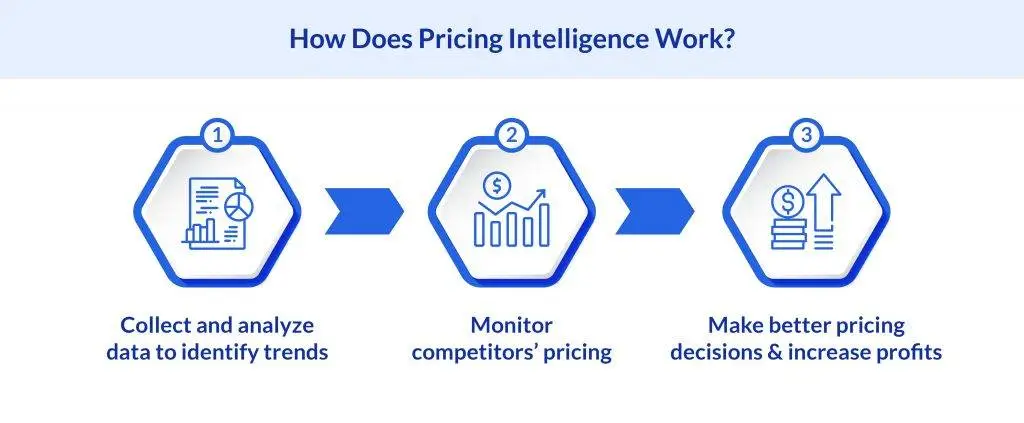
Image Source: Flipkart Commerce Cloud
First, a quick level-set. Pricing intelligence is more than just checking a competitor’s website every Tuesday. It’s the systematic process of gathering and analyzing data on how products are priced and promoted across the market. Modern pricing intelligence software tracks prices, stock status, and promotions across hundreds of retailers and marketplaces, turning a mountain of data into clear, actionable insights on your dashboard.
Why does this matter? Because data-driven pricing decisions can directly boost your bottom line. Research from Harvard Business Review suggests companies using analytics for pricing can improve profitability by 2-7%. Both 42Signals and Dataweave deliver on this core promise, but they go about it in different ways.
Meet the Players: 42Signals and Dataweave
Dataweave is a familiar name in the competitive intelligence space. They offer a robust, enterprise-grade platform known for deep data coverage, especially for brands that operate both online and in physical retail stores. Their strength lies in comprehensive market analytics that go beyond just price tags.
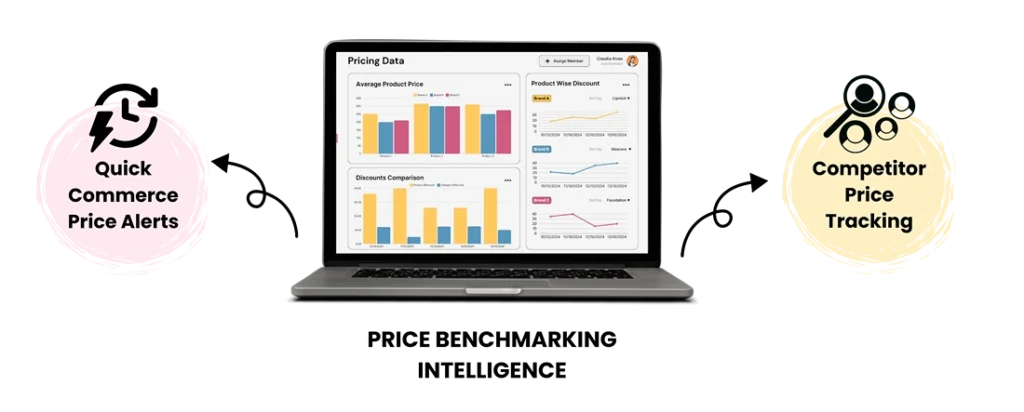
42Signals comes in with a focused approach, primarily serving e-commerce brands and online sellers. Their platform is built to be agile and user-friendly, concentrating on digital shelf analytics and pricing intelligence software that teams can act on quickly. Many see them as a nimble and specialized Dataweave alternative.
Breaking Down the Features: Where They Shine
This is the heart of any feature comparison. Let’s see how each platform handles the key jobs you need done.
Data Coverage: Where Do They Look?
A tool is only as good as the data it collects. Dataweave casts a wide net, with extensive global coverage across thousands of online and offline retailers. This omnichannel focus is a major plus if you need to track big-box stores as closely as Amazon.
42Signals also provides strong coverage, with a laser focus on key e-commerce channels, marketplaces, and direct-to-consumer sites. Their emphasis is on high-accuracy, real-time data for the digital world where prices change fast. Your choice here depends on your sales landscape. Is it the entire retail universe, or specifically the online arena?
Dashboards and Usability: Can Your Team Actually Use It?
Powerful data means nothing if your team finds the dashboard confusing. Dataweave provides deep, powerful analytics suited for data analysts or dedicated insights managers who need to run complex reports and models.
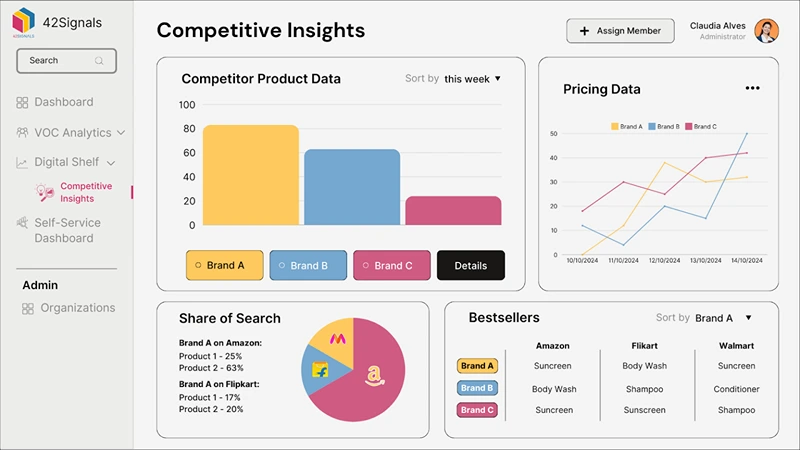
42Signals typically offers a cleaner, more intuitive interface designed for quicker decision-making. The idea is that a product manager or marketing lead should be able to log in, see a price positioning graph or a stock-out alert, and know what to do next without a training manual. It’s about cutting the time from insight to action.
Tracking and Alerts: Your Daily Radar
This is the core of any competitor analysis tool. Both platforms let you track competitors and products. Dataweave provides strong, customizable alerts for price changes, new product listings, and promotional activity.
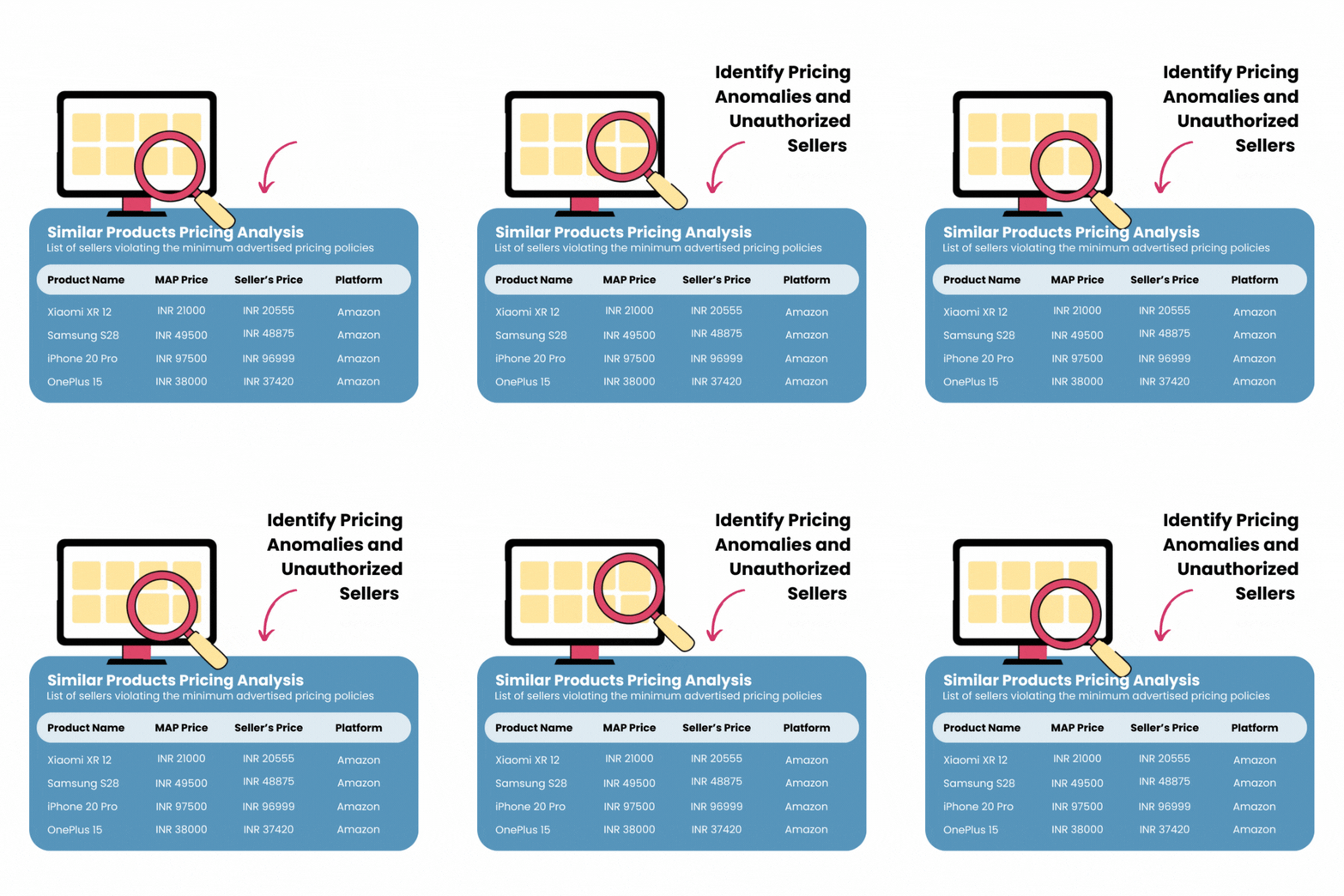
42Signals also excels here, allowing you to set smart price alerts for very specific events—like if your competitor’s product drops prices on a major marketplace, or if a key rival launches a flash sale, or if any of your products have a MAP violation. It’s designed to be your early warning system for the digital shelf.
Ready to Take the Next Step?
See how our solutions can help you achieve your goals and drive measurable results.
Talking About Money: Pricing and Plans
Alright, let’s discuss budget. Both companies generally use custom pricing based on your needs, so you’ll need to talk to their sales teams for an exact quote. However, their pricing philosophies reflect their overall approach.
Dataweave operates at the enterprise level. Investment is geared towards larger organizations that will use the full breadth of their extensive data suite. You’re paying for depth, scale, and comprehensive market visibility.
42Signals often uses a more modular and scalable structure. You might start with a core pricing module and add on specific capabilities as you grow. This can be attractive for mid-market companies or e-commerce brands that want a direct path to value without overbuying on features they won’t use. When comparing, think about the specific tools your team needs daily versus a broad suite of possibilities.
Hearing from Users: Reviews and Reputation
What’s the day-to-day experience like? For that, we turn to user feedback on sites like G2 Crowd. Looking at reviews on G2 Crowd for both platforms paints a helpful picture.
Dataweave reviews frequently commend its data comprehensiveness and analytical power for complex businesses. Some users note there can be a learning curve, affirming its fit for teams with dedicated analytical resources.
42Signals reviews often highlight ease of use, fast implementation, and responsive customer support. Users tend to describe it as a partner that’s easy to work with and quick to deliver focused insights for online competition.
The key is to read these reviews through the lens of your own company. A downside for a massive global brand might be a non-issue for a growing online business.
Making the Call: Which One Fits Your Team? 42Signals or Dataweave
So, how do you decide? Here’s a simple framework to guide your thinking.
Lean towards 42Signals if:

- Your business lives and breathes online (DTC site, Amazon, other marketplaces).
- You want quick alerts on products and understand your quick commerce presence.
- You want a tool that various team members can use without extensive training.
- You prefer a straightforward, scalable approach to pricing intelligence software.
- You value a partner-like relationship with accessible support.
Lean towards Dataweave if:
- You have a significant brick-and-mortar presence and need to track in-store pricing.
- You have a dedicated insights or analytics team to dive into deep data.
- Your competitive intelligence needs extend beyond price into assortment and promotion.
- Your organization is ready for an enterprise-level platform and investment.
Ready to Take the Next Step?
See how our solutions can help you achieve your goals and drive measurable results.
The Human Factor: Support and Setup
Remember, you’re not just buying software—you’re integrating a new system. Ask both companies about their onboarding process. How long does it take to get up and running? What does customer support look like after the sale? A tool that’s difficult to implement won’t deliver value, no matter how impressive its feature comparison sheet is.
Key Takeaways: Choosing Your Pricing Intelligence Partner
Before you dive into demos and sales calls, here are the core insights to keep in mind from our feature comparison between 42Signals and Dataweave.
1. It’s About Your Primary Sales Channel.
Your decision largely hinges on where you do business. If your battle is overwhelmingly on the digital shelf—your website, Amazon, and other online marketplaces—42Signals is built for that world. If you need to track pricing across major brick-and-mortar retailers in addition to online, Dataweave’s omnichannel strength is a significant advantage.
2. Consider Your Team’ Expertise and Workflow.
Think about who will use the tool daily. Dataweave offers powerful analytics that can unlock tremendous value, but it often works best with a dedicated analyst or insights team to manage its depth. 42Signals prioritizes a user-friendly dashboard that marketers, product managers, and sales leads can navigate quickly to get answers without a steep learning curve.
3. Align Investment with Expected Value.
Pricing is custom, but the models differ. Dataweave is an enterprise-level investment for companies that will use its full suite of competitive intelligence. 42Signals often provides a more modular path, allowing you to start with core pricing intelligence software and scale. The best value comes from paying for the features your team will actively use.
4. The Best Test is a Real-World Demo.
Ultimately, reviews and feature comparison charts only go so far. The most revealing step is to present each platform with a current, specific pricing challenge you’re facing. Watching how they surface insights and guide you to a decision will tell you more than any spec sheet. The right partner feels like a natural extension of your team.
Ready to Take the Next Step?
See how our solutions can help you achieve your goals and drive measurable results.
Wrapping It Up: Your Partner in Pricing
In the matchup between 42Signals and Dataweave, there’s no universal winner. There’s only the best fit for you. Dataweave stands out as the extensive, enterprise solution for omnichannel giants. As a focused Dataweave alternative, 42Signals shines as an agile, e-commerce specialist built for speed and action.
Your best move now is to get a hands-on demo. Give each platform a real problem you’re currently facing. See how they present the data and what insights they surface.
If you’re curious about 42Signals and want to see how our platform data can help you, schedule a personalized demo with us today.
Frequently Asked Questions
1. What is pricing data?
Pricing data is the structured information that shows how much products or services are being sold for across different channels, locations, and time periods. It includes list prices, discounted prices, promotional offers, competitor prices, and historical price changes.
Businesses use pricing data to track market movements, optimize margins, monitor competitors, and adjust prices based on demand and inventory.
2. What is the meaning of price data?
Price data simply means recorded information about the selling price of a product or service at a specific point in time. This data may include:
Base price
Sale price
Bundle price
Regional price differences
Channel-wise pricing (website, marketplace, store)
Price data becomes especially powerful when analyzed over time to understand trends, seasonality, and competitor behavior.
3. What are the 4 types of pricing?
The four widely used pricing types across industries are:
Cost-Based Pricing – Prices are set by adding a profit margin on top of total costs.
Value-Based Pricing – Prices are determined by how much customers believe the product is worth.
Competition-Based Pricing – Prices are set based on what competitors charge.
Dynamic Pricing – Prices change in real time based on demand, inventory, or market conditions.
Each pricing type fits different business models and market environments.
4. What are the 4 types of data types?
The four fundamental types of data used in analytics and research are:
Nominal Data – Categories with no specific order (e.g., brand names, colors).
Ordinal Data – Categories with a logical order but no fixed difference (e.g., ratings like low, medium, high).
Interval Data – Numerical values with equal intervals but no true zero (e.g., temperature in Celsius).
Ratio Data – Numerical values with equal intervals and a true zero (e.g., price, weight, sales revenue).
These data types determine how information can be analyzed and interpreted.
5. How does pricing analytics improve profit margins?
Pricing analytics improves profit margins by identifying where revenue is being lost due to underpricing, excessive discounting, or poor price positioning. It highlights:
Products that are priced too low despite strong demand
Discounts that reduce profit without increasing volume
High-demand items that can support price increases
By aligning price with customer value perception and market demand, companies increase gross margin without reducing sales volume. Over time, this creates sustainable profitability instead of short-term revenue spikes.
6. What industries benefit most from pricing analytics?
Industries that experience frequent price changes and high competition benefit the most, including:
E-commerce and marketplaces
Consumer packaged goods (CPG)
Electronics and appliances
Travel and hospitality
Quick commerce and grocery
Airlines and ticketing
SaaS and subscriptions
These industries operate in environments where price visibility is high and switching costs are low, making pricing analytics essential for survival and growth.