
** TL;DR ** Economy pricing is a rigorous business strategy focused on becoming the market’s low-cost leader by offering minimal, no-frills products at the lowest sustainable price, targeting price-sensitive consumers. While it can drive high sales volume and create strong competitive barriers through operational efficiency, it also carries significant risks like perpetually thin profit margins, vulnerability to cost fluctuations, and cementing a brand identity that is difficult to evolve beyond being “cheap.” Successfully adopting this model is not a simple tactical discount but requires a fundamental structural advantage, extreme operational excellence, and a target market that prioritizes cost above all other factors, making it a high-stakes strategy that is only suitable for a specific type of business.
We are navigating a unique period of global economic uncertainty. Inflationary pressures have seeped into every facet of commerce, fundamentally reshaping how consumers approach their purchasing decisions. Where brand loyalty once reigned supreme, pragmatic cost-consciousness is now often the order of the day. This shift presents both a formidable challenge and a potential opportunity for businesses across the spectrum. For leaders and strategists, the critical question becomes: how do we adapt our value proposition to remain relevant, competitive, and profitable in this new environment? One approach that demands serious consideration is the economy pricing model.
It’s a term often mentioned in boardrooms and marketing meetings, but it is frequently misunderstood. Adopting a genuine economy pricing strategy is not a simple tactical discount or a short-term promotional gambit. It represents a fundamental, all-encompassing business philosophy centered on operational supremacy and minimalist value delivery. It is a rigorous, operationally intensive strategy that demands specific, ingrained organizational capabilities.
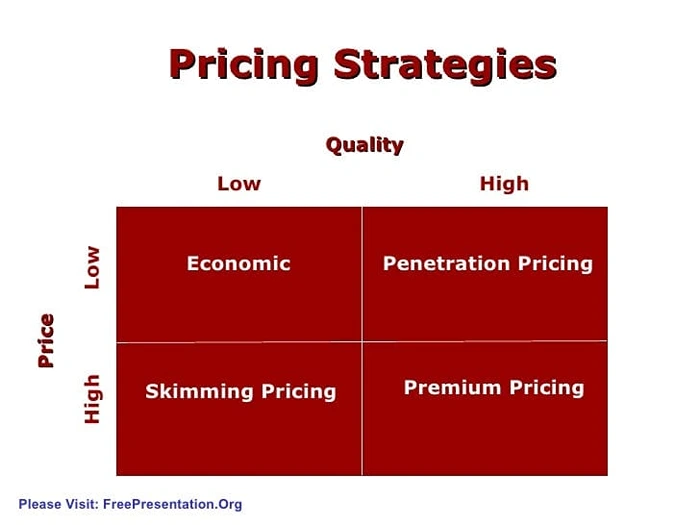
Defining Economy Pricing: Core Principles and Differentiation
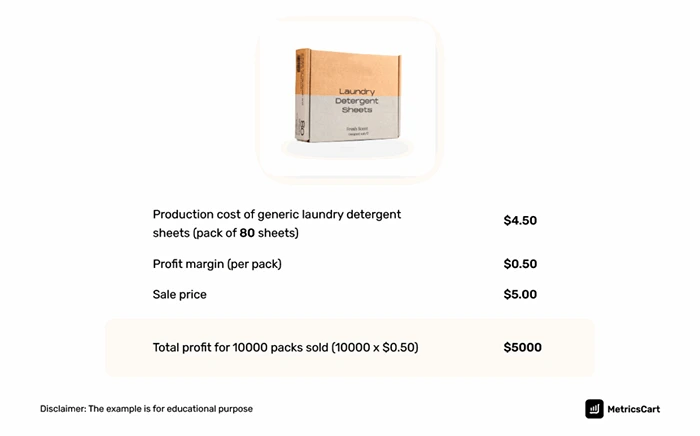
Image Source: Metrics Cart
To understand where economy pricing fits, we must first define it with precision. At its heart, economy pricing is a strategic approach wherein a company intentionally sets prices at a minimum viable level to secure a slim but sustainable profit margin.
The primary lever for competition is cost leadership, not feature differentiation or brand prestige. The overarching objective is to achieve deep market penetration and secure profitability through immense, volume-driven scale, specifically by targeting the vast segment of price-sensitive consumers.
This model is almost synonymous with the concept of no-frills pricing. The product or service offered under this banner is functionally austere. It is deliberately stripped of any features, embellishments, or services that are not absolutely essential to its primary utility. The value proposition is intentionally unambiguous and powerful: the customer receives maximum core utility at the industry’s lowest possible price point.
It is crucial to recognize this as a long-term positioning strategy. This distinguishes it sharply from penetration pricing, which is a more tactical, short-term maneuver. Penetration pricing uses low prices as a temporary loss-leader to gain initial market foothold and customer awareness, with the explicit intention of raising prices later. Economy pricing, by contrast, is the final destination; the low price is the permanent identity.
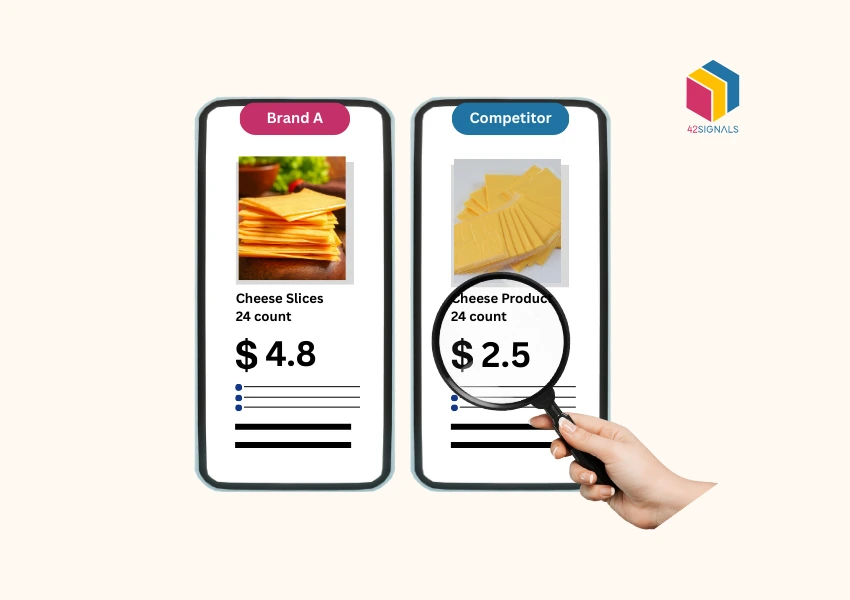
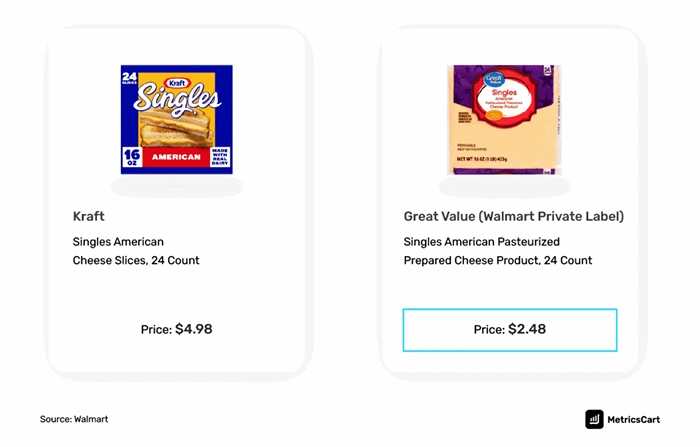
A clear, tangible example is found in the generic consumer goods sector. Consider a store-brand staple product, toilet paper, canned vegetables, or pasta. It is offered in minimalist, often outright plain packaging and is consistently priced 20-40% below its branded competitors on the same shelf.
Both products fulfill the same basic function, but one competes on cultivated brand equity and marketing allure, while the other competes purely on ruthless price efficiency and the trust of the retailer’s name. This is economy pricing in its pure, undiluted form.
Ready to Take the Next Step?
See how our solutions can help you achieve your goals and drive measurable results.
The Strategic Advantages of a Low-Price Model
When executed by a suitably equipped organization—one with the right infrastructure, culture, and cost structure—an economy pricing strategy can unlock formidable and durable competitive advantages that are difficult for competitors to assail.
1. Access to a Substantial and Growing Market Segment
A significant and often fluctuating proportion of consumers, particularly during periods of economic constraint, base their purchasing decisions primarily on cost. This isn’t a niche group; it can represent a majority of the market during a downturn.
A McKinsey & Company study on consumer behavior during inflationary periods noted a marked and rapid increase in consumers switching to private-label and value-brand alternatives.
An effective, well-communicated low price strategy positions a brand to capture this large, and often surprisingly loyal, demographic. Once consumers are convinced that a no-frills product delivers comparable quality, their trust and repeat purchases can become a stable revenue base.
2. Volume-Driven Revenue and Enhanced Operational Efficiency
This model operates on the powerful principle of economies of scale. The financial math is simple but compelling: while per-unit profit margins are intentionally narrow, the cumulative profit from an exceptionally high volume of sales can be substantial and predictable.
This relentless volume facilitates rapid inventory turnover, which in turn reduces warehousing costs, minimizes capital tied up in stock, and drastically mitigates the risk of product obsolescence.
The resulting consistent, predictable cash flow is a strategic asset in itself, streamlining operational planning and allowing for disciplined reinvestment into further cost-saving automation and efficiencies.
3. Inherent Operational and Marketing Simplicity
The no-frills pricing model naturally necessitates a corresponding simplicity throughout the business. Product design is simplified, focusing on core function over added features. Packaging is reduced to its most utilitarian and cost-effective form. Distribution channels are optimized for bulk and efficiency, not for prestige.
This operational leanness reduces internal complexity, lowers overhead, and can make the organization more agile. Furthermore, marketing communications become highly focused and efficient. The message is distilled to a clear, unambiguous value proposition of efficiency, practicality, and affordability. This reduces the need for expensive, emotive brand storytelling campaigns and can significantly lower customer acquisition costs.
4. Erecting Significant Barriers to Market Entry
Perhaps one of the most strategic long-term benefits is the barrier to entry it creates. A company that successfully achieves and maintains status as the undisputed low-cost leader creates a moat around its market.
New potential competitors must look at the landscape and realize they need to match or exceed your operational efficiency and razor-thin cost structures from day one to compete. This is a monumental challenge that protects your hard-won market share from new entrants and can often pressure less efficient existing competitors to exit the space, further consolidating your position.
The Inherent Challenges and Strategic Risks with Economic Pricing
However, the path to cost leadership is fraught with operational and perceptual risks that must be honestly acknowledged and meticulously managed. The pursuit of low prices is a demanding discipline that can easily undermine profitability if not controlled with extreme precision.
1. Extreme Margin Pressure and Systemic Vulnerability
The most significant and obvious challenge is the severe constriction of profit margins. Operating on a 2% net margin leaves almost zero room for error. This model renders the business highly vulnerable to external macroeconomic and supply chain shocks. A sudden 5% increase in raw material costs, a spike in energy prices, or a disruption in logistics can instantly erase profitability and force a price increase that may alienate the core customer base. This vulnerability demands continuous, relentless optimization of every single operational facet and a robust, diversified supply chain to mitigate risk.
2. Perpetual Brand Association with Low Cost
Strategically employing an economy pricing model risks cementing a brand’s identity solely around low cost. This perception, once established, can be impossible to shake. It creates a strategic trap, making it exceptionally difficult to later introduce more premium, higher-margin product lines or to justify any necessary price increases. The market becomes conditioned to undervalue the brand’s product offerings, seeing only the price tag and not the value engineering behind it. This can stifle growth and lock the company into a single, low-profit-margin product category.

3. Constrained Investment in Innovation and Development
The narrow margins characteristic of this model act as a constant constraint on available capital. This often limits investment in crucial areas like research and development, customer experience enhancement, and long-term brand building. The company can become so focused on shaving cents off its production cost that it fails to see the market evolving around it. This can result in a strategic inertia, where the company is unable to innovate, leaving it vulnerable to competitors who may not be the cheapest but who successfully differentiate on quality, new technology, or superior service, ultimately drawing away customers.
4. Absolute Dependence on Unrivaled Operational Excellence
The entire strategy is contingent upon achieving and maintaining best-in-class operational efficiency. This is non-negotiable. It requires mastery over global supply chain logistics, heavy investment in production automation, and ruthless, expert procurement capabilities. This is a complex capability that takes years to build and constant effort to maintain. Without this foundational excellence and a culture of continuous improvement, the business model is simply unsustainable. It’s a high-wire act without a safety net.
Ready to Take the Next Step?
See how our solutions can help you achieve your goals and drive measurable results.
Strategic Fit: Evaluating Your Brand’s Suitability
Adopting this model is not a decision to be taken lightly. It requires a clear-eyed, honest assessment of your organization’s fundamental capabilities and market context. Consider the following criteria as a diagnostic checklist to determine strategic fit.

Image Source: Brandalyzer
1. Do You Possess a Defensible Structural Cost Advantage?
Sustainable success requires more than just wanting to be cheaper; it requires a defensible competitive advantage in your cost structure. This is the cornerstone. Do you have proprietary manufacturing technology that drastically reduces labor or material costs? Do you have exclusive access to low-cost raw materials or vertically integrated production? Do you possess a supremely efficient, automated logistics network that competitors cannot easily replicate? Without a structural, hard-to-copy advantage, competition on price is merely a race to the bottom that will erode profitability for everyone.
2. Is Your Target Demographic Truly and Primarily Price-Sensitive?
The economic pricing model is only viable if the target market’s primary purchase driver is price. This is typically true for commodity goods (like basic groceries, utilities, or raw materials) and essential services where differentiation is minimal. Conversely, markets where consumers value brand prestige, artistic design, innovation, or superior service are poor candidates for this strategy. Selling a luxury car or a cutting-edge software platform on an economy pricing model would be a fundamental strategic mismatch.
3. Can Your Product or Service Be Effectively Standardized?
Economy pricing is best suited to simple, standardized, high-volume offerings with long life cycles. Complex, configurable, or service-intensive products that require significant customer education, bespoke engineering, or dedicated support are inherently incompatible with a no-frills approach. The model cannot support the cost of customization or hand-holding.
4. Can You Build a Coherent Narrative of Smart Value?
The most successful low-cost brands, such as Aldi in grocery or IKEA in furniture, brilliantly transcend the perception of mere cheapness. They cultivate a powerful brand ethos centered on efficiency, sustainability, waste reduction, and intelligent consumption. They are seen as smart choices, not cheap choices. It is critical to frame your low prices as the direct result of smart operational choices and a respect for the customer’s wallet, not as a signal of product inferiority. This narrative is essential for maintaining brand respect.
5. Do You Have or Can You Achieve the Necessary Scale?
Profitability in this model is purely a function of volume. The business must possess the operational capacity, production capability, and distribution reach to achieve the massive scale required to compensate for thin margins. This is a significant barrier for smaller players and often necessitates significant upfront investment in capacity, making it a strategy more readily available to established players or those with substantial backing.
Implementation Framework: A Phased Approach
For organizations that meet the above criteria and decide to proceed, implementation should follow a structured, phased process. Rushing in without this discipline is a recipe for failure.
1. Conduct a Granular, Activity-Based Cost Analysis
The first step is absolute cost clarity. You must perform a meticulous, activity-based audit of all direct and indirect costs. Understand the cost driver of every single activity, from sourcing to shipping. Knowing your absolute floor for pricing is the non-negotiable foundation of the entire strategy. You cannot compete on price if you don’t know your own costs inside and out.
2. Analyze Competitor Cost Structures, Not Just Their Prices
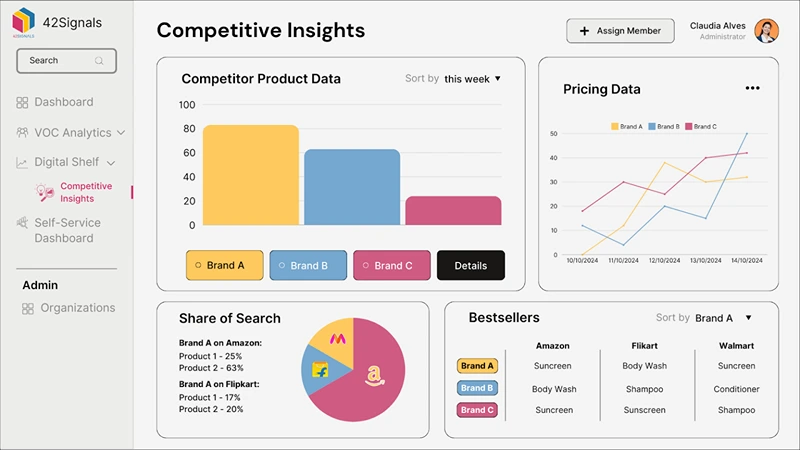
Go beyond merely monitoring competitor price tags. Strive to understand their cost bases and business models. Are they a high-cost, high-service provider? This analysis will reveal whether you can maintain a sustainable and defensible price advantage over the long term or if you are igniting a price war that will cripple the entire industry.
3. Engineer a Value-Engineered Product or Service
This is a deliberate (re)design process. You must re-engineer your offering specifically for this model. This involves simplifying features, specifying more cost-effective yet reliable materials, and minimizing packaging to the extreme of functionality. The product must reliably perform its core function without a single ounce of unnecessary expense. This is often called “value engineering.”
4. Optimize the End-to-End Supply Chain Relentlessly
This is where the strategy is won or lost. You must pursue aggressive negotiations with suppliers for bulk discounts, invest in process automation to reduce labor costs, and streamline logistics for maximum efficiency. Every single efficiency gain, every penny saved in the supply chain, goes straight to your fragile bottom line and strengthens your competitive price point.
5. Develop a Transparent and Confident Marketing Communication
Finally, craft a marketing message that transparently and confidently communicates your value proposition. Do not apologize for the lack of frills. Celebrate it. Focus your messaging on the smart allocation of resources, the elimination of waste, and the direct value passed on to the consumer. This builds trust and aligns your customer’s perception with your operational reality.
A Strategy of Discipline, Not Just Discounting
In conclusion, it is vital to recognize that economy pricing is a sophisticated and demanding strategy that extends far beyond the simple, tactical act of setting a low price. It is a holistic business model predicated on operational excellence, structural advantages, and deep alignment with a specific market segment. It is a strategic commitment to becoming the low-cost leader through superior efficiency, not just aggressive discounting.
While current economic trends may make it an attractive consideration for many, it is not a universal solution nor a tactical lever to be pulled lightly. It demands a specific corporate mindset and capability set. Brands must conduct a rigorous, honest self-assessment against the outlined criteria before embarking on this path.
For those with the requisite capabilities, the operational muscle, the structural advantages, and the target market, it can be a powerful and defensible tool for securing immense market share and building a lean, profitable enterprise.
For others, alternative strategies that compete on value beyond price, such as differentiation or focus, may offer a more sustainable, less risky, and ultimately more profitable route to long-term growth and brand equity. The key is to choose the strategy that fits your company’s identity, rather than forcing your company to fit a strategy.
Frequently Asked Questions
What is the economy pricing method?
Economy pricing is a pricing strategy where products are sold at a low price with minimal marketing or production costs. This method is often used for basic, no-frills items where the business relies on high sales volume rather than high margins to generate profit.
The focus is on keeping costs as low as possible—this means simpler packaging, limited advertising, and basic product features. Common examples include generic grocery brands or discount airlines
What is meant by pricing in economics?
In economics, pricing refers to the process of determining the value of a product or service in the marketplace. It’s influenced by several factors, including supply and demand, cost of production, market competition, and consumer behavior.
Pricing is not just about covering costs—it also reflects perceived value, market positioning, and strategic objectives. Economists study how prices affect consumer choices, resource allocation, and overall market efficiency.
What are the 4 types of pricing?
The four main types of pricing strategies are:
Cost-Based Pricing – Setting prices based on production costs plus a fixed profit margin.
Value-Based Pricing – Pricing according to the perceived value the product delivers to the customer.
Competition-Based Pricing – Aligning prices based on what competitors charge.
Dynamic Pricing – Adjusting prices in real-time based on market demand, inventory, or customer behavior.
Each strategy has its advantages depending on the market conditions, customer base, and business goals.
Who uses economy pricing?
Economy pricing is commonly used by:
Supermarkets and retailers – for store-brand or private-label items (e.g., generic cereals, canned goods).
Budget airlines – offering basic air travel with no add-ons (e.g., Ryanair, Spirit Airlines).
Discount stores – like Dollar Tree or Lidl, where price sensitivity is high.
Subscription services – that offer low-entry pricing tiers with limited features to attract budget-conscious users.
These businesses target price-sensitive consumers who prioritize affordability over features or brand prestige.