

** TL;DR ** Understand how multinational retailers can gain a competitive edge by analyzing early regional retail trends in one market (Region A) to predict future movement in another (Region B). This predictive capability is achieved through cross-region benchmarking, focusing on quantifiable geo-signals derived from digital shelf analytics—like search volume and customer sentiment—and proprietary dark store data that reveals hyper-local demand. By treating Region A as a laboratory, retailers can anticipate product demand and optimize pricing for Region B, ultimately enabling crucial market localization of products, marketing, and logistics to ensure the new trend translates successfully into profit.
The retail world moves at lightning speed. One minute, everyone is raving about smart mirrors in fitting rooms, the next, it is all about sustainable, closed-loop fashion. For businesses operating across multiple geographic areas, keeping up is not just a challenge—it is the difference between leading the market and playing catch-up.
Imagine having a crystal ball for commerce. That is essentially what savvy retailers are developing by mastering the art of regional retail trends analysis. By closely observing shifts in consumer behavior, pricing, and product demand in one area (say, Region A), they gain invaluable foresight into what is likely coming next for another (Region B). This ability to benchmark and predict allows for proactive planning, strategic inventory allocation, and ultimately, a much more localized and successful market approach.
Understanding the Ripple Effect: Why Regional Retail Trends Matter
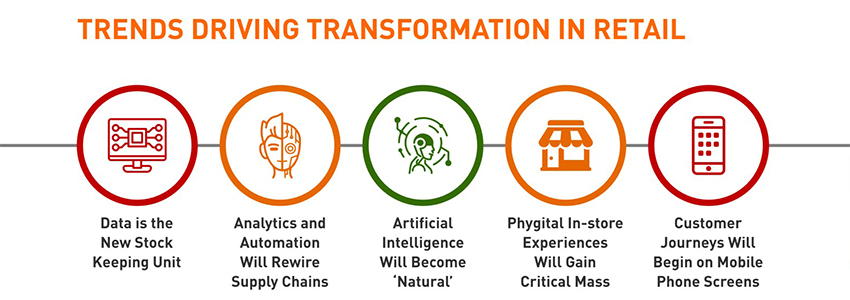
Image Source: WNS
It is easy to think of global retail as one monolithic entity, but the reality is a mosaic of different consumer cultures, economic landscapes, and technological adoption rates. However, these distinct markets are rarely isolated. Ideas, products, and behaviors often travel, creating a measurable “ripple effect” that smart retailers can track.
Think about a new sustainability-focused packaging material. It might first appear in a highly regulated or environmentally conscious market, often in Western Europe or Scandinavia (Region A).
Initially, it is a niche concept, perhaps driving slightly higher costs. But as supply chains mature and global awareness grows, that same trend, proven successful in Region A, begins to emerge in markets across North America or Asia (Region B) six to twelve months later.
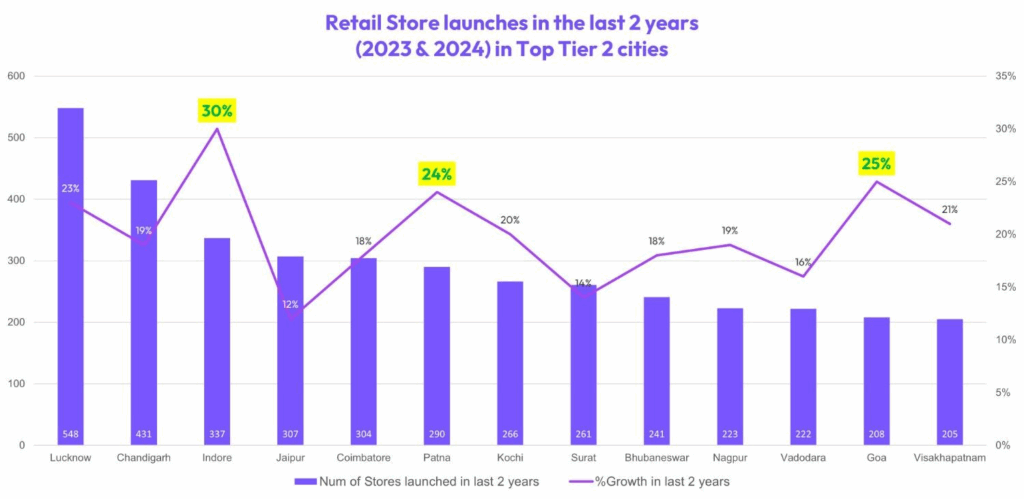
Image Source: Go Spatic
This time lag is your opportunity. Monitoring regional retail trends in advance allows you to:
- Prepare Infrastructure: Ensure your supply chain and logistics network in Region B can handle the new product format or service requirement before the demand explosion hits.
- Localize Marketing: Start crafting campaigns that will resonate with the cultural values of Region B, rather than simply translating the materials from Region A.
- Optimize Inventory: Avoid being caught off guard by a sudden surge in popularity for a specific product category. For example, if a certain tech gadget is flying off the shelves in Shanghai (Region A), retailers in São Paulo (Region B) can pre-order inventory, minimizing stock-outs.
The core principle here is using successful early-adopter regions as a laboratory for subsequent markets. The data points you gather—from purchase patterns to price elasticities—are the keys to unlocking successful market localization.
Decoding Geo-Signals: The Science of Cross-Region Benchmarking with Retail Trends
To transform observation into reliable prediction, retailers need a structured approach to data collection and analysis, often referred to as gathering geo-signals. These are the early indicators—subtle changes in search queries, social media sentiment, or competitor pricing—that signal a forthcoming shift in consumer behavior.
The power of cross-region benchmarking lies in comparing these geo-signals across diverse markets. It is not enough to see a sales spike in one area; you need to understand why it happened and how that “why” might apply elsewhere.
1. Demand Comparison: What Consumers Want (and When)
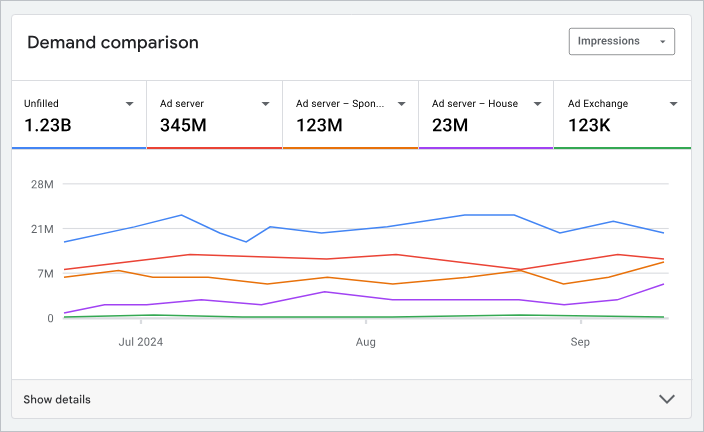
Comparing consumer demand across countries or regions is the foundational step in spotting predictive retail trends. This analysis must go beyond simple sales figures and look at the specifics:
- Product Category Penetration: If a specific product category, like vegan meat alternatives, has reached 30% household penetration in Region A, and is only at 5% in Region B, you can confidently project significant future growth in Region B, provided cultural and economic barriers are addressed.
- Search and Social Volume: Before a product hits peak sales, consumers start searching for it online. Using tools to track search query volume for specific keywords in Region A and contrasting them with volumes in Region B provides a leading indicator of interest. A steady climb in “refillable cleaning products” searches in London (Region A) is a clear geo-signal for anticipated demand in New York (Region B).
- Specific Feature Adoption: In the fashion industry, if a particular material (e.g., recycled polyester) becomes the majority choice for outerwear in Region A, tracking its adoption rate compared to traditional materials in Region B gives a quantifiable prediction for market share shift.
2. Pricing Comparison: Finding the Sweet Spot for Region B
Pricing is inherently local, influenced by taxes, tariffs, logistics costs, and local competition. However, early retail trends in pricing from Region A can help define the optimal pricing strategy for the emerging trend in Region B.
A rigorous cross-region benchmarking analysis of pricing focuses on:
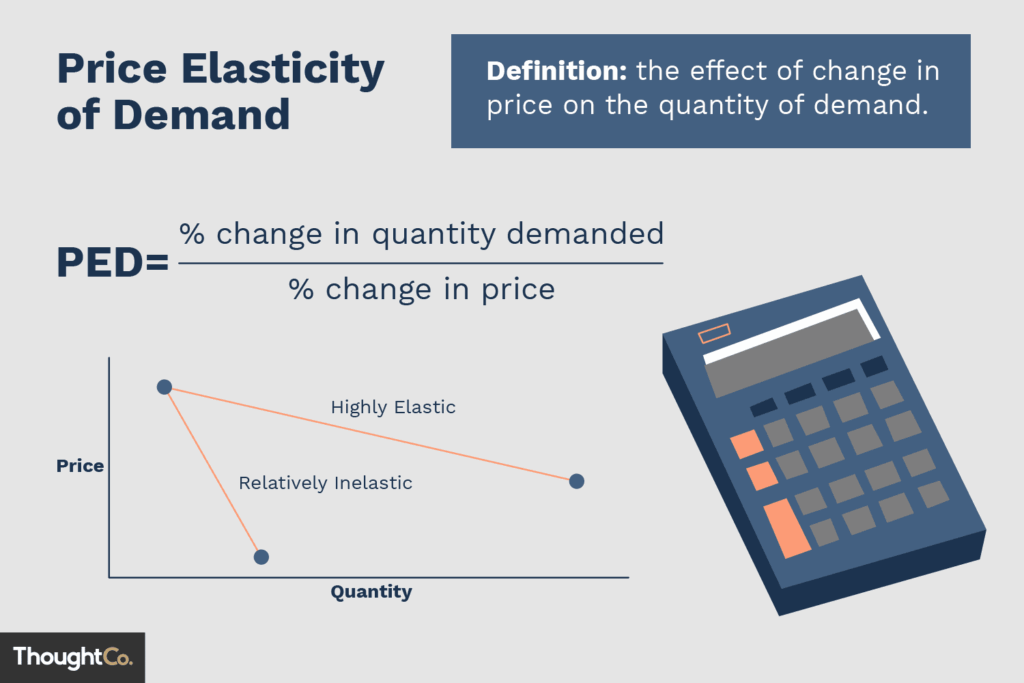
- Price Elasticity of Demand: In Region A, what happens to unit sales when the price changes by 5%? If the product shows high elasticity (sales drop significantly with a price increase), you know that the price point in Region B must be meticulously managed to encourage adoption. Conversely, if demand is inelastic (consumers buy it regardless of price), you might have more flexibility.
- Competitor Aggressiveness: Observe how quickly competitors in Region A drop prices or offer promotions when introducing the new product or service. This reveals the potential for a price war. If the market in Region A quickly stabilizes at a certain price floor, retailers in Region B can plan to introduce the product slightly above that floor, anticipating a similar stabilization.
- The Premium vs. Value Strategy: Is the new retail trend positioned as a premium product in Region A (e.g., high-end organic skincare)? If so, determine if the consumer base in Region B is ready to absorb that premium. If Region B is traditionally more price-sensitive, you may need to source a value-oriented alternative or delay launch until economy of scale reduces costs. This is essential for successful market localization.
By systematically comparing these two variables—demand and pricing—retailers create a risk-mitigated roadmap for introducing new retail trends across new markets. This is a crucial element of sophisticated digital shelf analytics.
The Data Behind the Demand: Leveraging Digital Shelf Analytics
The modern retailer’s oracle is data, particularly data gleaned from the digital shelf. Digital shelf analytics involves monitoring the online presence of your products and your competitors’ products, offering granular insights that traditional in-store data simply cannot match. For cross-region prediction, it is indispensable.
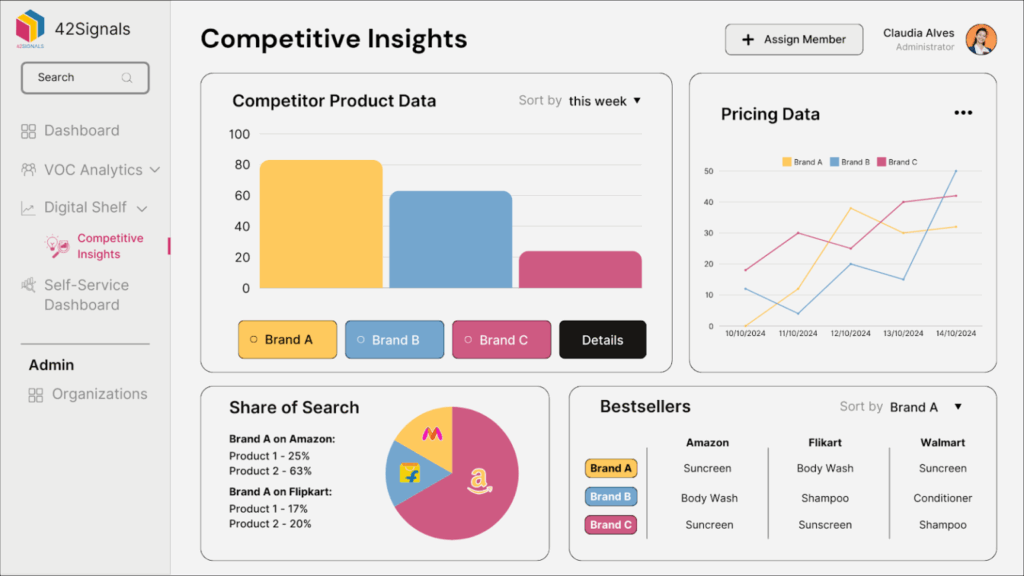
Competitor analysis dashboard by 42Signals
Tracking the Digital Shelf for Predictive Power
The digital shelf analytics process provides crucial context for interpreting regional retail trends:
- Content and Search Rank: How are products related to the emerging trend ranking on key retailer websites or search engines in Region A? If a specific set of keywords is driving high conversion rates in Region A, replicating that keyword strategy for Region B can jumpstart early sales.
- Out-of-Stock Rates: High out-of-stock rates for a specific product in Region A are a clear sign of overwhelming demand, which is a powerful geo-signal to increase inventory planning for Region B. Conversely, consistently high stock levels might indicate a trend that is plateauing or failing to take off.
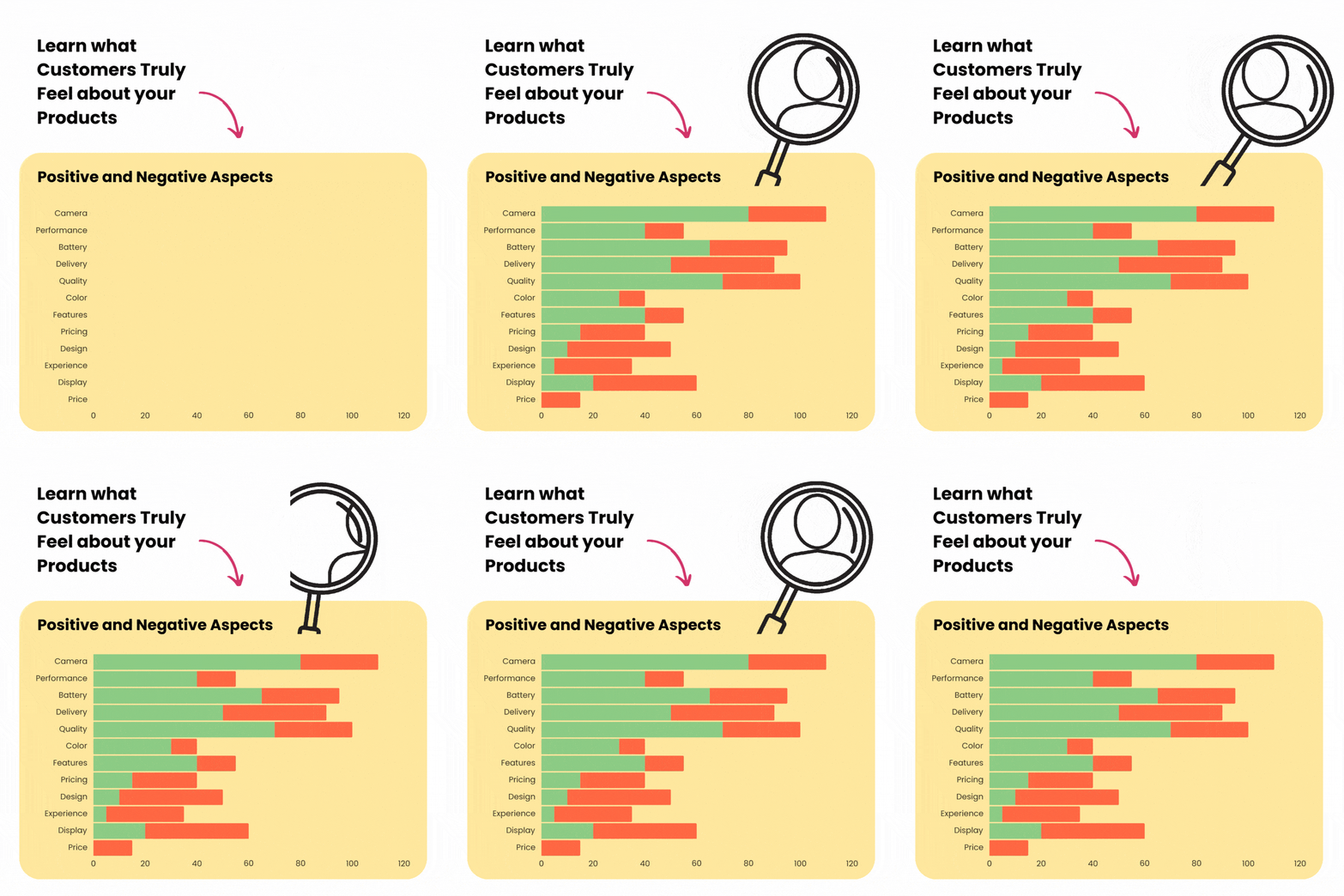
- Customer Review Sentiment: Analyze the language and core complaints or praises in customer reviews in Region A. If customers are consistently praising the ease of use of a product, emphasize that in marketing materials for Region B. If they complain about a specific feature, consider adapting the product slightly for the Region B launch to prevent similar backlash. This detailed sentiment analysis is key to genuine market localization.
The Power of Dark Store Data to Detect Retail Trends
A relatively new, yet incredibly potent, source of geo-signals comes from dark store data. Dark stores are physical retail locations or distribution centers that are closed to the public and solely dedicated to fulfilling online orders, particularly for fast delivery or “quick commerce.”
What makes dark store data so predictive for regional retail trends?
- Hyper-Local Demand Spikes: Dark stores reveal immediate, hyper-local demand changes. If a dark store in a specific urban neighborhood in Region A sees a 50% jump in orders for locally sourced produce after a policy change, that is an immediate geo-signal that a broader shift toward local food sourcing is underway.
- Efficiency Metrics: Data on delivery times, picking efficiency, and inventory rotation within dark stores offers insight into the operational challenges of a new product type. If a new, bulky product category (e.g., home fitness equipment) significantly slows down fulfillment in Region A, it is a warning for Region B to reconfigure dark store layouts or delivery methods before the launch.
- Inventory Composition: Analyzing the inventory that is consistently stocked and restocked in dark store data gives a real-time, unbiased look at core, high-frequency retail trends versus fleeting novelties. This helps differentiate a long-term consumer shift from a short-term fad.
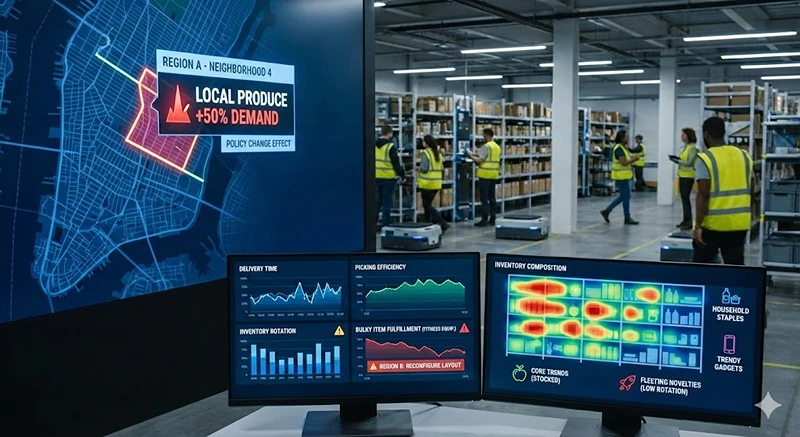
By integrating insights from digital shelf analytics and specific dark store data, businesses can move beyond guesswork and create data-driven forecasts for emerging retail trends in new regions.
Market Localization: The Bridge Between Prediction and Profit
Spotting a trend is only half the battle. The true differentiator for multinational retailers is successful market localization—the act of adapting the product, positioning, and strategy to fit the unique cultural, economic, and logistical landscape of a new market. A trend that succeeds in Region A will not automatically succeed in Region B without thoughtful adaptation.
Cultural and Behavioral Adaptation
The core of market localization is respect for the local customer. Even the most successful retail trends require tweaking:
- Product Adaptation: A popular snack flavor in East Asia (Region A) may need to be reformulated with less spice or different primary ingredients to appeal to consumers in the U.S. Midwest (Region B). It is the same underlying product idea (a new healthy snack), but the execution must be local.
- Payment Methods: In many regions, the dominant payment method is not credit card but mobile wallet or local installment plans. Launching a new e-commerce service in Region B without integrating these local payment options will severely limit adoption, regardless of how popular the retail trend was in Region A.
- Language and Context: Localization goes beyond simple translation. It involves ensuring that marketing messages resonate. A promotional message focused on convenience in a high-speed, urban environment (Region A) might be replaced with one focusing on family value or sustainability in a more suburban or rural environment (Region B).
Logistics and Supply Chain Optimization
A common mistake is assuming that a well-established supply chain in Region A can simply be duplicated in Region B. Predictive retail trends analysis should inform a localized logistics strategy:
- Shipping Costs and Times: High-value, low-weight items that are profitable to air-freight in Region A might become too expensive to ship into a less infrastructure-rich Region B. Local sourcing or different distribution partners must be considered to maintain price competitiveness based on cross-region benchmarking.
- Regulatory Compliance: New product categories, often driven by retail trends in health or sustainability, carry specific regulatory requirements for packaging, labeling, and import. Analyzing the regulatory hurdles faced in Region A during the trend’s rise can give Region B a playbook for faster compliance.
- Last-Mile Solutions: The prevalence of parcel lockers, in-store pickup, or specialized courier services varies dramatically. Using dark store data from a new region can help retailers identify the most efficient and cost-effective last-mile options for their newly localized strategy.
According to a 2024 report by the National Retail Federation, businesses that successfully localize their strategy by utilizing advanced analytics, like digital shelf analytics, see, on average, a 15% higher return on investment (ROI) in the new market compared to those who simply replicate their initial strategy. This underscores the financial imperative of true market localization.
Case Study: The Rise of Refurbished Electronics (A Hypothetical Example)
Let us examine how a retailer might use early regional retail trends to predict a major movement.
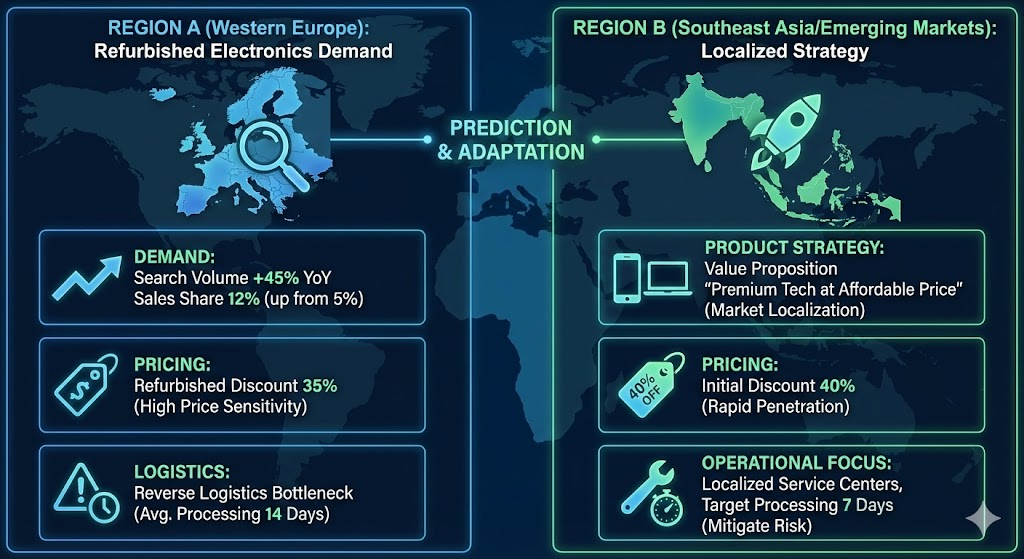
Region A (Western Europe): Driven by strong environmental consciousness and regulations around e-waste, the demand for refurbished smartphones and laptops begins to accelerate rapidly. This is the retail trend to watch.
Geo-Signals Spotted:
- Demand: Digital shelf analytics shows that search volume for “certified refurbished electronics” in Region A grew by 45% year-over-year. Sales of these items now account for 12% of the total mobile phone market, up from 5% two years prior.
- Pricing: Cross-region benchmarking reveals that refurbished units are consistently selling at a 35% discount to the equivalent new model, and this discount level maintains high sales volume (suggesting high price sensitivity).
- Logistics: Dark store data indicates that reverse logistics (managing returns and refurbishment processing) is the bottleneck, with average processing times of 14 days, driving up costs.
Prediction for Region B (Southeast Asia/Emerging Markets):
Based on the geo-signals, the retailer predicts that a similar demand for affordable, high-quality electronics will emerge in Region B, but with a different focus due to economic factors.
Localized Strategy for Region B:
- Product Strategy: Instead of focusing primarily on the environmental benefit (as in Region A), the marketing emphasizes the value proposition: “Premium Tech at an Affordable Price.” This is a key part of market localization.
- Pricing: The retailer sets the initial discount at 40% (slightly more aggressive than Region A’s 35%) to rapidly penetrate the more price-sensitive market, following the insights from cross-region benchmarking.
- Operational Focus: Learning from the bottleneck identified in Region A, the retailer prioritizes developing localized service centers in Region B before the launch to cut the reverse logistics time from 14 days to 7 days, thereby mitigating the cost and delay risk identified in the initial regional retail trends analysis.
By using the leading indicators from Region A, the retailer avoids potential pitfalls and customizes the value proposition and operational structure for maximum impact in Region B, effectively predicting and capitalizing on the next wave of the retail trends lifecycle.
Ready to Take the Next Step?
See how our solutions can help you achieve your goals and drive measurable results.
The Continuous Cycle of Retail Trends Monitoring
Effective monitoring of regional retail trends is not a one-time exercise; it is a continuous loop. The key primary keyword, retail trends, constantly evolves, meaning your predictive models must also adapt.
Retailers should establish a regular cycle for updating their predictive intelligence:
Quarterly Trend Review
Every quarter, dedicated teams should perform a deep dive into key data sets:
- Geo-Signals Audit: Identify any new, significant shifts in consumer search behavior, competitor product launches, or policy changes (e.g., plastic bans, new taxes) in leading indicator markets (Region A).
- Digital Shelf Analytics Report: Compare metrics like conversion rates, product visibility, and customer review scores for emerging categories across all operating regions. Note discrepancies that might indicate a delayed trend or a failure of market localization.
- Cross-Region Benchmarking Session: Formally compare demand growth rates, average transaction values, and profit margins for the top 10 emerging products across Region A and Region B to quantify the predictive time lag and the required localized price adjustments.
Technology and Tool Investment
To keep pace with the primary keyword, retail trends, retailers must invest in the right technology:
- AI-Powered Predictive Models: Tools that use machine learning can correlate geo-signals (like weather patterns, social media mentions, and economic reports) with sales data to automatically flag unusual or high-growth activity in one region as a potential precursor for another.
- Integrated Data Lakes: Ensuring that data from all sources—e-commerce platforms, physical point-of-sale systems, dark store data, and third-party digital shelf analytics providers—is unified allows for seamless cross-region benchmarking. Without centralized data, true predictive power is impossible.
- Localized Execution Platforms: Systems that allow regional teams to rapidly customize marketing copy, adjust pricing parameters, and modify inventory alerts based on the centrally identified regional retail trends are essential for effective market localization.
In conclusion, the future of global retail success lies in the ability to look sideways, not just forward. By mastering the analysis of regional retail trends, deploying sophisticated digital shelf analytics, and integrating crucial geo-signals and dark store data through rigorous cross-region benchmarking, multinational retailers can transform emerging market movements into actionable intelligence.
This foresight enables precise market localization, ensuring that every new product, service, or pricing strategy is perfectly tuned to the local consumer landscape, turning prediction into profit and securing a dominant position in the ever-evolving world of retail trends.
The ability to see what is happening now in Region A and predict its movement to Region B is the new standard for competitive advantage.
If you’re in the market for a tool that helps you understand regional trends, forecast demand, allocate the right inventory, and stay on top of India’s quick commerce trends, schedule a demo with us today.
Frequently Asked Questions
What are the trends in retailing?
Modern retailing is defined by a rapid convergence of technology, consumer values, and logistics. Key trends shaping the retail landscape include:
Omnichannel Integration: Moving beyond simple multi-channel presence to a seamless, unified customer experience across physical stores, e-commerce, mobile apps, and social media. The line between online and offline shopping continues to dissolve.
Sustainability and Ethical Consumption: Consumers are increasingly prioritizing brands that demonstrate environmental responsibility, ethical sourcing, and transparency. This includes circular economy models like resale and rental, and a focus on sustainable packaging.
Hyper-Personalization: Leveraging AI and machine learning on vast data sets (including digital shelf analytics and customer history) to offer highly relevant product recommendations, tailored pricing, and customized marketing messages to individual consumers.
Quick Commerce (q-commerce) and Ultra-Fast Delivery: The expectation for immediate gratification, often fulfilled through dark store data and localized distribution networks, particularly for groceries and convenience items.
Retail Media Networks (RMNs): Retailers leveraging their first-party customer data and digital shelf real estate to sell advertising space to brands, creating a significant new revenue stream.
Experiential Retail: Physical stores are transforming into brand showrooms or experience centers, focusing on entertainment, community-building, and high-touch customer service rather than just transactional sales.
What are the 7 types of retailers?
Retailers can be categorized based on their product offerings, pricing strategies, and service models. While classifications vary, seven common types are:
Department Stores: Large format retailers offering a wide variety of product categories (e.g., clothing, housewares, cosmetics) housed in separate departments, often positioned as mid-to-high end.
Specialty Stores: Narrow focus on a specific product category (e.g., jewelry, sporting goods, organic coffee) but with a deep assortment within that category, providing high expertise and selection.
Supermarkets and Grocery Stores: Focus on food and general household items, emphasizing fresh produce, competitive pricing, and convenience.
Discount Stores: Offer a broad range of products at lower prices by operating on low margins and high volume (e.g., mass merchandise stores like Walmart or Target).
Off-Price Retailers: Sell name-brand and designer merchandise at deep discounts, often sourcing excess inventory, closeouts, or end-of-season stock (e.g., outlet stores).
Convenience Stores: Small stores located near residential areas, offering a limited selection of high-turnover goods (e.g., snacks, beverages, newspapers) with extended operating hours and quick transaction times.
Category Killers (Big Box Stores): Large specialty stores that dominate a product category due to their immense selection and competitive pricing (e.g., Best Buy for electronics, IKEA for furniture).
What are the retail trends in 2025?
Looking ahead to 2025, several emerging trends will gain significant momentum, often driven by the predictive insights gained from cross-region benchmarking and geo-signals:
Generative AI in the Customer Journey: Widespread use of GenAI for personalized product discovery, creating synthetic models for virtual try-ons, generating localized marketing copy, and automating complex customer service interactions.
Full Supply Chain Visibility (Digital Twin): Retailers will move toward creating “digital twins” of their supply chains, utilizing real-time data from warehouses, logistics partners, and dark store data to predict disruptions, optimize inventory, and improve transparency for the consumer.
Decentralized Fulfillment and Robotics: Increased automation in micro-fulfillment centers and dark stores to handle the demand for ultra-fast delivery, reducing labor costs and improving order accuracy.
Data Monetization as a Core Business: Retail Media Networks will mature, becoming a critical revenue source for major retailers, pushing brands to allocate more budget toward these platforms based on their superior first-party data targeting.
The Phygital Store Experience: Physical stores will further integrate digital tools, such as augmented reality mirrors, endless aisle capabilities, and mobile self-checkout, to blend the efficiency of e-commerce with the tactile experience of brick-and-mortar.
What are the 5 P’s in retail?
The 5 P’s is a widely recognized framework used by retailers to define their strategic focus and execution. It expands on the traditional marketing mix (4 P’s: Product, Price, Place, Promotion) by adding Personnel (People) as a critical component, acknowledging the importance of the human element in service-based retail:
Product
Refers to the merchandise being sold, including quality, design, assortment, and sustainability, with a focus on localization and emerging retail trends.
Price
The cost paid by the consumer, including discounts and payment terms, is optimized using digital analytics and competitive benchmarking.
Place
The channels where products are sold—physical stores, online platforms, and pop-ups are supported by omnichannel strategies and fast delivery models.
Promotion
All communication activities, such as advertising, sales promotions, public relations, and visual merchandising,are increasingly driven by personalized and geo-targeted campaigns.
Personnel (People)
The staff who interact with customers, whose training, motivation, and service quality are essential for delivering experiential retail and localized customer experiences.