

Transforming Retail with Real-Time Retail Analytics
In today’s fast paced environment it is no longer enough to look at last week’s sales figures to make decisions for today. Retailers need to be “in the moment,” reacting to shifts in pricing, stock levels, and competitor moves as they happen. This is the power of real-time retail analytics. This comprehensive guide will explore how the implementation of automated alerts and sophisticated ai alerts ecommerce systems can transform raw data into instant, actionable insights, driving smarter decisions, boosting profits, and keeping you ahead of the curve. You’ll learn the crucial role of automated retail notifications in ensuring operational efficiency and strategic pricing through tools like live price monitoring.
The retail landscape is undergoing a revolutionary transformation. For decades, retail decisions were based on historical reports and weekly digests—a fundamentally reactive approach. Today, the digital shelf changes every second. Prices fluctuate, inventory levels deplete, and competitors launch new promotions—all in the time it takes to brew a cup of coffee. The gap between an event happening and a retailer knowing about it used to be a problem; now, it’s a critical vulnerability. The solution? Harnessing the power of real-time retail analytics to bridge that gap with automated, intelligent alerts.
The ability to move from data discovery to data action instantly is the new competitive differentiator. If your competitor drops their price, you need to know now, not tomorrow morning. If a product is trending on social media and about to sell out, you need an alert to adjust inventory allocation immediately. This isn’t futuristic technology; it’s the operational standard for leading retailers, enabled by sophisticated systems that use artificial intelligence to generate ai alerts ecommerce systems rely on.
What Real-Time Retail Analytics Actually Is and Why It’s Different from Your BI Dashboard
Real-time retail analytics refers to the process of collecting, processing, and analyzing data as soon as it is generated, giving businesses the ability to act on insights within seconds or minutes. It moves beyond traditional business intelligence (BI), which often relies on batch processing, providing snapshots of the past. Real-time analytics, by contrast, offers a continuous, live stream of what is happening right now, whether it’s customer behavior on your website, inventory movement in your warehouse, or a competitor’s strategic shift.
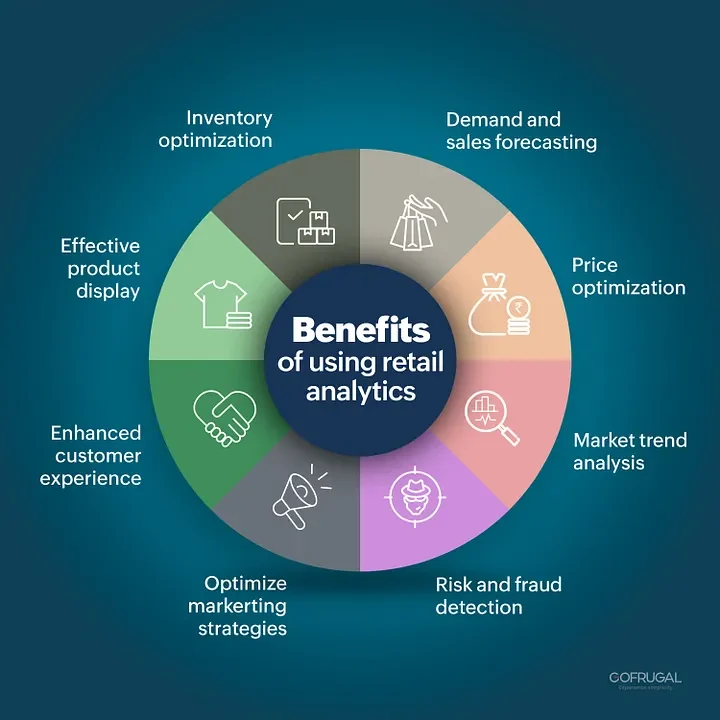
Image Source: Medium
Why Speed Matters in Modern Retail
The consumer of today expects instant gratification, and the market responds in kind. A delay of even a few hours can mean missing a crucial sales window or absorbing unnecessary losses. Consider promotional campaigns: if a marketing campaign suddenly drives a massive surge in traffic, a traditional system might crash or run out of stock before anyone notices the spike in demand. A real-time retail analytics system, however, triggers an immediate alert to the operations team, allowing them to allocate more server capacity or adjust inventory forecasts before a catastrophe occurs.
Bridging the Gap Between Insight and Action with Automated Retail Notifications
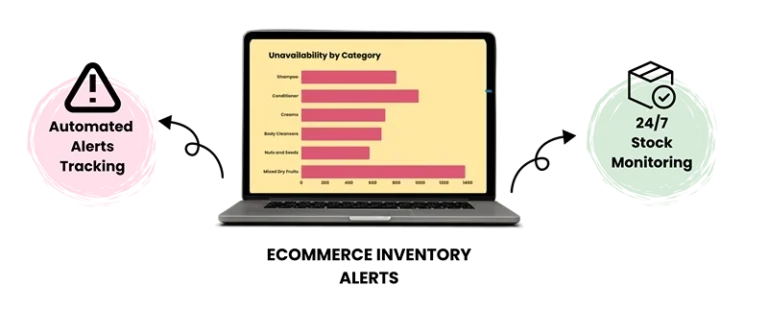
The real magic of real-time data isn’t just seeing the data; it’s acting on it automatically. This is where automated retail notifications come into play. These are pre-set conditions or thresholds that, when met, instantly trigger an alert to the relevant decision-maker or an automatic system action.
For example, imagine a scenario where your live price monitoring tool detects a competitor has just undercut your price with real-time price alerts on a best-selling item by 15%.
- Without automated alerts: An analyst might find this information in a report tomorrow, resulting in hours of lost sales at a non-competitive price.
- With automated alerts: The system instantly notifies the pricing manager via a dashboard alert or a text message. Better yet, if the system is integrated with an automated dynamic pricing engine, it automatically adjusts your price by 10% to stay competitive while protecting margins.
This rapid response mechanism, driven by ai alerts ecommerce platforms integrate, ensures that data isn’t just stored—it’s weaponized for immediate gain.
Key Use Cases: Where Automated Alerts Deliver Instant Value
Real-time retail analytics powers a diverse range of operational and strategic decisions. Implementing automated retail notifications across key functional areas ensures that no critical event goes unnoticed.
1. Dynamic Pricing and Competitive Intelligence
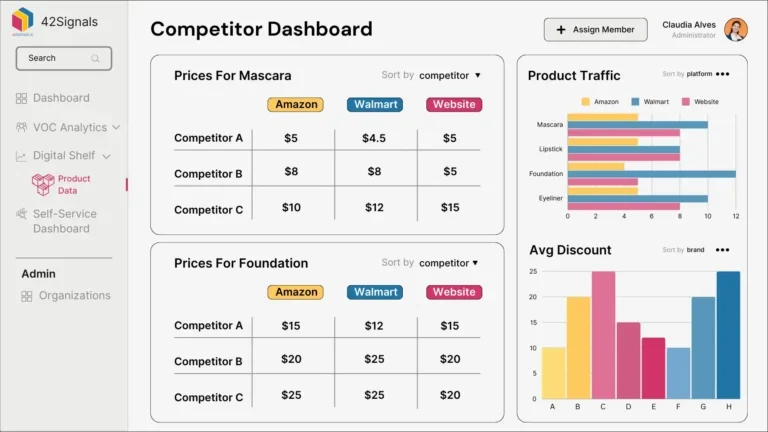
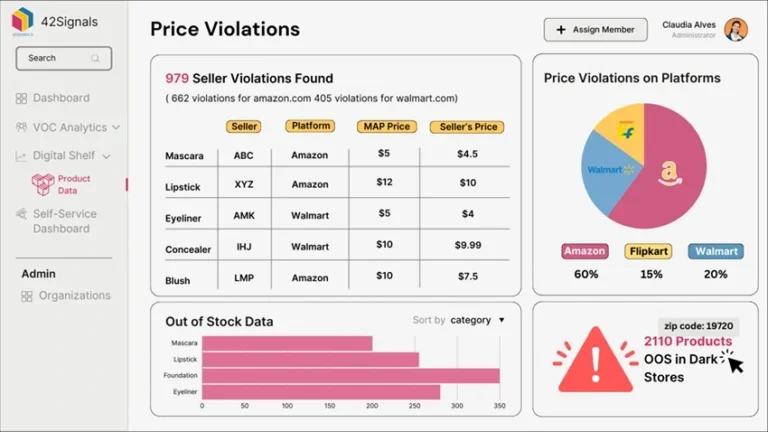
In competitive ecommerce alerting, pricing is the most volatile variable. The constant digital race to offer the most appealing price requires continuous oversight. Live price monitoring tools track competitors’ pricing and promotional activities across the entire market, providing an immediate feed of changes.
- Alert Type: Price War Alert.
- Trigger: Competitor X lowers the price of Product Y below a pre-defined threshold or margin level.
- Action: Alert the Category Manager. Automatically initiate a pre-approved price match or a counter-move to maintain the desired price index. This level of granularity is crucial for successful digital shelf monitoring.
- Benefit: Maximizing sales volume while protecting profit margins through instant, data-driven pricing adjustments.
2. Inventory and Supply Chain Optimization
Stockouts and overstocking are two sides of the same coin, both resulting in lost profit. Real-time retail analytics with inventory forecasting monitors inventory levels against demand signals, ensuring stock is where it needs to be when it needs to be there.
- Alert Type: Low Stock/High Demand Forecast Alert.
- Trigger: Sales velocity for Product Z has increased by 50% in the last four hours, projecting a stockout within 24 hours.
- Action: Automatically place a priority order with the supplier, or notify the warehouse to transfer stock from a low-velocity location to a high-velocity fulfillment center.
- Benefit: Preventing stockouts that lead to lost sales and poor customer experiences, while simultaneously reducing the capital tied up in slow-moving inventory.
3. Customer Experience and Fraud Detection
The customer journey happens in real-time, and issues like cart abandonment, website errors, or potential fraud require an immediate response. Ai alerts ecommerce systems are particularly effective here, spotting anomalies that human eyes would miss.
- Alert Type: High-Value Cart Abandonment Alert.
- Trigger: A customer with a basket value over $500 abandons the checkout page.
- Action: Instantly trigger a personalized, time-sensitive email offering assistance or a small incentive to complete the purchase, or notify a sales representative to initiate a live chat session.
- Benefit: Recovering potentially lost, high-value transactions and improving overall conversion rates by addressing friction points in the checkout process immediately. According to a 2024 study by the Baymard Institute, the average documented online shopping cart abandonment rate (which can be found with consumer behavior trends) is nearly 70%—recovering even a small fraction of these is a massive win (Source: Baymard Institute, “Shopping Cart Abandonment Rate Statistics,” 2024).
4. Digital Shelf Monitoring and Product Performance
For retailers selling online, the “digital shelf” is your storefront. You need digital shelf monitoring to ensure your products are accurately displayed, priced correctly, and have high-quality content with digital shelf performance metrics.
- Alert Type: Content Integrity/Rating Drop Alert.
- Trigger: A product’s average customer rating drops below 3.5 stars in a 24-hour period, or a key product image is missing from the listing.
- Action: Immediately notify the merchandising team to investigate the negative reviews (perhaps there is a quality control issue) or fix the broken listing component.
- Benefit: Maintaining product integrity and protecting brand reputation by quickly identifying and resolving issues that negatively impact customer perception and search rankings.
The Technology Under the Hood: AI Alerts Ecommerce and Automated Retail Notifications
Moving from reactive reporting to proactive real-time retail analytics requires a robust technological infrastructure. This involves specialized tools for data ingestion, processing, and intelligent alerting.
Data Ingestion and Processing
The first step is bringing the data in. This includes transactional data from Point of Sale (POS) systems, web clickstream data, inventory databases, and external data sources like social media feeds and competitor websites (real-time competitor tracking). Modern systems use stream processing technologies like Apache Kafka to handle massive volumes of data flowing continuously. This ensures that a purchase made in a store, a price change on a rival’s site, or an item added to an online cart is recognized and processed in milliseconds.
Artificial Intelligence and Machine Learning (AI/ML) for Smart Alerting
The human brain simply cannot process the constant stream of data from multiple sources. This is why ai alerts ecommerce systems are essential. AI and Machine Learning models sift through the noise, identifying true signals and deviations from the norm.
- Anomaly Detection: AI models learn the “normal” patterns of your business—typical sales volume, usual traffic flow, standard inventory depletion rates. When an event deviates significantly (e.g., a sudden 200% spike in traffic from a new geography, or a massive spike in returns), the system flags it as an anomaly. This is a critical function in ecommerce alerting, as it spots the unexpected—which is often the most important event.
- Predictive Triggers: Beyond reacting to what has happened, AI can predict what will happen. For instance, based on current sales velocity and weather patterns, an AI model might predict a stockout of umbrellas in London within 48 hours, triggering an automated retail notification for preemptive stock transfer.
- Prioritization: Not all alerts are created equal. AI scores the urgency and potential financial impact of each alert, ensuring decision-makers focus their attention on the most critical issues first. A low-urgency alert about a minor competitor price change won’t interrupt a manager dealing with a high-urgency fraud alert.
Deployment of Automated Retail Notifications
Once an insight is generated, it must be delivered instantly and intelligibly. Automated retail notifications can be delivered through various channels, ensuring the right person gets the message in the right format:
- Dashboard Alerts: Visual indicators on a dedicated real-time retail analytics dashboard.
- Email: Detailed reports for less urgent, strategic alerts.
- SMS/Mobile Push: Instant, high-priority notifications for critical events (e.g., system failure, significant price drop).
- System-to-System: The most powerful form—the alert triggers another automated system (e.g., a pricing alert triggers the Dynamic Pricing Engine).
Strategic Advantage: Real-Time Competitor Tracking and Digital Shelf Monitoring
The battle for market share is fought on the digital shelf monitoring. Successful retailers are constantly aware of what their rivals are doing. Real-time competitor tracking is no longer a luxury; it’s a foundational requirement for sustained profitability.
The Nuances of Real-Time Competitor Tracking
Traditional real-time competitor tracking focused primarily on price. While crucial, modern tracking with competitor price intelligence extends far beyond that to encompass the entire customer experience your competitor offers.
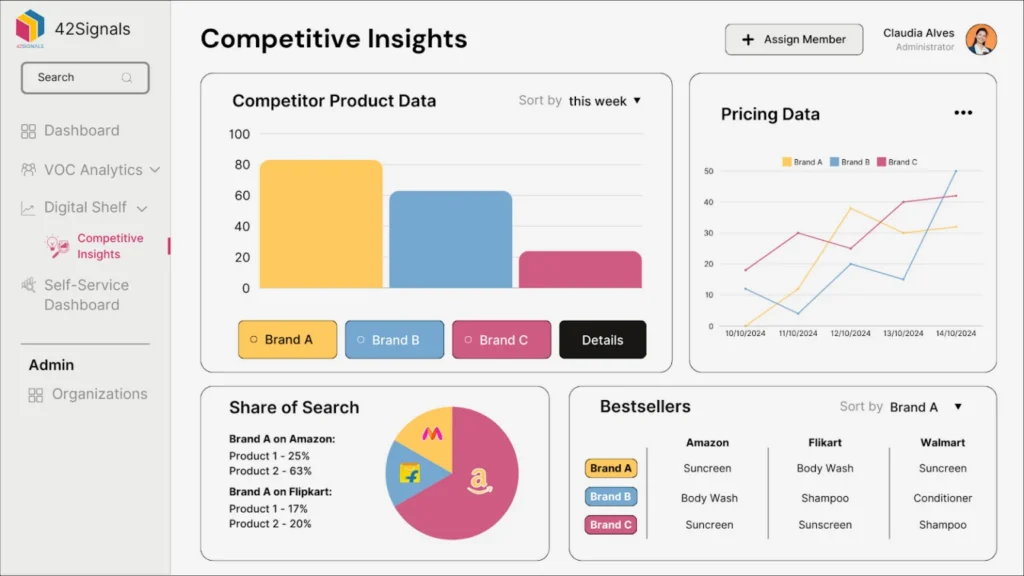
- Price and Promotion: As discussed, live price monitoring ensures you are always competitively positioned. This includes tracking promotions, bundle offers, and shipping costs.
- Product Availability: Knowing if a competitor is out of stock on a key item allows you to immediately increase your pricing or advertising spend for that product to capture the demand they cannot fulfill.
- Content and Reviews: Tracking changes in their product descriptions, images, and, crucially, monitoring their customer reviews helps you quickly identify their weaknesses and highlight your strengths.
- Search Ranking: Understanding how your competitors are ranking for key terms provides immediate opportunities to adjust your search engine optimization (SEO) strategy or ad spend in ecommerce alerting.
By implementing specific automated retail notifications for these nuanced triggers, you transform external market data into internal strategic moves instantly. For instance, a “Competitor Stockout Alert” with price and availability ecommerce allows you to raise your price on that specific item, temporarily increasing your margin before the competitor restocks. This is the essence of leveraging real-time retail analytics for strategic arbitrage.
Challenges and Considerations for Implementing Real-Time Systems
While the benefits of real-time retail analytics are clear, implementation comes with its own set of challenges. Addressing these ensures a successful transition from reactive to proactive operations.
1. Data Quality and Cleansing
Real-time data is only as good as its source. Implementing robust data validation and cleansing protocols is essential before data enters the analytics pipeline. If your inventory system reports inaccurate stock levels, or your live price monitoring tool pulls stale competitor data, the resulting automated retail notifications will be misleading and harmful. Focus on creating a unified, clean data foundation before automating actions.
2. Alert Fatigue
The most common failure point for any alerting system with product price alerts setup is “alert fatigue.” If the system generates too many low-priority alerts, users will begin to ignore them, potentially missing a high-priority, critical notification.
To combat this, the system must be meticulously configured:
- Prioritize and Filter: Use AI to prioritize alerts based on potential financial impact.
- Smart Grouping: Group related events into a single notification. For example, instead of 100 alerts for 100 small competitor price changes, provide one “Category Price Shift Summary Alert.”
- Actionable Content: Ensure every automated retail notification includes not just what happened, but why it matters and what the suggested immediate action is.
3. System Scalability and Latency
Processing and analyzing vast streams of data without delay requires massive infrastructure. The solution must be highly scalable to handle peak shopping periods (like Black Friday) without introducing latency. If the system takes five minutes to process a competitor’s price change, it’s no longer “real-time.” Ensuring low-latency data processing is fundamental to effective real-time retail analytics and successful ecommerce alerting.
Continuous Optimization: How ML Refines Alert Rules Over Time
The journey with real-time retail analytics is one of continuous optimization. Once the initial automated retail notifications are established, the next phase involves refining the rules and integrating more sophisticated AI capabilities. The ultimate goal is a level of automation where the system manages the vast majority of routine, high-velocity decisions independently, leaving human managers free to focus on strategic, creative problem-solving.
The Role of Machine Learning in Rule Refinement
Over time, ML models monitor the outcomes of the alerts they trigger. Did the automated price adjustment lead to the expected uplift in sales? Did the inventory transfer successfully prevent a stockout? This feedback loop allows the system to continuously refine the thresholds for alerts, making them smarter and more precise. For example, the system might learn that a 5% price drop alert is only necessary on weekends, while a 10% drop needs an alert any day—a level of nuance that dramatically reduces unnecessary alerts while increasing the precision of the most valuable ones.
Integrating the Digital and Physical World
Real-time retail analytics is increasingly bridging the gap between online and physical stores. Data from in-store sensors, security cameras, and POS systems are now integrated with digital shelf monitoring and real-time competitor tracking data. For instance, an in-store traffic alert (triggered by sensors) combined with an online sales spike alert allows a manager to instantly re-deploy staff from the back office to the sales floor, enhancing the in-store customer experience in the exact moment of high demand.
The most successful retailers are those who have mastered the art of the instant decision. By investing in robust real-time retail analytics with retail data BI tools platforms that utilize sophisticated ai alerts ecommerce technologies, businesses are moving beyond simply reporting data; they are transforming data into immediate, profitable action.
The Actionable Present of Retail
The shift to real-time retail analytics is non-negotiable for modern businesses. The speed, volume, and complexity of today’s market demand automated, immediate responses to competitor actions, inventory shifts, and customer behavior. Implementing intelligent automated retail notifications—powered by cutting-edge ai alerts ecommerce technology—is the critical step that transforms raw data into a continuous competitive edge.
From live price monitoring ensuring optimal margins to digital shelf monitoring guaranteeing product visibility, these instant alerts empower employees to make informed decisions in the moment, leading to fewer missed opportunities, higher profits, and superior customer satisfaction. The future of retail is not just about having data; it is about acting on it, instantly.
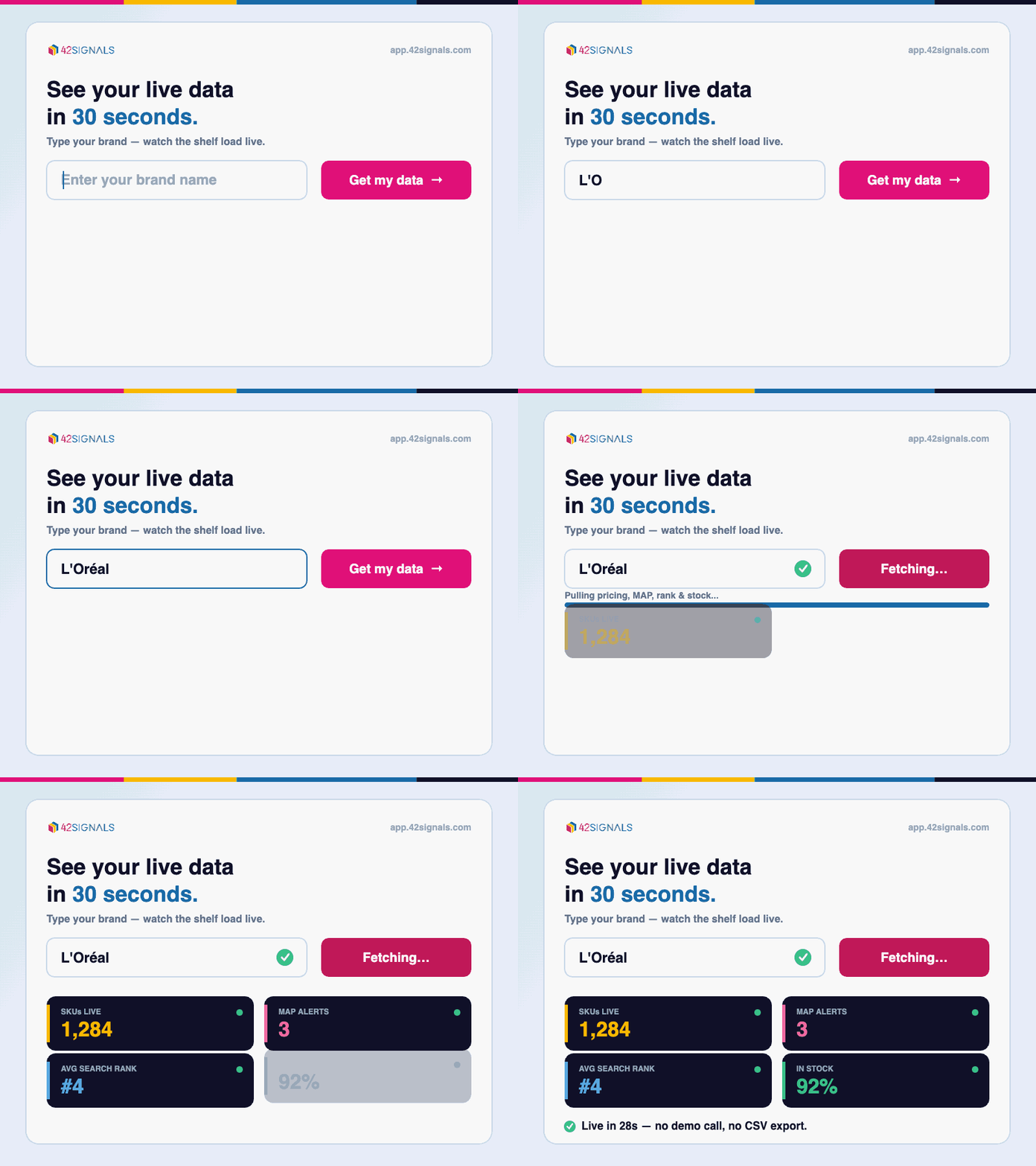
Ready to see automated retail alerts working in real time for your specific category? 42Signals monitors competitor pricing, stock levels, digital shelf content, and MAP compliance across Amazon, Flipkart, Walmart, and 50+ platforms — instantly alerting your team the moment something changes that affects your sales. Book a demo and we’ll show you live alert examples for your top SKUs.
FAQ Section: Your Questions on Real-Time Retail Analytics
What is the primary difference between traditional business intelligence (BI) and real-time retail analytics?
Traditional BI relies on historical data, processed in batches (daily, weekly, or monthly) to provide reports on past performance. It is fundamentally reactive. Real-time retail analytics, by contrast, processes data instantly—as soon as it is generated—to provide a current, live view of operations. The key difference is the speed of action: BI identifies what happened, while real-time analytics triggers an automated retail notification to initiate an immediate response to what is happening now.
How does AI enhance the effectiveness of real-time retail analytics?
AI (Artificial Intelligence) and Machine Learning (ML) are crucial for overcoming the challenge of “data noise.” An AI system monitors millions of data points simultaneously, identifying anomalies and predicting future events with higher accuracy than human analysts. For example, an ai alerts ecommerce system uses predictive modeling to forecast a potential stockout before it is obvious, triggering an alert for a preemptive inventory adjustment. It also intelligently prioritizes alerts, preventing alert fatigue and ensuring focus on the most financially impactful issues.
What specific metric is most improved by implementing live price monitoring?
The metric most directly and significantly improved by live price monitoring is the Price Index relative to key competitors, which directly impacts sales volume and profitability. By using real-time competitor tracking to trigger automated retail notifications when a rival changes a price, retailers can instantly adjust their own price to stay competitive, avoid being undercut, and capture immediate sales. This leads to both an improved conversion rate and protection against unnecessary margin erosion.
Can real-time analytics integrate data from both my physical stores and my website?
Yes, a robust real-time retail analytics platform is designed to ingest data from all sources—online and offline. This includes Point of Sale (POS) data from physical stores, inventory data from warehouses, web clickstream data, and third-party data from digital shelf monitoring tools. This unified, real-time view is essential for true omni-channel retail, allowing actions like allocating in-store staff based on online demand spikes or providing personalized in-store offers based on recent online browsing history.