

Ecommerce Predictive Analytics – Your Blueprint for Profit
Ecommerce predictive analytics is an indispensable tool that transforms your mountains of raw customer, product, and web data into actionable forecasts for sales, inventory, and pricing. By leveraging advanced methods like machine learning retail, businesses can move beyond simple historical reports and start accurately predicting future demand, optimizing every aspect of the retail lifecycle. This guide provides a comprehensive overview, showing you exactly how to apply web data to sophisticated retail demand forecasting, build an effective AI pricing strategy, and use predictive retail tools to ensure your inventory is perfectly balanced, ultimately maximizing profit and minimizing waste. Read on to discover how to fully integrate powerful sales forecasting software and inventory optimisation techniques into your operational framework.
What Is Ecommerce Predictive Analytics and Why Does It Matter?
Simply reacting to sales as they happen is a recipe for missed opportunities and dwindling margins. The real differentiator for top-tier ecommerce operations is the ability to anticipate the future. This is the core function of ecommerce predictive analytics: using historical data, real-time web activity, and statistical algorithms to make educated guesses about what will happen next.
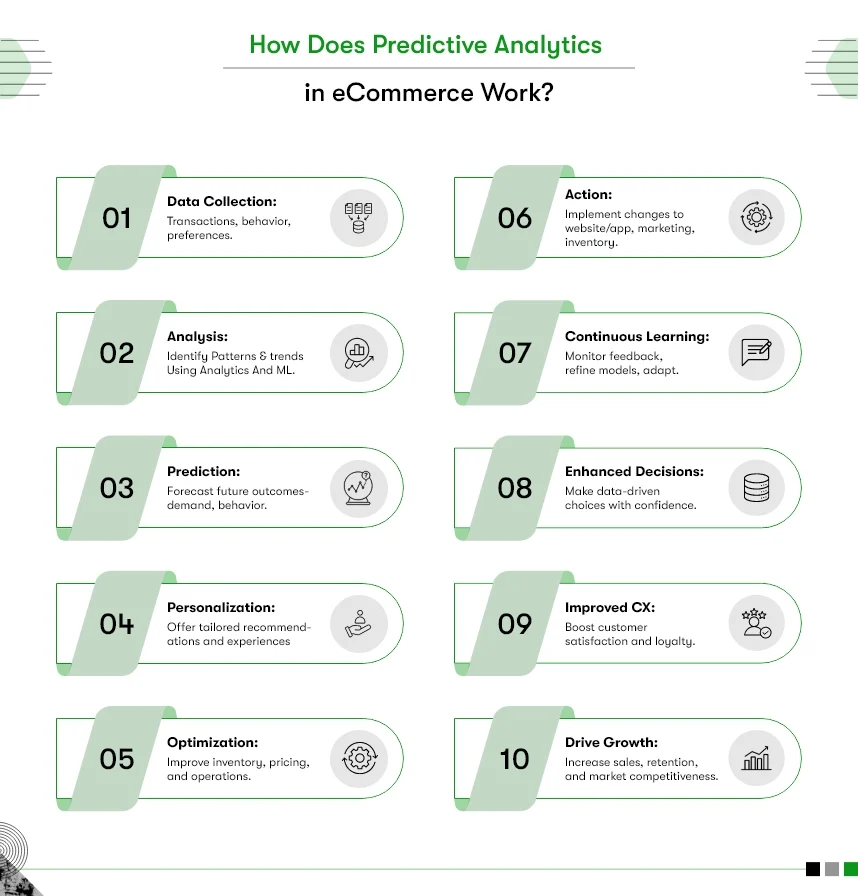
Image Source: Kody Technolab
Think of it this way: instead of looking in your rearview mirror at last quarter’s sales reports, you’re using a crystal ball powered by data science. This crystal ball helps you forecast which products will fly off the virtual shelves, which customers are likely to churn, and what the perfect price point is to maximize revenue without scaring away shoppers. It’s a systemic approach that leverages powerful computational models to analyze patterns that the human eye would miss, delivering a massive competitive edge.
Why Reactive Retail is Dying: The Case for Predictive Retail Tools
Many ecommerce businesses still rely on basic reporting without digital shelf analytics. They look at last year’s holiday sales and order roughly the same amount of stock for the current year. They change prices based on what a competitor just did. This is a reactive approach, and in today’s hyper-competitive digital marketplace, being reactive is being late.
Predictive retail tools allow you to get ahead of the curve. Consider the common problems faced by retailers: stockouts, overstocking, and poor pricing. A stockout means losing a sale and, potentially, a customer to a competitor. Overstocking means tying up valuable capital and incurring higher storage costs, often leading to deep discounts later to clear the inventory. Poor pricing means either leaving money on the table (underpricing) or losing sales volume (overpricing).

Ecommerce predictive analytics addresses all of these issues proactively. For instance, instead of merely stocking up based on last year’s numbers, the system ingests data points like social media sentiment, competitor pricing, weather forecasts (relevant for seasonal items), and current website traffic patterns to generate a much more nuanced and accurate forecast.
According to a study by McKinsey, companies that use predictive models for pricing, merchandising, and personalization see margin improvements of 1–3 percentage points. This difference is substantial when scaled across an entire operation. (Source: McKinsey & Company, “The New Science of Retail”)
How Machine Learning in Retail Transforms Raw Data into Decisions
At the heart of modern predictive analysis is machine learning retail. Machine learning (ML) is a type of artificial intelligence that allows software applications to become more accurate in predicting outcomes without being explicitly programmed to do so. In an ecommerce context, ML models continuously learn from new data, refining their accuracy with every transaction, click, and return.
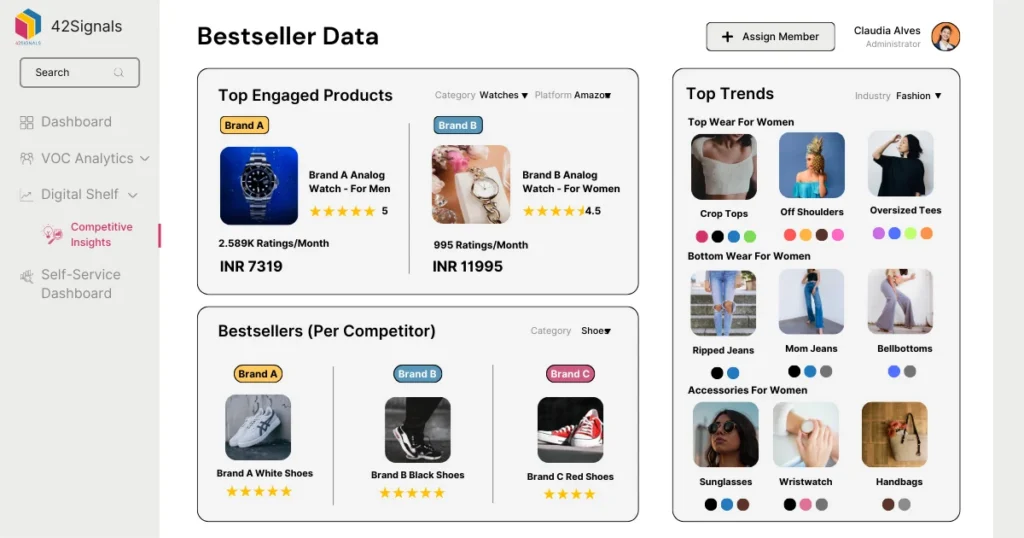
There are three primary ways machine learning is applied to retail data:
- Supervised Learning for Forecasting: This is where the model is trained on labeled historical data (e.g., past sales figures, corresponding marketing spend, seasonal factors). The model learns the relationship between these inputs (features) and the desired output (future sales). This is crucial for retail demand forecasting. The model is constantly supervised—that is, its predictions are compared against actual outcomes, and it adjusts its internal parameters to minimize error.
- Unsupervised Learning for Segmentation: These models look for hidden patterns and structures in data without pre-existing labels. In retail, this is often used for customer segmentation, grouping customers with similar buying behaviors, which then informs personalized marketing campaigns and product recommendations.
- Reinforcement Learning for Dynamic Pricing: This sophisticated approach involves an “agent” (the pricing algorithm) that learns to make decisions by trial and error in a simulated environment. The goal is to maximize a long-term reward, such as total profit. The algorithm adjusts the price and observes the market reaction, iteratively refining its AI pricing strategy to find the optimal point.
A crucial component in all of this is integrating diverse data sets. It’s no longer enough to just look at transactional data; truly effective predictive models incorporate web data—the millions of clicks, searches, cart abandonments, and time-on-page metrics that happen every day on your site. Applying web data to forecasting gives the model a much richer, real-time view of customer intent.
Advanced Retail Demand Forecasting with Web Data
Accurate forecasting is the bedrock of a profitable ecommerce business. When we talk about retail demand forecasting, we’re talking about predicting how many units of a specific product will be sold over a defined future period. Traditional methods relied heavily on simple time-series analysis, but modern ecommerce predictive analytics uses a more complex, holistic approach.
Incorporating the Voice of the Web into Your Forecast
The difference between a good forecast and a great forecast often lies in the inclusion of web data. Web data acts as a real-time signal of demand.
- Search and Session Data: The sheer volume of searches for a specific product or category on your site indicates immediate intent. Spikes in product page views, high conversion rates from organic search traffic related to a product, or an increase in abandoned carts for that item are all leading indicators that demand is rising, potentially faster than historical sales figures might suggest.
- External Traffic Signals: A sudden mention of your product by a major influencer or a feature on a popular news site can lead to an immediate, massive surge in demand. Monitoring referral traffic sources and correlating them with sales velocity is vital.
- Customer Interaction Data: Reviews via voice of customer analytics, Q&A engagement, and wishlist additions are proxies for interest. A high volume of positive reviews or a growing number of people adding an item to their “save for later” list can be factored into the model as a strong positive predictor of future sales.

By applying web data to forecasting, you move from general projections to granular, real-time demand signals. This allows your sales forecasting software to generate forecasts that are not just accurate at the monthly level, but often at the daily or even hourly level, which is critical for perishable goods or flash sales.
Beyond Basic Seasonality: Multi-Variate Forecasting Models
A robust retail demand forecasting model, powered by ecommerce predictive analytics, integrates dozens of variables, not just time.
- Macroeconomic Factors: Is the unemployment rate rising or falling? Is a major competitor having a massive clearance sale? These external factors influence consumer spending habits.
- Promotional Effectiveness: The model can predict the sales lift before a promotion even runs, based on the historical performance of similar campaigns, helping you determine if the discount will be profitable.
- Competitor Dynamics: By integrating competitor pricing and competitor stock monitoring (often through ethical data scraping), the model can predict the impact on your sales. If a key competitor is out of stock, your expected demand will rise.
The outcome of this process is an incredibly precise prediction that drives both purchasing and marketing strategy, making the application of advanced predictive retail tools a necessity, not a luxury.
Building an Effective AI Pricing Strategy for Profit Maximization
Pricing is arguably the single most important lever for profitability. Setting the right price means finding the sweet spot where sales volume and profit margin intersect to yield the highest total revenue. An effective AI pricing strategy uses ecommerce predictive analytics and machine learning retail to constantly adjust prices in real-time, often multiple times a day.
The Difference Between Dynamic and Algorithmic Pricing
- Dynamic Pricing: This is the older concept, where prices change based on simple, pre-set rules, such as “If stock falls below X, raise the price by 5%,” or “Match the lowest competitor price.”
- Algorithmic Pricing (AI Pricing Strategy): This is far more sophisticated. The algorithm is not bound by simple rules; it uses complex predictive models to determine the optimal price at that very moment for that specific customer segment, factoring in elasticity of demand, inventory levels, competitor actions, time of day, and even the customer’s browsing history.
For example, an AI pricing strategy might predict that a loyal customer segment is willing to pay 10% more for a popular item than a new visitor, but that a slight price drop in the middle of the night could capture high-volume impulse buyers without compromising daytime margins.
Key Components of a Predictive Pricing Model
- Demand Elasticity Forecasting: The model predicts how sensitive demand is to price changes for every product. Low-elasticity items (must-haves, exclusive goods) can sustain higher prices, while high-elasticity items (commodities) require tighter competitive pricing.
- Competitor Price War Prediction: Using competitor data, the model can predict whether a small price change by your business will trigger a destructive price war. It can recommend a price that maximizes your profit while staying below the threshold that would prompt competitors to slash their own prices, making the price changes strategic, not merely reactive.
- Inventory-Informed Pricing: Prices must reflect stock levels. If demand forecasting indicates a massive spike in sales for a limited-stock item, the AI pricing strategy can slightly raise the price to slow demand, extending the stock’s life and maximizing the total margin on that scarce item. Conversely, for slow-moving stock, the price can be optimally lowered just enough to generate movement without destroying profit potential.
This entire process is a continuous feedback loop powered by ecommerce predictive analytics, ensuring that every price adjustment serves the ultimate goal of maximizing revenue.
Inventory Optimisation Through Ecommerce Predictive Analytics

Stock control is the area where the insights from ecommerce predictive analytics translate most directly into capital efficiency. Inventory optimisation involves striking the perfect balance: enough stock to meet predicted demand, but not so much that it becomes a financial burden. This relies entirely on the accuracy of the inventory forecasting with real-time data.
From Forecast to Purchase Order: The Predictive Flow
The journey from raw data to a successful inventory decision follows a precise flow, utilizing high-end sales forecasting software and predictive retail tools:
- Granular Demand Prediction: The sales forecasting software generates forecasts not just for the next month, but often for the next 12 weeks, broken down by SKU, location (if applicable), and sales channel.
- Safety Stock Calculation: Based on the forecast and the historical variability of that product’s demand (forecasting error), the system calculates the optimal safety stock level. A product with highly unpredictable demand requires more safety stock to guard against stockouts.
- Lead Time Integration: The model factors in the supplier’s lead time (how long it takes to receive the order) and uses this to set dynamic reorder points. The reorder point isn’t static; it constantly shifts based on the predicted lead time and the expected demand during that lead time.
This sophisticated approach to inventory optimisation minimizes carrying costs while vastly improving service levels. For example, by using ecommerce predictive analytics, retailers can often reduce their safety stock levels by 20–30% without increasing the risk of stockouts. (Source: Various industry reports on supply chain efficiency).
Addressing the Long Tail with Machine Learning
In ecommerce, a significant portion of sales often comes from the “long tail”—the massive number of niche products that sell infrequently. Predicting demand for these items using traditional methods is nearly impossible due to sparse data.
- Machine Learning Retail for Low-Volume SKUs: Machine learning retail excels here by using “pooling” techniques. It groups these low-volume items based on shared characteristics (material, color, category, customer profile) and transfers learning across the group. Even if Product A has only three sales in a year, the ML model can use the sales patterns of the 50 similar products in its group to make a more informed prediction, preventing costly dead stock.
This targeted inventory optimisation for the long tail is a key driver of profit for large-scale ecommerce platforms, as it releases capital that would otherwise be tied up in low-demand goods.
Implementing and Scaling Your Ecommerce Predictive Analytics System
Adopting ecommerce predictive analytics is a strategic undertaking that requires both technology and organizational commitment. It’s not just about buying a piece of sales forecasting software; it’s about integrating a new way of making decisions across the entire organization.
Choosing the Right Predictive Retail Tools
The market is flooded with predictive retail tools, but the best choice depends on the scale and complexity of your business. Key features to look for in an ecommerce predictive analytics platform include:
- Data Ingestion Capabilities: Can the tool seamlessly integrate data from all your sources—ERP, CRM, website analytics, and external market data? The model is only as good as the data it consumes.
- Model Explainability (XAI): While powerful, you should be able to understand why the model made a certain prediction (e.g., “The price was raised because competitor stock is low, and social media sentiment is high”). This trust is essential for adoption by your human buying and pricing teams.
- Scalability: Can the tool handle forecasting for tens of thousands of SKUs and the massive data volume from real-time web traffic?
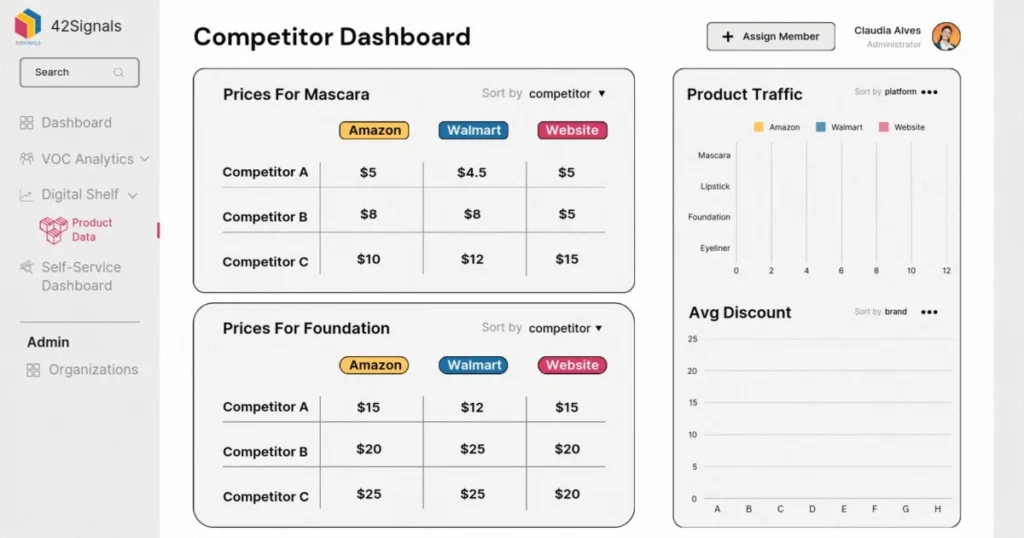
When considering investment, remember that the cost of these tools is often quickly recouped through reduction in stockouts and carrying costs. Many platforms offer flexible deployment options, making ecommerce predictive analytics accessible to businesses of all sizes.
Overcoming Organizational Resistance
The most significant barrier to successful implementation is often human. Buyers and planners who have relied on intuition and spreadsheets for decades may be hesitant to trust a machine learning retail system.
To foster adoption:
- Run Parallel Tests: For a defined period (e.g., three months), let the human team make their purchasing/pricing decisions as usual, but simultaneously track the results of the ecommerce predictive analytics system’s recommendations. The system’s superior performance often speaks for itself.
- Focus on Collaboration, Not Replacement: Position the predictive system as an enhancement to human expertise. The system handles the massive computational work, freeing up human analysts to focus on strategic tasks that require creativity and nuanced judgment.
- Invest in Data Literacy: Ensure key team members understand the basic principles of how the sales forecasting software works and how to interpret the outputs.
A key success factor is defining clear metrics for the project, such as “reduce stockout rate by X%” or “increase inventory turnover by Y%.” This alignment ensures that everyone understands the value proposition of the predictive retail tools.
Two Real-World Applications of Ecommerce Predictive Analytics
Let’s look at specific scenarios where the application of ecommerce predictive analytics leads to clear financial gains.
Case Study 1: Optimizing the Promotional Calendar
Promotions are costly, and often, only a handful drive significant, profitable sales. A predictive model can evaluate potential promotions before they happen.
- Prediction: The model uses historical data and current demand signals to predict the sales lift, the margin erosion, and the inventory depletion rate for a proposed “20% off all blue widgets” promotion.
- Outcome: It might advise against the 20% discount, predicting that a 15% offer will achieve 95% of the sales volume while preserving significantly more margin. Alternatively, it might flag that a different color widget, currently showing high search interest (via web data), would be a more profitable focus for the promotion.
This ensures your AI pricing strategy extends beyond just the standard shelf price, making promotional spending strategic and effective. Get the 42Signals forecast accuracy case study here.
Case Study 2: Managing Product Lifecycle and End-of-Life
Predicting when a product is nearing the end of its peak demand cycle is crucial for inventory optimisation.
- Early Warning: Machine learning retail models track customer sentiment, social media mentions, and search queries, spotting the early signs of market saturation or an impending shift in fashion trends.
- Actionable Advice: As the model identifies a product nearing its end-of-life, it triggers a phased exit plan: a small, strategic price reduction via the AI pricing strategy to clear the remaining stock over 60 days, rather than waiting until the last minute and being forced into a fire sale that destroys the product’s perceived value.
This use of ecommerce predictive analytics ensures that you don’t get stuck with obsolete inventory and frees up capital to invest in the next big thing.
From Reactive Retail to Predictive Profit
The future of ecommerce profitability lies in the ability to confidently predict the market. Ecommerce product analytics provides the framework, and machine learning retail provides the engine, transforming raw, messy data into clean, actionable revenue streams.
By proactively optimizing your AI pricing strategy, perfecting your inventory optimisation, and leveraging sophisticated sales forecasting software that fully integrates web data into retail demand forecasting, you move from surviving to thriving. This is the difference between guessing and knowing, between reacting and commanding. Start the journey today to unlock the full revenue potential hidden within your data.
42Signals already delivers the real-time market signals at the core of effective ecommerce predictive analytics — competitor stock levels, digital shelf share, live pricing data, and review sentiment, all feeding into your demand forecasting models. Book a demo, and we’ll show you a live predictive snapshot for your top product category.
FAQs: Your Questions About Ecommerce Predictive Analytics Answered
What is the difference between descriptive, diagnostic, and predictive analytics?
Descriptive analytics tells you what happened (e.g., “We sold 500 units last month”). Diagnostic analytics tells you why it happened (e.g., “Sales increased because of the social media campaign”). Ecommerce predictive analytics tells you what will happen (e.g., “We will sell 650 units next month based on current trends”). There is also prescriptive analytics, which goes one step further and tells you what you should do (e.g., “Raise the price by $5 and order 700 units”). All modern predictive retail tools increasingly offer prescriptive capabilities.
Is my business too small for sales forecasting software and machine learning retail?
Absolutely not. While large enterprises use massive custom systems, many accessible, cloud-based sales forecasting software and predictive retail tools are specifically designed for small to medium-sized businesses. The principles of inventory optimisation and accurate forecasting are universal, and the margin gains offered by ecommerce predictive analytics are often most impactful for smaller businesses operating on tighter cash flow. Starting with basic demand forecasting is a great first step.
How long does it take to see a return on investment from an AI pricing strategy?
The return on investment (ROI) from an effective AI pricing strategy can be surprisingly fast, often within six months to a year. The key benefits—reduced holding costs from better inventory optimisation, minimized stockouts, and increased profit per transaction due to optimal pricing—compound quickly. The time required for full implementation, however, depends on your data quality and integration complexity.
What specific data points are included when applying web data to forecasting?
When applying web data to forecasting, systems look far beyond simple page views. They incorporate real-time search trend forecasting: product searches, clicks on filtering/sorting options, time spent on product pages, scroll depth, heatmaps, cart-to-checkout conversion rates, bounce rates related to specific product categories, and even the search terms that led visitors to the site. This granular data provides real-time intent signals essential for accurate retail demand forecasting.
What is the difference between predictive analytics and AI in ecommerce?
Predictive analytics is the discipline — the framework for using data to forecast future outcomes. AI and machine learning are the engines that power modern predictive analytics systems. In ecommerce, AI processes the volume and speed of data (millions of product page views, real-time competitor price changes, live review sentiment) that traditional statistical models cannot handle. Predictive analytics sets the goal; AI provides the computational power to reach it at scale.