

How Stock Availability Directly Affects Your Search Rank
If a customer cannot find your product, they cannot buy it. It sounds like common sense, but in the fast world of ecommerce, many brands miss the invisible link between the warehouse and the search bar. When your item goes out of stock, it does not just disappear from the “Available” list. It often falls off the map of the search results entirely. This is why retail stock availability tracking has become a survival tool for modern brand managers.
The reality of the digital shelf is that algorithms favor what is ready for the customer right now. If you are a brand manager, you likely spend a lot of time on keywords and imagery. However, all that work can be undone by a single “Currently Unavailable” badge. We are going to look at how out of stock issues act as a silent tax on your growth and how you can use professional tools to keep your products in front of buyers.
Before we go deep into the strategy, you should see how these signals look in a live environment. You can explore our product availability analytics to see how real-time data changes the way operations teams handle their inventory.
The Hidden Cost of the Out of Stock Ripple Effect
Most people think a stockout only costs the sale that was lost in that moment. That is a dangerous mistake. The true cost is much higher because it creates a ripple effect across your entire digital presence. When you encounter a stockout, 73% of customers will buy from a competitor instead of waiting for you to restock (Source: IHL Group). Even worse, 45% of those shoppers may never return to your brand because they now see you as unreliable.
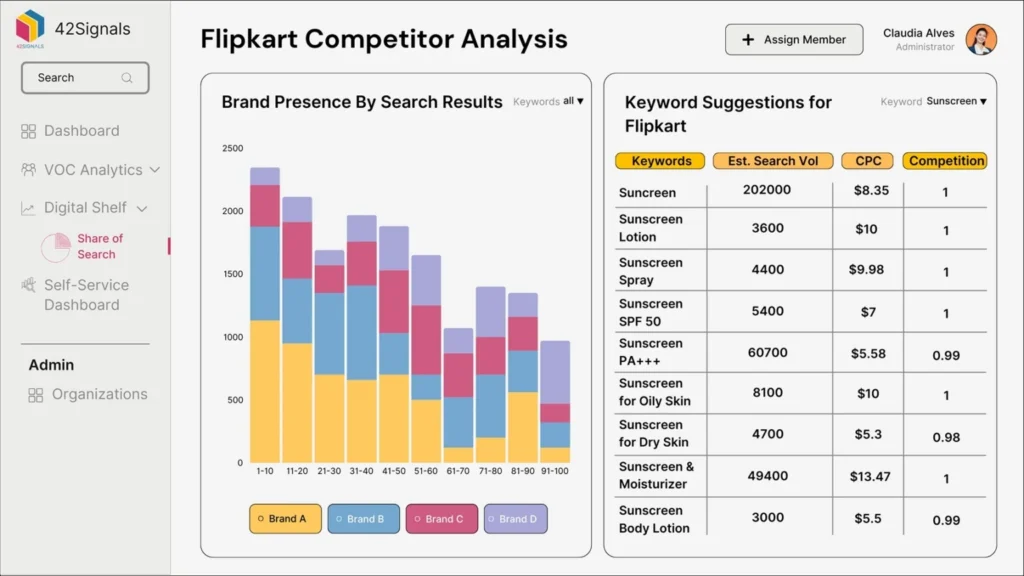
There is also the algorithmic damage to consider. Search engines like Amazon and Flipkart want to keep users happy. If your product is not there, the algorithm moves you down to make room for a competitor who is ready to ship (learn more about Flipkart listing optimization). According to internal data, if a product that ranks in the top ten goes out of stock for just one day, its rank can fall by 28%. If that stockout lasts for more than ten days, the rank can drop by a staggering 150%, making it nearly impossible for new customers to find you even after you restock.
Why Traditional ERP Systems Aren’t Enough for Ecommerce Stock Tracking
Many teams rely on their internal inventory systems to tell them what is happening. While those systems are great for the warehouse, they often fail to reflect the reality of the digital shelf. Your internal database might say you have ten units, but the marketplace might show you as out of stock due to a sync error or a regional limitation. This is where ecommerce stock tracking becomes a distinct necessity.
You need a system that looks at the shelf through the eyes of the customer. Digital shelf monitoring allows you to see exactly what the shopper sees in real time. It catches the gap between your warehouse and the actual listing. This visibility is the only way to ensure that your marketing spend is not driving traffic to a page that cannot convert.
Three Ways Real-Time Stock Tracking Prevents Search Rank Loss
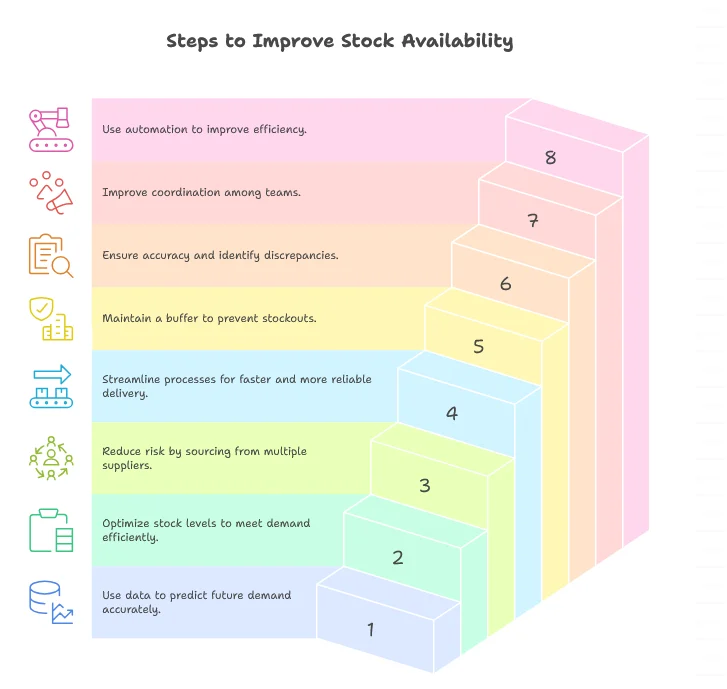
Image Source: QodeNext
- Real-time Visibility into Local Availability:
Traditional tracking often gives you a global view that misses the local nuances of quick commerce. You need to know if your product is available at the specific dark store or pincode where the customer is actually shopping. This level of pin-code availability is the only way to manage a modern supply chain effectively across platforms like Blinkit or Zepto. - Preventing Search Rank Penalties:
By setting up a product availability tracker, you can receive alerts long before your stock hits zero. This allows your team to move inventory or adjust marketing budgets to slow down demand before the algorithm penalizes your search position. Proactive management ensures that you never have to pay the high cost of recovering a lost search rank. - Competitive Intelligence and Market Gaps:
Monitoring your own stock is only half the battle. If you track your competitors, you can find moments where they are out of stock and increase your own advertising to capture their stranded customers. This kind of strategic move is a cornerstone of [Winning Keywords Your Competitors Already Own: The Complete Guide to Ecommerce Keyword Gap Analysis].
Mastering Hyperlocal Stock and the Pincode Challenge
The rise of quick commerce has changed the rules of inventory availability. It is no longer enough to be in stock “nationally.” In the world of ten-minute delivery, you must be in stock at the local dark store. If you are missing from the local hub, you are invisible to every customer in that radius. This creates a massive challenge for category managers who have to oversee thousands of location and SKU combinations.

Alt text: pricing data for Instacart by 42Signals
This is why 42Signals focuses heavily on pin-code availability insights. Our platform allows you to track your products down to the specific serviceable areas. If a product is out of stock in South Delhi but available in North Delhi, your sales team needs to know that immediately. This allows for surgical inventory replenishment rather than broad, expensive guesses. Learn more about it in our use cases.
Using Out of Stock Monitoring to Maintain Price Parity
There is a strange relationship between stock levels and pricing that many brands overlook. When stock is abundant, the pressure is on to keep prices competitive. However, when stock is low across the category, you might have the power to increase your margins. Conversely, if you are the only one out of stock, your authorized sellers might feel the need to break price parity to move what little inventory remains.
Effective out of stock monitoring helps you maintain your price parity across channels. By seeing the inventory levels of all your sellers, you can identify why price violations are happening. Often, a price drop is just a symptom of a seller trying to clear aging stock before a new version arrives. Understanding the inventory context allows you to address the root cause rather than just fighting the price change.
The Strategy of OOS Detection and Automated Stockout Alerts
The goal of any high-performing ecommerce team is to move from reactive to proactive. If you are waiting for a weekly report to tell you that you are out of stock, you have already lost. You need an OOS detection system that works in minutes. Automated stockout alerts ensure that the right person in the category or supply chain team is notified the second a listing goes dark.
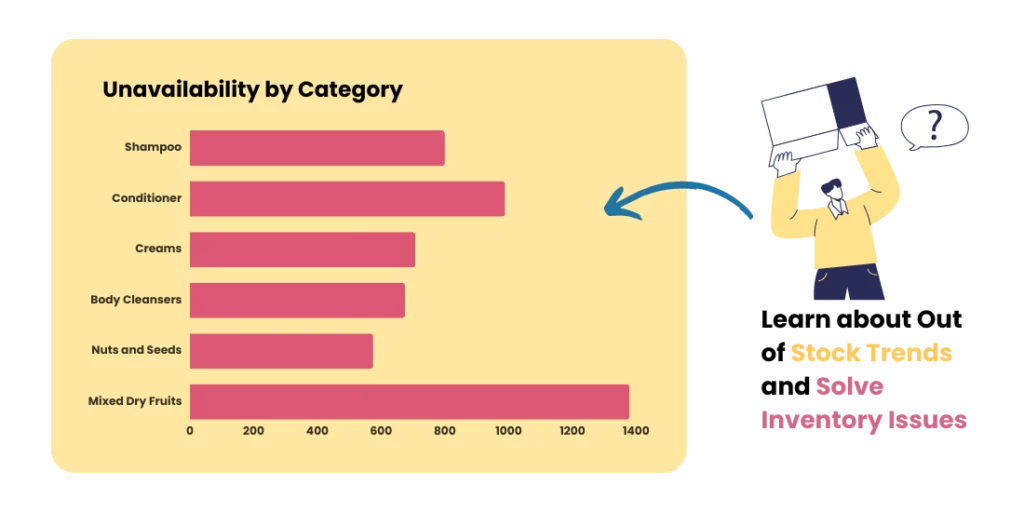
Alt text: learn about out of stock trends and solve inventory issues with 42Signals data
These alerts can be customized based on your business needs. You might want an alert when stock hits a “danger zone” of 10% remaining. This gives your replenishment team a window of time to move inventory before the search rank is affected. You can also integrate these signals with your inventory forecasting using ecommerce market intelligence to refine your future orders based on live sell-through rates.
How to Build a Revenue Protection Framework
- Segment Your Monitoring by SKU Velocity:
You cannot monitor every single item with the same level of intensity. Focus your high-frequency tracking on your top 20% of SKUs that generate 80% of your revenue. This ensures that your most important assets are never invisible to the customer. - Analyze the Root Cause of Stockouts:
Not all stockouts are caused by the warehouse. Sometimes there is a technical error on the marketplace, or an authorized seller has been suspended. A good digital shelf availability tool will help you distinguish between a physical shortage and a digital listing error so you can fix it faster. - Leverage Regional Demand Signals:
Use your availability data to spot where demand is spiking before your competitors do. If you see high out of stock rates in a specific city, it is a signal that your marketing is working well there, and you should prioritize shipping more units to that region immediately.
Measuring In-Stock Rate as a Leading Indicator of Market Share
Success in ecommerce is measured by more than just this month’s sales. It is about the health of your digital shelf. Tracking your in-stock rate over time is a leading indicator of your future market share. If your in-stock rate is declining, your search rank will soon follow, which will eventually lead to a drop in sales.
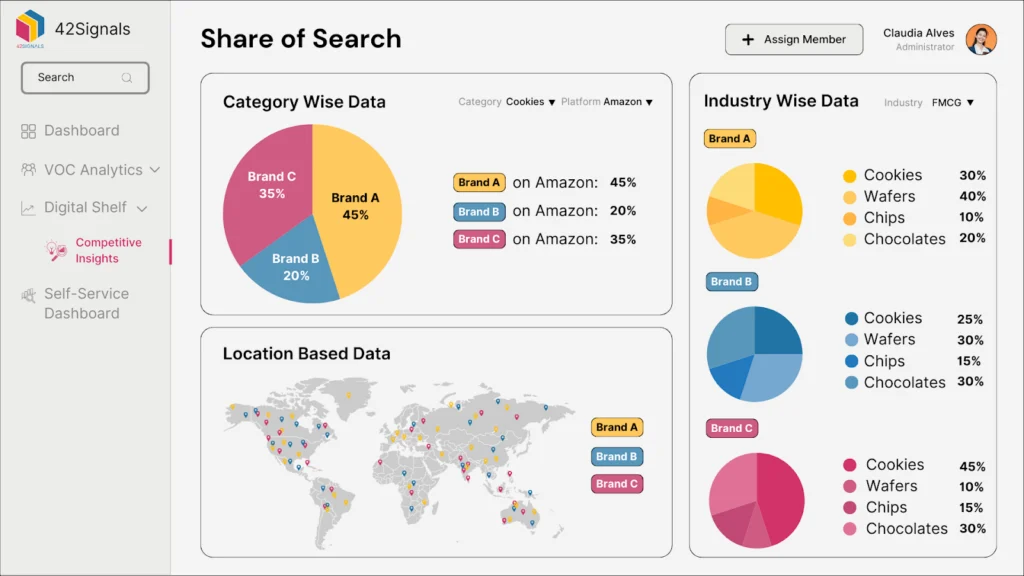
Brands that prioritize retail stock availability tracking see a direct improvement in their share of search for keyword competition. When you are always available, you are always reliable in the eyes of the search algorithm. This reliability earns you the top spots on the first page, which is where 70% of Amazon customers do all their shopping.
Protecting Brand Trust through Hyperlocal Stock Precision
At the end of the day, retail is about the relationship between a brand and a human being. When a customer expects to find your product and finds an empty shelf instead, that trust is broken. In the era of quick commerce, where expectations are set by swiping on a screen, that disappointment is magnified. Ensuring hyperlocal stock precision is an act of brand building.
By using a product availability tracker, you are essentially telling your customers that you value their time. You are ensuring that whenever they feel the intent to buy, you are there to fulfill it. This consistency is what builds long-term loyalty and protects your brand from being replaced by the “next best thing” that happens to be in stock.
Ensuring Stock Availability for Future Profit
The phrase “Out of Stock = Out of Search” is not just a catchy slogan. It is a fundamental law of the digital marketplace. Your ability to maintain high inventory availability is the foundation upon which all your other marketing efforts are built. Without it, your ad spend is wasted, your search rank is destroyed, and your customer loyalty is given away to competitors.

By implementing a robust retail stock availability tracking system with price alerts, you move away from the “rearview mirror” approach of traditional reporting. You gain the ability to see issues before they become crises. You can protect your revenue, maintain your margins, and ensure that your brand is always the one the customer finds first.
To learn more about how these metrics interact with your broader goals, check out our guide on 4 digital shelf performance metrics that every top brand should measure. The path to growth is paved with available products. Take control of your shelf today and stop the silent revenue leaks that are holding your brand back.
Frequently Asked Questions about Retail Stock Availability Tracking
How does a stockout affect my search ranking on marketplaces?
When your product goes out of stock, it loses its “buyability” score in the marketplace algorithm. This usually results in an immediate drop in search rank. Even after you restock, it can take weeks of discounted pricing and heavy ad spend to return to your original position.
Can I track stock levels for my competitors?
Yes, advanced digital shelf monitoring tools can track competitor stock levels across multiple platforms and pincodes. This allows you to identify supply gaps in the market and adjust your own pricing or advertising to capture their customers while they are out of stock.
What is the difference between an ERP and a digital shelf tracker?
An ERP tracks what you have in your physical warehouse. A digital shelf tracker monitors what the customer actually sees on the website or app. Often, these two do not match due to system delays, regional restrictions, or marketplace errors.
Why is pincode tracking important for quick commerce?
Quick commerce relies on hyper-local dark stores. A product might be in stock in one part of a city but totally unavailable in another. Tracking at the pincode level is the only way to know if your brand is actually visible to the local customers in high-demand areas.