

Master Your Product Listings with AI Retail Data Analytics for E-commerce Success
E-commerce success hinges on having product detail pages (PDPs) that convert. But how do you know if your listings are truly competitive? The answer lies in the strategic application of AI retail data analytics. This article introduces the essential 16-Point PDP Audit, a systematic approach to scoring and optimizing critical content elements—titles, bullet points, and images—against your top competitors. By leveraging granular data and marketplace insights provided by tools like 42Signals, you can significantly enhance your listing quality scoring, improve search visibility, and ultimately win the digital shelf. Learn how powerful ecommerce analytics can transform your PDPs from adequate to exceptional, ensuring every product is primed for maximum performance.
What Is the 16-Point PDP Audit and How Does Listing Quality Scoring Work?
In the hyper-competitive world of e-commerce, your Product Detail Page (PDP) is your primary salesperson. If it is dull, incomplete, or fails to address customer needs, sales will suffer. Simply having a PDP isn’t enough; you need a winning PDP. This is where the 16-Point PDP Audit comes in. It’s a structured, data-driven framework designed to systematically evaluate and grade every critical element of your product listing, moving far beyond a simple checklist.
The real power behind this audit today is AI retail data analytics. This isn’t about guesswork; it’s about precision. We are using intelligent algorithms and massive datasets to measure how your content—specifically your titles, bullets, and images—stacks up against the competition that is actively winning search results and driving conversions. Think of this audit as your secret weapon for enhancing your listing quality scoring and capturing market share. By integrating real-time competitor intelligence, you ensure that your optimization efforts are always focused on the factors that truly move the needle in e-commerce performance.
| Category | Metric | Type |
| Title | Keyword Inclusion and Placement | Search Win Metric |
| Title | Character Length and Compliance | Platform Health Metric |
| Title | Key Benefit Communication | User Clarity Metric |
| Title | Brand and Model Consistency | Trust Metric |
| Bullets | Feature/Benefit Balance | Persuasion Metric |
| Bullets | Semantic Keyword Coverage | Discovery Metric |
| Bullets | Clarity and Scannability | Experience Metric |
| Bullets | Addressing FAQs and Objections | Retention Metric |
| Images | Image Count and Variety | Completeness Metric |
| Images | Resolution and Clarity | Technical Metric |
| Images | Mobile Optimization | Accessibility Metric |
| Images | Alt Text and Metadata | SEO Metric |
Why AI-Powered Competitor Intelligence Changes How PDP Audits Work
For years, optimizing a PDP was often a subjective process, relying on best practices and intuition. Today, the digital shelf is too crowded and complex for that approach. AI retail data analytics via digital shelf analytics provides the necessary objective framework, turning anecdotal evidence into actionable data points.
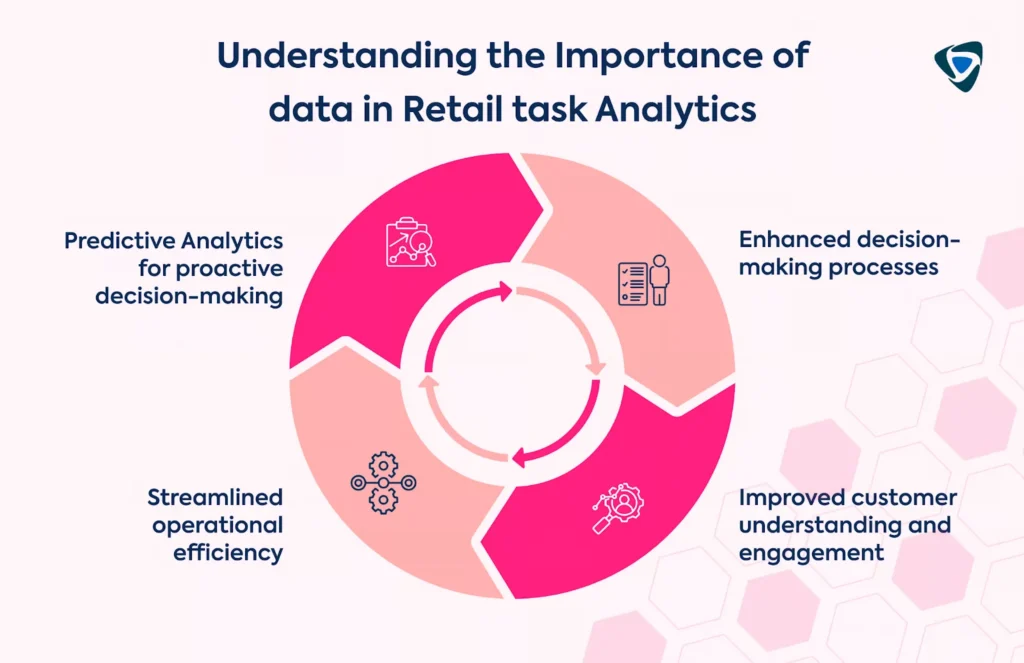
Image Source: Taqtics
From Subjective Reviews to Objective Scores: How Ecommerce Analytics Transforms PDP Optimization
Traditional methods of reviewing PDPs might involve a few team members looking at a page and suggesting improvements. While helpful, this process is slow, inconsistent, and lacks scale. Modern ecommerce analytics solutions, powered by artificial intelligence, can process millions of data points across thousands of SKUs and dozens of competitors in real-time. This level of analysis is humanly impossible.
For instance, an AI tool can quickly determine not just if your title is long enough, but whether it contains the exact high-converting keywords currently driving traffic to your top three competitors. It can score the image quality based on technical specifications and how effectively the image communicates key product benefits compared to the market standard. This depth of insight transforms the manual, tedious PDP audit into an automated, strategic function.
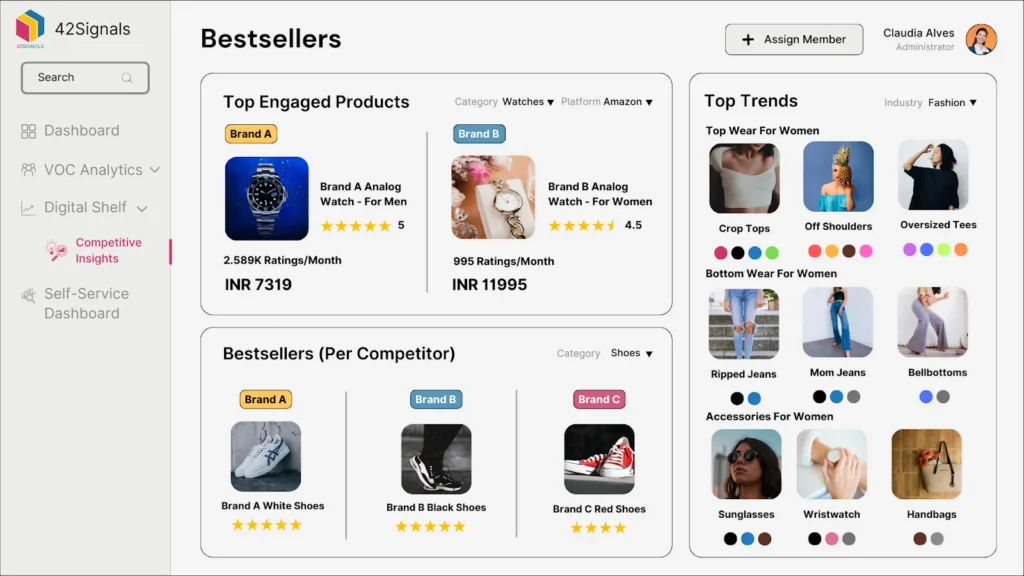
To truly excel, businesses must harness the specific and granular marketplace insights provided by advanced platforms. These insights reveal not only what is selling but why it is selling, which is the crucial difference between merely observing the market and actively leading it.
Core Components of the 16-Point Audit: Scoring Titles, Bullets, and Images
The 16-Point PDP Audit breaks down the overall PDP quality score into four main categories, each containing four key metrics, focusing on the three most vital conversion elements: the title, the bullet points, and the visual assets.
Title Optimization: Winning the Search Algorithm
The product title is the single most important piece of text on your PDP, heavily influencing both search ranking and click-through rate. AI retail data analytics is used here to score four critical aspects:
- Keyword Inclusion and Placement (Search Win Metric): This measures if the primary keyword—and relevant secondary keywords—are present, and crucially, if they are placed optimally near the beginning of the title. For example, if your primary keyword is ai retail data analytics, the AI will check its position relative to competitors who rank in the top search results. Source: Internal analysis of best practices across major e-commerce platforms.

- Character Length and Compliance (Platform Health Metric): Different marketplaces have different rules. The AI scores compliance with length limits (e.g., 50-80 characters on Amazon) and the exclusion of prohibited symbols or promotional language, which can lead to suppression.
- Key Benefit Communication (User Clarity Metric): Beyond keywords, does the title immediately communicate the product’s primary use or benefit? The AI analyzes competitor titles to identify common benefit phrases and scores yours based on its inclusion of high-performing terms.
- Brand and Model Consistency (Trust Metric): Ensuring the brand name and unique identifier (model number, size, color) are present and correct builds customer trust and reduces returns. The AI confirms this consistency against internal data records.
Bullet Points and Descriptions: Converting the Click
Once a customer clicks, the bullet points (key features) and description are what convince them to buy. These elements need to be informative, engaging, and structured for easy scanning. This section’s quality relies heavily on excellent ecommerce analytics to identify customer pain points and conversion drivers.
- Feature/Benefit Balance (Persuasion Metric): Do your bullet points list only features (e.g., “Contains 500GB storage”) or do they articulate the benefit (e.g., “Store thousands of photos and files with 500GB of reliable storage”)? The AI uses natural language processing (NLP) to score the ratio of benefits to mere features.
- Semantic Keyword Coverage (Discovery Metric): This goes beyond the primary keyword. Tools leveraging 42Signals’ platform using share of search analytics can identify associated queries and long-tail keywords—the semantic keywords—that your competitors are using. The audit scores the presence of these relevant terms (e.g., ‘data visualization tools,’ ‘real-time inventory management’ for the primary keyword ai retail data analytics).
- Clarity and Scannability (Experience Metric): Each bullet point should be concise and easy to read. The audit checks for excessive length or overly dense paragraphs, which harm the user experience. Shorter, punchy points score higher.
- Addressing FAQs and Objections (Retention Metric): Top-performing PDPs proactively address common customer questions (like “Is it easy to set up?” or “What is the warranty?”). The AI with voice of customer analytics analyzes Q&A sections and customer reviews to see if your content directly mitigates these common objections.
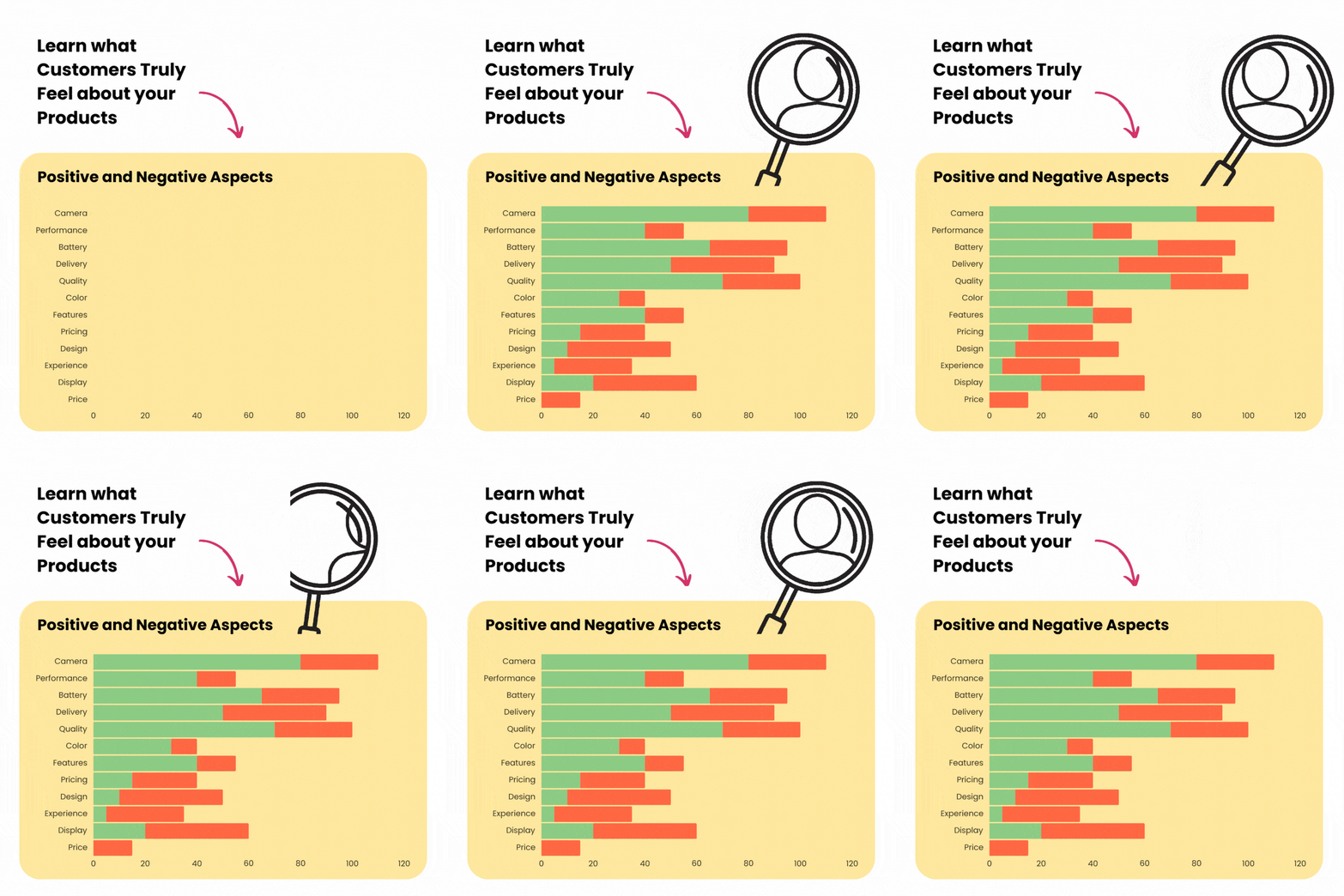
Image Quality and Optimization: The Visual Sell
Images are often the primary conversion driver. Customers rely on visuals, and a poor image set can kill a sale instantly, regardless of how good the copy is. This is a critical area for AI retail data analytics because AI can analyze visual data at scale.
- Image Count and Variety (Completeness Metric): The digital shelf performance metrics audit scores the number of images and verifies that you have a minimum set including the main product shot, scale/size references, lifestyle shots, and feature callouts (A+ content). Studies show that listings with 6-9 images often outperform those with fewer.
- Resolution and Clarity (Technical Metric): Technical quality is essential. The AI checks that all images meet platform resolution standards and are sharp, well-lit, and professionally shot. Blurry or low-resolution images instantly deduct points from your listing quality scoring.
- Mobile Optimization (Accessibility Metric): Since a majority of traffic comes from mobile devices, the AI simulates how the images look on small screens, checking for legibility of text overlays and overall crop effectiveness.
- Alt Text and Metadata (SEO Metric): This is where visual meets text search. The audit verifies that descriptive and keyword-rich alt text is present for all images, including the focus keyword ai retail data analytics for at least 50% of the visual assets, ensuring search engines can properly index the content.
The Role of Competitor Intelligence in Relative Listing Quality Scoring
To truly win search, your score can’t exist in a vacuum. It must be a relative score—how good are you compared to the products currently dominating the search results? This is the core principle of effective competitor price intelligence.
Why Your Listing Score Must Be Relative, Not Absolute
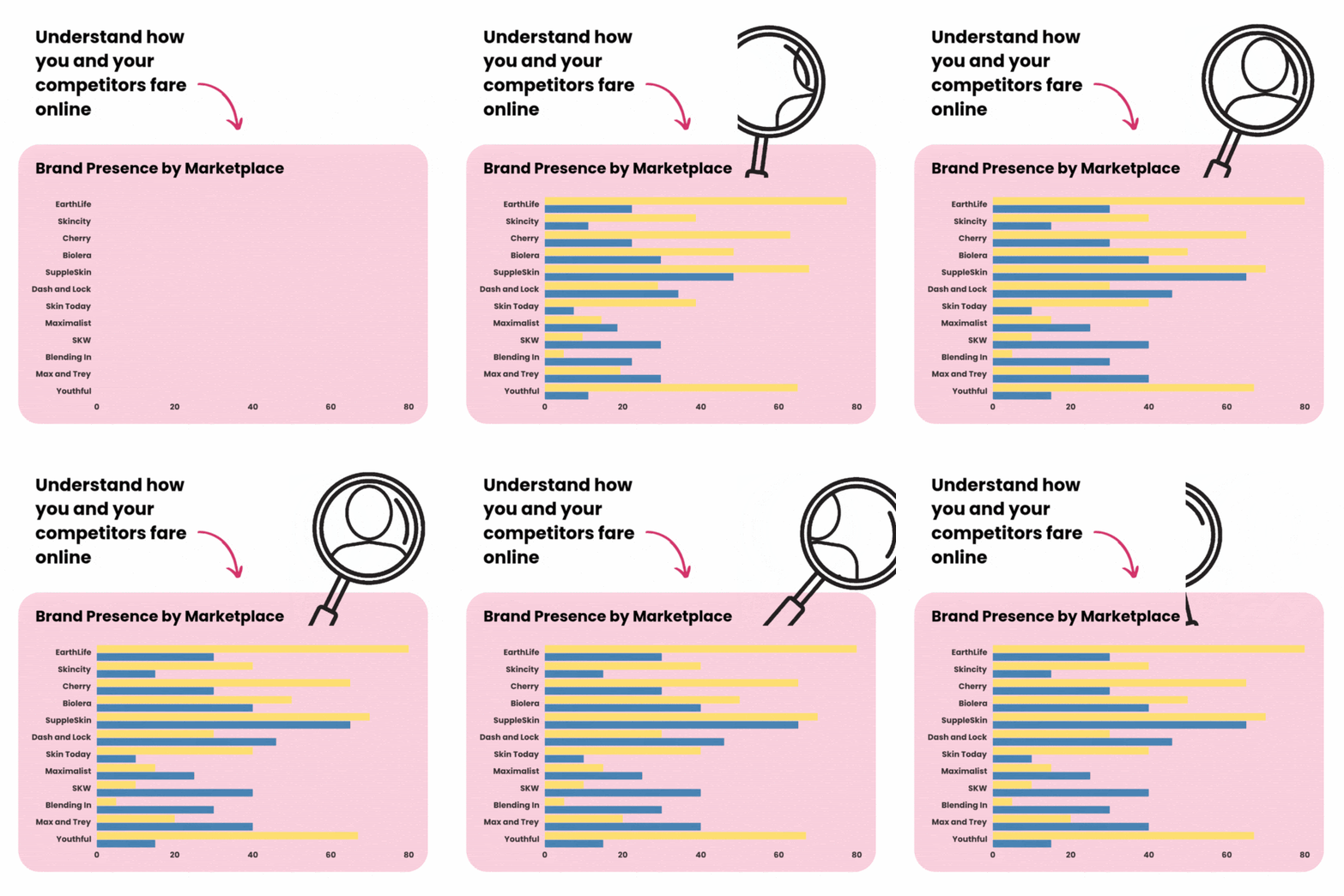
The most successful companies use AI retail data analytics to achieve granular marketplace insights. This involves continuously monitoring the competitive landscape to understand pricing, promotional activity, review sentiment, and, most importantly, content performance.
For instance, an AI platform might continuously track the top five ranking PDPs for the search term ‘advanced inventory software.’ If three of those top five suddenly update their titles to include the phrase ‘cloud-based integration,’ that is a strong market signal. Your 16-Point Audit, backed by competitor intelligence, would flag your PDP for a mandatory update to maintain your listing quality scoring parity.
Tired of playing catch-up? Schedule a demo today to see how our proprietary AI retail data analytics platform and the 16-Point Audit can give you the marketplace insights needed to dominate your product category.
Implementing the 16-Point Audit: From Initial Score to Continuous Optimization
The 16-Point PDP Audit is not a one-time fix; it is a continuous improvement cycle. The goal is to maximize your listing quality scoring and maintain it against the ever-changing competitive tide.
Step-by-Step Optimization with AI Retail Data Analytics
- Initial Scoring and Gap Analysis: First, run all your PDPs through the AI scoring system. The resulting score, ideally out of 100, immediately highlights deficiencies. A low score in the ‘Title Keyword Inclusion’ metric for a specific product line clearly indicates where the team needs to focus its efforts. This initial review sets the baseline for the entire process.
- Prioritization based on ROI: Not all PDP fixes are equal. Using product performance metrics via ecommerce analytics, prioritize fixes based on potential impact. A PDP with high traffic but a low conversion rate needs immediate attention on images and bullet points (conversion elements). A PDP with low traffic needs immediate attention on the title and alt text (SEO elements). The focus keyword ai retail data analytics should be used strategically to maximize search visibility on these high-priority pages.
- A/B Testing and Validation: The AI suggests an optimal change, but human oversight and validation are still key. The suggested changes are A/B tested to confirm that they actually lead to higher conversion rates, not just higher content scores. This rigorous testing loop, informed by 42Signals, ensures that changes are based on proven market success.
- Continuous Monitoring: The digital shelf is dynamic. Competitors are always launching new content, running promotions, and changing keywords. Continuous monitoring, powered by AI retail data analytics, ensures that if a key competitor makes a move, your system alerts you, preventing a drop in your listing quality scoring.
For example, a high score in the ‘Addressing FAQs’ point might require checking both your product description and your customer Q&A data. If customers are consistently asking about “API integration” for your software, and neither your description nor your bullets clearly mention it, your score for that point will drop. Using competitor intelligence, the AI can see if competitors are proactively addressing this need, highlighting a content gap.
The Financial Impact of High-Quality Content
While improving titles and images might seem like a marketing task, the results directly impact the bottom line. High listing quality scoring leads to quantifiable financial benefits.
Boosting Visibility and Reducing Costs
High-quality content, fully optimized with focus keywords like ai retail data analytics, is rewarded by marketplace algorithms with better search placement. Better placement means more organic, free traffic. This directly reduces reliance on expensive paid advertising and improves your overall Return on Ad Spend (ROAS).
Furthermore, detailed and accurate product detail page optimization —scored highly in areas like ‘Clarity and Scannability’ and ‘Addressing FAQs’—lead to lower return rates. When customers know exactly what they are buying, they are less likely to send it back. A 2% reduction in return rate across a large product catalog can translate into millions in saved revenue and logistics costs.
Ready to run the 16-Point PDP Audit on your product catalogue? 42Signals scores your listing quality against the top-ranking competitors in your category — automatically, in real time. Book a demo, and we’ll show you which of the sixteen metrics are costing you the most visibility and conversions today
Future-Proofing Your E-commerce Strategy with AI
The future of e-commerce is data-driven. The 16-Point PDP Audit, fueled by the precision of AI retail data analytics, is the standard for mastering the digital shelf. By systematically scoring, optimizing, and continuously monitoring your critical content elements—titles, bullets, and images—against the latest marketplace insights and competitor intelligence, you move from reacting to the market to defining it. Embracing this level of detail and automation ensures that your listing quality scoring remains high, driving better search performance, higher conversion rates, and sustainable e-commerce growth.
Frequently Asked Questions (FAQs) About PDP Audits
What is the primary difference between a manual PDP audit and one using AI retail data analytics?
A manual PDP audit relies on human judgment and limited data, making it slow, subjective, and difficult to scale across thousands of SKUs. An audit using AI retail data analytics is automated, objective, and uses massive datasets (like 42Signals data) to compare your content against real-time top-performing competitors, providing a measurable listing quality scoring that updates constantly.
How often should I perform a 16-Point PDP Audit?
The digital shelf changes constantly. While a deep, comprehensive audit should be performed quarterly or semi-annually, continuous monitoring using AI retail data analytics should be run daily or weekly. This continuous check-up ensures that you immediately catch any content issues or competitive shifts detected through competitor intelligence before they severely impact your sales.
Which elements of the PDP have the highest impact on SEO?
While all elements matter, the most crucial elements for e-commerce SEO are the Product Title (for keyword inclusion, including the focus keyword like ai retail data analytics), the Alt Text on images, and the initial bullet points, as these are heavily weighted by search algorithms. Improving the quality of these elements is directly reflected in your listing quality scoring.
Can AI retail data analytics help with international marketplace expansion?
Absolutely. Ecommerce analytics platforms can be configured to analyze and score content based on country-specific search terms, language nuances, and local marketplace insights. This ensures your content is not just translated, but truly localized and optimized for each specific regional market, maximizing your reach and conversion globally.