

Success Starts with Reliable Competitor Benchmarks
Building accurate competitor benchmarks is no longer just a luxury for large retail brands; it is a necessity for any category manager who wants to justify budgets and track real performance. By moving away from manual spreadsheets and adopting a sophisticated category benchmarking tool like 42Signals, brands can transform raw digital shelf data into actionable insights. This article explores how to create a high-performance framework that uses a price benchmark, an availability benchmark, and a share of search benchmark to define your “win zone” in the market. We will look at why simple price matching is a trap and how a holistic competitor analysis benchmark allows you to outmaneuver rivals without sacrificing your profit margins.
The High Stakes of Retail Category Management
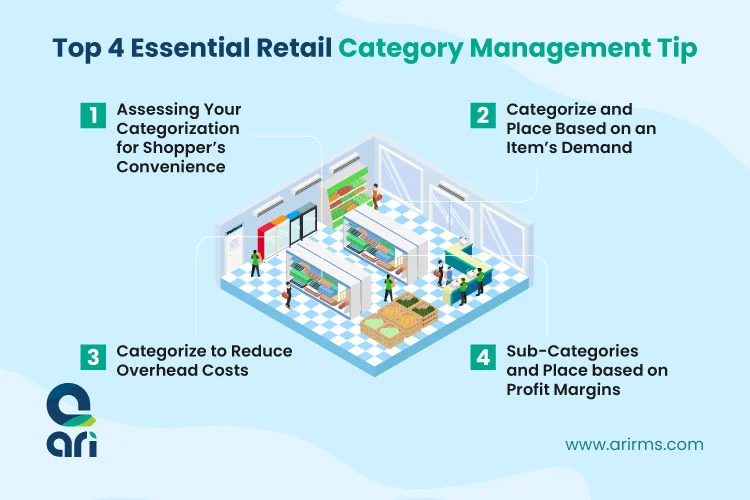
Image Source: Arirms
Have you ever sat in a board meeting and tried to explain why your sales dropped even though your marketing spend went up? It is an uncomfortable position to be in, and usually, the missing piece of the puzzle is an objective set of competitor benchmarks. Without a clear understanding of what your rivals are doing on the digital shelf, you are essentially guessing your market position based on internal metrics that do not tell the whole story. Modern retail moves too fast for guesswork because a single competitor price drop or a stockout on your end can shift market share in hours.
To lead a category successfully, you need to justify every investment with data that compares your brand to the market leaders. This is where a robust competitor analysis benchmark comes into play, providing the evidence needed to show exactly where you are winning and where you are losing ground. When you build competitor benchmarks that are rooted in real-time data, you stop reacting to the market and start shaping it to your advantage.
What Are Competitor Benchmarks and Why Do They Matter?
At its core, competitor benchmarks are the performance standards you set by analyzing the industry leaders and your direct rivals. They are not static numbers you check once a year; they are living metrics that help you understand the “why” behind your sales volume. For instance, knowing your own conversion rate is good, but knowing how that rate compares to the category average through a category benchmarking tool is what truly drives strategy.
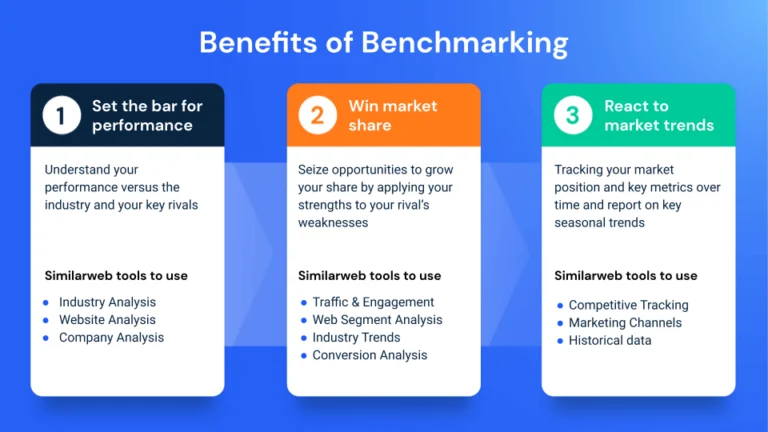
Image Source: Similarweb
Competitor benchmarks serve as a reality check for your brand’s value proposition. If you believe your product is premium but your competitor benchmarks show that rivals are offering better features at a lower price point, your positioning is flawed. By establishing a clear competitor analysis benchmark, you can identify these gaps early and adjust your tactics before they impact your quarterly results.
Why Manual Tracking is Failing Your Brand
Many category managers still rely on manual research to build their competitor benchmarks, but this approach is increasingly dangerous. The digital shelf is dynamic, with prices and stock levels changing across multiple marketplaces simultaneously. If you are relying on a weekly spreadsheet to track competitor benchmarks, you are acting on stale information that might already be irrelevant by the time you see it.
Furthermore, manual tracking is prone to human error and lacks the scale needed for comprehensive competitive benchmarking ecommerce. You cannot possibly manually monitor every SKU across every retailer and still have time for strategic planning. Automation is the only way to build competitor benchmarks that are accurate, frequent, and granular enough to support high-stakes decision-making.
The Four Pillars of Modern Competitive Benchmarking Ecommerce
To build a framework that actually means something, you need to look beyond the surface level. A truly effective competitor analysis benchmark is built on four distinct pillars that capture the full customer experience on the digital shelf.
1. The Price Benchmark: Protecting Your Profitability
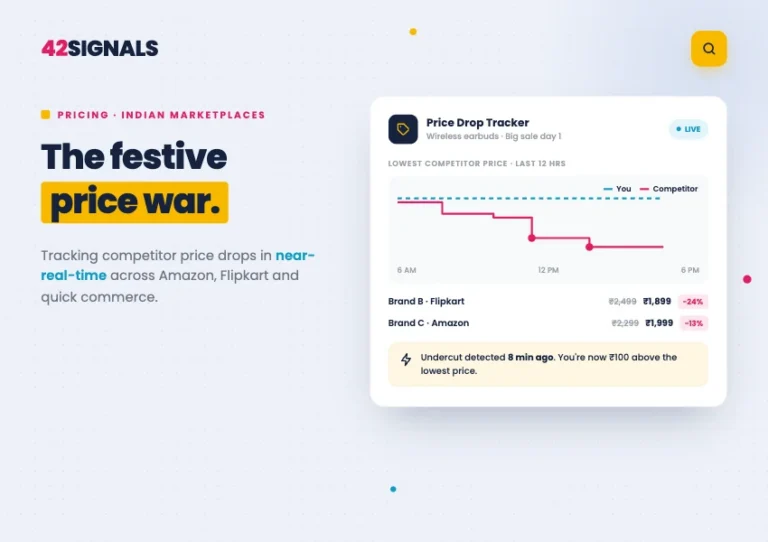
The most common metric in any competitor benchmarks set is price, but it is often misused. A proper price benchmark does not just look at the list price; it accounts for promotions, shipping costs, and bundle deals that competitors use to hide the true cost of their products. By using a price benchmark that tracks the total “landed price” for the consumer, you can see how you actually stack up in terms of value.

Moreover, a sophisticated competitor price intelligence solution helps you avoid the “race to the bottom”. Instead of reflexively matching every discount, you can use your competitor benchmarks to find areas where you have the authority to charge a premium. Research by McKinsey & Company shows that even a 1% improvement in price can increase operating profits by 8.7% on average. This proves that a data-driven price benchmarking analysis is one of the most powerful levers for financial success.
2. The Availability Benchmark: Winning the Battle of Choice
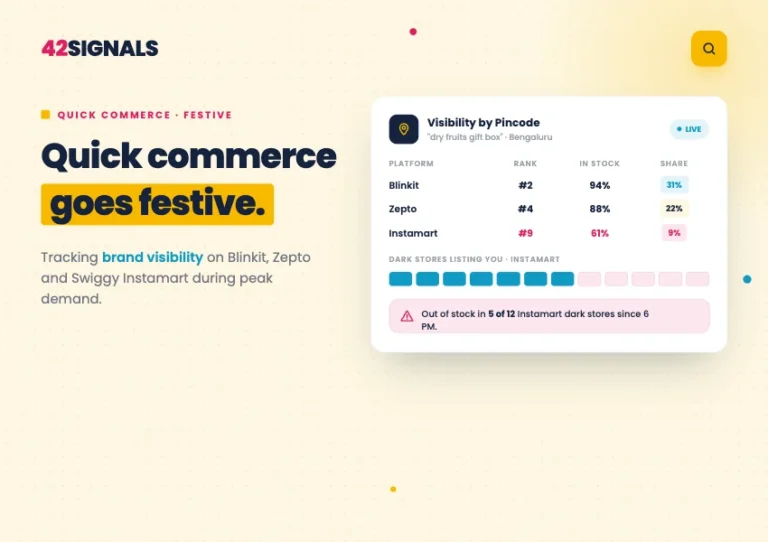
You cannot sell what is not in stock, and your competitor benchmarks must reflect this reality. An availability benchmark tracks how often your products are listed as “out of stock” compared to your rivals. If a competitor is constantly out of stock on a high-demand item, your competitor benchmarks (a part of the digital shelf performance metrics) should flag this as a golden opportunity to capture their frustrated customers.
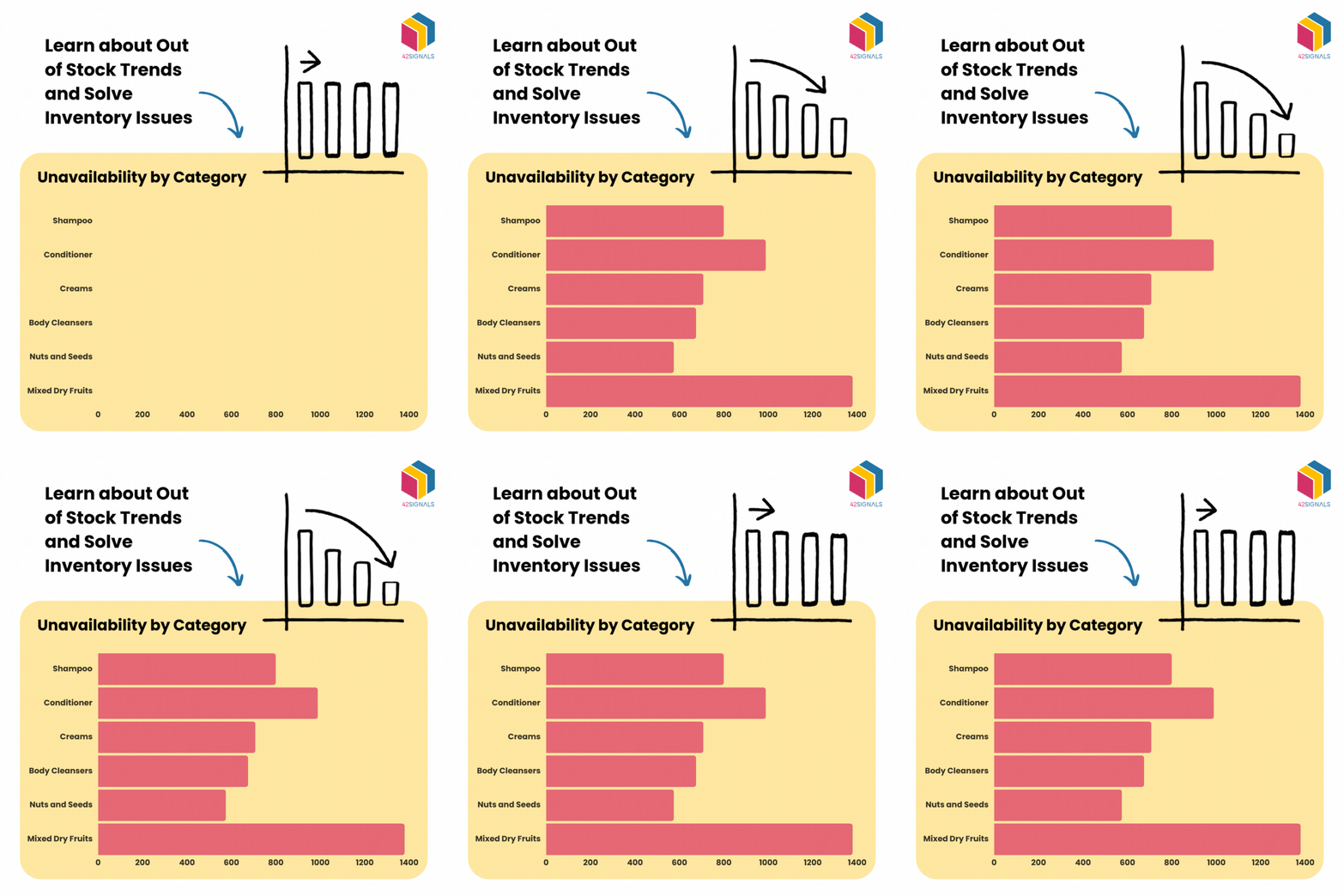
On the flip side, if your availability benchmark shows that you are the one frequently running out of stock, it highlights a critical failure in your supply chain. High-performance brands use these competitor benchmarks to improve their inventory forecasting and ensure they are always present where the customer is looking to buy. In the world of ecommerce, being the “only one in stock” is often more important than being the “cheapest one”.
3. The Rating Benchmark: Gauging Customer Sentiment
Quality is a competitive advantage, and the rating benchmark is how you measure it at scale. By comparing your average star ratings and review volume to the market leaders, you can build competitor benchmarks that reflect consumer trust. A high rating benchmark signals to marketplaces like Amazon that your product is a safe bet, which often leads to better organic visibility.
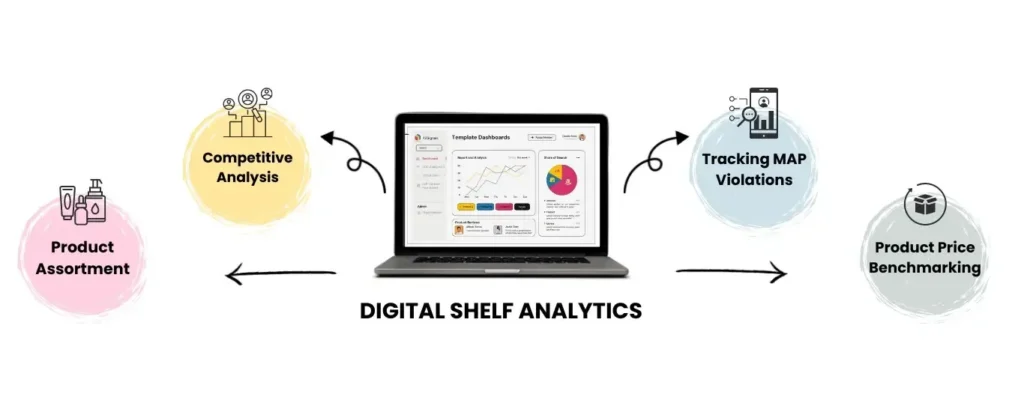
You should also look at the qualitative data within these competitor benchmarks. Analyzing why customers are leaving 1-star reviews for your competitors with digital shelf insights can reveal product gaps that you can exploit in your own marketing. A rating benchmark is essentially a constant, free focus group that tells you exactly what the market thinks of your current competitive position.
4. The Share of Search Benchmark: Measuring Your Visibility
If a customer cannot find you, you do not exist, which is why the share of search benchmark is so vital. This metric measures how often your brand appears in the top results for primary category keywords compared to your rivals. A dominant share of search benchmark is the digital equivalent of having the best eye-level shelf space in a physical grocery store.
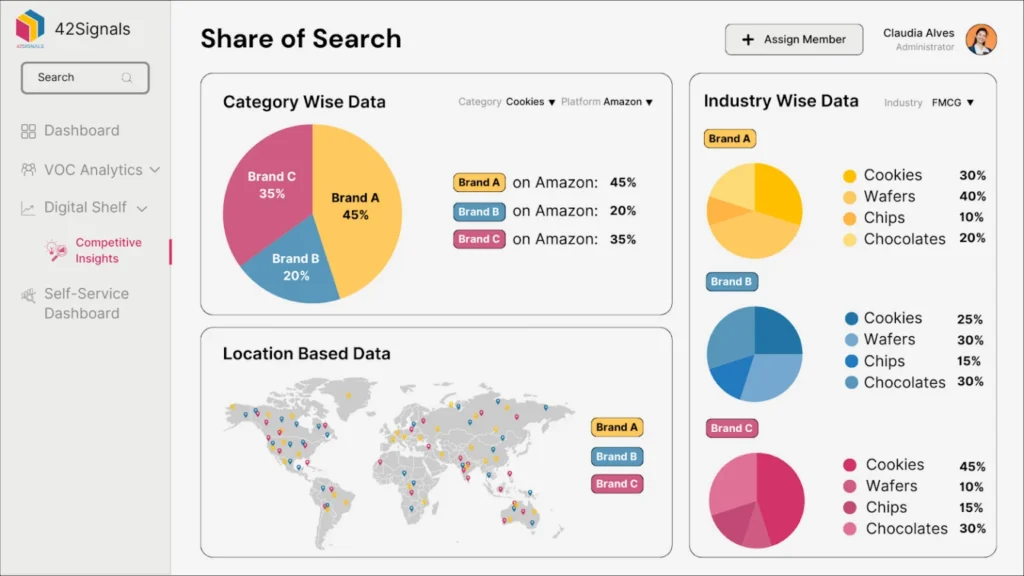
When your competitor benchmarks show a declining share of search, it is an early warning sign that your rivals are out-optimizing you or out-spending you on retail media. High-performance brands use the share of search benchmark to reallocate their advertising budgets to the keywords where they are losing ground. Without these competitor benchmarks, you might be throwing money at ads that are not moving the needle on your overall market visibility.
Read our Competitor Analysis Framework Guide.
How to Choose the Right Category Benchmarking Tool
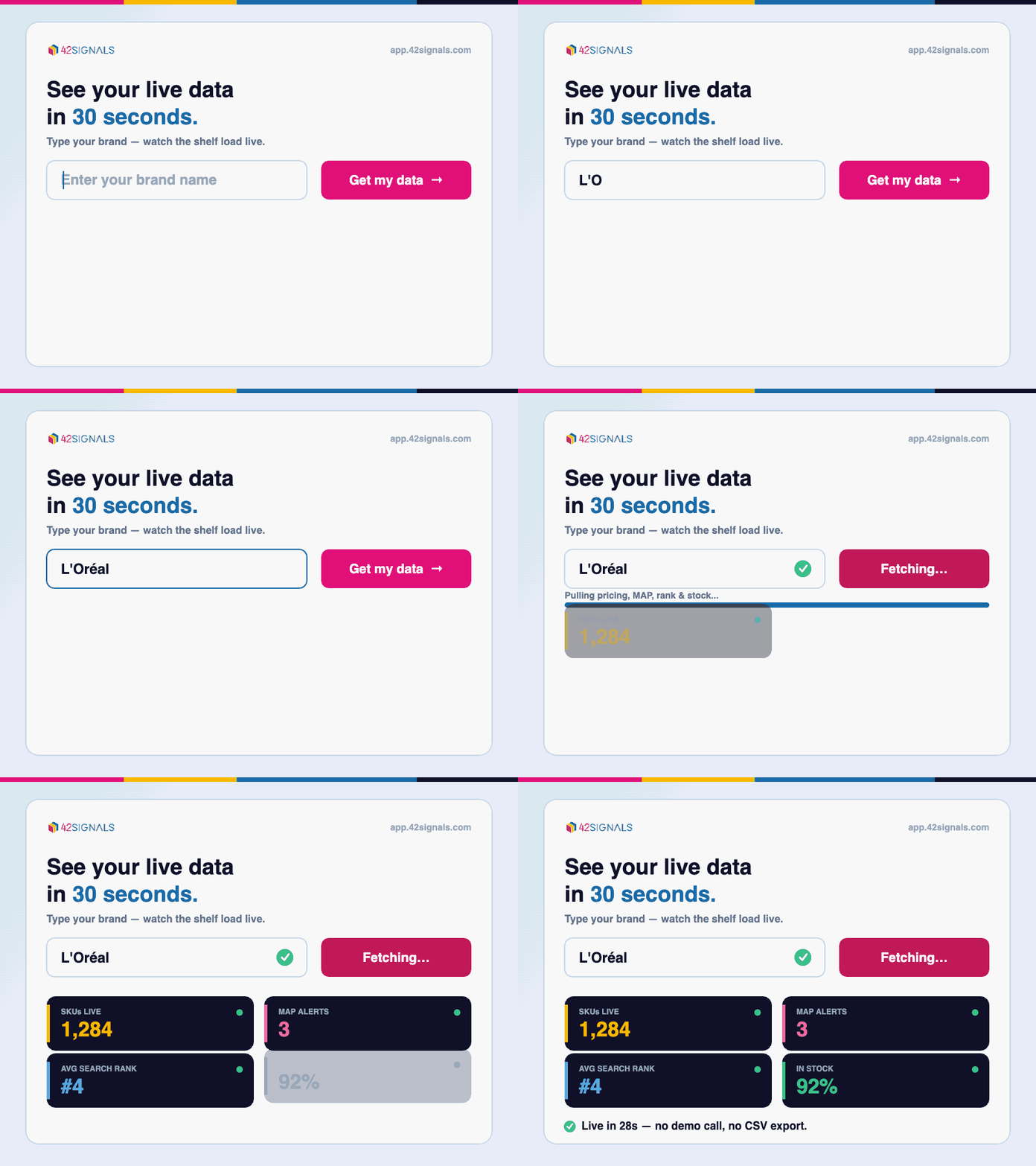
Not all tools are created equal when it comes to building professional competitor benchmarks. To get results that actually drive growth, your category benchmarking tool must provide three things: scale, speed, and accuracy. You need a platform like 42Signals, one of the best competitive benchmarking tools, that can ingest millions of data points across global marketplaces to give you the big picture without the manual headache.
A great category benchmarking tool should also provide context. It is not enough to just see a price drop; you need to see how that drop correlated with a change in that competitor’s sales rank or share of search benchmark. This multi-dimensional view is what separates simple trackers from the true intelligence layers that high-performance retail teams rely on.
Setting Up Your Framework: A Step-By-Step Guide
Building your competitor benchmarks is a strategic process that requires a clear roadmap. You cannot track everything at once, so you must be intentional about where you focus your analytical energy.
Step 1: Define Your True Rivals
Start by identifying the 5-10 competitors that actually impact your sales. These might not always be the biggest brands; they could be nimble marketplace “ninjas” that are stealing your buy box through aggressive pricing. Your competitor benchmarks are only as good as the rivals you choose to track.
Step 2: Select Your KVI Products
Focus your competitor benchmarks on your Key Value Indicators (KVIs). These are the products that consumers use to judge your brand’s overall value. By prioritizing these high-impact SKUs, you ensure that your competitive benchmarking ecommerce efforts are always aligned with revenue generation.
Step 3: Establish Your “Win Zone”
Based on your internal costs and your competitor benchmarks, define the price range where you are both profitable and competitive. This is your “win zone”. If your competitor analysis benchmark shows that the market is moving outside of this zone, you know it is time to either find cost savings or pivot your marketing to justify a higher price.
The ROI of Accurate Competitor Benchmarks
Investing in the right technology to build competitor benchmarks pays for itself through improved margins and market share. When you stop guessing, you stop wasting money on unnecessary discounts and inefficient ad spend. According to industry data, brands using advanced competitive intelligence can achieve revenue growth of 1% to 5% simply by optimizing their pricing and availability based on market reality.
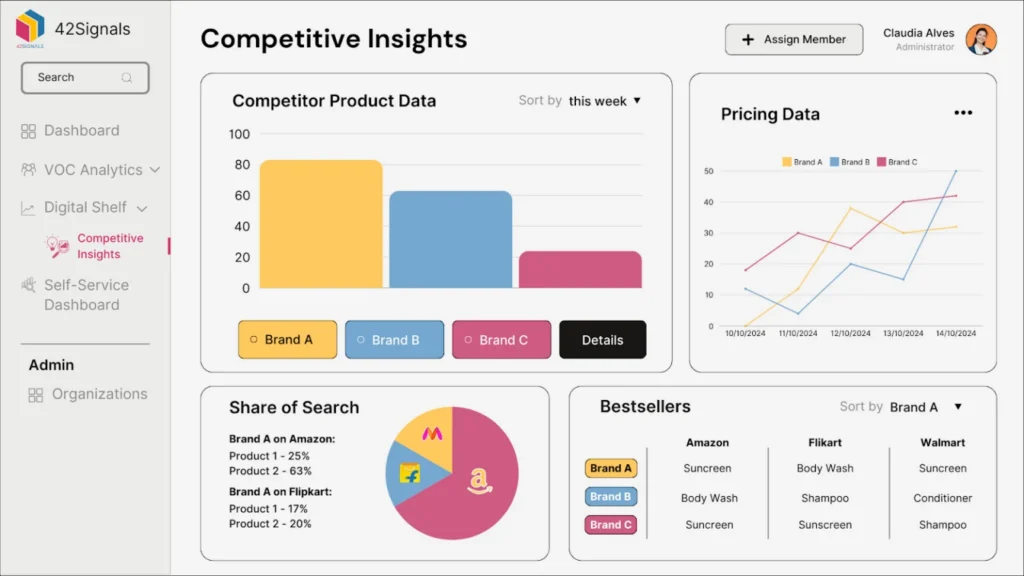
Furthermore, reliable competitor benchmarks save your team countless hours of manual work. Instead of hunting for data, your category managers can spend their time analyzing insights and making the big strategic moves that actually grow the business. In a landscape as competitive as 2026 retail, time is just as valuable as the data itself.
Conclusion: Stop Guessing, Start Leading
The era of “gut feeling” retail is over. To succeed in today’s digital-first environment, you must build competitor benchmarks that are accurate, automated, and actionable. By utilizing a price benchmark, availability benchmark, and share of search benchmark, you create a foundation for high-performance strategies that justify every dollar of investment.
Don’t let your rivals define the market for you. Use a robust category benchmarking tool and a structured competitor analysis benchmark to take control of your category and drive superior financial results. The data is there for the taking; the only question is whether you have the tools to turn it into your greatest competitive advantage.
Ready to see how your brand stacks up? Schedule a personalized demo of 42Signals and transform your competitive benchmarking ecommerce strategy today.
FAQs on Competitor Benchmarks
How often should we update our competitor benchmarks?
For fast-moving categories like electronics or fashion, your competitor benchmarks should be updated daily or even hourly. For more stable categories, a weekly or monthly review might be sufficient. However, major market events like holiday sales or new product launches should always trigger an immediate update to your competitor analysis benchmark.
Can we build competitor benchmarks for marketplaces like Amazon?
Yes, and it is absolutely essential. Over 60% of product searches now begin on marketplaces like Amazon, making it the primary battleground for competitive benchmarking ecommerce. A category benchmarking tool that includes marketplace data allows you to track everything from third-party price undercutting to changes in fulfillment speed.
What is the most important metric in competitor benchmarks?
While price is the most visible, the share of search benchmark is arguably the most important for long-term growth. If you have the best price but nobody can find you on the digital shelf, your sales will still suffer. A balanced set of competitor benchmarks includes price, availability, and visibility to provide a 360-degree view of the market.