
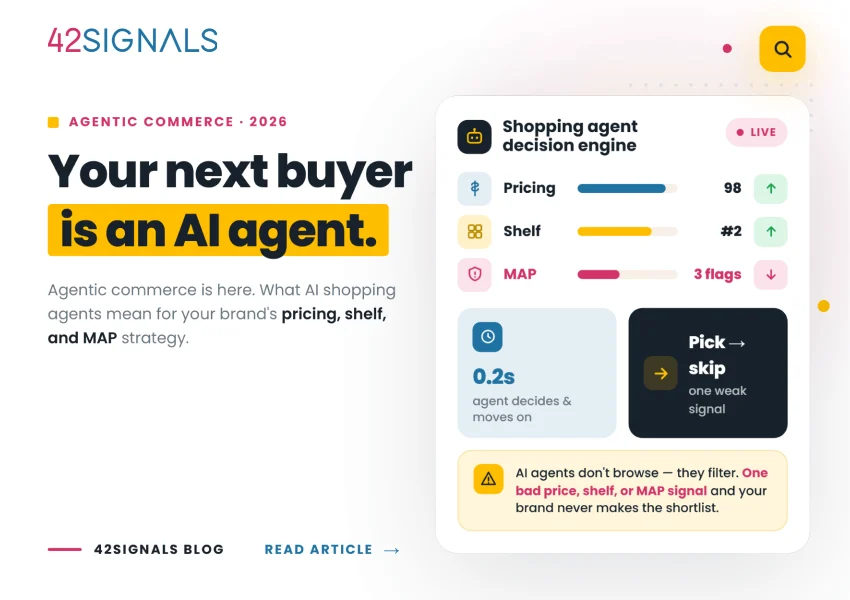
A Quick Summary of Agentic Commerce for Brands
We are moving away from a time when people spend hours scrolling through pages to find the best deal. Instead, we are entering the era of agentic commerce, where digital assistants do the heavy lifting for us. These AI shopping agents are designed to look at millions of data points in seconds to find exactly what a customer needs. For brands, this means that your old marketing tricks might not work as well as they used to. You need to focus on being the most reliable source of truth for these machines.
What is Agentic Commerce and Why Does it Matter Now?
When you ask what is agentic commerce, you are really asking about the next version of the internet. For a long time, the internet was built for humans. We used search engines to find websites, and then we clicked on those websites to buy things. This required a lot of manual work from the shopper. They had to compare prices, read reviews, and check if items were in stock. Now, we are seeing a shift where autonomous commerce takes over these tasks.

Image source: Consultancy
In 2026, this has become the fastest growing topic in the industry. People are searching for this term thousands of times every month. The reason it matters so much right now is that the technology has finally caught up to the idea. We now have powerful language models that can act as AI ecommerce agents. These agents do not just give you a link to a store. They can actually go to the store, evaluate the product, and complete the purchase for you.
This shift changes the relationship between a brand and its customers. Usually, a brand tries to win over a person with pretty pictures and emotional stories. But an agentic commerce protocol does not care about your feelings. It cares about data. It looks for the best value based on the rules the user has set. If you want to survive, you have to make sure your data is clean and easy for a machine to read.
How Do AI Shopping Agents Change the Customer Journey?
The traditional way people shop is often called the marketing funnel. It starts with awareness and ends with a purchase. But AI shopping agents are compressing this funnel into a single moment. A user might say to their assistant, “Find me a high-quality protein powder under fifty dollars and order it.” In that one sentence, the agent handles the discovery, the comparison, and the transaction.
This means that the “discovery” phase is happening inside a black box. You cannot see the agent browsing your site because it happens in milliseconds. According to some reports, over 50% of all internet traffic is now made up of bots and automated systems. Some of these are bad, but many are these new shoppers. They are looking for specific signals to decide if your brand is worth recommending.
One of the most important things to understand is that AI ecommerce agents do not browse, they filter. They start with every product in the category and then they start crossing names off the list. They might remove you because your price is inconsistent or because your shipping takes too long. If you get filtered out early, the human customer never even knows you existed. This is a massive risk for brands that rely on traditional search engine rankings.
Why Is Pricing the Most Critical Signal for AI Shopping Agents?
In an world driven by AI purchasing, price is the ultimate filter. These agents are programmed to find the best deal according to the user’s preferences. If your price is not accurate across all platforms, you create a “weak signal” that causes the agent to skip you. This is why pricing in agentic AI is so much more complex than just setting a number on your website.
You also have to worry about how your price looks to the rest of the web. These agents can see every listing you have on Amazon, Walmart, and Target at the same time. If one of those retailers has an old price, it confuses the AI. Machines like consistency. When they see different prices for the same SKU, they might flag your product as unreliable. This can hurt your chances of being the top recommendation.
To manage this, you need to have a very strong PDP Analytics strategy. You need to know exactly what your price is everywhere at every hour of the day. If a third-party seller drops your price too low, you need to know instantly. In a human world, you might have a few days to fix it. In a world of AI shopping agents, you might lose thousands of sales in the time it takes you to drink a cup of coffee.
Protecting Your Brand with MAP Compliance in Agentic Commerce
Minimum Advertised Price, or MAP, has always been important for protecting brand value. But MAP compliance in agentic commerce is now a matter of survival. When unauthorized sellers break your price rules, they are not just hurting your margins. They are effectively telling the AI ecommerce agents that your brand is in chaos. Agents look for the lowest price that also seems legitimate.
If an agent sees a price that is way below your MAP, it might think the product is a scam or a counterfeit. On the other hand, if it thinks the low price is real, it will steer all customers toward that unauthorized seller. This leaves your loyal retail partners with no sales and a lot of frustration. It also makes it very hard for you to maintain a premium image.

The only way to stop this is through constant MAP violation monitoring. You need a system that can catch these violations as they happen. Because agentic commerce moves so fast, you cannot rely on manual checks anymore. You need an automated partner that alerts you the moment a seller goes off script. This allows you to protect your “buy box” and keep the AI agents focused on your authorized listings.
The Evolution of the Digital Shelf and Product Availability
We often talk about the “digital shelf” when we discuss how products appear on a screen. In the era of autonomous commerce, the shelf is no longer a physical or even a visual space. It is a data space. Digital shelf AI refers to how your product information is structured so that machines can find it. If your product is out of stock, you essentially disappear from the shelf entirely.

Availability is a binary signal for an agent. If you are out of stock, the agent will not wait for you to restock. It will immediately find the next best alternative. This is why Availability and out-of-stock tracking is so critical. You need to be able to predict when you might run out so you can adjust your marketing or your supply chain before it is too late.
There are also more complex issues like “dark store” availability for quick commerce. In some cases, your product might be available in one city but not another. AI shopping agents are smart enough to know where the user is located. They will only recommend things that can be delivered to that specific spot. If your local inventory data is wrong, you are invisible to those local agents.
Why Content Quality is Your Best Friend for Brand Visibility
You might think that if machines are doing the shopping, you don’t need good descriptions or photos anymore. That is actually the opposite of the truth. Brand visibility to AI agents depends on having very clear and structured data. These agents use something called Retrieval-Augmented Generation to understand your products. This means they “read” your product pages to answer user questions.
If your content is vague or uses too much “brand-speak,” the agent will struggle to understand what you are actually selling. For example, if you describe a shirt as “crafted for modern life,” an agent might not know if it is formal or casual. But if you provide specific details about the fabric, the fit, and the care instructions, the agent can confidently recommend it. This is why Content Compliance is now a core part of SEO.
According to industry data, nearly 40% of ecommerce returns happen because the product content was poor or inaccurate. AI ecommerce agents are designed to minimize these kinds of mistakes for the user. They will prefer brands that provide high-quality, verified data. By cleaning up your product titles and descriptions, you are essentially training the AI to be your best salesperson.
Understanding the Agentic Commerce Protocol for Developers
For those on the technical side, the agentic commerce protocol is the set of rules that allows different systems to talk to each other. It is what connects a user’s wallet to a shopping assistant and a brand’s inventory. This is often built on top of decentralized systems or advanced APIs. The goal is to make transactions happen at a near-zero cost so that agents can do thousands of them without breaking the bank.
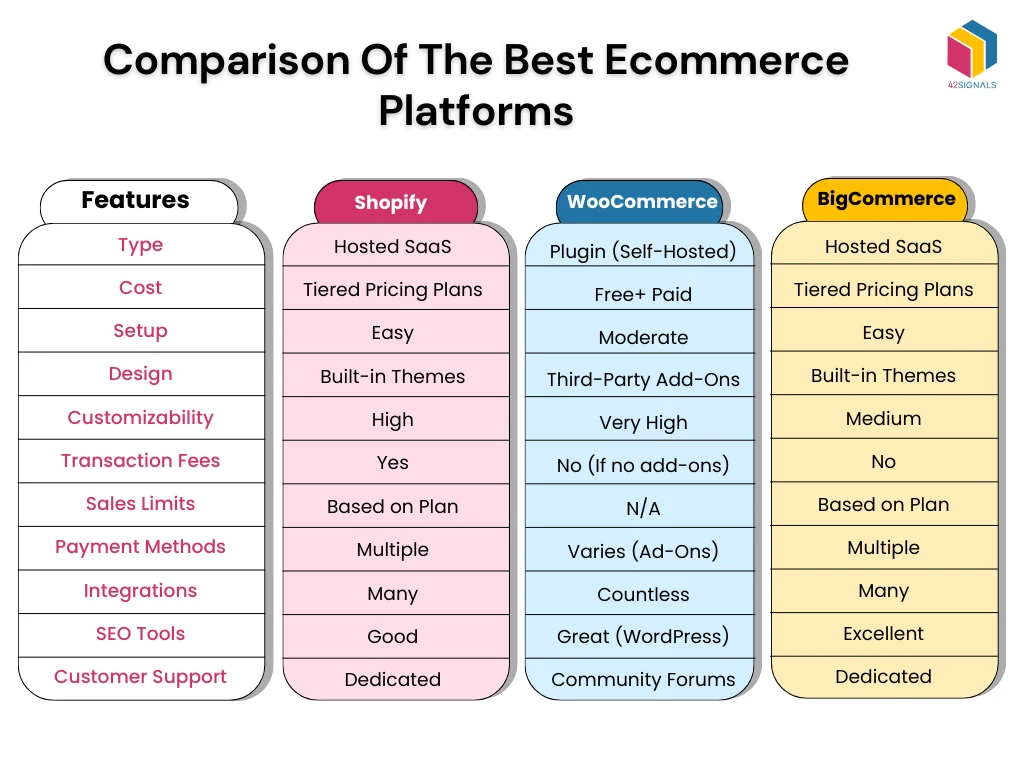
This is a big shift from the old way of doing things where a human had to use a credit card and a checkout page. In the future, your website might not even have a “buy” button for humans. It might just have an endpoint for agents to hit. This is why Shopify and other big players are now optimizing their platforms for “LLM consumption”. They want to make it as easy as possible for an agent to see your catalog.
As a brand, you don’t necessarily need to build your own protocol. But you do need to make sure your Multi-Platform Integration is ready. Your data should be able to flow seamlessly into any system an agent might use. If your backend is messy, you will have a hard time connecting to these new sales channels.
Winning the AI-Driven Buy Box with Real-Time Intelligence
The “buy box” is the most valuable piece of real estate in ecommerce. It is the default option that appears when a customer clicks “add to cart.” In the world of AI shopping agents, the agent effectively decides who wins the buy box for every single request. Winning the AI-driven buy box requires you to have the best combination of price, availability, and reputation.
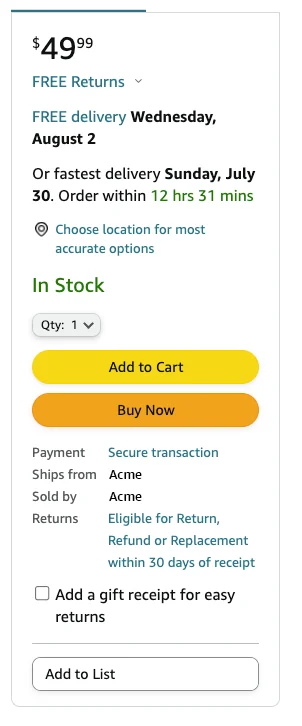
Image Source: Ecom Engine
To stay on top, you need Buy box analytics that tell you who else is competing for that spot. Is a competitor dropping their price every time you do? Are they using a different shipping method that agents prefer? Without this data, you are flying blind. You might think you are winning when you are actually losing the majority of recommendations.
Real-time brand intelligence is the only way to react to these changes. The market moves too fast for weekly or even daily reports. You need alerts that tell you the moment your position changes. This allows you to make quick adjustments to your strategy so you can take the lead again.
The Importance of Sentiment and Reviews in Autonomous Shopping
Even though agents are machines, they still care about human opinions. AI shopping agents are programmed to look at reviews and ratings to judge the quality of a product. If your product has a lot of negative reviews, an agent will see that as a “risk” and will likely recommend a competitor instead. This is why Sentiment Analytics is still so important.

Image Source: appinventiv
Agents can do something humans cannot: they can read every single review on your page in an instant. They look for specific themes, like if people are complaining about the size or the color. They use this “voice of the customer” data to build a profile of your brand. If that profile is negative, your agentic commerce strategy will fail no matter how low your price is.
You should be using AI to analyze these reviews yourself. This helps you find problems before they become big enough for the shopping agents to notice. For example, if you see a sudden spike in complaints about a specific feature, you can fix it in your next production run. This proactive approach helps you maintain a high “trust score” with the automated systems that now control the market.
How 42Signals Provides the Competitive Moat for Your Brand
In a world where everyone has access to AI, the only thing that sets you apart is the quality of your data. This is where 42Signals comes in. We provide the brand intelligence you need to navigate the world of agentic commerce. Our platform is designed to give you a real-time view of your pricing, your shelf presence, and your MAP compliance across hundreds of retailers.
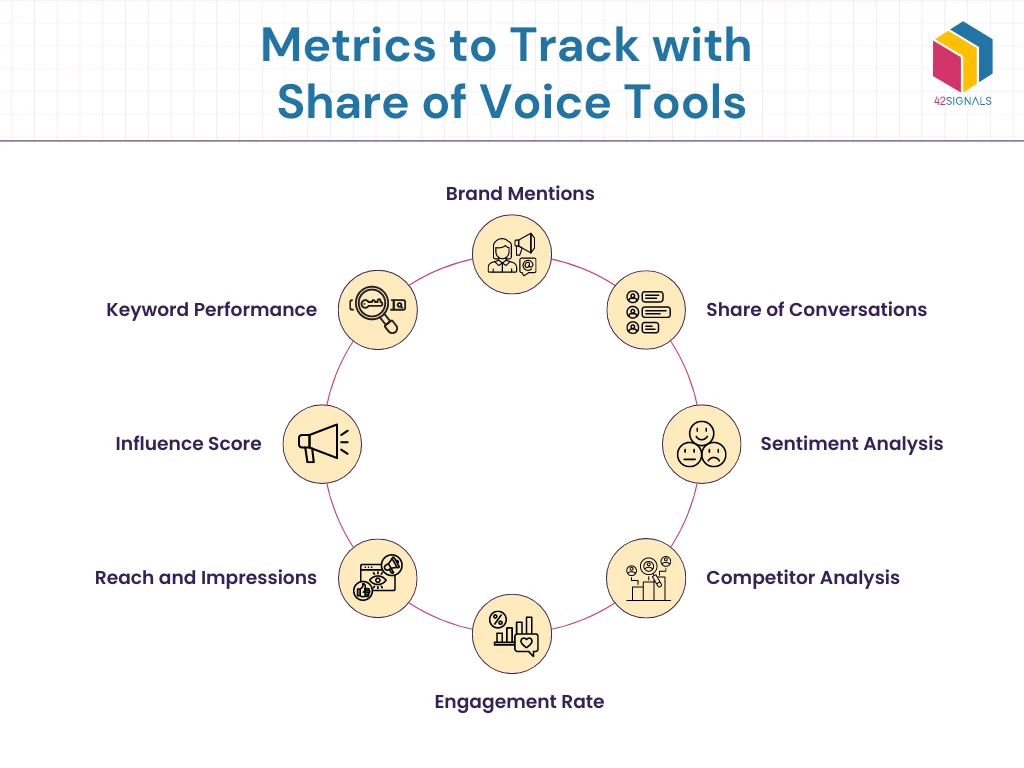
We don’t just give you raw data; we give you actionable insights. Our system can tell you which of your products are most “agent-friendly” and which ones need work. We help you identify the gaps in your strategy so you can fill them before your competitors do. By using our Share of Voice tools, you can see exactly how often you are appearing in the results that matter most.
While you focus on building great products, we focus on making sure the world’s AI shopping agents can find and recommend them. In the fast-paced world of 2026, this kind of intelligence is not just an advantage. It is the foundation of your entire business.
Final Thoughts on the Future of Brand Strategy in Ecommerce
As we have seen, agentic commerce is not a trend that will go away. It is the new reality of how people buy things. The brands that will succeed are the ones that embrace this change and adapt their strategies accordingly. You cannot afford to wait and see what happens. The technology is already here, and your customers are already starting to use it.
Your goal should be to become the most “retrievable” brand in your category. This means having perfect prices, 100% availability, and crystal-clear content. It means monitoring your MAP and your competitors every single hour. It sounds like a lot of work, but with the right tools, it is entirely possible.
Webinar: Beyond Price Monitoring: The 4 Hidden Dimensions of Competitor Intelligence
Learn how to track competitor assortment shifts, localized delivery speeds, merchant landscape leakage, and search visibility trends before they erode your market share.
See how 42Signals helps brands meet the data requirements of AI shopping agents across pricing, availability, and MAP compliance. Request a demo.
Frequently Asked Questions About Agentic Commerce
What is the difference between traditional ecommerce and agentic commerce?
Traditional ecommerce requires a human to do all the work of searching and comparing. In agentic commerce, an AI assistant takes over these tasks and makes decisions based on the user’s goals.
Do AI shopping agents actually buy things without human approval?
In many cases, yes. While some users might want to give a final “okay,” many systems are being built to handle the entire transaction from start to finish autonomously.
How can I make my brand more visible to AI ecommerce agents?
You need to focus on structured data, clear product descriptions, and consistent pricing. The easier it is for a machine to read your information, the more likely it is to recommend your product.
Will agentic commerce destroy brand loyalty?
It might change it. Loyalty will no longer be about catchy slogans. It will be about which brand consistently provides the best data and the most reliable products.
What is the role of an agentic commerce protocol?
A protocol is the set of technical rules that allows different AI systems to communicate and handle transactions securely and efficiently.
How does MAP compliance affect my ranking with AI agents?
Agents look for consistency. If they see different prices from unauthorized sellers, they might flag your brand as unreliable or direct customers to the wrong place, hurting your overall performance.
Why is 42Signals the best partner for this new era?
We provide real-time, SKU-level insights into every part of the digital shelf. This gives you the data you need to satisfy the strict requirements of today’s AI shopping agents.