

** TL;DR ** Winning the Amazon Buy Box, which is crucial for sales, relies on more than just having the lowest price. A powerful but often overlooked factor is your review data. This isn’t just about star ratings; Amazon’s algorithm heavily weighs the volume, steady rate, and positive sentiment of your reviews as key trust signals. By proactively generating authentic feedback and professionally managing this customer feedback data, you significantly boost your credibility, improve your conversion rate, and dramatically increase your chances of securing the Buy Box.
If you’ve ever bought anything on Amazon, you’ve used the Buy Box without even thinking about it. It’s that familiar white box on the right side of a product page with the “Add to Cart” or “Buy Now” button. It seems simple, but behind that single button is a fierce, silent battle between sellers.
Most shoppers just click and go, unaware that multiple sellers might be competing to offer that exact same product. Winning the Buy Box means you get the vast majority of the sales. In fact, Amazon states that over 80% of all sales on its platform go through the Buy Box winner. That is a staggering number, and it means that for sellers, losing the Buy Box is like watching potential revenue vanish.
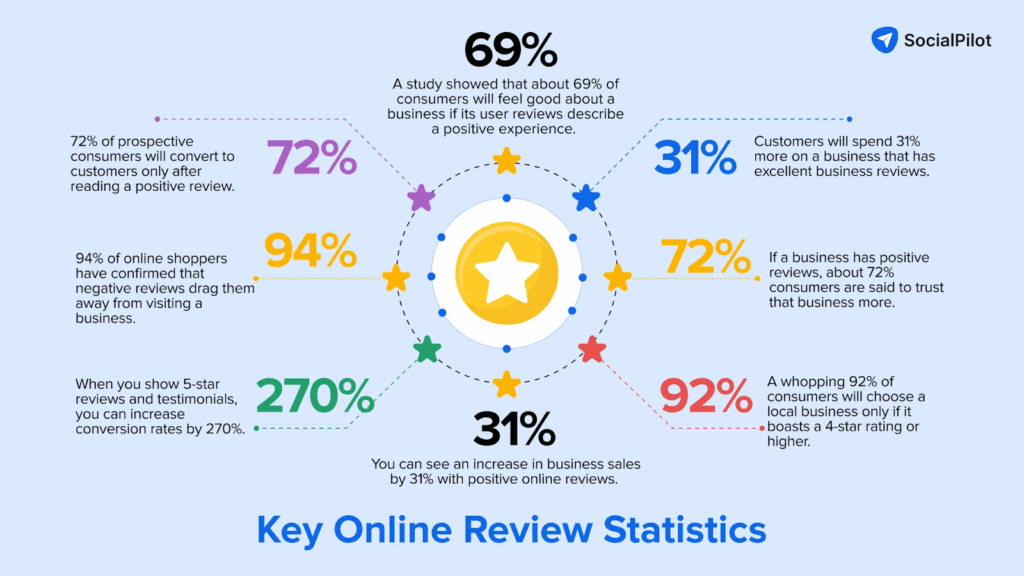
Image Source: Social Pilot
So, how does Amazon decide which seller wins this prized real estate? While price and shipping speed are crucial, there’s a hidden, powerful force at play: your review data. This article is not just about star ratings. We will dive deep into how the quality, quantity, and substance of your customer feedback data directly shape your chances of winning the Buy Box and dominating your market.
What Exactly is the Amazon Buy Box and Why is Review Data Important? Let’s Break It Down
Before we get into the role of reviews, let’s make sure we fully understand the prize. The Buy Box is Amazon’s automated system that selects a single, default seller for each product. When a customer clicks “Add to Cart,” they are buying from the seller who currently “owns” the Buy Box.
Think of it as Amazon’s vote of confidence. By placing a seller in the Buy Box, Amazon is telling the customer, “We recommend you buy from this seller because they offer the best overall combination of price, service, and reliability.”
For the seller, it’s the ultimate form of visibility. Being in the Buy Box doesn’t just increase your sales; it effectively makes you Amazon’s featured vendor for that item. This is one of the most critical, yet often misunderstood, Amazon Buy Box factors. It is not a permanent trophy. Ownership can change by the hour based on a dynamic algorithm that constantly reevaluates each seller’s performance.
The Amazon Buy Box Factors: It’s Not Just About Price
Many sellers operate under the false assumption that having the lowest price is the only way to win. While price is incredibly important, it’s just one piece of a complex puzzle. Amazon’s ultimate goal is to ensure a fantastic customer experience to keep people coming back to its platform. To do this, its algorithm considers a seller’s ability to fulfill that promise reliably.
The key factors include:
- Fulfillment Method: Sellers using Fulfillment by Amazon (FBA) often have a significant advantage because Amazon trusts its own shipping and customer service capabilities.
- Shipping Time: Customers want their products fast. Sellers who can offer two-day or Prime shipping are heavily favored.
- Order Defect Rate: This measures the percentage of a seller’s orders that have received negative sentiment, an A-to-z Guarantee claim, or a credit card chargeback. A low rate is non-negotiable.
- Seller Feedback Rating: This is the long-term reputation score for the seller themselves, different from product reviews impact.
- And finally, the focus of our discussion: Product Reviews and Ratings. This is where the review data you collect for your specific products becomes a direct competitive weapon.
The Heart of the Matter: Why Review Data is a Buy Box Superpower
Now, let’s get to the core of it. Why does review data hold so much weight?
The answer lies in social proof and risk reduction. For a customer, seeing a product with hundreds of positive reviews is a powerful signal that they are making a safe, smart purchase. For Amazon, promoting products with strong, positive review data minimizes the risk of returns, negative customer service interactions, and dissatisfied buyers.
Positive reviews act as a massive trust signal to the algorithm. They tell Amazon, “Customers who bought this from Seller A are happy.”
This proven customer satisfaction reduces the perceived risk for Amazon when they feature your offer in the Buy Box. It is a direct reflection of the product reviews impact on the overall shopping experience. A product with a high number of good reviews is a safer bet for Amazon than an identical product with few or poor reviews, even if the latter is slightly cheaper.
Beyond the 5 Stars: A Deeper Look at Review Data
When we talk about review data, we must look beyond the simple star rating. The algorithm is sophisticated enough to analyze multiple dimensions of your reviews. Let’s explore the key components.
1. Review Volume: The Power of the Crowd
A product with three hundred 4.5-star reviews is almost always more trusted than a product with three 5-star reviews. Volume matters because it indicates longevity and widespread satisfaction. A high volume of reviews suggests that the product has been tested by a large number of people and has consistently performed well.
This massive pool of customer feedback data provides a more statistically reliable picture for both customers and the algorithm, making your listing a much stronger contender for the Buy Box.
2. Review Velocity: The Rhythm of Trust
Velocity refers to the rate at which new reviews are coming in. A steady stream of new, positive reviews is a fantastic signal to Amazon. It shows that the product is currently popular, relevant, and consistently meeting modern customer expectations.
A product that received all its reviews two years ago and has gone silent since might be seen as outdated or less engaged with the current market. Consistent, positive review data inflow keeps your product “fresh” in the eyes of the algorithm.
3. Review Sentiment Analysis: Reading Between the Lines
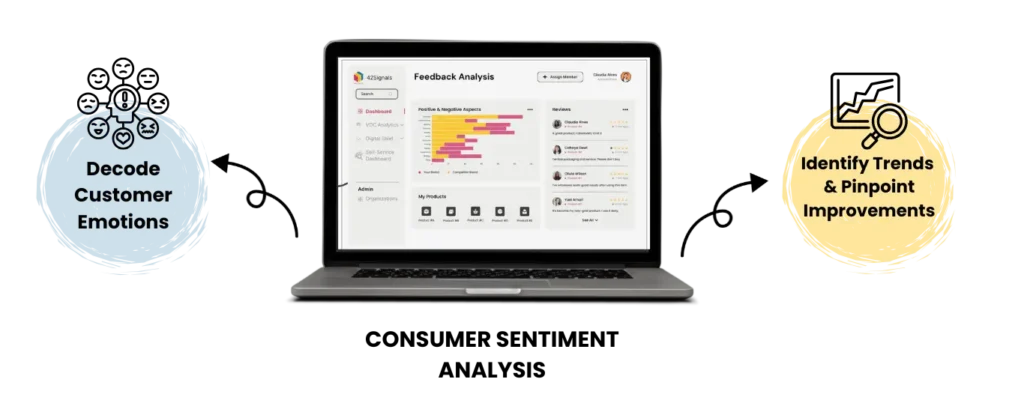
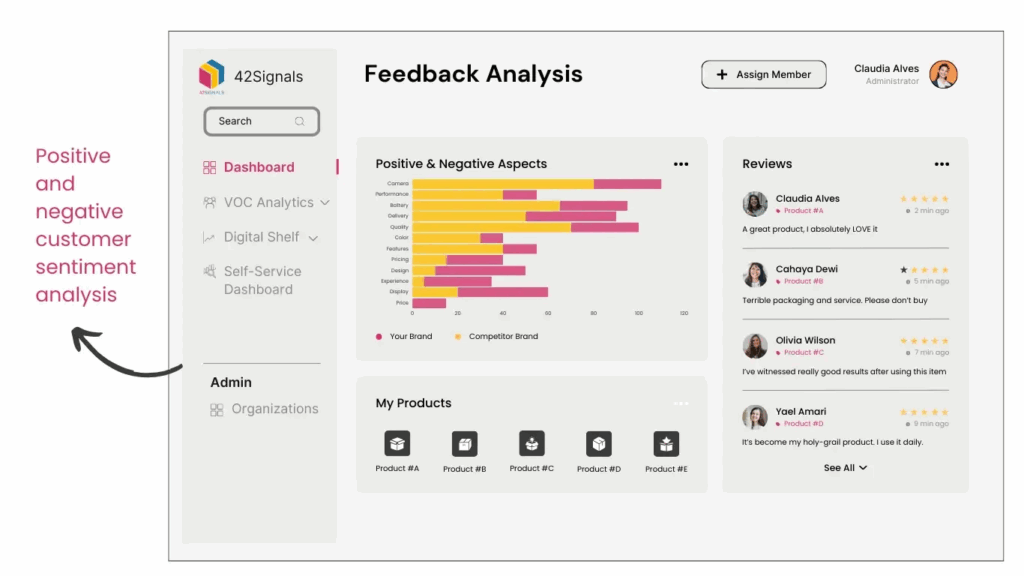
Image Source: Customer Sentiment Analysis by 42Signals
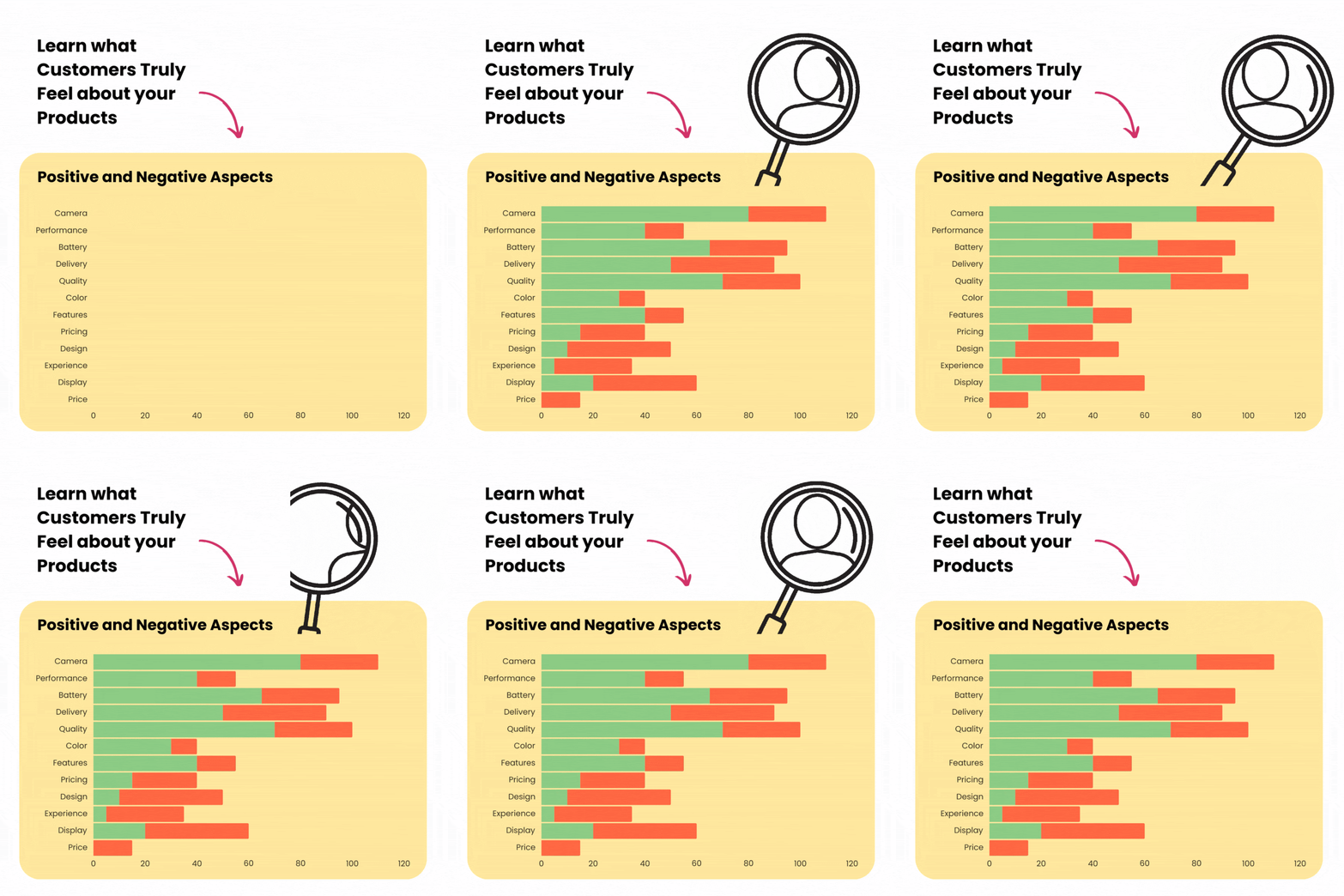
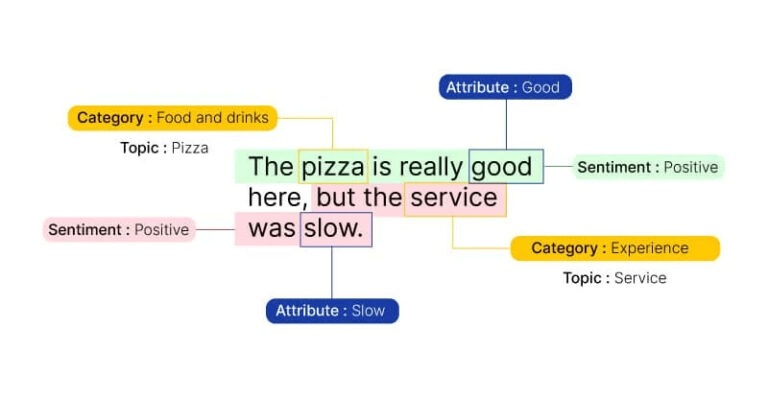
This is where things get really interesting. Review sentiment analysis is the process of understanding the emotion and specific opinions within the text of a review. Amazon’s algorithm almost certainly uses a form of this. It’s not just about counting stars; it’s about understanding why a customer gave that rating.
A 4-star review that says, “Great product, works perfectly but the box was dented,” is very different from a 4-star review that says, “Product is okay, but it stopped working after a month.” The first comment criticizes the shipping, while the second raises a red flag about product durability.
Review sentiment analysis helps the algorithm gauge the nature of the feedback. An abundance of positive keywords like “love,” “perfect,” and “fast shipping” in your review data is a powerful positive signal, while a prevalence of negative terms like “broken,” “defective,” or “slow” can be devastating to your Buy Box eligibility.
The Direct Link: How Reviews Influence Amazon SEO and Conversion
To understand the full product reviews impact, you need to see how reviews tie into Amazon’s search engine optimization, or Amazon SEO. Amazon’s A9 algorithm ranks products in search results based on their likelihood to convert into a sale. Products with strong, positive review data have a much higher conversion rate.
Think about your own behavior. You are more likely to buy a product with a 4.5-star rating from 500 people than a 5-star rating from 5 people. This higher conversion rate is a massive green light for Amazon’s algorithm.

Image Source: Search Engine Journal
When Amazon sees that your listing consistently converts browsers into buyers, it rewards you with higher visibility in both search results and, crucially, the Buy Box. Your review data directly fuels your Amazon SEO, creating a virtuous cycle: good reviews lead to higher rankings and Buy Box wins, which lead to more sales, which lead to more reviews.
Turning Feedback into Wins: An Actionable Plan for Sellers
Knowing that review data is critical is one thing; actively managing it is another. You cannot just sit back and hope for the best. You need a proactive strategy to generate high-quality, authentic customer feedback data.
First, the most important rule: never, ever offer incentives for positive reviews or post fake reviews. This violates Amazon’s terms of service and will get your account suspended. Your goal is to generate organic, honest feedback.
A powerful and compliant strategy is to use the “Request a Review” button directly within your Seller Central account for each order. This sends a polite, automated message to the buyer asking them to leave both seller feedback and a product review. Systematically doing this for every order, a few days after the product is delivered, can significantly legitimately increase your review data volume.
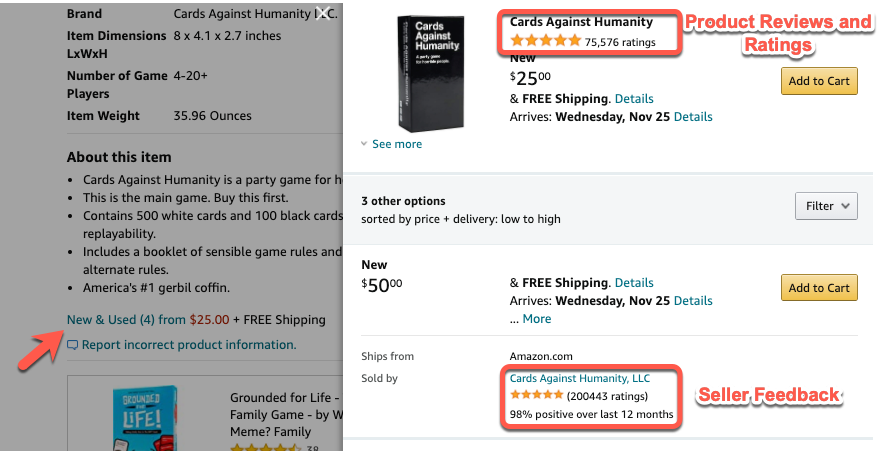
Furthermore, you must actively engage with the reviews you receive. Respond professionally and helpfully to negative reviews, addressing the customer’s concerns. This shows potential buyers and the Amazon algorithm that you are committed to customer satisfaction.
For positive reviews, a simple “Thank you!” can foster goodwill. This ongoing management is a key part of leveraging your review data effectively.
The Domino Effect: How Ratings and Reviews Boost Your Conversion Rate
We have touched on this, but it deserves its own section. The impact of ratings and reviews on your conversion rate is profound and direct. They are the last piece of social proof a customer sees before clicking “Add to Cart.”
Consider this stat from a study by Spiegel Research Center: nearly 95% of shoppers read online reviews before making a purchase. Furthermore, products with reviews have a dramatically higher conversion rate than those without.
The presence of reviews reduces perceived risk and answers final questions a shopper might have. When a customer reads a review that confirms the product size is accurate or that it solved the exact problem they have, it pushes them over the edge from consideration to purchase. This surge in conversions is a primary signal to Amazon that your product listing is effective, further cementing your claim to the Buy Box.
Common Pitfalls: What Hurts Your Review Data and Buy Box Chances
It is just as important to know what to avoid as it is to know what to do. Certain behaviors can poison your review data and destroy your chances of winning the Buy Box.
- Ignoring Negative Reviews: Letting negative feedback sit without a response is a terrible look. It signals to Amazon that you do not care about the customer experience.
- A Sudden Drop in Ratings: If you change manufacturers or product materials and your review data suddenly shows a wave of negative ratings and reviews, your Buy Box ownership will likely plummet. The algorithm interprets this as a sharp decline in product quality.
- Inauthentic Review Patterns: A sudden influx of five-star reviews with generic text can trigger Amazon’s fraud detection. It is always better to have slow, organic growth than suspicious spikes.
- Poor Responses to Feedback: Getting into arguments with customers in your public responses damages your reputation with both future buyers and the algorithm.
Mastering Your Review Data to Win the Buy Box
Winning the Amazon Buy Box is a multi-layered challenge, but as we have seen, your review data sits at the heart of it. It is not a passive element but an active, dynamic asset that you must cultivate and manage. It goes far beyond a simple star rating, encompassing volume, velocity, and deep review sentiment analysis.
By understanding that every aspect of your customer feedback data influences key Amazon Buy Box factors, you can develop a smarter strategy. Focus on providing an excellent product and customer experience that naturally generates positive reviews. Use legitimate tools to encourage feedback, monitor your review data closely, and engage with your customers professionally.
When you do this, you are not just collecting reviews; you are building the very trust signals that convince Amazon’s algorithm to award you the Buy Box, skyrocket your conversion rate, and ultimately, secure your long-term success on the platform.

Try using 42Signals’ voice of customer analytics service to aggregate review data from multiple marketplaces in an easy-to-understand dashboard. Schedule a demo with us today.
Frequently Asked Questions
What is review data?
Review data refers to the written feedback, star ratings, comments, photos, and reactions that customers leave about a product, service, or business. This includes reviews on marketplaces like Amazon, e-commerce sites, Google, social platforms, and third-party review portals.
Brands analyze review data to understand customer satisfaction, recurring issues, product strengths, and opportunities for improvement. It’s one of the most direct forms of customer insight because it comes straight from real buyers.
What is a data reviewer?
A data reviewer is someone who evaluates information, documents, or datasets to check for accuracy, completeness, and relevance. In the context of product or customer reviews, a data reviewer may:
– Classify reviews
– Identify patterns or themes
– Spot fake or suspicious reviews
– Validate sentiment or star ratings
– Ensure data is clean enough for analysis
In larger organizations, data reviewers are part of quality, analytics, or customer experience teams.
How to analyze review data?
Analyzing review data involves several steps:
1. Collect the reviews from all platforms where your product appears.
2. Clean the data by removing duplicates, spam, and irrelevant comments.
3. Categorize feedback into themes such as quality, price, delivery, packaging, usability, etc.
4. Perform sentiment analysis to identify whether reviews are positive, neutral, or negative.
5. Look for trends like repeated complaints or frequently praised features.
6. Quantify the findings using metrics such as average rating, sentiment score, or issue frequency.
7. Compare with competitors to understand where you stand in the market.
Tools like 42Signals, Google Cloud NLP, or internal dashboards help automate large-scale review analysis.
How to write a data review?
Writing a data review involves summarizing what the data reveals in a clear and structured way. A strong data review usually includes:
1. Objective: What you analyzed and why.
2. Method: Where the data came from and how you processed it.
3. Key findings: Major patterns, recurring themes, and notable insights.
4. Metrics: Ratings, percentages, sentiment scores, or category breakdowns.
5. Interpretation: What the results mean for the business or product.
6. Recommendations: Suggested improvements, product updates, or actions to take.
A good data review transforms raw review data into actionable insights that teams in product, marketing, support, and operations can use.