
Quick Commerce Platforms and How to Win the Visibility Game
If you are a brand manager today, you know that the world of shopping has changed almost overnight. It is no longer just about waiting two days for a package to arrive from a warehouse. Now, consumers expect their groceries, snacks, and even electronics to show up at their door in ten minutes. This shift has made quick commerce platforms the fastest growing segment of ecommerce in India. While this speed is great for the customer, it creates a massive challenge for brands. This guide covers everything you need to know to succeed on quick commerce platforms like Blinkit, Zepto, and Swiggy Instamart.

Image Source: Blinkit
You might have your products listed, but are they actually visible to the person looking at their phone? Many brands are finding that they have a huge presence on paper but almost zero visibility on the actual app. This happens because the environment is hyperlocal and changes every few minutes based on which dark store is serving a specific neighborhood.
To fix this, you need more than just a listing; you need a strategy built on real data. In this article, we will talk about how you can use quick commerce intelligence to stop being invisible and start winning on apps like Blinkit and Zepto. We will look at why stockouts happen, how to track your keywords, and why understanding your dark store data is the only way to grow in 2026.
The Explosive Growth of Quick Commerce Platforms in India
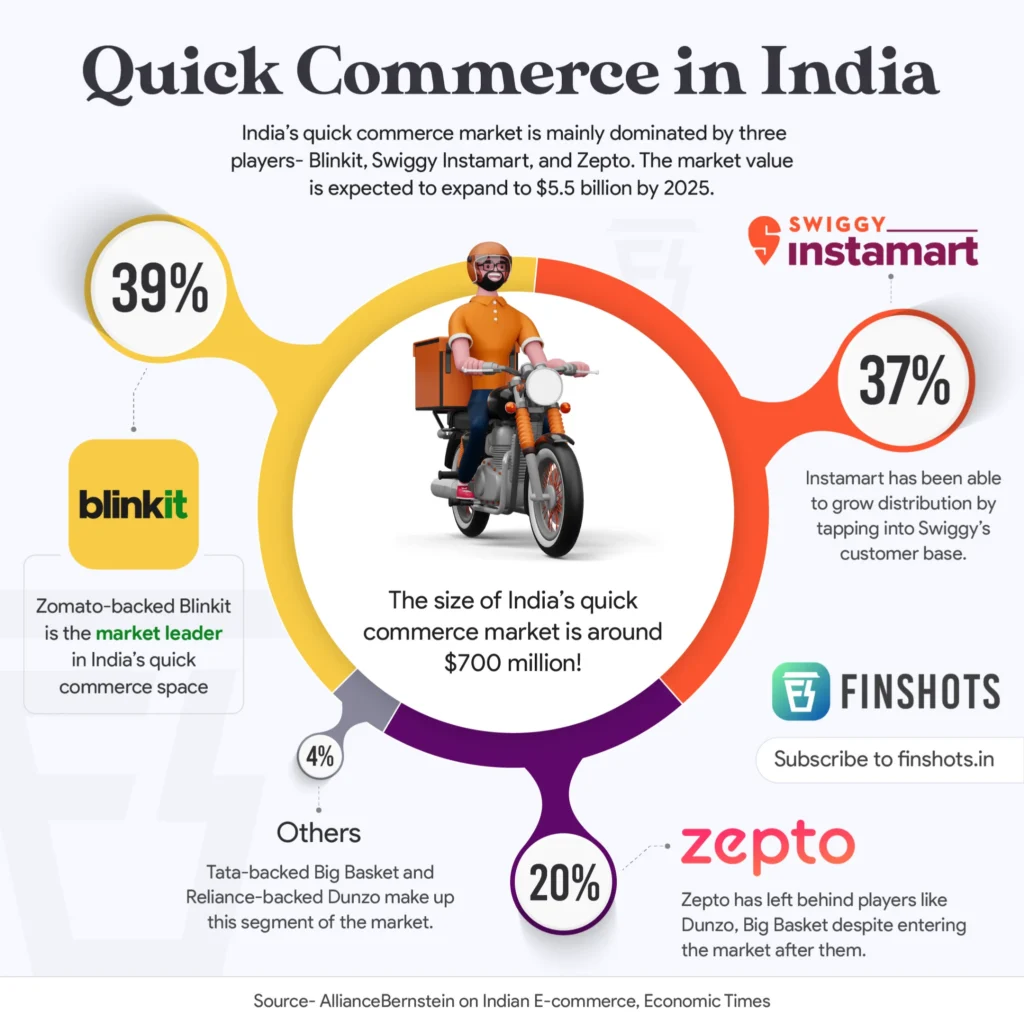
Image Source: Finshots
India has become a global leader in the q-commerce space for several very specific reasons. Unlike the United States or Europe, where quick delivery has sometimes struggled due to high labor costs and suburban sprawl, India has the perfect mix of dense urban populations and low labor costs.
Cities like Mumbai and Delhi have thousands of people packed into small areas, which makes it much easier for a dark store to serve a huge number of customers within a two-kilometer radius. Because of this, the Indian market is projected to reach over 5 billion dollars, with platforms like Blinkit and Zepto leading the way. You can find more details on this growth through external data insights from Market Brew.
This growth means that every major FMCG and D2C brand is rushing to get their products onto these platforms. However, the competition is becoming fierce. It is not just about having a good product anymore; it is about having the right tech stack to ensure people can find it. Many brands are finding that their old ways of measuring success simply do not work here. You cannot rely on weekly reports when your stock can sell out in an hour during a rainy afternoon.
Why Your Q-Commerce Brand is Often Invisible
It is a common frustration for brand managers to look at their sales dashboard and see a sudden dip, only to find that their product was “out of stock” for half the city. This happens because the app only shows what is available in the nearest dark store to the user. A dark store is a mini-warehouse that is not open to the public but is used only to fulfill online orders. If your inventory is sitting in a warehouse in North Delhi, but the customer is in South Delhi, you are effectively invisible to them. This creates a massive visibility gap that traditional ecommerce tools cannot see.
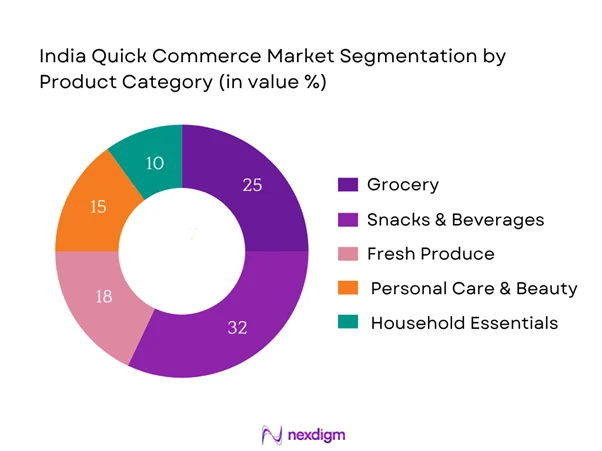
Image Source: Nexdigm
Another reason for this invisibility is the way the search algorithm works on these apps. If your competitor is offering a deeper discount or has better keyword optimization, they will take the top spots on the screen. Since most people only scroll through the first five or six items on their phone, being in the tenth spot is the same as not being there at all. Without specialized blinkit tracking or Zepto analytics, you are essentially flying blind. You need to know exactly where you stand in every neighborhood to fix these gaps.
The Role of the Dark Store in Hyperlocal Brand Presence
To understand your performance, you have to understand the dark store. These locations are the heart of the quick commerce model. They are strategically placed in high-demand areas to ensure that a rider can pick up an order and deliver it within 10 to 15 minutes. For a brand, each dark store is like a tiny, independent market. What sells in a college area might be completely different from what sells in a corporate hub. This is why having a strong hyperlocal brand presence is so critical.
By using data to track inward and outward movement at the dark store level, you can start to see patterns. You might notice that your body lotion sells out every Friday in Bangalore but sits on the shelf in Chennai. This allows you to talk to category managers with real evidence. Instead of guessing, you can show them that you need more stock in specific pincodes to avoid losing revenue. This kind of granular data is the only way to move from a reactive strategy to a proactive one.
Solving the Stockout Crisis with Quick Commerce Intelligence
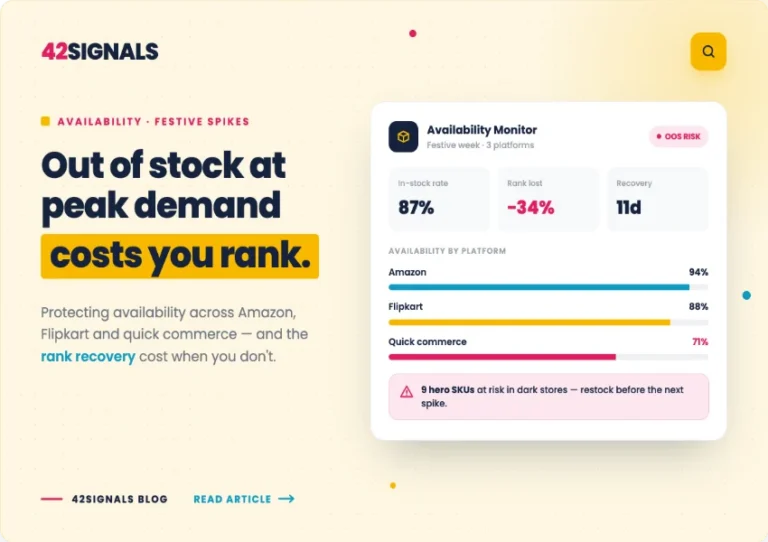
One of the biggest pain points for brands on quick commerce platforms is the “out-of-stock” or OOS event. When a product goes out of stock, it doesn’t just mean you lost a sale; it means you are losing your ranking. The algorithm favors products that are consistently available and have high conversion rates. If you are offline for three days, your competitor will move into your spot, and it will take a lot of advertising spend to get that position back. This is why real-time retail analytics alerts are so important for modern brands.

- Use automated alerts for stock levels. These alerts can be sent to your team via WhatsApp or Telegram the moment a hero SKU goes out of stock in a priority dark store. This allows your supply chain team to act immediately rather than waiting for a weekly report. It ensures that your most important products stay live and visible to the consumer.
- Track availability across different pincodes. You need to see a map of where you are actually live versus where you think you are live. Sometimes a platform might say you are available in a city, but you are actually missing from 40 percent of the dark stores. Identifying these gaps helps you reallocate inventory to the places where demand is highest.
- Challenge platform data with your own insights. Category managers often provide data that is several days old or lacks granularity. When you have your own quick commerce intelligence, you can have a much more productive conversation. You can prove exactly where the supply chain is breaking down and work together to fix it.
Mastering Quick Commerce Share of Search and Visibility
In the world of online shopping, search is everything. Most people do not browse through categories; they type “milk,” “shampoo,” or “chips” into the search bar. If your brand doesn’t appear on the first half of the screen, you are missing out on the majority of the market. This is what we call “Share of Search,” and it is a key metric for any digital brand. You need to know how often you are appearing for top keywords compared to your rivals with share of search analytics.

By using Zepto analytics (Zepto data by 42Signals) and Swiggy Instamart data, you can track your organic versus sponsored ranking. Sometimes a brand might be spending heavily on ads, but their organic ranking is actually dropping. This is a sign that something is wrong with the product page or the conversion rate. On the other hand, if you see a competitor gaining share on a specific keyword, you can adjust your strategy before you lose too much ground. It’s about being faster and smarter than the person next to you on the digital shelf.
Managing Price Parity and MAP Violations
Pricing on quick commerce platforms can be a nightmare for brands that want to maintain a premium image. Because these apps are so competitive, they often trigger a “price cascade” where one platform drops the price and others follow automatically to stay competitive. This can lead to MAP (Minimum Advertised Price) violations that hurt your relationships with other retailers. If Blinkit drops the price of your product by 20 percent, Amazon and Flipkart might match it within hours.
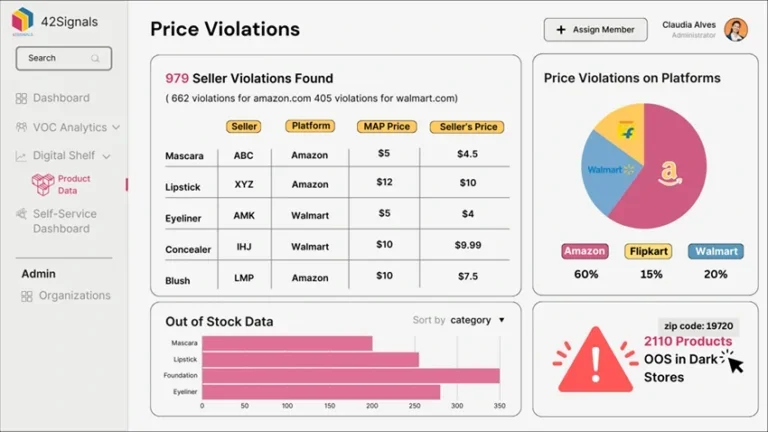
Tracking these violations manually is almost impossible because the prices can change multiple times a day. You need a MAP price monitoring system that monitors pricing across all quick commerce platforms and alerts you when someone breaks the agreed-upon limit. This allows you to identify who started the price drop so you can address it at the source. Maintaining price parity is essential for protecting your brand’s long-term value and ensuring your margins stay healthy.
Identifying Assortment Gaps and Competitor Moves
If you want to grow your market share, you have to look at what your competitors are doing. Often, there are “assortment gaps” where a competitor’s product is available in a pincode but yours is not. This is a missed opportunity to capture a customer who is ready to buy. By analyzing competitor presence at a hyperlocal level, you can see where they are winning and where you have a chance to take over.
- Monitor competitor product launches in real-time. If a rival brand launches a new flavor or a new pack size on Blinkit, you need to know about it immediately. This gives you the chance to respond with your own promotions or marketing campaigns. It keeps you from being blindsided by a sudden shift in the category.
- Track share of shelf across different categories. You should know exactly how much space you occupy on the digital shelf compared to other brands. This isn’t just about search results; it is about how you appear in curated lists and category pages. Understanding this balance helps you decide where to invest your marketing budget for the best ROI.
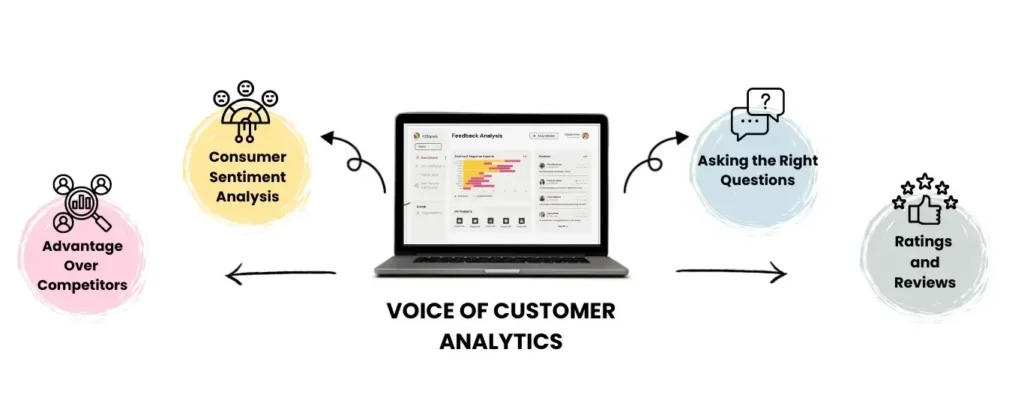
- Use sentiment analysis to understand customer feedback with voice of customer analytics. By scraping reviews and ratings from quick commerce apps, you can see what people actually think of your products and your competitors. This information is gold for your product development team. It allows you to fix issues or highlight strengths that your customers truly care about.
Why In-House Scraping is Often a Mistake for Brands
Many companies think they can save money by building their own data extraction tools. However, quick commerce platforms are incredibly complex and use advanced anti-bot measures to protect their data. To get reliable information, you need a massive pool of rotating IP addresses and proxies within India to avoid being blocked. Maintaining this infrastructure is expensive and takes your team’s focus away from your actual business of selling products.
A managed service like 42Signals takes all of that complexity away by providing q-commerce data scraping. You get clean, structured data and a user-friendly dashboard without having to worry about broken scripts or IP bans. This speed to insight is critical because a month spent building a tool is a month of lost sales on the apps. For most brands, the return on investment from a specialized provider is much higher than trying to do it themselves. You can explore our competitor analysis tools to see how we help brands stay ahead.
Improving ROAS and Advertising Efficiency
If you are running performance ads on quick commerce platforms, you are likely worried about your ROAS (Return on Ad Spend). One of the biggest reasons ads fail is that they lead to products that are out of stock. There is nothing worse than paying for a click only for the customer to see an “Out of Stock” button. By integrating your inventory data with your advertising strategy, you can stop spending money on products that aren’t available to the customer.

Another way to improve your ROAS is by ad tracking quick commerce and optimizing your keywords based on actual visibility data. If you are already ranking number one organically for a term, you might not need to pay for a sponsored spot for that specific keyword. You can move that budget to keywords where you are currently on page two or three. This kind of share of search analysis ensures that every rupee you spend on ads is working as hard as possible.
Leveraging Sales and Volume Estimates for Better Planning
While quick commerce platforms do not usually share direct sales data, you can estimate it with high accuracy by tracking inventory changes. By monitoring how stock levels drop in a dark store every hour, you can calculate how many units were sold. This data is usually 85 to 90 percent accurate and gives you a much better picture of the market than you would have otherwise.
This kind of quick commerce intelligence is vital for planning your production and logistics. If you see that sales are spiking in a particular city, you can prepare your supply chain to meet that demand. It also helps you benchmark your performance against your competitors. If they are selling twice as many units as you are, you know you need to rethink your pricing or your visibility strategy.
Why Hourly Data Refresh Cycles Matter More on Quick Commerce Than Anywhere Else
In traditional ecommerce, refreshing your data once a day might be enough. In quick commerce, everything moves much faster. Prices can change, products can sell out, and rankings can shift multiple times between breakfast and lunch. This is why having customizable refresh frequencies is a must for any serious q-commerce brand.
You might want to track your hero SKUs every hour during a major festival or a weekend sale. During these peak times, being slow by just a few hours can mean losing millions in revenue. Having a system that adapts to your needs and gives you up-to-the-minute insights is the only way to maintain a true competitive advantage. It allows you to be as fast as the platforms you are selling on.
Building a Data-Driven Culture in Your Ecommerce Team
Technology is only half the battle; your team also needs to know how to use it. Moving to a data-driven approach means that your ecommerce, marketing, and supply chain teams all need to be looking at the same numbers. When everyone has access to a shared dashboard with quick commerce intelligence, communication becomes much smoother.
Instead of arguing over why sales are down, the team can look at the data and see that visibility dropped because of a pricing violation in five key pincodes. This leads to faster decision-making and fewer mistakes. It turns your team into a proactive force that can anticipate market changes rather than just reacting to them after the damage is done.
Conclusion: Future-Proofing Your Strategy on Quick Commerce Platforms
The world of quick commerce is not going away; it is only going to get bigger and more complex. As more platforms enter the market and more categories move to 10-minute delivery, the brands that win will be the ones that own their data. You cannot afford to be invisible on the digital shelf when that is where your customers are spending their time and money. By investing in product availability tracking and deep analytics, you are ensuring your brand’s future.

Fixing your presence requires a commitment to hyperlocal tracking, real-time alerts, and competitive intelligence. Whether it is solving stockouts with blinkit tracking or optimizing your keywords with Zepto analytics, the tools are now available to help you succeed. The goal is to move from guessing to knowing. When you know exactly what is happening in every dark store and on every search page, you can finally take full control of your brand’s growth on quick commerce platforms.
Ready to stop being invisible on Blinkit, Zepto, and Swiggy Instamart? 42Signals provides pincode-level availability tracking, real-time stockout alerts via WhatsApp and Telegram, share of search monitoring, and MAP violation detection across all major quick commerce platforms — in a single dashboard your ecommerce team can use without a data science degree. Book a demo and we’ll pull live visibility data for your top SKUs in your priority pincodes.
Frequently Asked Questions About Quick Commerce Intelligence
What is the difference between Share of Search and Share of Voice?
Share of Search usually refers to how often your brand is searched for by name, whereas Share of Voice on quick commerce platforms measures how often your products appear in the top spots for specific category keywords. Both are important, but Share of Voice is more critical for capturing customers who are looking for a type of product rather than a specific brand.
How accurate is the inventory data from these platforms?
Most professional data services can provide inventory and sales estimates with an accuracy rate of 85 to 90 percent. This is achieved by tracking non-public inventory data from platform APIs and monitoring how it changes over time at the pincode level.
Why should I track data at a pincode level instead of a city level?
Quick commerce is a hyperlocal business where each dark store serves a specific radius. Since different stores can have different stock levels and prices, city-level data is often misleading and hides the real issues you might be facing in specific neighborhoods.
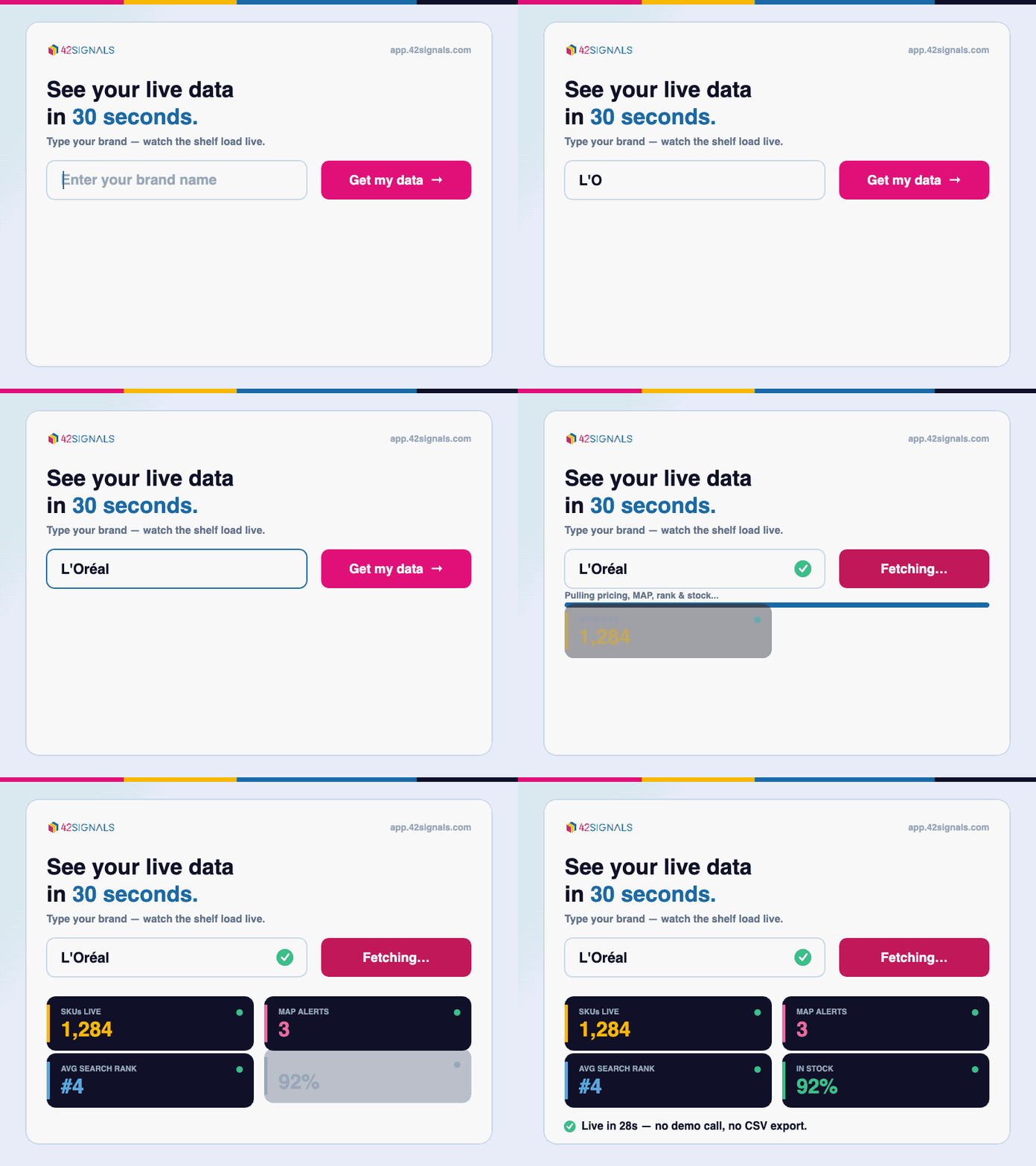
How quickly can I start tracking my brand on Blinkit or Zepto?
Most managed services can initiate a proof of concept or a pilot within a few weeks. This allows you to validate the data quality and see the dashboards before committing to a full-scale rollout across all your categories and locations.
Can I get alerts for price changes on my mobile phone?
Yes, many modern quick commerce intelligence tools offer integration with Telegram or WhatsApp. This means your team can get instant notifications whenever a competitor drops their price or whenever your own products go out of stock.