
Amazon Keyword Rank Tracking Software
Most Amazon keyword rank tracking software is built for individual sellers, not brand managers. If you are evaluating tools for a multi-SKU brand, here is what actually matters: refresh rate, sponsored vs organic separation, ASIN-level visibility, historical trend data, and regional or pin-code level tracking. This guide walks through each feature so you can ask the right questions before you commit to a platform.
Amazon Keyword Rank Tracking Software: A Brand Manager’s Guide to Choosing the Right Platform
Most brand managers inherit their Amazon search strategy from whoever set it up first. A spreadsheet of target keywords, a weekly manual check, and a vague sense that page one is where you need to be. The problem is not the intent — it is the tooling. Amazon’s search results can shift ten times in a single day based on stock levels, competitor bids, and time-of-day demand patterns. A weekly check catches none of that.
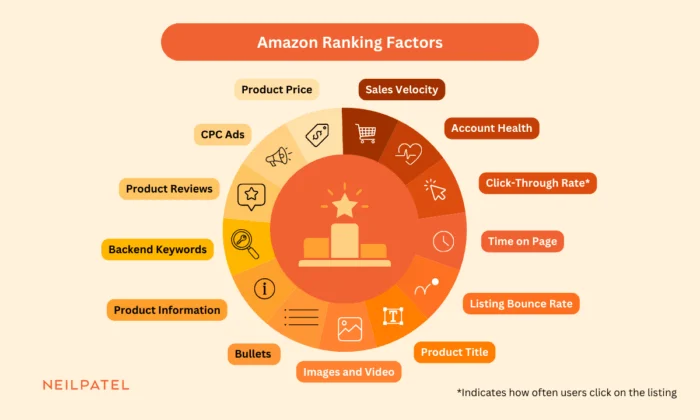
Image source: Neil Patel
This is not just about seeing a number next to a word. It is about understanding your total ASIN keyword visibility across a crowded marketplace. Many brand managers get stuck using tools built for individual sellers who are just trying to move a few units. When you are managing a major brand, you need search intelligence that shows you how you compare to your biggest rivals in real time. In this guide, we will walk through the specific features that separate a basic tracker from a professional grade search intelligence platform.
Why Most Brands Struggle With Basic Amazon Search Rank Tracking
The biggest problem with standard tools is that they treat search rank as a static number. On a platform as dynamic as Amazon, your rank can change ten times in a single day based on stock levels, competitor pricing, and even the time of day. If your current amazon keyword tracking tool only refreshes once every twenty four hours, you are missing twenty three hours of potential data. This delay makes it very difficult to understand why your sales might be dipping or why a competitor is suddenly winning the buy box more often.
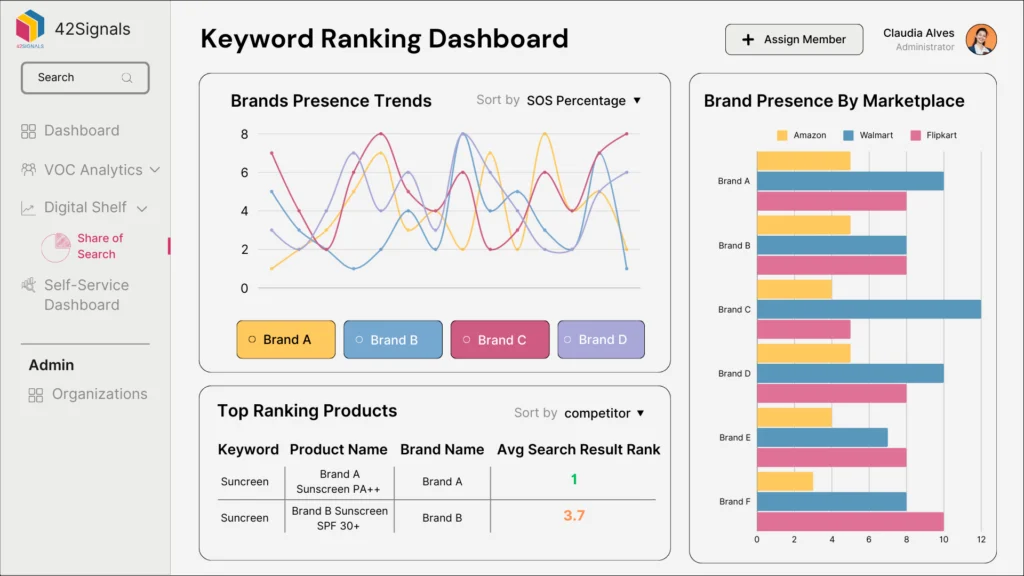
Another common issue is the lack of context. A simple tracker might tell you that you are rank five for a specific term, but it won’t tell you if the four spots above you are all sponsored ads from a new competitor. Without knowing the difference between sponsored vs organic rank, you cannot make smart decisions about your advertising spend. You might be bidding heavily on keywords where you already have a strong organic presence, which is essentially wasting your budget. Professional Amazon keyword rank tracking software helps you spot these overlaps so you can optimize your strategy.
The Importance of Real Time Data in a Keyword Tracking Software Amazon
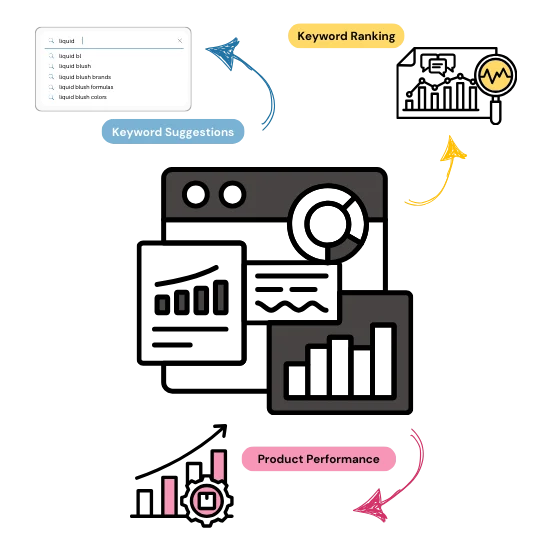
When we talk about the best Amazon rank tracker, the first thing we look at is the refresh rate. Most tools on the market use what is called batch processing. This means they crawl the site at a set time and then save that data for the rest of the day. For a brand in a fast moving category like fashion or electronics, this is practically useless. You need a platform that can provide near real time updates so you can see changes as they happen.
Real time data allows you to respond to shifts on the digital shelf in minutes instead of days. For example, if a competitor suddenly drops their price and your organic rank slips as a result, you want to know that immediately. This is why keyword movement alerts are such a critical part of modern e-commerce operations. Instead of having your team manually check a dashboard every morning, the software should push a notification to your email or messaging app the moment something breaks.
Understanding ASIN Keyword Visibility and Sponsored Placements
One of the most complex parts of managing a brand on Amazon is tracking how many of your products are actually visible for your target keywords. This is often referred to as ASIN keyword visibility. It is not enough to know that your brand is ranking. You need to know which specific products are appearing and where they are placed on the page. A high quality amazon keyword rank tracker will show you a heat map of your visibility across your entire catalog.
This becomes even more important when you consider sponsored placements. Most marketplace shoppers now research across multiple platforms before completing a purchase — checking reviews on one site, comparing prices on another, and often completing the transaction on a third.
On Amazon specifically, the top of the search results page is almost always dominated by ads. If your Amazon keyword rank tracking software does not clearly distinguish between organic results and sponsored placements, you are getting an incomplete picture of your performance. You need to see exactly how much of the “above the fold” space you actually own versus what your competitors are buying.
How Share of Search Reflects Your Real Market Power

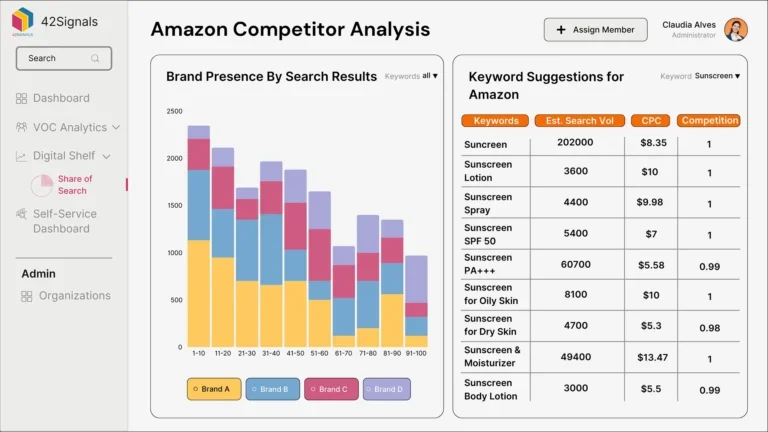
In the world of brand intelligence, we often talk about search share or Share of Search. This is a metric that tells you what percentage of the total search results for a category are owned by your brand. For example, if someone searches for “silk dresses” and your products appear in five out of the top twenty spots, your search share is 25%. This is a much better indicator of brand health than just looking at a single keyword rank.
In competitive categories like fashion, leading brands track their share of search as a category health metric — not just individual keyword positions. The goal is to understand what proportion of the total relevant search results your brand owns, and whether that proportion is growing or shrinking.
If you are below this range, it is a sign that your listings might need optimization or that your competitors are outspending you on ads. By using keyword tracking software amazon that calculates this for you, you can set better goals for your marketing team. It moves the conversation from “are we ranking?” to “are we dominating the category?”
The Need for Historical Data and Rank History
A single day of data is just a data point, but six months of data is a story. This is why you must ensure that your amazon search rank tracking tool provides a deep rank history. You need to be able to look back at major events like Prime Day or the holiday season to see how your rankings held up under pressure. This historical context is vital for planning your inventory and your promotional calendar for the upcoming year.
Without historical data, it is impossible to see if your rankings are slowly eroding over time. Sometimes a brand doesn’t fall from page one to page five overnight. Instead, it might slip one or two spots every month. If you are only looking at today’s data, you might not notice the trend until it is too late to fix. The best Amazon rank tracker will let you overlay your rank history with other metrics like price changes or stock levels to find the root cause of any performance issues.
Why Regional and Pin Code Level Tracking is the Next Frontier
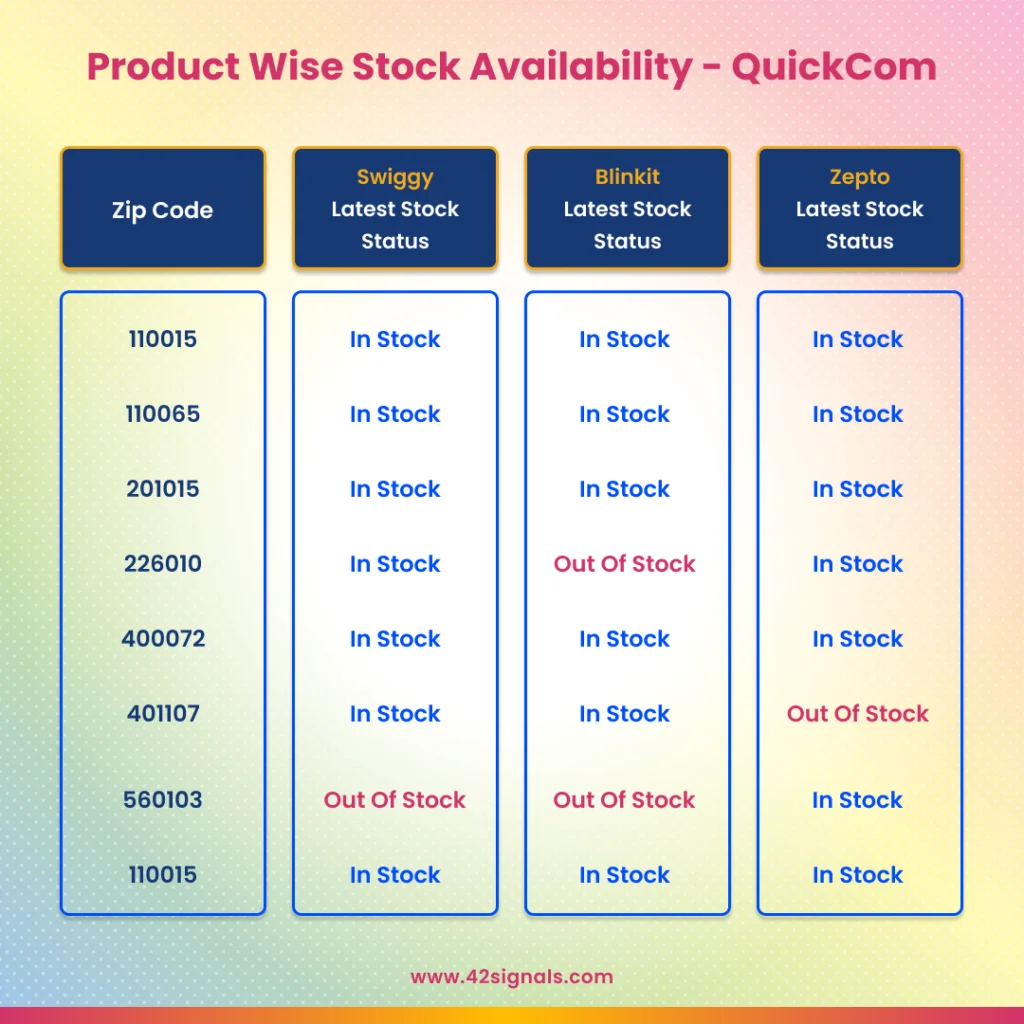
For brands selling in large markets like India or the United States, national averages can be very misleading. A product might be rank one in New York but rank ten in Los Angeles because of local competition or distribution issues. This is especially true for brands that sell on quick commerce platforms where inventory is managed at a very local level. If your Amazon keyword rank tracking software only gives you a national view, you are missing these regional blind spots.
Modern platforms are now moving toward pin code level visibility. This allows you to see exactly how your search rank changes based on where the customer is located. This level of granularity is essential for brands that want to optimize their logistics and ensure they are always visible to the customers who are most likely to buy. It helps you identify specific regions where your competitors are winning so you can run targeted local campaigns to win back that search share.
Integrating Amazon Search Intelligence Into Your Daily Workflow
The biggest mistake a brand can make is buying a sophisticated amazon keyword tracking tool and then never using it. To get the most out of your investment, the search intelligence data needs to be integrated into your team’s daily routines. This means setting up automated reports that go directly to the people who can take action. For example, your advertising manager should get an alert if an organic rank drops so they can temporarily increase ad spend to maintain visibility.
Your category managers should also be looking at this data regularly. If they see that a competitor has launched a new product that is quickly climbing the ranks, they need to know what keywords that product is targeting. By using the competitor benchmarking features found in top tier Amazon keyword rank tracking software, your team can stop being reactive and start being proactive. You can see the moves your rivals are making before they have a chance to fully take over your space.
Evaluating the Best Amazon Rank Tracker for Your Brand
When it is time to actually pick a tool, you should ask a few specific questions during the demo.
- First, ask how often the data is refreshed and if it is truly real time.
- Second, ask if the platform can track both organic and sponsored placements on the same screen.
- Third, check to see if they offer pin code level tracking or if they only provide a broad national average.
These three factors will tell you if you are looking at a professional brand intelligence tool or just another basic seller tracker.
You should also consider how the data is delivered. Many enterprise teams do not want another dashboard to log into every morning. They prefer to have the raw data delivered via an API or an S3 bucket so they can plug it into their own internal analytics tools. If your team has its own data scientists, look for Amazon keyword rank tracking software that offers this level of flexibility. This ensures that the search data becomes a part of your larger business intelligence ecosystem instead of being stuck in a silo.
When evaluating platforms, use this checklist:
- Data refresh rate — Does the tool update in near real time or in 24-hour batches?
- Organic vs sponsored separation — Can you see both placements clearly on the same screen?
- ASIN-level visibility — Does it track individual product visibility, not just brand-level rank?
- Historical data depth — How far back does rank history go? Is it accessible without extra cost?
- Regional granularity — Does it offer pin-code or city-level tracking, or only national averages?
- Alert delivery — Can alerts be pushed to email, Slack, or Telegram without logging into a dashboard?
- API access — Can your data team pull raw data into your own BI tools?
How 42Signals Changes the Search Rank Game
42Signals is built specifically for brands that have outgrown basic seller tools. Rather than providing a list of rank numbers, the platform focuses on actionable alerts — notifying teams the moment a competitor gains a top-of-search position, a MAP policy is violated, or a product drops out of the organic results. Pin-code level visibility across marketplaces and quick commerce platforms is a core feature, which is a level of granularity that most rank trackers don’t offer. For brands managing large catalogs across Amazon, Flipkart, and quick commerce platforms simultaneously, this unified view replaces the patchwork of individual platform dashboards.
We focus on providing the depth that major brands require. This includes pin code level visibility across marketplaces and quick commerce platforms, which is a level of detail that most competitors simply do not offer. By tracking every move your competitors make across every platform you sell on, we help your team stop making decisions based on gut feel. Instead, you get a clear view of your digital shelf that allows you to protect your margins and grow your revenue with confidence.
Final Thoughts on Choosing Amazon Keyword Rank Tracking Software
Choosing the right Amazon keyword rank tracking software is one of the most important decisions an e-commerce brand manager can make. It is the difference between operating in the dark and having a clear map of the digital shelf. By moving away from simple trackers and toward a brand intelligence platform, you gain the ability to act on data while it is still fresh. This allows you to protect your brand, outsmart your competitors, and ultimately capture a larger share of the search results in your category.
The difference between a basic rank tracker and a professional search intelligence platform is not just features — it is whether your team can act on the data before the opportunity closes. Look for real-time alerts, regional granularity, and clear organic-vs-sponsored separation. If you want to see how your brand actually performs on the digital shelf across every market you operate in, request a 42Signals demo — no generic dashboard, just the data your category team can act on today.
For more information on how to optimize your digital shelf, visit our 42Signals Homepage or check out our detailed use cases.
Common Questions About Amazon Keyword Rank Tracking Software
How often should I be tracking my keyword rankings?
For most brands, daily tracking is the absolute minimum requirement. However, if you are in a highly competitive category or if you are running major promotions, you should look for tools that offer refreshes every few hours. This allows you to see how your rank fluctuates throughout the day and how it responds to real time changes in the market.
What is the difference between organic and sponsored rank?
Organic rank is where your product appears naturally based on Amazon’s search algorithm. Sponsored rank is where your product appears because you have paid for an advertisement. It is vital to track both because a high organic rank can sometimes allow you to reduce your ad spend on certain keywords, saving you money without losing visibility.
Why is historical data important for keyword tracking?
Historical data helps you identify long term trends and seasonal patterns. It allows you to see if a recent drop in rank is a one time event or part of a larger decline. By looking at historical trends, you can also measure the success of your optimization efforts over several months rather than just a few days.
Can keyword rank tracking software help with competitor analysis?
Yes, professional tools allow you to track your competitors’ keywords just as easily as your own. This gives you insight into their search strategy and allows you to see which keywords they are prioritizing. You can use this information to find gaps in their strategy or to defend your own top performing keywords.
Does regional tracking really matter for Amazon?
It matters more than most brands realize. Factors like local shipping speeds and regional warehouse stock levels can cause your search rank to vary significantly from one city to another. Tracking at a local level ensures that you are aware of these variations and can adjust your logistics or marketing accordingly.
Webinar: Beyond Price Monitoring: The 4 Hidden Dimensions of Competitor Intelligence
Learn how to track competitor assortment shifts, localized delivery speeds, merchant landscape leakage, and search visibility trends before they erode your market share.