

A Quick Guide to the Best Competitor Analysis Tools for Your Success
Finding the right software can feel like a full time job, so we have simplified the choice for you. If you are focused on search engine optimization and paid ads, SEMrush remains a top contender for tracking keywords. For brands that need to see exactly what is happening on the digital shelf across Amazon or quick commerce platforms, 42Signals is the clear leader because it provides hyperlocal data. If your goal is social media monitoring, Sprout Social is likely your best bet for tracking engagement. Most successful brands in 2026 actually use a combination of these best competitor analysis tools to cover every angle of their business. The right competitor analysis tool depends on what you’re trying to measure, here’s which tool owns each category.
Why You Need the Best Competitor Analysis Tools in 2026
The world of online shopping has changed faster than most of us expected. Just a few years ago, we could get away with checking a few websites once a week to see what our rivals were doing. In 2026, that simply does not work anymore. With the rise of quick commerce and dark stores, prices and stock levels can change by the hour in specific neighborhoods. You might be losing sales to a competitor who just dropped their price by five percent in a single city, and you would never know it until your weekly report comes out.
The competition is no longer just the big brands you have known for decades. New private labels and direct to consumer startups are popping up every day. These companies are agile and data driven, which means they are constantly looking for gaps in your strategy. By using modern competitive analysis tools, you can spot these new entrants before they take too much of your market share. You can see which keywords they are bidding on and how they are positioning their products to attract your customers.
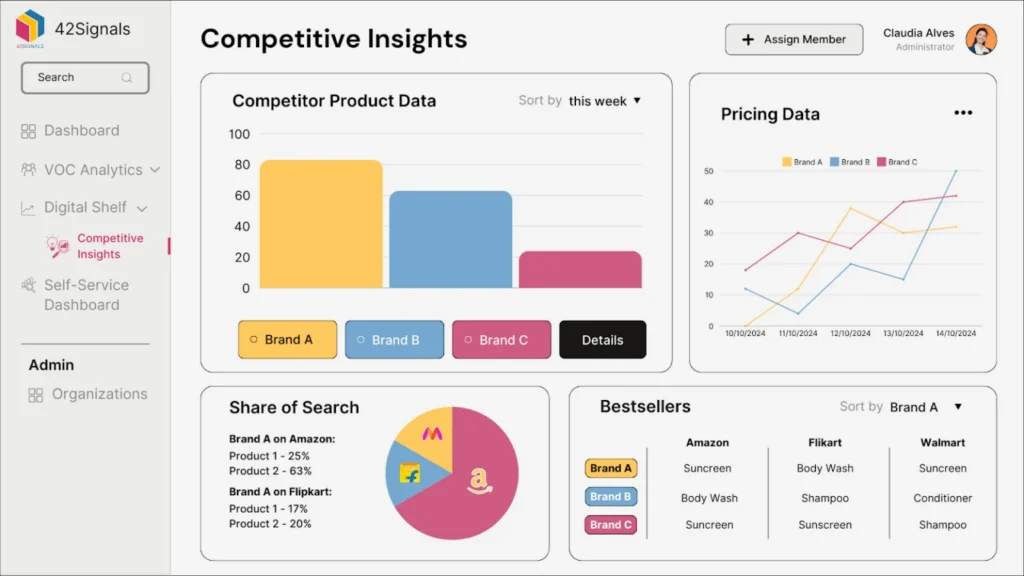
Many of the tools available today give you endless spreadsheets that nobody has time to read. The best competitor analysis tools for ecommerce are the ones that turn that raw data into clear instructions for your team. Whether it is an alert that your main rival is out of stock or a suggestion for a new keyword to target, these tools should make your life easier, not harder.
The Top Contenders for Best Competitor Analysis Tools This Year
When we look at the landscape of ecommerce competitor analysis tools, a few names consistently rise to the top. Each of these has a specific strength, so the right choice depends on your specific business goals.
The right competitor analysis tool depends on what you’re trying to measure — here’s which tool owns each category.
1. 42Signals: The Leader in Digital Shelf and Quick Commerce Intelligence
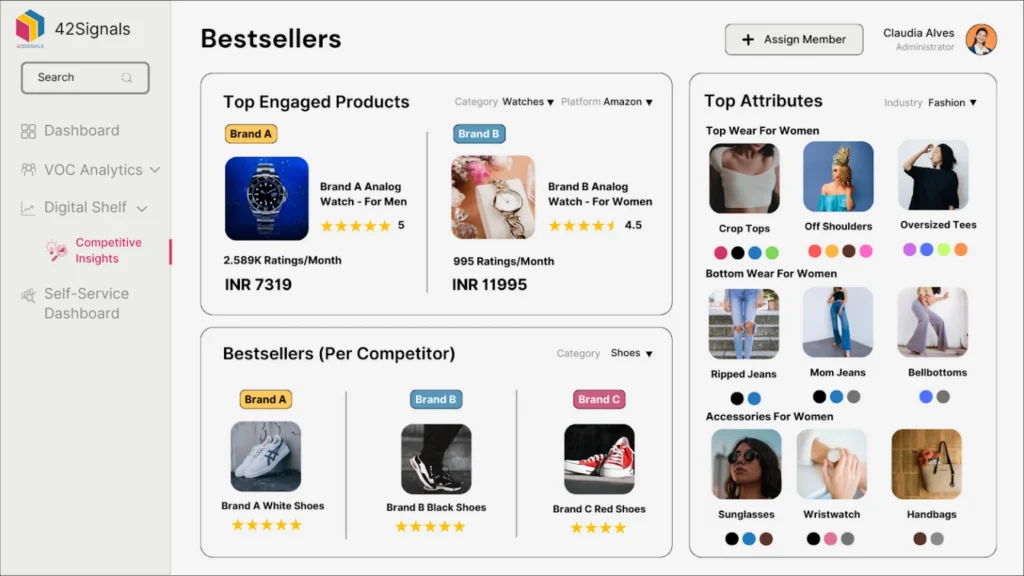
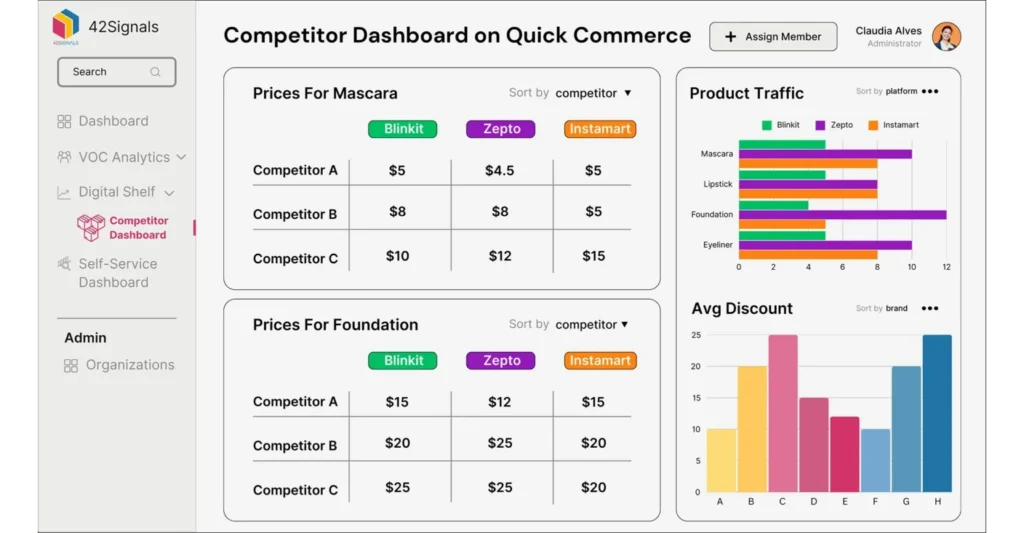
If your brand sells on major marketplaces or quick commerce platforms like Blinkit or Zepto, 42Signals is arguably the most specialized option available. It goes beyond basic tracking by offering pincode level granularity, which is essential in today’s hyperlocal market. This means you can see exactly what a customer in a specific part of a city sees when they search for your products.
One of the standout features is the ability to monitor share of search across various platforms. You can see which brands are winning the top spots for high intent keywords and how that visibility changes over time. This is crucial because we know that 70% of Amazon customers never scroll past the first page of search results. If your competitors are capturing those top spots, they are capturing the majority of the business.
Another reason this is considered one of the best competitor analysis tools is its focus on price parity and violation monitoring. It can track your products across hundreds of sites to ensure that unauthorized discounts are not hurting your brand value. You get real time alerts with screenshots as evidence, allowing you to take action immediately rather than waiting for manual audits.
2. SEMrush: The Gold Standard for Search and Content Strategy
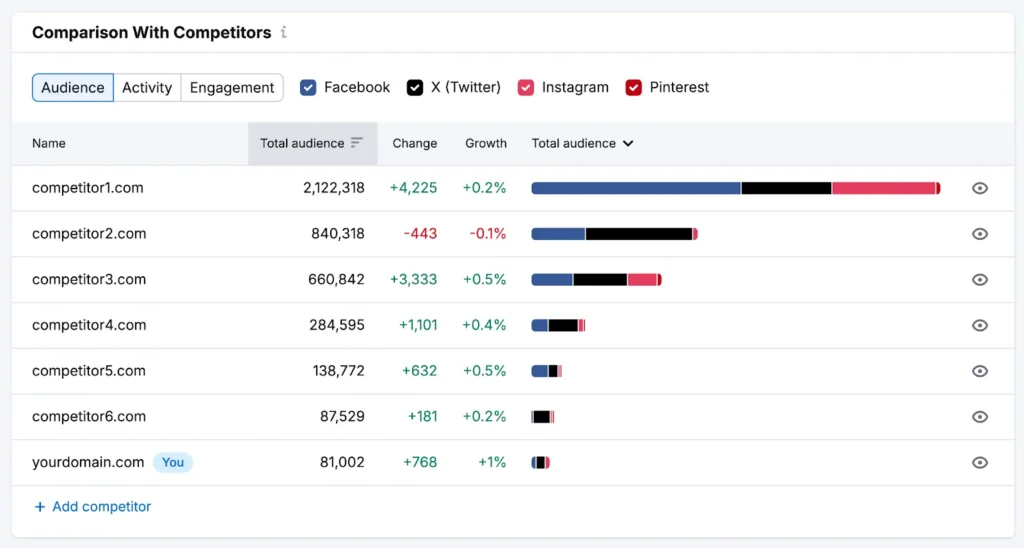
Image Source: Semrush
When it comes to the best competitor research tools for SEO and PPC, SEMrush is a name that almost everyone knows. It allows you to peek into the digital marketing playbook of your rivals to see exactly where they are getting their traffic. You can analyze their backlink profiles, see their top performing organic keywords, and even view the ad copy they are using for Google Ads.
This competitor analysis software is particularly helpful for identifying keyword gaps. It can show you terms that your competitors are ranking for but you are missing entirely. By filling these gaps, you can start to siphon off traffic that was previously going straight to your rivals. It is a very comprehensive market analysis tools suite that covers almost everything related to search engines.
The platform also includes tools for social media tracking and brand monitoring. You can set up alerts to find out whenever a competitor is mentioned online, which helps you stay aware of their public relations moves and customer feedback. While it might not have the deep marketplace specific data of a tool like 42Signals, it is an essential part of any digital marketer’s toolkit.
3. Ahrefs: Powerful Backlink Analysis and Competitive Intelligence
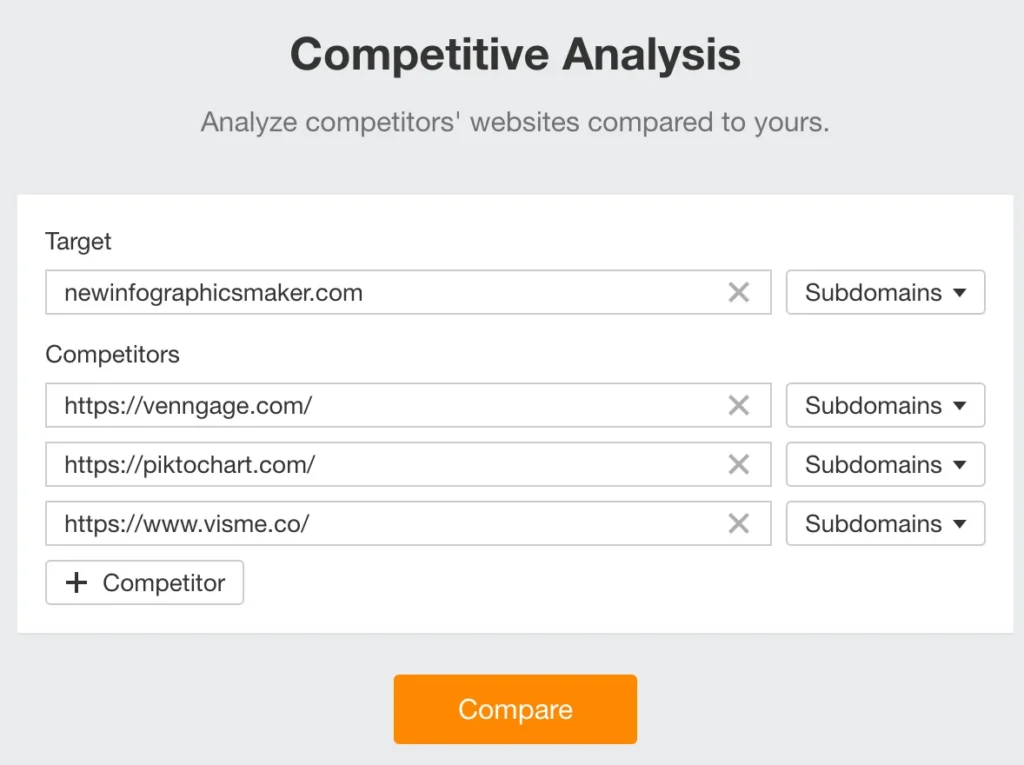
Image source: Ahrefs
Ahrefs started as a tool for link builders, but it has grown into one of the most respected competitive intelligence tools on the market. Its crawler is one of the most active in the world, which means the data you get is incredibly fresh. For ecommerce brands, this is useful for understanding how competitors are building authority and where they are getting their most valuable referrals.
You can use Ahrefs to see the exact pages on a competitor’s site that are attracting the most links and traffic. This can give you great ideas for your own content strategy. If you see that a rival’s “How to Choose” guide is performing exceptionally well, you might decide to create a better, more detailed version of your own. It is one of the best competitor analysis tools for brands that want to win the long term game of organic search.
The “Site Audit” and “Rank Tracker” features also help you keep an eye on your own performance relative to the market. You can see how your rankings for specific product categories are shifting compared to your top five rivals. This kind of benchmarking tools functionality is vital for proving the ROI of your SEO efforts to your leadership team.
4. Sprout Social: Deep Insights into Social Media Competition
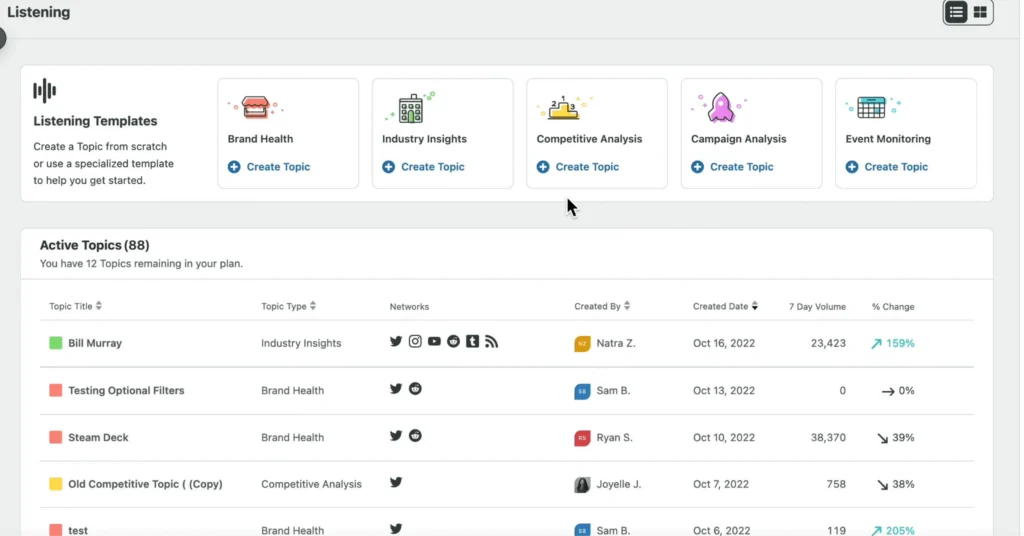
Image source: Sprout Social
For many ecommerce brands, social media is where the most important customer interactions happen. Sprout Social is one of the best competitor analysis tools specifically designed to help you understand what your rivals are doing on platforms like Instagram, TikTok, and Facebook. It provides detailed reports on their engagement rates, posting frequency, and audience growth.
This competitor tracking software allows you to compare your social performance directly against your competitors. You can see which types of content are resonating with their audience and use those insights to improve your own social strategy. If they are seeing a lot of success with short form video, for example, you can pivot your resources to match that trend.
The social listening features are particularly powerful for sentiment analysis. You can track specific hashtags or brand names to see how people feel about your competitors’ latest launches. This can help you identify weaknesses in their products or service that you can then address in your own marketing campaigns.
Critical Stats for Decision Makers in 2026
To understand why investing in the best competitor analysis tools is so important, let us look at some hard numbers from the industry. These statistics highlight how competitive the digital shelf has become and why you cannot afford to wait.
| Statistic Description | Value | Source |
|---|---|---|
| Shoppers influenced by price changes within 48 hours | 72% | NielsenIQ |
| Customers who never scroll past the first page of Amazon results | 70% | 42Signals Research |
| Sales captured by the first 3 products in search results | 64% | 42Signals Data |
| Shoppers who prioritize review recency over star rating | 86% | Consumer Survey |
These numbers tell a clear story: speed and visibility are everything. If 72% of your customers are making decisions based on price changes that happen in less than two days, you need a tool that can track those changes in real time. Likewise, if nearly two thirds of the business goes to the top three results, you need benchmarking tools that help you climb that ladder.
How to Choose Among the Best Competitor Research Tools
Selecting the right tool for your team can be a challenge because there are so many options. You should start by identifying your biggest pain point. Is it that you do not know why your sales are dropping on Amazon, or is it that your organic traffic is stalling? If it is the former, you need a tool with deep marketplace insights. If it is the latter, an SEO focused tool is the way to go.
You should also consider the technical expertise of your team. Some of the best competitor analysis tools are very complex and require a lot of training to use effectively. Others offer a more intuitive self service dashboard that anyone on your marketing or sales team can understand. Look for software that provides actionable insights rather than just raw data dumps.
Scalability is another important factor to keep in mind. As your business grows, you will likely want to track more competitors and more product categories. Make sure the competitor analysis software you choose has flexible pricing plans that can grow with you. It is also a good idea to check if the tool can integrate with your existing systems, such as your ERP or CRM, to make your workflow smoother.
Moving Beyond Manual Tracking with 42Signals

Many teams still try to do competitor research using manual spreadsheets and occasional website visits. While this might have worked in the past, it is no longer sustainable in 2026. Manual tracking is slow, prone to human error, and completely misses the hyperlocal variations that are so common today. This is where a platform like 42Signals provides a massive advantage over traditional methods.
By automating your data collection, you save your team dozens of hours every week that can be better spent on strategy and execution. Instead of spending all day scraping prices, your analysts can spend their time deciding how to respond to a competitor’s move.
The platform’s ability to handle anti bot measures means you get reliable data even from sites that try to block scraping. This ensures that your insights are consistent and that you are not missing any critical information. When you have a single source of truth for your digital shelf performance, it becomes much easier to align your different departments, from sales to marketing to supply chain.
The Future of Competitor Tracking Software
Looking ahead, we can expect the best competitor analysis tools to become even more predictive. Instead of just telling you what happened yesterday, they will start to tell you what is likely to happen tomorrow. This will be powered by advanced machine learning models that can spot patterns in pricing and promotion that humans might miss.
We are also seeing a much bigger focus on the voice of the customer. It is not enough to know what your competitors are charging; you also need to know what people think of their products. Sentiment analysis is becoming a standard feature in many market analysis tools, allowing you to see the “why” behind the numbers. This helps you build better products and more effective marketing messages.
Finally, the integration of quick commerce data will only become more important. As consumers demand faster delivery, the brands that can optimize their performance at the local store level will be the ones that win. The best competitor analysis tools of the future will be the ones that can bridge the gap between national brand strategy and hyperlocal execution.
Summary of the Best Competitor Analysis Tools for 2026
To wrap things up, the best tool for you depends entirely on where your brand lives. For comprehensive digital shelf and marketplace data, 42Signals is the top choice because of its hyperlocal focus and real time alerts. For SEO and PPC research, SEMrush and Ahrefs are the industry leaders that every brand should consider. If social media is your primary battleground, Sprout Social will give you the deepest insights into your rivals’ engagement and sentiment. The most successful ecommerce brands in 2026 will be the ones that use these tools to build a proactive, data driven culture.
For more information on optimizing your strategy, you might want to look into digital shelf analytics or learn about ecommerce price tracking. You can also find useful tips on how to set up product alerts to stay ahead of the competition.
Final Thoughts on Choosing Your Competitor Analysis Software
Selecting from the best competitor analysis tools is one of the most important decisions you will make for your ecommerce brand this year. The right software will give you the confidence to make big moves, knowing that you have the data to back them up. It will help you protect your margins, grow your visibility, and ultimately win a larger share of the market.
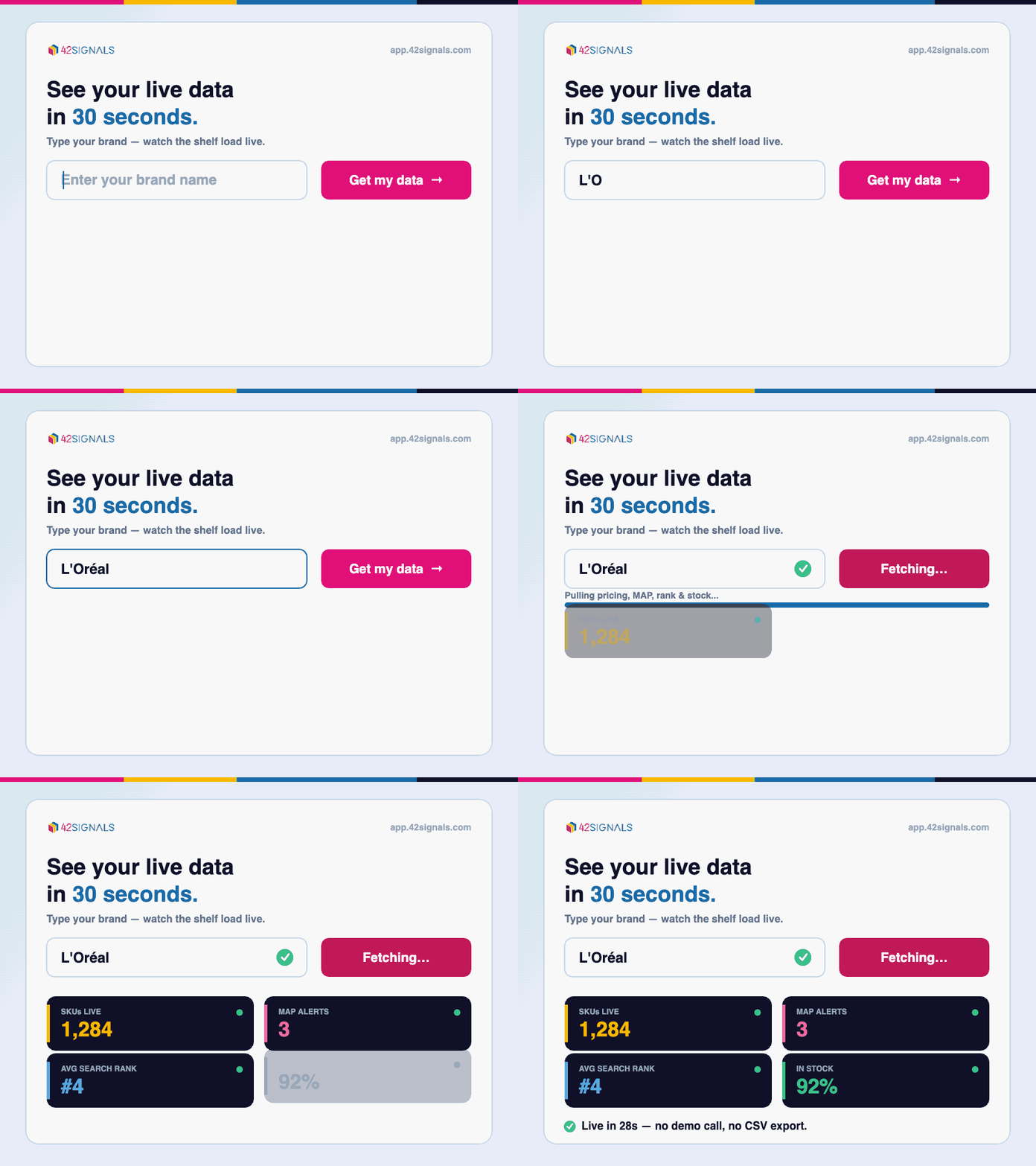
For brands selling on Amazon, Flipkart, or quick commerce platforms, 42Signals provides the hyperlocal competitor intelligence that general SEO tools can’t match. See it in action.
Frequently Asked Questions About Competitor Analysis
What are the most important features in the best competitor analysis tools?
The most important features usually include real time data tracking, customizable alerts, and deep marketplace coverage. You should also look for tools that offer clear visualizations and easy to understand reports so that your team can take action quickly.
How often should I use competitor analysis software to check my rivals?
In 2026, many brands find that they need to check their data at least once a day, especially for high velocity products. Some categories, like electronics or fashion, might even require multiple updates per day to keep up with rapid price changes and promotions.
Can these competitive intelligence tools help me with my pricing strategy?
Yes, most of the best competitor analysis tools are specifically designed to help with pricing. They can track competitor discounts, identify price violations, and even help you find the optimal price point that balances volume with profitability.
Is it difficult to set up ecommerce competitor analysis tools?
Most modern tools are designed to be as user friendly as possible. Many offer self service dashboards that do not require technical expertise to set up. However, for more complex requirements like API integrations, you might need a bit of help from your engineering team.
Do the best competitor analysis tools work for small businesses too?
Absolutely, there are tools available for businesses of all sizes. While enterprise level platforms offer more deep data, many SEO and social media tools have entry level plans that are perfect for smaller brands looking to get a foothold in the market.
Webinar: Beyond Price Monitoring: The 4 Hidden Dimensions of Competitor Intelligence
Learn how to track competitor assortment shifts, localized delivery speeds, merchant landscape leakage, and search visibility trends before they erode your market share.