

** TL;DR ** The Zepto business model redefines quick commerce by leveraging a network of hyperlocal, automated warehouses called “dark stores” strategically placed within neighborhoods to enable 10-minute grocery delivery. This speed is achieved by combining this physical infrastructure with sophisticated technology that uses predictive algorithms to stock inventory based on local demand patterns, optimizing both the picking and last-mile delivery processes. While the company generates revenue through commissions, delivery fees, and advertising, its path to profitability hinges on achieving high order volume to offset the significant operational costs. Ultimately, Zepto’s true impact lies in its success at making extreme speed a viable retail standard, forcing the entire industry to reconsider the logistics of convenience.
The contemporary consumer landscape is defined by a relentless pursuit of efficiency. In this environment, the notion of waiting for a package, a meal, or information has become increasingly anathema. It was within this cultural context that Zepto, a venture launched by two astoundingly young entrepreneurs, made a promise that many considered logistically implausible: grocery delivery in ten minutes. Let’s understand the Zepto business model.
This was not merely an incremental improvement on existing services; it was a radical reimagining of the very fundamentals of urban commerce. Zepto’s ascent to unicorn status in a record-breaking timeframe is a narrative that transcends a simple startup success story. It represents a masterclass in modern business strategy, a case study in how a singular, audacious goal can be realized through the meticulous integration of technology, logistics, and data.
The model Zepto pioneered, known globally as quick commerce or q-commerce (learn what is q-commerce), challenges traditional retail paradigms on every front. It questions the necessity of the physical storefront, reconfigures the supply chain from the ground up, and places an unprecedented emphasis on predictive analytics.
To comprehend its impact, we must examine its genesis, its operational core—the much-discussed dark store model—the sophisticated technology that orchestrates its movements, and the economic realities that underpin its ambitious growth.
What is Zepto Packman?
One of the internal tools that underpins Zepto’s dark store efficiency is Zepto Packman, its proprietary warehouse management system. Packman is the software interface used by store associates (packers) to receive order assignments, navigate optimized picking routes within the dark store, and confirm item scanning and packing. It is essentially the operational bridge between the algorithmic order management system and the physical hands that assemble each delivery. The efficiency of Packman — in terms of pick rate, error reduction, and route optimisation — directly determines how reliably Zepto can fulfill its 10-minute promise.
The Impetus for Instant Gratification: Zepto Business Model
Every disruptive enterprise begins with the identification of a significant, often unarticulated, market need. For Zepto’s founders, Aadit Palicha and Kaivalya Vohra, this need was crystallized by the daily inconveniences of urban life.
The existing e-commerce ecosystem had successfully compressed delivery timelines for non-perishable goods from weeks to days. However, the domain of immediate, spontaneous needs—the forgotten carton of milk, the sudden requirement for specific ingredients for a dinner recipe, the urgent need for over-the-counter medicine—remained largely unaddressed.
Grocery delivery services, where they existed, often operated on a same-day or next-day model, a timeline that felt increasingly out of step with the accelerating pace of life.
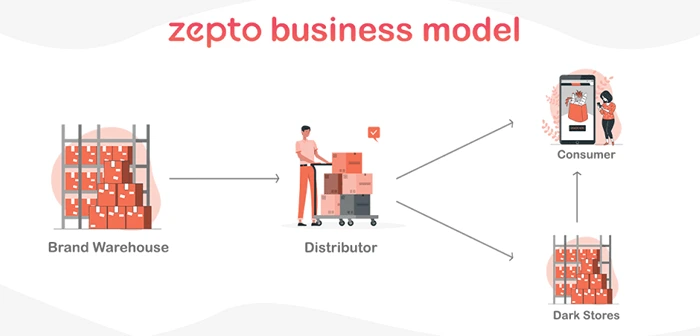
Image Source: Apps Rhino
The global pandemic served as a potent catalyst, accelerating the adoption of online grocery shopping by several years. It normalized the behavior and exposed the limitations of existing infrastructure when faced with soaring demand. Palicha and Vohra perceived that this shift was not temporary but permanent.
They bet on a simple, powerful hypothesis: that time itself was the most valuable commodity for the modern consumer. The founding insight of Zepto was that a service capable of reliably saving customers significant time on mundane tasks would command immense loyalty and value. This foundational understanding of consumer psychology is the bedrock upon which the entire Zepto business model is constructed.
The promise of ten minutes was more than a marketing gimmick; it was a direct response to a deep-seated desire for convenience and control.
Who Founded Zepto and Who Owns It?
Zepto was founded in 2021 by Aadit Palicha (CEO) and Kaivalya Vohra (CTO), two Stanford dropouts who were 19 years old at the time of founding. The company is operated under KiranaKart Technologies Private Limited, headquartered in Mumbai. Zepto is an independent company — it is not owned by Zomato and is not a Tata company, despite common misconceptions. It remains privately held, having raised significant venture capital from investors including Glade Brook Capital, Nexus Venture Partners, and Lightspeed Venture Partners, achieving unicorn status (over $1 billion valuation) in 2022.
Ready to Take the Next Step?
See how our solutions can help you achieve your goals and drive measurable results.
Zepto Explained: The Quick Commerce Pioneer
For those new to the space, Zepto is an Indian quick commerce startup that delivers groceries and essential goods in as little as 10 minutes. The Zepto app connects users to a network of neighborhood-based, tech-enabled warehouses called dark stores. It is not a Tata company; it is an independent venture founded in 2021 by Aadit Palicha and Kaivalya Vohra.
Zepto is used for fulfilling immediate, spontaneous needs—from fresh produce and snacks to personal care and home essentials. Its e-commerce model redefines convenience by making extreme speed a reliable standard, as detailed in its annual Zepto report on growth and metrics.
Where Does Zepto Operate? Cities and Expansion
As of 2025, Zepto operates across all major Indian metro cities including Mumbai, Delhi, Bengaluru, Hyderabad, Chennai, Kolkata, Pune, and Ahmedabad. The company has been aggressively expanding into Tier 2 cities including Jaipur, Lucknow, Chandigarh, Surat, Nagpur, Indore, Coimbatore, Vizag (Visakhapatnam), Kochi, and Bhopal, among others. Cities like Patna, Gwalior, Jodhpur, and Jalandhar are in varying stages of expansion — Zepto’s dark store rollout strategy prioritises cities with sufficient order density to sustain the economics of q-commerce. To check current availability in your city, use the Zepto app which shows coverage zones in real time.
Architecting for Velocity: The Centrality of the Dark Store Model
If the ambition of ten-minute delivery was the destination, the dark store model was the revolutionary vehicle designed to reach it. To appreciate its ingenuity, one must first understand why traditional retail models are ill-suited for this task. A conventional supermarket is designed for customer browsing, with wide aisles, attractive displays, and a checkout process.
These features, while beneficial for in-person shopping, introduce significant inefficiencies for order fulfillment. A picker navigating crowded aisles to assemble an online order cannot achieve the speed required for q-commerce.

Image Source: Deonde
Zepto’s solution was to eliminate the customer-facing element entirely. A dark store is a compact, strategically located micro-warehouse that serves exclusively as a fulfillment hub. The term “dark” signifies its absence of public-facing features; it is a utility, not a destination. The strategic placement of these stores is the first critical component of the model. Zepto deploys them in dense urban neighborhoods, typically within a one to two-kilometer radius of its target customer base.
This hyperlocal delivery approach is the fundamental innovation that makes ten-minute Zepto delivery logistically feasible. Instead of a delivery rider traversing a city from a large, centralized warehouse, the journey begins from a location that is, quite literally, just around the corner.

Image Source: Zepto Data by 42Signals
Inside these dark stores, every element is optimized for speed and accuracy. The layout is data-driven, with high-velocity items placed in easily accessible zones to minimize pickers’ walking time. Shelving is utilitarian, designed for storage density rather than aesthetic appeal.
When an order is placed, the system generates an optimized picking path for the store associate, guiding them through the store in the most efficient sequence possible. This entire operation is a masterclass in rethinking last-mile logistics, which is traditionally the most complex and costly segment of the supply chain. By radically shortening the distance from the warehouse to the customer, Zepto not only achieves speed but also gains greater control over delivery times and costs.
By the first quarter of 2024, Zepto had operationalized a network of over 300 such dark stores across major Indian cities, creating a dense, capillary-like system of fulfillment that forms the physical backbone of its operations.
Why Hyperlocal Fulfillment Is Zepto’s Core Competitive Advantage
Zepto does not publicly list its dark store (warehouse) locations, as these are fulfillment-only facilities not open to the public. However, users can find the nearest fulfillment zone through the Zepto app itself. ‘Zepto Warehouse APK’ queries typically refer to the Zepto for Partners app — the Android application used by delivery associates and packing staff to manage orders and routes within dark stores.
The Invisible Zepto Business Model Engine: Data, Algorithms, and Predictive Inventory Management
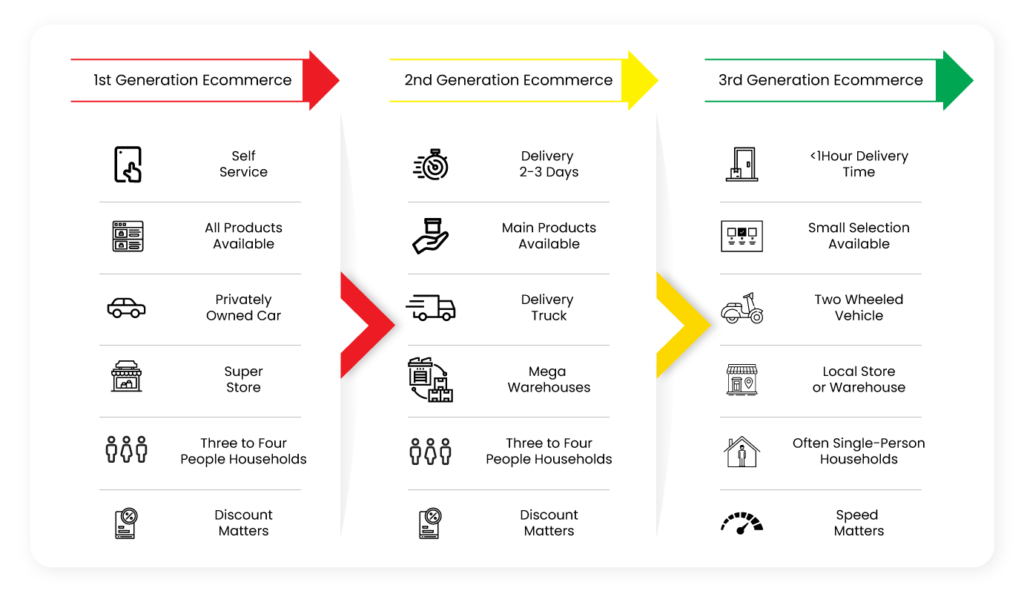
Image Source: Codilar
A network of well-located dark stores is a necessary condition for quick commerce, but it is not sufficient. Without intelligent, real-time coordination, it would swiftly descend into chaos. The true sophistication of the Zepto business model lies in the layer of advanced technology that acts as its central nervous system. This is where data transforms into a competitive advantage.
The most critical technological component is predictive inventory management. This is not a simple automated reordering system. It is a complex algorithmic engine that analyzes a multifaceted stream of data to forecast demand at a remarkably granular level. This data includes historical sales figures from each specific dark store, real-time ordering patterns, time of day, day of the week, local weather conditions, and even trends from local events or holidays.
For example, the algorithm might learn that a dark store in a residential area experiences a surge in demand for breakfast items and dairy products between 7 AM and 10 AM on weekdays, while a store located near business districts sees higher orders for snacks and ready-to-eat meals during the afternoon. Another might stock up on baking supplies ahead of a major holiday weekend.
This sophisticated predictive inventory management ensures that each dark store is pre-emptively stocked with the products its hyperlocal customer base is most likely to order. The benefits are twofold. First, it drastically reduces the time a picker spends searching for an item or dealing with stock-outs, which is fatal to a ten-minute promise.
Second, it optimizes capital by reducing excess inventory and minimizing food waste, a crucial factor for profitability in the low-margin grocery business. According to an analysis by the consulting firm Bain & Company, advanced demand forecasting can improve inventory accuracy by up to 30%, a figure that directly impacts the bottom line for a q-commerce operation.
Beyond inventory, the technology stack manages a ballet of coordination. The moment an order is placed, the system instantaneously routes it to the optimal dark store based on inventory availability and proximity. It then generates the picking route for the associate and, simultaneously, assigns a delivery partner, calculating the fastest possible route for the rider while accounting for real-time traffic data. This seamless, automated handoff between digital command and physical execution is the invisible engine that makes the Zepto business model hum with efficiency.
Ready to Take the Next Step?
See how our solutions can help you achieve your goals and drive measurable results.
The Partner Ecosystem: Seller Onboarding, Fees & Earning Models
Zepto operates a hybrid model, acting as both a retailer and a marketplace. For brands and local stores, Zepto marketplace provides access to high-intent customers.
- Seller Costs: Sellers pay a zepto commission (a percentage of order value) and sometimes a one-time zepto onboarding fee. The exact zepto charges for seller are outlined in a dynamic zepto rate card (e.g., 2025), which varies by category.
- Franchise & Partnerships: While not a traditional zepto dealership or zepto warehouse franchise, Zepto may license its model to local operators in some areas as part of its expansion zepto business plan. Its B2B arm also supplies these dark stores.
- Delivery & Rider Earnings: Zepto delivery partner earnings per order are structured via a zepto rider rate card, which includes a base pay, incentives for speed/volume, and sometimes per kilometer components. Zepto rider salary or zepto delivery salary is thus variable. Zepto salary day and payout cycles are defined in partner agreements. This network is part of zepto services and zepto transportation logistics.
Inside the Model: Unit Economics, Profitability & Challenges
The zepto business model is a high-stakes operation balancing incredible speed against thin margins.
- Revenue & Costs: The zepto revenue model combines product margins, delivery fees, and advertising. Zepto unit economics scrutinize the profit/loss per order, heavily dependent on achieving high order density to offset the costs of dark store operations, staffing, and last-mile delivery (zepto speed).
- Profitability Quest: When asked “is zepto making profit?” the answer is that it’s on the path, focusing on EBITDA positivity by scaling and optimizing its zepto supply chain. Zepto business challenges 2025 include sustaining growth, managing burn rate, and navigating intense competition.
- Operational Nuances: Initiatives like Zepto Kitchen (cloud kitchens) and Zepto Cafe represent category expansion for higher margins. The app indicator “H in fresh” likely signifies hyper-fresh or a specific quality grade for produce. ‘Zepto Q’ often refers to its quick commerce vertical.
Zepto built a business on being in stock. Are your products?
Get alerted when your products go out of stock on quick commerce and marketplaces.
The Balance Sheet: Scrutinizing the Zepto Business Model
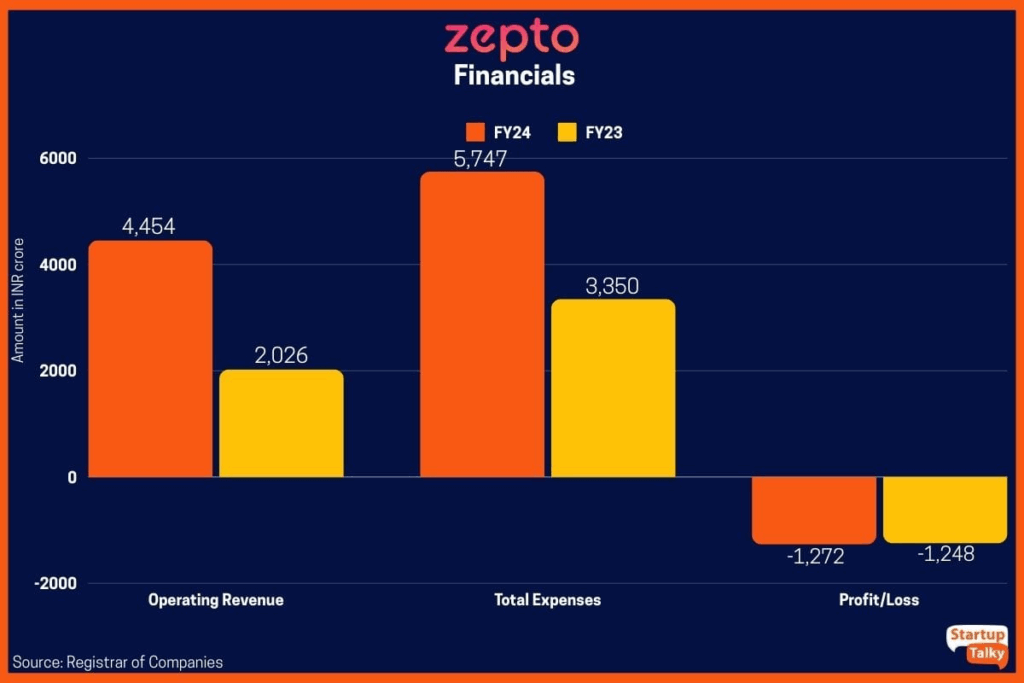
Image Source: Startup Talky
A common point of skepticism regarding quick commerce revolves around its economic sustainability. Can a business that promises such extreme speed and convenience also be profitable?
Examining the streams of Zepto revenue reveals a multi-pronged approach to building a viable economic model, though the path to consistent profitability remains a central challenge for the entire sector.
The primary source of Zepto revenue is commissions. Zepto operates as a curated marketplace, and like other platforms, it charges brands and suppliers a commission fee for the right to sell their products through its app. These commissions, which can vary from 10% to 25% or more depending on the category and negotiation, provide a significant revenue stream. Secondly, delivery fees contribute to the Zepto revenue pool.
| Canvas Element | Zepto’s Approach |
| Value Proposition | 10-minute grocery delivery; convenience for spontaneous needs |
| Customer Segments | Urban consumers aged 18–45; time-poor professionals; households |
| Key Activities | Dark store operations; demand forecasting; last-mile logistics |
| Key Resources | Dark store network; proprietary tech stack; delivery partners |
| Key Partners | FMCG brands; produce suppliers; logistics partners; tech providers |
| Revenue Streams | Product commissions; delivery fees; advertising; Zepto Pass subscription |
| Cost Structure | Dark store rent and staffing; inventory; rider costs; tech infrastructure |
| Channels | Zepto app (iOS/Android); Zepto website |
While often waived as a promotional tactic to acquire and retain customers, a nominal fee is typically applied to smaller-value orders, helping to partially offset the substantial costs associated with last-mile logistics.
A third lever is dynamic or surge pricing. During periods of peak demand, such as evenings, weekends, or inclement weather, Zepto may implement a small surge charge. This mechanism, familiar from ride-hailing apps, helps to manage demand and ensure service reliability during high-stress periods, while also generating incremental revenue. Finally, a rapidly growing component of the Zepto revenue model is advertising and promotional placements. Here’s how you can understand quick commerce analytics.
Brands pay a premium for featured banners, push notification sponsorships, and placement in high-visibility sections of the app—essentially paying for digital “shelf space.” This high-margin revenue stream is critical as it does not directly increase operational costs.
The fundamental economic challenge of the grocery delivery business model is the combination of low average order values and high operational costs. The key to profitability, which Zepto is aggressively pursuing, lies in achieving a high volume of orders per dark store per day.
This “throughput” allows the company to spread its fixed costs (rent, staffing, technology) over a larger number of transactions, thereby improving unit economics—the profit or loss on each individual order. The goal is to reach a point where the combined revenue from commissions, fees, and advertising on each order exceeds its associated cost of fulfillment.
The Competitive Arena: Zepto vs. Blinkit and the Q-Commerce Battlefield
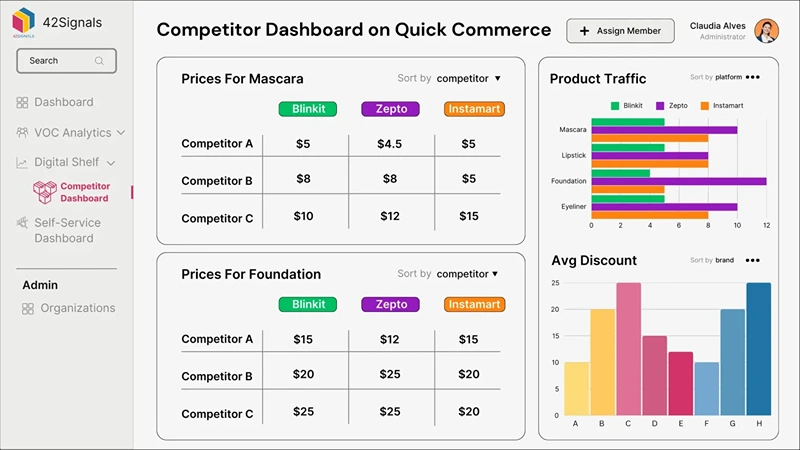
Image Source: Blinkit Data by 42Signals
Zepto did not emerge into a vacuum. The quick commerce space in India is a fiercely competitive landscape, often characterized as a high-stakes battle for market dominance. The most direct and frequently drawn comparison is Zepto vs Blinkit. Blinkit (formerly Grofers), now owned by the food delivery giant Zomato, was an early mover in the q-commerce space and operates on an almost identical dark store model.
The rivalry between Zepto vs Blinkit has been a primary driver of rapid innovation, aggressive expansion, and intense marketing spending in the sector. Both companies are targeting a similar demographic with a nearly identical value proposition of speed and convenience. The points of differentiation, therefore, become subtler and more strategic.
Zepto has consistently emphasized operational excellence and reliability, focusing on building a robust and scalable supply chain from the ground up. Their narrative often centers on technology and execution. Blinkit, in contrast, leverages the immense existing user base and brand recognition of its parent company, Zomato, allowing for powerful cross-promotional opportunities and a potentially faster path to customer acquisition.
The competitive field extends beyond this primary duel. Swiggy Instamart, backed by the other major food delivery platform, is another significant contender, while established players like BigBasket have launched their own quick service, BB Now. This crowded battlefield ensures that no company can become complacent. Here’s how you can track Swiggy Instamart data.
The intense competition pressures everyone to continuously innovate in areas like delivery speed, product range, customer service, and, crucially, price. This environment is a net positive for consumers but places enormous strain on the companies to achieve scale and efficiency at a breathtaking pace. Here’s how you can track Zepto and Blinkit data easily.
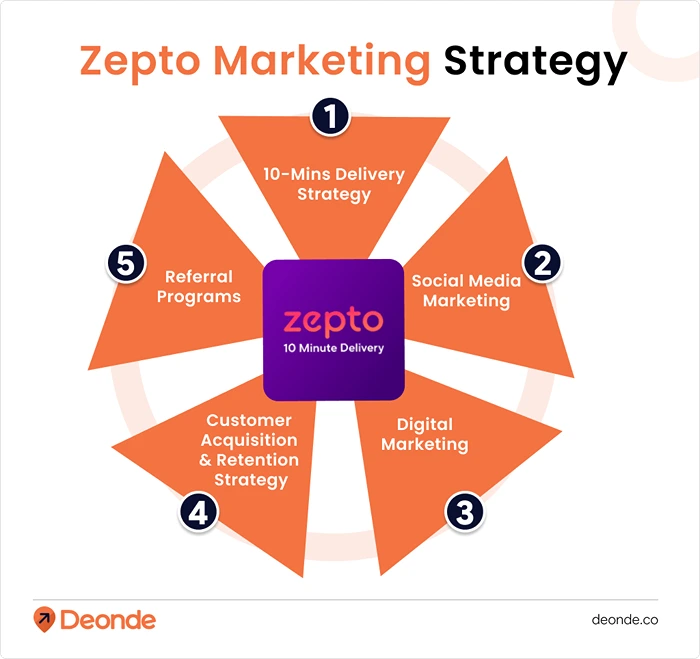
Zepto’s Marketing Strategy
Zepto’s marketing strategy combines aggressive performance marketing (app-install campaigns, first-order discounts), influencer partnerships on Instagram and YouTube targeting urban millennials, and the Zepto Pass subscription model to drive retention. The company has leaned heavily into brand building in 2024–25, including an IPL sponsorship and celebrity brand ambassador campaigns, moving beyond pure performance metrics toward building top-of-mind brand awareness — a key differentiator in a market where Blinkit benefits from Zomato’s existing brand recognition.
Navigating Headwinds: Challenges and Future Trajectories in the Zepto Business Model
For all its success, the path forward for Zepto is not without significant obstacles. The operational complexity of managing a distributed network of dark stores and a large, granular workforce of pickers and riders is immense. Labor management, ensuring consistent service quality across all locations, and maintaining the delicate balance of inventory to avoid both stock-outs and wastage are perpetual challenges.
Furthermore, the economics of the grocery delivery business model remain precarious, and the pressure to demonstrate a clear path to profitability will only intensify as the company matures.
Looking ahead, Zepto’s growth strategy will likely involve two key pillars. The first is geographic expansion within India, targeting tier-two and tier-three cities where the value proposition may differ but the potential for growth is substantial.
The second, and perhaps more significant, is category expansion with quick commerce strategies. The dense logistics network built for ten-minute grocery delivery is a powerful platform that can be leveraged to deliver a much wider array of products. We are already seeing early moves into categories like pharmaceuticals, electronics, office supplies, and personal care.
The long-term vision is to position Zepto not merely as a grocery app, but as the default solution for all immediate urban needs. The future of the Zepto business model may well lie in becoming a ubiquitous, on-demand utility for modern city life.
Ready to Take the Next Step?
See how our solutions can help you achieve your goals and drive measurable results.
Zepto Business Model – A Lasting Impact on the Commerce Landscape
In conclusion, Zepto’s business model represents a fundamental shift in the architecture of retail. It has demonstrated that with the right operational blueprint—centered on the dark store model, powered by sophisticated predictive inventory management, and fine-tuned for hyperlocal delivery—even the most ambitious service promises can be operationalized.
The company has successfully educated a market and set a new benchmark for convenience that competitors and adjacent industries must now contend with.
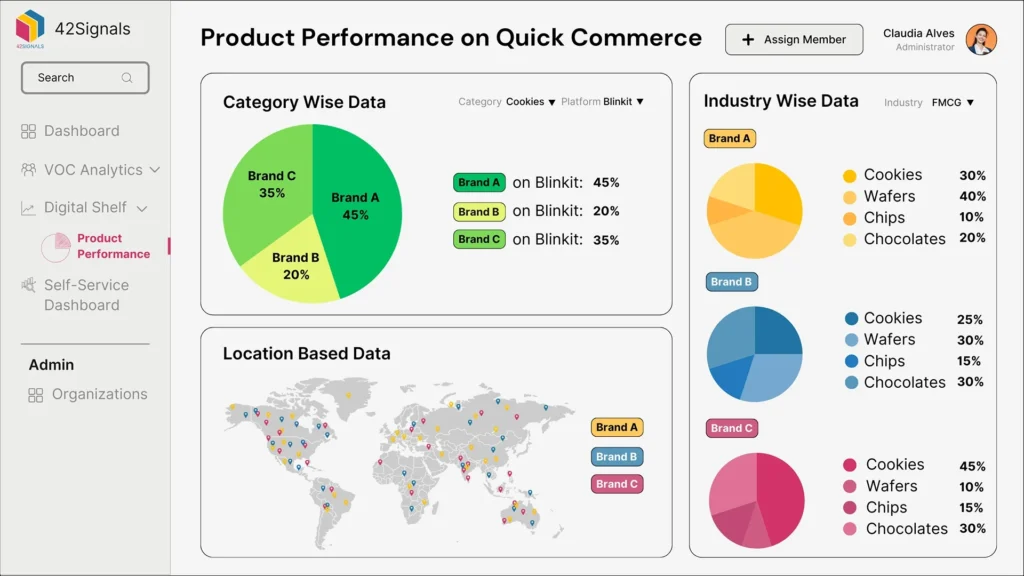
The discussion around Zepto vs Blinkit and other players will continue, but the true legacy of Zepto may be its demonstration of the power of a singular focus. By orienting its entire organization—from technology to logistics to real estate—around the goal of saving the customer time, it has created a formidable and resilient operation.
While the quest for sustainable profitability is the next critical chapter, Zepto has undeniably redefined commerce. It has proven that in the modern economy, speed, when executed with precision, is not just a feature—it is a foundational element of a new grocery delivery business model and a powerful competitive weapon.
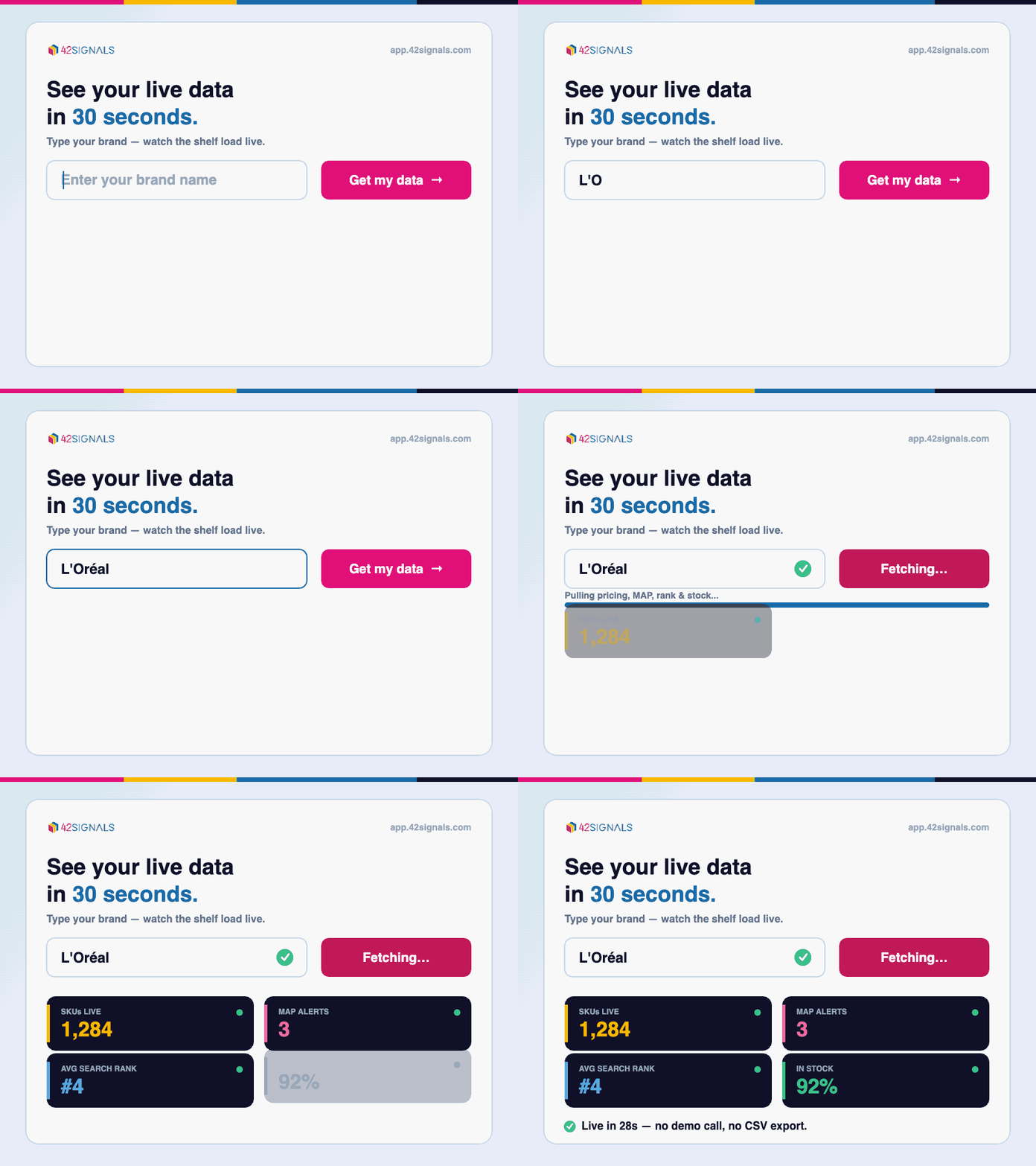
If you’re looking for reliable quick commerce data for your business, schedule a demo with us today.
Frequently Asked Questions
How is Zepto making profit?
Zepto generates revenue through multiple channels, though it’s still working toward consistent profitability. Key sources of income include:
Product Sales: Zepto sells groceries, fresh produce, dairy, snacks, personal care items, etc., via its app and website. It procures the products (often via its parent company) and earns margin on the markup between wholesale and what the end customers pay.
Delivery Fees: For many orders, Zepto adds a delivery or logistics charge, especially when free delivery isn’t included. This helps cover the costs of fast delivery operations.
Subscription / Membership (Zepto Pass): Regular customers can opt into Zepto’s subscription plan (Zepto Pass) which gives them benefits like free or discounted delivery, early access to deals, etc. This creates recurring revenue and boosts order frequency.
Advertising / Promotions: Brands pay Zepto for increased visibility, special placements, promotions within the app, sponsored listings, etc. This helps Zepto monetize its customer base beyond just transactional sales.
Efficiency Gains from Dark Stores: By using dark stores (mini‑warehouses not open to walk‑in customers), optimising route logistics, placing inventory close to demand zones, Zepto reduces delivery time and costs. Lower fulfillment and last‑mile costs help improve margins.
What is the business structure of Zepto?
Zepto is organized under KiranaKart Technologies Pvt Ltd, founded by Aadit Palicha and Kaivalya Vohra in 2021.
It operates a network of dark stores (fulfillment centres) in major Indian cities to enable very fast (10‑minute) delivery of groceries and essentials.
Zepto Marketplace Private Limited is the formal legal entity through which Zepto’s newer marketplace-model operations are structured. As Zepto shifted from a purely inventory-led model (where it directly owned stock) toward a marketplace model, it created this separate entity to formalise the platform licensing, B2B procurement, and retail operations via licensees. In practical terms, when you order on the Zepto app, you are transacting through Zepto Marketplace Private Limited. The parent holding company remains KiranaKart Technologies Private Limited, founded by Aadit Palicha and Kaivalya Vohra in 2021.
What is the commission model of Zepto?
Zepto charges a commission (“take rate”) from orders placed through its platform. Sources suggest that Zepto’s take rate is around 15‑20% of GMV (Gross Merchandise Value) in many cases.
On top of that, Zepto may also charge commission or fees from sellers/brands for advertising placements or promoted product listings.
There are also subscription or membership plans (e.g. Zepto Pass) which include certain fees but also reduce or waive delivery charges for members, indirectly affecting revenue and margin.
Is Zepto a B2B or B2C company?
Zepto primarily serves the B2C (Business‑to‑Consumer) market—it delivers groceries and essentials directly to end customers via its app.
However, its structure does have B2B elements: Zepto procures (or sources) inventory from brands or wholesalers (B2B), and its licensees or dark stores act as retailers/distributors in some contexts. The recent shift to the marketplace model also formalises the B2B2C relationships.