
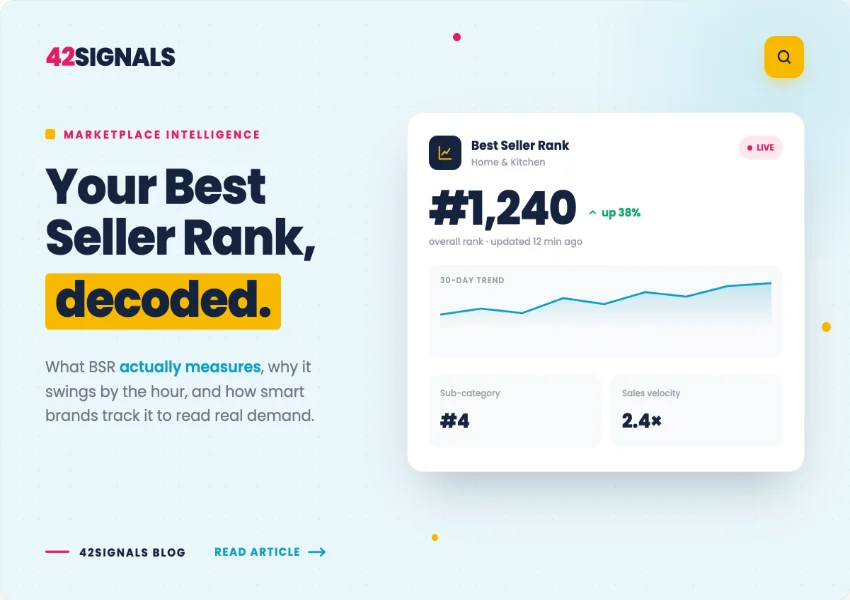
A Quick Look at Amazon BSR Strategy
If you are looking for a quick summary of how to handle your rankings, here is what you need to know about the Amazon BSR. The Best Seller Rank is a relative measure of sales velocity within a specific category, meaning a lower number indicates that you are selling more units than your competitors. To manage this effectively, brands must look beyond just the number and focus on how it correlates with pricing, availability, and review velocity. Successful brands use a professional best seller rank tracker to monitor daily shifts and identify opportunities where competitors might be losing ground due to stock issues. It is important to remember that BSR is a lagging indicator that reflects recent sales rather than future potential. By using automated systems like 42Signals, you can turn these rank signals into actionable insights for inventory planning and advertising spend.
What is BSR on Amazon and Why Does It Matter?
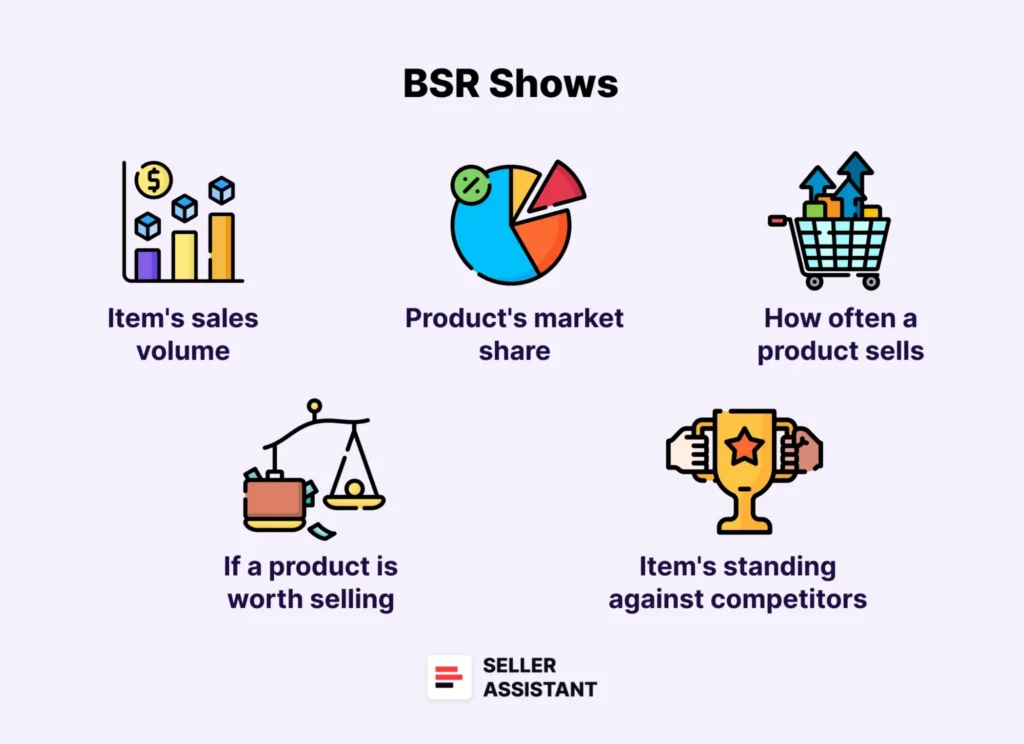
Image Source: Seller Assistant
When you look at a product page on the world’s largest marketplace, you will see a number that many people obsess over. This is the Amazon BSR, or Best Seller Rank. For a brand manager, this number is the most visible pulse of a product’s health on the digital shelf. It tells you exactly where you stand in the hierarchy of your category. However, simply knowing the number is not enough if you do not understand the mechanics behind it.
Amazon BSR tells you how your sales volume compares to every other product in the same category over a specific period. If you have a BSR of 10 in Electronics, it means only nine other products are moving faster than yours at this very moment. This makes it a critical part of competitor pricing intelligence because it reveals who is winning the volume game.
Understanding what BSR on Amazon is also vital because of how it influences shopper behavior. While most customers do not check the specific BSR number, they certainly notice the “Bestseller” badge that often accompanies the top spots. This badge acts as a massive signal of social proof, which can significantly increase your conversion rates. Because 70% of Amazon customers never scroll past the first page of search results, maintaining a strong BSR is often the difference between being a market leader and being invisible.
How the Best Seller Rank is Calculated
The math behind the Amazon BSR is one of the most closely guarded secrets in ecommerce, but we can infer how it works based on data patterns. It is primarily driven by sales velocity, which is the number of units sold in a given timeframe. Amazon looks at both recent sales and historical performance to determine where a product should sit. This means a sudden spike in sales can cause your rank to jump quickly, but consistent sales are required to keep it there.
Many people think that Amazon BSR tracking only looks at total lifetime sales, but that is a common misconception. The algorithm heavily weights recent activity, which is why a new product can quickly climb the ranks if it has a strong launch. This is also why you might see a BSR fluctuation after a major promotion or a holiday event. The rank is updated hourly, meaning it is a near real-time reflection of the competitive landscape.
Another key factor in the calculation is the rank vs sales correlation. While the relationship is strong, it is not always linear. For example, the jump in sales needed to move from rank 100 to 50 is much smaller than the jump needed to move from rank 10 to rank 5. In high-volume categories, the competition at the top is incredibly fierce. Brands often use professional tools to perform revenue estimation by mapping these BSR numbers to estimated unit counts based on historical category data.
Navigating Category Rank and Sub-Category Rank
When you are performing Amazon BSR tracking, you will notice that your product has different ranks in different places. You might be rank 5,000 in the broad “Home & Kitchen” category but rank 5 in the more specific “Espresso Machines” sub-category. Both of these numbers matter, but they serve different strategic purposes. The broad category rank gives you a sense of your brand’s overall power in the market, while the sub-category rank shows how you are performing against your direct rivals.
Smart brands focus on dominating sub-categories because that is where the bestseller badge is usually awarded. Winning a badge in a niche category is often easier and more cost-effective than trying to climb the ranks of a massive parent category. This is a core part of a successful Amazon BSR strategy. It allows you to build momentum and social proof that eventually helps you climb higher in the broader rankings as your authority grows.
It is also important to monitor competitive rank monitoring across these different levels. If you see a new competitor suddenly appearing in your sub-category top ten, you need to investigate their strategy immediately.
- Are they running a heavy discount?
- Have they improved their review velocity?
By tracking these movements across both main and sub-categories, you can spot threats before they impact your bottom line.
Why You See BSR Fluctuation Every Day
One of the most frustrating things for a brand manager is seeing a massive BSR drop when you thought your sales were doing well. It is important to remember that because BSR is a relative metric, your rank can go down even if your sales stay the same. If your competitors all increase their sales by 20% while your sales are flat, your Amazon BSR will naturally fall. This is why you cannot track your rank in a silo.
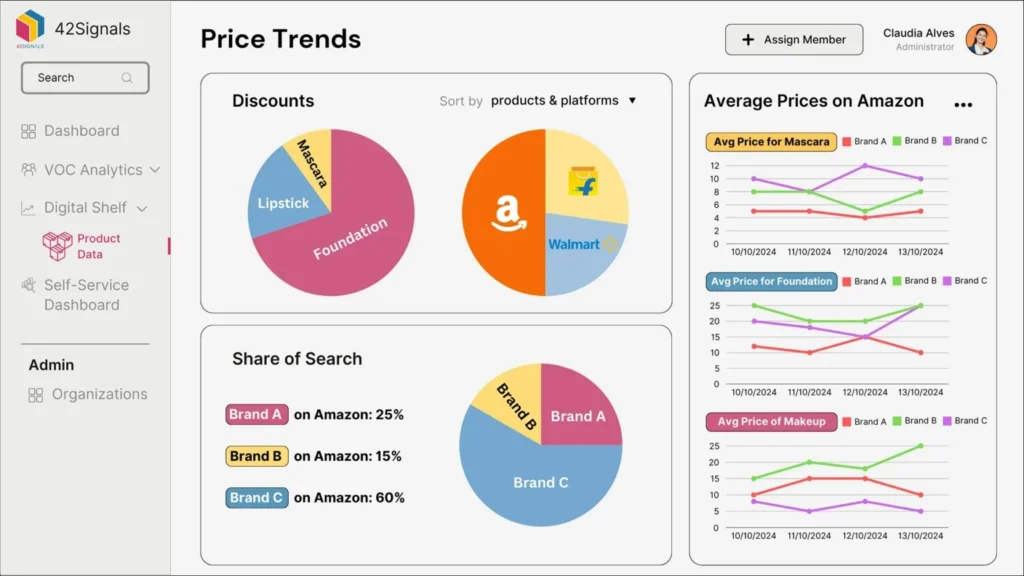
Daily BSR fluctuation is completely normal on a platform as busy as Amazon. Factors like time of day, seasonal trends, and even localized stock issues can cause the numbers to dance. For instance, if a competitor goes out of stock in a major region, their rank will start to slip, giving you an opportunity to capture their search share. This highlights the need for digital shelf availability tracking to understand the “why” behind the movement.
To handle these fluctuations, you need a best seller rank tracker that provides historical context. Looking at a single day of data is like looking at a single frame of a movie. You need to see the trend over weeks and months to understand if a dip is a temporary blip or a sign of a deeper problem. Professional tools like 42Signals help you filter out the noise so you can focus on the long-term Amazon ranking signals that actually drive growth.
The Link Between Rank and Sales Correlation
The most valuable thing about the Amazon BSR is its ability to act as a proxy for revenue. While Amazon does not share private sales figures, the rank vs sales correlation allows analysts to build very accurate models. By tracking the BSR of thousands of products and comparing them to known sales data points, professional platforms can estimate the GMV of almost any product on the site.
This modeling is essential for category revenue analysis because it helps you understand the total size of the prize. If you know that the rank 1 product in your category is doing $1 million a month and you are at rank 50 doing $100,000, you can see exactly how much room there is to grow. It also helps you set realistic KPIs for your team. Instead of just saying “sell more,” you can say “we need to reach a BSR of 20 to hit our revenue goals.”
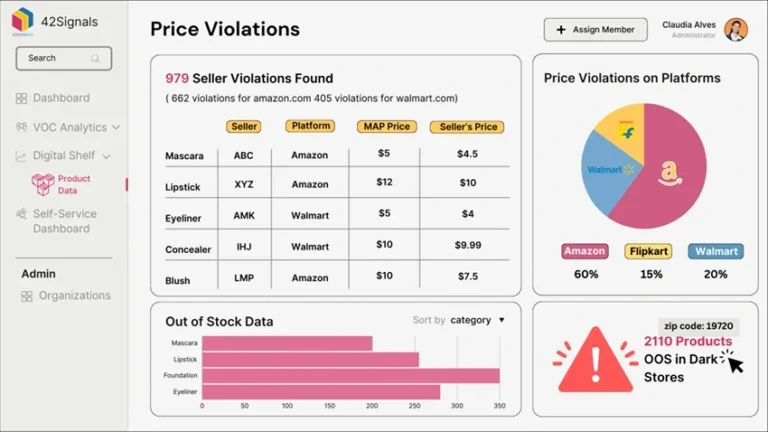
However, you must be careful not to rely solely on this correlation. Other Amazon ranking signals like price and reviews also play a role. If a brand is at rank 1 but selling at a 50% discount, they might be generating high volume but very little profit. This is why a holistic view of the digital shelf is required. You need to combine BSR data with pricing and MAP violation monitoring to get the full picture of a competitor’s health.
How to Improve Amazon BSR for Your Brand
If you are struggling with a low rank, you are likely asking how to improve Amazon BSR quickly. The answer is not a single magic trick but a combination of factors that drive sales velocity. Because BSR is a reflection of sales, anything that helps you sell more units will improve your rank. This includes everything from your keyword optimization to your images and your pricing strategy.
One of the fastest ways to see a jump is through aggressive advertising. By increasing your spend on high-converting keywords, you can drive a surge of orders that signals to the algorithm that your product is trending. This creates a “flywheel effect” where higher sales lead to a better Amazon BSR, which leads to more organic visibility and even more sales. This is a common tactic used during product launches or to clear out inventory before a new season starts.
Another critical factor in how to improve Amazon BSR is maintaining high availability. If your product goes out of stock even for a few days, your rank will plummet, and it can be very difficult to regain your previous position. Data shows that out-of-stock events are one of the leading causes of long-term market share loss. You should also focus on your review velocity tracking because fresh, positive reviews are a major conversion driver that helps sustain your sales volume over time.
Using Competitive Rank Monitoring to Find Gaps
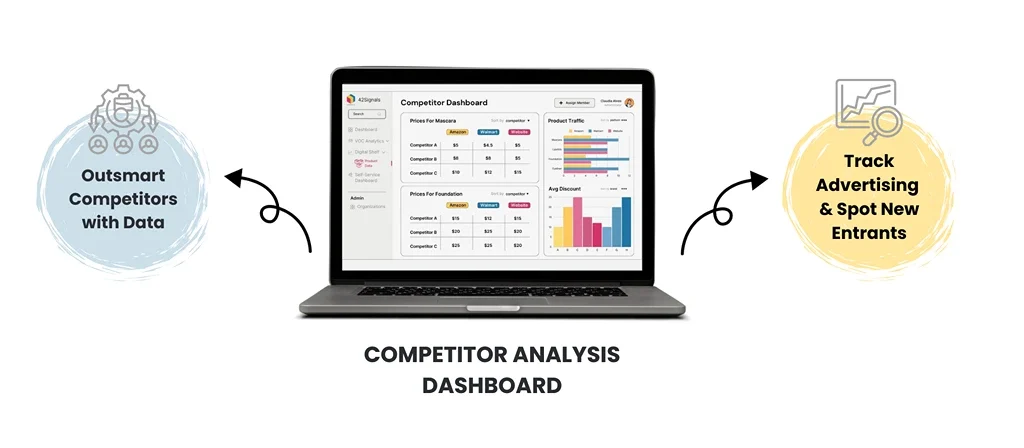
One of the best uses of an Amazon BSR strategy is to spot when your rivals are vulnerable. By using competitive rank monitoring, you can see in real-time when a top-ranked brand starts to slide. This often happens because they have raised their prices too high or they are facing supply chain issues. When you see a competitor’s BSR start to drop, that is your signal to increase your own advertising and promotional efforts to capture their fleeing customers.
This type of competitor gap analysis is what separates proactive brands from reactive ones. Instead of waiting for your own sales to dip, you are constantly looking for ways to steal share from others. If you notice a rival has a high BSR but poor review sentiment, you have found a massive opportunity. It means consumers want the product but are unhappy with the current options, allowing you to position your brand as the better alternative.
You can also use a best seller rank tracker to benchmark your performance against the “category average.” If the entire category is seeing a BSR fluctuation due to a seasonal shift, you don’t need to panic about a small drop in your own numbers. However, if everyone else is rising and you are the only one falling, it is a clear sign that you need to audit your listings and your pricing strategy immediately. Staying ahead of the curve requires constant vigilance and high-quality data.
The Role of 42Signals in Amazon BSR Tracking
Managing all of these moving parts manually is impossible for a brand with a large catalog. This is why we position 42Signals as the essential data layer for your ecommerce strategy. We provide the infrastructure to perform Amazon BSR tracking at scale across thousands of SKUs and multiple marketplaces. Our platform doesn’t just give you a list of numbers; it gives you the context you need to make smart business decisions.
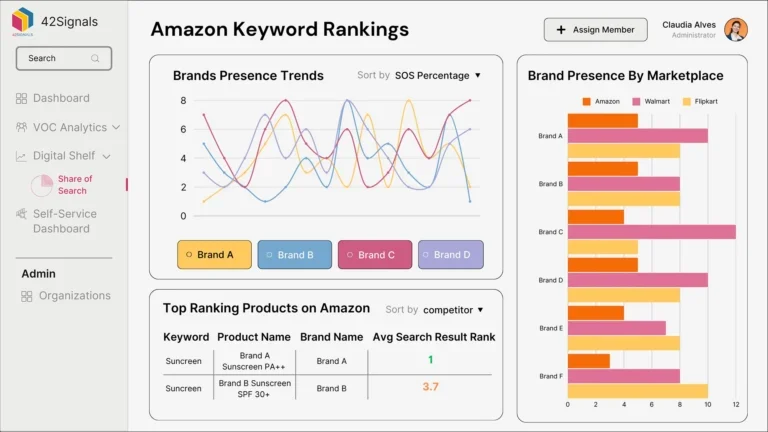
Our digital shelf analytics combine BSR data with pricing, stock status, and share of search metrics. This allows you to see the “why” behind every BSR fluctuation. For example, our dashboard can show you that your rank dropped because a competitor launched a Lightning Deal, or because your shipping times increased in a specific region. This level of granularity is essential for brands that want to protect their margins and grow their revenue with confidence.
By using our best seller rank tracker capabilities, you can also automate your reporting. Instead of having your team spend hours every week pulling data into spreadsheets, they can receive real-time alerts when a rank changes or a competitor makes a move. This frees up your team to focus on high-level strategy rather than manual data entry. Whether you are looking for Amazon keyword rank tracking software or a complete market intelligence solution, 42Signals provides the reliability and speed that modern brands require.
Common Pitfalls in Best Seller Rank Analysis
While the Amazon BSR is a powerful tool, it is also easy to misinterpret. One of the biggest mistakes is focusing too much on short-term spikes. A brand might run a massive giveaway that pushes them to rank 1 for a day, but if they cannot sustain those sales at a profitable price, the jump is meaningless. You should always look for “sustainable rank,” which is the position you can hold through organic demand and efficient advertising.
Another pitfall is ignoring the impact of sponsored placements. A competitor might have a better Amazon BSR than you simply because they are outspending you on ads. If they are losing money on every sale just to keep their rank, they are not a long-term threat. You must use search intelligence to distinguish between organic power and paid visibility. This helps you avoid “price wars” that destroy your profitability while trying to chase a vanity metric.
Finally, many brands fail to account for the difference in BSR Amazon meaning across different international markets. A BSR of 100 in the US is not the same as a BSR of 100 in India or Germany. Each market has its own volume and competitive dynamics. If you are a global brand, you need a solution that provides regional and pin-code level tracking to ensure your data is accurate for every territory where you sell.
Mastering Your Amazon BSR for Long-Term Growth
In the fast-moving world of online retail, information is the only thing that keeps you from flying blind. The Amazon BSR is more than just a number on a page; it is a complex signal that tells the story of your brand’s relationship with the consumer. By understanding how it is calculated and how it fluctuates, you can move from guessing to knowing exactly what your next move should be.
To truly succeed, you must move away from basic trackers and embrace a professional data strategy. This means integrating your Amazon BSR tracking with other critical signals like price, availability, and sentiment. When you have a unified view of the digital shelf, you can spot opportunities that your competitors miss and react to threats before they become disasters. This is how the top 1% of brands maintain their dominance year after year.
If you are ready to take control of your market position and stop worrying about every BSR drop, it is time to invest in a professional data partner.
42Signals combines BSR data with pricing, availability, and share of search metrics to give brand managers a unified view of the digital shelf. If you want to track rank movements across categories, geographies, and competitors in real time, start a free trial.
Frequently Asked Questions
What is a good Amazon BSR for my product?
A “good” BSR is entirely dependent on your category. In a high-volume category like “Books,” a BSR under 10,000 might be excellent, whereas, in a niche category like “Industrial Lab Supplies,” a BSR of 500 might be the target. You should always benchmark your Amazon BSR against your top five direct competitors rather than looking at an arbitrary number.
How often does Amazon update the Best Seller Rank?
Amazon typically updates the BSR every hour. However, the system is dynamic, and in very high-volume categories, you might see changes even more frequently. Using a best seller rank tracker that captures these hourly shifts is vital for understanding how your promotions or price changes are impacting your sales in real-time.
Can I have a BSR without any sales?
No, a product must have at least one sale to be assigned an Amazon BSR. If a product has not sold in a long time, its rank will slowly drop until it eventually disappears from the rankings altogether. This is why maintaining a consistent sales velocity is so important for staying visible to potential customers.
Does BSR affect my organic search ranking?
Yes, there is a strong relationship between BSR and search rank. Amazon’s search algorithm prioritizes products that are already selling well because it wants to show customers items they are likely to buy. By focusing on how to improve Amazon BSR, you are also indirectly helping your products climb to the top of the search results for your most important keywords.
Why did my BSR go up even though I sold more units today?
Because BSR is a relative metric, your rank depends on everyone else’s performance too. If you sold 100 units today but your competitors sold 200, your Amazon BSR will still drop. This is why daily BSR fluctuation can be confusing if you only look at your own internal sales data without comparing it to the rest of the category.
How can I track my competitors’ BSR?
You can manually check the product details page for any item, but for a brand manager, this is not efficient. The best way is to use an automated best seller rank tracker like 42Signals, which monitors your competitors’ ranks daily and alerts you to any significant shifts in their performance or market share.
Webinar: Beyond Price Monitoring: The 4 Hidden Dimensions of Competitor Intelligence
Learn how to track competitor assortment shifts, localized delivery speeds, merchant landscape leakage, and search visibility trends before they erode your market share.