

The Importance of Visibility Data for Market Dominance
Visibility data and share of search are the primary indicators of e-commerce success on platforms like Amazon and Flipkart, as products that aren’t found simply aren’t bought. To dominate the digital shelf, brands must move beyond simple rank tracking to analyze cumulative presence across organic and sponsored results while monitoring regional stock availability. 42Signals provides the essential real-time market intelligence and automated tracking tools needed to transform these complex metrics into actionable strategies that outpace competitors and secure long-term growth.
If you are a brand manager or an e-commerce lead, you probably hear the phrase visibility data several times a day. You know that if your products are not on the first page of Amazon or Flipkart, they might as well not exist for the average shopper. However, simply knowing you need to be visible is not the same as understanding the deep metrics that make up that presence. In this guide, we will peel back the layers of what visibility data actually represents and how it influences your daily sales. We will explore the connection between search rankings and market share while showing you how to turn raw numbers into a winning strategy. By the end of this article, you will understand how to use professional tools to reclaim your space on the digital shelf.
Why Your Current Understanding of Visibility Data Might Be Incomplete
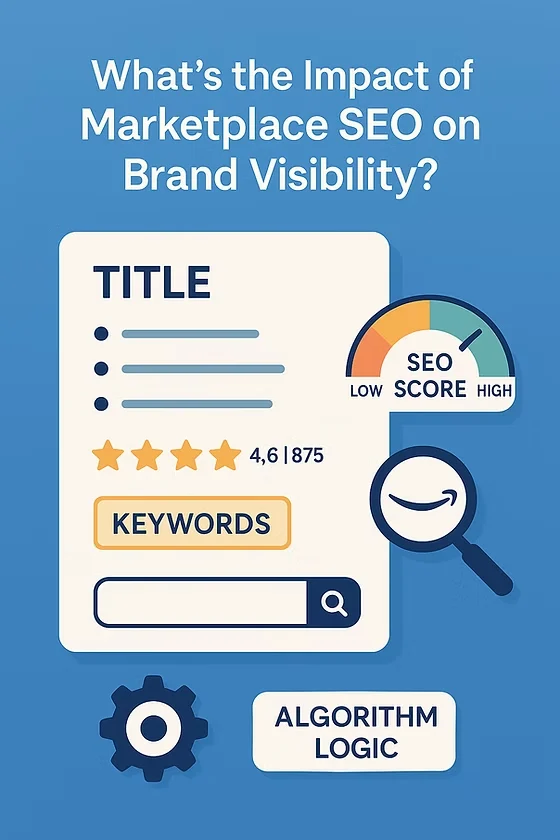
Image Source: Genrise
Let us think about your product’s performance on Amazon for a moment. You might check your ranking once a week and see that you are in the top ten for your main keyword. While that feels like a win, it is only a small slice of the true visibility data story. Real visibility is about more than just one keyword or one moment in time. It is about how often you appear across hundreds of relevant search terms and how that presence compares to every one of your competitors.
When we talk about visibility data, we are discussing the cumulative impact of your brand’s presence. This includes your organic rankings, your sponsored ad placements, and even the “Amazon’s Choice” or “Best Seller” badges you might hold. If you only look at your own rank, you are missing the context of the entire marketplace. You need to know if a new competitor just launched a heavy ad campaign that is pushing you down the page during peak hours. Understanding this data allows you to react before your sales numbers start to dip.
The digital shelf is not a static place. It changes based on the time of day, the location of the shopper, and even the device they are using. If you are not tracking visibility data across all these variables, you are essentially flying blind. Professional brands use this information to decide where to spend their marketing budget and which products need a content overhaul. It is the difference between guessing why sales are down and having a clear roadmap to fix the problem.
Defining Visibility Data in the Context of E-commerce
To truly master the marketplace, we must first define what we mean by visibility data. At its simplest level, this metric refers to how prominently your products are displayed across digital platforms compared to your rivals. It is a measurement of the space you occupy in the shopper’s view. According to research by Sprout Social, this concept is closely tied to the idea of share of voice, which tracks how much of the online conversation and search space your brand owns.
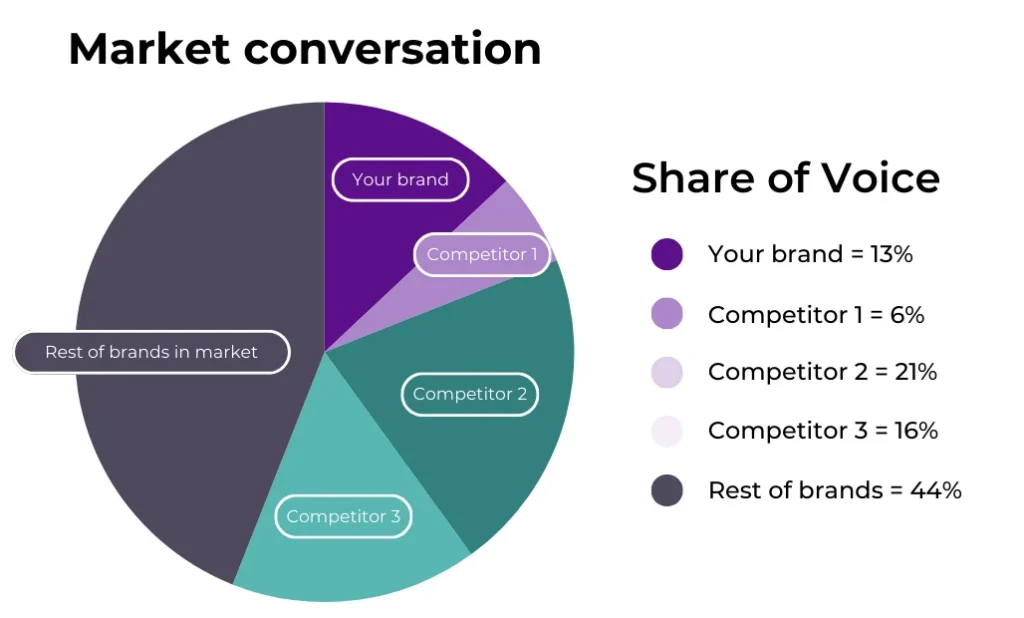
Image Source: FlipFlow
There are several layers to this information. First, there is the search ranking position, which is the most basic form of visibility. This tells you where your product ranks for specific keywords. Then, there are featured placements, such as sponsored ads and top-of-search banners. These paid elements are a critical part of your overall visibility data because they allow you to “buy” your way to the top when organic rankings are not enough.
Another key component is the click-through rate. Even if you are at the top of the page, you are not truly visible if no one is clicking on your listing. This is where content quality comes into play. Compelling titles and high-resolution images are what turn a search appearance into a meaningful interaction. Finally, conversion rates tell you if that visibility is actually translating into revenue. All these pieces together form a complete picture of your digital shelf visibility.
The Critical Link Between Share of Search Data and Market Dominance
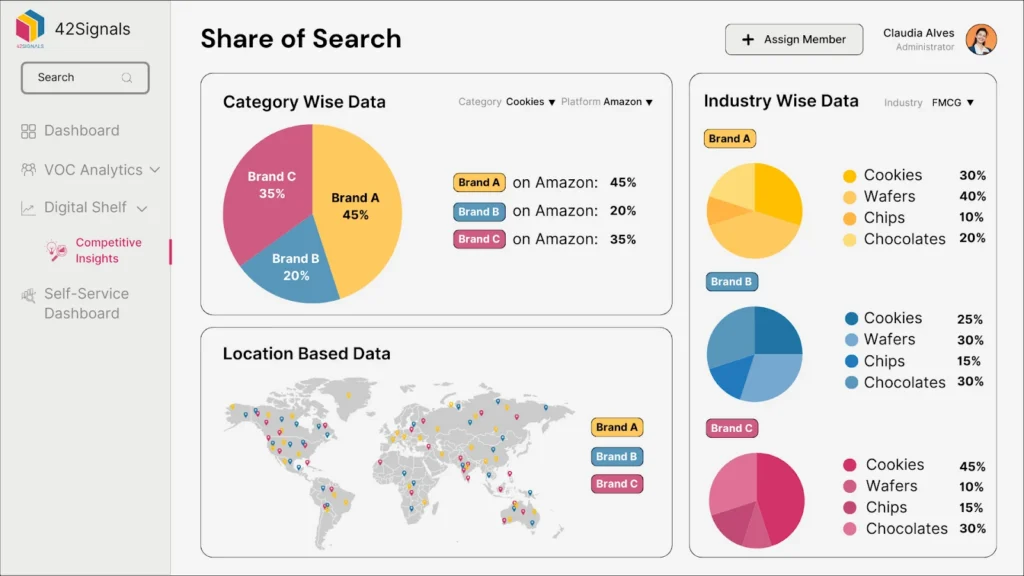
You cannot discuss visibility without looking at share of search data. This is a specific subset of visibility that measures how often your brand appears in search results for specific keywords compared to the total number of searches for those terms. For example, if shoppers search for “wireless headphones” 1,000 times and your product appears in the top ten results for 700 of those searches, your share of search is 70%.
This metric is widely considered a leading indicator of market share. Brands that dominate search results almost always dominate sales as well. By tracking your share of search data, you can predict shifts in your market position before they show up in your monthly revenue reports. If you see your search share starting to slide, it is a clear warning sign that a competitor is gaining ground.
Monitoring this information allows you to identify which keywords are your “power” terms and which ones represent a gap in your strategy. Perhaps you are very visible for your brand name but almost invisible for generic category terms like “kids slide for home”. Closing these gaps is the most direct way to increase your overall visibility data and bring new customers into your ecosystem. It is about being present at every stage of the customer journey, from the first discovery search to the final purchase decision.
How a Brand Visibility Tool Changes Your Daily Workflow
Trying to track these metrics manually is a losing battle. E-commerce marketplaces like Amazon and Flipkart are too fast and too complex for spreadsheets. This is why investing in a dedicated brand visibility tool is essential for any growing company. These tools automate the collection of data, scanning thousands of pages every day to give you a real-time view of your performance.
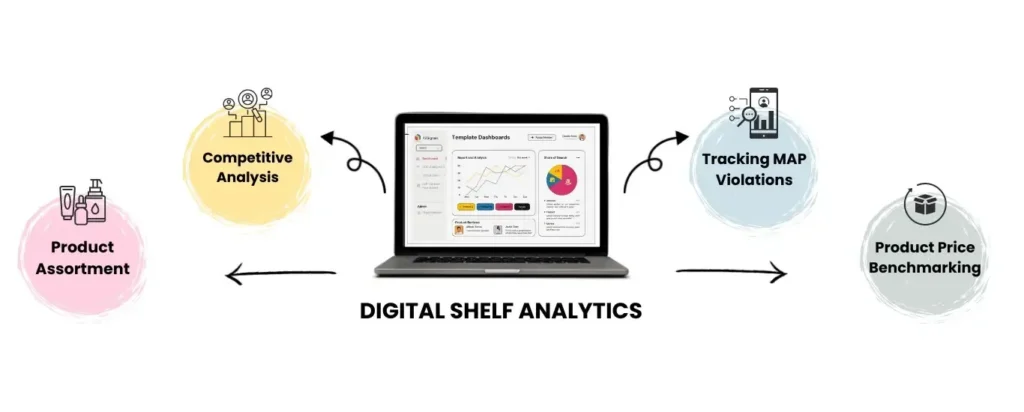
A professional tool does not just give you numbers; it gives you context. It can show you how your digital shelf visibility changes during a holiday sale or how it differs across different geographic regions. For example, a brand might be highly visible in Mumbai but struggling in Delhi due to local stock shortages or regional competitors. A good tool will highlight these discrepancies so you can take targeted action.
Furthermore, these tools provide automated alerts. If your ranking for a high-value keyword drops suddenly, you get a notification immediately. This allows you to investigate the cause right away. Was it a MAP violation by an unauthorized seller? Did a competitor launch a new promotion? Having this visibility data at your fingertips means you spend less time searching for problems and more time solving them.
Using a Competitor Analysis Tool to Outpace Competitors
To stay ahead, you need more than just internal data. You need to know exactly what your rivals are doing. This is where an ecommerce visibility tracker becomes your most valuable asset. It allows you to perform ecommerce competitor analysis at scale. You can see which keywords your competitors are ranking for that you are currently missing.
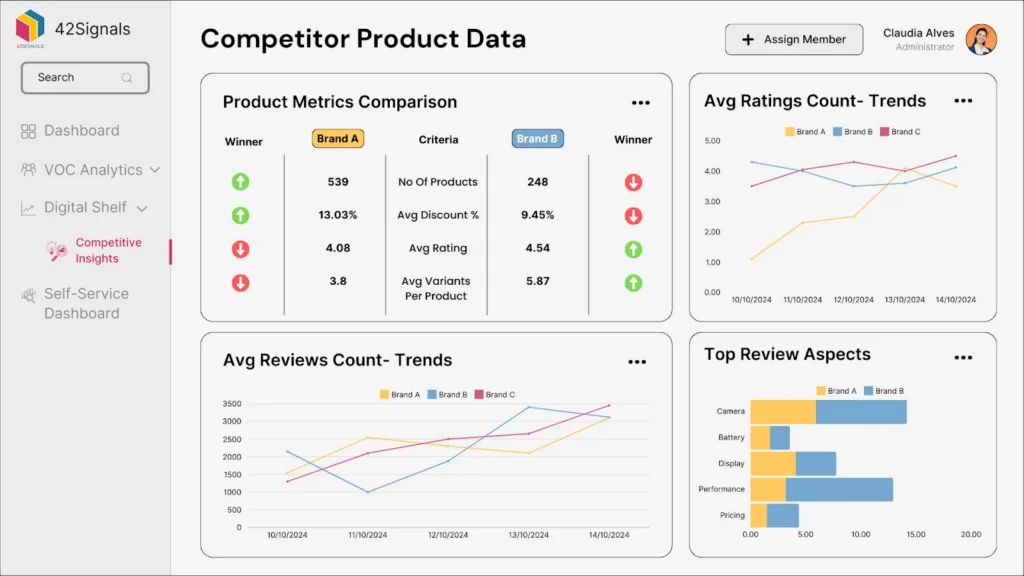
Imagine you are a toy brand and you notice a rival is suddenly appearing for the term “sturdy indoor slides for toddlers.” By identifying this gap in your visibility data, you can update your own listing content to include these high-intent phrases. This type of reactive optimization is what keeps your brand relevant in a shifting market. You are not just following the trends; you are actively taking market share away from those who are slower to respond.
A tracker also helps you monitor competitor pricing and promotions. If a rival runs a “Buy One, Get One” deal, you will see their search rankings jump almost immediately. Understanding the relationship between their promotions and their visibility data allows you to plan your own counter-strategies. You can choose to match their price or lean into your own unique selling points, such as better reviews or faster shipping.
Key Metrics You Must Monitor Within Your Visibility Data
When you look at your dashboard, it can be easy to get overwhelmed by all the information. To keep your strategy focused, you should prioritize a few key metrics within your visibility data. These are the indicators that have the most direct impact on your bottom line.
1. Organic and Sponsored Search Ranking Position
Your ranking position is the foundation of your presence. You must track where your product appears for your top twenty keywords on both an organic and sponsored basis. If your organic rank is high, you might be able to reduce your ad spend for that specific term. Conversely, if your organic rank is low, you may need to increase your sponsored visibility to stay competitive while you work on improving your listing content.
2. Share of Voice and Search Share
You need to know the percentage of the digital shelf you actually own. This involves looking at the top spots on the first page and seeing how many of them belong to you versus your competitors. Tracking your share of search analytics over time will tell you if your brand is growing or shrinking in the eyes of the consumer. This is a high-level metric that is perfect for reporting to leadership and setting long-term goals.
3. Stock Availability and Regional Performance
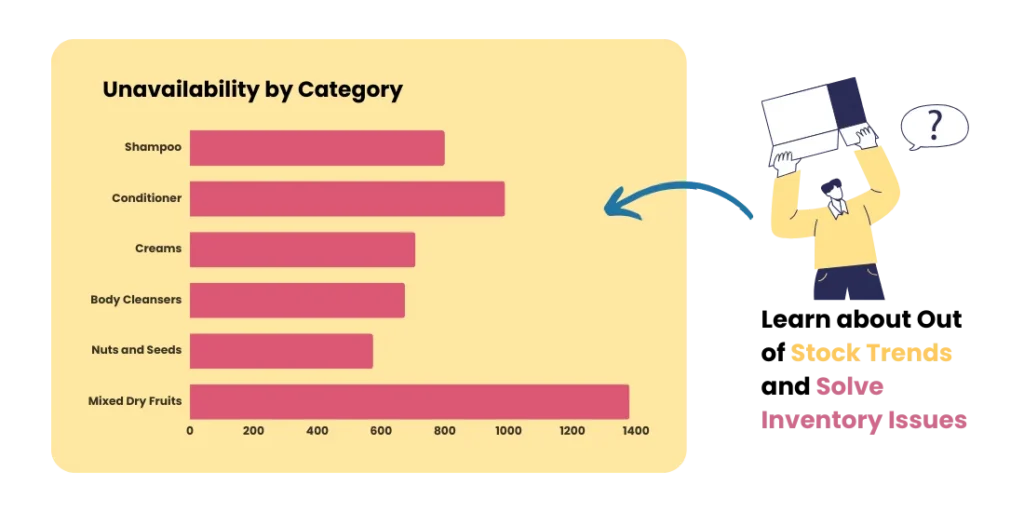
Nothing kills visibility faster than being out of stock. When a product is unavailable, the search algorithm will often hide the listing entirely to avoid a bad user experience. You must use stock availability analytics to ensure your products are always ready for purchase. Additionally, monitoring this data at the pincode level is critical for brands selling on quick commerce platforms like Blinkit or Zepto, where availability can change from one neighborhood to the next.
4. Content Quality and Listing Benchmarking
Your visibility is only as good as your content. You should regularly compare your titles, images, and bullet points against the top-ranking products in your category. This process, often called listing benchmarking, helps you identify if your descriptions are missing key features that customers care about. High-quality content improves your click-through rate, which in turn signals to the algorithm that your product is relevant, further boosting your visibility data.
Transforming Visibility Data into Actionable Strategy
Collecting data is only the first step. The real value comes from what you do with that information. To transform visibility data into a winning strategy, you must create a feedback loop between your insights and your operations. This means your marketing team, your sales team, and your inventory managers all need to be looking at the same numbers.

If the data shows a drop in visibility for a specific product, your first step should be an audit. Check for any MAP violation monitoring issues that might be confusing the search algorithm or driving customers away with inconsistent pricing. Then, look at your keyword strategy. Are there new search terms that have become popular recently? Updating your titles with high-volume, relevant phrases can often lead to a quick jump in rankings.
You should also use your visibility data to inform your advertising spend. Instead of spreading your budget evenly across all products, focus your resources on the ones that have the highest potential for growth. If a product is on the verge of breaking onto the first page organically, a small boost in sponsored ads can provide the momentum it needs to get there. Once it is ranking organically, you can shift those ad dollars to a different product that needs more support.
A Practical Scenario Improving Digital Shelf Visibility on Flipkart
Let us look at a real-world scenario to see how this works in practice. A brand named EcoGadgets noticed they were struggling to get traction for their bamboo utensil set on Flipkart. Despite having great reviews, they were stuck on page four of the search results. By using a brand visibility tool, they discovered two critical pieces of information.
First, they realized they were missing the keyword “eco-friendly bamboo cutlery set,” which had a much higher search volume than the terms they were currently using. Second, they noticed that the top-ranked competitors all included video demonstrations in their listings. By updating their title and adding a short 30-second video, EcoGadgets saw their visibility data improve significantly.
Within six weeks, their product jumped from page four to page one. This increase in digital shelf visibility led to a 140% growth in sales. This case study proves that visibility is not a matter of luck. It is a result of identifying the right signals and making the necessary adjustments to your content and keyword strategy.
The Future of Visibility Data in the Quick Commerce Era
As the retail landscape evolves, the definition of being “found” is also changing. We are moving away from traditional searches and toward more immediate, location-based discovery. This is especially true with the rise of quick commerce platforms. For these platforms, visibility data is almost entirely dependent on local availability and delivery speed.
If your product can be delivered in ten minutes, it will be prioritized over a competitor who takes two hours. This means your inventory management is now a direct driver of your visibility. Brands that can sync their stock levels with their search data will have a massive advantage. You need to know not just that you are visible, but where you are visible and why.
Furthermore, we are seeing more personalization in search results. Two different shoppers searching for the same term on Amazon might see different products based on their past behavior. This makes aggregate visibility data even more important because it gives you a broad view of your brand health across all user segments. You must stay focused on the fundamentals of relevance and quality while adapting to these new technologies.
How 42Signals Delivers Superior Visibility Data Insights
When it comes to managing your presence on the digital shelf, 42Signals is the platform that brings all these complex metrics together into a single, intuitive dashboard. We understand that brand managers need more than just data; they need clarity. Our platform is designed to provide real-time market intelligence that allows you to act faster than your competition.
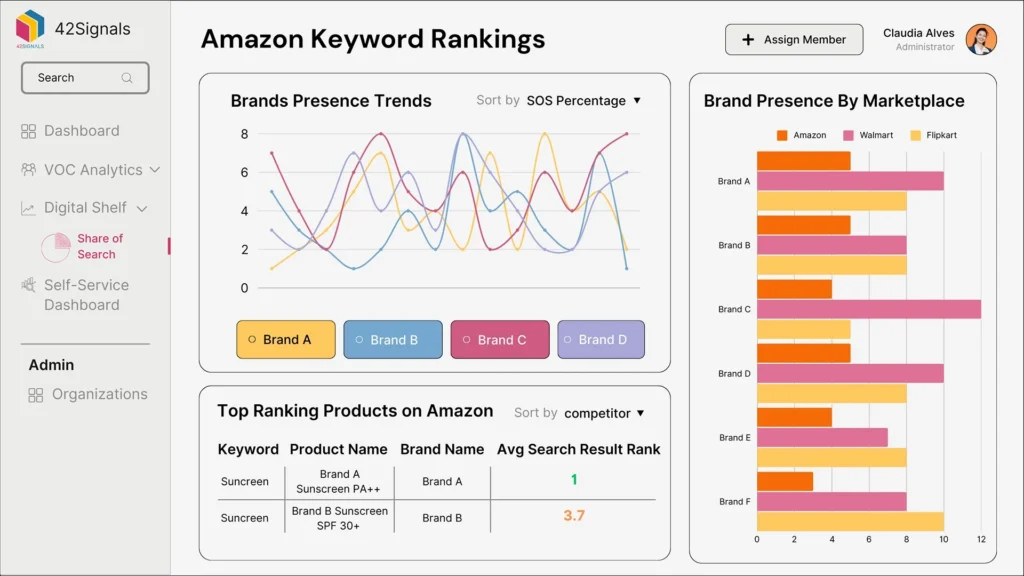
42Signals offers deep tracking for share of search data, allowing you to see your brand’s position across Amazon, Flipkart, and quick commerce apps like Blinkit and Zepto. We provide a comprehensive view of your digital shelf visibility, including pricing trends, stock status, and competitor movements. Our advanced algorithms can even detect unauthorized sellers and price violations, protecting your brand’s integrity and margins.
What sets 42Signals apart is our focus on actionable recommendations. We don’t just show you a chart; we help you understand which listings to fix and which keywords to add to your titles. Whether you are a growing D2C brand or a large enterprise, our customizable analytics ensure that you are always looking at the metrics that matter most to your specific business goals.
Conclusion: Dominating Your Market with Visibility Data
In the world of e-commerce, visibility is the only currency that truly matters. If you are not being found, you are not being bought. By mastering your visibility data and understanding the nuances of share of search, you can move from a reactive strategy to a proactive one. You can anticipate competitor moves, close content gaps, and ensure your products are always front and center for the shoppers who want them.
Remember that visibility is not a one-time fix. It is a daily priority that requires the right tools and a commitment to continuous improvement. Audit your listings regularly, monitor your search share, and never ignore the signals the marketplace is sending you. With a clear focus on the metrics we have discussed, you are well on your way to dominating the digital shelf.
If you are ready to take control of your presence on Amazon and Flipkart, we invite you to schedule a demo with the 42Signals team. We will show you exactly how our platform can track your rankings, monitor your competitors, and provide the visibility data you need to grow your sales and secure your market position.
Frequently Asked Questions About Visibility Data
What is the difference between visibility data and search ranking?
Search ranking is a single data point that tells you where a product appears for a specific keyword. Visibility data is a much broader concept that encompasses your presence across all keywords, including sponsored ads, organic results, and geographic variations. It provides a holistic view of how often and how prominently your brand is seen by shoppers across an entire platform.
How often should I check my share of search data?
In a competitive marketplace like Amazon or Flipkart, you should ideally monitor your share of search data every day. Prices, stock levels, and competitor strategies can change in an instant. Daily monitoring allows you to spot ranking drops or new competitor threats immediately, giving you the chance to react before the impact shows up in your sales figures.
Can a brand visibility tool help with quick commerce platforms?
Yes, a professional brand visibility tool is essential for platforms like Blinkit or Zepto. Because quick commerce is highly dependent on local inventory, your visibility can change from one neighborhood to another. A tool like 42Signals can track your presence at the pincode level, ensuring you know exactly where your products are visible and where they are missing due to stock issues.
Does high visibility always lead to high sales?
High visibility is a prerequisite for sales, but it is not a guarantee. You also need high-quality content and competitive pricing to turn those views into purchases. If your visibility data shows you are at the top of the page but your sales are still low, it is a sign that your click-through rate or conversion rate needs work. This often means your title, images, or reviews are not resonating with shoppers.
Why is organic search visibility ecommerce important compared to paid ads?
Organic visibility is critical because it represents long-term brand health and carries no direct cost per click. While paid ads are great for short-term boosts or launching new products, a strong organic presence ensures you are always visible even when your ad budget is limited. Furthermore, many shoppers trust organic results more than sponsored ones, making high organic rankings a powerful trust signal.
For more information on improving your marketplace performance, visit our Share of Search pillar page.