


** TL;DR ** Modern Market Intelligence is essential for retailers to navigate today’s volatile market by moving beyond historical sales data to proactively monitor external signals for predictive, near-real-time insights. Success relies on continuously tracking five key signal categories: 1) Consumer Intent (Search and Social Media for demand and sentiment analytics), 2) Competitor Dynamics (Marketplace data for pricing and assortment), 3) Macro-Indicators (Economic trends and localized weather for context), 4) Supply Chain Vulnerabilities (Freight rates and commodity prices for risk management), and 5) Future Shifts (Technology adoption and policy changes). The true challenge is operationalizing this intelligence by integrating automated systems that translate raw data into actionable alerts across all organizational silos—Merchandising, Sourcing, Marketing, and Finance—to ensure agile, data-driven decision-making that minimizes risk and captures emerging retail trends.
The retail landscape is a territory defined by speed and volatility. Gone are the days when a retailer could rely solely on historical data or the static wisdom of an annual report to forecast demand. The modern consumer is digitally empowered, globally connected, and utterly unpredictable. A shift in preference, driven by anything from a viral TikTok trend to a sudden geopolitical event, can fundamentally alter a market in an instant. For any retail company—whether a global giant or a niche e-commerce startup—to merely survive, let alone thrive, they need more than rearview mirror data. They need a proactive, forward-looking system. This necessity defines the role of modern market intelligence.
It is no longer an abstract business buzzword reserved for executive reports, but a crucial, operational system integrated into every facet of the business. At its heart, modern market intelligence is the disciplined practice of capturing, analyzing, and acting upon data that originates outside the company’s internal transaction systems. We call this external signal monitoring. These signals provide a live, near-real-time insights pulse on consumer behavior, competitive maneuvers, and global economic forces.
By moving beyond traditional demand planning—which relies on what has happened—to a system based on external signals—which suggests what will happen—retailers transform their process from reactive inventory management to proactively shaping strategy around emerging retail trends and consumer sentiment.
The Core Concept: Market Intelligence for Smart Demand Planning
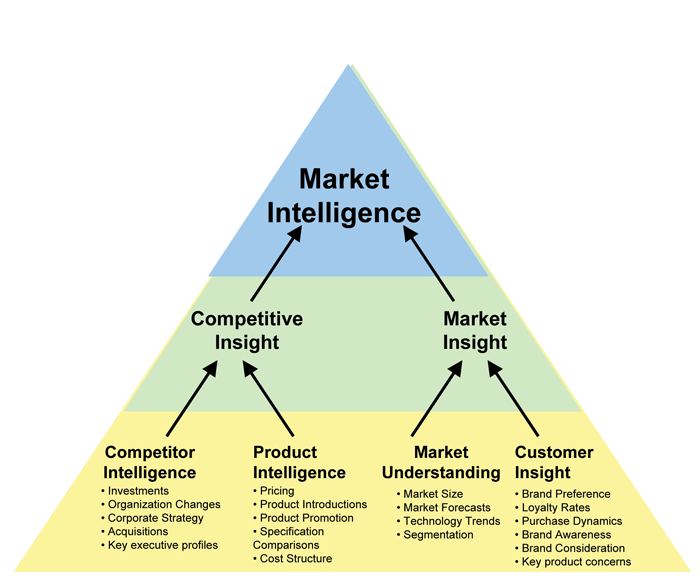
Image Source: Quirks
In its most practical form, external signal monitoring is a continuous, automated process of tracking relevant, outside information sources to generate predictive insights. If your retail company were a ship, traditional internal data (past sales, stock levels) would be the wake it leaves behind.
External signals, conversely, are the radar, the sonar, and the satellite weather reports that tell the captain what conditions lie ahead.
Moving Beyond Historical Data: The Power of Predictive Market Intelligence
Traditional demand planning has always been rooted in internal data: past sales figures, promotional performance, and current inventory levels. This internal lens is superb for understanding what has happened—the successes and failures of the previous quarter. However, it often catastrophically fails to predict what will happen, especially in volatile markets characterized by accelerated digital adoption. The rise of ecommerce insights means that consumer journeys are no longer linear, and demand can be created and dissipated in weeks, not months.
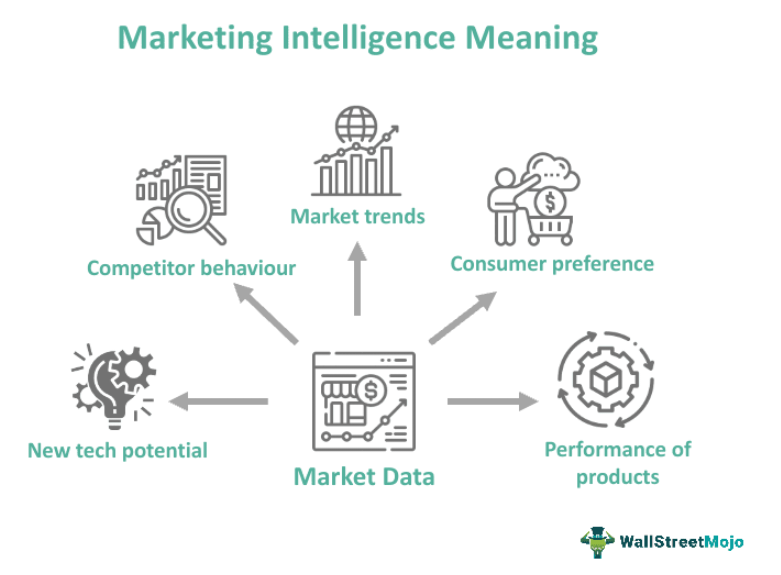
Image Source: Wall Street Mojo
External signals are the leading indicators. They are pieces of information that, when analyzed correctly, strongly suggest a future change in demand, often weeks or months before that change is reflected in your own transactional data. They act as the early warning system.
The strategic goal of modern market intelligence is to establish a seamless, automated system that integrates these external insights directly into existing forecasting and inventory models. When you incorporate rich ecommerce insights about customer behavior on third-party sites, or timely data about competitor price changes, your demand plan evolves from a static projection into a dynamic, resilient model.
Example in Practice: Consider a spike in search volume for a highly specific product category, such as “sustainable bamboo cutlery sets” (an external signal). This signals nascent demand, perhaps driven by a growing environmental awareness trend or a new regulation. If the system is working, this signal should immediately trigger a review of inventory levels and sourcing strategy for that category, rather than waiting until the retailer sees an actual sales surge, which is almost always too late to prevent a stockout or to maximize the opportunity.
This proactive use of market intelligence is the difference between capturing a trend and chasing one. It prevents costly stockouts, minimizes capital tied up in overstock, and directly boosts the bottom line.
The Mechanism: From Raw Data to Actionable Near-Real-Time Insights
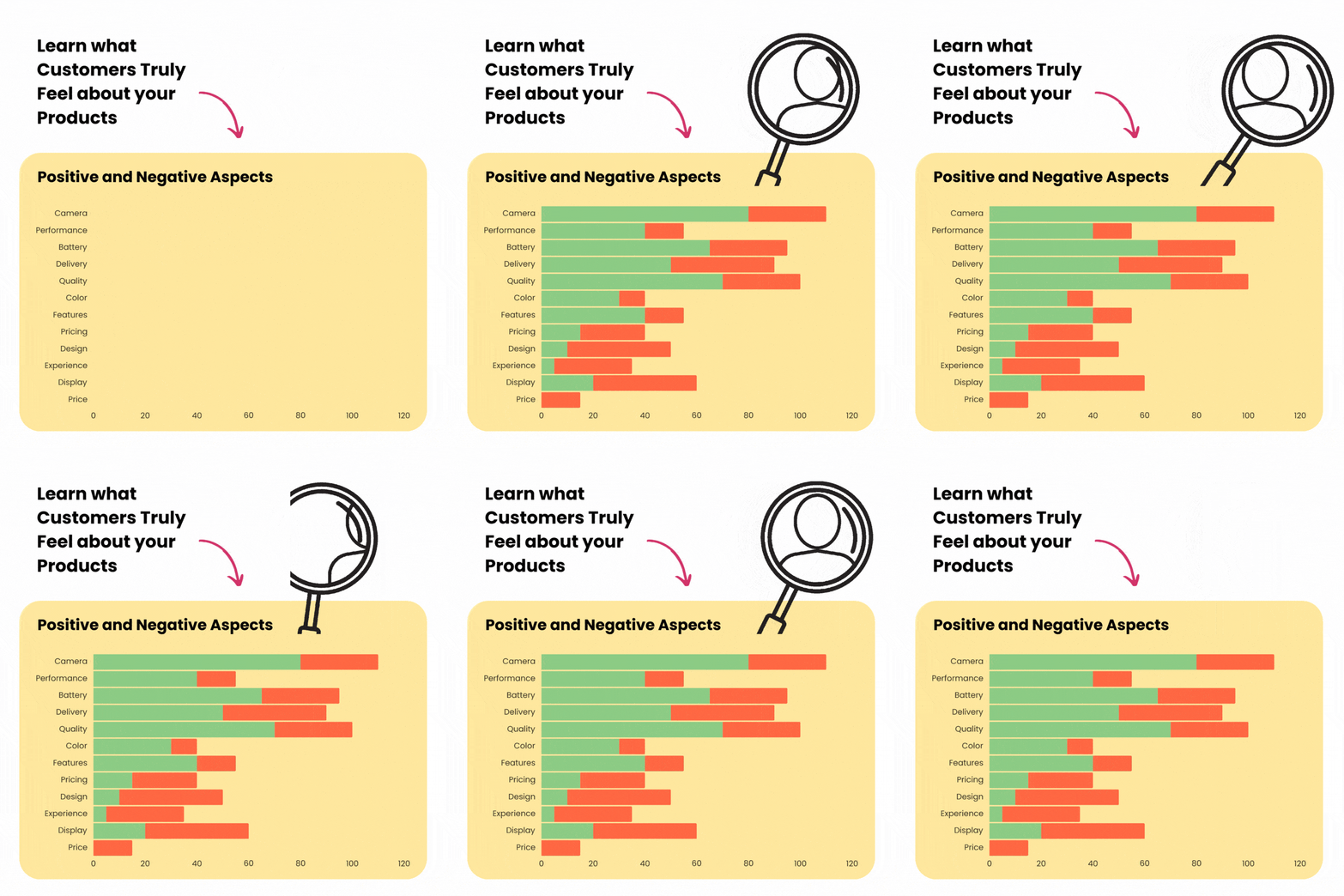
The process involves several critical steps:
- Identification: Pinpointing the most relevant external signals for your specific Line of Business (LOB).
- Collection: Employing sophisticated data scraping, APIs, and partnerships to collect this data continuously.
- Analysis: Using AI and machine learning to cleanse, structure, and analyze the data, looking for anomalies, correlations, and trends (e.g., performing sentiment analytics).
- Integration: Feeding the resulting near-real-time insights directly into demand planning software, ERPs, and marketing platforms.
- Action: Generating actionable alerts for specific teams (merchandising, sourcing, marketing, and logistics).
This mechanism transforms raw, unstructured external information into a cohesive, predictive tool that informs decision-making at every level, helping retailers stay ahead of the curve of rapidly evolving retail trends.
The Five Pillars: Top External Signals Every Retail Company Must Monitor
To establish a world-class market intelligence function, retailers must be deliberate and strategic about which external signals they track. While the universe of data is vast, these five categories represent the most impactful and essential signals for driving smart, profitable decisions in today’s retail landscape.
1. Decoding Consumer Intent with Search and Social Media Data
The modern consumer’s journey begins in the digital ether. Before a purchase is made, intent is expressed through a search query, a social media comment, or engagement with a trending topic. Monitoring this stream of user-generated data provides the earliest, most powerful near-real-time insights into nascent demand and changing attitudes.
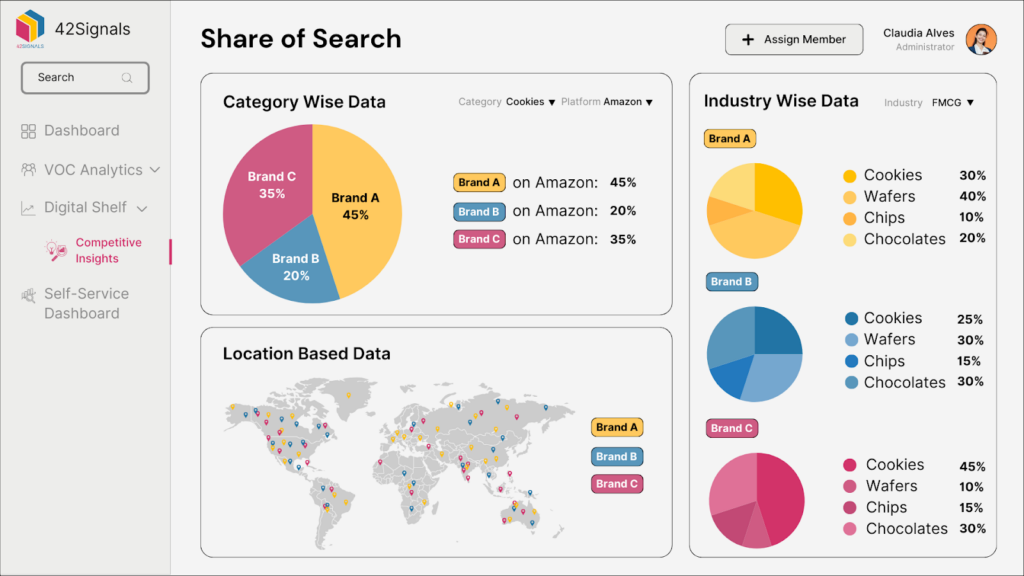
42Signals’ share of search feature
Search Engine Insights: Uncovering Unmet Demand and Future Trends
The queries typed into search engines like Google, Bing, or even Amazon’s internal search bar are direct, unambiguous expressions of consumer need and intent. Tracking fluctuations and spikes in search volume for specific keywords, product features, or desired solutions is a potent leading indicator of demand.
For a specialized retailer selling outdoor gear, simply tracking searches for “tents” is rudimentary. Modern market intelligence demands tracking emerging activities and adjacent solutions, such as “glamping setup ideas,” “best portable solar shower,” or “lightweight backpacking meals.” The search volume around these specific, long-tail keywords reveals what consumers want and are preparing to buy before they even look for a specific brand or retailer.
By analyzing this data, a retailer can adjust product assortment, optimize inventory positioning, and launch highly targeted marketing campaigns to capture this emerging demand immediately, often weeks before competitors notice the sales shift.
Social Media Listening: Gauge Sentiment and Catch Viral Moments with Sentiment Analytics
Social media platforms are, collectively, the largest, most dynamic focus group operating 24 hours a day. Monitoring mentions of your brand, your competitors, and highly relevant product categories allows for instantaneous measurement of public mood—the essence of sentiment analytics.
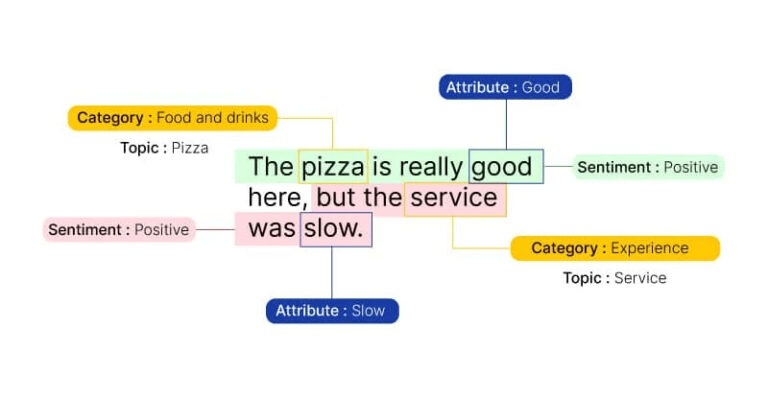
If discussions surrounding a competitor’s flagship product suddenly trend negative due to a reported manufacturing flaw or poor customer service, that external signal represents an immediate, direct opportunity to capture their dissatisfied market share. Conversely, if a particular style, aesthetic, or product feature—say, a specific shade of neon green or a product made from recycled ocean plastic—starts trending globally on platforms like Instagram or Pinterest, the retailer gains a critical early warning signal.
This allows the sourcing and merchandising teams to ramp up production or explore alternative sourcing to meet anticipated demand. Failing to engage with this powerful feedback loop means missing out on the earliest, most influential indicators of major retail trends. Sentiment analytics tools must be sophisticated enough to distinguish sarcasm and nuanced opinions to provide reliable, actionable intelligence.
2. Marketplace Data and Competitor Pricing Dynamics
In a digital-first economy, the competitive landscape is defined by the digital shelf. The moves of your competitors—especially on dominant marketplace data platforms—directly and immediately influence your own sales volume and pricing elasticity. Effective market intelligence requires a constant, granular view of these rival actions.
Tracking the Digital Shelf: Assortment, Availability, and Presentation
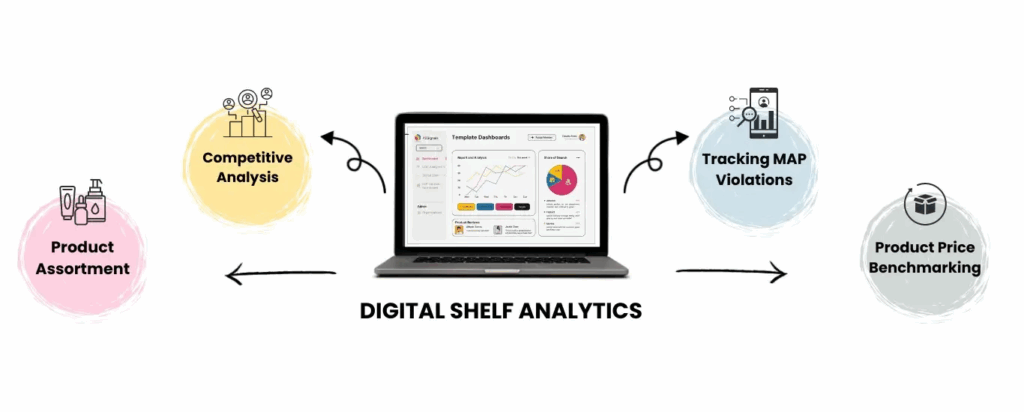
Retailers must monitor the digital shelf across all relevant channels, including massive players like Amazon, eBay, Walmart Marketplace, and niche specialized marketplace data sites. Key questions to answer via continuous monitoring include:
- What new products are competitors launching, and how are they positioning them?
- Which categories are being prioritized with banner ads or prime placement?
- Are there observable gaps in your own product assortment compared to the competition?
- Are key competitors experiencing supply constraints or going out of stock on popular items?
If a major competitor suddenly sells out of a high-demand item, that purchase intent is immediately diverted to the next available retailer. Having this marketplace data in near-real-time insights allows your inventory allocation and dynamic pricing systems to react instantly, maximizing the temporary advantage and securing additional sales that would have otherwise gone elsewhere.
Monitoring product imagery, review velocity, and specific product descriptions also provides rich competitive ecommerce insights into marketing effectiveness.
Dynamic Pricing Monitoring: Staying Competitive and Profitable

Pricing is arguably the single most impactful factor in a consumer’s purchase decision online. Competitor price tracking should be a non-negotiable cornerstone of your market intelligence strategy. If your main rivals drop their price on a directly comparable item, your demand will suffer unless you react quickly and appropriately.
However, sophisticated price monitoring goes far beyond simply matching the lowest price. Modern systems incorporate factors like historical price elasticity, competitor stock levels, and consumer reviews. This allows the retailer to identify opportunities where they can maintain a slightly higher price point—perhaps justified by superior customer reviews, loyalty programs, or guaranteed faster shipping times—while remaining competitive.
Conversely, it identifies instances where rivals have priced themselves out of the market, allowing the retailer to capture market share without aggressive margin compression. Effective use of this marketplace data ensures that pricing decisions are data-driven and margin-aware, rather than purely reactive.3. Macroeconomic and Environmental Indicators
While granular signals track micro-demand, the macro environment—the economy, major global events, and climatic conditions—provides the foundational context that either enables or constrains overall consumer spending across all retail trends.
3. Economic Signals: Understanding Consumer Spending Power and Confidence
Indicators such as consumer confidence index reports, official inflation rates, employment data, and interest rate announcements are absolutely vital for predicting significant, systemic shifts in overall consumer spending behavior.
- Dipping Confidence: When consumer confidence dips (an external signal often reported by organizations like The Conference Board), consumers typically pull back on non-essential, discretionary, or big-ticket purchases. This demands a strategic pivot towards value-focused assortments, increased promotional activity, or emphasizing durable, necessary goods.
- Strong Economy: Conversely, a period of sustained high employment and wage growth might signal an opportunity to aggressively launch premium or luxury goods, as consumers have more disposable income.
Effective market intelligence integrates these macro signals to adjust overall inventory risk. Retailers might stock less deep into high-risk, discretionary categories during recession warnings and strategically prepare for growth in foundational categories during economic expansion.
For example, data confirms that a significant drop in the Consumer Confidence Index often precedes a noticeable drop in retail sales growth for non-essential sectors within one to two quarters, prompting retailers to adjust their promotional strategies immediately following a negative report.
Weather and Geographical Data: Micro-Demand Shifts at a Local Level
For a vast number of retail sectors—including apparel, sporting goods, groceries, home and garden, and construction materials—weather is an immediate, powerful, and localized driver of demand. Tracking hyper-local weather forecasts with high precision allows for minute, micro-adjustments in demand planning and inventory logistics.
A sudden, prolonged heatwave forecasted for a specific regional distribution zone should instantly trigger inventory transfers and heightened promotional activity for swimwear, fans, air conditioners, and cold beverages in that precise area.
This requires a level of detail that surpasses simple seasonal planning, providing near-real-time insights into localized demand spikes or dips driven by unseasonal or extreme weather conditions. This geographic specificity is a huge competitive advantage, allowing the retailer to be perfectly stocked in the right place at the right time, minimizing missed sales opportunities.
4. Supply Chain and Logistics Vulnerabilities
The ability to meet demand, regardless of how accurately it is forecasted, hinges entirely on the stability and predictability of the supply chain. Monitoring global supply chain health is no longer an auxiliary function; it is a critical source of modern market intelligence. Disruptions here can instantly create stockouts and erode customer trust.Port Congestion and Freight Rate Monitoring
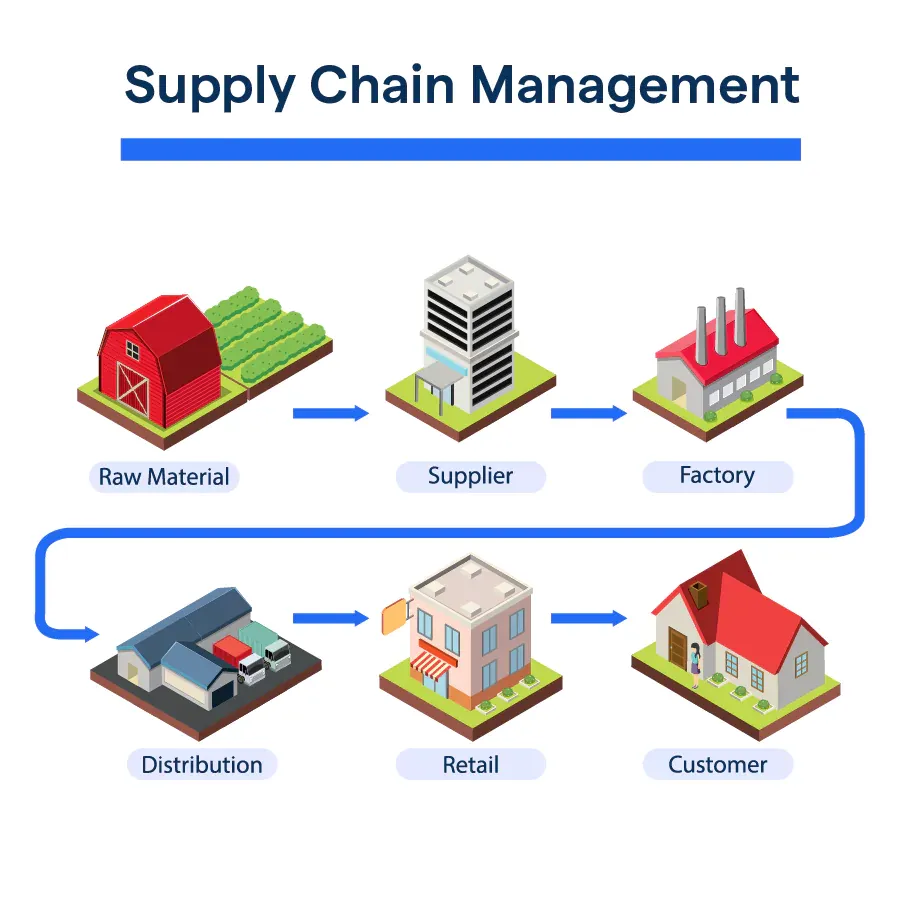
Image Source: Bot Penguin
The global logistics network is susceptible to external shocks: geopolitical events, labor disputes, port strikes, and natural disasters. Tracking data related to port congestion indices, average ocean freight transit times, and fluctuations in global freight rates provides an essential forward-looking view of potential inventory delays and cost spikes.
If freight costs for the China-to-US route are spiking (a clear external signal), it might indicate future input cost increases or significant delivery slowdowns for goods sourced from Asia. This intelligence forces the retailer to proactively adjust pricing, explore alternative regional sourcing strategies, or communicate transparently with customers about potential delays.
Understanding these external vulnerabilities allows the retailer to diversify suppliers proactively, negotiate more favorable terms, and mitigate the catastrophic risk of widespread stockouts, which is a key component of modern ecommerce insights.
Commodity Price Movements: Input Cost Forecasting
For retailers who manufacture their own goods, or rely heavily on specific raw materials (e.g., cotton for apparel, palm oil for cosmetics, metals for electronics), tracking global commodity price indexes is mission-critical. Significant external price fluctuations directly impact the cost of goods sold (COGS) and, consequently, the retailer’s eventual pricing strategy and overall profitability. Integrating this market intelligence into the planning process helps:
- Sourcing Teams: Lock in favorable, long-term contracts when prices are low.
- Merchandising Teams: Prepare for necessary price increases well in advance of the cost impact being felt, allowing for smooth, gradual adjustments that minimize customer sticker shock.
- Finance Teams: Accurately forecast gross margin targets.
Monitoring the futures markets for key commodities provides leading indicators that allow the retailer to manage its financial risk profile against external market volatility.5. Emerging Technology and Policy Shifts
The digital and regulatory environments are in constant flux, presenting both profound risks and immense opportunities. The retailers that monitor these external signals are the ones who are prepared to pivot their business models and technology stacks.Technological Adoption Rates and Platform Shifts
Retailers must track shifts in how consumers transact and interact with brands. Questions to consider include:
- Are consumers rapidly adopting a new payment method, such as “Buy Now, Pay Later” (BNPL), and what does this mean for checkout conversion rates?
- Are major social media platforms (like TikTok or Instagram) introducing new in-app checkout or live shopping ecommerce insights features that could potentially bypass the traditional retailer website model?
- Is there a surge in smart home device adoption (Google Assistant, Alexa) that necessitates optimizing product information and websites for voice search and conversational commerce?
Monitoring these technological retail trends allows the company to adapt its customer experience, user interface, and technology stack to match emerging user preferences. For example, a spike in voice search usage should prompt immediate optimization of product listing titles and descriptions for natural language queries, a key piece of market intelligence for future-proofing the digital store.
Regulatory and Policy Changes: Proactive Compliance and Cost Management
New trade tariffs, evolving data privacy laws (like the ongoing changes to GDPR in Europe or state-level CCPA regulations in the US), and environmental regulations can create major operational hurdles, compliance risks, and substantial unforeseen costs. Monitoring pending legislation and policy shifts acts as an essential, high-stakes external signal.
For example, a government announcing a forthcoming ban on specific types of single-use plastics or a new mandatory standard for energy efficiency might necessitate a complete, costly overhaul of product design or packaging. Having early warning near-real-time insights allows the company to plan and execute this transition over months, distributing the cost and effort. In contrast, being caught off-guard results in emergency, rushed transitions that are invariably more expensive, lead to non-compliance fines, and can disrupt supply. This proactive monitoring of the policy landscape is a critical, often-overlooked aspect of comprehensive market intelligence.
The Execution Challenge: Operationalizing Market Intelligence Across the Organization
The mere collection of these five types of external signals, no matter how comprehensive, only solves half the problem. The true competitive value of modern market intelligence is unlocked by integrating these signals seamlessly into the retail company’s daily, hour-by-hour decision-making processes.
From Data Collection to Action: Ensuring Near-Real-Time Insights Drive Decisions
The fundamental determinant of successful modern market intelligence is speed. Reports delivered monthly, or even weekly, are often obsolete before they are read in the fast-moving retail environment. Retailers need an integrated, machine-driven system capable of capturing, cleansing, and analyzing these external signals continuously, with alerts triggered instantaneously.
This requires significant investment in a technology infrastructure capable of:
- Automated Scraping and API Integration: Tools that can scrape marketplace data hourly, pull in official economic reports the minute they are released, and access commercial satellite and weather data streams.
- Machine Learning for Analysis: AI models that perform automated sentiment analytics on vast streams of unstructured text (reviews, social media) and identify subtle correlations between, for instance, a competitor’s change in product listing imagery and a subsequent surge in their sales.
- Integrated Alerting: A system that converts the structured, analyzed data into a simple, unambiguous, and actionable alert for the specific responsible team.
Actionable Workflow Example:

- Signal: AI system detects a 45% increase in negative sentiment analytics specifically criticizing the “battery life” feature within competitor product reviews on multiple marketplace data platforms (Signal 1).
- Action: An immediate, high-priority alert is sent to:
- Product Development Team: To initiate an urgent review of your equivalent product’s battery performance.
- Marketing Team: To launch a targeted social media campaign highlighting your product’s certified superior battery life.
- Merchandising Team: To prioritize inventory and prime digital shelf placement for your superior product.
This immediate, machine-driven translation of external data into organizational action is the ultimate hallmark of a sophisticated market intelligence operation.
Avoiding Data Overload: Focusing on Strategic KPIs and Correlation with Market Intelligence
A common pitfall of embracing market intelligence is drowning in the data lake—falling victim to analysis paralysis where teams spend more time managing data than making decisions. The key to mitigating this risk is defining and adhering to clear Key Performance Indicators (KPIs) that are directly and demonstrably mapped to your core business objectives (e.g., Gross Margin, Stockout Rate, or Customer Acquisition Cost).
Strategic Focus:
- Focus on Correlation: Prioritize external signals that have historically shown the strongest, most reliable correlation with your demand fluctuations. Not all data is equally valuable; some signals are merely noise.
- Strategic Competitor Tracking: Instead of trying to track every single minor competitor, focus the bulk of your resources on the top five to ten competitors who pose the greatest demonstrable threat to your core market share or profitability.
- Simplicity of Output: The final output of the market intelligence system should not be a complex dashboard, but a simple, prioritized list of recommended actions.
This highly strategic focus ensures that the market intelligence function remains a driver of measurable results—faster inventory turns, better pricing decisions, and lower marketing costs—rather than merely an expensive generator of voluminous, unread reports.
Organizational Alignment: Breaking Down Internal Silos
For market intelligence to be truly effective, the insights cannot reside solely within an “analytics” or “intelligence” department. The data must flow across traditional organizational silos:
- Merchandising: Needs marketplace data and retail trends insights to decide on assortment and product promotion.
- Sourcing/Supply Chain: Needs supply chain vulnerability data and commodity price forecasts (Signal 4) to manage risk and contracts.
- Marketing: Needs sentiment analytics and search query data (Signal 1) to refine messaging and channel spend.
- Finance: Needs macroeconomic data and pricing insights (Signal 3 & 2) to forecast revenue and profit margins.
The intelligence system itself must serve as the connective tissue, ensuring all decisions—from a price markdown to a major sourcing contract—are informed by a single, unified, external view of the market. This systemic alignment accelerates decision-making and ensures that the entire company is moving in concert with the dictates of the dynamic market.
Securing Your Future with Proactive Market Intelligence
The modern retail environment is a complex, unpredictable, and highly volatile ecosystem. In this new world, success is not determined by legacy size or brand recognition alone, but by superior intelligence—it belongs to the smartest, most agile players. These are the companies who can effectively see around corners and anticipate changes in consumer demand before they even materialize in their own sales figures.
By systematically prioritizing and mastering the monitoring of these top five categories of external signals—from the granular shifts in ecommerce insights and competitive marketplace data to the broad, foundational strokes of macroeconomic trends and technological shifts—retail companies can fundamentally transform their entire approach to demand planning and market strategy.
Try 42Signals today to see how prompt ecommerce intelligence can help your brand.
Frequently Asked Questions
What do you mean by market intelligence?
Modern market intelligence is the systematic, continuous practice of gathering, analyzing, and acting upon data originating outside a company’s internal transaction systems. It moves beyond retrospective sales reports (which show what has happened) to proactively monitoring external signals—such as consumer search behavior, competitor pricing, and macroeconomic trends—to generate predictive, near-real-time insights that guide strategic and operational decision-making across all business functions (e.g., Merchandising, Sourcing, and Marketing).
What is an example of market intelligence?
A powerful example of market intelligence in action is a retailer monitoring sentiment analytics on social media platforms (Signal 1: Consumer Intent). If the intelligence system detects a significant, sudden spike in negative chatter or customer complaints regarding a key feature of a competitor’s product (e.g., a competitor’s new smartwatch is frequently criticized for poor battery life), this external signal should immediately trigger an alert. The resulting actions would include the retailer’s marketing team launching campaigns highlighting their own product’s superior battery life, and the merchandising team prioritizing inventory for that specific, now-more-competitive product. This is using external data to capture a competitor’s vulnerable market share immediately.
What are the four types of market intelligence?
While the document details five crucial categories of external signals, they are often organized into broader types of market intelligence based on their core focus:
Consumer Intelligence (Demand-Side): Focuses on understanding the customer, their intent, behavior, and sentiment. (Corresponds to Signal 1: Decoding Consumer Intent).
Competitive Intelligence (Market/Rival-Side): Focuses on monitoring the actions, strategies, products, pricing, and positioning of direct and indirect competitors, particularly across digital shelves and marketplace data platforms. (Corresponds to Signal 2: Marketplace Data and Competitor Pricing Dynamics).
Contextual/Environmental Intelligence (Macro-Side): Focuses on the foundational forces and broader operating context, including economic indicators, regulatory policy, and localized environmental factors (like weather). (Corresponds to Signal 3: Macroeconomic and Environmental Indicators, and parts of Signal 5: Policy Shifts).
Operational Intelligence (Supply-Side): Focuses on the ability to meet demand, monitoring risks and costs related to the supply chain, logistics, commodity pricing, and manufacturing inputs. (Corresponds to Signal 4: Supply Chain and Logistic Vulnerabilities).
What is another term for market intelligence?
Common synonyms or closely related terms for modern market intelligence include:
External Signal Monitoring
Competitive Analysis (often used as a subset of MI)
Near-Real-Time Insights
Environmental Scanning
What are the 4 types of marketing?
While the concept of “types of marketing” can be categorized in numerous ways (by channel, goal, or medium), a common and essential framework often breaks marketing into four high-level, foundational areas based on the intent or strategy employed:
Inbound Marketing: This type focuses on attracting customers by creating valuable content and experiences tailored to them. Instead of cold-calling or pushing ads, Inbound Marketing draws potential customers in when they are actively seeking information. Goal: To establish trust, build authority, and organically draw customers to the brand.
Examples: Search Engine Optimization (SEO), content creation (blogs, white papers, videos), social media engagement, and email nurturing flows.
Outbound Marketing: This is the traditional form of marketing that pushes a message out to a broad audience, regardless of whether the recipient has expressed prior interest. It’s often interruptive. Goal: To generate awareness and immediate leads through broad reach.
Examples: Television and radio advertising, print ads, billboards, trade shows, and cold email/cold calling.
Digital Marketing (or Online Marketing): This encompasses all marketing efforts that use electronic devices or the internet. It is often the medium through which Inbound and Outbound strategies are executed today. Goal: To connect with consumers online where they spend most of their time, allowing for precision targeting and measurable results.
Examples: Pay-Per-Click (PPC) advertising, social media advertising, email marketing, affiliate marketing, and website optimization.
Relationship Marketing: This type focuses on customer retention and long-term customer satisfaction rather than short-term transactions. It prioritizes building deep, meaningful connections with individual customers. Goal: To increase Customer Lifetime Value (CLV), foster loyalty, and encourage advocacy (word-of-mouth referrals).
Examples: Loyalty programs, personalized customer service, creating community events, and hyper-personalized communication based on purchase history.