


Companies today often sell their products through various channels to reach as many customers as possible. These channels can include direct sales, online marketplaces, authorized retailers, and more. However, when multiple distribution channels are used, there is always the risk of channel conflict arising from price discrepancies between these channels.
This issue, known as retailer price violations, can lead to damaged relationships with partners, loss of revenue, and decreased brand value. Therefore, businesses must manage violations effectively to prevent channel conflicts.

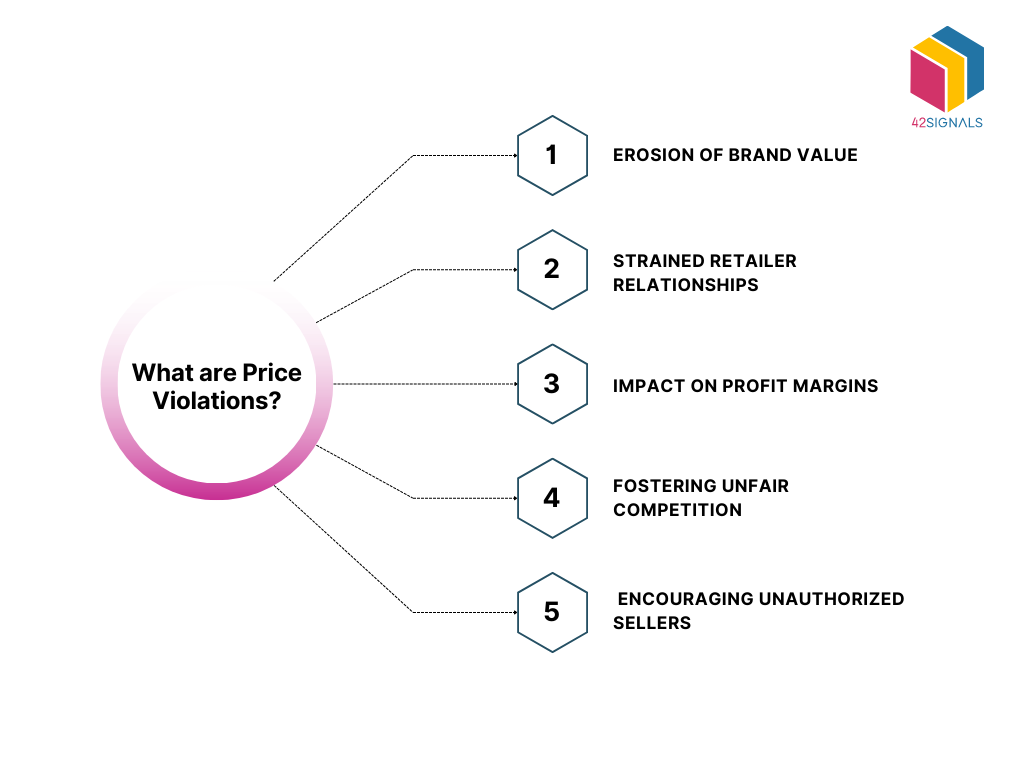
Image Source: Priceva
What are Retailer Price Violations Causing Channel Conflict?
Retailer price violations occur when a retailer sets a product price below the minimum advertised price (MAP) established by the manufacturer or seller. MAP policies aim to protect the integrity of a brand and ensure fair competition among all retailers selling the same product.
Understanding the Core Problem: What Constitutes a Violation?
At its heart, a retailer price violation occurs when a retailer advertises a product below the Minimum Advertised Price (MAP) or Suggested Retail Price (SRP) stipulated by the manufacturer. Crucially, MAP governs the advertised price (online listings, flyers, circulars, email promotions), not necessarily the final selling price at the checkout (though enforcing the latter is often the practical outcome).
MAP vs. UPP vs. RPM: It’s essential to distinguish policies.
- MAP (Minimum Advertised Price): Sets the floor for advertising a product. Retailers can still sell below this price in-store or at the online cart, but cannot publicly promote a lower price.
- UPP (Unilateral Pricing Policy): Takes MAP further by prohibiting the retailer from selling the product below a set price point, regardless of advertising.
- RPM (Resale Price Maintenance): Historically problematic, RPM involves an agreement between manufacturer and retailer to set a fixed resale price. While technically illegal per se under US antitrust law (Sherman Act Section 1) after the Leegin decision (2007), manufacturers can still suggest prices and implement unilateral policies like MAP or UPP without agreement, provided they are consistently enforced and avoid collusion. Image Source: Price2Spy

Image Source: Price2Spy
Why Violations Cause Explosive Channel Conflict:
The damage inflicted by MAP violations radiates far beyond the offending retailer:
Undermining Brand Value & Positioning:
Commoditization: Persistent discounting trains consumers to view the brand purely on price, stripping away perceptions of quality, innovation, or exclusivity carefully built by the manufacturer and premium retailers.
Eroding Premium Perception: Luxury or high-end brands suffer immensely when their products are consistently advertised at bargain-basement prices, making it impossible to maintain aspirational status.
Devaluing Innovation: Heavy discounting on new products signals to consumers that the innovation isn’t worth the initial price, discouraging future R&D investment.
Destroying Retailer Margins & Relationships:
Margin Compression: Compliant retailers (especially smaller ones or specialists investing in product expertise, demo areas, and superior service) cannot compete on price with violators operating on razor-thin or even negative margins just to drive traffic or market share. This forces them to either lose sales or match the unsustainable discount, destroying profitability.
Loss of Trust & Goodwill: Compliant retailers feel betrayed and devalued. They invest resources in marketing and selling the brand, only to have their efforts undercut by rogue discounters. This breeds deep resentment and erodes the partnership with the manufacturer.
Channel Exodus: Frustrated authorized retailers may simply stop carrying the brand, reducing the manufacturer’s overall market reach and access to valuable sales channels (e.g., specialty stores crucial for high-touch products).
Creating an Uneven Playing Field:
Service vs. Price Battle: Violators often compete solely on price, neglecting the value-added services (pre-sales advice, installation, warranties, post-sales support) that authorized retailers provide. This creates an unfair dynamic where service-oriented retailers are punished for their investments.
Free-Riding: Offending retailers “free ride” on the investments of others. They benefit from the brand awareness, marketing, and demand generation funded by the manufacturer and compliant retailers without contributing proportionally.
Consumer Confusion and Erosion of Trust:
Price Discrepancy Distrust: Seeing vastly different advertised prices for the same product across retailers makes consumers suspicious. They may question the product’s true value or the integrity of retailers charging the MAP/SRP.
Service Uncertainty: Consumers lured by a low advertised price might be disappointed if the final selling price is higher (though technically MAP compliant) or if they receive minimal service compared to what they expected based on the brand’s premium image.
Ways of Monitoring Retailer Price Violations
One effective way to monitor retailer compliance is through automated tools that track online listings, alert manufacturers to any deviations from set pricing standards, and avoid channel conflicts.
Tools like 42Signals’ MAP Violations and Seller Intelligence offer real-time insights into how products are being priced across different platforms, allowing businesses to take swift action against those who violate MAP agreements.
Regular audits of retailer websites and marketplaces should also be conducted manually to verify the accuracy and consistency of pricing practices.
When dealing with retailer price violations, communication is key. Rather than immediately resorting to legal measures or terminating partnerships, consider engaging in constructive dialogue with the offending party.
Acknowledge their efforts to provide competitive pricing while emphasizing the importance of maintaining a level playing field for all involved parties. Offer resources and support to help them comply with MAP policies moving forward, demonstrating your commitment to building lasting relationships grounded in trust and collaboration.
Preventing Channel Conflict
Another strategy for preventing channel conflict caused by retailer price violations involves implementing tiered pricing structures tailored to each distributor’s unique needs and capabilities.
By offering varying levels of discounts based on factors such as volume purchases, exclusive territories, or marketing initiatives, businesses can incentivize retailers to maintain appropriate pricing without compromising profitability.
Furthermore, providing access to co-op funds, promotional materials, and training programs can empower retailers to effectively market and sell products at suggested retail prices, thereby reducing the likelihood of price erosion.
In addition to proactive measures aimed at preventing violations, businesses should develop contingency plans for addressing instances of noncompliance and channel conflicts.
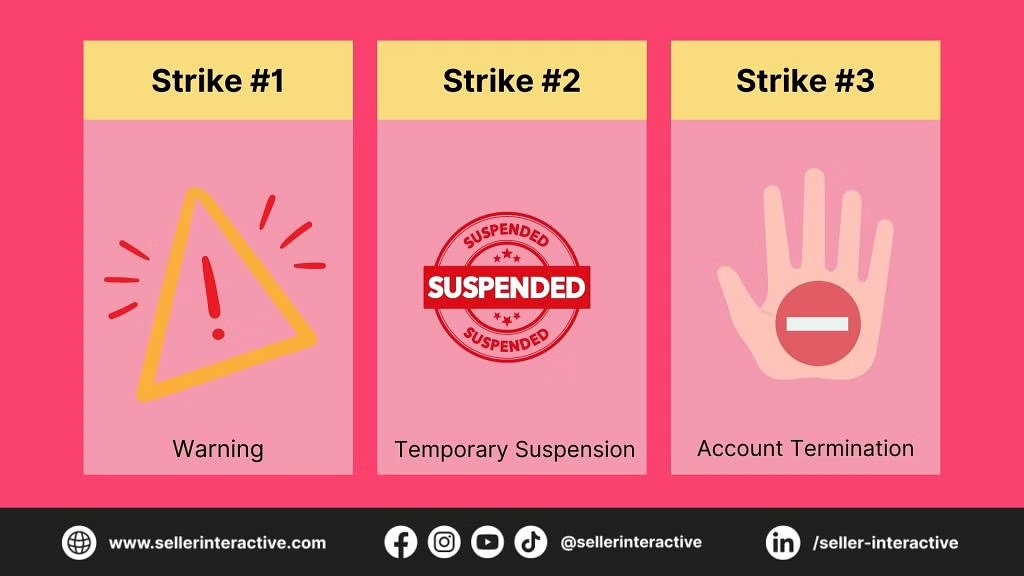
Image Source: Seller Interactive
Establishing clear consequences for repeated infractions, such as –
- Suspending shipments
- Revoking special privileges or
- Pursuing legal action
sends a strong message that MAP policies will be enforced consistently.
At the same time, remain open to renegotiating terms if circumstances change or exceptional circumstances arise, ensuring that decisions are made fairly and reasonably.
Lastly, educate both internal teams and external partners on the importance of protecting brand value and promoting healthy competition within the marketplace. Encourage employees to report suspicious activity and engage in regular discussions about best practices for managing pricing disputes.
Provide retailers with resources and guidance on optimal pricing strategies, highlighting the benefits of adhering to MAP policies and the negative impacts associated with violations. Through collective efforts, businesses can foster a culture centered around ethical conduct, mutual respect, and collaborative growth.
Let’s look at a few examples of companies that faced and overcame price violations.
The Critical Arsenal: Monitoring and Enforcing Compliance
Preventing and addressing violations requires proactive vigilance and a clear, consistent enforcement strategy:
- Advanced Digital Monitoring Tools (Non-Negotiable):
- Automated Price Scraping & Alerting: Solutions like 42Signals’ MAP Violations, PriceSpider, TrackStreet, or Intelligence Node continuously scan thousands of retailer websites, marketplaces (Amazon, eBay, Walmart.com), and comparison engines. They identify violations in near real-time, providing screenshots, timestamps, and historical data for evidence. Image Source: Price2Spy
- Seller Intelligence & Marketplace Focus: Dedicated tools track unauthorized sellers (often the worst offenders), identify supply chain leaks (diverted goods), and monitor fulfillment sources (FBA vs. FBM on Amazon), which is crucial for pinpointing the source of violations.
- Comprehensive Coverage: Monitoring must encompass all digital touchpoints: official retailer sites, major marketplaces, affiliate networks, social media promotions, and email campaigns.
- Manual Audits & Mystery Shopping: While automated tools are essential, periodic manual checks are crucial. This includes:
- Reviewing major retailer flyers and print ads.
- Mystery shopping calls/emails to check on quoted prices.
- Verifying in-store advertised prices (signage, tags).
- Checking regional or niche retailers not fully covered by automated tools.
- Clear, Consistent Communication Protocol:
- Policy Dissemination: Ensure all authorized retailers have received, acknowledged, and understand the current MAP/UPP policy. Use signed agreements where appropriate.
- Constructive First Contact: Upon detecting a violation, initiate contact promptly but professionally. Assume good faith initially – technical glitches or human error happen. Provide clear evidence (screenshot, URL, date/time).
- Focus on Partnership & Impact: Frame the conversation around protecting the brand value for all partners and ensuring a fair competitive environment. Explain how violations harm their fellow retailers and the brand’s long-term health, which ultimately impacts everyone’s ability to profit. Avoid accusatory language initially.
- Document Everything: Maintain meticulous records of all communications, violations found, and actions taken.
- Structured Enforcement Escalation: Have a predefined, consistently applied consequence ladder to avoid channel conflict.
- First Violation: Formal written notice reiterating the policy, requesting immediate correction, and warning of consequences for repeat offenses.
- Second Violation: Stronger warning, potential suspension of co-op advertising funds or short-term holds on new shipments of high-demand items.
- Third/Repeat Violations: Significant consequences: suspension of all shipments, revocation of authorized dealer status, loss of access to new product launches, termination of the distribution agreement. Image Source: Seller Interactive
- Legal Action: As a last resort for persistent, damaging violators (especially unauthorized sellers or those causing significant market disruption). Legal options include cease-and-desist letters, lawsuits for trademark infringement (if unauthorized), tortious interference, or breach of contract.
- Building Compliance Through Incentives (Tiered Structures & Support):
- Strategic Tiered Pricing: Structure wholesale pricing and discount tiers to incentivize compliance and reward desired behaviors beyond just volume.
- Volume Tiers: Standard, but ensure the base wholesale price doesn’t make MAP adherence impossible at lower volumes.
- Performance Bonuses: Tie rebates or additional discounts to metrics like sell-through rate, maintaining MAP compliance, participation in brand marketing programs, or providing excellent customer service scores.
- Exclusive Products/Programs: Offer compliant retailers access to exclusive SKUs, limited editions, or early launch programs unavailable to discount-focused channels.
- Co-op Marketing Funds: Allocate funds specifically tied to advertising that upholds MAP. Require pre-approval of ad creatives to ensure compliance.
- Sales & Marketing Enablement: Provide retailers with high-quality marketing assets (images, videos, product copy), sales training, and in-store merchandising support to help them sell effectively at the MAP/SRP by emphasizing value, not competing solely on price.
- Strategic Tiered Pricing: Structure wholesale pricing and discount tiers to incentivize compliance and reward desired behaviors beyond just volume.
- Internal & External Education: Fostering a Culture of Compliance
- Internal Teams: Ensure sales, marketing, and executive leadership are fully aligned on the importance of MAP, the monitoring process, and the enforcement protocol. Sales teams must understand they cannot offer “side deals” that undermine the policy. Empower employees to report suspected violations internally.
- Retailer Partners: Go beyond just sending the policy. Conduct webinars or training sessions explaining why MAP exists, the negative impacts of violations on their business and the channel, and how adhering to MAP protects their investment and profitability. Share best practices for selling at MAP. Position compliance as a shared responsibility for mutual success.
GoPro
GoPro, a leading manufacturer of action cameras, faced significant challenges due to widespread MAP policy violations on Amazon. To address this channel conflict issue, GoPro decided to stop selling its products directly to Amazon and instead appointed a select group of authorized resellers responsible for fulfilling orders placed on the platform.
This move allowed GoPro to regain control over its pricing strategy and minimize conflicts between competing sellers. As a result, average selling prices increased significantly, helping to preserve the brand’s premium image and improve overall profitability.
Yeti Coolers
Yeti Coolers, renowned for their high-quality coolers and drinkware, experienced similar problems with MAP policy violations on Amazon. The company took several steps to rectify the situation, including identifying and removing unauthorized sellers, limiting distribution channels, and increasing enforcement of MAP policies.
By strengthening relationships with authorized dealers and providing them with additional support, Yeti restored order to its distribution network and maintained consistent pricing across all channels, avoiding channel conflict.
Sonos
Sonos, a producer of wireless home sound systems, encountered difficulties when third-party sellers began listing its products on eBay at steep discounts. In response, Sonos developed a comprehensive plan to combat MAP violations, which included working closely with authorized retailers, improving communication channels, and utilizing specialized software to monitor pricing trends.
By engaging in open dialogues with offending sellers and imposing penalties for continued noncompliance, Sonos was able to reduce the prevalence of price erosion and protect its brand value.
Conclusion on Preventing Channel Conflict
Preventing conflict resulting from retailer price violations requires ongoing vigilance, clear communication, and strategic planning.
Taking decisive action when necessary can help businesses resolve such issues that dilute brand reputation.
While doing it manually can be cumbersome, 42Signals provides comprehensive MAP violations and seller intelligence data that help brands across marketplaces identify, take action, and resolve unlawful violations.
If you are curious to know more about our product schedule a demo or sign up for a free trial.