

What are ecommerce APIs? Consider this: You run an online store. Remaining competitive means you are continuously monitoring competitor prices, stock counts, and reviews. Your staff manually aggregates this ecommerce data, but it becomes irrelevant in less than a day. This is annoying, ineffective, and crippling for your business.
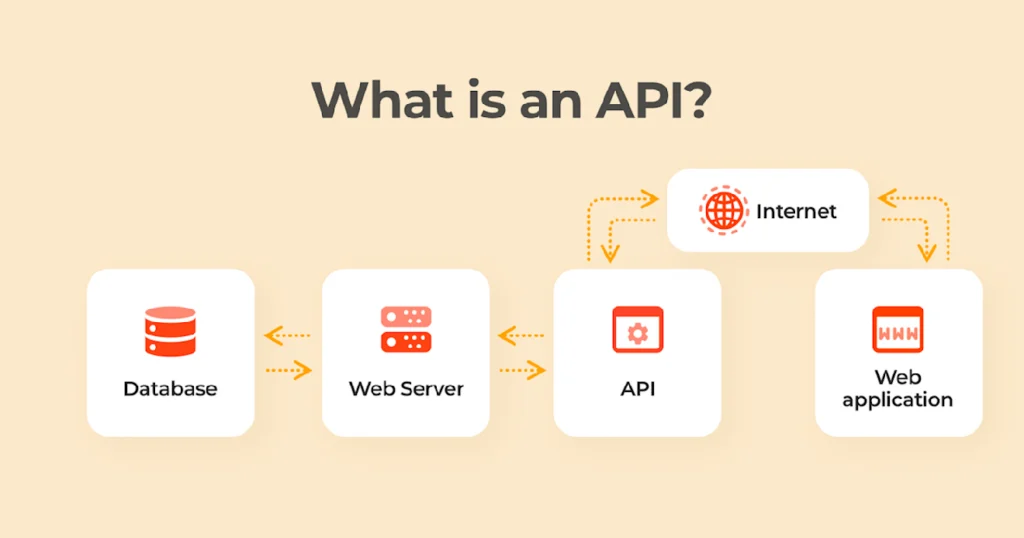
Image Source: Chargebee
Now, imagine if you could automate the entire process. Rather than fetching data from multiple websites manually, an ecommerce API directly integrates into your system and provides perpetual updates regarding competitors in real-time.
You eliminate all guesswork—no more outdated insights. improvement to pricing, marketing, inventory management, and advertising becomes an effortless process.
In this article, we’ll explore how ecommerce APIs help businesses automate data collection to streamline the decision-making process and provide an edge over competitors in the ever-changing marketplace.
What is an Ecommerce API?

An ecommerce API offers capabilities for different programs to communicate with each other. This allows for software systems to interact. Think of it as a digital bridge that connects your operations to the rest of the world like online marketplaces and competitor sites so that you can fetch, collect, and analyze pertinent data without any manual effort.
These APIs can retrieve various types of data, including:
- Pricing Data – Receive competitor dynamic pricing feeds to adjust your pricing strategically
- Stock Availability –Keep track of inventory challenges faced by competitors so you can take advantage of market gaps.
- Product Descriptions & Specifications – Make sure your product listings are as competitive and detailed as possible.
- Customer Reviews & Ratings – Examine external consumer sentiments to find gaps in the internal systems interfaces like pricing engines, inventory management systems, analytics, ecommerce websites, online shopping platforms, and competitors’ data.
For instance, if your company needs to monitor prices from competitors on Amazon, Walmart, or eBay, an ecommerce API can retrieve the current pricing information, stock levels, listings, and promotional offers without you having to visit the websites individually. This information can be utilized to modify pricing policies, enhance product listing strategies, and boost overall market competitiveness.
Why Ecommerce APIs are Essential for Online Businesses
1. Automating Data Collection
Tracking changes to a product’s information is a great ordeal that ecommerce businesses face. Manually following price changes and availability for several platforms becomes time-consuming and impossible to maintain as your business grows.
An ecommerce API offers a fully automated service where you receive well-organized and updated data without any effort on your end. With the ease of data fetch automation, businesses can respond to changes in the market, fine-tune their pricing, and remain ahead of the competition.
2. Competitive Intelligence Made Easy
Knowing your competition and staying on top of them helps in surviving and thriving in the ecommerce domain. A competitor data API allows businesses to monitor competitor products, sales, and overall stock levels.
For instance, should a competitor choose to discount a hot-selling item, you can respond to undercut their price instantly. Such agility and responsiveness are made possible by timely and accurate data access enabled through ecommerce APIs.
3. Enhancing Ecommerce Analytics
Optimizing your ecommerce operations goes beyond amassing terabytes worth of data; it demands careful consideration of how that data is utilized. Insights can be gathered from structured data provided through the use of APIs.
By integrating APIs with analytics tools, businesses can:
- Map and refine pricing strategy by implementing dynamic pricing.
- Study the product demand across various marketplaces.
- Optimize inventory management based on real-time stock data.
Analyzing consumer behaviors, one study concluded that 60% of consumers visit several websites before finalizing a purchase. When equipped with an understanding of where their products are listed in comparison to the competition concerning pricing, businesses can enhance their pricing and marketing plans.
4. Streamlining Digital Shelf Analytics

As defined, the digital shelf is the online representation of products at digital retailers. Elements such as visibility, price, customer review rating, stock, and seasonality all impact the sales velocity of a product.
An ecommerce API helps brands track and optimize their digital shelf by providing data on:
- How competitors position their products.
- The impact of price changes on conversions.
- The effectiveness of promotional campaigns.
With the help of digital shelf analytics, brands can optimize their sales and brand recognition through strategic planning.
What Are The Types of Ecommerce APIs?
Different ecommerce functions available constitute the different types of ecommerce APIs, each type serving a particular function. Knowing these classes will aid you in identifying the correct API to fit your business requirements.
- Product Data APIs – These provide current details on a product including its description, images, specifications, and any available variations. These APIs are vital for businesses because they ensure the correctness and currency of their product listings.
- Competitor Data APIs – These APIs retrieve competitor prices, promotional offers, and stock status from different online stores. They are vital for business intelligence since they help firms to adjust their pricing policies dynamically.
- Ecommerce Platform APIs – These are used to integrate with Shopify, Magento, WooCommerce, and other platforms to help automate business functions like inventory, orders, and product updates.
- Review and Sentiment Analysis APIs – These aggregate reviews and ratings from different sources, allowing businesses to analyze sentiment towards their products and enhance their offerings.
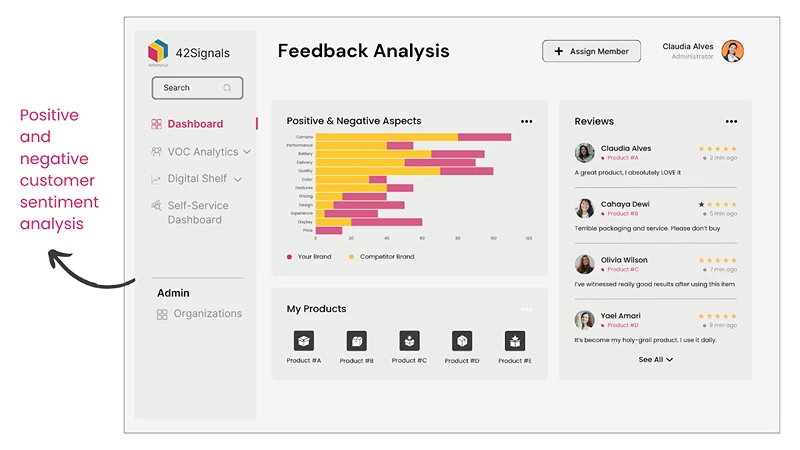
- Search and SEO APIs – These monitor keyword performance, search volume, and customer queries on ecommerce sites to assist businesses in optimizing product performance and sales.
Now, what if you got all these in one API? 42Signals does just that!
How Ecommerce API Integration Works
Ecommerce APIs serve as intermediaries between online marketplaces and the clients’ systems like ecommerce dashboards, pricing engines, and inventory management tools. Below are the actions to be taken:
1. Identify Your Data Needs
Pick an API based on the data you intend to use and what benchmarks drive your business. Set goals with consumer analysis, stock level comparison, and competitive pricing insights. These aims will help you structure the business API outline better.
2. Choose a Reliable API Provider
In your search for an API provider, focus on one that guarantees real-time, accurate data, high uptime, and reliable support. Popular providers include 42Signals, which offers competitor data APIs and analytics for ecommerce, providing businesses with valuable insights into changing markets.
3. Ensure Seamless Integration
APIs should synchronize with your current framework, be it the analytics dashboard, CRM, or pricing engine. Collaborate with your developers on the proper design to ensure effortless ecommerce API integration that allows for smooth data transfer.
4. Automate and Optimize
While setting up the API, strive to automate as much as possible. Employ dynamic pricing policies, automated stock updates, and competitor surveillance alerts to outperform the market without exerting manual labor.
5. Monitor and Scale with ECommerce APIs
While APIs offer perpetual data supply, businesses require continuous supervision to validate their performance. Make alterations where necessary to retain the relevance of the supplied data and ensure it facilitates decision-making.
Use Cases of Ecommerce APIs in Business Operations
1. Price Optimization with ECommerce APIs

A dynamic pricing solution offers merchants an edge in growing their online business. Through an ecommerce API, businesses can monitor competitor prices and make adjustments to their pricing in real-time.
2. Inventory Management

An out-of-stock product amounts to lost sales. Thanks to APIs, businesses can oversee stock levels on different platforms and can ensure that inventory is always available when needed.
3. Market Expansion
Expanding to new marketplaces has to be accompanied by an understanding of demand and pricing for the specific product. APIs offer profiling information about different markets which helps businesses make better moves before introducing new products or entering new regions.
4. Competitor Analysis
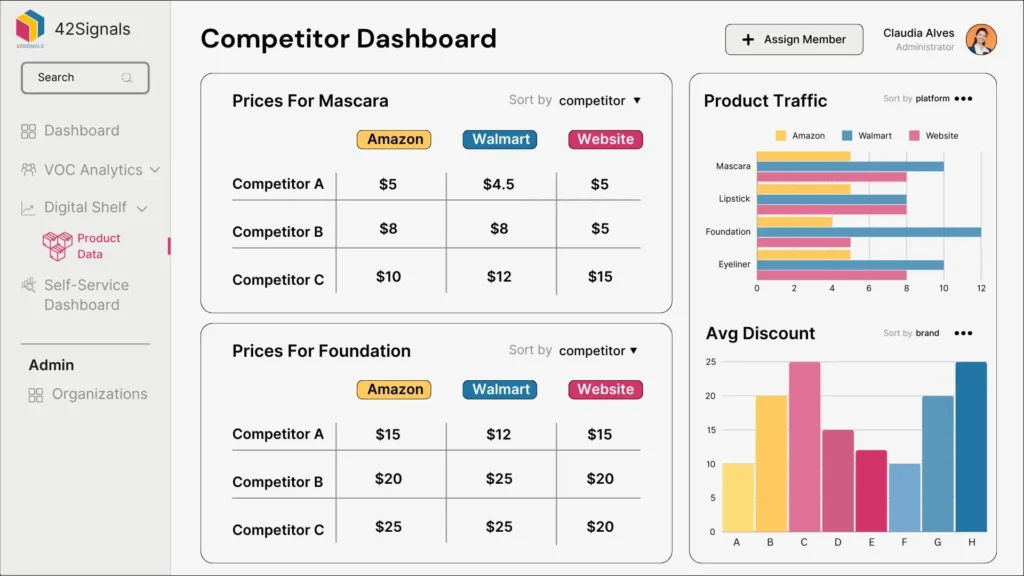
A competitor data API gives businesses a comprehensive view of their competitors’ activities. From analyzing product reviews to tracking discounts, APIs provide important information that can be used in marketing and pricing decisions.
How to Choose the Right Ecommerce APIs for Your Brand
There are various types of ecommerce APIs and not all of them are the same. When choosing an API keep in mind the following:
1. Data Accuracy and Coverage with ECommerce APIs
The foundation of any data-driven decision is trust in the data itself. When evaluating an API, look beyond marketing claims and investigate the sources and methodologies used for data collection. Does the provider aggregate information from a wide array of platforms, including major marketplaces like Amazon, Shopify stores, and social commerce channels?
Comprehensive coverage ensures you get a holistic view of the competitive landscape. Furthermore, inquire about their data refresh rates. In fast-moving sectors like fashion or electronics, data that is only updated weekly can be dangerously outdated. Accurate, real-time data on pricing, inventory levels, and product assortment is what empowers you to react swiftly to market changes.
2. Scalability
Your chosen API must be a growth enabler, not a bottleneck. As your brand expands into new sales channels, product lines, or geographic regions, the volume of data you need to process will multiply. A scalable API is built on robust infrastructure that can handle sudden spikes in request volume without crashing or experiencing significant latency.
Before committing, ask the provider about their rate limits, uptime guarantees (often outlined in a Service Level Agreement), and their track record of supporting businesses as they scale. A solution that works for a startup may buckle under the demands of an enterprise-level operation.
3. Integration Ease with ECommerce APIs
Time-to-value is a critical business metric. An API with a convoluted integration process can drain developer resources and delay your project for months. Prioritize APIs that offer clear, well-documented documentation, a rich library of Software Development Kits (SDKs) for popular programming languages, and accessible developer support.
Many leading providers also offer pre-built connectors for common ecommerce platforms and business intelligence tools, allowing for a “plug-and-play” experience. The simpler the integration, the faster your team can leverage the API’s insights to drive revenue and efficiency.
4. Compliance and Security
In an era of stringent data privacy laws like GDPR and CCPA, entrusting a third party with your data is a significant responsibility. A reputable API provider will be transparent about their security protocols, which should include strong encryption (both in transit and at rest), regular security audits, and adherence to recognized compliance frameworks.
Ensure they have clear data processing agreements (DPAs) that define how your and your customers’ data is handled, stored, and protected. Neglecting this due diligence can expose your brand to severe legal, financial, and reputational risks. Ultimately, a secure API isn’t just a technical feature; it’s a cornerstone of your brand’s integrity and customer trust.
The Future of Ecommerce APIs
The ecommerce sector is likely to require deeper ecommerce API integrations in the future. APIs are advanced now with AI and machine learning, which allows for predictive analytics, and automating smarter processes.
As reported, the ecommerce analytics industry is likely to expand by 15% during the next five years, which illustrates the growing importance of ecommerce in modern business strategy powered by ecommerce data intelligence.
Any business that utilizes ecommerce APIs will have an advantage in pricing, inventory management, business intelligence, and even competition.
Final Thoughts on ECommerce API
An ecommerce API reshapes the online business ecosystem. The flexibility that comes with automating data collection, enhancing competitive business intelligence, and analytics intuitively improves decision-making speed.
It’s important to note that the shift from manual data collection to API automation streamlines business operations. The right tools should be leveraged so that ecommerce strategies become more proactive with data.Contact us to get started on better integrating advanced APIs into your eCommerce strategy.
Frequently Asked Questions
1. What is an e-commerce API?
An e-commerce API (Application Programming Interface) is a set of rules that allows different software systems—like websites, apps, and payment gateways—to communicate and share data seamlessly.
In simple terms, it’s what lets your online store connect with external services such as payment processors (Stripe, PayPal), inventory databases, shipping partners, or customer relationship tools.
For example, when a buyer places an order on an online store, APIs help fetch product details, confirm payment, update stock, and generate shipping labels—all in real time without manual effort.
2. Why are APIs important for e-commerce?
APIs are the backbone of modern e-commerce ecosystems. They enable automation, integration, and personalization at scale. Here’s why they matter:
- Seamless Integrations: APIs connect your store to ERP, CRM, and logistics systems so operations run smoothly.
- Real-time Data Flow: Product availability, prices, and orders update instantly across platforms.
- Faster Development: Developers can add new features (like tracking or reviews) without rebuilding the core website.
- Personalized Experiences: APIs help marketers tailor content, prices, and recommendations based on customer behavior.
- Scalability: Businesses can expand to new marketplaces (Amazon, Shopify, etc.) using API connections rather than manual uploads.
In essence, APIs help e-commerce businesses stay fast, connected, and customer-centric.
3. What are the different types of e-commerce APIs?
E-commerce platforms rely on several categories of APIs depending on functionality:
- Product Information APIs – Manage product data such as titles, SKUs, descriptions, and pricing across multiple channels.
Example: Shopify Product API, WooCommerce REST API. - Order Management APIs – Handle order creation, tracking, returns, and fulfillment.
Example: Amazon MWS Orders API. - Payment APIs – Securely process transactions and manage refunds.
Example: Stripe, PayPal, Razorpay APIs. - Inventory APIs – Keep stock levels synced between warehouses, marketplaces, and stores.
Example: BigCommerce Inventory API. - Customer Data APIs – Store and access customer information, preferences, and purchase history.
Example: Salesforce Commerce Cloud API. - Shipping & Logistics APIs – Generate labels, calculate shipping rates, and update delivery status.
Example: Shippo, FedEx, and UPS APIs. - Analytics APIs – Provide metrics on sales, conversions, and customer behavior.
Example: Google Analytics Reporting API.
Together, these APIs form the invisible infrastructure that powers every online purchase—from clicking “Add to Cart” to doorstep delivery.