
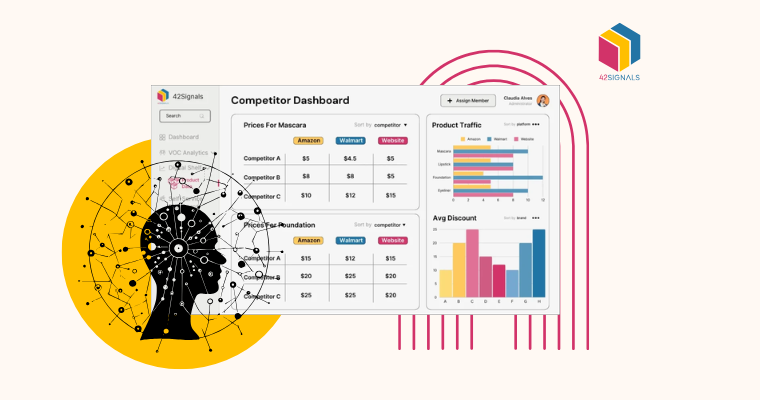
As the market evolves quickly, newer products launch, disruptions occur, etc. – the ability to grasp customer needs and adapt product offerings is crucial for success. Artificial Intelligence (AI)-enabled dashboards are reshaping how organizations review product details, empowering them to make smarter, more well-rounded choices.
By combining tools such as product insights, online shelf evaluations, and ecommerce assessments, companies can refine their offerings and maintain a competitive edge. This article examines how AI-based dashboards are changing product strategies and the clear advantages they provide.
How AI is Transforming Product Offerings in Modern Businesses?

Image Source: The Motley Fool
Artificial intelligence has influenced nearly every area of business operations. From simplifying repetitive tasks to delivering deep knowledge about consumer preferences, AI has opened new doors for efficiency and innovation. One of its most valuable uses lies in analyzing information—specifically through dashboards enhanced by AI capabilities.
These dashboards use learning algorithms to process large amounts of product-related information instantaneously, offering helpful takeaways to decision-makers. By merging and interpreting data from various sources, AI dashboards remove the traditional barriers that often limit comprehensive evaluation and improve product offerings.
What is an AI Dashboard? (Beyond Traditional BI)
A traditional dashboard displays historical data—it tells you what happened. An AI-powered dashboard, however, tells you why it happened, what will happen next, and what you should do about it.
At its core, an AI dashboard integrates machine learning and natural language processing to:
- Automate Analysis: Go beyond static charts to automatically find patterns, correlations, and anomalies in your data.
- Generate Predictions: Use predictive analytics to forecast trends, demand, and potential outcomes.
- Provide Prescriptive Insights: Offer actionable recommendations, answering the “so what?” for decision-makers.
- Learn and Adapt: The more data it processes, the smarter and more accurate its insights become.
Key Advantages of Integrating AI into Your Business Dashboards
Moving from static reports to AI-driven dashboards offers transformative benefits, especially for startups looking to scale intelligently:
- Proactive Decision-Making: Shift from reactive to proactive strategies based on forecasts and trends, not just past performance.
- Deeper Visibility and Oversight: Uncover hidden patterns in user behavior, supply chain logistics, or market dynamics that are impossible to spot manually.
- Automated Root-Cause Analysis: Instantly pinpoint the root cause of a drop in sales or a surge in customer complaints, saving days of manual investigation.
- Democratization of Data: AI translates complex data into plain-language insights, allowing non-technical team members to make data-driven decisions.
- Competitive Benchmarking: Continuously track and compare your performance against competitors in real-time.
How AI Dashboards Improve Visibility in Product Offerings, Oversight, and Market Insights
The promise of “better visibility” is often vague. AI dashboards make it concrete. For instance, in AI brand monitoring, real-time dashboards track brand mentions, sentiment, and share-of-voice across the web and social media. This allows you to see not just if people are talking about you, but what they are saying and how they feel, enabling immediate reputation management.
For market insights, AI-driven dashboards can synthesize data from news sources, competitor websites, and market trends to present a cohesive narrative on emerging threats and opportunities. This isn’t just a chart; it’s an automated market intelligence report.
Revolutionizing Product Offerings, Insights & Metrics with AI Technology
Understanding product performance involves tracking and interpreting how users engage with it. This includes observing behavior, spotting trends, and analyzing the factors that affect outcomes. Historically, gathering and processing this data required considerable manual work and expertise.

AI-enabled dashboards, like the product data and prices by 42Signals, simplify these tasks by automating the collection and interpretation of data. With intelligent models, organizations can:
- Detect Usage Trends: Dashboards highlight common behaviors and key features, showcasing popular elements and identifying areas that need refinement.
- Forecast Developments: Predictive algorithms suggest future customer interests based on historical patterns, enabling preemptive product adjustments.
- Assess Outcomes: These tools deliver up-to-the-minute snapshots of critical metrics such as satisfaction levels, customer retention, and conversion progress.
A Real-World Example of Improving User Satisfaction
Take the case of a software-as-a-service (SaaS) provider leveraging an AI dashboard to interpret product usage. By observing which functionalities customers frequently rely on, the provider can prioritize improving these aspects. If a particular feature frequently causes issues, the dashboard flags it, prompting prompt corrections.
How to Improve Online Product Offerings & Display for Better Engagement?
What Are Online Shelf Evaluations?
In the context of ecommerce, an “online shelf” refers to how products are presented across digital platforms. Online shelf evaluations involve examining the visibility, search rankings, and feedback related to these products.
AI dashboards bring precision and greater depth to these evaluations. They enable organizations to monitor product offerings by looking at:
- Product Placement: Dashboards analyze the position of items in search results and their effect on sales performance.
- Competitive Comparisons: Teams can benchmark their product’s digital visibility against others to find strengths and shortcomings.
- Consumer Opinions: AI-driven tools review and assess customer sentiment, ratings, and testimonials to extract useful insights.

Boosting Sales Through Refined Product Offerings
For instance, a brand specializing in consumer electronics might use an AI dashboard to examine online shelf evaluations. By identifying listings with weaker engagement, the brand could enhance descriptions, visuals, and keywords to improve appeal and achieve higher sales.
The Power of “What-If” Analysis and AI Decision Support
“What-if analysis” is a hallmark of advanced, prescriptive analytics. It allows you to simulate scenarios before making a decision. For example:
- “What if I increase my product price by 5%?”
- “What if I launch this product in a new region?”
- “What if a key supplier fails?”
An AI-powered dashboard can model the potential outcomes of these scenarios based on historical data and predictive algorithms, giving you a data-backed view of risks and rewards. This transforms the dashboard from a reporting tool into a strategic decision-support system.
How to Advance Ecommerce Assessments for Growth?

Image Source: Peel Insights
Ecommerce assessments focus on examining the performance of online platforms. Metrics such as purchase rates, average order size, and product demand are integral. AI dashboards elevate ecommerce evaluations by providing:
- Integrated Data Views: Dashboards consolidate inputs from platforms like marketplaces, social channels, and websites.
- Instantaneous Feedback: Businesses can observe sales movements in real-time, allowing immediate changes to marketing approaches.
- Custom Suggestions: Intelligent algorithms examine shopping behaviors to recommend promotions and offers tailored to customer habits.
How AI Dashboards Help Fashion Retailers Maximize Sales & Inventory Planning?
Consider an online fashion retailer that adopts an AI dashboard to monitor ecommerce metrics. By studying the purchasing habits of their audience, the retailer identifies which items resonate during specific seasons. This enables them to plan inventory wisely and offer strategic discounts, driving better results.
Industry in Focus: Customizable AI Dashboards for Your Product Offerings Needs
The true power of an AI dashboard lies in its customization. A one-size-fits-all approach doesn’t work. For example:
- For E-commerce Marketers: The most useful dashboards track customer journey metrics, cart abandonment reasons, and product-level profitability, with AI suggesting optimal discount strategies.
- For Fashion & FMCG: Dynamic price dashboards are crucial. They monitor competitor pricing, promotion frequency, and stock levels across retailers, recommending real-time price adjustments to protect margins and share.
- For AI Product Managers: Custom dashboards are needed to track AI-specific metrics like prompt performance, model accuracy, and user engagement with AI features.
When evaluating vendors, look for those that offer this level of deep customization to track the metrics that matter most to your specific role and industry.
How Listening to Customer Feedback Drives Ecommerce Success?

Listening to customers involves gathering and interpreting their opinions to better align with their needs and expectations that plays a very important role in curating product offerings. AI dashboards make this process more actionable by:
- Bringing Feedback Together: They collect inputs from surveys, social media posts, customer service conversations, and reviews.
- Analyzing Customer Sentiments: These tools gauge the tone behind customer comments, spotlighting areas that need improvement or celebration.
- Providing Clear Directions: Businesses can prioritize updates or innovations based on customer likes and dislikes.
How AI Feedback Analysis Enhances Home Appliance Reliability?
Imagine a manufacturer of home appliances using an AI dashboard for feedback analysis. By identifying repeated concerns about a product’s reliability, it can improve its design to better meet expectations, fostering greater satisfaction and loyalty.
Why AI Dashboards Are Essential for Improved Product Offerings?
1. Making Thoughtful Choices
AI dashboards allow companies to base their strategies on solid information instead of relying solely on intuition. This reduces the likelihood of costly missteps and ensures offerings align with what customers actually want.
2. Saving Time and Effort
By automating the process of analyzing data, these dashboards allow teams to focus their efforts on executing improvements rather than spending hours interpreting information manually.
3. Enhancing the Customer’s Experience
Understanding customers better enables organizations to create offerings and experiences that truly meet their desires. This leads to greater happiness, loyalty, and advocacy.
4. Staying Ahead of Rivals
Adopting AI dashboards provides a strategic edge. With predictive tools and instant insights, businesses can adapt more swiftly than competitors, ensuring their offerings remain in demand.
How to Address Challenges in Leveraging AI for Business Growth?
Although these tools are valuable, implementing AI dashboards requires addressing some challenges. Businesses must:
- Ensure High-Quality Data: Reliable insights depend on accurate and comprehensive information.
- Invest in Training: Teams need skills to interpret and act on insights effectively.
- Protect Confidential Information: Safeguarding sensitive customer data is a key responsibility.
Conclusion
AI-enhanced dashboards are reshaping how organizations approach product offerings decisions. By integrating tools for analyzing product usage, online visibility, ecommerce success, and customer opinions, these dashboards provide a full picture of both performance and consumer needs.
Companies embracing this innovation can offer improved products, build stronger connections with their customers, and achieve sustainable progress.42Signals provides such dashboards to improve product offerings on multiple platforms. If you’re interested in seeing what that means for your business, schedule a demo with us today.
Frequently Asked Questions
1. What is a product offering example?
A product offering is the complete package of goods or services a company presents to meet a customer’s need. It includes not just the physical product but also features, price, packaging, and related services.
Example:
Apple’s iPhone is a strong example of a product offering — it’s not just a smartphone. The offering includes the device itself, iOS software, iCloud storage, warranty, customer service, and brand experience. Together, these components make up the full value that Apple provides to the consumer.
2. What are the product offerings?
Product offerings refer to the full range of products or services that a company sells. They can vary based on customer segments, pricing tiers, or market needs. A company’s product offering typically includes:
- Core Products – The main product fulfilling the primary need (e.g., shampoo for hair cleaning).
- Augmented Products – Added features like packaging, branding, or customer support.
- Complementary Products – Related or add-on items that enhance the main product (e.g., conditioner with shampoo).
- Service Components – Delivery, warranties, installation, or tech support that enrich the customer experience.
Together, these shape how customers perceive value and make purchasing decisions.
3. What are the different types of product offerings?
There are generally four types of product offerings, categorized by how consumers buy and use them:
- Convenience Offerings:
Low-cost, frequently purchased items like snacks, toiletries, or beverages. Customers buy them quickly and with minimal effort. - Shopping Offerings:
Products that require more comparison before purchase, such as clothing, electronics, or furniture. - Specialty Offerings:
Unique or luxury items with distinct brand loyalty and high customer involvement — like designer handbags or premium watches. - Unsought Offerings:
Products that customers don’t actively look for but might need, such as insurance or medical alert devices.
Each type requires a different marketing, pricing, and distribution strategy.
4. What are the 4 types of products?
The four main types of products in marketing are:
- Consumer Products:
Goods purchased by individuals for personal use (e.g., food, cosmetics, apparel). - Industrial Products:
Goods used by businesses for production or operations (e.g., machinery, raw materials). - Service Products:
Intangible offerings like education, healthcare, and consulting. - Digital Products:
Online or software-based products such as apps, e-books, or subscriptions.
Each product type plays a different role in the economy and requires distinct marketing and distribution approaches.