
** TL;DR ** Etsy’s genius lies in its two-sided platform that acts as a digital town square, seamlessly connecting creators directly with a massive, pre-existing audience of millions who are already looking for unique, non-mass-produced items. The platform empowers sellers by handling the complex tech and marketing infrastructure, allowing them to focus on crafting, while it earns its keep through small fees that are only incurred when a sale is made, aligning its success directly with the success of its small businesses. Ultimately, Etsy proved that by fostering community, trust, and a focus on authenticity, technology could be harnessed to build a human-centric global marketplace where individual passion can thrive at scale.
Imagine a craftsperson, let’s call her Sarah, sitting at her kitchen table. She’s carefully sanding a piece of wood that will soon become a custom-made cutting board. A decade ago, Sarah’s customer base would have been limited to friends, family, and maybe a local craft fair. Today, with a few clicks, her creation is visible to millions of potential buyers across the globe. The engine behind this modern-day miracle? Etsy.
You might have asked yourself, “What is Etsy?” Is it just a website for handmade goods? The answer is both simpler and far more complex. Etsy’s magic isn’t just in what it sells, but in how it sells. It has masterfully built what economists call a multi-sided platform, a digital ecosystem that doesn’t just host small businesses; it actively fuels them.
It’s a global village market, but with the reach and sophistication of a tech giant. This article will deconstruct the ingenious Etsy business model, revealing the specific components that allow a single creator to reach a vast audience and build a thriving Etsy shop.
What is Etsy, Really? More Than Just a Marketplace
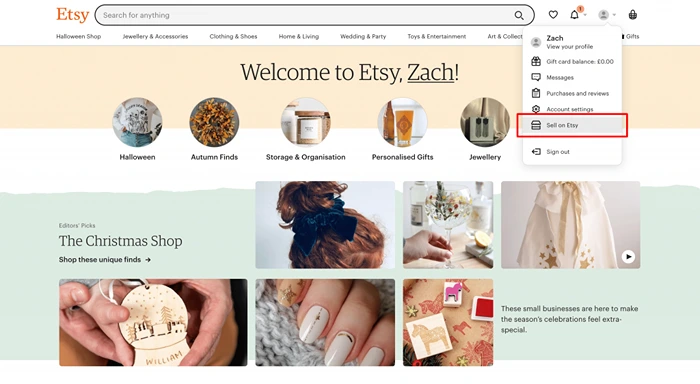
Image Source: Creative Hub
At its core, Etsy is an e-commerce website focused on handmade, vintage, and craft supplies. But to define it merely as an online store is to miss the point. Think of it not as a single massive department store, but as a beautifully organized, global bazaar. Instead of corporate brands, the stalls are run by individual artisans, collectors, and creators. This fundamental shift in perspective is key to understanding its appeal.
Unlike monolithic online marketplaces that sell everything from A to Z, Etsy carved out a specific niche: the unique, the personal, and the soulful. When you shop on Etsy, you are not buying a mass-produced item. You are often buying a story, a piece of someone’s passion, and a direct connection to the person who made it.
This focus on authenticity is the bedrock of the entire platform. It attracts buyers who are tired of generic products and seeking something special, and it empowers sellers who want to turn their craft into their livelihood. This creates a powerful, self-reinforcing cycle that is the heartbeat of the Etsy ecosystem.
The Engine Room: Etsy as a Two-Sided Platform
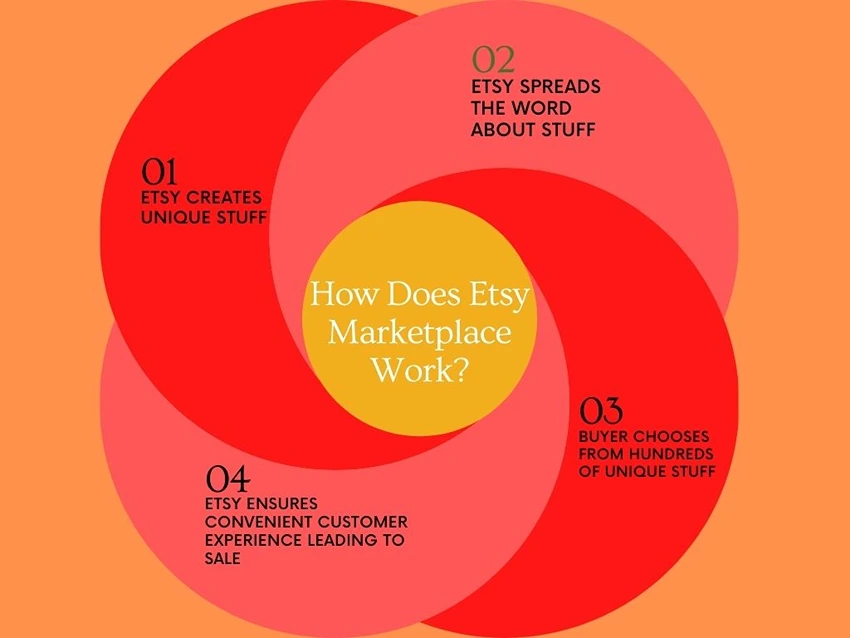
\The technical term for what Etsy has built is a “multi-sided platform” or a “two-sided marketplace.” In simple terms, it’s a service that creates value by enabling interactions between two distinct user groups. In this case, those groups are the sellers (the makers) and the buyers (the shoppers). The platform is worthless without a healthy, active presence from both sides.
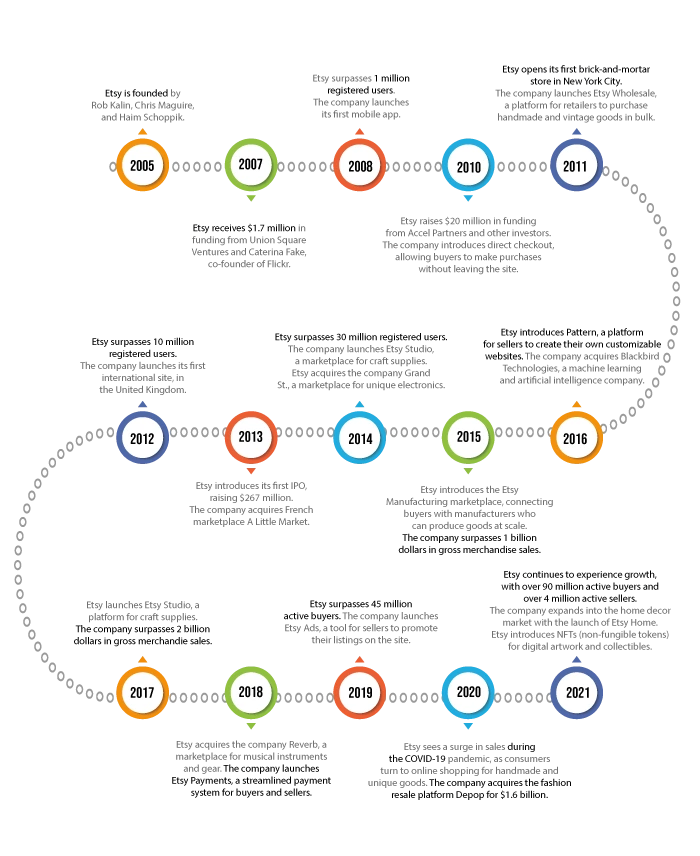
Etsy’s primary job is to get these two groups together and make their interaction as smooth as possible. For buyers, Etsy provides a massive, searchable, and trustworthy catalog of unique goods. For sellers, it provides a ready-made audience of millions who are already pre-qualified because they came to the site looking for exactly what the sellers offer. A 2023 report from Etsy noted they have over 96 million active buyers on the platform.
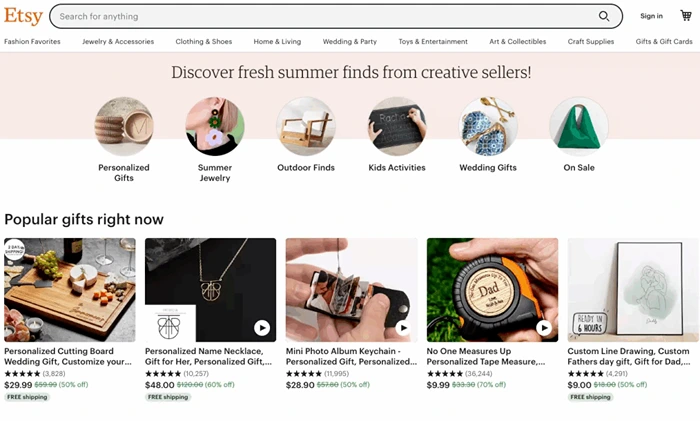
Image Source: Foundr
This is the immense power an Etsy seller taps into. They don’t need to spend millions on advertising to build an audience from scratch. Etsy has already assembled it for them. The platform’s success depends entirely on its ability to keep both sides happy and engaged, which leads us to the next piece of the puzzle.
How Etsy Makes Money: A Transparent Exchange of Value
To sustain this massive ecosystem, Etsy needs to generate revenue. Its business model is straightforward and transparent, aligning its success directly with the success of its sellers. When an Etsy seller makes a sale, Etsy earns a fee. This creates a powerful incentive for Etsy to provide the best possible tools and services to help its sellers succeed.
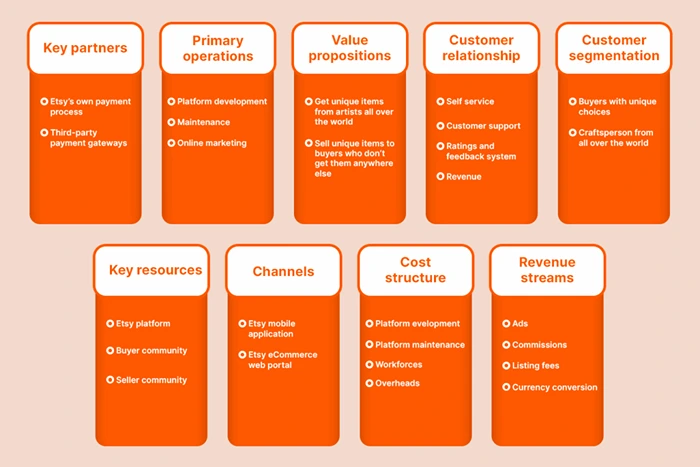
The revenue comes from a few key streams.
- First, there is a listing fee, a small charge to publish each item in an Etsy shop for a set number of months.
- Second, and most significantly, is the transaction fee. This is a percentage of the final sale price, including shipping.
- Third, Etsy offers optional services like payment processing fees and a program called Etsy Offsite Ads, which promotes a seller’s listings on other platforms like Google and Facebook, charging a fee only if the ad leads to a sale.
This model ensures that Etsy only truly wins when its sellers are winning, creating a partnership rather than a purely transactional relationship.
The Seller’s Toolkit: Your Passport to a Global Audience
So, how does a creator like our friend Sarah actually get started? Setting up an Etsy shop is famously accessible. The barriers to entry are intentionally low. You do not need a business degree or a massive startup capital. You need your creations, a clear idea, and a bit of time. The process of how to sell on Etsy is designed to be a guided journey.
Once the shop is open, Etsy provides a powerful suite of tools that would be incredibly costly and complex for a solo entrepreneur to build. This includes a built-in payment processing system, shipping label purchasing, sales analytics, and a messaging system for direct communication with customers. For a small business owner, these are not just conveniences.
They are essential operational pillars. By handling the complex backend technology, Etsy allows the seller to focus on what they do best: creating amazing products and providing excellent customer service. This empowerment of small businesses is a core tenet of the platform’s mission.
The Buyer’s Experience: Cultivating Trust and Discovery
On the other side of the platform, Etsy works tirelessly to create a seamless and enjoyable experience for the buyer. Trust is the most important currency here. When you are buying from an individual in another state or country, you need confidence that the transaction will be secure and the product will meet your expectations.
Etsy builds this trust through several features. Buyer and seller reviews create a system of accountability and social proof. Secure, integrated payment processing via Etsy Payments ensures financial data is protected. Clear shop policies and direct messaging channels open lines of communication.
Furthermore, Etsy’s search and recommendation algorithms are engineered for discovery. They are designed to help buyers find not just what they explicitly searched for, but also unique, related items they might love. This element of discovery is a key differentiator from other online marketplaces and is crucial for helping new sellers get found.
The Power of Community and Niche
Beyond the algorithms and transaction fees, Etsy cultivates a powerful sense of community. This is the “village” part of the global village market. Sellers connect with each other in forums, sharing tips on everything from photography to SEO. Teams form around shared interests or locations. This sense of belonging is a powerful motivator and a source of support that you would not find on a standard e-commerce platform.
This community naturally fosters incredible niche markets. Whether you are looking for miniature furniture for a dollhouse, historically accurate vintage clothing, or custom jewelry for a specific fandom, you will likely find a dedicated Etsy seller who specializes in it. This ability to cater to hyper-specific interests is something large, generalized retailers cannot easily replicate. For the buyer, it is a treasure trove. For the seller, it means you can build a successful business around a very specific passion, connecting with a dedicated, global audience that shares your interest.
Challenges and Considerations for the Modern Etsy Seller
While the platform offers incredible opportunity, it is not a guaranteed path to easy money. Success on Etsy requires strategy and hard work. The very low barrier to entry means there is significant competition. Standing out requires more than just great products. A successful Etsy seller must become a master of their own digital presence.
This involves taking high-quality, well-lit photographs that tell a story. It requires writing compelling, keyword-rich product descriptions so their items appear in search results. It means providing stellar customer service to earn positive reviews.
Understanding the nuances of how to sell on Etsy effectively is a learning process. Sellers must also navigate the fees, ensuring their pricing strategy accounts for all costs to maintain a profitable Etsy shop. It is a real business, and it demands a business-minded approach.
Conclusion: A Blueprint for Human-Centric Commerce
The Etsy business model is a masterclass in modern, platform-based economics. It demonstrates that technology does not have to erase the human element from commerce. In fact, it can amplify it. By building a two-sided platform that serves both buyers and sellers, by providing the tools and the audience, and by fostering a sense of community, Etsy has created a sustainable ecosystem where creativity can thrive on a global scale.
It has answered the question of what is Etsy by showing us a new model for economic connection. It is a blueprint for how technology can be harnessed to support small businesses and allow individuals to participate in the global economy on their own terms.
The story of Etsy is still being written. It faces competition from other platforms and the perpetual challenge of scaling while maintaining its soul. Yet, its core achievement remains. It proved that there is a massive, enduring market for authenticity and human connection. For anyone wondering how to sell on Etsy or simply looking to understand the future of retail, the platform stands as a powerful testament to the idea that in a world of automation, the work of human hands and hearts holds more value than ever.
If you liked this article, read –
The Caudalie Strategy: How a French Skincare Brand Blends Natural Ingredients with Digital Mastery
The Bloom Nutrition Success Story: From Zero to $170M with Influencers and Omnichannel Sales
Mario Badescu: The Cult Beauty Brand Masterclass in Authenticity & Smart Pricing
The Labubu Frenzy: How a Mysterious Monster Became the $2B Collectible Empire
Quaker Oats’ Pricing Strategy: Balancing Affordability and Premium Positioning
Frequently Asked Questions
1. Can Indians sell on Etsy?
Yes, Indians can absolutely sell on Etsy. The platform allows sellers from India to open a shop and list their products for international buyers. Many Indian entrepreneurs and artisans already use Etsy to sell handcrafted goods, jewelry, home décor, digital art, and vintage items.
To get started, Indian sellers need to:
Create an Etsy seller account.
Set up their shop profile and payment method.
Comply with Etsy’s product and shipping guidelines.
Link a valid bank account for payouts (Etsy supports Indian bank accounts through approved payment processors).
Selling on Etsy is particularly popular among small businesses, independent artists, and craft makers from India because it gives them access to a global customer base without needing their own e-commerce website.
2. Is it free to sell on Etsy?
No, selling on Etsy isn’t entirely free. While opening a shop doesn’t cost anything, Etsy charges several fees:
Listing Fee: $0.20 per product listed (valid for 4 months or until sold).
Transaction Fee: A small percentage (currently 6.5%) of the sale price, excluding shipping and taxes.
Payment Processing Fee: Varies by country and payment method.
Optional Advertising Fees: If sellers use Etsy Ads or Offsite Ads, additional charges apply.
These costs are deducted automatically from the seller’s earnings, so you don’t need to pay upfront separately.
3. Does Etsy pay real money?
Yes, Etsy pays sellers in real money, directly to their bank accounts. In India, payouts are typically made in INR (Indian Rupees) through supported payment gateways after deducting Etsy’s fees.
Sellers can track their earnings through the Etsy Payments dashboard, where all transactions, fees, and payouts are clearly itemized. The time it takes to receive funds depends on the payout schedule selected—most sellers receive payments within a few business days.
4. What exactly does Etsy do?
Etsy is an online global marketplace that connects independent creators, artists, and vintage sellers with buyers looking for unique products. Unlike mass-market e-commerce platforms, Etsy focuses on:
Handmade goods
Vintage items (20 years or older)
Craft supplies
Digital downloads
Etsy provides the infrastructure for listing, payment processing, and buyer protection, allowing creators to focus on their craft while the platform manages transactions and visibility. It’s widely used by small businesses, artisans, and niche brands worldwide to grow their customer base