

Effective House of Brands Management
A “House of Brands” is a strategic model where a parent company manages multiple distinct, independent brands, allowing each to target unique market segments without conflict (like P&G or Unilever). Success hinges on developing a clear brand architecture (differentiating between House of Brands, Branded House, and Endorsed Brand models), ensuring strategic brand positioning to prevent cannibalization, centralizing administrative functions for efficiency, leveraging data for deep customer insights, and maintaining strong leadership and governance to balance corporate goals with individual brand autonomy.
A “House of Brands” is a strategic business model in which a company owns and manages multiple distinct brands, each with its own unique identity, target audience, and market positioning.
Unlike a “Branded House,” where a single brand name is used across all products and services, a House of Brands allows each brand to operate independently, maintaining its individual image and value proposition.
This approach enables the parent company to cater to diverse consumer needs, tap into various market segments, and minimize risks by diversifying its portfolio.
Notable examples of companies employing the House of Brands strategy include Procter & Gamble, Unilever, and Nestlé, which manage numerous brands across different product categories, from household goods and personal care items to food and beverages.

Image Source: Brigade
Managing multiple brands under one roof, a house of brands, is a challenging yet rewarding endeavor. It demands a strategic approach to ensure that each brand thrives without cannibalizing the others. Here are some key strategies to help you manage multiple brands effectively:
House of Brands Examples: How the World’s Biggest Companies Do It
Procter & Gamble — owns over 65 consumer brands including Tide, Ariel, Pampers, Gillette, Head & Shoulders, Oral-B, and Febreze. Each brand targets a specific consumer need and is marketed independently. Most consumers don’t associate Tide with Pampers despite both being P&G brands — by design.
Unilever — portfolio includes Dove, Axe/Lynx, Ben & Jerry’s, Hellmann’s, Lipton, and Vaseline. These brands span personal care, food, and household categories targeting entirely different consumer psychographics. Dove’s empowerment positioning and Axe’s provocative marketing can coexist because consumers never see the parent brand behind either.
Nestlé — manages KitKat, Nescafé, Purina, Maggi, Milo, and Häagen-Dazs. Nestlé’s house of brands approach allows it to operate in confectionery, coffee, pet food, and infant nutrition simultaneously — categories with different regulatory environments, consumer expectations, and distribution channels.
Diageo — owns Johnnie Walker, Guinness, Baileys, Smirnoff, and Tanqueray. Each brand targets a different drinking occasion, price point, and demographic. Diageo itself has minimal consumer visibility.
Jaguar Land Rover (referenced in GSC data) — two distinct automotive brands with different positioning (Jaguar: performance and heritage; Land Rover: adventure and utility) operating under Tata Motors’ ownership. A frequently cited example of a house of brands in the automotive sector.
House of Brands vs. Branded House: A Clear Comparison with Examples
A crucial first step in brand architecture is understanding the fundamental difference between a House of Brands and a Branded House. They represent two ends of a spectrum.
| Aspect | House of Brands | Branded House |
|---|---|---|
| Brand Identity | Multiple, distinct, and independent brands. | A single, unified master brand across all offerings. |
| Customer Perception | Customers may not know the brands are connected. | Customers clearly associate all products with the parent company. |
| Risk & Reward | Failure of one brand doesn’t heavily impact the others. | A master brand crisis affects all sub-brands. Success of one boosts all. |
| Marketing Cost | High (each brand needs its own strategy and budget). | Lower (marketing efforts are consolidated under one brand). |
| Flexibility | High flexibility to enter new, unrelated markets. | Lower flexibility; new offerings must fit the master brand’s identity. |
Real-World Examples:
- House of Brands: Procter & Gamble (P&G). Customers buy Tide detergent, Crest toothpaste, and Pampers diapers without necessarily associating them all with P&G. Each brand has its own unique identity and target market.
- Branded House: Virgin Group. Whether it’s Virgin Atlantic, Virgin Mobile, or Virgin Galactic, the master “Virgin” brand is prominent. The brand’s values of innovation and customer challenge are consistent across all ventures.
Which Model is Right for You?
- Choose a House of Brands if: You operate in highly diverse, unrelated markets with different customer bases. You acquire brands that have strong, established identities you don’t want to dilute.
- Choose a Branded House if: Your products/services are closely related and reinforce each other. You want to build a powerful, singular brand reputation that confers trust across all your offerings.
The Hybrid Model: Blending Both Worlds
Many modern corporations adopt a Hybrid Model, which combines elements of both the House of Brands and Branded House. This offers a balanced approach.
In a Hybrid Model, a strong master brand acts as an umbrella, providing an overarching layer of trust and credibility. Beneath it, sub-brands or endorsed brands have their own identities but are visibly connected to the parent.
Example: Marriott International
- Master Brand: Marriott
- Sub-Brands/Endorsed Brands: The Ritz-Carlton, St. Regis, W Hotels, Sheraton, Westin, etc.
Each hotel brand has a distinct personality and targets a different segment (luxury, boutique, business), but they all benefit from the trust and reservation system of the Marriott master brand. This is different from a pure House of Brands because the connection to Marriott is clear and often a key part of the value proposition.
Steps to Get Started to Creating a House of Brands
1. Develop a Clear Brand Architecture: The Four Models Explained
A well-defined brand architecture is crucial for managing multiple brands. There are three primary types of brand architecture:
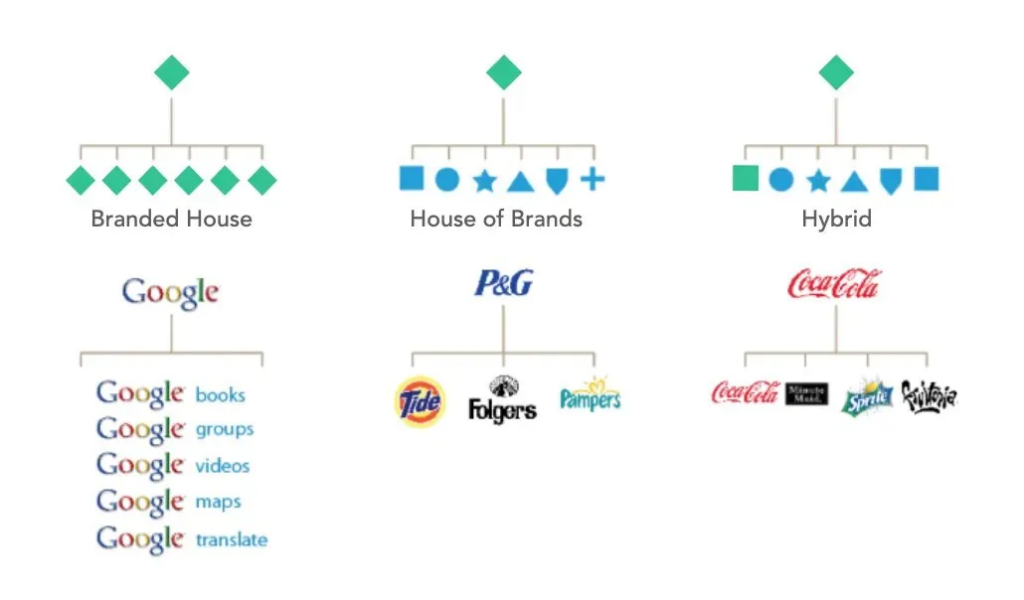
House of Brands: Parent invisible, individual brands carry all equity. Example: P&G.
Branded House: Master brand dominant, sub-brands use master brand name. Example: Virgin (Virgin Atlantic, Virgin Media, Virgin Money).
Endorsed Brand: Individual brands carry their own identity but are visibly backed by the parent. Example: Courtyard by Marriott; Polo by Ralph Lauren. The parent endorsement adds credibility without dominating.
Hybrid / Mixed: Different brands within the portfolio use different architecture approaches. Example: Marriott International uses both a branded house (Marriott Hotels) and endorsement (Courtyard by Marriott) simultaneously.
Choosing the right architecture depends on your business goals, target markets, and brand equity. A clear structure helps streamline marketing efforts and resource allocation.
2. Maintain Consistent Brand Values
While each brand may have its unique identity, maintaining consistent core values across all businesses under the house of brands is vital.
Consistent values build trust and credibility with consumers. Ensure that each brand’s messaging aligns with the overarching company values.
For example, if sustainability is a core value, every brand under your umbrella should reflect this in their practices and communications. This consistency reinforces your commitment to your values and helps build a cohesive brand portfolio.
3. Centralize Administrative Functions
While brand identities should be distinct, administrative functions can be centralized to achieve economies of scale and improve efficiency.
Functions such as HR, finance, IT, and procurement can be shared across businesses, reducing redundancy and operational costs.
Practical Steps:
- Shared Services Model: Implement a shared services model for administrative functions, allowing each brand to focus on its core activities while benefiting from centralized support.
- Standardized Processes: Develop standardized processes and systems for administrative tasks to ensure consistency and efficiency across brands.
- Integrated Technology: Utilize integrated technology solutions to streamline operations and enhance communication between brands and centralized functions.
4. Strategic Brand Positioning

Image Source: Enigma
Strategic brand positioning involves understanding and optimizing the market positions of each brand to avoid cannibalization and maximize market share.
This requires thorough market research, competitive analysis tools, and strategic planning.
Practical Steps:
- Market Segmentation: Segment the market accurately and position each brand to target specific customer segments without overlapping.
- Competitive Analysis: Conduct regular competitive analysis to understand the market landscape and adjust brand positioning strategies accordingly.
- Portfolio Management: Use portfolio management techniques to assess the performance of each brand and make strategic decisions about investment, development, or divestment.
5. Effective Brand Communication Strategies
Tailoring communication strategies to suit the unique identity and target audience of each brand is essential.
However, these strategies should also align with the overarching corporate goals and values.
Practical Steps:
- Customized Marketing Campaigns: Develop customized marketing campaigns for each brand, considering their unique identities and customer bases.
- Consistent Messaging: Ensure that the messaging across all brands is consistent with the company’s core values and strategic objectives.
- Integrated Marketing Communication (IMC): Implement an IMC approach to create a seamless experience for customers, ensuring that all communication channels work together effectively.
6. Leverage Data and Analytics
Data and analytics play a crucial role in managing a house of brands effectively. By leveraging data, companies can gain insights into customer behavior, market trends, and brand performance, enabling informed decision-making.
Practical Steps:
- Customer Insights: Use data analytics to gather insights into customer preferences and behavior for each brand, tailoring marketing and product strategies accordingly.
- Performance Metrics: Establish key performance metrics for each brand and use data analytics to monitor and evaluate performance.
- Predictive Analytics: Utilize predictive analytics to anticipate market trends and customer needs, allowing proactive strategy adjustments.
7. Adaptability and Continuous Improvement
In a dynamic market, adaptability and continuous improvement are essential for sustaining the success of a house of brands. This involves staying abreast of market trends, being responsive to customer feedback, and continuously refining strategies.
Practical Steps:
- Market Monitoring: Regularly monitor market trends and establish competitor monitoring activities to identify opportunities and threats.
- Customer Feedback: Actively seek and act on customer feedback to improve products, services, and customer experiences.
- Continuous Learning: Foster a culture of continuous learning and improvement, encouraging employees to stay updated with industry developments and enhance their skills.
8. Effective Leadership and Governance
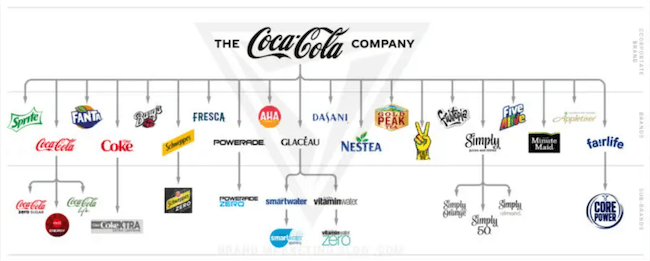
Image Source: Brand Marketing Blog
Strong leadership and governance are critical for the successful management of multiple verticals under the house of brands. Leaders must be adept at balancing the strategic objectives of the company with the individual needs of each brand.
Practical Steps:
- Leadership Development: Invest in leadership development programs to cultivate leaders who can effectively manage multiple brands and drive overall company success.
- Governance Structures: Establish robust governance structures that provide oversight and strategic direction for all brands while allowing flexibility and autonomy.
- Transparent Decision-making: Ensure transparent decision-making processes that consider the perspectives and interests of all brands.
Managing Multiple Brands: Tools and Platforms
Brand Asset Management (BAM/DAM): Tools like Bynder, Frontify, Brandfolder, and Canto allow multi-brand organisations to store, organise, and control access to brand assets — logos, templates, imagery — by brand, team, or region.
Multi-brand social media management: Platforms like Sprout Social, Hootsuite, and Brandwatch support multiple brand accounts from a single dashboard, with role-based permissions that prevent cross-brand publishing errors. Learn more about e-commerce brand management.
Multi-brand marketing platforms: Tools like HubSpot, Salesforce Marketing Cloud, and Klaviyo support multi-brand workspaces where campaigns, lists, and reporting can be segmented by brand while sharing infrastructure.
Multi-brand help desk / support: Zendesk, Freshdesk, and Intercom support multi-brand configurations where a single support team can manage inboxes, templates, and SLAs separately for each brand.
E-commerce multi-brand operations: Shopify Plus supports multi-store management from a single admin; Akeneo and Contentful support multi-brand product content at scale. Learn more about e-commerce analytics here.
SEO and Website Strategy for a House of Brands
Separate domains vs subdomains vs subdirectories: Each brand should generally have its own domain for SEO purposes — shared domains dilute brand identity and create cross-brand SEO conflicts. The exception is endorsed brand architecture, where a subdomain or subdirectory may be appropriate.
Content strategy: Each brand’s website and blog should target its own keyword universe. Sharing content infrastructure (CMS, templates) is fine; sharing content is not.
Technical SEO: Canonical tags, hreflang for multilingual multi-brand operations, and separate Search Console properties per brand are standard requirements.
Operationalizing Your Strategy: Tools, Templates, and Best Practices
Managing a House of Brands requires robust operational systems to maintain efficiency and consistency.
1. Centralized Brand Management Platforms (Digital Asset Management – DAM)
Invest in a Digital Asset Management (DAM) system like Bynder, Frontify, or Acquia DAM. This acts as a single source of truth for all brand assets.
- Benefit: Ensures every team and agency uses the correct logos, fonts, brand guidelines, and latest product imagery for each specific brand. This directly addresses queries about
how to prevent brand misuse by internal teams or partners.
2. Creating Flexible Templates
Yes, you can and should create templates for multiple brands.
- Approach: Develop master templates for social media posts, email campaigns, and presentation decks that use a consistent layout structure but have easily swappable color palettes, fonts, and logo locks for each brand.
- Tools: Canva for Work, Adobe Creative Cloud Libraries, and advanced features in Figma are excellent for this.
3. Managing Social Media for Multiple Brands
- Dedicated Handles: Each brand should typically have its own social media handles to build a unique community.
- Management Tools: Use a platform like Sprout Social, Hootsuite, or Agorapulse that allows you to manage all brand accounts from a single dashboard, schedule content, and monitor brand mentions efficiently.
- Unified Voice, Distinct Tone: While the overarching brand values are consistent (e.g., “customer-obsessed”), the tone for each brand can differ (e.g., one brand is playful and witty, another is professional and authoritative).
4. Content Management System (CMS) Strategy
For managing multiple brand websites or microsites, a headless CMS like Contentful, Strapi, or Storyblok is often the best choice.
- Benefit: It allows you to manage content for all brands in one central backend “head,” while pushing that content to different front-end “bodies” (websites, apps, etc.), ensuring consistency while allowing for unique brand designs.
Advantages and Disadvantages of a House of Brands
Advantages of a House of Brands:
- Market Segmentation: Precisely target different demographics, psychographics, and price points without brand dilution.
- Reduced Risk: A product failure or PR crisis for one brand is contained and does not necessarily tarnish the reputation of the other brands in the portfolio.
- Acquisition Flexibility: Allows a company to acquire strong brands and let them continue operating successfully without a risky rebrand.
- Internal Focus: Teams can develop deep expertise and passion for their specific brand’s market.
Disadvantages of a House of Brands:
- High Operational Cost: Maintaining separate marketing teams, campaigns, and brand identities is expensive and resource-intensive.
- Complex Management: Requires sophisticated systems and leadership to manage the portfolio without causing internal competition or confusion.
- Diluted Master Brand Power: The parent company can become invisible to consumers, missing out on the cumulative brand equity that a Branded House enjoys.
- Cross-Selling Challenges: It’s difficult to leverage the customer base of one brand to promote another if they don’t know the connection.
Conclusion on House of Brands
Managing multiple brands under one roof is a complex but rewarding endeavor. A house of brands model offers significant advantages in terms of brand specialization and market reach but also presents challenges in terms of brand management and resource allocation.
It’s not for every business, but if done right can prove to be a lucrative business.
If you liked this article, visit our insights and blog page.
Frequently Added Questions
What is a house of brands?
A house of brands is a corporate strategy where a parent company owns multiple distinct brands, each with its own identity, positioning, and target audience. The parent company is typically invisible to consumers. Examples: Procter & Gamble, Unilever, Diageo.
What is the difference between a house of brands and a branded house?
In a house of brands, individual brand names dominate and the parent is invisible. In a branded house, the master brand name dominates and sub-products carry that name (e.g. Apple iPhone, Apple Watch, Apple TV). The key difference is where brand equity sits — in individual brands or in the corporate name.
What are the advantages of a house of brands?
Market segmentation without brand conflict, risk isolation (a crisis in one brand doesn’t affect others), ability to acquire established brands and preserve their equity, and the flexibility to target consumers who would never accept the same brand for different product categories.
When should a company use a house of brands strategy?
When target segments are too different for a single brand to credibly serve all of them, when you’ve acquired brands with strong existing equity, or when you operate in categories with very different brand expectations (e.g. luxury vs mass market).
What is a master brand?
A master brand is the dominant parent brand in a branded house architecture — a single brand name that spans all products and services. Example: Google, Virgin, FedEx.
What is an endorsed brand?
An endorsed brand is a brand that carries its own name but is visibly associated with a parent brand for credibility. Example: Courtyard by Marriott, Polo by Ralph Lauren. It sits between a full house of brands and a branded house.