

** TL;DR ** Without an online price monitoring tool, your business is likely leaking profit in several silent ways: you slowly lose margin as competitors subtly lower prices, get dragged into destructive price wars based on impulse rather than data, consistently lose sales to cheaper and more agile competitors, make poor strategic decisions because you’re blind to broader market changes, and waste immense amounts of valuable employee time on manual, outdated price checks. Essentially, you’re ceding control of your pricing strategy and leaving money on the table by operating in the dark, while a dedicated tool provides the real-time intelligence needed to stop the bleed and make informed, profit-protecting decisions.
Running a business means you’re constantly watching the bottom line. You’re cutting costs, optimising operations, and trying to boost sales. But what if I told you there’s a high chance you’re leaking money without even realising it? A slow, silent drain on your profits that’s happening 24/7, right under your nose. Online price monitoring can help you figure it out.
This isn’t about a broken piece of equipment or a costly marketing mistake. This is about something more fundamental, something that changes every single day: your prices and your competitors’ prices. In today’s hyper-competitive online world, your pricing strategy can’t be a “set it and forget it” task. It needs to be dynamic, informed, and sharp.
The Need for an Online Price Monitoring Tool
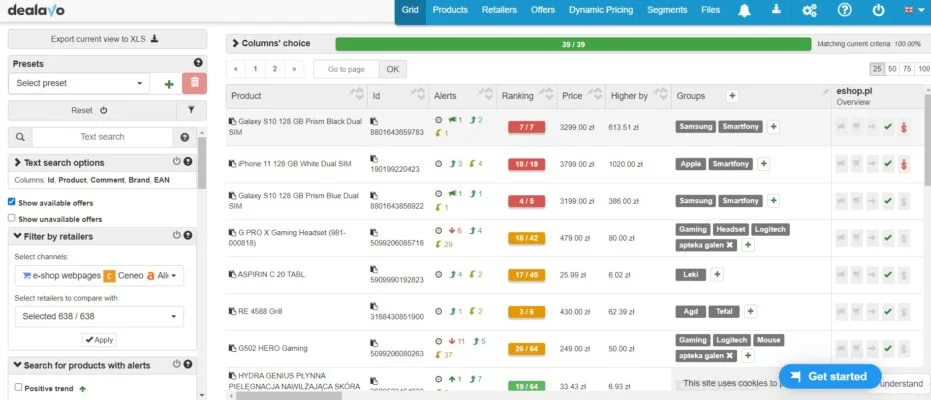
Image Source: Dealavo
A study by McKinsey & Company found that companies that adjust their prices frequently based on market data can boost their margins by 2 to 7 percent, which often translates to a 10 to 20 percent increase in total profits. That is a significant amount of money left on the table for those who are not paying attention.
If you’re not actively using an online price monitoring tool, you’re essentially flying blind. You’re making crucial decisions based on gut feelings or outdated information.
1. The Slow Creep of Margin Erosion

Imagine this. You set a price for your bestselling product with a healthy 30% profit margin. It feels good. Sales are steady. But unbeknownst to you, your main competitor has been slowly, subtly lowering their price for the same item. They dropped it by 2% last month, another 3% this week. You do not notice because you are not constantly checking.
This is margin erosion in action. It is not a sudden price slash that makes headlines. It is a gradual, silent grind that wears away your profitability pixel by pixel. Customers, especially those shopping online, are savvier than ever. A report from Forrester indicates that over 70% of shoppers regularly compare prices online before making a purchase. They will often choose the slightly cheaper option, all else being equal.
So, your sales volume might appear stable, but each individual sale brings in less and less profit. Over a quarter, or a year, that adds up to a staggering amount of lost revenue. You are essentially working harder for less money, and you might not even see the direct cause because the change was so incremental.
Consider a real-world scenario. You sell a speciality coffee maker for $200. Your cost is $140, giving you a $60 profit per unit. A competitor quietly lowers their price to $195. A segment of price-sensitive customers starts buying from them. To win them back, you feel pressured to match the $195 price, slicing your profit to $55. That is a $5 loss on every single sale.
If you sell 500 units a month, that is $2,500 in lost profit monthly, or $30,000 annually, from just one product. Now, imagine this happening across your entire catalogue. The cumulative effect is devastating.
An effective online price monitoring system acts as your early warning system. It alerts you the moment a competitor adjusts their price, allowing you to make a strategic decision rather than unknowingly suffering from a shrinking margin.
Perhaps you decide not to match the price but to emphasise your superior customer service or warranty. Maybe you discover you can afford to lower your price slightly without triggering a price war. The power is back in your hands because you have the information needed to make an intelligent choice, protecting your margins from silent erosion.
Ready to Take the Next Step?
See how our solutions can help you achieve your goals and drive measurable results.
2. Getting Dragged into Losing Price Wars
On the opposite end of the spectrum from slow erosion is the brutal, all-out price war. This often happens when a business finally notices a competitor’s lower price and reacts impulsively, without context.
You see, they are 5% cheaper, so you slash your price by 7% to beat them. They see your new price and drop theirs by 10%. And the race to the bottom begins. This destructive cycle can happen in a matter of hours, leaving both companies with crippled profitability.
This is a losing battle for almost everyone involved. Price wars destroy industry profitability and train customers to only buy on discount. You might win a few sales in the short term, but you are sacrificing your long-term brand value and profit health.
Customers begin to perceive your products as commodities, where the only differentiating factor is price. This makes it incredibly difficult to ever raise prices again without facing significant backlash. The root cause of this reactive strategy is a profound lack of information and context.
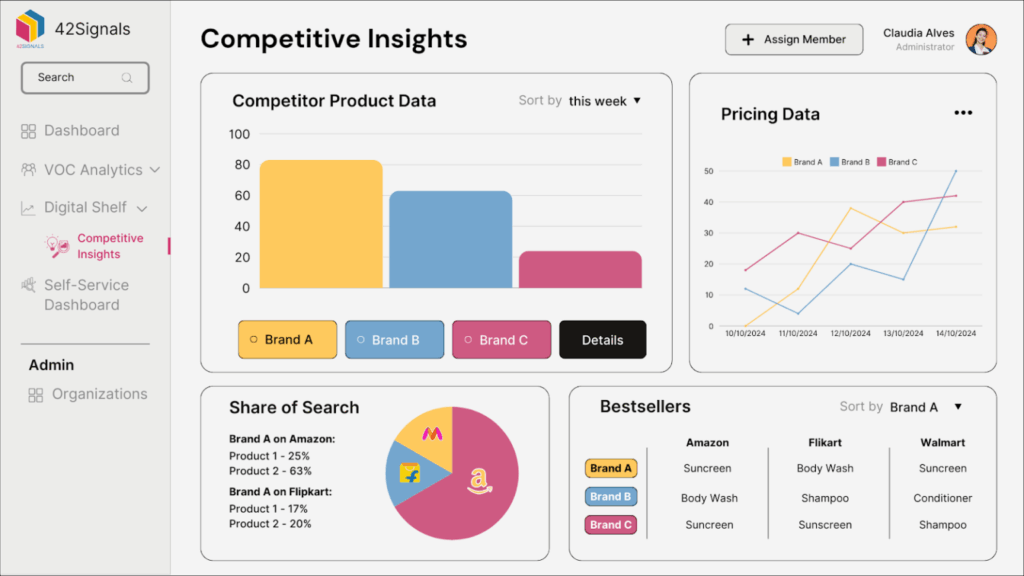
42Signals’ competitor analysis dashboard
Without competitor price tracking, you only see a snapshot, not the whole story. Perhaps that competitor is running a short-term promotion to clear out old inventory. Maybe they have a temporary shipping discount or a special sale for a holiday you forgot about.
By matching their price blindly and aggressively, you escalate a temporary situation into a permanent problem. For example, a major electronics retailer might drop the price of a television for a 48-hour “Flash Sale.” If you automatically match that price without knowing it is short-term, you have now permanently devalued that television in the eyes of customers who saw the lower price, and you have sacrificed your margin for no strategic reason.
With a comprehensive monitoring tool, you have the context that prevents panic-driven decisions. You can see pricing history and understand if a change is a fleeting tactic or a permanent strategic shift.
This intelligence allows you to respond intelligently instead of impulsively. You might choose to wait out a short-term promotion, or you might counter with a value-added bundle instead of a straight price cut. This approach helps you avoid the devastating profit loss associated with all-out price wars and maintains the perceived value of your products and brand.
3. The Heartbreak of Lost Sales to Cheaper Competitors
This is the most direct and palpable form of profit loss. A potential customer visits your website, is genuinely interested in your product, reads the reviews, and adds it to their cart. But then, they decide to do a quick search online, as most modern shoppers do. They find the exact same product for 15% less on a competitor’s site. With a single click, they are gone, and that sale is lost forever. This moment is the digital equivalent of a customer walking out of your physical store, and it happens thousands of times a day to businesses that are not price-competitive.
Every time this scenario plays out, you lose not just the profit from that single sale, but also the customer acquisition cost you invested to get them to your site in the first place. Whether it was through paid advertising, SEO efforts, or social media marketing, you spent real money to attract that visitor.
A study from the Baymard Institute consistently shows that the average online cart abandonment rate is nearly 70%, and “found a better price elsewhere” is consistently a top-tier reason. You cannot blame the customer; they are being rational and smart with their money.
The core problem here is your competitive disadvantage. You are simply not aware that you are no longer the most attractive option on the market. This is especially damaging for considered purchases or products where comparison shopping is easy.
The longer your prices remain uncompetitive, the more sales silently slip through your fingers. This constant trickle of lost sales can be enough to keep a business stagnant or even push it into the red, all while the owner is puzzled by declining revenues despite steady website traffic.
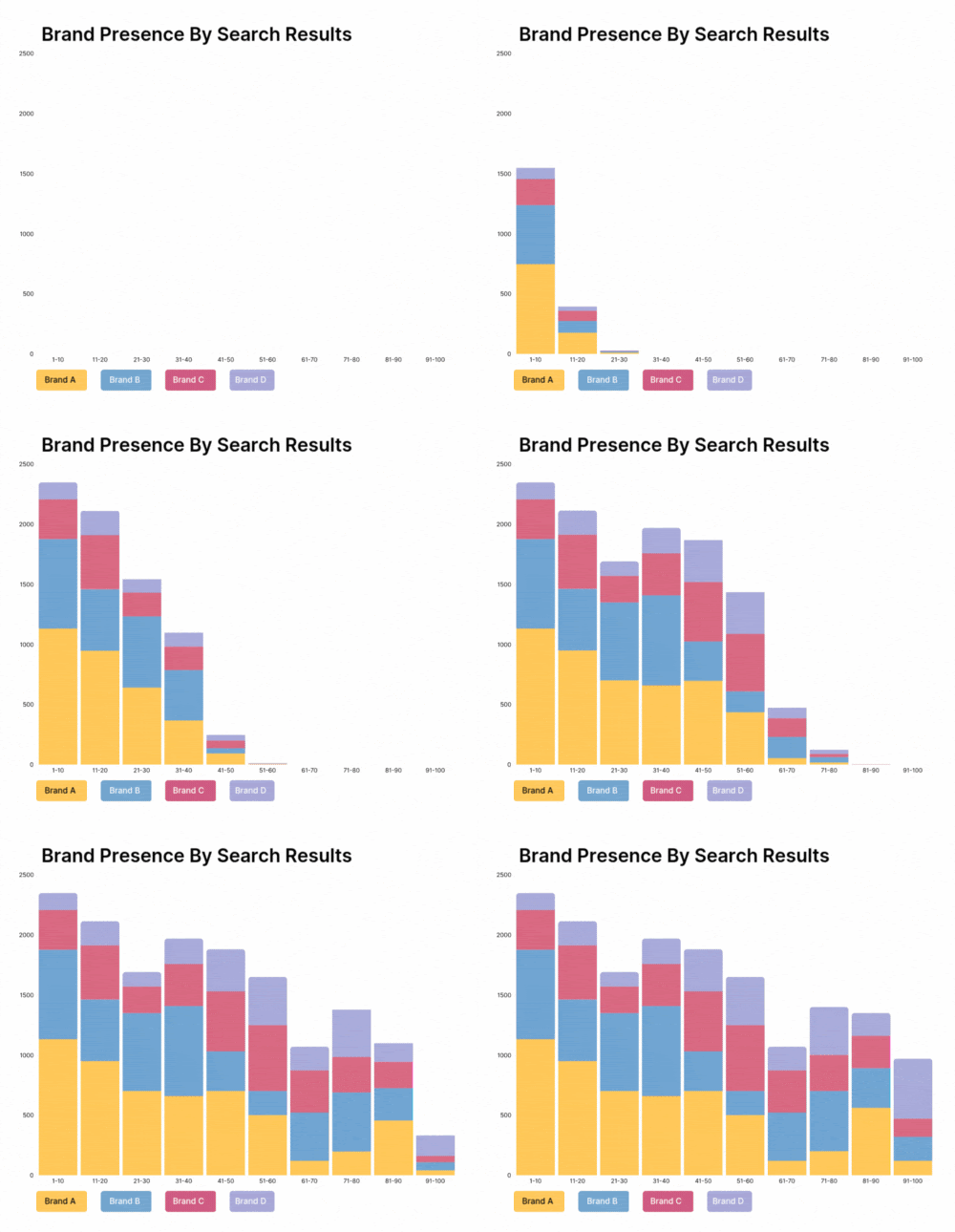
Consistent online price monitoring ensures you remain competitive. It helps you identify when you have become the expensive option, so you can adjust your pricing strategy to win back those sales before the customer even thinks about leaving. This does not always mean having the absolute lowest price. It means knowing what the competitive price range is and positioning yourself within it strategically.
For instance, if you are only 1-2% higher than a major competitor, your brand reputation and customer service might be enough to retain buyers. But if you are 10% higher and unaware, you are almost guaranteed to be losing a significant portion of your potential customers. Monitoring gives you the chance to act, turning potential lost sales into secured revenue.
4. Flying Blind Through Market Changes Without an Online Price Monitoring Tool
The market is a living, breathing entity, not a static snapshot. New trends emerge, seasons change, consumer demand fluctuates, and external economic factors shift. A product that was a hot seller last month might be cooling off now. Without a clear, data-driven view of how the entire market is pricing similar products, you are left guessing based on intuition or lagging indicators like your own declining sales.
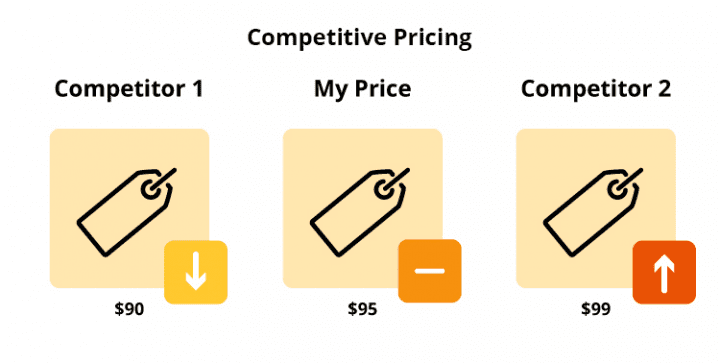
This lack of insight leads to two major, costly errors: pricing too high and killing demand, or pricing too low and leaving massive amounts of money on the table.
For instance, if a new product feature becomes the industry standard, competitors might start including it at no extra cost. If you are not tracking their bundles and offers, you might still be charging a premium for a feature that is now considered basic, making your product seem overpriced and outdated.
This is a direct result of being out of touch with market changes. Similarly, during peak shopping seasons like the holidays, consumer willingness to pay shifts. If you fail to raise prices modestly during high-demand periods, you are essentially giving away profit. Conversely, if you keep summer seasonal items at a premium deep into the fall, you will be stuck with dead inventory.
A robust online price monitoring tool does more than just track the prices of direct competitors. It gives you a panoramic, real-time view of the entire market landscape. You can see how average market prices shift with seasons, new product launches, or changes in raw material costs that affect your entire industry.
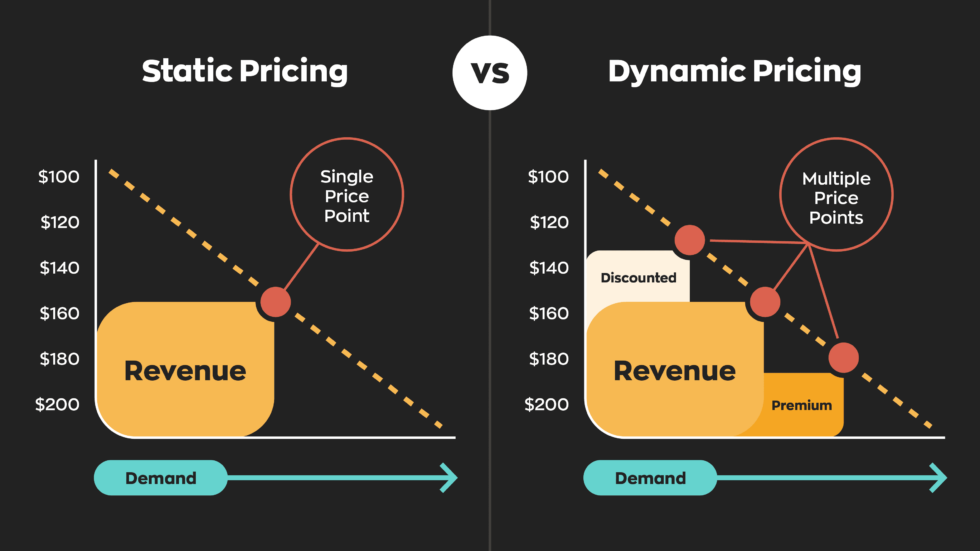
This intelligence is the foundation of dynamic pricing, a strategy where your prices intelligently and automatically reflect real-time market conditions. The airline and hospitality industries have used this for decades, but now, with technology, it is accessible for e-commerce businesses of all sizes.
By understanding these market changes, you can make proactive adjustments. You can confidently raise prices when demand is high and your value proposition is strong, capturing extra margin. You can also be the first to strategically lower prices to clear inventory or capture market share when you see a dip in overall demand, staying ahead of competitors who are still operating on a fixed, outdated schedule. This transforms your pricing from a passive, administrative task into an active, profit-maximising strategy.
Ready to Take the Next Step?
See how our solutions can help you achieve your goals and drive measurable results.
5. Wasting Precious Time and Resources on Manual Checks
Let us ask a simple, operational question: “How much is our top competitor selling this product for right now?” How does your team answer that question today? If the answer involves sending an intern on a daily website scavenger hunt, having a manager spend hours every week manually checking dozens of product pages across multiple sites, or compiling fragmented reports from different team members, you have identified a massive and hidden efficiency problem.
This manual method of competitor price tracking is not just tedious; it is incredibly costly, notoriously inaccurate, and simply unsustainable at scale. The time your highly skilled team spends copying and pasting prices into a spreadsheet is time they are not spending on high-value tasks like developing marketing strategy, improving customer service, forging new partnerships, or analyzing data for other insights.
The labor cost alone of a manual process can be substantial. Furthermore, human-led checks are prone to error. A missed decimal point, a misread number, or a simple missed product page can lead to catastrophic pricing decisions based on faulty data.
Most critically, by the time your team has collected, compiled, and analysed the manual data, it is almost certainly outdated. In the digital world, prices can change multiple times a day. A competitor might use an AI tool to adjust their prices at 2:00 PM, while your weekly report is not generated until Friday morning.
This manual process creates a permanent competitive disadvantage because you are always operating with yesterday’s information. You are constantly behind, always reacting, and never leading.
Automating this entire process with a dedicated online price monitoring tool is a triple win.
- First, it frees up your team’s valuable time, allowing them to focus on strategic work that actually grows the business.
- Second, it guarantees you have accurate, real-time data, eliminating the risk of human error.
- Third, and most importantly, it provides a continuous flow of intelligence, ensuring you are never caught off guard.
This automation turns the time-consuming, error-prone chore of price checking into a seamless, reliable strategic advantage, giving you back your most finite resource: time.
From Profit Loss to Pricing Power
The common thread running through all five points is a fundamental lack of control and visibility. Without a systematic approach to online price monitoring, you are not in the driver’s seat of your own pricing strategy. You are merely reacting, often too late and without crucial context, to moves made by others in your market. This reactive state leads directly to margin erosion, pointless price wars, the quiet heartbreak of lost sales, an inability to adapt to market changes, and a significant waste of internal resources.
The good news is that this is a solvable problem. Embracing competitor price tracking and the principles of dynamic pricing is not about engaging in a ruthless, mindless race to the bottom. It is about gaining intelligence and taking back control. It is about understanding your unique position in the market, anticipating shifts before they happen, and making confident, data-driven decisions that protect and grow your profits. It is the difference between guessing and knowing.
The transition from manual frustration to automated insight represents a fundamental shift in how you run your business. You stop being a passive observer of the market and become an active, informed participant. You can defend your margins, avoid destructive pricing conflicts, win more sales, and allocate your team’s time to where it truly matters. Stop letting silent leaks drain your business vitality.
The first step to fixing a problem is knowing it exists. Now that you understand the true cost of operating in the dark, the power to change your pricing strategy, secure your bottom line, and build a more resilient, profitable business is firmly in your hands.
Try 42Signals to understand how your products fare online, when competitors launch discounts and promotions, and how to stay ahead of it all.
Frequently Asked Questions
What is a price monitoring system?
A price monitoring system is a tool or process used to track product prices in real time across multiple online channels, including marketplaces, competitor websites, and retail platforms.
Businesses use these systems to:
Keep track of competitor pricing strategies.
Detect price changes instantly.
Monitor compliance with pricing policies such as MAP (Minimum Advertised Price).
Optimize their own pricing to stay competitive.
A price monitoring system is often powered by web scraping, APIs, or data feeds, giving brands a clear view of market dynamics.
2. Why is price monitoring important?
Price monitoring is essential because pricing directly impacts both sales volume and profitability. Key benefits include:
Maintaining competitiveness – ensures your pricing is in line with or better than competitors.
Boosting conversions – helps identify the price points that attract buyers.
Protecting margins – prevents unnecessary discounting and price wars.
Ensuring compliance – identifies MAP violations by unauthorised resellers.
Enabling dynamic pricing – allows businesses to adjust prices automatically based on market trends.
For retailers and brands, it’s a critical part of digital shelf strategy and revenue optimisation.
3. What is the price monitoring unit?
The price monitoring unit usually refers to the smallest measurable component of a price tracking system. This can vary depending on the business, but typically includes:
Product SKU or ASIN level tracking (specific product IDs).
Geographic or channel-specific tracking (e.g., country, marketplace, or retailer).
Price point over time (daily or hourly snapshots).
Competitor source or seller data.
Essentially, it’s the data granularity level at which the system records and analyzes prices.
4. How to monitor the price of something?
Monitoring prices can be done in a few ways, depending on scale and precision:
Manual Monitoring – Visiting competitor sites and noting price changes. Feasible for a small number of products.
Using Price Tracking Tools – Platforms like 42Signals, CamelCamelCamel, or Keepa allow automated price tracking with alerts.
Web Scraping & APIs – Automated scripts collect real-time price data from multiple sources for deeper analysis.
Marketplace Integrations – Many e-commerce platforms offer built-in price tracking or third-party integrations.
For businesses selling online, using a dedicated price monitoring solution like 42Signals gives a real-time, structured view of market pricing, enabling faster reactions and more strategic pricing decisions.