
** TL;DR ** Review analytics is essential for moving beyond simple star ratings to understand the true “Voice of Customer” (VoC). By utilizing tools like sentiment analysis and feedback mining, businesses can systematically process large volumes of customer reviews to identify subtle quality gaps (e.g., usability issues, manufacturing flaws) and evaluate the perceived value of their pricing. Critically, this data reveals both hidden weaknesses and unexpected strengths, informing product development by quantifying unmet needs (“I wish it could…”) and pinpointing the true Unique Selling Proposition (USP), ultimately driving a data-informed cycle of continuous product improvement and market strategy refinement.
Is your current demand forecasting methodology struggling to keep pace with the volatile nature of the digital marketplace? Relying exclusively on historical sales data is an inherently reactive strategy that hinders proactive inventory and marketing decisions. To gain a true competitive advantage, businesses must transition from analyzing past performance to anticipating future consumer intent through dynamic, real-time data streams.
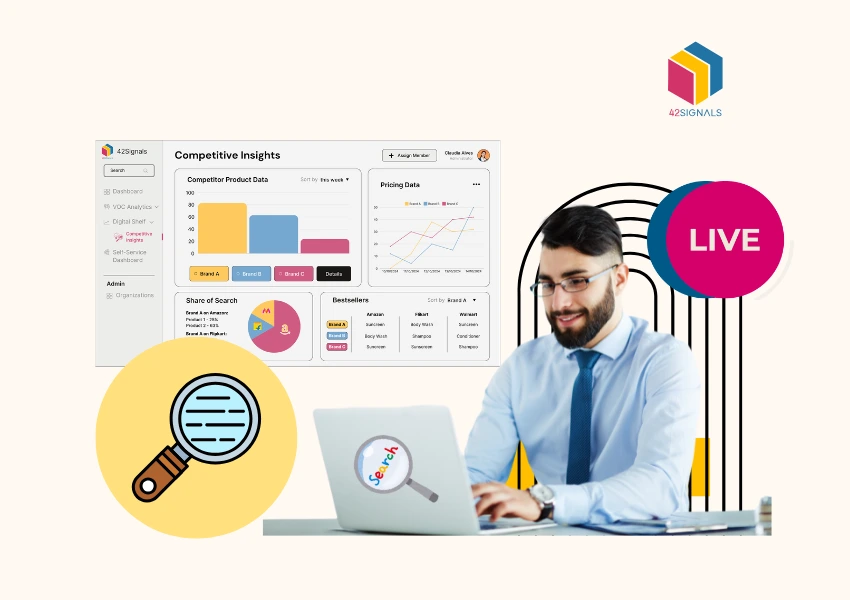
Let’s look at how the integration of live search data and key ecommerce trends derived from marketplace intelligence can significantly enhance demand forecasting accuracy. We will explore how these leading indicators—including search volume, product listing characteristics, and nuanced customer feedback—provide robust predictive insights from data that legacy models fail to capture. The goal is to equip your organization to shift from a reactive operational stance to a highly proactive, data-driven strategy.
The Limitations of Conventional Demand Forecasting
For decades, demand forecasting has been grounded in methodologies that prioritize time-series analysis of past sales, seasonal fluctuations, and promotional effects. While these techniques establish a foundational baseline, their fundamental weakness is their backward-looking orientation.
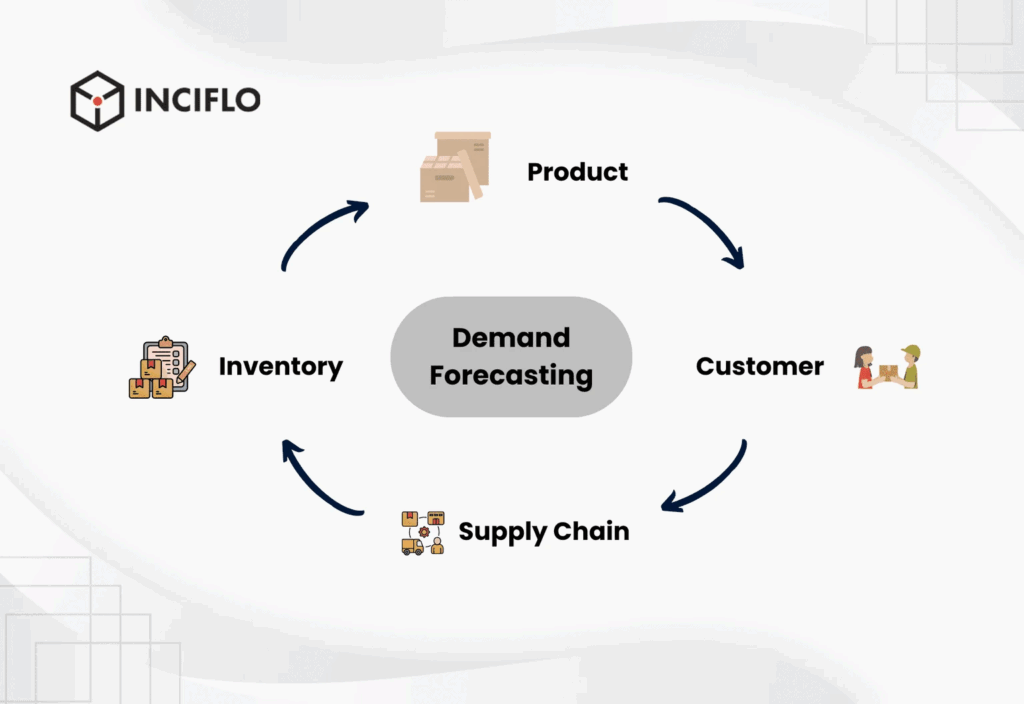
Image Source: INCIFLO
Consider the impact of unforeseen external factors: a sudden geopolitical event, the emergence of a viral product trend, or a significant competitive launch. Historical data cannot register these disruptive shifts until tangible sales volumes have already occurred. By the time a traditional system flags a sales spike, the inventory stockout may have already materialized, resulting in significant missed revenue opportunities and damage to customer satisfaction. This inherent lag undermines the efficacy of traditional demand forecasting.
To cultivate a resilient and agile e-commerce operation, it is essential to incorporate leading indicators—data that signals demand prior to the transaction. Live search trend data serves as the pivotal new frontier for sophisticated demand forecasting.
Leveraging Live Search Trend Data for Enhanced E-commerce Prediction
Live search trend data represents the aggregate intent of millions of consumers. Every search query functions as a granular statement of future interest, outlining what consumers intend to purchase, research, or compare. Integrating this continuous, real-time data flow into your demand forecasting models provides immediate and powerful predictive insights from data.
Capturing Real-Time Customer Intent Signals
When a consumer enters a query such as “premium ergonomic office chair reviews 2026” into a search engine or marketplace platform, they are communicating high purchase intent. Monitoring the volume and velocity of these specific queries acts as an early warning system for market shifts.
For instance, if searches for “high-efficiency home air purifier” abruptly surge by 40% outside of the traditional allergy season, this constitutes a strong signal that your existing demand forecasting for that product category requires immediate, upward revision.
This mechanism fundamentally differs from simply tracking sales. Search data enables the detection of burgeoning ecommerce trends in their nascent stages, providing critical lead time—often spanning weeks or months—to optimize inventory levels, recalibrate marketing expenditure, and refine sourcing strategies.
Detecting Demand Surges Through Integrated Search, Listing, and Review Analysis
Truly advanced demand forecasting synthesizes diverse marketplace signals to construct a comprehensive predictive view. The most valuable indicators originate from three interconnected data types: search queries, active product listings, and recent customer reviews. Analyzing these components concurrently enables the effective detection of sudden spikes in demand.
1. Deciphering Consumer Intent from Live Search Queries
The cornerstone of this methodology is the rigorous analysis of consumer language. Tracking marketplace data related to search terms specific to your product portfolio allows for the early identification of escalating demand.
- Velocity and Volume Metrics: A sharp, unexpected increase in the volume of searches for a highly specific, long-tail keyword (e.g., “biodegradable dog waste bags unscented”) signifies a micro-trend gaining traction. While traditional demand forecasting may overlook this niche item, the search data provides an unmistakable signal. Analyzing the velocity of this change is crucial for distinguishing between temporary spikes and sustained market trends.
- Geographic Demand Mapping: Advanced search trend tools can pinpoint the geographical source of the surging demand. If searches for “winterized camping tents” unexpectedly spike in an atypical region, it may signal an anomalous weather event or a localized marketing success, prompting proactive inventory redistribution.
2. Utilizing Search Listings Data as a Leading Indicator
Beyond analyzing user input, it is vital to assess marketplace prioritization. The search listings data available on major e-commerce platforms is a strong indicator of prevailing consumer preference and platform optimization efforts.
- First Page Product Listings Analysis: What defining characteristics are present in the product listings on the first page of search results across platforms like Amazon or Etsy for your category? If competing products consistently ranking highest feature a specific material (e.g., recycled polymers) or a key functional upgrade (e.g., integrated smart connectivity), this indicates that these attributes are currently driving consumer preference and conversion rates. This data yields predictive insights from data regarding in-demand product features, directly influencing your procurement and product development priorities, thereby informing your demand forecasting.
- Monitoring New Product Entrants: A rapid proliferation of new, highly optimized listings within a product category can signal either a significant market opportunity or a surge in competitive activity. Continuous monitoring of these changes is necessary to gauge the speed of market saturation and identify remaining growth opportunities.
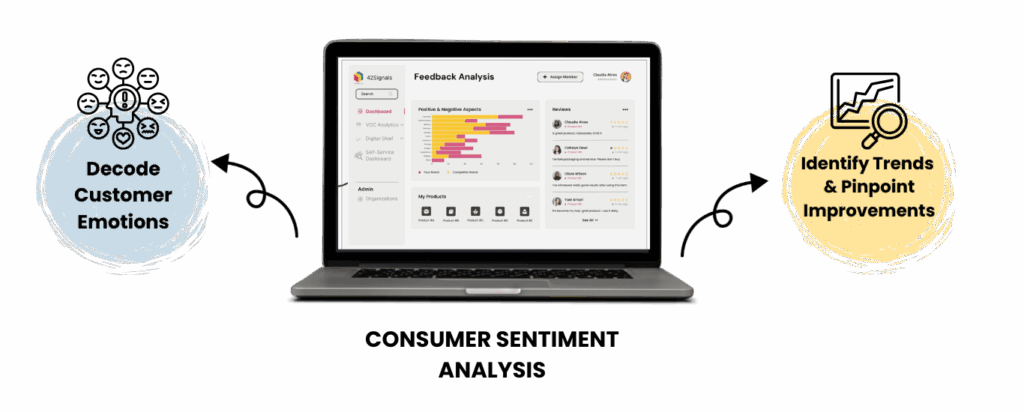
3. Extracting Predictive Insights from Customer Reviews
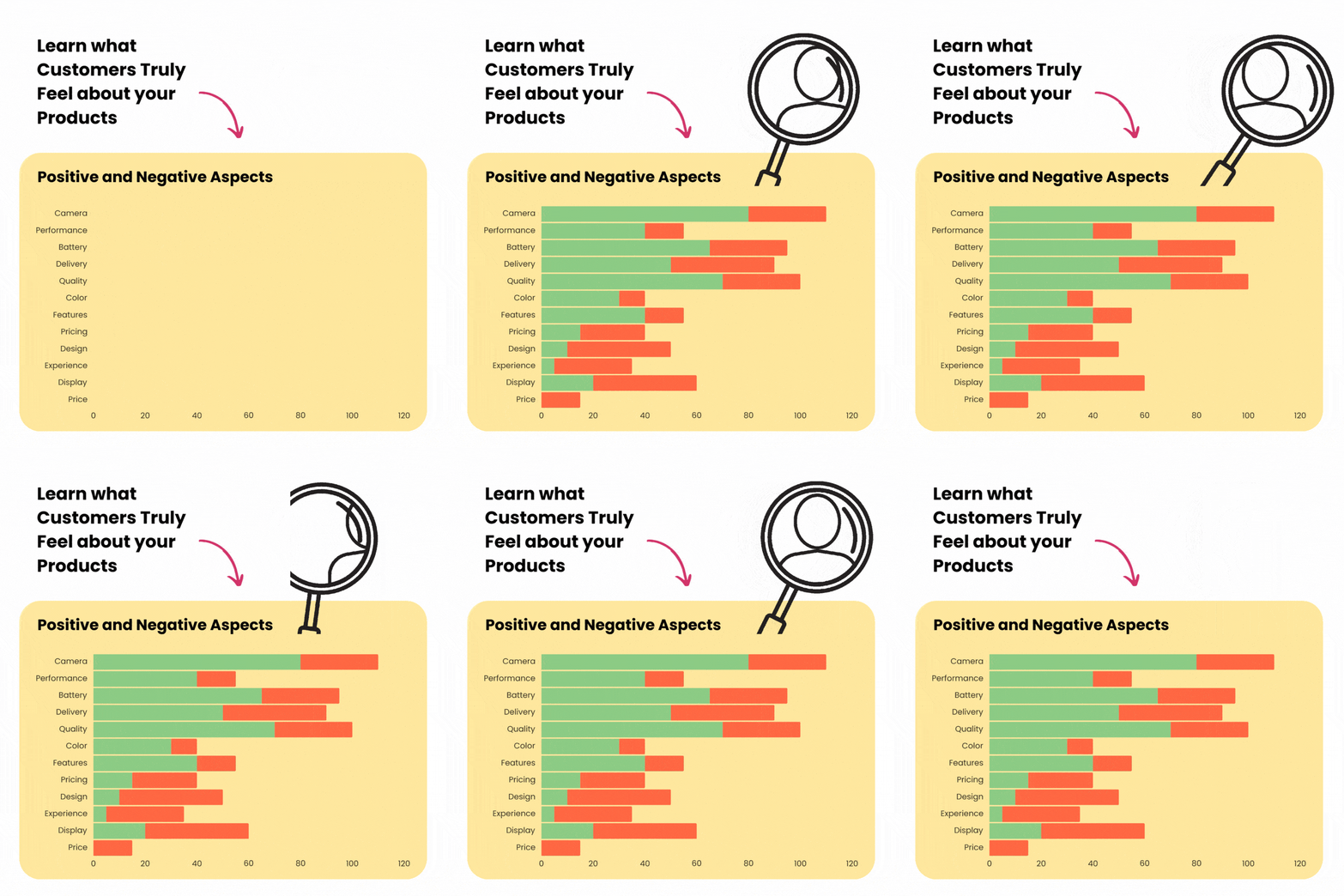
Customer reviews are often treated as static feedback on past performance, yet they represent a rich source of marketplace signals for future demand forecasting. They provide essential qualitative context explaining the drivers of quantitative sales figures.
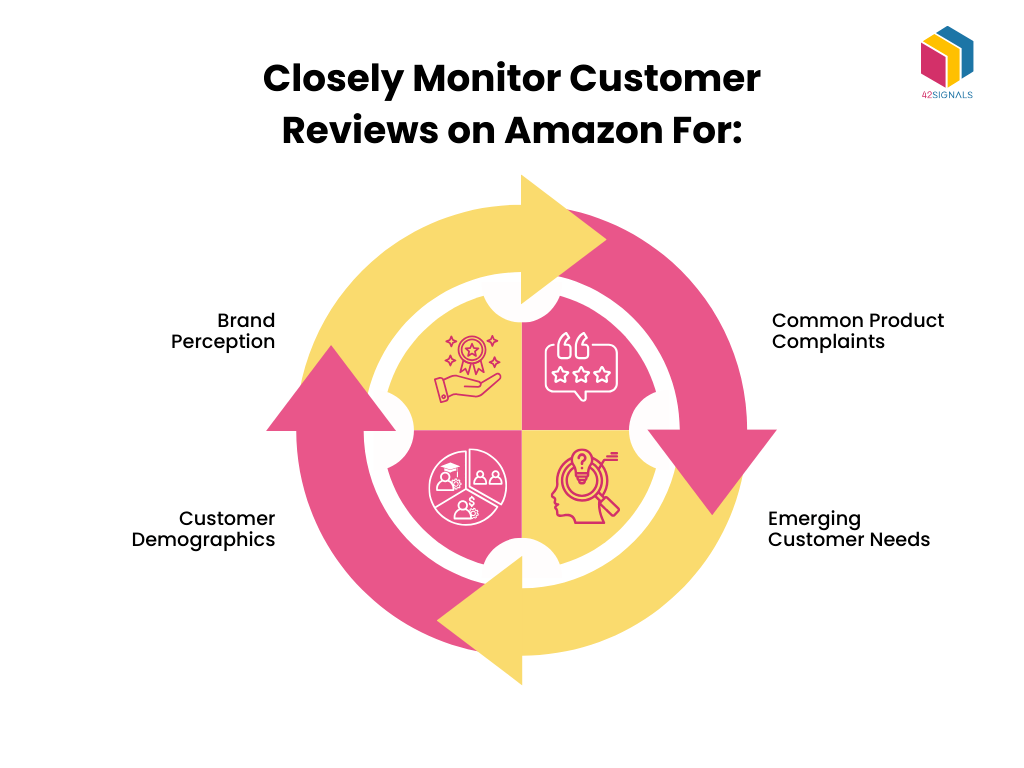
- Identifying Emerging Feature Requirements: Systematic analysis of thematic trends in customer reviews across various competitor listings is critical. If numerous reviewers mention the absence of a particular functionality (e.g., “The handheld steamer needs a larger water reservoir”), this is a powerful marketplace signal that this feature will soon become a significant demand driver. This insight allows you to prioritize inventory of products that already incorporate the desired attribute.
- Tracking Sentiment Velocity: A rapid change in consumer sentiment, particularly concerning a new product generation or feature update, can signal both market opportunity and operational risk. For example, if recent reviews for a competitor’s industrial-grade vacuum cleaner begin to praise its “exceptionally quiet operation,” it provides a crucial predictive insight from data that the market is beginning to value noise reduction, influencing your own product specifications and inventory strategy.
Operationalizing Data Integration: From Insight to Actionable Inventory Management
The challenge lies not merely in collecting diverse marketplace data, but in seamlessly embedding it into the existing demand forecasting infrastructure. The primary objective is to translate trends into strategic actions with greater speed than competitors.
Step 1: Comprehensive Data Aggregation and Normalization
The initial operational hurdle is unifying disparate data sources: public search trends, proprietary search listings data, and aggregated customer reviews. These varied streams must be meticulously cleaned and normalized to ensure compatibility with internal sales and inventory data.
This process guarantees that a detected surge in marketplace search volume can be accurately weighted against changes in internal sales data. This necessitates the implementation of robust data pipelines designed to manage high-velocity, unstructured data.
Step 2: Implementation of Advanced Demand Forecasting Models
Once the data integrity is established, the focus shifts beyond rudimentary linear models. Modern demand forecasting requires sophisticated machine learning models capable of effectively leveraging both leading indicators (search intent, market trends) and lagging indicators (historical sales).
- Dynamic Weighted Averages: Assign higher weighting to the most recent marketplace signals, especially for product lines characterized by volatility or fast fashion cycles. A rapid increase in searches for “rechargeable tactical flashlight” within the last 48 hours must carry greater predictive weight than sales data from the preceding quarter.
- Machine Learning (ML) Applications: Employ models such as Random Forests or Long Short-Term Memory (LSTM) networks. LSTMs are particularly adept at recognizing complex patterns in time-series data and can be trained to identify the distinct correlation between a specific volume increase in search and a subsequent sales uplift, thereby delivering highly sophisticated predictive insights from data.
For instance, a report by McKinsey & Company indicated that organizations applying advanced analytics, including ML utilizing external data sources, achieved forecast accuracy improvements ranging from 20% to 50% in certain categories, directly correlating to substantial operational cost savings and revenue gains.
Step 3: Automated Inventory and Marketing Triggers

The ultimate benefit of this integration is the automation of responses. The system should not only report a revised forecast; it must automatically initiate necessary business actions.
- Dynamic Safety Stock Adjustment: If the search listings data and live query trends indicate a sustained upward trajectory in product demand, the system should automatically elevate the product’s safety stock level, triggering a procurement order significantly sooner than the standard lead time calculation would permit.
- Targeted Marketing Spend Redistribution: Demand spikes identified in specific geographical locations or for particular long-tail keywords (based on meticulous analysis of product listings on the first page) can automatically reallocate PPC budget to capture the immediate surge in consumer intent. This strategic allocation maximizes return on advertising investment by targeting consumers at their highest point of purchase readiness.
Strategic Illustration: The Sustained Growth of Sustainable Products
Consider an e-commerce firm specializing in kitchenware that traditionally relied on seasonal sales, with expected peaks during the holiday season. Their conventional demand forecasting projected a modest 5% year-over-year growth during off-peak months.
However, their newly integrated system began detecting compelling marketplace signals beginning in late spring:
- Search Trend Data: Searches for “eco-friendly reusable food wraps” and “bamboo cutting boards” exhibited a 65% year-over-year increase, dramatically outpacing generic searches for “kitchen accessories.”
- Review Analysis: An increasing frequency of customer reviews across existing listings mentioned phrases such as “appreciate the zero-waste design” and “seeking more sustainable options for storage.”
- Search Listings Data: The product listings on the first page for numerous kitchen categories prominently featured “sustainable” and “plastic-free” designations and language.
This convergence of real-time data streams unequivocally indicated a substantial, enduring shift in ecommerce trend toward sustainability, transcending mere seasonality. The company strategically revised its demand forecasting for all sustainable SKUs, increasing procurement orders by 40% immediately.
Furthermore, they proactively optimized product descriptions and marketing campaigns to highlight the sustainable attributes of their current stock, successfully capturing the emerging demand surge and realizing a 35% revenue increase in that specific category before competitors could effectively react. This success was entirely contingent on synthesizing predictive insights from data from multiple live streams.
Achieving Predictive Excellence in E-commerce
The pathway to competitive dominance in contemporary e-commerce is predicated on the ability to predict market dynamics, not merely retrospectively account for them. By systematically integrating live search trend data, search listings data, and qualitative customer reviews into a unified analysis of marketplace signals, organizations can establish a significantly more accurate and adaptive demand forecasting framework.
This critical evolution from purely historical analysis to a predictive, forward-looking model yields tangible business benefits:
- Optimized Inventory Efficiency: Minimizing capital consumption on obsolete or slow-moving inventory while substantially reducing revenue losses associated with stockouts.
- Superior Customer Experience: Ensuring product availability aligns precisely with consumer need, cultivating higher long-term customer loyalty.
- Strategic Marketing Investment: Efficient allocation of budget, targeting areas of immediate and emerging demand capture.
The integration of these powerful ecommerce trends and predictive insights from data is no longer discretionary—it is a fundamental operational necessity for sustained growth in the dynamic digital environment.
Organizations should prioritize integrating these live data streams to strategically control their e-commerce trajectory, thereby transforming demand forecasting from an imprecise art into a sophisticated, science-based process driven by real-time consumer intent.
If you’re wondering where and how to get started, you’ve come to the right place. Try 42Signals to see our entire suite in action for your business.
Frequently Asked Questions
What is Demand Forecasting?
Demand forecasting is the process of estimating the future sales, revenue, or customer demand for a product or service over a specific period. It is a critical operational and strategic activity that utilizes historical data, market analysis, external factors (like economic trends or competitor activity), and now, increasingly, real-time leading indicators (like search intent and social signals) to make informed predictions. The core objective is to ensure optimal resource allocation, inventory management, production planning, and budgeting to meet anticipated consumer needs effectively and efficiently.
What are the Five Types of Demand Forecasting?
Demand forecasting can be categorized based on the time frame, level of aggregation, or the nature of the data being analyzed:
| Type of Demand Forecasting | Definition | Time Horizon |
|---|---|---|
| 1. Short-Term Forecasting | Predicts demand for the immediate future, typically for tactical decisions like inventory planning and scheduling. | Up to 12 months |
| 2. Long-Term Forecasting | Predicts demand for an extended future period, crucial for strategic decisions like facility expansion, capital investment, and new product development. | Over 1 year, often 2–5 years |
| 3. Macro-Level Forecasting | Focuses on predicting demand for an entire economy, industry, or sector, used by governments and large corporations for broad strategic planning. | Varies |
| 4. Micro-Level Forecasting | Focuses on predicting demand for a specific firm, product line, or geographical segment, essential for day-to-day business operations. | Varies |
| 5. Active/Passive Forecasting | Passive relies solely on historical sales data assuming no major changes. Active incorporates anticipated future changes due to marketing efforts, competitive actions, or external events. | Varies |
What are the 7 Steps in a Forecasting System?
While the precise number and names of the steps can vary, a robust forecasting system generally follows these seven sequential stages to ensure accuracy and actionable insights:
- Define the Scope and Purpose: Clearly articulate what needs to be forecasted (e.g., total sales, SKU-level demand, regional demand) and the time horizon required (short or long-term). This determines the appropriate methodology.
- Select the Forecasting Technique: Choose the most suitable methodology—qualitative (e.g., expert opinion, market surveys) or quantitative (e.g., time-series analysis, machine learning)—based on data availability, required accuracy, and time horizon.
- Gather and Prepare Data: Collect all necessary historical data (sales, promotions, pricing) and external leading indicators (search trends, marketplace signals). Clean, normalize, and validate the data to eliminate errors and inconsistencies.
- Analyze Data and Develop the Forecast: Apply the chosen model to the prepared data. This involves identifying patterns, trends, seasonality, and correlations between variables to generate an initial prediction.
- Review and Refine the Forecast (Model Validation): Test the forecast model’s accuracy against actual past results (back-testing). Adjust parameters and assumptions based on validation results to improve reliability.
- Disseminate the Forecast: Present the final forecast to relevant stakeholders (e.g., inventory management, production, marketing) in a clear, actionable format. Include confidence intervals or probability assessments.
- Monitor and Evaluate Forecast Performance: Continuously track the actual demand against the forecasted figures. Calculate forecast error metrics (e.g., MAPE, Bias) and use this feedback to improve the model in the next cycle.
What are the Five Basic Steps of Demand Forecasting?
A simplified, high-level view of the process, often used in operational contexts, boils down to five core steps:
- Specify the Objective: Define the specific question the forecast must answer (e.g., “How many units of Product X will we sell in the South region next quarter?”).
- Determine the Time Period: Establish the duration of the forecast (e.g., weekly, monthly, annually).
- Select a Method and Collect Data: Choose the forecasting model (e.g., moving average, regression, qualitative assessment) and acquire the required historical and real-time data inputs.
- Estimate the Demand: Execute the selected method using the collected data to produce the quantitative demand prediction.
- Validate and Implement: Check the prediction against real-world judgment and internal benchmarks. Once validated, integrate the forecast into operational planning (e.g., setting inventory levels).