
Today, people expect immediate access to services, whether it’s hailing a ride, streaming entertainment, or even ordering food. This growing demand for instant gratification has led to the birth of a new retail model that is revolutionizing the way we shop—Quick Commerce or Q-Commerce.
To understand how to make it work, let’s explore what Q-Commerce is, its rise, and how dark stores and digital shelf analytics are driving its growth.
What is Q-Commerce?
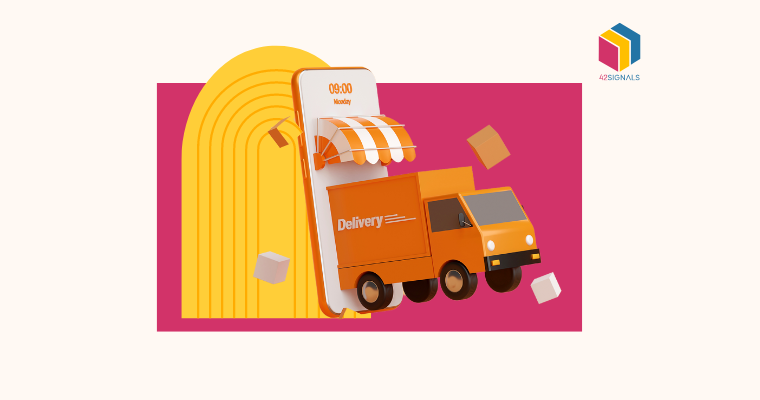
Quick Commerce, often abbreviated as Q-Commerce, represents a natural progression from traditional e-commerce.

Image Source: Delivery Hero
While e-commerce focuses on the convenience of shopping from the comfort of your home with delivery times that might range from a few days to a week, Q-Commerce takes this convenience to the next level by offering rapid, on-demand delivery, often within 10 to 30 minutes.
At its core, Q-Commerce is built on speed and immediacy. It caters to consumers who need products—such as groceries, personal care items, or household essentials—delivered almost instantaneously.
The growing demand for immediate access to everyday products is reshaping the retail landscape, with companies developing logistics and technological solutions to fulfill these urgent needs.
Q-Commerce vs. E-commerce: A Clear Definition and Distinction
Quick Commerce (Q-Commerce) is a hyper-specialized segment of e-commerce focused on delivering a curated range of essential goods to consumers in under 30 minutes, often in as little as 10-15 minutes.
| Feature | Traditional E-commerce | Quick Commerce (Q-Commerce) |
|---|---|---|
| Primary Goal | Convenience & Selection | Instant Gratification & Urgency |
| Delivery Promise | 1-5 days | 10-30 minutes |
| Product Range | Vast (millions of SKUs) | Hyper-curated (1,000-3,000 high-demand SKUs) |
| Fulfillment Model | Large, centralized warehouses | Network of micro-fulfillment centers (Dark Stores) |
| Typical Order | Planned purchase | Immediate, unplanned need (e.g., missing ingredient, emergency snack) |
| The core innovation isn’t the app—it’s the dense network of dark stores that make the speed promise physically possible. |
How Quick Commerce is Taking Over the Retail Industry?
Several factors are driving the rise of quick commerce, and at the heart of it is the shift in consumer expectations. Today’s consumers not only expect convenience but also speed, and Q-Commerce has positioned itself perfectly to meet this demand.
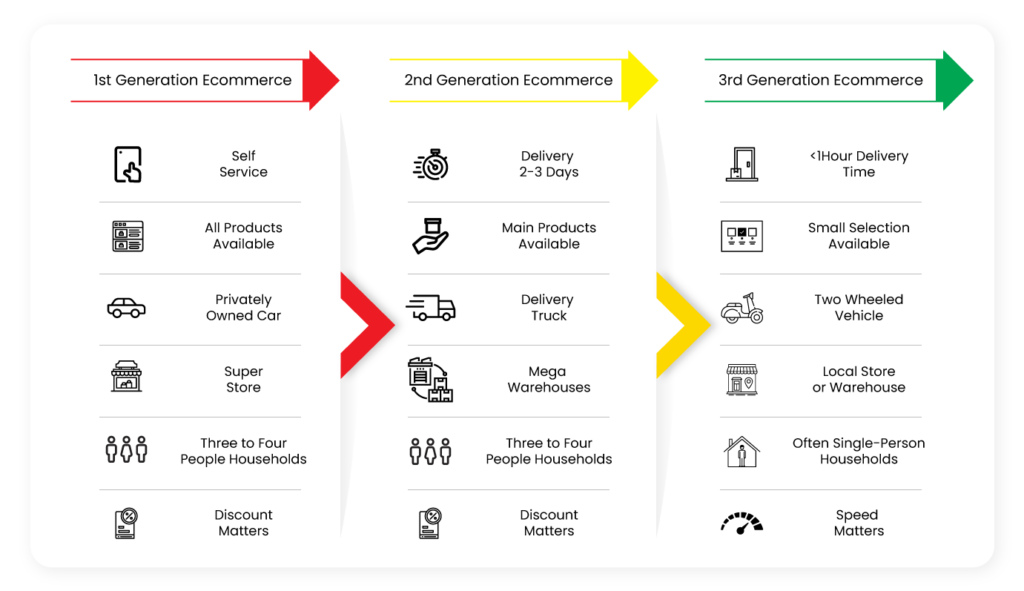
Image Source: Codilar
Whether it’s urban professionals too busy to visit a store, parents juggling family responsibilities, or anyone else in need of last-minute purchases, the promise of ultra-fast delivery is extremely appealing.
This shift has been further accelerated by the COVID-19 pandemic, which made doorstep delivery more than a convenience—it became a necessity.
With many people avoiding crowded stores, Q-Commerce offered a safe, efficient alternative. Startups and established retailers alike recognized this trend and began investing heavily in the infrastructure required to make quick commerce a reality.
The Dark Store Engine: Anatomy of a Quick Commerce Hub
A dark store in quick commerce is a micro-warehouse optimized for speed, not customer experience. Here’s what’s inside:
- Location: Nestled in dense urban residential areas, not commercial strips. Rent is prioritized for proximity over foot traffic.
- Size & Layout: Typically 1,000-3,000 sq ft. Layout is designed for picker efficiency, not aesthetics. Aisles are narrow, fast-moving products are placed near packing stations, and the entire flow is mapped digitally.
- Inventory: Stock is limited to ~2,000 SKUs of high-velocity, low-size goods: staples (milk, eggs), snacks, beverages, OTC pharmacy, and basic home care. Data from quick commerce analytics dictates 80% of the assortment.
- Technology Stack: This is the brain. It includes:
- Warehouse Management System (WMS): Guides pickers via digital pick-lists on handheld devices for optimal routes.
- Real-time Inventory Management: Syncs stock levels with the app every minute to prevent selling unavailable items.
- Order Management System (OMS): Batches nearby orders to be picked and delivered together, maximizing rider efficiency.
- Staff: A small team of “pickers” and a store manager. Their KPIs are pick accuracy and speed to dispatch.
How Does Quick Commerce Work?
At first glance, quick commerce might seem like a logistical miracle—how can a business deliver products within minutes of an order being placed? The answer lies in a combination of cutting-edge technology, well-designed operational models, and a new type of retail space known as dark stores.
Dark stores are one of the foundational pillars of quick commerce. These are retail outlets that are not open to the public but are set up solely to fulfill online orders.

Unlike traditional stores that must accommodate both in-person shoppers and online order processing, dark stores are optimized exclusively for picking, packing, and dispatching items as quickly as possible.
Their locations are carefully chosen, often in densely populated urban areas, to minimize delivery times.
These stores are usually stocked with a smaller, more curated inventory compared to large supermarkets.
The focus is on high-demand items that consumers are likely to need on short notice, such as groceries, toiletries, and over-the-counter medications.
Workers in these dark stores use digital tools, including digital shelf analytics, to keep track of inventory in real-time and ensure that the most popular products are always available.
Digital shelf analytics also plays a crucial role in predicting demand patterns. These tools analyze consumer data to determine which products are most likely to be ordered at any given time and location.

This helps companies stock their dark stores efficiently and minimize out-of-stock situations, ultimately ensuring faster order fulfillment.
What Is The Role of Dark Stores in Q-Commerce?
Dark stores are the hidden engines of Q-Commerce, and their strategic placement in cities is critical to meeting the delivery promise.
Because these stores are exclusively dedicated to processing online orders, they eliminate the delays associated with traditional brick-and-mortar stores, where customers and staff share the same space. With no need to cater to foot traffic, dark stores can optimize every aspect of their operations, from product layout to staffing.
The size of these stores varies depending on the population density and consumer demand in their service area.
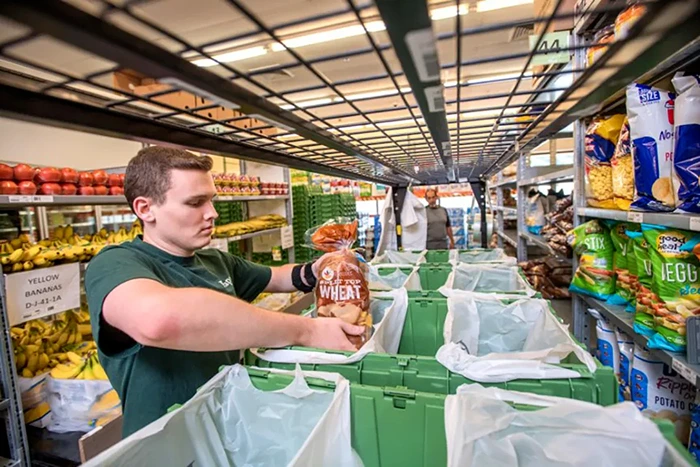
Image Source: CNN
Some are as small as a few thousand square feet, while others resemble large warehouses. Regardless of size, their primary function is to ensure that orders can be packed and dispatched within minutes.
The rise of dark stores has also led to advancements in automation. Some stores are experimenting with robots and other automated systems to further speed up the picking process.
The integration of technology not only enhances operational efficiency but also reduces human error, which can be costly in an industry where speed and accuracy are paramount.
The Economic Equation: How the Dark Store Model (Attempts) to Work
The dark store model is a high-cost, high-volume game. Profitability hinges on ruthless optimization.
Major Costs:
- Real Estate: Premium rents for small, centrally-located spaces.
- Labor: Pickers and riders, with high turnover in a demanding job.
- Last-Mile Delivery: The single largest cost. Rider fees per delivery.
- Customer Acquisition: Heavy discounting and marketing to build habit.
Path to Profitability (The Challenges):
- Increase Average Order Value (AOV): Encouraging larger baskets via bundling or “spend more for free delivery” thresholds. This is hard when the core promise is “a few items now.”
- Optimize Delivery Density: Q-commerce software must algorithmically batch orders from the same dark store to nearby locations so a rider delivers 3-4 orders per trip, not 1.
- Expand into Higher-Margin Categories: Adding beauty, electronics, or pharmacy items where margins can offset low-margin groceries.
- Implement Dynamic Fees: Charging small delivery fees during peak demand or for very small orders.
The model is fragile: a drop in order density or a rise in real estate costs can erase thin margins.
Dark Store vs. Traditional Retail: A Side-by-Side Comparison
| Element | Traditional Retail Store | Q-Commerce Dark Store |
|---|---|---|
| Customer Access | Open to the public | Closed to public; online-only |
| Design Priority | Customer experience (lighting, aisles, displays) | Picking & packing efficiency |
| Staff Role | Customer service, checkout, restocking | Order picking, packing, inventory management |
| Location Strategy | High-footfall commercial streets | Residential density, proximity to customers |
| Inventory | Broad selection for browsing | Data-driven, hyper-curated for speed |
| Metric of Success | Sales per square foot, foot traffic | Orders processed per hour, delivery speed |
The Impact of Digital Shelf Analytics on Q-Commerce
One of the most significant challenges in Q-Commerce is maintaining a balance between stock availability and delivery speed.
If a customer orders a product that is out of stock, the entire promise of quick commerce is jeopardized.
Digital shelf analytics tools provide real-time data on inventory levels and help businesses make data-driven decisions about restocking and promotions.
For instance, if the data shows that a certain product is running low in a specific dark store, the system can trigger an automatic restock before the product sells out. In addition, digital shelf analytics can provide insights into consumer preferences, helping companies adjust their offerings to meet changing demands.
Moreover, these tools can be integrated with other technologies like artificial intelligence and machine learning to predict future demand trends
If the data indicates an increase in demand for certain products on weekends or during specific times of the year, the company can stock its dark stores accordingly. This level of predictive analytics not only improves efficiency but also enhances the customer experience by reducing the likelihood of out-of-stock situations.
Key Players in the Q-Commerce Space
Several companies are leading the charge in the quick commerce space, each leveraging dark stores and advanced technology to meet the growing demand for ultra-fast delivery. Some of the major players include Gorillas, Gopuff, and Flink, all of which have built their businesses around the concept of delivering everyday essentials in record time.
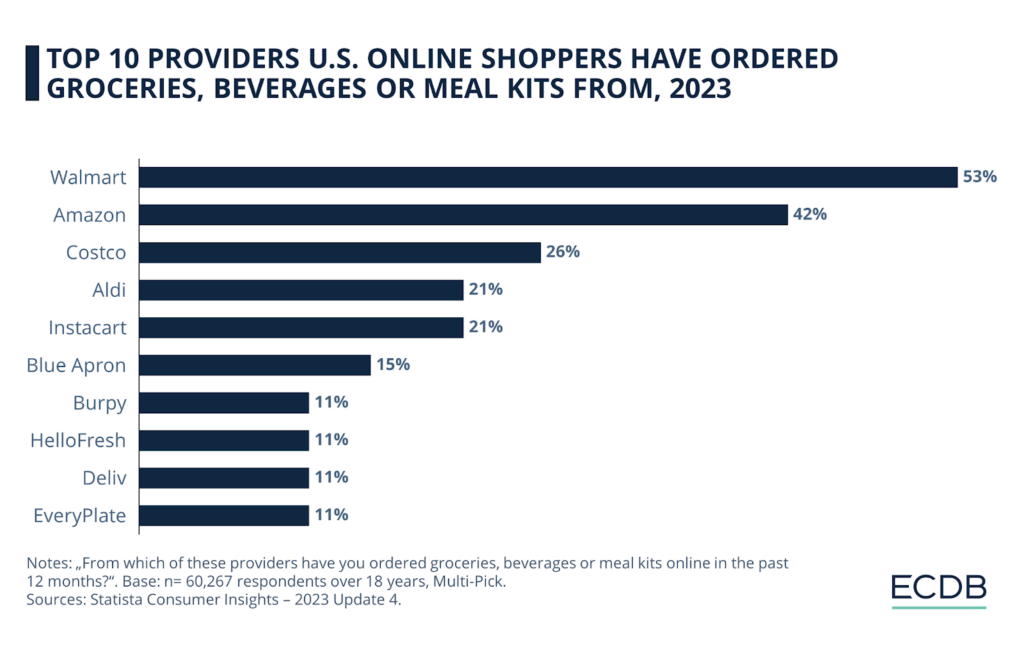
Image Source: Ecommerce DB
These companies typically operate in major cities where there is a high concentration of consumers who value convenience and speed.
In addition to these specialized startups, larger e-commerce platforms and retailers are entering the Q-Commerce space as well. For instance, companies like Amazon and Walmart are experimenting with faster delivery options to remain competitive.
By building their own network of stores or partnering with third-party logistics providers, these giants are aiming to capture a share of the rapidly growing quick commerce market.
Key Players and Market Map: Who Operates This Model?
The quick commerce landscape is a mix of dedicated startups and traditional giants adapting.
Global Pioneers (Now Consolidating):
- Gorillas, Getir, Flink: European pioneers who scaled rapidly, now facing consolidation due to profitability challenges. They proved the model’s consumer appeal.
Regional Leaders (Where Model Thrives):
- India: Dominated by Zepto (10-minute promise) and Blinkit (owned by Zomato). They operate hundreds of dark stores in major cities. Swiggy Instamart and Tata’s BigBasket (BB Now) are also key players.
- Middle East: InstaShop (owned by Delivery Hero) and Nana in Saudi Arabia are major players, adapting the model to local preferences.
- USA: Gopuff is the largest, building its network of small fulfillment centers stocked with snacks, drinks, and essentials.
Traditional Retailers Adapting:
- Reliance Retail (India) is launching its own quick commerce service, leveraging its vast retail footprint to act as dark stores.
- Walmart, Tesco, Carrefour are testing “store-as-a-dark-store” models, using existing supermarkets to fulfill rapid delivery orders from a dedicated picking area.
The Future of Quick Commerce
As Q-Commerce continues to gain momentum, several trends are likely to shape its future. One significant trend is the expansion of product categories available for ultra-fast delivery.
While Q-Commerce initially focused on groceries and essential items, consumers are beginning to expect quick delivery for a wider range of products, from clothing to electronics.
Companies that can efficiently expand their product offerings without compromising on delivery speed will likely emerge as leaders in this space.
Another trend is the increased use of automation and artificial intelligence to streamline operations. As companies continue to optimize their dark stores and delivery networks, we can expect to see more automation in both the picking process and the delivery itself.
For example, autonomous delivery vehicles or drones could eventually become a common sight in cities, reducing delivery times even further.
Sustainability will also be a critical consideration as Q-Commerce scales. The environmental impact of rapid deliveries—such as increased packaging waste and higher emissions from delivery vehicles—may lead to a push for more eco-friendly solutions.
This could include using electric delivery vehicles, optimizing delivery routes to reduce carbon footprints, and finding ways to minimize packaging waste.
Conclusion
Q-Commerce is more than just a trend; it represents a fundamental shift in how consumers expect to shop and receive their products.
The growing category and the insurgence of new companies in the domain bodes well for the businesses looking to grow in this and adjacent industries.
To stay ahead in this rapidly evolving market, leverage 42Signals to track digital shelf performance, monitor competitor activity, and optimize your strategy for maximum growth. Schedule a demo now!
Frequently Asked Questions
What does “dark” mean in “dark store”?
A: It means the store is “dark” or closed to the general public. There are no display windows, signage for walk-in customers, or checkout counters. The lights are on for workers, but it’s not a traditional retail environment. It’s a fulfillment center in an urban storefront shell.
Can I shop in person at a dark store?
A: No. Dark stores are not designed or permitted for customer browsing. They lack the layout, signage, and facilities (like checkouts) for in-person shopping. Access is restricted to authorized staff and delivery riders only.
How many dark stores does a typical quick commerce company operate?
A: It scales with city density. In a megacity like Mumbai or Delhi, a leading player like Zepto or Blinkit might operate 80-150+ dark stores to blanket the city and achieve a 10-minute promise. In a smaller city, they might start with 10-20. The number is directly tied to achieving geographic coverage for speed.
What’s the difference between a dark store and a micro-fulfillment center (MFC)?
A: They are closely related. A dark store is a type of MFC designed for direct-to-consumer quick commerce. An MFC can also be a small automated warehouse that supplies traditional retail stores. All quick commerce dark stores are MFCs, but not all MFCs are consumer-facing dark stores.
Are dark stores profitable?
A: It’s the central challenge of the industry. Most standalone dark store networks are not yet profitable at a company level. They require extremely high order density, optimal routing, and disciplined spending to cover high real estate and delivery costs. Profitability is the current focus after an initial growth-at-all-costs phase.
What happens to dark stores if quick commerce fails?
A: The real estate is repurposable. These small, well-located units can revert to traditional retail (convenience stores, specialty shops), become last-mile logistics hubs for broader e-commerce, or serve as pickup points for larger retailers. Their value is in their location.
By integrating these sections, your article becomes the definitive, one-stop resource that moves from explaining the “what” to detailing the “how,” “who,” and “at what cost,” perfectly matching the deeper intent behind the user searches.