
The unprecedented growth of e-commerce has reshaped global consumption, but it comes with a hidden environmental invoice. The convenience of online shopping is underpinned by a complex logistics chain—warehousing, packaging, transportation, and returns—that collectively contributes a significant and growing carbon footprint and sustainable e-commerce becomes so important.
While the narrative often simplifies the issue, the reality is nuanced: a well-optimized e-commerce model can be more efficient than traditional retail, but the current trend of hyper-fast, free shipping and excessive packaging is driving emissions upward. For conscious businesses and consumers, the question isn’t whether to participate, but how to build and support a sustainable e-commerce ecosystem.
This guide moves beyond generic advice to provide a data-driven framework for understanding and actively reducing your e-commerce carbon footprint, turning sustainability from a cost center into a competitive advantage and a core brand value.
As responsible corporate citizens, e-commerce businesses must adopt sustainable practices that reduce their carbon footprints.
The Unpacked Truth: Carbon Footprint in Sustainable E-Commerce
To effectively reduce impact, you must first measure and understand its sources. The carbon footprint of online shopping is not a single number but a sum of interconnected parts:
- Last-Mile Delivery (The Biggest Culprit – ~50% of Logistics Emissions): The final journey from a distribution hub to the customer’s doorstep is notoriously inefficient. Separate vans delivering small parcels, failed delivery attempts, and the fuel used in dense urban traffic make this the most emission-intensive segment.
- Packaging & Materials: Virgin plastic bubble wrap, polystyrene fillers, oversized boxes filled with air, and non-recyclable composite materials generate waste and have high embedded carbon from production. The prompts
blinkit bubble wrapandbubble wrap instamarthighlight consumer awareness of this very visible issue. - Warehousing & Fulfillment Energy: Massive fulfillment centers run 24/7, requiring immense energy for lighting, heating, cooling, and running automated robotics systems. The source of this electricity (coal vs. renewables) is critical.
- Returns & Reverse Logistics: The “easy returns” culture has a dark side. The carbon footprint for online shopping is doubled when items are shipped back, often requiring repackaging, reshelving, or worse, ending up in landfills. Apparel has return rates of 20-40%, making this a major hotspot.
- Data & Digital Infrastructure: Every product search, transaction, and cloud-stored inventory record consumes energy in data centers. Green web hosting is a piece of this often-overlooked puzzle.
Six Strategies to Create a Sustainable E-Commerce Platform
1. Choose Sustainable Packaging
Traditional packing materials like plastic bubble wrap and polystyrene peanuts have high environmental costs. Instead, opt for recycled or biodegradable options such as corrugated cardboard, mushroom packaging, or seaweed-based solutions. Additionally, minimize package size to cut down on shipping volume.

Image Source: Earth.org
- Go Beyond “Recyclable”: Aim for compostable or reusable systems. Brands like Patagonia and Loop partner to deliver products in durable containers that are returned, cleaned, and refilled.
- Right-Size Intelligently: Use packaging algorithms (like Packsize) to create a box that fits the product perfectly, eliminating void fill and reducing shipping volume. This directly cuts material use and transportation emissions.
- Material Innovation: Replace plastic air pillows with curlicue shredded paper, mushroom mycelium foam, or cornstarch-based peanuts. Clearly label how to properly dispose of or return the packaging.
2. Energy-Efficient Web Hosting
Data centers consume massive amounts of electricity. By choosing a green web host, you can ensure your site is powered by renewable energy sources. Look for certifications like LEED (Leadership in Energy and Environmental Design) or Energy Star when selecting a hosting provider.
- Consolidate and Slow Down: Actively promote and incentivize “slower” consolidated shipping. Offer a loyalty point bonus or a small discount for customers who choose a 3-5 day window over next-day delivery. Frame it as a “green choice.”
- Invest in Electric Fleets & Micro-Mobility: For urban centers, transition delivery vans to EVs and leverage e-cargo bikes for dense areas. Companies like DPD and UPS are rapidly scaling these solutions.
- Optimize Delivery Networks: Use advanced route optimization software to minimize distance and idle time. Implement parcel lockers and pick-up points (like Amazon Hub) to reduce failed deliveries and allow for efficient batch drop-offs.
3. Promote Slow Shipping for Sustainable E-Commerce
While next-day deliveries may be convenient, they aren’t exactly eco-friendly. Encourage customers to choose slower shipping methods which often involve ground transportation which is generally more fuel-efficient than air freight. Consider offering incentives like discount codes to nudge consumers towards greener choices.
- Demand Forecasting with AI: Reduce overstock and dead stock by using predictive analytics to align purchasing with actual demand. This minimizes warehouse space needed and the risk of products being discarded.
- On-Demand & Near-Shoring: For customizable products, adopt a print-on-demand or made-to-order model. For core inventory, consider near-shoring production to reduce long-haul international freight emissions.
- Energy-Efficient Warehouses: Choose fulfillment partners or design warehouses with LEED certification, solar panels, and smart LED lighting systems. This directly tackles e commerce energy consumption.
4. Localize Fulfillment Centers
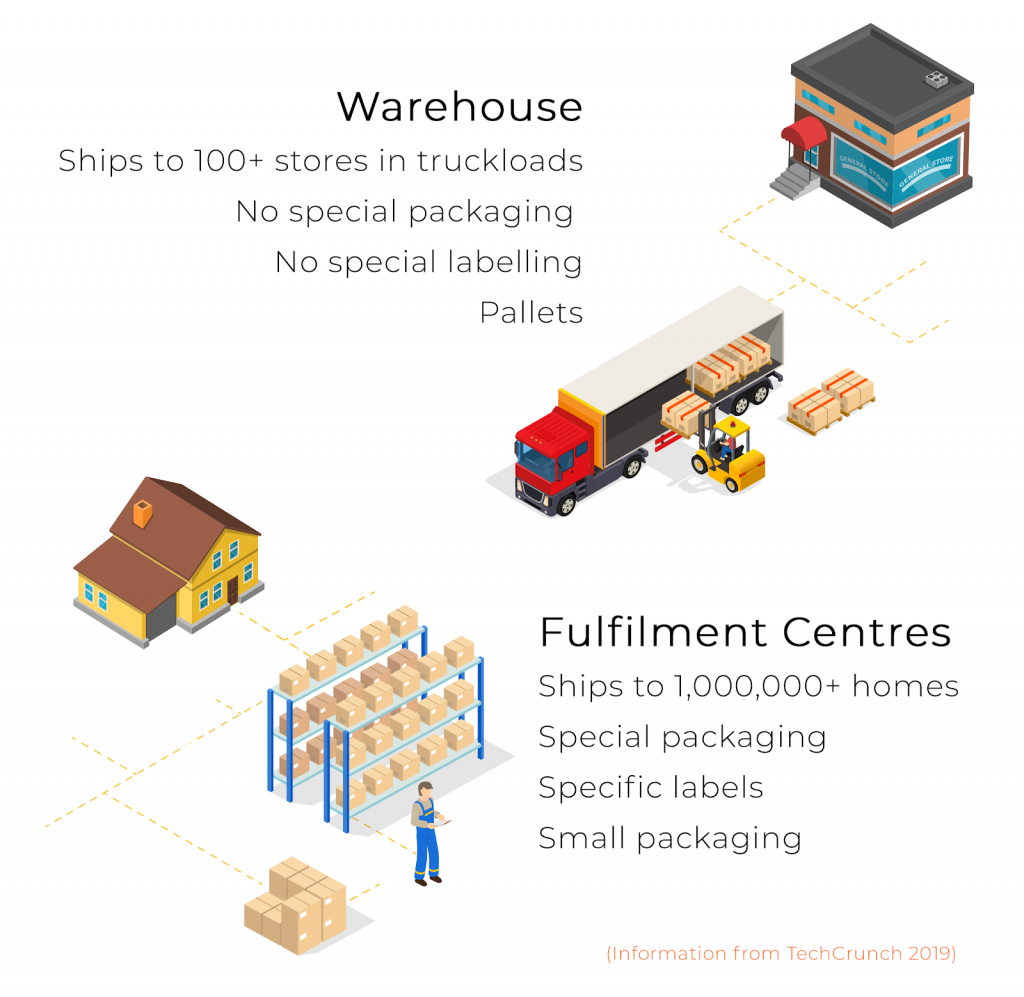
Centralizing distribution hubs leads to longer transit times and increased fuel consumption. Spread out inventory across several regional fulfilment centers to decrease delivery distances and associated emissions.
- Prevent Returns Proactively: Use augmented reality (AR) for “try-on,” provide ultra-accurate sizing charts with customer review data, and offer high-quality, 360-degree product images and videos.
- Optimize Reverse Logistics: For eligible returns, offer a simplified “keep it” option for low-value items, saving the carbon cost of return shipping and processing. For high-value items, partner with refurbishers or donate instead of landfilling.
- Local Returns Processing: Allow returns to be dropped at physical retail partners or designated local drop-off points to consolidate reverse logistics.
5. Implement Return Policies That Make Sense
A lenient return policy might seem customer-friendly but results in unnecessary trips back to the warehouse and additional packaging waste. Implement clear product descriptions and sizing guides to help customers make informed purchases, thus reducing returns.
- Embed Carbon Calculators at Checkout: Use APIs from providers like Watershed or Normative to show customers the estimated carbon footprint of their order and delivery choice in real-time.
- Offer Integrated Carbon Offsetting: Provide a simple, trusted option to offset the calculated emissions at checkout through certified projects (reforestation, renewable energy). Etsy pioneered this by offsetting 100% of shipping emissions, paid for by the platform.
- Radical Transparency: Publish an annual sustainability report following GHG Protocol standards. Share your goals, progress, and challenges openly. This builds the trust that today’s consumers demand.
6. Track & Report Emissions
Transparency builds trust. Regularly measure and report your company’s carbon footprint using tools provided by organizations like the Greenhouse Gas Protocol. Share these findings openly on your website and social media platforms to demonstrate commitment to sustainability.
- Green Web Hosting: Select a hosting provider powered by 100% renewable energy (look for Google Cloud, AWS, or specialized green hosts). This reduces the carbon footprint of your digital storefront.
- Platform Choice: Build your store on platforms like Shopify, which has a Sustainability Fund and aims for 100% renewable operations, or BigCommerce, which partners with carbon offset programs. For marketplaces, prioritize those with strong environmental policies.
- Sustainable E-Commerce Suppliers: Audit your supply chain. Choose manufacturers and brands that prioritize renewable energy, ethical labor, and low-impact materials. Your sustainability is only as strong as your weakest link.
Learning from Leaders: Green Initiatives from Big Retailers
- Amazon’s “Climate Pledge Friendly” Program: Badges products that meet sustainability certifications, helping customers identify better choices. Their “Ship in Product Packaging” program eliminates the need for an outer box.
- IKEA’s “Circular Hub” & “Buy Back”: Sells refurbished furniture and has a robust program to buy back used items for resale or recycling, embracing a true circular model.
- Patagonia’s “Worn Wear”: The gold standard. Actively repairs, resells, and recycles its own gear, building a brand narrative around product longevity and anti-consumerism that drives fierce loyalty.
- Etsy’s 100% Offset Shipping: A clear, customer-facing commitment that makes sustainability a default part of every transaction.
The Consumer’s Role in Sustainable E-Commerce: How to Support the Environment When Buying Online
- Consolidate Orders: Batch your purchases into fewer shipments. Choose the standard shipping option.
- Choose “Green” Retailers: Support brands that are transparent about their sustainability efforts and use eco-friendly packaging.
- Skip the Rush: Avoid expedited shipping unless absolutely necessary.
- Mindful Returns: Be sure before you buy. If you must return, use the provided labels and drop-off options correctly.
- Recycle Packaging: Properly separate and recycle cardboard, paper, and eligible plastics. Compost compostable materials.
Remember, every little bit counts. Even small changes implemented consistently over time can lead to substantial reductions in your business’s carbon footprint and create a sustainable e-commerce entity.
So why wait? Start implementing these strategies today and pave the way towards a cleaner, greener future!
Conclusion: Sustainability is the Future of Commerce
Reducing your e-commerce carbon footprint is no longer a niche concern but a business imperative for risk management, cost control, and customer connection. The strategies outlined—from smart packaging and green logistics to transparency and tech-enabled offsets—provide a roadmap.
The most successful sustainable e-commerce platforms will be those that integrate these practices not as a marketing afterthought, but as a core operational principle. They will turn the challenge of e-commerce carbon emissions into an opportunity to build deeper trust, foster innovation, and create a resilient business model fit for the future.
Start your measurement today. You cannot manage what you do not measure. Audit your biggest emission sources, set a bold reduction target, and begin communicating your journey. The planet—and your increasingly conscious customers—will thank you.
Liked this article? For more insightful content, read our e-commerce blogs.
Frequently Asked Questions on Sustainable E-Commerce
1. What is sustainable e-commerce?
Sustainable e-commerce refers to running online retail operations in a way that minimizes environmental harm, promotes ethical practices, and supports long-term economic responsibility. It goes beyond just selling online. It includes using eco-friendly packaging, reducing carbon emissions from shipping, sourcing products responsibly, ensuring fair labor practices, and minimizing waste across the supply chain.
A sustainable e-commerce business focuses on:
- Lower environmental impact in logistics and packaging
- Ethical sourcing and production
- Transparent business practices
- Long-term customer and community value
The goal is to grow revenue without compromising social or environmental well-being.
2. What are the 4 types of sustainability?
The four widely recognized types (or dimensions) of sustainability are:
- Environmental Sustainability
Protecting natural resources by reducing pollution, waste, energy use, and carbon emissions. - Economic Sustainability
Running a business or economy in a way that is financially stable and viable in the long term without damaging future opportunities. - Social Sustainability
Supporting fair labor practices, human rights, diversity, safety, and community well-being. - Institutional (or Governance) Sustainability
Ensuring ethical leadership, strong policies, transparency, and regulatory compliance in organizations and governments.
True sustainability only works when all four dimensions are balanced together.
3. What are the 4 types of e-commerce?
The four primary types of e-commerce models are based on who is buying and selling:
- B2C (Business to Consumer)
Businesses sell directly to individual consumers. Example: Online clothing or electronics stores. - B2B (Business to Business)
One business sells to another business. Example: Wholesale platforms or SaaS tools. - C2C (Consumer to Consumer)
Individuals sell to other individuals using platforms. Example: Online resale marketplaces. - C2B (Consumer to Business)
Individuals sell products or services to companies. Example: Freelancers selling services to brands.
Each model has different pricing, logistics, and marketing strategies.
4. What are the 7 pillars of e-commerce?
The seven pillars of e-commerce represent the key elements that determine success in online business:
- Product Strategy – What you sell, how it’s positioned, and how it solves customer needs.
- Pricing Strategy – How prices are set, optimized, and promoted.
- Technology & Platform – Website, app, APIs, security, and performance.
- Digital Marketing & Traffic – SEO, ads, social media, and influencer strategies.
- Customer Experience (CX) – Usability, trust, reviews, service, and returns.
- Logistics & Fulfillment – Shipping speed, order accuracy, and inventory control.
- Data & Analytics – Tracking performance, pricing, behavior, and demand signals.
Strong e-commerce brands continuously optimize all seven pillars together, not just one or two.
5. How can an e-commerce business reduce its carbon footprint?
An e-commerce business can reduce its carbon footprint by optimizing packaging size, switching to recyclable or biodegradable materials, using energy-efficient warehouses, and partnering with green logistics providers. Reducing split shipments, offering slower but consolidated delivery options, and sourcing products closer to customers also significantly lower emissions. Even small changes in shipping routes and packaging design can create measurable environmental impact over time.
6. Why do customers prefer sustainable e-commerce brands?
Customers increasingly prefer sustainable e-commerce brands because they want their spending choices to align with their values. Shoppers are more aware of environmental damage, unethical labor practices, and excessive waste. When brands show transparency in sourcing, packaging, and production, it builds trust. Sustainability also signals long-term responsibility, which strengthens brand loyalty and improves repeat purchase behavior.
7. Is sustainable e-commerce more expensive to operate?
Sustainable e-commerce may involve higher initial costs due to eco-friendly packaging, clean energy, or ethical sourcing. However, over time it often reduces operational expenses through lower energy usage, optimized logistics, and reduced waste. Many businesses also see higher customer retention and brand equity, which offsets early investments. Sustainability is no longer just a cost factor. It has become a long-term competitive advantage.