
** TL;DR ** In a retail landscape dominated by faceless e-commerce, Best Buy staged a remarkable comeback by decisively rejecting a price war with Amazon and instead leveraging its physical stores and human expertise as its core advantage. The company empowered its Blue Shirt employees as certified consultants, embraced “reverse showrooming” by making stores destinations for hands-on product demos and expert advice, and built a sticky service ecosystem with Geek Squad and the Totaltech subscription. This high-touch strategy, focused on solving customer problems and building trust, transformed Best Buy from a showroom for online retailers into a thriving hub for experience and service, proving the enduring value of human connection in a low-touch world.
In an age where a “buy now” button is often the pinnacle of customer interaction, the value of a physical store can seem like a relic of the past. We live in a low-touch world, dominated by the sheer convenience and efficiency of faceless e-commerce giants. So, why is Best Buy, a classic big-box electronics retailer, not just surviving, but actually thriving?
The answer lies in a bold and deliberate strategy. Instead of trying to out-Amazon Amazon, Best Buy decided to double down on what it does best: creating a high-touch, human-centric in-store experience.

Best Buy: The Retail Apocalypse and the Showrooming Threat
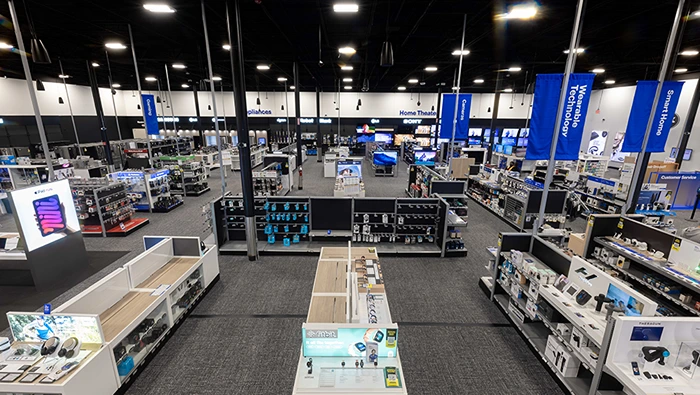
Image Source: Best Buy Corporate
Not too long ago, the future looked bleak for brick-and-mortar stores, especially those selling electronics. The term “showrooming” entered the lexicon, describing a consumer behaviour that was devastating for physical retailers. Shoppers would visit a store like Best Buy to get hands-on with a new TV or laptop, benefiting from the advice of the Blue Shirt employees, only to pull out their phones and purchase the item online for a slightly lower price, often from Amazon competition.
This trend posed an existential threat. Why maintain expensive physical locations if they were just becoming free showrooms for your online rivals? The entire model of brick-and-mortar retail future was in question.
For a time, it seemed the convenience and vast selection of online marketplaces would render physical electronics stores obsolete. Best Buy was caught in a perfect storm: its large stores were costly to operate, its prices were often undercut, and its key differentiator—the ability to see products in person—was being used against it.
The company needed a radical new playbook, and fast. They had to find a way to make their physical spaces indispensable again, transforming them from a liability into their greatest asset.
The Great Pivot: Embracing “Reverse Showrooming”
The turnaround strategy was brilliant in its simplicity. If customers were using their stores as showrooms, Best Buy would lean into that—but on their own terms. They pioneered what is now known as “reverse showrooming” or “webrooming.”
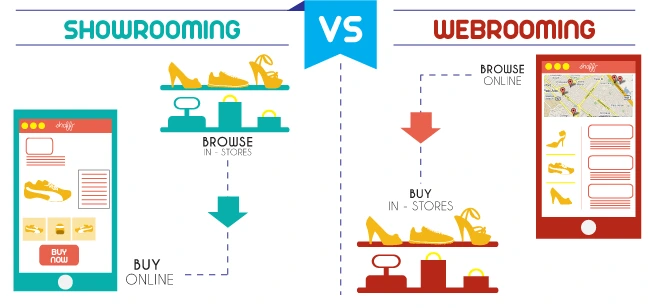
Reverse showrooming flips the old script. Today, a vast majority of shoppers research products online but then choose to make their final purchase in a physical store. Why? Because they want to see, touch, and test the product before committing. They have questions that a product description cannot answer. They want the reassurance of a knowledgeable person and the immediate gratification of walking out with their new gadget.
A study by the International Council of Shopping Centres found that over 80% of millennials practice webrooming. Best Buy recognized this shift early. They optimized their entire operation to cater to this new consumer, making their stores the ultimate destination for validation, expertise, and a seamless customer experience (CX) that starts online and culminates in a rewarding in-person interaction.
The Heart of the Strategy: The Blue Shirt Associates
At the core of the Best Buy transformation are its employees, the iconic Blue Shirt employees. In a world of automated chatbots and algorithm-based recommendations, the human expert is a powerful differentiator.
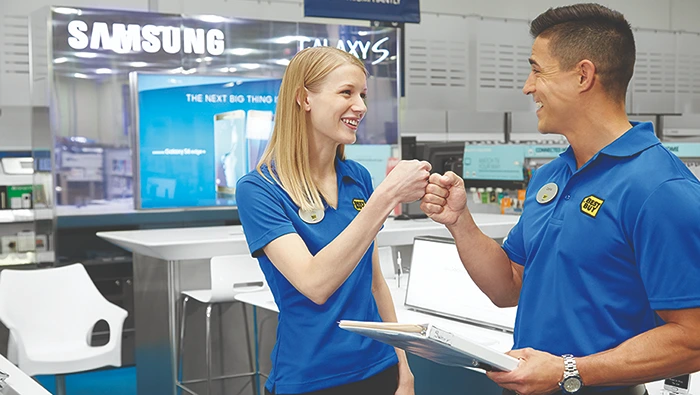
Best Buy made a conscious decision to invest heavily in its people. It stopped viewing its sales floor staff as mere cashiers and stockers and started treating them as certified product consultants. These associates undergo continuous, rigorous training on the latest technology, from the nuances of 8K televisions and HDR formats to the intricacies of smart home
ecosystems and networking. When you walk into a Best Buy store today, you are not just encountering a salesperson. You are engaging with an enthusiast who can explain the real-world difference between two soundbars or help you choose a laptop that perfectly fits your workflow, budget, and future needs.
This focus on deep product knowledge builds an invaluable commodity: trust. A customer is far less likely to buy elsewhere after receiving genuine, helpful advice that saves them from making a costly mistake. The Blue Shirt employees are the human embodiment of the Best Buy brand, turning a transactional visit into an educational and reassuring in-store experience. They are empowered to spend time with customers, to listen to their needs, and to provide solutions, not just push products. This human connection creates a level of customer loyalty that a discounted price alone cannot secure.
More Than a Store: The Power of Store-within-a-Store and Demos
Walking into a modern Best Buy feels different than it did a decade ago. The layout is less about overwhelming aisles of boxes and more about curated, immersive brand experiences. This is the store-within-a-store concept in action.
You will now find dedicated, expertly designed sections operated by major brands like Apple, Samsung, Google, and Sony. These are not just branded displays; they are mini-stores that offer a cohesive environment where customers can get hands-on with the entire ecosystem of a product line. An Apple-certified specialist can walk you through the seamless integration between a new MacBook, an iPhone, and an Apple Watch.

A Samsung expert can demonstrate how their smartphones, tablets, and smart TVs work in harmony. This strategy is a win-win. Brands get premium, staffed retail space and direct face-time with highly engaged customers, and Best Buy enhances its in-store experience by offering specialized, brand-approved expertise and a compelling reason for customers to visit physically.
Furthermore, the strategic importance of live product demonstrations cannot be overstated. It is one thing to read a spec sheet about the picture quality of an OLED TV. It is another to see it for yourself, with a Blue Shirt employee there to point out the specific technologies like per-pixel dimming that create that stunning, infinite contrast image. These live product demonstrations create a powerful emotional connection to the product. They make abstract specifications tangible and fuel the desire to own the item. For high-consideration purchases, this sensory experience is often the final, decisive factor that closes the sale and justifies the value of the physical store.
Building a Service Ecosystem: Geek Squad and Totaltech
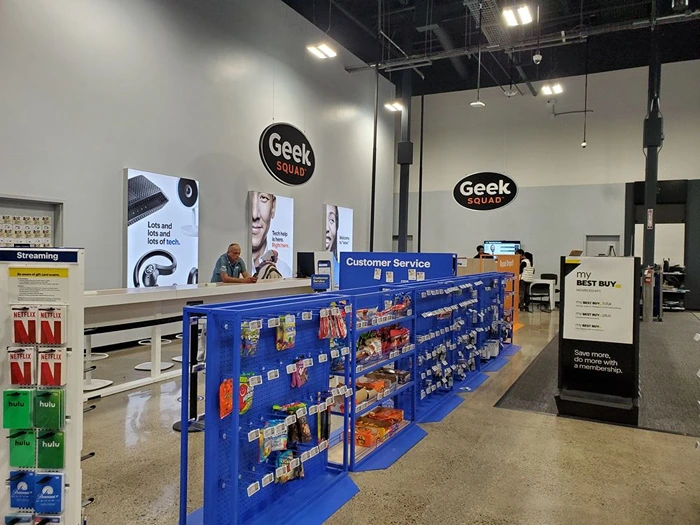
Selling a product is one thing. Supporting a customer throughout the entire lifecycle of that product is where true loyalty is built. Best Buy understood that technology can be complex and intimidating, and they built a service arm to address that very anxiety: the Geek Squad services.
What started primarily as a computer repair service has expanded into a comprehensive tech support and protection solution. Geek Squad services now include everything from setting up a complex home theater system with hidden wiring and calibrating a new television for optimal picture quality, to installing smart home devices like thermostats and security systems, and providing 24/7 tech support for virtually any device. This creates a long-term relationship with the customer that extends far beyond the initial purchase. It positions Best Buy as a partner in your technological life, not just a vendor.
To cement this ongoing relationship, Best Buy introduced the Totaltech subscription. For an annual fee, members receive a suite of benefits including free two-day shipping, exclusive member pricing on items, and perhaps most importantly, 24/7 support and included protection plans on all their eligible purchases. This subscription model is a masterstroke. It creates a predictable, recurring revenue stream for Best Buy and incredible stickiness with its customer base.
A Totaltech subscription member is far less likely to shop elsewhere because the value they receive in services, protection, and peace of mind outweighs a small potential price difference on a single item. It effectively makes the customer’s lifetime value more important than any single transaction.
The Psychology of High-Touch Retail in a Low-Touch Era
To fully grasp why this strategy works, we need to look at the human psychology behind purchasing decisions, especially for complex and expensive products. In a purely digital transaction, the burden of research and the risk of making a wrong choice rests entirely on the customer. This creates what psychologists call “decision fatigue” and “analysis paralysis.” The overwhelming number of options and the fear of buyer’s remorse can actually prevent a purchase from happening.
The high-touch model that Best Buy employs directly alleviates this anxiety. The Blue Shirt employee acts as a trusted filter and guide. They simplify the complex, validate the customer’s research, and provide confidence. This consultation is a service in itself, one that people are willing to pay a slight premium for, either in a marginally higher price or through a membership like Totaltech.
The physical store becomes a place of resolution and certainty. The ability to touch a keyboard, feel the weight of a laptop, or hear the immersive sound of a surround system provides tangible proof that a digital image cannot match. This sensory confirmation is a critical step in the journey for high-value goods, making the in-store experience psychologically fundamental to the sale.
The Results Speak for Themselves: A Data-Driven Turnaround
This high-touch strategy is not just a nice story. It is a commercially successful business model that has delivered impressive results. After a period of declining sales, Best Buy’s focused investment in customer experience (CX) and services fueled a remarkable recovery.
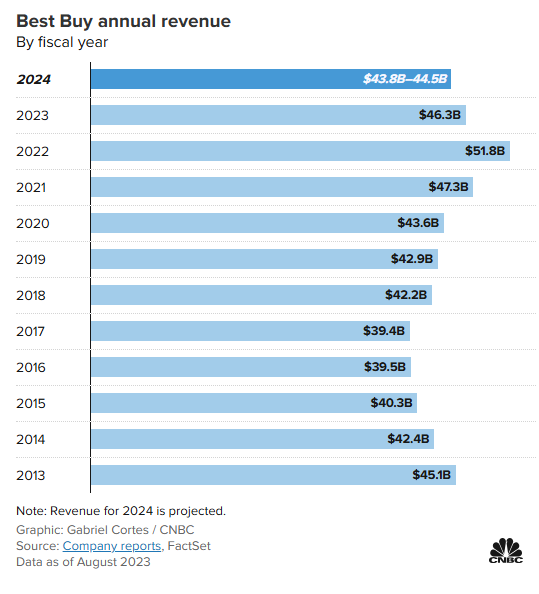
Image Source: CNBC
The company’s market share in the key consumer electronics category has grown significantly since implementing this strategy. Furthermore, their services segment, which is heavily driven by Geek Squad services and protection plans, has become a major profit center. In one fiscal year, Best Buy reported that its services revenue was nearing $5 billion, highlighting how crucial this ecosystem is to their financial health. This data proves that a differentiated in-store experience is not just a cost of doing business. It is a powerful engine for growth and profitability.
The Future of Retail is Human
The narrative of the past decade was that physical retail was dying. Best Buy’s journey tells a different story. It proves that brick-and-mortar is not dead. It was just outdated. The future of the brick-and-mortar retail future is not about being a warehouse of products. It is about being a hub for experiences, expertise, and trust.
By leveraging its physical presence, investing in its people, and building a robust service ecosystem, Best Buy has written a new playbook for success. They have shown that in a low-touch world, there is immense and enduring value in a high-touch approach. In the ongoing Amazon competition, Best Buy carved out its own unique space by remembering a simple truth. People do not just want to buy things. They want to buy the right thing, with confidence, and know that help is there if they need it.
If you liked this article, read –
The Ingenious Business Model of Etsy: How Sellers Reach Vast Audiences
Britannia Industries’ Digital Leap: From Biscuit Giant to Leading Innovator
The Caudalie Strategy: How a French Skincare Brand Blends Natural Ingredients with Digital Mastery
The Bloom Nutrition Success Story: From Zero to $170M with Influencers and Omnichannel Sales
Amul’s Dominance on Quick Commerce: A Multi-Category Assortment Masterclass
Frequently Asked Questions
1. What type of company is Best Buy?
Best Buy Co., Inc. is a multinational consumer electronics retailer based in the United States. It operates a brick-and-mortar and e-commerce hybrid model, selling products like laptops, mobile phones, home appliances, gaming equipment, and smart home devices. The company is classified as a publicly traded retail corporation listed on the New York Stock Exchange (NYSE: BBY).
Apart from direct product sales, Best Buy also offers installation, tech support, and protection services, making it one of the most recognized consumer electronics chains in North America.
2. What does Best Buy do?
Best Buy sells consumer electronics and provides related services both in-store and online. Its offerings include:
Electronics & Appliances: TVs, laptops, smartphones, kitchen appliances, smart devices, and more.
Tech Support: Through its Geek Squad service, Best Buy provides setup, installation, and troubleshooting for devices.
Warranties & Protection Plans: Customers can purchase extended coverage and repair services.
Trade-in Programs: Customers can exchange old electronics for credit toward new purchases.
Business Solutions: Best Buy also caters to small businesses with IT and procurement support.
The company’s value lies in blending retail convenience, after-sales service, and trusted product selection.
3. How do I pay my Best Buy bill?
Best Buy offers multiple ways to pay your bill, especially if you have a My Best Buy® Credit Card:
Online: Log in to your Best Buy credit account and pay using your bank account or debit card.
Mobile App: You can make payments through the official Best Buy or Citibank mobile app.
Phone: Call the customer service number on your billing statement to make a payment by phone.
Mail: Send a check or money order to the address listed on your statement.
In-Store: Visit any Best Buy store and pay at the customer service desk.
Most customers prefer online or app payments because they’re fast, secure, and reflect quickly on the account.