
** TL;DR ** By fixing often-overlooked issues with their digital shelf space—like incomplete product content, inconsistent pricing, and poor inventory monitoring—we helped clients dramatically improve their digital shelf visibility on major marketplaces. This systematic approach, powered by ongoing digital shelf analytics to provide actionable marketplace insights, directly led to a sustained ecommerce uplift, including one notable case where conversions jumped 35%, proving that optimizing this foundational element is crucial for unlocking real retail ROI.
What’s the importance of digital shelf space? Let’s start with a simple question.
- Where does a sale actually happen in ecommerce?
- Is it when a customer clicks “Buy Now”?
- Or when their credit card is charged?
In my experience working with dozens of brands, the real sale happens much earlier. It happens in the silent, critical moments a shopper spends on a product page on Amazon, Walmart.com, or a major retail website. This is the digital shelf space. It’s the modern equivalent of a physical store’s prime endcap or eye-level shelf. But here’s the catch: it’s invisible to most businesses.
For years, our clients were frustrated. They had great products, competitive pricing, and solid marketing, but their online sales were inconsistent. The problem wasn’t the product; it was the product’s digital shelf visibility. They were, in essence, putting their best items on a shelf in the back corner of a dark store.
By focusing relentlessly on the health and prominence of our clients’ digital shelf space, we consistently achieved an ecommerce uplift, with one campaign even delivering that 35% jump in conversions.
What is Digital Shelf Space, and Why is It Your New Battlefield?

Image Source: Plytix
You understand physical shelf space. Pay a slotting fee, get your product placed, and shoppers see it. The digital shelf is conceptually similar but infinitely more complex. It encompasses everything that constitutes your product’s presence on an online retailer’s site: the product title, images, videos, description, bullet points, reviews, ratings, price, availability, and even the Q&A section.
But unlike a physical shelf, your spot isn’t guaranteed. Your digital shelf visibility is dynamic, changing by the second based on algorithms, competitor actions, inventory levels, and shopper behavior.
A study by Profitero noted that even top brands can have nearly 20% of their product pages missing key content like images or descriptions, directly harming visibility. This isn’t just about being listed; it’s about being presented completely, accurately, and compellingly to win the sale.
Mastering this space is the foundation of modern ecommerce analytics. It’s where retail ROI is won or lost before a single ad dollar is spent.
The Silent Killers of Conversion: Where Most Brands Go Wrong

Image Source: Blue Stout
Our audit process revealed common, costly mistakes. Brands weren’t just facing stiff competition; they were sabotaging their own efforts.
- Incomplete and Inconsistent Listings: A product page with three blurry images, a three-word title, and a generic manufacturer’s description signals low quality to shoppers and algorithms. Each marketplace has its own best practices, and a one-size-fits-all approach fails.
- The Pricing Black Hole: Pricing dynamically across dozens of retailers is a nightmare. We’d often find our clients’ products priced 15-20% above identical items on the same site, simply because of a lack of real-time marketplace insights. Shoppers compare instantly, and you will lose.
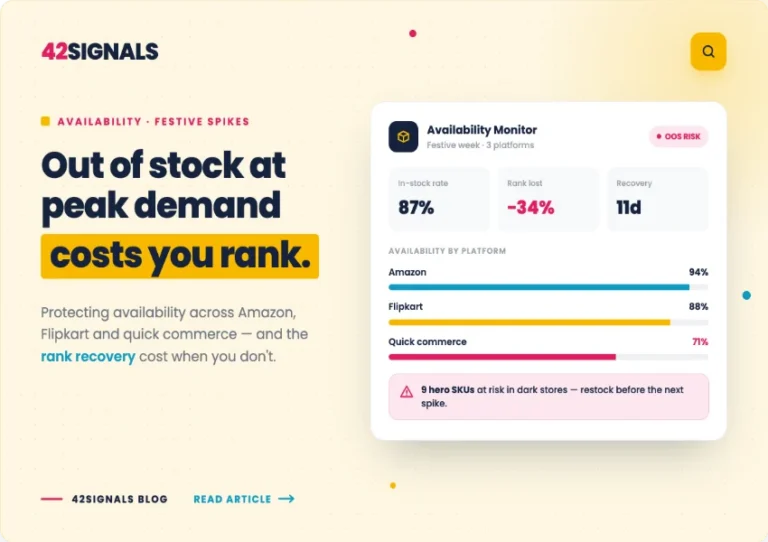
- Stock-Outs That Kill Momentum: Nothing destroys algorithmic trust and consumer confidence like an “Out of Stock” label. When your item disappears, the algorithm demotes it, and competitors cannibalize your first page visibility. It can take weeks to recover that lost ground.
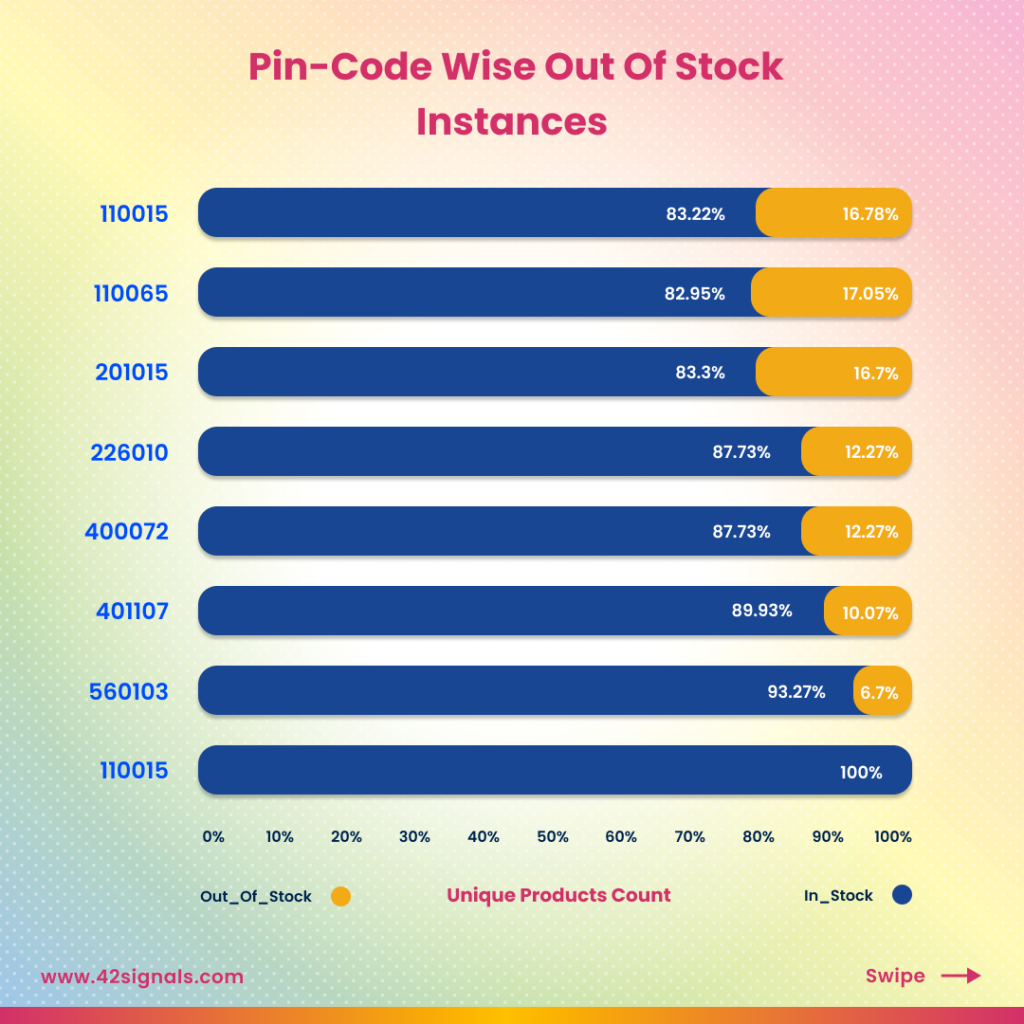
42Signals’ Product Availability
- Review Neglect: A product with few reviews or unanswered negative questions looks abandoned. Shoppers trust peer validation. Ignoring this section is like ignoring a customer shouting a complaint in your physical store.
These weren’t malicious errors. They were holes in a boat no one knew was leaking. We needed a lifeboat built on data.
Our Playbook: Fixing Digital Shelf Visibility, One Pixel at a Time
Our strategy wasn’t about magic tricks. It was about instituting a disciplined, data-led system. We call it the Digital Shelf Health Monitor.
Step 1: Comprehensive Digital Shelf Analytics
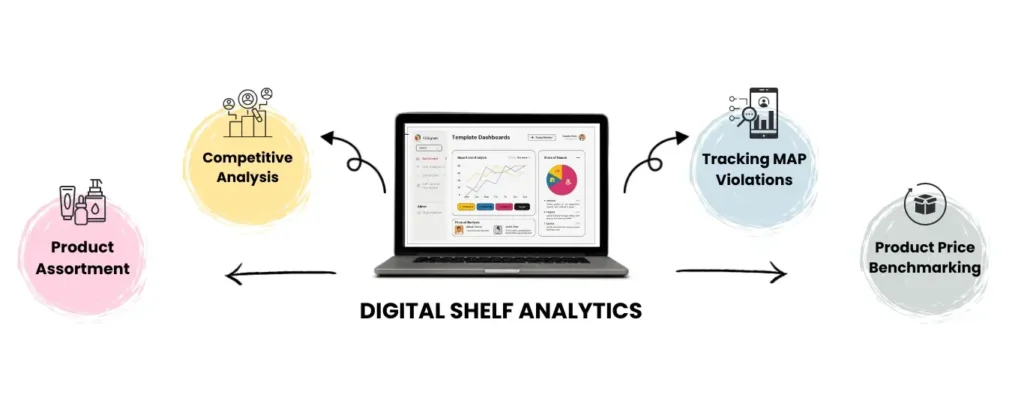
We started by deploying specialized tools to crawl the web. We didn’t just look at our client’s pages; we monitored every competitor, on every major retailer, daily. This gave us marketplace data on pricing shifts, content changes, review velocity, and stock status. For the first time, clients saw a complete picture of their digital shelf space.
According to a 2023 report by Stackline, brands that actively monitor their digital shelf see a 12% higher sales growth on average than those that do not. The insight was immediate.
Step 2: The Content Perfect Score
We developed a scoring system for every product page. A perfect “page score” required optimized images (7+ high-res shots with infographics), a keyword-rich yet human-readable title, feature-rich bullet points, an engaging A+ Content or brand story, and a robust Q&A section. We made content optimization a non-negotiable, iterative process.
Step 3: Price and Distribution Governance
Using our analytics dashboard, we set automated alerts for pricing anomalies and stock-outs. A client would get a notification the moment their price drifted out of a defined corridor or if stock dipped below a critical threshold at a key retailer. This proactive defense saved countless sales and preserved margin.
Step 4: The Review and Relevance Engine
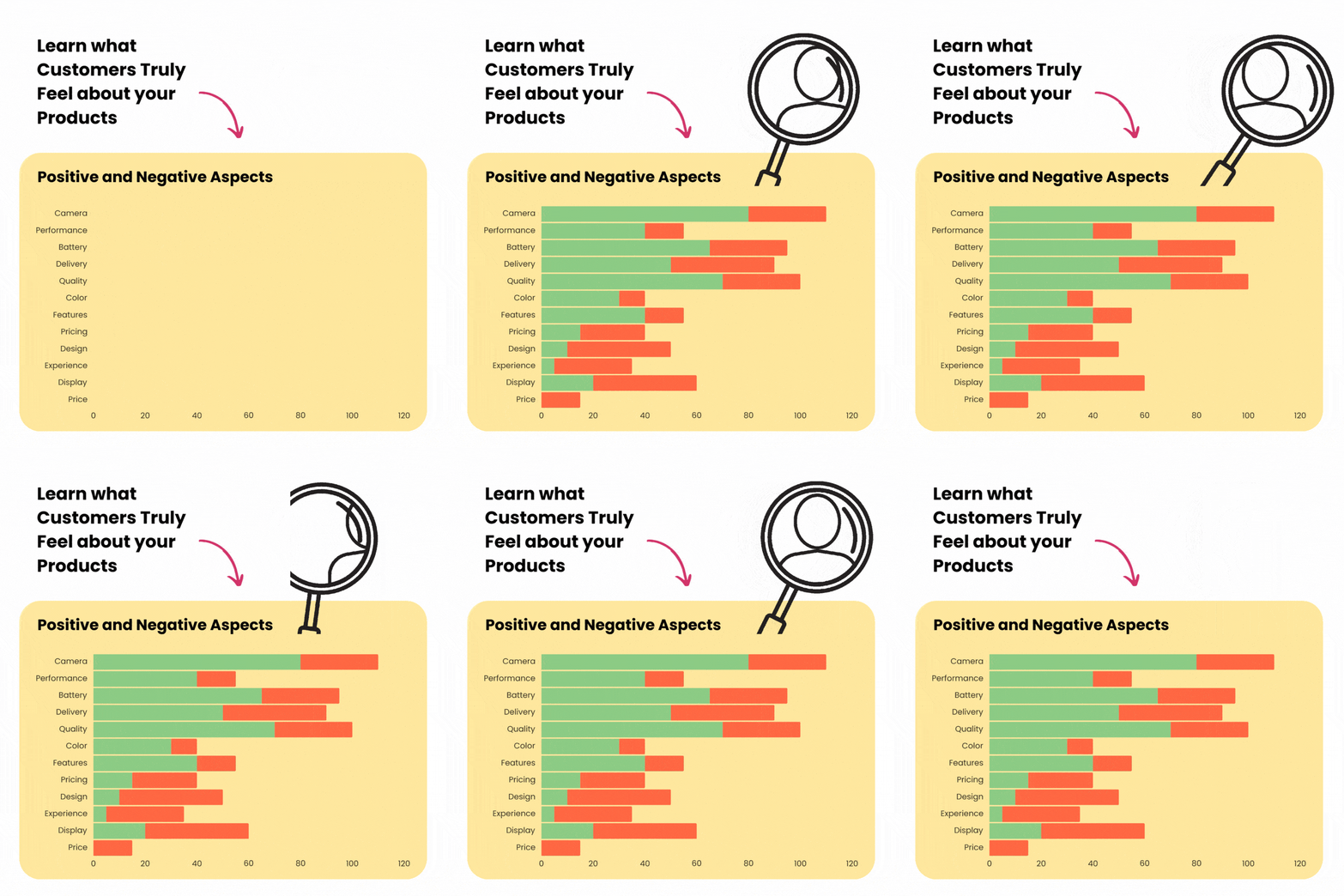
We implemented a system to solicit reviews via voice of customer analytics post-purchase legally and ethically, and more importantly, to respond to every single negative review and question publicly. This signaled to new shoppers and marketplace algorithms that the brand was active and trustworthy, boosting relevance.
The Proof: How These Actions Drove a 35% Ecommerce Uplift
The theory is good, but results are everything. Let me detail a specific case, a mid-sized home goods brand selling on Home Depot, Lowe’s, Amazon, and Wayfair.
Their challenge was stagnant growth despite increased ad spend. Our digital shelf audit revealed: 40% of their SKUs had incomplete bullet points on key retailers, their pricing was inconsistent by an average of 18% across channels, and they had a 15% stock-out rate on their top-selling items during peak weekends.
We executed the playbook. We rewrote and standardized all content, implemented a dynamic pricing rule engine, and worked with their logistics team to set safety stock alerts based on our visibility data.
The result? Within 90 days, their overall digital shelf visibility score improved by 65%. Their products began consistently appearing on the first page visibility for targeted search terms.
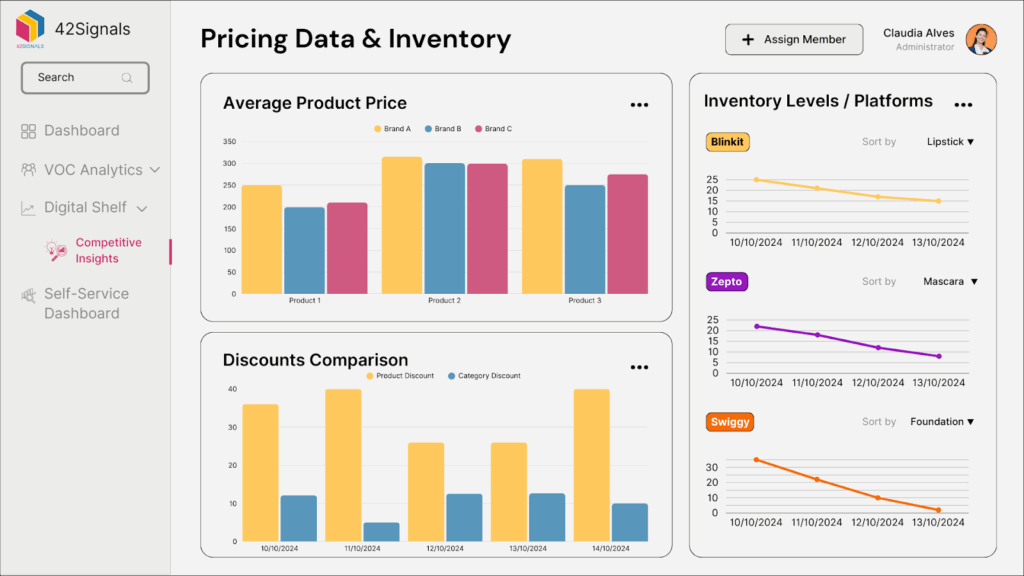
The cumulative effect of being in-stock, priced right, and presented perfectly was staggering. In the next quarter, they saw a 35% increase in conversion rate on their product pages. Their ad spend efficiency improved dramatically because the landing pages (their digital shelf) were finally optimized to close the sale. This was the tangible retail ROI they had been seeking.
Beyond the Fix: Sustaining Growth with Ongoing Marketplace Insights
Fixing the shelf is a project. Maintaining it is a discipline. Growth isn’t a one-time push; it’s the outcome of a healthy system.
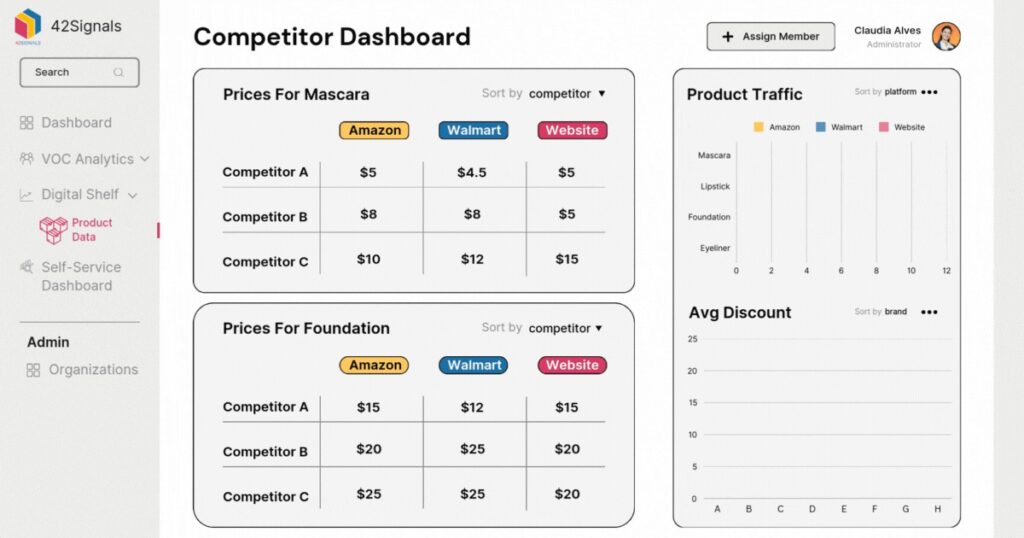
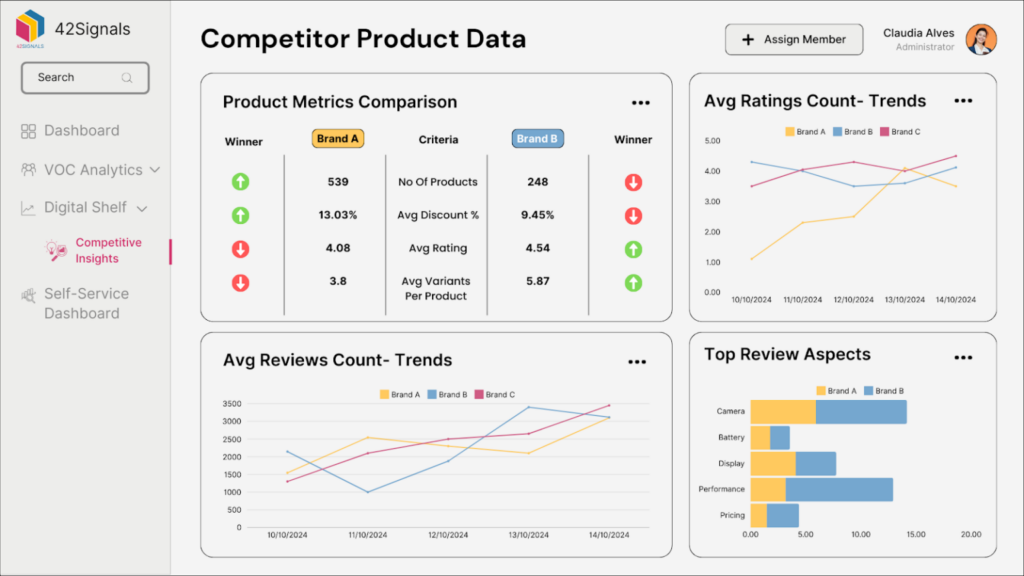
The true power emerged from digital shelf analytics as a strategic compass. Our clients now use their dashboards not just for defense, but for offense. They can see which new content formats (like videos) are boosting conversion for competitors, which retailers are driving the most engaged traffic, and where emerging gaps in the market present opportunities for new products.
This ongoing stream of marketplace insights transforms the ecommerce team from guessers into informed strategists. They can pivot quickly, test confidently, and allocate resources to what truly moves the needle on their digital shelf space.
Your First Steps Toward Digital Shelf Dominance
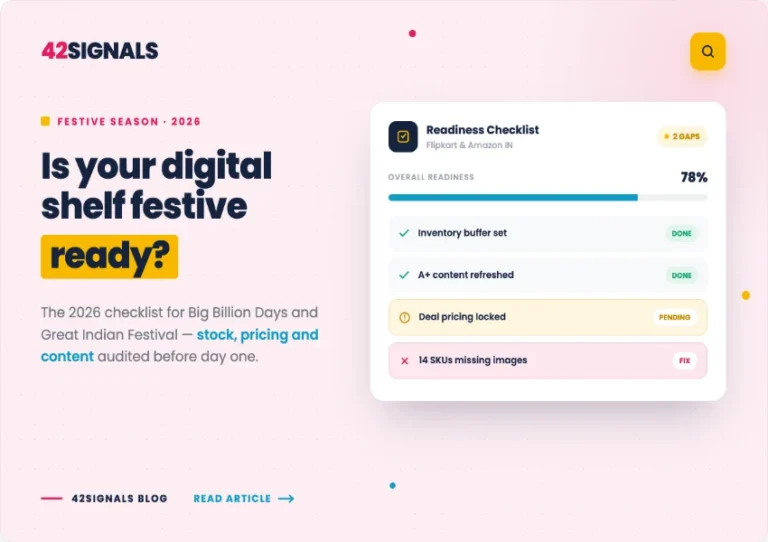
You do not need a massive budget to start. You need a shift in perspective. Begin by auditing your own digital shelf visibility.
- Pick your two best-selling products and your two most promising underperformers.
- Manually visit their pages on your top three sales channels. Be a harsh critic. Are the images stunning? Does the description answer every possible question? Is your price competitive right now, at this very second?
- Check your inventory. Will those items be in stock next week?
- Read your reviews and Q&A. What are real shoppers confused or concerned about?
This simple audit will reveal glaring opportunities. From there, the path is clear. Prioritize fixing content, then institute price monitoring, then tackle inventory coordination.
Visibility is the New Velocity
In the race for ecommerce growth, velocity is everything. But you cannot accelerate if you are invisible. The digital shelf space is not a background detail; it is the main stage. The 35% conversion lift our client saw was not a fluke. It was the direct result of treating their product pages as the most important real estate they own.
By embracing digital shelf analytics, acting on marketplace insights, and committing to relentless optimization, you turn your online listings from passive catalogs into active, 24/7 sales engines. The goal is first page visibility, but the reward is sustainable ecommerce uplift and undeniable retail ROI. Start looking at your shelf today. Your customers already are.
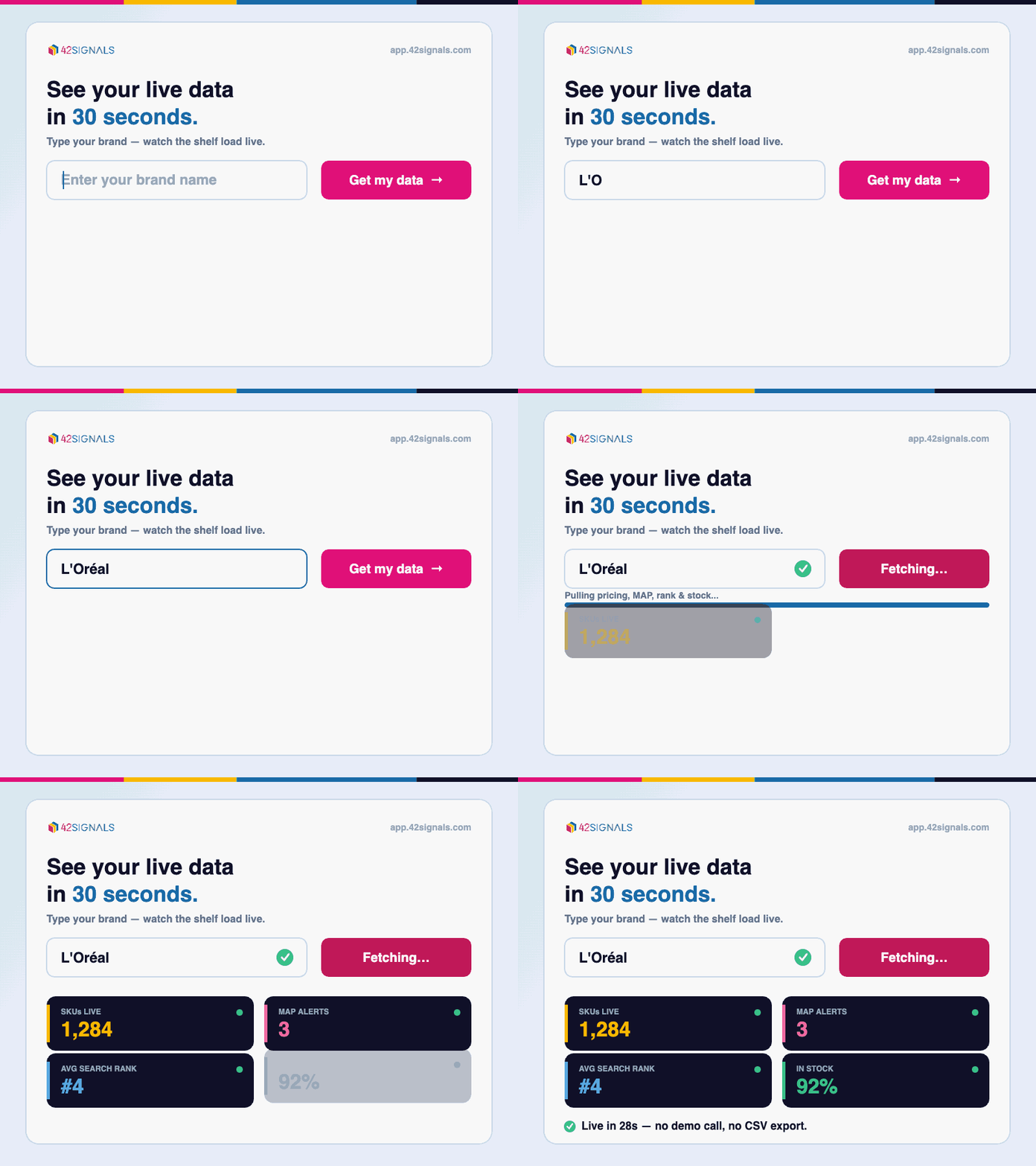
Try 42Signals today to see this in action for your brand.
Frequently Asked Questions
1. What does digital shelf mean?
The digital shelf refers to the online environment where products are discovered, compared, and purchased across e-commerce websites, marketplaces, and mobile apps. It includes everything a shopper sees before buying — product titles, images, descriptions, prices, reviews, availability, and search placement.
Unlike a physical shelf, the digital shelf is shaped by algorithms, pricing dynamics, content quality, and customer feedback. A strong digital shelf presence increases visibility and improves conversion rates, while a weak one makes even good products hard to find.
2. What is digital market space?
The digital market space is the broader online ecosystem where businesses compete for customer attention and sales. It includes e-commerce platforms, brand websites, social commerce channels, search engines, mobile apps, and digital advertising networks.
This space is not limited by geography or store size. Competition is global, fast-moving, and heavily influenced by data, technology, and consumer behavior.
3. What is digital shelf optimization?
Digital shelf optimization is the ongoing process of improving how products appear and perform online. It focuses on making products easier to find, more appealing to shoppers, and more competitive than alternatives.
Optimization typically involves:
Improving product titles, images, and descriptions
Ensuring pricing is competitive and consistent
Monitoring stock availability
Managing reviews and ratings
Tracking competitor listings
Responding quickly to algorithm or marketplace changes
The goal is to maximize visibility, conversion, and long-term market share.
4. What does “shelf space” mean in business?
In business, shelf space refers to the physical or digital area where products are displayed for customers. In physical retail, shelf space determines how visible a product is in-store. Prime shelf space often drives higher sales.
In digital commerce, shelf space is replaced by search ranking, category placement, and recommendation visibility. Whether physical or digital, shelf space represents access to customer attention, which directly impacts sales performance.
5. How is the physical shelf different from the digital shelf?
The physical shelf exists in brick-and-mortar stores and is limited by store layout, space, and foot traffic. Products compete for attention based on aisle placement, eye-level positioning, packaging, and in-store promotions.
The digital shelf, on the other hand, exists online and is driven by algorithms rather than store layouts. Products compete through search rankings, pricing, availability, reviews, and content quality. Visibility can change instantly based on competitor actions or platform updates.
In short:
Physical shelf visibility is fixed and slow to change
Digital shelf visibility is dynamic and changes continuously
6. Why does the digital shelf change faster than the physical shelf?
Physical shelves require manual resets, store approvals, and inventory movement. Digital shelves are controlled by software and algorithms, allowing prices, rankings, and placements to change in real time.
Factors that cause rapid digital shelf changes include:
Competitor price drops
Stock availability shifts
Review score changes
Sponsored placements
Algorithm updates
This speed makes constant monitoring essential for online success.
7. Why is digital shelf monitoring more important than store audits?
Store audits are typically done weekly or monthly. Digital shelf conditions can change multiple times a day. Without continuous monitoring, brands may not notice:
Sudden stockouts
Price undercutting by competitors
Loss of Buy Box
Declining search visibility
Content errors or suppression
Digital shelf monitoring allows brands to react before performance declines become revenue losses.