

Maximizing Retail Performance Using Platform Data Insights
In today’s complex digital retail landscape, brands are constantly deciding where to focus their energy and resources: on established marketplaces or on their own direct-to-consumer (D2C) channels. The key to making this decision and achieving multi-channel success isn’t gut feeling; it’s the intelligent use of platform data. This article explores a detailed retail performance comparison between marketplaces and D2C, showing how sophisticated analytics, including digital shelf analytics and quick commerce insights, allow brands to prioritize channels effectively. By analyzing sales velocity, customer behavior, and inventory health across all platforms, companies can execute a successful mix shift, optimize operations, and drive profitable growth. We dive deep into using marketplace insights to inform D2C strategy, ultimately ensuring your brand captures the maximum share of the digital market.
Marketplace vs. D2C: Why the Right Balance Depends on Data, Not Intuition
The modern retail environment offers a classic dilemma for every brand: do you sell your products on massive, high-traffic marketplaces like Amazon and Walmart, or do you invest in and nurture your own D2C website? Both channels offer compelling advantages, but determining the optimal balance is crucial for sustainable growth. This isn’t a matter of choosing one over the other; it’s about mastering both and understanding their synergy. The difference maker in this decision is platform data.

Image Source: Maple
For many years, the convenience and vast customer base of marketplaces made them the default starting point. They offer instant visibility and streamlined logistics. However, the D2C model provides something invaluable: control over the customer experience, brand narrative, and, most importantly, proprietary first-party data.
Why a Unified View of Channel Performance Is the Foundation of Any Mix Shift Decision
Before a brand can execute a successful mix shift or channel prioritization strategy, it must first accurately measure the performance of each channel. This is where comprehensive, aggregated platform data comes into play. It provides an objective look at sales, conversion rates, customer acquisition costs, and inventory efficiency across the entire ecosystem. Without this unified view, brands are essentially flying blind, unable to make informed decisions about where to invest marketing dollars or adjust product assortment.
One crucial area to examine is the cost of doing business. While marketplaces offer built-in traffic, they also charge significant commissions and advertising fees. D2C, while requiring initial investment in infrastructure and marketing, ultimately offers better margins and direct customer relationships. A detailed retail performance comparison using transparent data helps uncover the true profitability of each channel.
Marketplace Performance Analytics: The Metrics That Go Beyond Top-Line Sales
Marketplaces are powerful engines of commerce, but their sheer scale often obscures critical marketplace insights. To truly understand how your brand is performing, you must look beyond top-line sales figures and delve into granular platform data.
Deep Dive into Marketplace Insights and Metrics
The data available from marketplace platforms, while often anonymized concerning the end customer, offers powerful indicators of product and category health. Key metrics include:
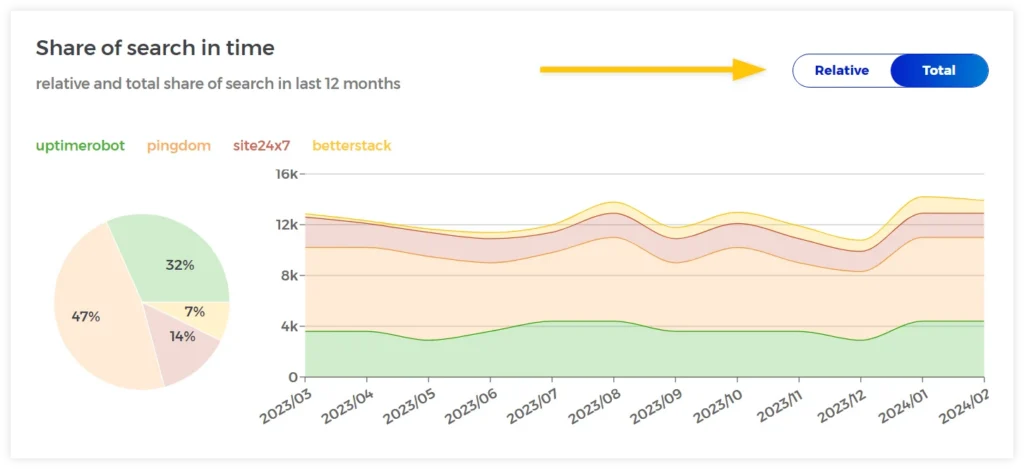
Image Source: Mangools
Sales Velocity and Share of Search
Sales velocity—the speed at which a product sells—is a primary health indicator. A high velocity suggests strong product market fit and effective listing optimization. However, velocity is directly tied to visibility. Brands must look at share of search analytics. If your product ranks highly for key search terms, but its sales velocity is low, it suggests a problem with pricing, imagery, or reviews. Conversely, low visibility coupled with high velocity indicates an untapped opportunity to scale through advertising. By integrating this platform data, brands can pinpoint which products are resonating and where their search ranking is falling short.
Inventory and Operational Efficiency
Marketplace systems provide detailed reports on inventory health, including sell-through rates and storage fees. Poor inventory management on marketplaces can drastically erode margins without inventory forecasting. For instance, high “stranded inventory” or excessive storage fees indicate forecasting issues. By systematically analyzing these operational metrics, which form part of the broader platform data set, brands can optimize their stock levels, minimize holding costs, and maximize their return on investment.
Review and Rating Analysis
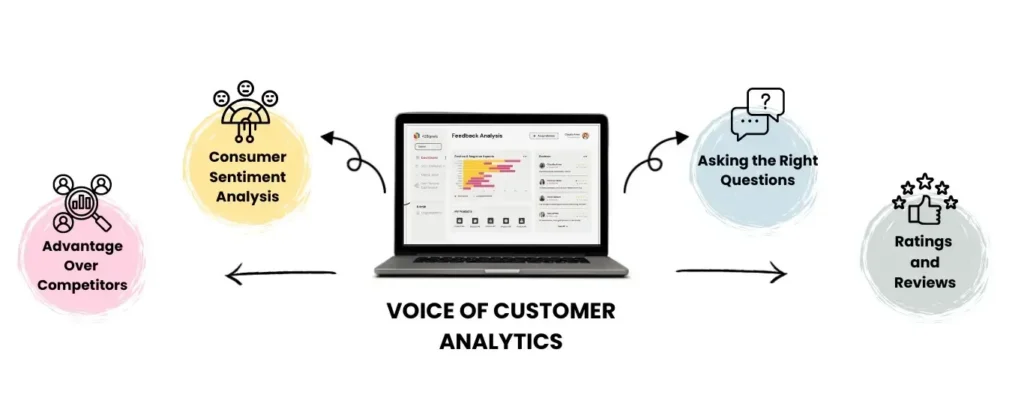
Customer reviews, via voice of customer analytics, are the social proof of the digital age. Analyzing the sentiment and frequency of these reviews is essential. A dip in star ratings or a recurring negative theme in the comments provides immediate, actionable marketplace insights into product quality or fulfillment issues. This qualitative data, when paired with quantitative sales data, creates a holistic view of product acceptance. According to a 2023 study by Statista, approximately 60% of online shoppers consider product reviews very or extremely important when making a purchase decision (Source: Statista, Online Shopping Consumer Survey Data).
D2C Channel Analytics: The First-Party Data Advantage
While marketplaces offer reach, the D2C channel provides depth. The data generated by your own website and fulfillment network is infinitely richer, allowing for true customer relationship building and precise targeting.
The Power of Proprietary First-Party Platform Data
The D2C channel is defined by its ability to collect and own first-party data. This proprietary platform data includes email addresses, complete purchase history, browsing behavior, and demographic information. This level of detail is impossible to obtain from third-party marketplaces.
Customer Lifetime Value (CLV) and Retention Metrics
The ultimate metric for D2C success via D2C brand strategies is not merely the initial purchase value, but the Customer Lifetime Value (CLV). By tracking repeat purchase rates, average order value (AOV) over time, and time between purchases, brands can identify their most valuable customer segments. Using this rich platform data, companies can prioritize efforts on retention marketing—such as loyalty programs and personalized email campaigns—which is far more cost-effective than constant customer acquisition. A robust D2C platform provides the analytics necessary to understand the true profitability of a customer relationship.
Conversion Funnel Deep Dive
Your D2C website’s analytics platform offers a microscopic view of the customer journey. You can analyze drop-off points in the conversion funnel—from the home page to the product page to the checkout. Understanding why shoppers are leaving, such as a complicated checkout process or unexpectedly high shipping costs, is the first step toward optimization. This actionable platform data allows for continuous A/B testing and refinement of the user experience, leading to higher conversion rates and greater customer satisfaction.
When comparing marketplace and D2C performance, an essential tool is digital shelf analytics. This involves monitoring product visibility, pricing, promotion, and content accuracy across all digital retail channels. For the D2C channel, this ensures your product pages are optimized for organic search and provide a superior, brand-consistent experience compared to your listings on external sites. Here’s a free digital shelf analytics guide.
Retail Performance Comparison and Strategic Mix Shift
The core challenge for multi-channel brands is utilizing the distinct data sets from both marketplaces and D2C to execute a strategic mix shift—that is, deciding which channels deserve greater investment and focus.
Comparative Analysis: Profitability vs. Scale
A simple retail performance comparison involves stacking key metrics side-by-side.
| Metric | Marketplace Performance | D2C Performance | Strategic Insight from Platform Data |
|---|---|---|---|
| Gross Sales Volume | Typically Higher (due to traffic) | Lower, but steadily growing | Indicates immediate market demand and reach. |
| Net Profit Margin | Lower (due to commissions, ad fees) | Higher (due to direct relationship) | The true measure of channel health; dictates where profitable growth lies. |
| Customer Acquisition Cost (CAC) | Often Lower (organic search within platform) | Typically Higher (paid search, social ads) | Identifies the most efficient way to acquire a new customer. |
| Customer Lifetime Value (CLV) | Unknown/Zero (no direct relationship) | High (due to repeat purchase potential) | Shows the long-term value of nurturing the direct relationship. |
| Inventory Turnover Rate | High | Variable (depends on marketing push) | Helps balance stock levels to avoid storage fees and stockouts across the network. |
By analyzing this comparative platform data, brands can identify discrepancies. For example, if a product shows high sales volume on a marketplace but extremely low profitability, the brand might strategically initiate a mix shift by slightly raising the price on the marketplace while offering exclusive bundles and better value on the D2C site to drive more profitable traffic there.
Semantic Keyword Integration: Quick Commerce Insights
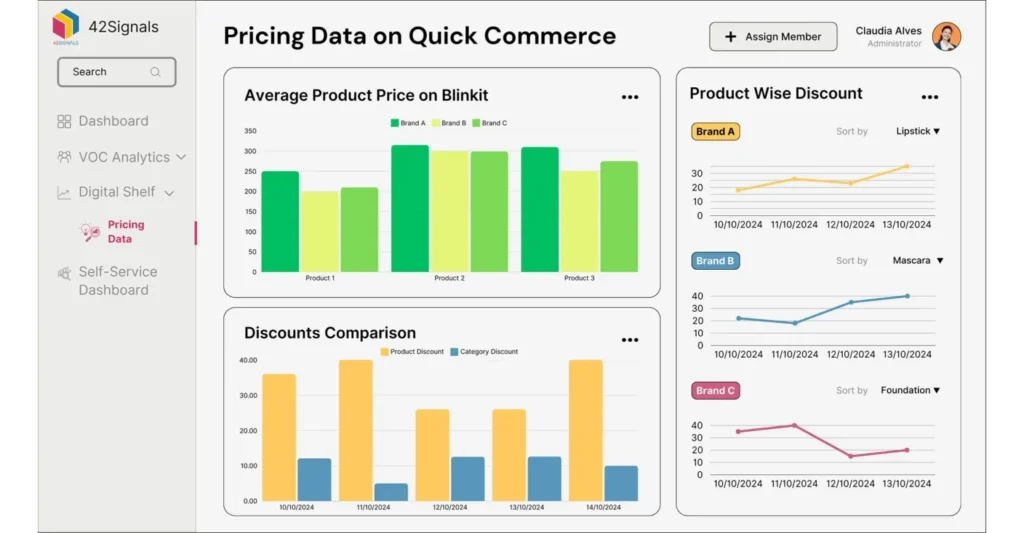
The rise of rapid delivery, or quick commerce, requires a focused approach. Quick commerce data, which draw heavily on hyper-local inventory data, fulfillment times, and delivery success rates from third-party delivery apps (a subset of platform data), are vital. Brands need to compare the incremental sales from quick commerce against the associated fulfillment costs and commissions. This specialized data informs decisions on which specific products are suitable for this high-speed, high-cost channel, and which should remain exclusive to the standard D2C or marketplace distribution.
Executing the Mix Shift: Three Data-Driven Multi-Channel Strategies
Successfully navigating the marketplace vs. D2C dynamic requires using platform data not just for reporting, but for unified execution across all channels.
Data-Driven Product and Pricing Harmonization
Inconsistent pricing is a common pitfall. Consumers frequently cross-reference prices between a brand’s D2C site and its marketplace listing. Using aggregated platform data, brands can maintain price parity or, more strategically, offer differentiated pricing. For example, a brand might match the price on the marketplace but offer free, faster shipping or an exclusive gift on the D2C site. Price parity across channels is a critical issue brands have to contend with.
Furthermore, products that consistently underperform in terms of search ranking or sales velocity on marketplaces, as revealed by marketplace insights, could be retired from that channel and instead relaunched as exclusive “D2C only” items. This strategic use of a retail performance comparison helps segment the product portfolio and minimizes channel conflict.
Semantic Keyword Integration: Dark Store Data
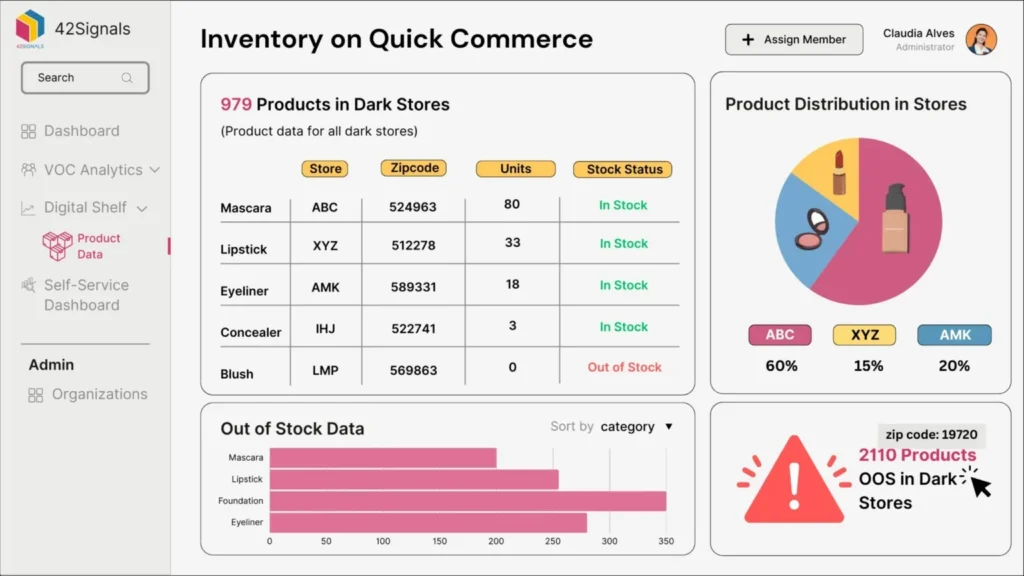
The use of dark store data—inventory and operational metrics from micro-fulfillment centers or smaller, non-public retail spaces used for online order fulfillment—is becoming increasingly important for both D2C and quick commerce. This platform data provides real-time visibility into local stock levels, enabling efficient routing of orders and minimizing last-mile delivery costs. Comparing dark store performance (speed and cost) against standard warehouse fulfillment helps refine the fulfillment strategy and supports the overall mix shift towards more efficient regional distribution. Learn how dark store inventory management is important for your brand.
The Feedback Loop: Using Marketplace Insights to Improve D2C
One of the most powerful uses of marketplace data is leveraging it as a massive, free R&D platform for your D2C channel. The high volume of traffic and purchases on marketplaces generates vast amounts of platform data regarding customer search behavior and product preference.
For example, if marketplace insights reveal that customers frequently use a specific, un-indexed keyword to search for your product, you should immediately update the SEO and content on your D2C product pages using that exact keyword. Similarly, if a competitor’s product consistently wins the ‘Buy Box’ due to slightly better imagery or clearer bullet points, the D2C channel can quickly adopt those best practices. This systematic process of a continuous retail performance comparison ensures that learnings from the high-traffic marketplaces inform and elevate the high-margin D2C experience.
The Technology Foundation for Unified Multi-Channel Analytics
Achieving multi-channel success requires a technological foundation capable of integrating disparate data streams. A unified data platform is essential for generating meaningful platform data and actionable insights.
Overcoming Data Silos
Most brands find their marketplace sales data, D2C website analytics, and fulfillment metrics trapped in separate silos. This fragmented view makes an accurate retail performance comparison impossible. The solution lies in investing in a data aggregation layer like ecommerce market intelligence that automatically pulls data from all sources (e.g., Amazon Vendor Central, Shopify, internal ERP systems, quick commerce dashboards) and normalizes it.
A unified dashboard provides the single source of truth necessary for the executive team to confidently make decisions regarding mix shift and channel investment. Without this centralized view of platform data, channel managers will always be operating with incomplete information, leading to sub-optimal resource allocation.
The Role of Predictive Analytics
Once the platform data is unified, brands can move beyond descriptive reporting and into predictive analytics. This is where the true value of data intelligence is unlocked. Predictive models can forecast demand for specific products on specific channels, allowing for proactive inventory pre-positioning—a critical capability for managing the complexity of both D2C shipping and marketplace fulfillment. Predictive models informed by marketplace insights and D2C traffic patterns are the engine behind an effective mix shift strategy.
Measuring and Sustaining the Mix Shift
Implementing a mix shift—the intentional move of sales and marketing resources from one channel to another—is a continuous process that requires constant measurement using platform data.
Key Performance Indicators for Channel Prioritization
Success should be measured not just by absolute growth, but by the profitability and strategic alignment of that growth. Two key KPIs are essential for validating a successful mix shift:
- Profitability Index by Channel: This metric calculates the net profit margin (after all costs, including logistics, platform fees, and marketing spend) for every dollar of sales in each channel. A successful mix shift with retail pricing analytics will show a gradual increase in the profitability index of the D2C channel relative to the marketplace channel, even if the D2C sales volume remains lower overall.
- Customer Ownership Rate: This tracks the percentage of total customers acquired through the D2C channel compared to total sales volume. A higher ownership rate signifies that the brand is successfully building its proprietary customer database, maximizing the long-term value derived from the platform data collected.
These metrics, informed by constant retail performance comparison across all data sources, ensure that the channel strategy remains focused on sustainable, profitable growth, not just vanity metrics.
Platform Data is the Navigator for Digital Retail
The dynamic tension between marketplace and D2C channels defines modern commerce. The decision of where to allocate resources is no longer a strategic guessing game; it is an analytical one driven by robust, integrated platform data. By mastering the use of marketplace insights, engaging in a constant retail performance comparison, and leveraging specialized metrics like digital shelf analytics and dark store data, brands can orchestrate a successful mix shift. This data-centric approach ensures profitability, builds valuable customer relationships, and positions the brand for sustained success across the entire multi-channel ecosystem. The future of retail success belongs to those who not only collect data but also use it as the definitive guide for prioritization and execution.
Schedule a Data Strategy Consultation
Is your brand ready to translate complex platform data into clear, profitable action? Contact us today to schedule a demo of our unified analytics platform and see how we can optimize your mix shift strategy.
Ready to build your retail performance comparison dashboard across marketplace and D2C channels? Book a 42Signals demo and we’ll show you how the mix shift framework looks for your specific category, channel mix, and competitive set.
Frequently Asked Questions (FAQs)
What is the most important metric when comparing marketplace and D2C channel performance?
The most important metric is Net Profit Margin by Channel. While sales volume (scale) is often higher on marketplaces, the true measure of efficiency is the net profit after accounting for all channel-specific costs (commissions, advertising, logistics). Comprehensive platform data allows for this granular retail performance comparison, guiding the strategic mix shift towards the channel that yields higher profitability.
How does platform data help in performing a strategic mix shift?
Platform data provides the empirical evidence needed to justify shifting resources. It does this by comparing Channel A’s cost of acquisition (CAC) and customer lifetime value (CLV) against Channel B’s profitability and inventory costs. For example, if marketplace insights show a rising CAC coupled with poor review sentiment, the data supports an immediate mix shift of marketing spend toward the D2C channel, where the brand has greater control and higher margin potential.
What is digital shelf analytics and why is it important for multi-channel success?
Digital shelf analytics is the process of monitoring and analyzing key product attributes (pricing, stock availability, search rank, content accuracy) across all digital retail touchpoints, including third-party marketplaces and the D2C website. It’s crucial because it reveals discrepancies and opportunities, ensuring brand consistency and competitive advantage. For instance, it uses platform data to detect unauthorized price undercutting by third-party sellers on marketplaces.
What data falls under the category of “dark store data”?
Dark store data refers to the operational and inventory metrics collected from fulfillment centers dedicated solely to online order processing (dark stores or micro-fulfillment centers). This type of platform data includes metrics like order fulfillment time, local inventory levels, delivery speed, and last-mile delivery costs. This data is critical for optimizing quick commerce and regional D2C shipping strategies.
Can marketplace insights actually improve my D2C website?
Absolutely. Marketplace insights act as a large-scale testing ground. The high volume of searches and customer reviews provides immediate feedback on product appeal, common customer queries, and effective sales copy. For example, analyzing which search terms customers use to find your product on Amazon (a subset of platform data) can directly inform the SEO keywords and content adjustments needed on your D2C site for better organic visibility and conversion.