

** TL;DR ** Your product page is likely losing sales due to common but fixable errors, so immediately address these seven areas: invest in high-quality images and video to build trust and replicate an in-store experience, rewrite generic descriptions into benefit-driven stories that speak directly to the customer’s needs, optimize page content and structure for search engines to improve first-page visibility and search rankings, prominently display customer reviews and clear shipping information to overcome purchase anxiety, use complementary product suggestions to increase average order value, and ensure your page is flawlessly responsive and fast on mobile devices, as this comprehensive product detail page optimization transforms your listing into a powerful, 24/7 sales tool that boosts conversions across all platforms.
You’ve poured your heart into your product. You’ve sourced the best materials, designed beautiful packaging, and maybe even run ads to get people to your site. The traffic starts to trickle in, but then… crickets. The add-to-cart button gathers digital dust, and your sales figures tell a disappointing story. The answer lies in product detail page optimization.
If this story sounds familiar, the culprit is often staring right back at you: your product detail page. This page isn’t just a digital spec sheet; it’s your hardest-working salesperson. It works 24/7, answering questions, overcoming objections, and building the final thread of trust needed to convert a browser into a buyer.
Product Detail Page Optimization – Where to Begin
When your product listing page is weak, you’re essentially turning away customers at the doorstep. The good news? Fixing it is entirely within your control. Product detail page optimization is a systematic process of turning your biggest leak into your strongest asset. It directly influences your ecommerce listings performance, your marketplace visibility on platforms like Amazon, and ultimately, your revenue.

Image Source: OptiMonk
1. Weak or Missing Hero: Your Images and Video Are Letting You Down
Imagine walking into a store and finding the product you want locked in a dusty glass case, viewed from a single, unflattering angle. You’d walk right out. Online, your images are that first, critical touchpoint.
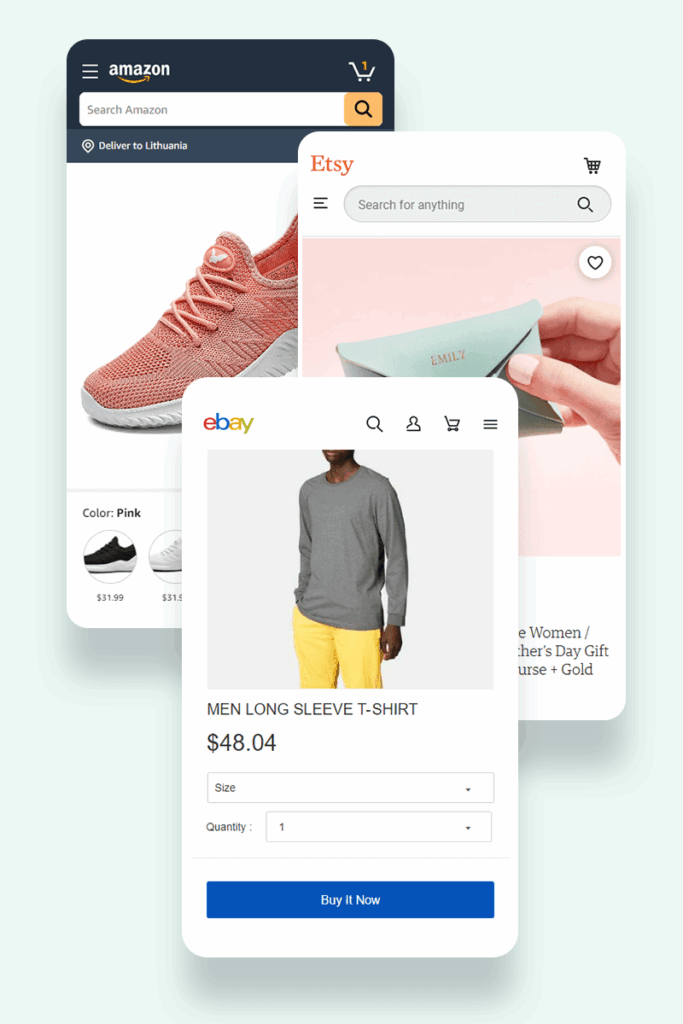
Image Source: ECommerce Fastlane
A single, low-resolution main image is a conversion killer. Shoppers rely on visuals to assess quality, texture, scale, and details. According to research by Baymard Institute, providing multiple high-quality images is one of the most effective ways to improve an ecommerce product page. Your goal is to replicate the in-person “pick-up-and-look” experience.
The Fix: Invest in a professional photography session. Your hero set should include:
- Multiple High-Res Angles: Show front, back, sides, top, and bottom.
- Context and Scale: Show the product in use. Is it a lamp? Show it on a desk. A blanket? Drape it over a couch. Include a common object for scale (like a coin or a hand).
- Detail Shots: Zoom in on unique textures, stitching, logos, or material quality.
- Video Content: A short, 30-60 second video can dramatically increase engagement. Show the product being used, highlight its key features, and demonstrate its benefits. This builds immense trust and answers questions before they’re even asked.
This visual foundation is the first step in retail content optimization. It reduces uncertainty, which is the number one barrier to online sales.
2. The Silent Salesperson: Product Descriptions That Don’t Speak to Your Customer
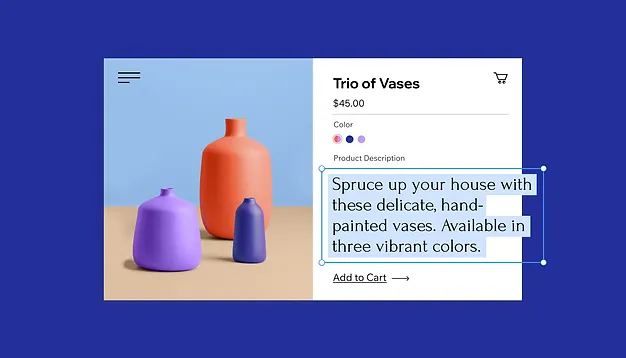
Here’s a trap many fall into: writing product descriptions that are just a list of specifications copied from the manufacturer. “Dimensions: 10x5x3. Material: Polyester.” This tells a customer what it is, but never why it matters to them.
Your description is your voice. It needs to connect on an emotional level while delivering practical information. It should address the customer’s problems and paint a picture of their life improved by your product.
The Fix: Write for your customer, not your warehouse log. Structure your description with a compelling story.
Start with a hook that summarizes the core benefit. Is the coffee mug not just ceramic, but “the perfect temperature-retaining companion for your slow, mindful mornings”?
Then, use bullet points (explained in full sentences) for key specs and features, but always link them back to a benefit.
- Instead of “Stainless steel construction,” try
- “Crafted from 18/8 stainless steel for lifelong durability and a brilliant, easy-to-clean finish.”
- Weave in relevant keyword suggestions from your research naturally, like “easy-to-clean” or “temperature control,” to aid both readability and SEO.
This approach helps your ecommerce listings resonate on a human level.
3. The Invisible Wall: Poor Search Visibility and Ignoring SEO
You could have the best product page in the world, but if no one can find it, it’s useless. This is where technical product detail page optimization meets marketing. Your page needs to be built in a way that search engines like Google can understand and rank it for relevant terms. Ignoring this is like opening a brick-and-mortar store in a deserted alley.
Your goal is first page visibility for searches related to your product. This increases your share of search, the percentage of visible search results you own for your category, which is a strong indicator of brand health and market presence.
The Fix: Conduct basic keyword research. Use a keyword rank tracker to understand what terms your target audience is using. Tools like Google Keyword Planner or SEMrush, even 42Signals can provide keyword suggestions.

Then, strategically place your primary keyword in crucial elements:
- Page Title Tag: The clickable headline in search results.
- Meta Description: The short blurb under the title (though not a direct ranking factor, it affects click-through rate).
- Headings (H1, H2): Especially the main H1 heading on the page.
- Image Alt Text: Describe each image for accessibility and SEO (e.g., alt=”acme-organic-cotton-throw-blanket-draped-over-gray-sofa”).
- Throughout the Content: Naturally within your product description and bullet points.
Remember, the aim is not to stuff keywords but to use them where they make logical sense. This structured approach is key to search visibility growth.
4. The Trust Gap: Missing Social Proof and Urgency
In the physical world, we ask friends for recommendations. Online, we look at reviews and ratings. A product page without reviews is a major red flag for new customers. It signals that either no one has bought it, or those who did were disappointed enough not to comment.
Similarly, a page that feels static, with no indication of scarcity or popularity, fails to trigger the psychological levers that drive action.
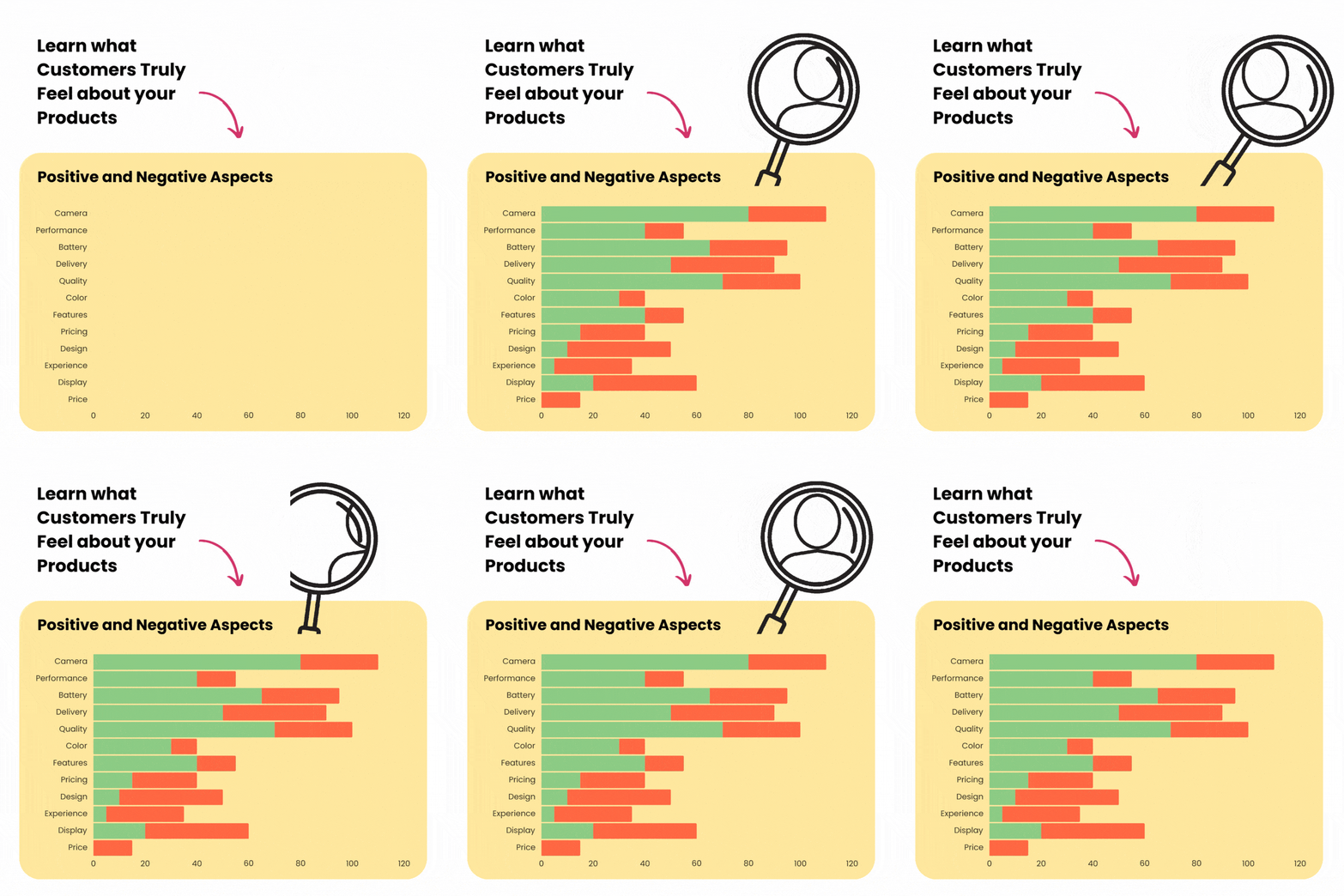
The Fix: Actively collect and display customer reviews. Encourage reviews with follow-up emails. Show a mix of ratings (5-star is great, but a few 4-star reviews actually look more authentic). Feature detailed customer reviews with photos and videos.
Add elements of social proof and light urgency. This doesn’t mean fake countdown timers.
It means honest signals like “Low stock alert,” “Over 1,000 units sold this month,” or “Recently purchased by 12 shoppers.”
For marketplace listing improvement, platforms often have built-in review systems; your job is to provide such exceptional service that you generate positive feedback organically. This builds the critical trust needed to move from consideration to purchase.
5. The Confusion Corner: Unclear Specifications and Shipping Info
Unexpected costs are the top reason for cart abandonment. If a customer has to dig through your FAQ or proceed to checkout to find shipping costs, taxes, or return policies, you’ve created friction. The same goes for vague product specs.
- For a tech product, what are the exact input/output ports?
- For clothing, what is the precise fabric blend and detailed sizing chart?
The Fix: Create a dedicated, highly visible specifications table or section. Use clear, standardized headers.
For shipping and policies, have a concise summary right on the product page, above the fold or near the add-to-cart button.
For example: “Free shipping on orders over $50. Returns accepted within 30 days.” Link to your full policy page for details. This transparency removes a massive point of anxiety and positions your brand as honest and customer-centric. Clear specs are a non-negotiable part of retail content optimization.
6. The Dead-End Street: No Cross-Selling or Up-Selling
When a customer is committed to buying, they are at their most engaged. Showing them nothing else after they add an item to the cart is a missed opportunity. Effective product detail page optimization considers the entire customer journey and average order value.
The Fix: Implement thoughtful “Frequently Bought Together” or “Customers Also Viewed” sections. For a camera, suggest a memory card and case. For a shirt, suggest a matching tie or belt. Ensure these suggestions are genuinely complementary, not random.
The goal is to provide value by helping the customer complete their kit or discover a perfect pairing, which enhances their experience and increases your revenue. This strategy is just as vital for standalone ecommerce listings as it is for marketplace visibility, where algorithms often handle suggestions, but you can influence them through bundled listings.
7. The Mobile Minefield: A Page That Fails on Smaller Screens

Image Source: Tubik Studio
Over half of all web traffic globally comes from mobile phones. If your product page is difficult to navigate, has tiny text, requires pinching and zooming, or has slow-loading images on a smartphone, you are actively rejecting the majority of your potential customers.
Google also uses mobile-first indexing, meaning it primarily uses the mobile version of your page for ranking and indexing.
The Fix: Test, test, and test again. Use your own smartphone to go through the entire purchase journey.
- Is the add-to-cart button easy to tap?
- Do images load quickly on a 4G connection?
- Is the text readable without zooming?
Ensure your website uses a responsive design that automatically adapts to screen size. Compress your images to reduce file size without sacrificing quality. A seamless mobile experience is no longer optional; it’s the cornerstone of modern search visibility and conversion.
Turning Your Page Into a Profit Center
Optimizing your product detail page with digital shelf analytics is not a one-time task. It’s an ongoing process of listening to customer feedback, analyzing your data, and making iterative improvements. Each of these seven fixes works synergistically.
Compelling visuals hook them, persuasive copy speaks to them, SEO helps them find you, trust signals reassure them, clear information comforts them, smart suggestions enhance their cart, and a mobile-friendly experience makes it all effortless.
Start by auditing your current pages against this list. Pick one or two of the most glaring issues to fix this week. Then, move down the list. Use a keyword rank tracker to monitor your improvements in first-page visibility over time.
By treating your product page with the same strategic care as your marketing campaigns, you’ll transform it from a cost center into your most reliable, high-converting sales engine. The path to greater marketplace visibility and a larger share of search begins with a single, well-optimized page. Start building yours today.
Look at 42Signals to understand your brand’s performance on online marketplaces like Amazon and see what improvements can be made today.
Frequently Asked Questions
1. What is product page optimization?
Product page optimization is the process of improving the content, structure, and design of a product page to increase visibility, engagement, and conversions. It ensures that shoppers have all the information they need to make a confident purchase decision.
Optimization typically includes refining product titles, images, descriptions, pricing, reviews, and technical SEO elements so the page performs well in search results and delivers a seamless user experience.
2. How to optimize a product page?
Optimizing a product page involves a combination of content enhancements, technical improvements, and conversion-focused design. Key steps include:
Use a clear, keyword-rich product title that reflects how customers search.
Add high-quality images and videos showing multiple angles and real use cases.
Write detailed and structured product descriptions highlighting features, benefits, materials, sizing, and care instructions.
Use bullet points for easy scanning on mobile.
Show competitive pricing and promotions clearly.
Add trust signals such as reviews, ratings, badges, and certifications.
Ensure fast loading speed and mobile-friendly layout.
Include FAQs to reduce buying hesitation.
Improve internal searchability by using enriched metadata and relevant keywords.
The goal is to reduce friction, answer customer questions early, and make the product incredibly easy to buy.
3. What is PLP and PDP?
PLP and PDP are two critical page types in e-commerce:
PLP (Product Listing Page): This is the category or search results page where multiple products are displayed. Customers browse PLPs to narrow down choices based on filters like price, brand, size, and rating.
PDP (Product Detail Page): This is the specific page dedicated to a single product. It contains all the details: images, description, pricing, reviews, availability, and specifications. The PDP is where most conversion decisions happen.
PLP helps customers discover products.
PDP helps customers decide which product to buy.
4. What makes a good product detail page?
A great product detail page (PDP) does three things well: inform, persuade, and convert. Strong PDPs include:
Clear, benefit-focused product descriptions
High-resolution images and lifestyle videos
Transparent pricing and delivery information
Strong social proof through reviews and ratings
Structured content: bullets, comparison tables, specifications
Mobile-optimized design for fast scrolling and quick add-to-cart
Accurate availability and shipping timelines
Compelling hooks like warranty info or guarantees
SEO-friendly structure that helps the PDP rank for relevant keywords
Ultimately, a good PDP reduces uncertainty, builds trust, and guides the customer toward completing the purchase.