
** TL;DR ** The future of retail in 2025 hinges on integrating advanced technology to create a seamless, personalized customer experience, where a robust retail ecommerce software platform acts as the essential foundation. Success requires leveraging AI in retail for efficient operations and hyper-personalization, using tools like customer data platforms (CDPs) and omnichannel analytics to gain a unified customer view and make data-driven decisions. Furthermore, profitability will be driven by intelligent trade promotion optimization, and meeting the demands of the conscious consumer will make ESG a core operational necessity, not just a marketing trend. Ultimately, the retailers who thrive will be those who connect these elements now to build an intelligent, agile, and customer-centric enterprise.
Remember when the future of retail was a distant concept, something out of a sci-fi movie? That future is not just on the horizon; it is unfolding in our stores and on our screens right now. The year 2025 is not a far-off milestone. It is the next logical step in a transformation that has been accelerating for years. For strategic leaders, this is not a time for passive observation. It is a time for decisive action and strategic investment, which is where retail ecommerce software comes in.
The retailers who will thrive are those who see the connections between the tools they use today and the market trends of tomorrow. They understand that the lines between physical and digital are not just blurring; they are dissolving entirely. This new landscape is built on a foundation of intelligent technology, deep customer understanding, and operational agility. At the heart of this shift lies a powerful combination of sophisticated retail ecommerce software, advanced AI in retail, and a commitment to a truly unified customer experience.
The Digital Backbone: Why Robust Retail Ecommerce Software is Non-Negotiable
Before we can talk about artificial intelligence or hyper-personalization, we must talk about the foundation upon which everything is built. Think of your retail ecommerce software not just as a online storefront, but as the central nervous system of your entire operation. A legacy or siloed system simply will not cut it anymore. The platform you choose must be capable of handling immense complexity while presenting a simple, seamless face to the customer.
Modern retail ecommerce software does much more than process transactions. It is the engine that manages real-time inventory across multiple warehouses and physical stores. It is the system that unifies customer data from every touchpoint, creating a single source of truth. When a customer buys online for in-store pickup, this software ensures the item is waiting for them.
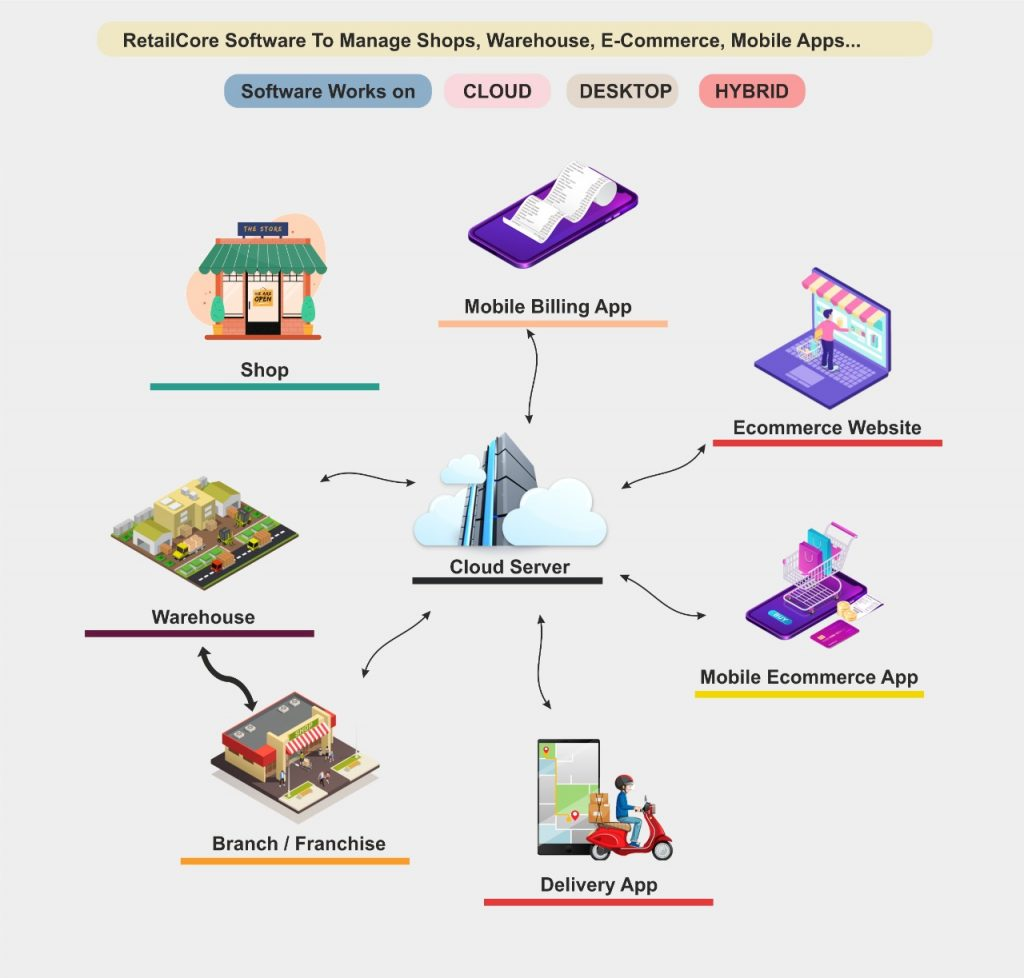
Image Source: Retailcore
When they browse a product on their phone and later log in on a laptop, their cart is saved and synchronized. This level of integration is the baseline expectation for 2025.
Without a flexible and powerful platform, attempts at personalization or omnichannel excellence will be fragmented and ineffective. Your digital backbone must be strong enough to support the intelligent features that will define the next era of retail.
Ready to Take the Next Step?
See how our solutions can help you achieve your goals and drive measurable results.
The Intelligent Core: AI in Retail Moves from Hype to Hard Results
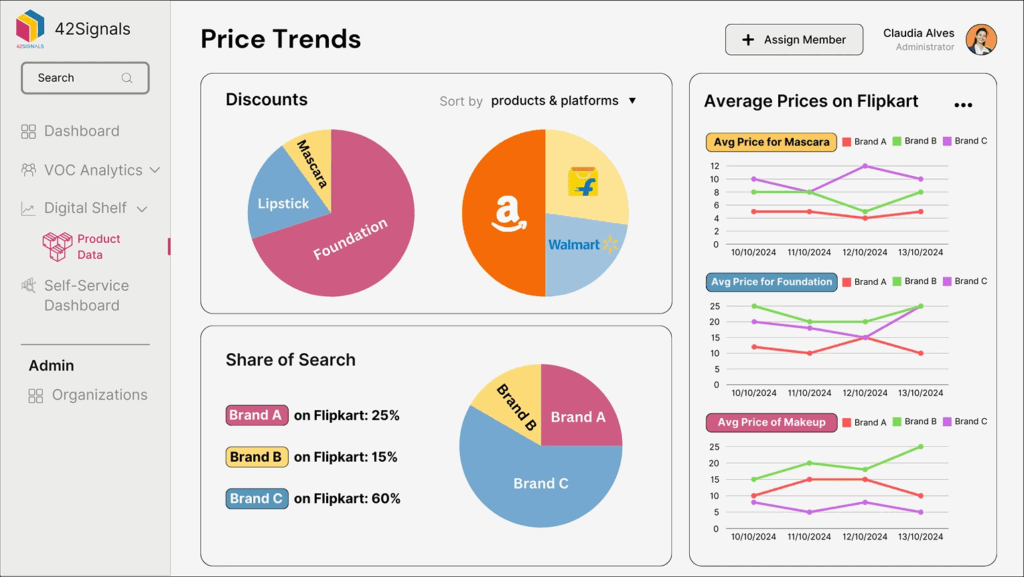
The conversation around AI in retail is evolving. It is moving from a buzzword to a tangible driver of efficiency and revenue. In 2025, AI is not a standalone gadget but an embedded intelligence within your existing systems. It works quietly in the background, analyzing vast datasets to generate insights and automate decisions that were previously impossible for humans to make at scale.
Flipkart data by 42Signals
One of the most impactful applications is in demand forecasting and supply chain management. By analyzing historical sales data, seasonality, weather patterns, and even social media trends, AI can predict future demand with remarkable accuracy. A study by McKinsey & Company found that AI-powered supply chain management can reduce forecasting errors by up to 50 percent and lost sales by up to 65 percent with better product availability.
This directly translates to optimized stock levels, fewer markdowns, and happier customers who find the products they want. Furthermore, AI in retail is revolutionizing loss prevention by identifying patterns that indicate theft or fraud, and it is automating customer service through intelligent chatbots that can handle complex queries, freeing human agents for more nuanced issues.
Knowing the Individual: The Shift from Personalization to Hyper-Personalization
Personalization is not new. Addressing a customer by their first name in an email has been standard practice for years. But the future belongs to hyper-personalization. This is a fundamental shift from segmenting customers into broad groups to treating each individual as a market of one.
Hyper-personalization uses real-time data, predictive analytics, and AI to deliver experiences and product recommendations that are uniquely relevant to a single person at a specific moment in time.
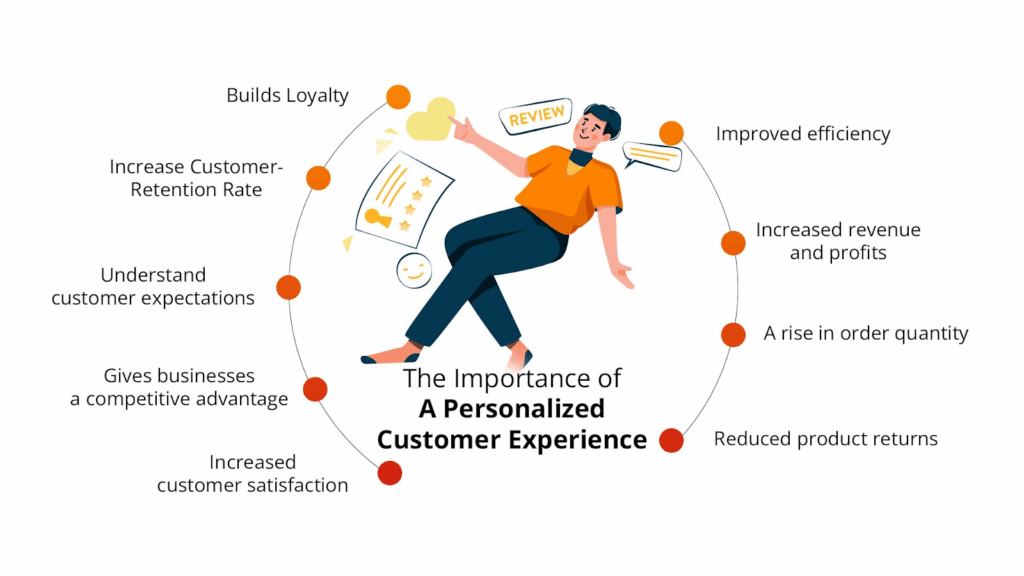
Image Source: Clootrack
Imagine a customer who frequently buys eco-friendly cleaning products. A personalized approach might send them an email about a new green brand. A hyper-personalized approach, however, would recognize that they are running low on a specific detergent based on their purchase cycle. It would then showcase that product on the website homepage, offer a complementary product like a reusable cleaning cloth, and send a mobile notification with a personalized promo code when they are physically near a store that has both items in stock.
This level of relevance requires a unified view of the customer, which is where customer data platforms (CDPs) become critical. A CDP aggregates data from every source website visits, app usage, purchase history, customer service interactions and creates a single, persistent customer profile. This profile is the fuel that powers the engine of hyper-personalization, creating a sense of being understood that builds incredible loyalty.
Ready to Take the Next Step?
See how our solutions can help you achieve your goals and drive measurable results.
The Unified Retail ECommerce Software View: Mastering the Omnichannel with Omnichannel Analytics
The term “omnichannel” has been used for years, but many retailers have struggled to execute it effectively. The challenge has always been data. When your online store, mobile app, and physical locations operate on separate systems, you get a fragmented view of your customer and your operations. This is where omnichannel analytics changes the game. This is not just about tracking sales across channels. It is about understanding the entire customer journey, from the first digital touchpoint to the final in-store purchase.
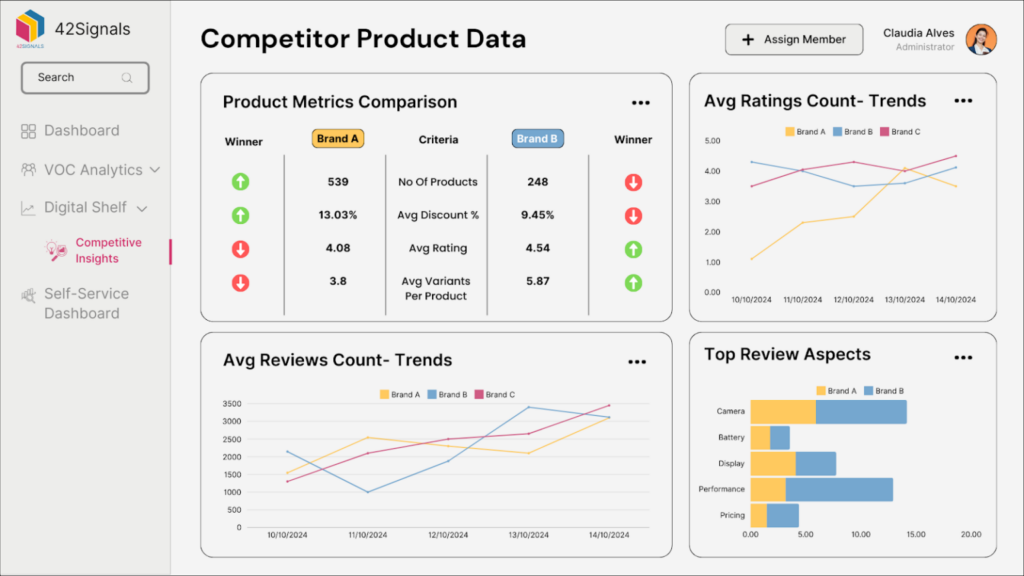
Omnichannel analytics provides a holistic dashboard that shows how channels influence each other. For instance, it can reveal that 40 percent of online sales are actually influenced by a prior in-store visit. It can track how a social media ad campaign drives traffic to both the website and physical locations. This intelligence allows for smarter decisions.
You can allocate marketing budget more effectively, design store layouts that complement the online experience, and ensure your messaging is consistent everywhere. The ultimate goal of omnichannel analytics is to create a cohesive brand experience where the customer feels they are interacting with one single entity, not a collection of disconnected departments.
Optimizing for Profit: The Strategic Power of Trade Promotion Optimization
In a competitive retail landscape, promotions and discounts are essential tools. However, poorly planned promotions can erode profit margins without delivering a corresponding boost in loyalty or long-term sales. This is where trade promotion optimization becomes a strategic advantage. Traditionally, planning promotions was often based on gut feeling and historical precedent. Today, it can be a precise science driven by data and predictive analytics.
Trade promotion optimization software uses AI to model the potential outcomes of different promotional strategies before they are ever launched. It can analyze how a price reduction on one product might affect the sales of complementary items. It can determine the optimal timing and duration for a promotion based on seasonal trends and competitor activity.
For example, the software might predict that a “buy one, get one 50% off” promotion will be 25 percent more effective at clearing seasonal inventory than a flat 30 percent discount, while also preserving more margin. By leveraging these insights, retailers can move from reactive discounting to proactive, profit-maximizing campaigns that strengthen their market position and build smarter relationships with their suppliers.
The Conscious Consumer: Why ESG is a Operational Imperative, Not a Marketing Trend
The retail landscape of 2025 is shaped by more than just technology; it is also shaped by values. Consumers, particularly younger generations, are increasingly making purchasing decisions based on a company’s commitment to ESG which stands for Environmental, Social, and governance. This is not a fleeting trend but a fundamental shift in consumer consciousness.
A retailer’s approach to sustainability, ethical sourcing, and community engagement is now a direct factor in its competitive advantage.
Intelligent retail systems are crucial for operationalizing ESG goals. For instance, predictive analytics can optimize delivery routes to reduce fuel consumption and carbon emissions. Real-time inventory management minimizes overstocking and the resulting waste, which is especially critical for perishable goods.
Furthermore, technology can provide transparency into the supply chain, allowing retailers to verify and communicate the ethical sourcing of their products. Investing in ESG is not just about doing the right thing; it is about building a resilient, future-proof brand that resonates with the values of the modern consumer. It is a business imperative that is intrinsically linked to long-term profitability and reputation.
Ready to Take the Next Step?
See how our solutions can help you achieve your goals and drive measurable results.
Building the Retail ECommerce Software of 2025, Today
The future of retail in 2025 is intelligent, personalized, and seamlessly connected. It is a future where the right retail ecommerce software platform acts as the central command center, enabling a deep, data-driven understanding of each customer and the operational agility to serve them perfectly. The integration of AI in retail, the pursuit of hyper-personalization, and the insights from omnichannel analytics are not isolated projects. They are interconnected parts of a single strategy.
The journey to 2025 starts with an honest assessment of your current technology stack and data capabilities. Are your systems integrated? Do you have a unified view of your customer? Can your supply chain respond to intelligent forecasts? The brands that will lead the market are those that act now to build this integrated, intelligent foundation.
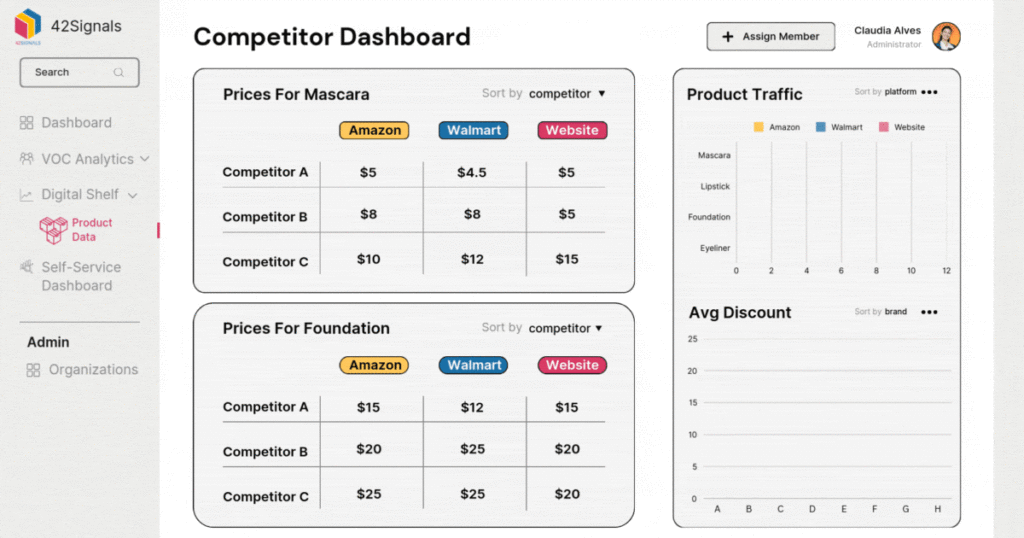
42Signals offers retail ecommerce software solutions to help brands understand the space and optimize operations. Try us out.
Frequently Asked Questions
1. Which software is best for e-commerce?
The best e-commerce software depends on the business size, product catalog, and operational needs. Popular and widely used options include:
Shopify – Ideal for small to medium businesses that want an all-in-one, easy-to-use platform with integrated payments, shipping, and app extensions.
Magento (Adobe Commerce) – A robust, highly customizable platform suitable for enterprises and brands with complex product catalogs.
WooCommerce – A flexible, open-source option for businesses already using WordPress.
BigCommerce – Scales well for fast-growing online stores and offers strong multi-channel selling features.
Salesforce Commerce Cloud – Built for larger organizations that need enterprise-grade infrastructure and CRM integration.
Many retailers also pair their store platform with competitive intelligence and price monitoring tools like 42Signals to track market trends and optimize pricing strategies in real time
2. What are the 4 types of e-commerce?
The four primary types of e-commerce models are:
B2C (Business to Consumer) – Companies sell directly to individual customers (e.g., Nike.com, Amazon).
B2B (Business to Business) – Businesses sell products or services to other businesses (e.g., Alibaba, Salesforce).
C2C (Consumer to Consumer) – Individuals sell to each other through platforms (e.g., eBay, Etsy).
C2B (Consumer to Business) – Individuals offer goods or services to companies (e.g., influencer marketing platforms, Upwork).
Some modern businesses also operate in hybrid models that combine these, especially marketplaces and omnichannel brands.
3. What software do retail stores use?
Retail stores use different types of software for various functions, often integrated to create a unified commerce stack:
POS Systems (Point of Sale): Square, Lightspeed, Shopify POS.
Inventory Management: TradeGecko, Zoho Inventory, Cin7.
CRM & Marketing: HubSpot, Salesforce, Klaviyo.
E-commerce Platforms: Shopify, WooCommerce, BigCommerce.
Analytics & Pricing: 42Signals for competitive pricing intelligence and digital shelf visibility.
The right combination helps retailers manage both online and offline operations efficiently.
4. What is e-commerce in retail?
E-commerce in retail refers to the integration of online sales channels with traditional retail operations to reach customers through multiple touchpoints.
For example:
A clothing store can sell in physical outlets and through its website or marketplaces.
Customers can browse online, pick up in-store, or get home delivery.
Inventory, pricing, and promotions are synced across channels for a seamless experience.
This model—often called omnichannel retail—allows businesses to expand their reach, personalize customer experiences, and optimize operations by combining the best of digital and physical commerce.