

Why Your Amazon Ranking Isn’t Just About Your Product — and What the Digital Shelf Actually Measures
Amazon is not a search engine like Google, it is a buying engine. Its A9 algorithm ranks products based on sales velocity, conversion rates, and customer satisfaction, not content relevance and backlinks. This means brands that manage their Amazon digital shelf proactively tracking how their listings compare to competitors on price, availability, reviews, and content quality consistently outrank and outsell those that treat their Amazon presence as a static listing. This guide covers the anatomy of the Amazon digital shelf, how the A9 algorithm works, how to use digital shelf analytics to identify and close competitive gaps, and how 42Signals provides the real-time Amazon intelligence brands need to maintain visibility and win the Buy Box.
What Is the Amazon Digital Shelf?
The Amazon Digital Shelf refers to the virtual display of products on Amazon’s marketplace, mirroring the physical shelves in traditional retail stores. It represents the online presence of a product, encompassing everything from its listing details—such as title, description, and images—to its visibility in search results, customer reviews, and ratings.

For businesses, the digital shelf is more than just an online product listing; it is a strategic touchpoint where potential customers discover, evaluate, and decide to purchase a product. Factors like keyword optimization, competitive pricing, inventory availability, and advertising campaigns directly influence how well a product performs on the Amazon Digital Shelf.
The Anatomy of the Amazon Digital Shelf
The Amazon Digital Shelf is a dynamic environment that influences consumer purchasing decisions. The key elements that make up this digital shelf include:
- Product Content: High-quality product images, detailed descriptions, and accurate specifications are crucial. Well-optimized product listings with clear, engaging content boost visibility and conversions.
- Pricing: Competitive pricing is a significant factor in winning the digital shelf battle. Amazon’s algorithm rewards products with attractive, competitive prices, factoring in promotions, discounts, and dynamic pricing strategies.
- Reviews: Consumer reviews play a pivotal role in trust-building. Positive reviews and ratings enhance credibility, while negative ones provide opportunities for improvement. Review management is essential for maintaining a strong presence.
- Rankings: Product rankings determine visibility on Amazon. Leveraging SEO strategies, competitive insights, and sales performance data ensures higher rankings, driving more traffic to listings and increasing sales potential.
These elements, when optimized together, create a robust Amazon Digital Shelf strategy that enhances product discoverability, fosters customer trust, and drives higher conversion rates.
How Amazon’s A9 Algorithm Ranks Products — and What That Means for Your Listings

Amazon’s A9 algorithm is the backbone of its search functionality, dictating which products appear for specific keywords. Unlike Google’s algorithm, which emphasises content relevance and backlinks, Amazon’s algorithm prioritises sales‑driven metrics. Here are the specific ranking factors for successful Amazon pricing strategies:
| Factor | Weight | Detail |
| Exact match keywords in title | Very High | The first few words of your title carry the most weight for primary keywords. |
| Sales rank (BSR) | Very High | Products that sell more units (recently) rank higher. BSR is updated hourly. |
| Conversion rate | High | Percentage of views that turn into purchases. Amazon tracks conversion per search term. |
| Click‑through rate (CTR) | High | Main image, price, and review count drive CTR. |
| Fulfilment method | High | FBA ranks higher than FBM for most categories. |
| Price competitiveness | High | Products priced below or near the average for that search term get a boost. |
| Review count and recency | Medium | Both matter. A product with 50 reviews this month outranks one with 500 reviews from last year. |
| Seller account health | Medium | Order Defect Rate, Late Shipment Rate, and Valid Tracking Rate. |
| Stock availability | High | Out‑of‑stock products are demoted or removed from search results. |
| Backend search terms | Medium | Hidden keywords in Seller Central still influence relevance. |
| Add‑to‑cart rate | Medium | Products frequently added to carts (even if not purchased) get a relevance signal. |
| Returns rate | Low‑Medium | High return rates signal poor product‑listing match and reduce ranking. |
How the algorithm processes a search query:
- Search: Customer types a query (e.g., “wireless headphones under $50”).
- Indexing: A9 scans all products for relevance – titles, bullets, descriptions, backend keywords.
- Filtering: Out‑of‑stock, restricted, or heavily returned products are filtered out.
- Scoring: Each relevant product gets a score based on sales velocity, conversion rate, price, fulfilment, and account health.
- Ranking: Products are sorted by score, with sponsored ads interspersed.
Why this matters for Digital Shelf Analytics: Most brands optimise once and forget. The digital shelf is dynamic – rankings change hourly. Continuous monitoring of these factors (via 42Signals) allows you to react to competitor price changes, review surges, or stockouts before they damage your rank.
How to Win the Amazon Buy Box: The Pricing, Fulfilment, and Metrics That Matter
The Buy Box is the white box on the right side of an Amazon product detail page where customers can click “Add to Cart” or “Buy Now.” It is the single most commercially valuable piece of real estate on Amazon – over 80% of sales go through the Buy Box winner.
Winning the Buy Box is not automatic. Amazon awards it to the seller with the best overall value proposition based on several factors:
| Factor | Weight | What You Control |
| Price (including shipping) | High | Competitive pricing, free shipping, promotions |
| Fulfilment method | Very High | FBA vs FBM – FBA strongly preferred |
| Seller metrics | High | Order defect rate, late shipment rate, cancellation rate |
| Stock availability | High | Keep inventory in stock; stockouts instantly lose Buy Box |
| Customer service responsiveness | Medium | 24‑hour response time, negative feedback resolution |
| Landed price consistency | Medium | Avoiding hidden fees or unexpected charges |
Key strategies to win the Buy Box:
- Use FBA (Fulfilment by Amazon) whenever possible. FBA listings dominate the Buy Box because Amazon trusts its own delivery speed and customer service.
- Maintain competitive pricing. The Buy Box often rotates among sellers with similar offers. Use repricing tools (or manual monitoring) to stay within 1–2% of the lowest eligible seller.
- Keep stock levels healthy. A single out‑of‑stock event can cost you the Buy Box for days or weeks after restocking.
- Track seller health metrics. Stay above Amazon’s thresholds: Order Defect Rate <1%, Late Shipment Rate <4%, Valid Tracking Rate >95%.
Why Digital Shelf Analytics matters for the Buy Box: Tools like 42Signals track competitor pricing, stock status, and Buy Box ownership in real time, allowing you to adjust your offer before you lose the Buy Box.
Why Amazon Digital Shelf Performance Directly Determines Your Sales Volume
Amazon transcends the typical online marketplace; it stands as a dominant force in the world of retail. With over 310 million active customers and a vast product catalog, it has become the go-to platform for shoppers seeking convenience, choice, and reliability. As such, establishing a strong presence on the Amazon digital shelf is paramount for brands and businesses for several reasons:
- Customer Reach: Amazon’s extensive customer base provides unparalleled access to potential buyers.
- Credibility and Trust: Shoppers often trust Amazon for product quality and delivery, lending credibility to your brand.
- Global Exposure: Amazon’s international presence enables businesses to tap into global markets effortlessly.
- Sales Potential: High traffic and conversion rates on Amazon can translate into significant sales growth.
- Competitive Advantage: Being on Amazon allows you to compete with both established brands and emerging competitors.
How Digital Shelf Analytics Improves Your Amazon Performance
What is Digital Shelf Analytics (DSA)?
Digital Shelf Analytics refers to the process of monitoring and analyzing key performance indicators (KPIs) on the Amazon platform.
It involves tracking metrics such as product visibility, consumer ratings, pricing, competitor activity, and customer reviews.
By leveraging this data, businesses gain valuable insights into their performance and can make informed decisions to drive growth.
What is Digital Shelf Reporting?
With DSA reports, businesses can monitor their Amazon presence in real-time, allowing them to identify and address any issues promptly.
For example, if a product is not ranking well in search results, businesses can make adjustments to increase visibility.
By proactively managing product listings and optimizing content, businesses can improve their overall performance on Amazon.
Five Benefits of Using Digital Shelf Analytics on Amazon

Image Source: Xtract
- Improved Product Visibility: By tracking and analyzing search rankings, businesses can identify opportunities to improve product visibility. With insights from digital shelf analytics, businesses can optimize product listings by incorporating relevant keywords and creating compelling content. This increases the chances of products appearing higher in search results, resulting in increased traffic and sales.
- Competitor Analysis: Analytics provides businesses with the ability to track and analyze competitor activity on Amazon. By monitoring competitor pricing, product assortment, and customer reviews, businesses can gain a competitive edge. This information allows businesses to align their pricing strategies, optimize product selection, and improve customer satisfaction.
- Enhanced Customer Insights: Understanding customer behavior is crucial for driving growth on Amazon. Using DSA, enterprises can acquire valuable information about customer preferences, purchasing behaviors, and demographic profiles. This data can then be employed to enhance product descriptions, images, and pricing strategies, all with the aim of providing a more tailored experience to meet customer demands.
- Real-time Performance Monitoring: DSA enables businesses to track their performance on Amazon in real time. This allows businesses to identify any issues or areas of improvement promptly. By continuously monitoring key metrics, businesses can optimize their Amazon presence and make necessary adjustments to enhance performance.
- Data-driven Decision Making: DSA empowers businesses to make data-driven decisions. Through the analysis of metrics and trends, companies can spot potential openings, make well-informed pricing choices, fine-tune product listings, and craft potent marketing strategies. This paves the way for streamlined and proficient decision-making, ultimately yielding enhanced performance and fostering growth.
A+ Content and Enhanced Brand Content: The Missing Piece
Basic product listings on Amazon consist of a title, bullet points, description, and images. However, registered brand owners have access to A+ Content (formerly Enhanced Brand Content) – a feature that allows rich multimedia content including:
- Comparison charts
- High‑resolution lifestyle images
- Brand story modules
- Video embedding
- Side‑by‑side product comparisons
Why A+ Content directly impacts the digital shelf:
| Metric | Impact of A+ Content |
| Conversion rate | Increases by 5–15% on average |
| Return rate | Decreases (customers have better expectations) |
| Time on page | Increases, sending positive signals to A9 algorithm |
| Buy Box eligibility | Indirectly improves through higher conversion rates |
Implementation checklist for A+ Content:
- Register for Amazon Brand Registry (required for A+ Content).
- Identify your top 20% of SKUs – focus A+ on products that generate most revenue.
- Design modules that answer customer questions – use comparison charts to differentiate from competitors.
- Include high‑quality videos – products with video convert 2–3x better.
- Update seasonally – refresh content for holidays or product variations.
Note: Basic sellers without Brand Registry cannot access A+ Content. For them, optimisation focuses on core listing elements (title, bullets, images). Digital shelf analytics helps benchmark your content against A+‑enhanced competitors.
How to Implement Digital Shelf Analytics: Five Steps for Amazon Sellers
To effectively utilize digital shelf analytics on Amazon, businesses should follow these key steps:
- Select the Right Analytics Tools: There are various DSA tools available in the market like 42Signals to help optimize your Amazon digital shelf. Businesses should choose a tool that aligns with their specific needs and budget. The tool should provide comprehensive data analysis, competitor tracking, and real-time monitoring capabilities.
- Define Key Metrics: Businesses need to identify the key metrics they want to track on Amazon. This could include search rankings, customer reviews, conversion rates, pricing, and competitor activities. Defining key metrics allows businesses to focus on the most relevant data and gain actionable insights.
- Regular Monitoring and Analysis: DSA is an ongoing process. It is crucial to regularly monitor and analyze data to identify trends, track performance, and make necessary adjustments. This includes monitoring search rankings, competitor pricing, customer sentiment and reviews, and overall product performance.
- Optimize Product Listings: Using the insights gained from DSA, businesses should continuously optimize their product listings. This involves incorporating relevant keywords, improving content quality, and optimizing images to enhance product visibility and attract customers.
- Leverage Competitor Insights: Digital analytics provides businesses with valuable competitor insights with competitor price intelligence. By analyzing competitor pricing, product assortment, and customer reviews, businesses can identify gaps and opportunities. This enables businesses to optimize their own pricing strategies, assortment, and customer experience to gain a competitive advantage.
Challenges in Managing the Amazon Digital Shelf
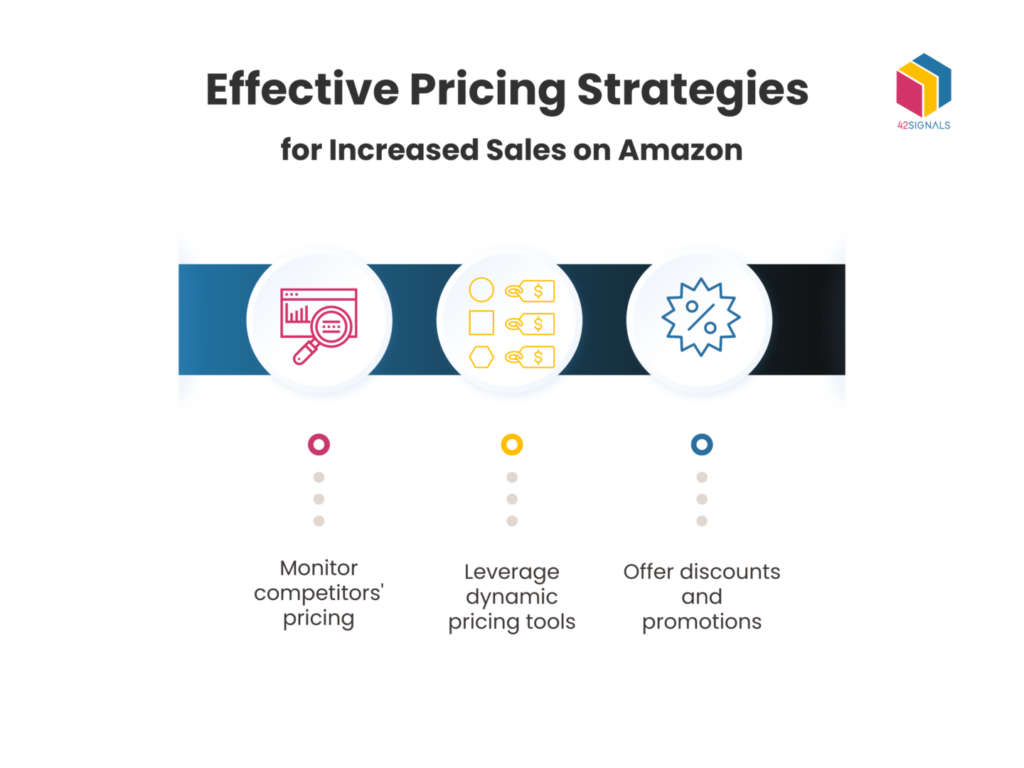
Managing the Amazon Digital Shelf can be complex due to several factors. One of the key challenges is price volatility, as businesses must constantly monitor competitors’ prices and adjust their strategies to maintain competitiveness.
Additionally, content optimization is crucial for ensuring products are presented effectively, but keeping listings accurate and up-to-date across various marketplaces can be time-consuming. Inventory management is another hurdle (which can be solved with stock availability analytics), as stock levels need to be aligned with demand forecasts to avoid stockouts or overstocking.
Lastly, the ever-changing algorithms of Amazon require constant adjustments to stay visible and relevant on the platform. Effective use of digital shelf analytics and competitive insights can help businesses navigate these challenges more efficiently.
Weekly Amazon Digital Shelf Health Audit: A Simple Scorecard
Managing the Amazon digital shelf is not a set‑and‑forget task. Use this weekly audit framework to spot problems before they hurt sales. Score each factor 0–2 (0 = poor, 1 = acceptable, 2 = excellent) and calculate your Digital Shelf Health Score.
| Factor | Check | 0 (Poor) | 1 (Acceptable) | 2 (Excellent) |
| Title optimisation | Primary keyword appears in first 50 characters? | No | Yes, but buried | Yes, near start |
| Main image quality | White background, high resolution, shows product clearly? | Poor | Acceptable | Professional, zoomable |
| Secondary images | At least 4 images? | 0–1 | 2–3 | 4+ (including infographics) |
| A+ Content / Video | Present on top SKUs? | No | Only on some | Yes, with video |
| Price competitiveness | Within 5% of lowest competitor? | >15% higher | 5–15% higher | Within 5% or lower |
| Buy Box ownership | For top 5 SKUs, do you own >80% of Buy Box? | <50% | 50–80% | >80% |
| Stock availability | In‑stock rate across top SKUs? | <90% | 90–98% | >98% |
| Review recency | At least one new review in last 30 days? | No | Yes, but from older reviews | Yes, frequent new reviews |
| Seller rating | Account health score? | <250 | 250–400 | >400 (or “Excellent”) |
| Share of search | Brand visibility vs. competitors? | Declining >10% | Stable | Growing |
Scoring:
- 18–20: Digital shelf healthy. Focus on expansion and testing.
- 14–17: Good, but gaps exist. Prioritise the lowest‑scoring factors.
- 10–13: At risk. Take action within 2 weeks.
- <10: Urgent intervention needed. Stop new initiatives and fix fundamentals.
How to use this scorecard with 42Signals: The platform automates most of these checks – price competitiveness, Buy Box ownership, stock availability, share of search analytics, and review recency. Run the report weekly, share with your team, and assign owners to each low score.
How 42Signals Helps Brands Win on the Amazon Digital Shelf
42Signals leverages advanced AI-powered analytics to help brands optimize their presence on the Amazon digital shelf. By tracking real-time competitor data, pricing fluctuations, and customer sentiment, 42Signals provides actionable insights that enable brands to make data-driven decisions. The platform helps brands identify gaps in their product listings, monitor the performance of key metrics like share of search, and adjust their strategies accordingly.
Through continuous monitoring of price intelligence and stock levels, 42Signals empowers brands to maintain competitive pricing and ensure product availability, ensuring they remain visible and competitive in Amazon’s fast-paced marketplace.
Additionally, the platform offers insights into advertising performance, enabling brands to refine their ad spend and improve return on investment. By optimizing the digital shelf with Amazon product listing optimization, 42Signals helps brands drive higher sales, enhance customer experiences, and achieve long-term growth on Amazon
Conclusion
Digital shelf analytics plays a crucial role in optimizing a business’s presence on Amazon. By leveraging data and insights, businesses can improve product visibility, gain a competitive edge, enhance customer satisfaction, and make informed decisions.
Remember, digital analytics is not a one-time effort but an ongoing journey to adapt and excel in the ever-evolving Amazon marketplace.
Start your journey with 42Signals and you’ll be better equipped to make data-driven decisions that drive your Amazon success. Schedule a demo today!
Frequently Asked Questions
What is the Digital Shelf?
The digital shelf is the collection of online spaces where products are displayed and sold. It’s the virtual counterpart to the physical shelves you see in a store, but instead, it spans across e-commerce websites, mobile apps, and social media platforms. It’s where consumers interact with brands digitally, making it a critical battleground for market visibility and sales.
What is Digital Shelf Optimization?
Digital Shelf Optimization (DSO) involves strategies to enhance a product’s online presence and searchability. It’s about ensuring that your product listings are complete, accurate, and engaging across all online retail channels. DSO aims to improve the consumer’s online shopping experience, thereby increasing the likelihood of conversion and customer loyalty.
What is Digital Shelf Excellence?
Digital Shelf Excellence is the pursuit of perfection in online product presentation and performance. It means your products not only show up on the digital shelf but also stand out through superior content, strategic placement, and interactive elements that drive engagement and sales. It’s an ongoing process of measuring, learning, and improving to stay ahead in the digital marketplace.