

** TL;DR ** Unauthorised sellers on Amazon can silently erode your brand’s reputation and revenue by creating a series of interconnected problems, including price undercutting that violates your MAP policy, losing the critical Buy Box, which diverts sales, and an influx of negative reviews often linked to counterfeit or grey market goods. These issues deteriorate customer trust, strain relationships with authorised retailers, and create hidden financial costs. The essential defence is a proactive, data-driven strategy that involves consistently monitoring your listings for these red flags using Amazon retail analytics and aggressively enforcing your policies through Amazon’s Brand Registry and a clear distribution agreement to reclaim control over your brand’s presence.
Building a distinguished brand requires a significant investment of resources, creativity, and strategic vision. You have developed a high-quality product, cultivated a compelling brand identity, and chosen to leverage Amazon’s vast marketplace to scale your business. Initially, the results meet your expectations, with sales figures reflecting your hard work.
However, a subtle shift may occur over time. You might observe an unexpected and dramatic price drop on your flagship product. Your product detail page, once a source of proud customer testimonials, begins to accumulate concerning reviews that reference issues your quality control should have prevented. Concurrently, your sales velocity slows, despite stable or increased advertising spend.
This scenario is often the symptom of a deeper issue, one that operates beneath the surface of your official storefront. The likely cause is the presence of unauthorised sellers. These third-party entities, operating outside your sanctioned distribution network, can systematically undermine your brand’s value, customer trust, and profitability.
Defining the Adversary with Amazon Retail Analytics
To effectively address a challenge, one must first understand its nature. An unauthorised seller is any retailer listing and selling your products on Amazon without your formal authorisation. They are not vetted partners, do not adhere to your brand standards, and operate independently of your distribution strategy.
The sourcing methods for these sellers are typically indirect. They may procure inventory through liquidators of excess stock, from retailers going out of business, or via the grey market. The grey market involves the trade of genuine goods through distribution channels not authorised by the original manufacturer, often crossing international borders without regard for regional warranty or support agreements.

Image Source: Operation ROI
While the product may be authentic, its pathway to the consumer is unmanaged, creating a fundamental disconnect between your brand’s promise and the customer’s experience. This initial breach in your supply chain control is the vulnerability that comprehensive Amazon retail analytics are designed to identify.
The Diagnostic Checklist: Key Indicators of an Unauthorised Seller Problem
A proactive brand protection strategy begins with vigilant monitoring. You do not need advanced technical skills to identify these warning signs, merely a disciplined approach to reviewing your Amazon presence. The following red flags signal that unauthorised sellers may be impacting your business.

1. Inconsistent and Eroded Pricing Structures
One of the most immediate and visible signs of a problem is the violation of your established pricing policy. If you have implemented a Minimum Advertised Price (MAP) to maintain brand value and ensure fair competition, seeing your product listed significantly below that price by an unknown seller is a definitive red flag.
This practice, known as price undercutting, is a common tactic. Because unauthorised sellers often acquire inventory at a lower cost, they can afford to offer drastic discounts to quickly capture market share. While a lower price may seem attractive to consumers in the short term, it critically devalues your brand in the long term.
It signals to your authorised retail partners that you are unable or unwilling to enforce your own policies, damaging those crucial relationships and triggering a destructive price war. Consistent monitoring for these MAP violations is a non-negotiable component of modern brand management.
2. The Disappearance from the Buy Box with Amazon Retail Analytics
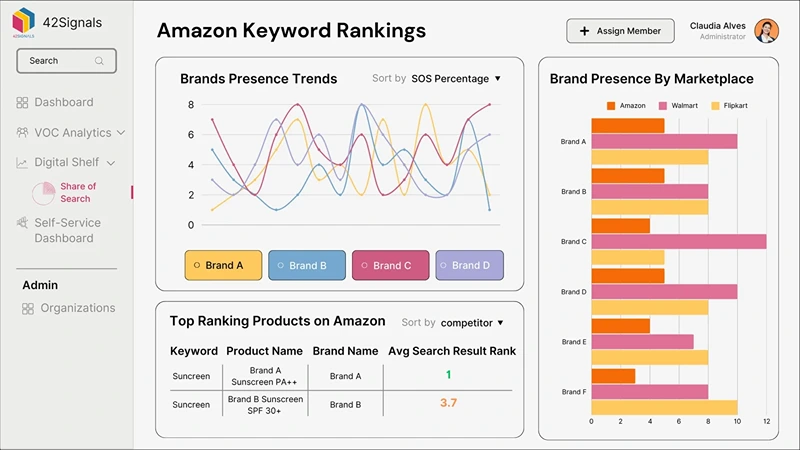
On Amazon, the “Buy Box” is the primary point of sale. Industry analysis suggests that over 82% of Amazon sales are secured by the seller who wins this coveted position. (Source: Feedvisor).
When you are the sole seller, you consistently hold the Buy Box. However, when multiple sellers list the identical product, Amazon’s algorithm awards it based on a combination of factors, including price, shipping speed, and seller performance metrics.

Image Source: Seller Intelligence by 42Signals
An unauthorised seller engaging in price undercutting can easily meet the algorithm’s primary criteria, causing you to lose Buy Box ownership. The consequence is profound: even customers who arrive on the page intending to purchase from your brand can inadvertently buy from an unauthorised seller simply by clicking the default “Add to Cart” button. This not only diverts revenue but also places the customer experience in the hands of an unvetted entity.
3. Anomalies in Customer Feedback and Reviews
Your product reviews are a vital source of market intelligence. A sudden influx of negative feedback, particularly with complaints that are inconsistent with your known product quality, is a major warning sign. Customers may report receiving items that are used, damaged, missing components, or accompanied by manuals in incorrect languages.

Consumer sentiment analysis by 42Signals
These patterns often point to issues with counterfeit products or the commingling of inventory within Amazon’s fulfilment centres. When unauthorised sellers send their inventory to Amazon, it can be commingled with your own in a shared bin if you do not take precautions. When an order is placed, Amazon may fulfil it from the nearest available stock, which could be a compromised unit from a rogue seller.
The end customer, who believes they are purchasing from you, receives a substandard product. Their resulting negative review directly damages your brand reputation, and the feedback is permanently attached to your product listing, influencing future purchase decisions.
4. Proliferation of Unidentifiable Seller Entities
A simple but effective diagnostic step is to regularly review the “Other Sellers on Amazon” section on your product detail pages. The presence of seller names that appear anonymous or unprofessional, such as “clearance_warehouse77” or “deals_network,” is a significant concern.

Reputable businesses operate under identifiable names to build trust and facilitate customer service. Unauthorised sellers frequently use opaque or constantly changing pseudonyms to avoid detection, accountability, and the consequences of policy violations. If you cannot readily determine who is selling your products, it indicates a lack of control over your distribution channel and presents a substantial risk to your brand.
The Cascading Impact: Quantifying the Damage to Your Business
Identifying the symptoms is the first step. Appreciating the full, cascading impact of unauthorised sellers is essential for justifying the investment in a solution. The damage extends far beyond a simple loss of a single sale, creating ripple effects across your entire operation.
The Gradual Erosion of Brand Equity and Consumer Trust Without Amazon Retail Analytics
The most significant long-term cost is the erosion of your brand reputation. Brand equity is built over years through consistent, positive customer experiences. When a consumer purchases from an unauthorised seller and receives a counterfeit, damaged, or incorrect item, their frustration is directed at your brand. They do not distinguish between you and the anonymous third party; in their eyes, your brand failed to deliver. This loss of trust results in diminished customer lifetime value, negative word-of-mouth, and a tarnished brand image that is exceptionally difficult and expensive to rehabilitate.
The Compound Financial Consequences
The financial implications are both direct and indirect. The most obvious direct impact is the revenue diverted when you lose Buy Box percentage to an unauthorised seller. The indirect costs, however, are often more substantial. Your advertising efficiency declines because a lost Buy Box leads to lower conversion rates, increasing your cost per acquisition.
Your customer service team invests valuable time handling complaints and processing returns for issues they did not create. Furthermore, you may feel pressured to engage in price matching, which erodes your profit margins and further devalues your brand. Implementing a sophisticated Amazon retail analytics platform allows you to move beyond anecdotal evidence and accurately quantify these compound financial losses.
The Deterioration of Authorised Partner Relationships
Your authorised retailers and distributors are your strategic allies. They invest in merchandising, staff training, and local marketing to support your brand. When they see their sales undercut by unauthorised online sellers who operate with lower overhead and no commitment to brand standards, it creates significant friction.
They may perceive your brand as being poorly managed or indifferent to their partnership. This can lead to reduced shelf space, a lack of promotional support, or, in severe cases, the decision to discontinue carrying your products altogether. Proactively preventing MAP violations is, therefore, a critical function of partner relationship management.
Building a Strategic Defence: The Role of Proactive Monitoring and Amazon Retail Analytics
A passive approach is insufficient to address this challenge. Protecting your brand requires a deliberate, data-driven strategy centred on continuous vigilance. This is where the strategic application of Amazon retail analytics transitions from a luxury to a business necessity.
Moving beyond occasional, manual checks of your listings is imperative. For brands with extensive catalogues, manually tracking prices, seller emergence, and Buy Box ownership across all SKUs is not a scalable solution. Specialised software and Amazon retail analytics tools provide an automated and systematic defence.
These platforms can monitor your product pages around the clock, delivering immediate alerts when a new, unauthorised seller appears, a MAP violation is detected, or your Buy Box share drops unexpectedly. This actionable intelligence forms the evidentiary foundation required to enforce your policies effectively and efficiently.
Reclaiming Your Brand Narrative: An Actionable Response Plan
Armed with data and a clear diagnosis, you can move from a defensive posture to an offensive strategy. Reclaiming control involves a multi-layered approach that combines Amazon’s internal tools with robust external policies.
Step 1: Fortify Your Foundation with Amazon Brand Registry
The foundational step for any serious brand on Amazon is enrollment in the Amazon Brand Registry. This program provides powerful tools to search, report, and manage potential intellectual property infringements. It grants you greater control over your product listings and is a prerequisite for accessing advanced protection tools. It is the first and most critical line of defence.
Step 2: Establish and Enforce a Transparent Distribution Policy
Prevention is the most efficient form of protection. Develop a clear, unambiguous distribution policy that is formally communicated to all your wholesale partners. This policy should explicitly prohibit the resale of your products on Amazon and other online marketplaces without express written consent. The policy must be backed by consistent enforcement, including the termination of relationships with distributors who violate these terms.
Step 3: Maintain Rigorous Enforcement of Your MAP Policy
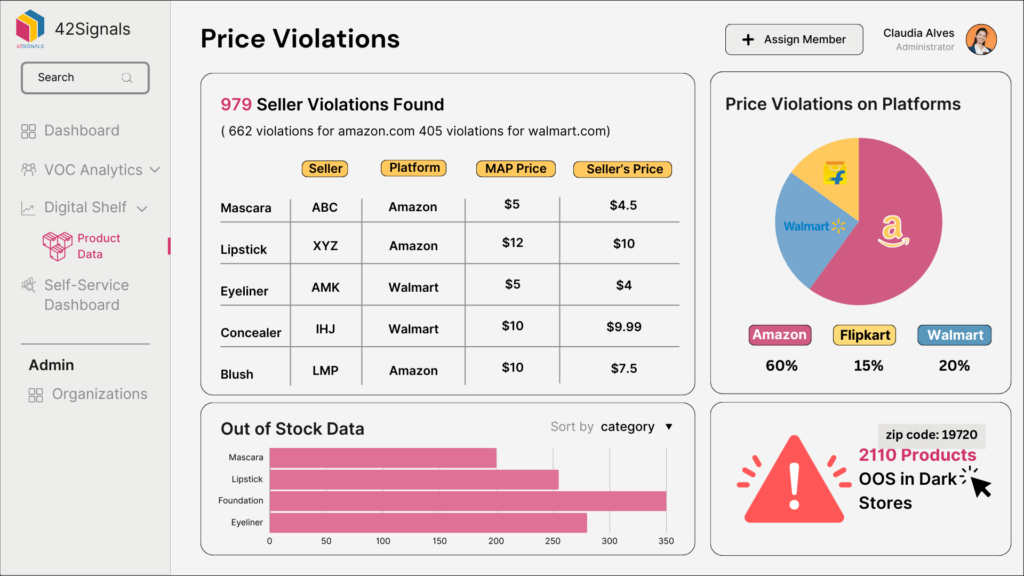
A MAP policy is only as effective as its enforcement. When a violation is detected through your monitoring, the process should be systematic. Document the infringement with detailed screenshots. Initiate contact with the violating seller through Amazon’s official channels, politely informing them of your policy and requesting compliance. Many will comply upon first contact. For those who do not, your documented evidence becomes the basis for formal reports to Amazon.
Step 4: Leverage Amazon’s Reporting Mechanisms
For sellers who persist in violating policies or who are engaged in selling counterfeit products, you must utilise Amazon’s Report a Violation tool within Brand Registry. This system allows you to report intellectual property infringement based on trademark, copyright, or counterfeit claims. The quality and clarity of the evidence you submit, gathered through your Amazon retail analytics efforts, directly influence the speed and effectiveness of Amazon’s response.
Securing Your Brand’s Future with Amazon Retail Analytics
The presence of unauthorised sellers on Amazon represents a persistent and evolving challenge. However, it is not an insurmountable one. The integrity of your brand reputation is secured through a commitment to strategic vigilance and a proactive defence.
By learning to recognise the diagnostic red flags, from erratic pricing and lost Buy Box ownership to anomalous customer reviews, you can identify a problem in its early stages. By embracing a data-centric approach through dedicated Amazon retail analytics and taking decisive, policy-driven action, you can reclaim control of your product listings.
Do not allow unaccountable sellers to dictate your brand’s narrative or diminish the value you have meticulously built. A strategic and informed approach empowers you to protect your customers, nurture your partner relationships, and ensure the long-term health and growth of your brand on Amazon.
Use 42Signals’ unauthorised seller and MAP violation detection features to stay on top of any suspicious activity on several platforms.
Ready to Take the Next Step?
See how our solutions can help you achieve your goals and drive measurable results.
Frequently Asked Questions
1. What is shelf optimization?
Shelf optimization is the process of arranging and managing products on retail or digital shelves in a way that maximizes visibility, sales, and customer satisfaction. It combines data analytics, consumer behavior insights, and product performance metrics to determine the best placement for each product.
In physical retail, this means identifying which products should go on eye-level shelves, how much space each SKU should occupy, and what combinations increase basket size. In e-commerce, it involves optimizing product listings, search placement, and recommendations to improve discoverability and conversions.
The goal is simple — make it easy for customers to find what they want and encourage them to buy more.
2. What is shelf management?
Shelf management refers to the systematic control of product placement, inventory levels, and shelf space utilization in stores or online platforms. It ensures that the right products are displayed in the right place, at the right time, and in the right quantity.
Good shelf management helps:
Reduce out-of-stock situations
Improve sales through better product visibility
Maintain planogram (shelf layout) compliance
Enhance brand performance by aligning shelf strategy with shopper behavior
Retailers often use specialized software or digital shelf analytics tools to monitor shelf performance and automate decisions.
3. How to improve shelf availability?
To improve shelf availability, retailers and brands focus on preventing stockouts and ensuring replenishment happens in real time. Some proven methods include:
Automated Replenishment: Using predictive analytics to forecast demand and restock proactively.
Inventory Integration: Linking POS systems with supply chain data for accurate visibility.
Regular Audits: Conducting frequent in-store or online checks to spot gaps.
Collaborative Planning: Coordinating with suppliers and distributors to maintain consistent stock flow.
Digital Shelf Monitoring: Using AI tools like PromptCloud’s data feeds to track product availability across e-commerce platforms in real time.
Maintaining high shelf availability ensures customer satisfaction and prevents lost sales opportunities.
4. What is shelf technology?
Shelf technology refers to the use of digital tools, sensors, and analytics platforms to monitor and optimize shelf performance. It can include:
Electronic shelf labels (ESLs): Automatically update prices or promotions.
Image recognition software: Detect empty shelves or misplaced items through cameras.
IoT sensors: Track stock levels and product movement in real time.
Digital shelf analytics: Analyze online product visibility, pricing, and customer engagement.
In essence, shelf technology merges AI, automation, and data analytics to make retail operations smarter, faster, and more customer-centric — both in-store and online.