
Quick Summary of Competitor Keyword Gap Analysis
If you are looking for a simple way to boost your sales on marketplaces like Amazon or Flipkart, you need to understand where your competitors are beating you. A competitor keyword gap analysis is the process of finding the specific search terms that your rivals are ranking for while your products remain hidden. By identifying these missing keywords, you can update your product listings to capture traffic that was previously going to other brands. This strategy is essential for maintaining a strong share of search in a crowded digital marketplace.
The Importance of Finding Your Competitor Keyword Gap
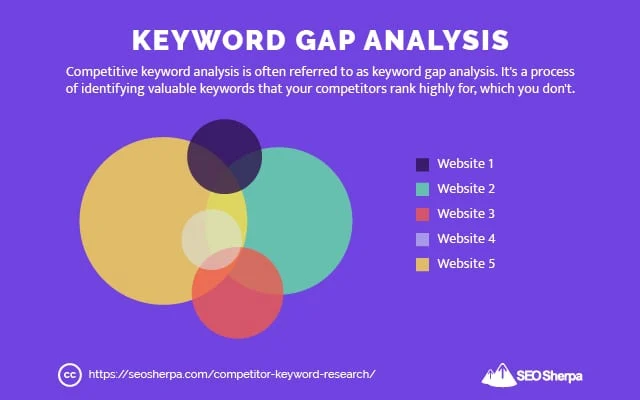
Image Source: SEO Sherpa
In the world of online shopping, visibility is the most valuable currency you have. If a customer cannot find your product within the first few seconds of their search, they will simply buy from someone else. Research shows that on platforms like Amazon, as many as 70 percent of shoppers never actually click past the first page of search results. This means that if your competitor is on page one for a high volume term and you are on page two, you are effectively invisible to the majority of the market.
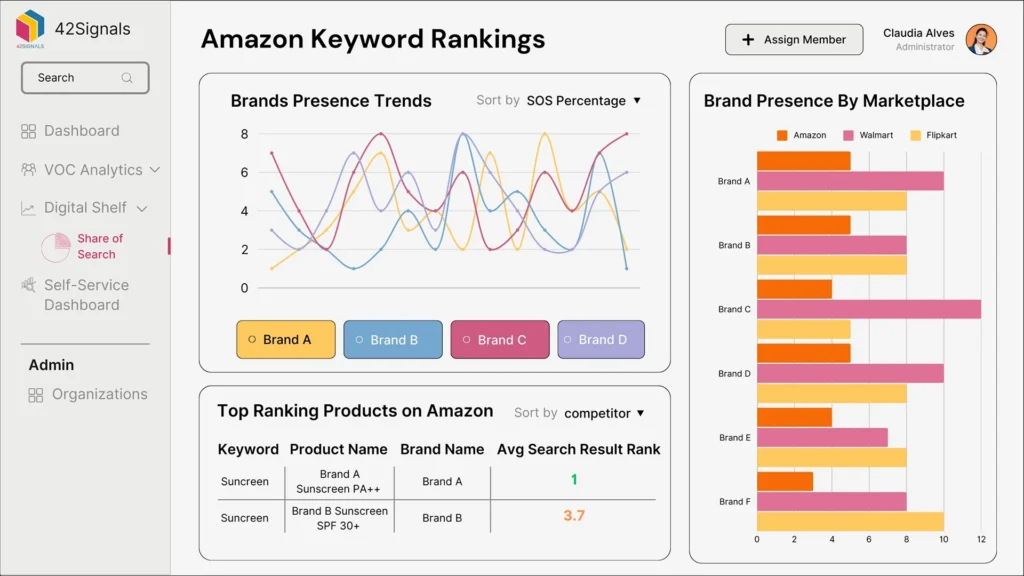
Conducting a regular competitor keyword gap analysis allows you to see the market through the eyes of the consumer. It reveals the language they use and the specific problems they are trying to solve. When you ignore these gaps, you are essentially leaving revenue on the table for your rivals to claim without a fight. This is not just about finding new words; it is about reclaiming your rightful place at the top of the search results where the sales actually happen.
Defining the Competitor Keyword Gap Analysis Process
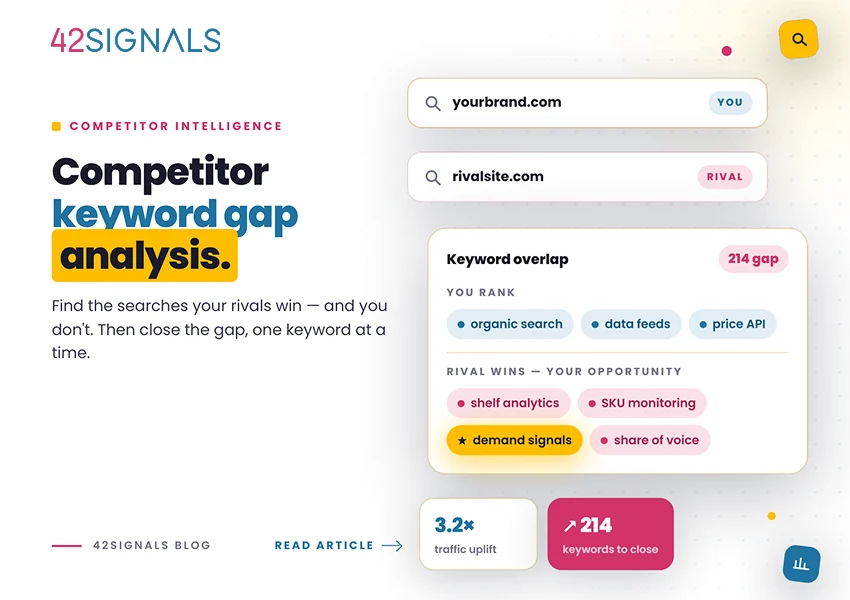
To start, we must define what we mean by a “gap” in the context of ecommerce search. A gap occurs when a competitor ranks for a relevant search term that you do not appear for, or when they rank significantly higher than you for the same term. This is often caused by a difference in how products are described or how metadata is optimized. A thorough competitor keyword gap analysis looks at the entire landscape of your category to find these missed opportunities.
There are several layers to this process that you should consider:
- The first layer involves identifying keywords where your competitor is in the top five results while you are nowhere to be found. This represents a total loss of visibility for a term that is clearly driving sales for another brand in your space. You should prioritize these terms because they offer the most immediate potential for growth if you can optimize your listings quickly.
- The second layer focuses on terms where you and your rival both rank, but they are consistently outperforming you. This often suggests that their content is more relevant to the search intent or that they have better performance metrics like conversion rates. Improving your ranking for these terms requires a mix of content updates and performance monitoring.
- The third layer looks for emerging trends and long tail phrases that neither you nor your competitor have fully dominated yet. These are often the most cost effective keywords to target because the competition is lower but the buyer intent is very high. Finding these early allows you to build authority before the rest of the market catches on.
What Is a Keyword Gap Analysis Tool and How Does It Work?
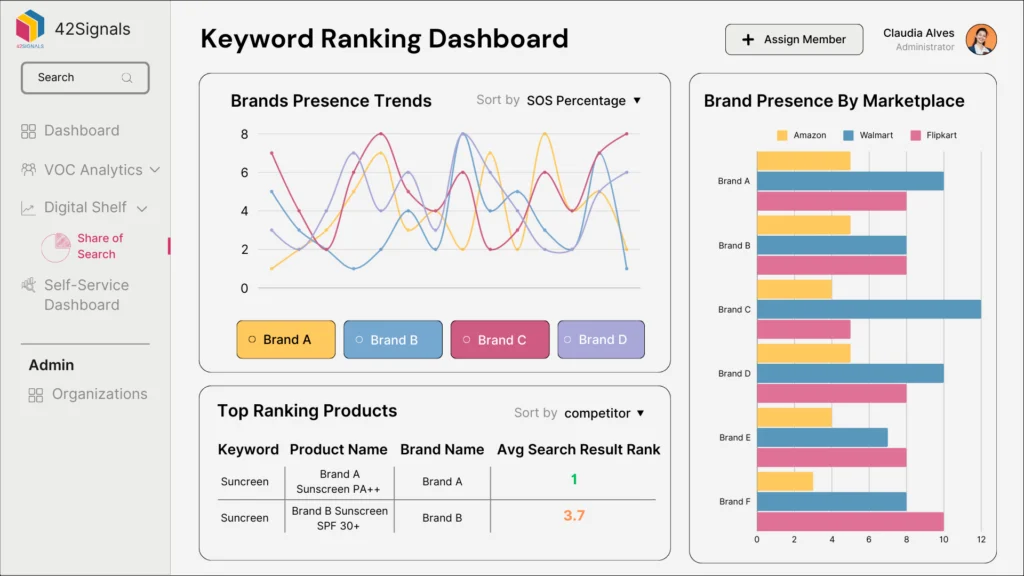
Trying to find these gaps manually is an impossible task for any modern brand. Marketplaces like Flipkart and Amazon India change their rankings every single hour, and tracking thousands of SKUs by hand would take a massive team. This is why using a dedicated keyword gap analysis tool is necessary for anyone serious about growth. These tools can scan the entire digital shelf in seconds and provide you with a clear list of missing keywords.
A high quality tool does more than just give you a list of words; it provides the context you need to make decisions. It should show you search volume, the difficulty of ranking for a term, and how your rivals are using those terms in their titles and descriptions. By using a keyword gap analysis tool, you can automate the boring parts of research and spend your time on the creative work of optimization.
The benefits of using automation for this work are clear:
- Automation allows you to track changes in real time so you can respond to competitor moves before they impact your weekly sales reports. If a rival launches a new campaign or changes their pricing, you will see the impact on their keyword rankings almost immediately. This level of speed is the difference between leading the market and constantly playing catch up.
- You can also gather data from multiple platforms at once, which is vital for brands selling on Amazon, Flipkart, and Noon simultaneously. Each platform has its own unique search algorithm, and a keyword that works on one might not work on another. A good tool helps you tailor your strategy for each specific marketplace without doubling your workload.
- Finally, these tools help you avoid human error, which is common when dealing with massive spreadsheets and thousands of data points. By relying on structured data, you can be confident that your optimization efforts are based on facts rather than guesses. This makes it much easier to justify your marketing spend to leadership teams who want to see a clear return on investment.
How to Read Your Keyword Gap Report
Once your tool has finished its work, you will be presented with a keyword gap report. This document is the roadmap for your upcoming content updates and ad campaigns. It highlights the overlap between your brand and your rivals, showing you exactly where you are winning and where you are falling behind. Understanding how to interpret this report is a critical skill for any ecommerce manager.
A typical keyword gap report will group keywords into different categories based on their priority. You might see a “missing” category for words you don’t rank for at all, and a “weak” category for words where your ranking is poor. By focusing on the terms with the highest search volume in the missing category, you can find the biggest opportunities for quick wins.
Performing a Deep Competitive Keyword Analysis
While keywords are the foundation of search, a true competitive keyword analysis goes deeper than just text. You need to understand why the algorithm prefers your competitor for certain terms. This might involve looking at their pricing strategies, their review counts, or even their product images. Search engines on marketplaces don’t just look for word matches; they look for the products that are most likely to satisfy the customer.

When you perform this analysis, you should look at the “share of voice” for each of your key competitors. This metric tells you what percentage of the total visibility in a category is owned by a single brand. If one rival has a massive share of search for a specific set of keywords, it is a sign that they have built a very strong authority in that niche. You can then study their listings to see what they are doing differently and adapt those lessons for your own brand.
To make your analysis effective, follow these steps:
- Begin by identifying your top three to five direct competitors on each platform where you sell your products. These should be the brands that appear most often for your target keywords, even if they aren’t the largest companies in the physical world. In ecommerce, your biggest rival is whoever owns the first three spots on the search results page.
- Next, use your tool to extract the keywords that are driving the most organic traffic to their product pages. You are looking for the “workhorse” terms that consistently put them in front of buyers. Compare this list to your own keyword set to find the obvious omissions that you need to fix immediately.
- After you have your list of missing terms, look at the content quality of the top ranking listings for those words. Check if they are using high quality images, detailed bullet points, or specific technical terms that you might be missing. This qualitative data is just as important as the numbers when it comes to convincing a customer to click on your product.
What Is an SEO Keyword Gap and How Do You Close It?
Your seo keyword gap is essentially a list of topics that you haven’t covered well enough to satisfy the search engine. On a marketplace, SEO is not a one time task; it is a continuous cycle of testing and refining. As new products enter the market and customer behavior shifts, your gap will naturally change. This is why you must treat your seo keyword gap as a living document that guides your weekly activities.
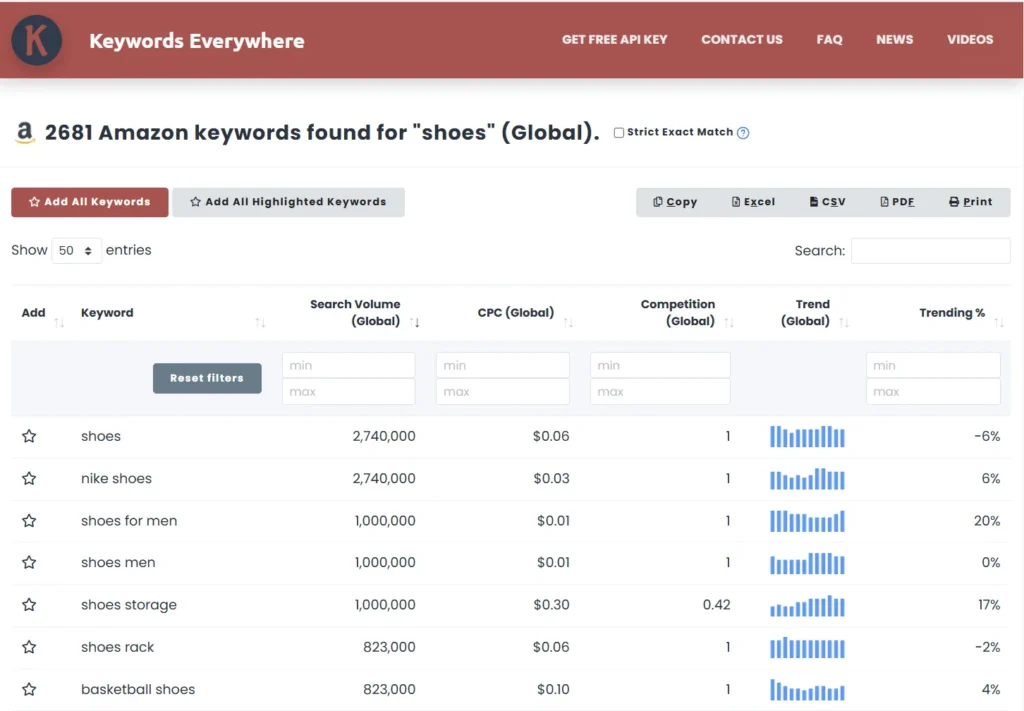
Image Source: Keywords Everywhere
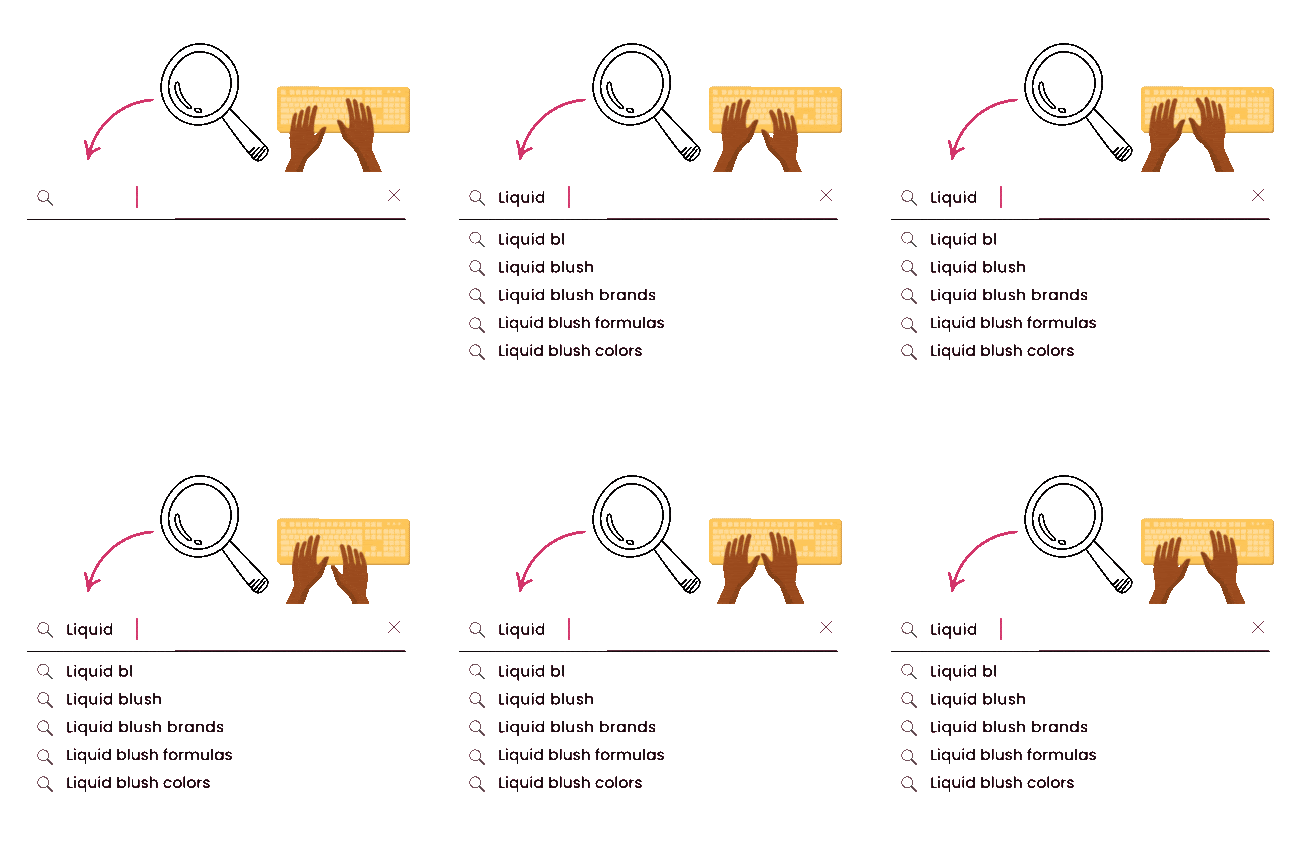
Closing this gap often requires more than just adding a word to your title. You might need to rewrite your product descriptions to better explain how your product solves a specific problem. If the search term is “waterproof running shoes for flat feet,” and your description only says “running shoes,” you have a relevance gap that needs to be filled with detailed content.
Tracking Your Share of Search to Measure Success
One of the best ways to see if your efforts are working is to track your share of search over time. This metric shows you how often your brand appears in the search results compared to the total number of searches in your category. As you close your keyword gaps, your share of search should naturally increase. This is a leading indicator of future sales growth and brand health.
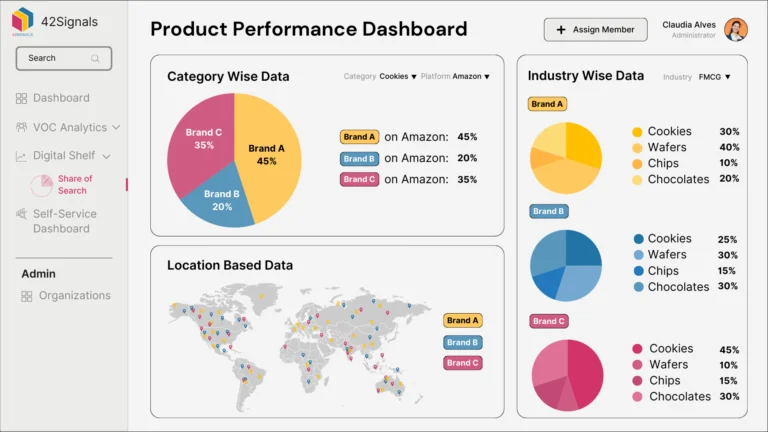
If you notice that your share of search is dropping even though your sales are steady, it is a warning sign. It means that while you are still making money, your competitors are becoming more visible to new customers. Eventually, this visibility gap will turn into a sales gap as more people choose the brands they see most often. Regular monitoring allows you to catch these trends before they become major problems for your business.
Consider these factors when tracking this metric:
- Monitor your share of search for both branded and non branded keywords to get a full picture of your market position. Branded terms show you how loyal your customers are, while non branded terms show you how well you are attracting new buyers who are just starting their shopping journey. Balancing both is the key to long term stability in a competitive market.
- Compare your performance across different regions or pincodes if the platform allows for it. Sometimes a brand might be winning in major cities but losing in smaller towns because of availability or delivery speed issues. Identifying these geographic gaps can help you optimize your logistics and inventory planning to better serve all your customers.
- Use this data to set clear goals for your marketing and category teams each quarter. For example, you might set a goal to increase your share of search for the “premium appliances” category by ten percent over the next six months. Having a specific, data driven target makes it easier to align your team and measure the impact of your keyword optimization work.
Finding and Fixing Missing Keywords on Amazon and Flipkart
Amazon and Flipkart are the two giants of the Indian ecommerce market, but they treat keywords very differently. On Amazon, the algorithm places a heavy emphasis on conversion rate and sales velocity. If you add a missing keyword but don’t make any sales from it, Amazon will eventually stop showing you for that term. This means your competitor keyword gap strategy on Amazon must be tied to performance.
On Flipkart, the search engine is often more focused on direct keyword matching in the product titles and descriptions. If you find a keyword gap on Flipkart, simply adding that term to your title can often result in a much faster ranking boost than it would on Amazon. Understanding these platform specific nuances is what separates the expert sellers from the amateurs.
Extending Your Analysis to Quick Commerce Platforms
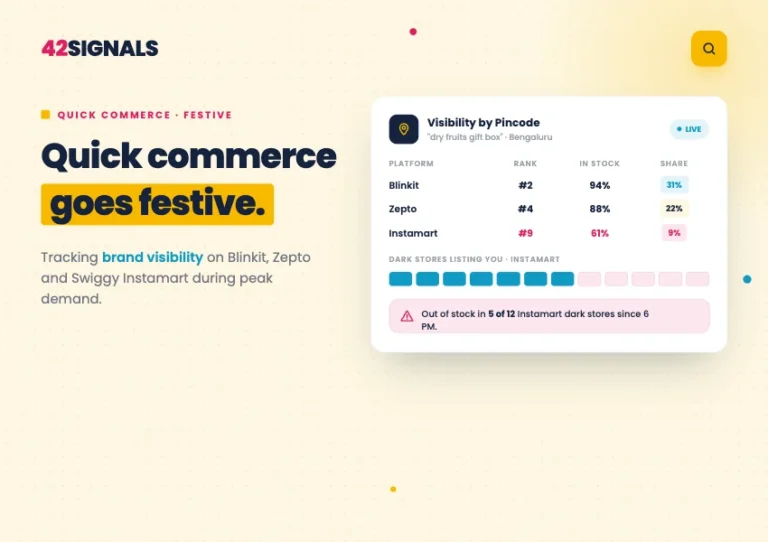
In the last two years, quick commerce platforms like Blinkit, Zepto, and Instamart have changed how people shop for daily essentials. On these platforms, the digital shelf is even smaller, with only a few spots available on the first screen. This makes a competitor keyword gap analysis even more critical. If you are not in the top three results for a term like “organic milk” or “instant coffee,” you might as well not exist on the platform.
Quick commerce requires a very agile approach to keywords. Trends can emerge and disappear in a matter of days based on local events or weather changes. A competitor keyword gap analysis for these platforms should be done weekly or even daily to ensure you are always visible when the customer is ready to buy.
How to Turn Keyword Overlap Into a Competitive Advantage
When you look at your data, you will see a certain amount of keyword overlap between you and your rivals. These are the terms where the real battle happens. Instead of just trying to rank for these words, you should look for ways to differentiate your product within the search results. If everyone is using the same keywords, the customer will choose based on price or reviews.
By finding the “gaps within the overlap,” you can win. This means looking for specific features or benefits that your competitors mention in their descriptions that you are ignoring. If you both sell “noise cancelling headphones,” but your rival highlights “40 hour battery life” and you don’t mention your battery at all, they have a content gap that is winning them the sale even though you both use the same primary keywords.
The Human Side of Competitive Keyword Analysis
While we use tools and data, we must never forget that keywords are just a way to understand human behavior. Behind every search term is a person with a need or a problem. A successful competitor keyword gap analysis is about learning how to speak the customer’s language better than anyone else. If you can describe their problem and your solution more clearly than your rival, you will win the sale every time.
This means you should occasionally step away from the spreadsheets and look at the actual search results pages. Read the customer reviews for your competitors’ products to see what people like and dislike. Often, you will find keywords in the “voice of the customer” that no tool would ever suggest. Using these natural language phrases in your listings can give you a massive advantage in relevance and trust.
Building a Resilient Ecommerce Keyword Strategy
In conclusion, a competitor keyword gap analysis is not a luxury for ecommerce brands; it is a vital part of staying alive in a competitive market. By consistently looking for the search terms you are missing, you can ensure that you are always in the conversation when a customer is ready to buy. This proactive approach helps you build a more resilient brand that can withstand changes in the market and aggressive moves from your rivals.
Remember that search visibility is a long term game of inches. You don’t need to win every keyword overnight; you just need to be more attentive and data driven than the brand next to you. By using the right tools and focusing on the needs of the customer, you can turn your competitor keyword gap analysis into a powerful engine for growth that keeps your brand at the top of the digital shelf for years to come.
Find every keyword your competitors rank for that you don’t. 42Signals surfaces these gaps daily so you can act before the next ranking update.
Frequently Asked Questions About Keyword Gaps
What is the best way to start a competitor keyword gap analysis?
The best way to start is by identifying your top three competitors and using a professional tool to compare your rankings for high volume terms. You should focus on finding the words where they are on page one and you are not, as these offer the quickest path to increasing your sales. Once you have this initial list, you can begin the process of updating your product titles and descriptions to include these missing terms.
How often should I check for keyword gaps in my category?
For most brands, a monthly deep dive is sufficient to keep up with general market trends and competitor moves. However, if you are in a high growth or seasonal category like fashion or electronics, you may want to check your keyword gap report every two weeks. This ensures that you don’t miss out on sudden shifts in consumer behavior or new product launches from your rivals.
Can I use the same keywords for Amazon, Flipkart, and Noon?
While there will be a lot of overlap, it is best to customize your keyword strategy for each platform based on their specific search behavior. Customers on Noon in the UAE might use different terminology than shoppers on Flipkart in India, even if they are looking for the same product. A good analysis will highlight these regional differences so you can optimize your listings for maximum local relevance.
Will closing a keyword gap automatically increase my sales?
Closing a keyword gap will increase your visibility, which is the first step toward making a sale. However, your product must also have competitive pricing, high quality images, and good reviews to convert that new traffic into customers. Think of keywords as the door that lets people into your store; once they are inside, your content and product quality must do the work of closing the deal.