

Top Amazon Price Tracker Tools for Savvy Shoppers and Sellers
Amazon price trackers are essential tools for both shoppers and sellers to navigate the platform’s dynamic pricing. This article reviews the top options available, including CamelCamelCamel for historical price charts and alerts, Keepa for comprehensive price history tracking across international stores, Honey for finding coupons and tracking price drops, and Earny for automating post-purchase refunds on price reductions. For brands and manufacturers, 42Signals offers an enterprise-focused analytics suite providing cross-platform competitive intelligence and digital shelf monitoring. Ultimately, selecting the right Amazon price tracker based on needs—whether maximizing savings or optimizing profits—allows users to monitor fluctuations, analyze historical data, and time purchases or sales effectively.
Introduction to Amazon Price History Tracker
An Amazon price history tracker provides significant advantages for both buyers and merchants within the dynamic world of Internet commerce. By monitoring and evaluating product prices on Amazon, these tools enable consumers to make well-informed buying choices aimed at maximizing cost reductions, while suppliers gain the ability to tactically modify their pricing strategy.
Equipped with powerful algorithms, these platforms deliver instantaneous updates and tailored notices, guaranteeing users remain updated regarding new deals or price developments.
Consequently, they empower users to seize ideal purchasing moments and maintain competitive pricing.
Amazon’s Competitive Advantage: What Makes Amazon Unbeatable?
Beyond individual price tracking tools, understanding Amazon’s competitive advantage as a company explains why the platform itself is so dominant. Several structural factors make Amazon extraordinarily difficult to compete against.
Cost Leadership at Scale
Amazon’s investment in robotics, warehouse automation, and last‑mile delivery infrastructure gives it a structural cost advantage no competitor has replicated. This is passed on to consumers through Prime pricing, creating a loyalty flywheel: lower costs → lower prices → more customers → more volume → further cost reductions.
The Prime Ecosystem
With over 200 million Prime subscribers globally, Prime bundles shipping, entertainment (Prime Video, Prime Music), cloud storage, and exclusive deals. Once a customer subscribes, switching costs become high. Prime members spend significantly more per year than non‑members, and their loyalty insulates Amazon from competitor promotions. Learn more about competitor price monitoring on Amazon.
AWS Cross‑Subsidisation
Amazon Web Services (AWS) generates the majority of Amazon’s operating profit, effectively subsidising the retail business. This allows Amazon to price aggressively — even operate retail at break‑even or at a loss — in ways that purely retail competitors (Walmart, Target, Alibaba) cannot match.
Data and Personalisation
Amazon’s proprietary customer data powers a recommendation engine that drives a substantial share of total sales. This data moat compounds over time: more sales → more data → better recommendations → more sales. New entrants cannot replicate this quickly.
Third‑Party Marketplace as a Revenue Source
Over 60% of Amazon’s unit sales come from third‑party sellers. Yet Amazon captures fulfilment fees, advertising revenue, and referral fees from each transaction. The competition (sellers on Amazon) becomes a revenue source — a brilliant strategic moat.
Amazon differentiation strategy: Amazon differentiates on convenience — speed, selection, reliability — not primarily on price. The Prime delivery promise has redefined consumer expectations across the entire e‑commerce industry.
Amazon positioning strategy: Amazon positions itself as “Earth’s Most Customer‑Centric Company” — a positioning operationally enforced through its leadership principles and internal performance metrics, not just marketed.
Analysing Amazon’s Competitive Strategy
For a structured Amazon competitive advantage analysis, strategic frameworks help clarify how Amazon defends its position.
Porter’s Generic Strategies
Amazon operates as a cost leader at the consumer level (low Prime prices, free shipping) but differentiates on service (speed, selection, returns). This hybrid position is rare and is sustained through operational excellence at scale.
SWOT Summary
| Strengths | Weaknesses | |
| Internal | Logistics infrastructure, Prime ecosystem, AWS profit engine, data advantage, marketplace scale | Thin retail margins, regulatory scrutiny, counterfeit problem, seller trust issues |
| Opportunities | Threats | |
| External | Healthcare (Amazon Pharmacy), grocery (Whole Foods), advertising growth, international expansion (India, Brazil) | Antitrust regulation, DTC brand bypass (brands selling direct), regional competitors (Alibaba, Flipkart, MercadoLibre) |
Business‑Level Strategy
Amazon’s primary business‑level strategy is integrated cost leadership and differentiation — competing on price and selection while differentiating on delivery speed and ecosystem convenience. Alternative strategies include:
- Focus differentiation in AWS (targeting enterprise cloud customers)
- Market development in international expansion (e.g., Amazon Brazil)
- Product development in private‑label brands (Amazon Basics, Amazon Essentials)
Navigating Price Fluctuations with CamelCamelCamel
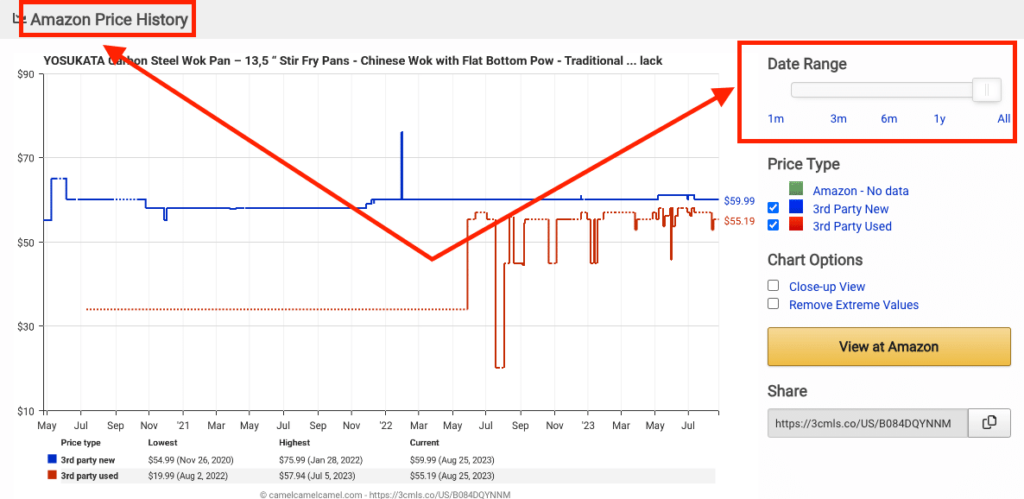
Image Source: Clear The Shelf
CamelCamelCamel provides an accessible platform enabling effective monitoring of Amazon product price trends for consumers. With its complimentary registration option, individuals may establish notifications for preferred items’ price reductions. Features include:
- Historical Price Charts: Visualize the price history of millions of Amazon products.
- Wish List Syncing: Import your Amazon wish list to track prices.
- Browser Extension: Add The Camelizer for quick access to pricing trends.
- Price Drop Alerts: Receive email notifications when prices fall below your set threshold.
With CamelCamelCamel, both shoppers and sellers can make more informed decisions, optimizing their purchase or sales timing based on historical pricing data.
Honey: Your Coupon and Price Drop Advisor

Image Source: Join Honey
Honey is not exclusively an Amazon price history tracker but a comprehensive tool that patrols the internet for discounts and coupons on products you’re interested in. When it comes to Amazon:
- Honey’s DropList feature allows you to track price drops on specific items.
- Users receive notifications when prices dip below the desired level.
- The browser extension automatically applies coupon codes at checkout.
- Honey also presents a price history graph, displaying fluctuations over time.
- It’s user-friendly for both shoppers who want to save money and sellers keeping an eye on market trends.
Keepa: The Comprehensive Amazon Price History Tracker
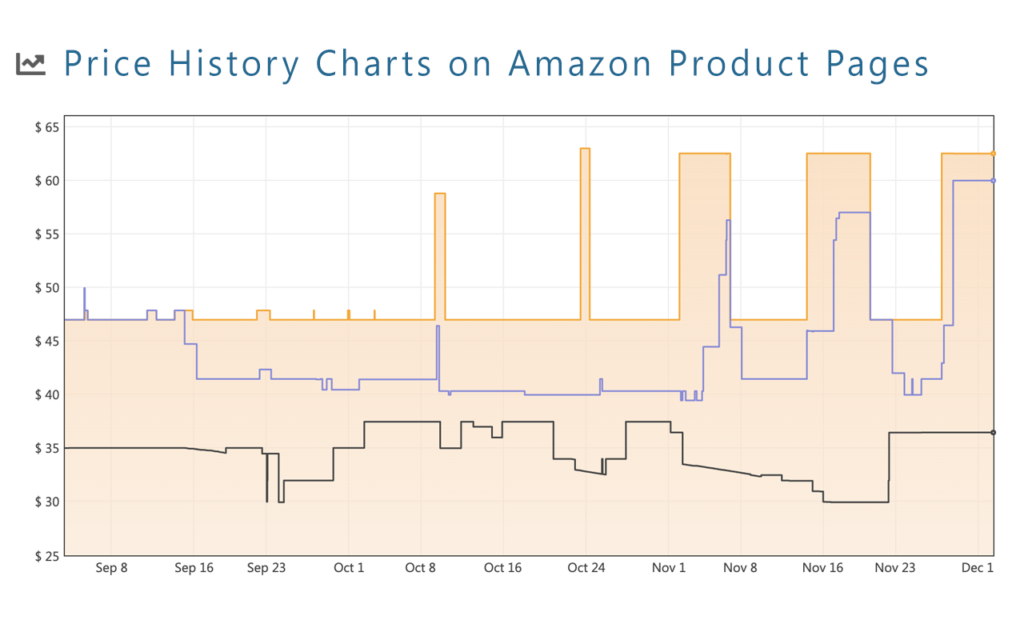
Image Source: Keepa – Amazon Price Tracker
Keepa stands out as an essential tool for consumers and merchants navigating Amazon’s ever-changing prices. This tracker offers:
- Detailed price histories for millions of products.
- Alerts when prices drop to your desired level.
- A browser extension for convenient price tracking.
- Support for numerous international Amazon stores.
- An accessible interface providing insights into price trends.
With Keepa, users can create a wish list to monitor, ensuring they never miss a price cut. Its data-driven approach helps to make informed purchasing decisions, making it a valuable asset for anyone looking to save money or maximize profits on Amazon.
Earny: Automating Refunds on Price Drops

Image Source: Seller App
Earny shines by automating the process of securing refunds when prices drop on Amazon. This tool diligently tracks purchases by linking to users’ email and Amazon accounts. If a price goes down on an item you’ve bought, Earny:
- Monitors the price changes on millions of items.
- Sends automatic price drop alerts.
- Files refund requests on your behalf with retailers.
- Ensures you get refunded the difference if a price guarantee is in place.
With Earny, shoppers rest easy knowing they won’t miss out on savings after their purchase, as the app scours for price drops and takes action to reclaim the difference.
42Signals: Ecommerce Analytics for Brands
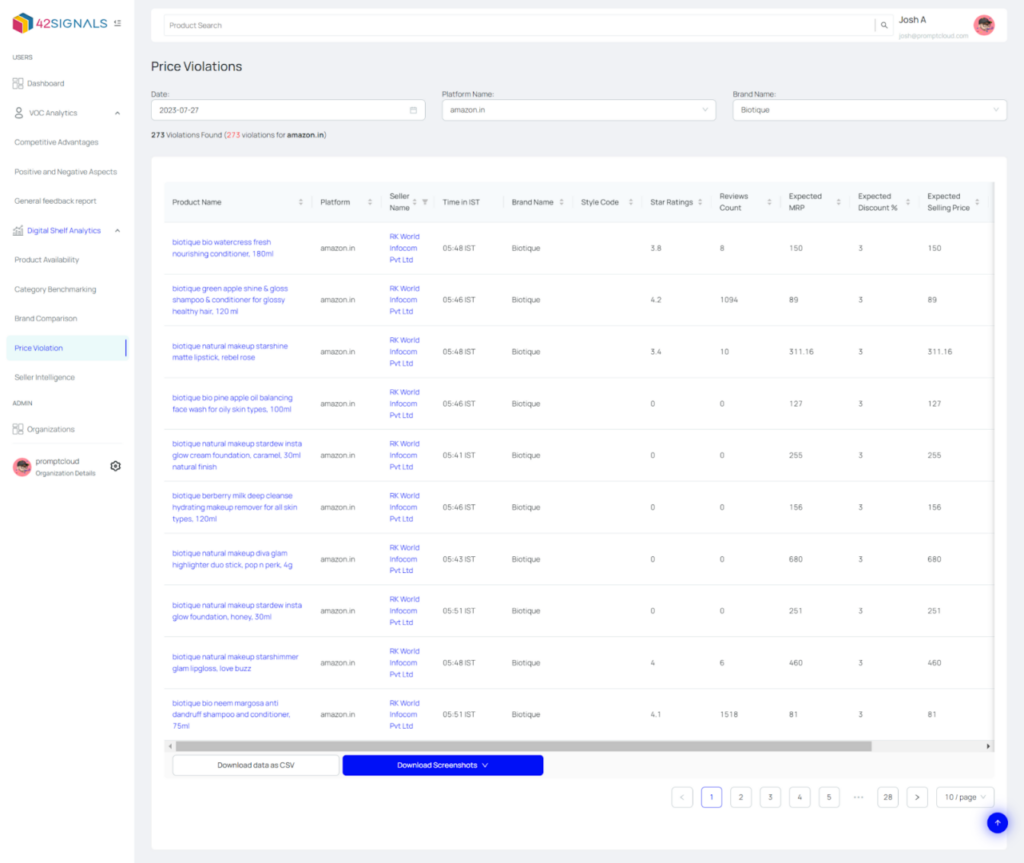
42Signals has emerged as a powerful analytics solution specifically designed for brands leveraging e-commerce platforms such as Amazon.
The platform using Amazon digital shelf analytics aims to optimize a brand’s presence on the “digital shelf” by delivering instantaneous insights into prevailing market trends, competitors’ approaches, and consumer behaviors.
This enables well-informed decision-making and enhances overall business performance. The platform aids:
- Price Monitoring: Track pricing fluctuations across various sellers and categories.
- Market Analysis: Gauge market demand and identify potential growth opportunities.
- Competitive Intelligence: Understand competitor product offerings and pricing tactics.
- Inventory Management: Monitor stock levels to prevent overstocking or stockouts.
- Track MAP (Minimum Advertised Price) Violations: Ensure that third-party sellers comply with minimum pricing requirements set by manufacturers or distributors.
- Guage Customer Sentiment with Voice of Customer Analytics: Use natural language processing techniques to analyze reviews, ratings, and feedback from customers to gauge satisfaction, preferences, and areas for improvement.
For brands aiming to stay competitive on Amazon, 42Signals offers a comprehensive analytics suite to navigate the dynamic e-commerce landscape.
Using Competitor Keywords on Amazon
A powerful advertising tactic within Amazon’s ecosystem is using competitor names as keywords. Amazon allows bidding on competitor brand names in Sponsored Product and Sponsored Brand campaigns — a legal and common practice.
- Best practice: When bidding on competitor keywords, ensure your listing has competitive pricing, strong reviews, and a clear differentiator. Otherwise, the click spend will not convert.
- What Amazon prohibits: Using a competitor’s brand name in your product title, description, or bullet points. Keyword targeting in ads is permitted; on‑listing use of competitor names is not.
- How 42Signals helps: The platform identifies which competitor keywords are driving traffic to rival listings, enabling informed bidding decisions. You can see which search terms send traffic to competing products and adjust your PPC strategy accordingly.
Amazon Brand Performance Signals: What the Algorithm Measures
Amazon’s A10 algorithm does not rely on a single metric. Instead, it measures a set of brand performance signals that collectively determine rank and visibility. Understanding these signals helps sellers use price tracking tools more effectively.
| Signal | What It Means | Why It Matters |
| Conversion rate | Percentage of product page views that result in a purchase | Products that convert well for a search term get ranked higher for that term over time |
| Click‑through rate (CTR) | Driven by main image quality, price, review count, and Prime badge | Higher CTR signals to Amazon that your listing is relevant and attractive |
| Sales velocity | Rate of sales over a recent period (days, not months) | Consistent high velocity signals positive ranking momentum; a sudden drop can trigger rank loss |
| Review rate and recency | Volume of new reviews and when they were posted | Recent reviews matter as much as the average rating. A product with 4.5★ but no reviews in 6 months may be demoted |
| Return rate | Percentage of units sold that are returned | High returns signal product‑listing mismatch (e.g., overpromising in the title) and directly impact seller account health |
| Inventory availability | Whether the product is in stock and ready to ship | Out‑of‑stock events suppress rankings and can take weeks to recover |
42Signals tracks many of these signals — out‑of‑stock tracking, competitor pricing changes, review monitoring — allowing brands to respond before performance drops compound.
Amazon Vendor Advantage: Vendor Central vs Seller Central
A common point of confusion for brands is whether to sell as a first‑party (1P) vendor through Vendor Central or as a third‑party (3P) seller through Seller Central. Each has a distinct Amazon vendor advantage.
| Factor | Vendor Central (1P) | Seller Central (3P) |
| Who sells | Amazon buys and sells your products | You sell directly on the marketplace |
| Pricing control | Amazon controls pricing — can undercut your MSRP | Full pricing control |
| Trust signal | “Sold by Amazon” — higher consumer trust | Depends on seller rating and FBA status |
| Margins | Lower — Amazon takes wholesale margin | Higher — but more operational complexity |
| Customer data | Limited data access | Full customer data (through Amazon’s APIs) |
| Best for | High‑volume SKUs with strong wholesale relationships | Brands wanting pricing control and direct customer data |
Vendor Central advantage example: A national beverage brand may choose Vendor Central to get “Sold by Amazon” trust and Prime eligibility at scale, accepting lower margins in exchange for volume.
Seller Central advantage example: A niche skincare brand wants to control its own pricing and access customer emails for retargeting — Seller Central (with FBA) gives that control.
Many large brands use both: Vendor Central for their top‑selling, mass‑market items, and Seller Central for exclusive products or limited editions where pricing control is paramount.
Amazon Analytics Tools: Choosing the Right Platform
Users searching for comparisons between 42Signals, Jungle Scout, and Helium 10 need clarity. Here is how they differ:
| Tool | Best For | Key Strength | Limitation |
| Jungle Scout | Individual sellers and SMBs | Product research and demand estimation | Amazon‑only; weak on brand‑level analytics |
| Helium 10 | Listing and keyword optimisation | Comprehensive keyword research suite | Amazon‑only; no cross‑platform intelligence. Look at Amazon keyword strategy |
| AMZScout | Entry‑level sellers | Low cost, simple interface | Limited depth for brand strategy |
| 42Signals | Brands and manufacturers | Cross‑platform competitor intelligence, pricing analytics, digital shelf monitoring | Enterprise‑focused; broader than Amazon‑only |
For individual sellers focused purely on Amazon product research, Jungle Scout and Helium 10 serve the core use case. For brands managing multiple SKUs across Amazon, Flipkart, quick commerce platforms, and DTC channels simultaneously, 42Signals provides the cross‑platform intelligence layer that Amazon‑only tools cannot.
Analyzing the Features and Benefits of Each Tracker
Each Amazon price history tracker offers unique features:
- CamelCamelCamel:
- Provides price history charts.
- Gives price drop alerts.
- Show best price dates.
- Keepa:
- Offers extensive price history graphs.
- Includes an add-on for real-time price tracking.
- Sets up customizable alerts.
- Honey:
- Integrates with browsers for easy use.
- Compiles a list of promo codes.
- Adds a watch list for price changes.
- Earny:
- Monitors price drops on items you’ve already purchased.
- Helps you get refunds for the difference if prices drop.
- Tracks purchases made through linked email accounts or credit cards.
- 42Signals:
- Provides e-commerce analytics.
- Offers customization.
- Includes competitor tracking tools.
Maximizing Savings and Profits with the Right Price Tracking Tool
The judicious selection of an Amazon price history tracker is critical for enhancing savings and profits. These tools empower users to:
- Monitor price fluctuations in real-time.
- Receive alerts when prices drop to desired levels.
- Analyze historical pricing data for informed decision-making with Amazon pricing intelligence
- Optimize the timing of purchases or sales to capitalize on price trends.
- Increase competitive intelligence by keeping an eye on competitor pricing strategies.
Utilizing these features enables both buyers and vendors to substantially enhance their financial results within the Amazon marketplace.
Choosing the Best Amazon Price History Tracker for Your Needs
When selecting the ideal Amazon price tracker, assess your shopping habits or business needs carefully. Consider the following factors:
- Ease of Use: Opt for interfaces that are intuitive and simple.
- Tracking Accuracy: Reliable price history and alert accuracy are paramount.
- Customization: Choose services that offer personalized alert settings.
- Mobile Accessibility: For on-the-go monitoring, ensure the tracker has a mobile app.
- Cost: Determine if the benefits align with any subscription fees.
Your perfect Amazon price tracker balances functionality with user-friendly features, providing the best shopping or selling advantage in the dynamic Amazon marketplace.
Now that we’ve explored the key features and benefits of several Amazon price trackers, consider taking your analysis to the next level with 42Signals’ Amazon analytics platform.
As an advanced ecommerce analytics solution, 42Signals’ digital shelf analytics empowers brands to thrive on Amazon by offering deep insights into market trends, competitor strategies, customer sentiment, and inventory management.
Frequently Asked Questions
How do you find price history on Amazon?
Amazon itself does not provide a built-in price history feature, but there are third-party tools and browser extensions that track price fluctuations over time. Here’s how you can find price history:
Use a Price Tracking Tool: Websites like CamelCamelCamel or Keepa track the price history of Amazon products. You can either visit their websites directly or install their browser extensions to see price history charts right on Amazon product pages.
Steps:
Visit the product page on Amazon.
Use a browser extension like Keepa or CamelCamelCamel to display a price history chart beneath the product listing.
Review the historical data to check how the price has changed over time.
These tools provide insights into whether the current price is a good deal or whether you should wait for a better offer.
How do I find my Amazon order history with prices?
To find your Amazon order history, including the prices of each item you’ve purchased, follow these steps:
Log in to your Amazon account.
Go to “Accounts & Lists” in the upper-right corner of the homepage, and select “Your Orders” from the dropdown menu.
You’ll see a list of your recent orders. To view older purchases, use the date range filter to select the time period you want to search.
Each order will display the item details, the price paid at the time of purchase, and other order information (such as shipping and payment method).
For more details on an individual order, click the “Order Details” button next to the item.
This method will show you all your past orders, along with the prices at which you purchased each item.
How to find the lowest price of a product?
To find the lowest price of a product, especially when shopping online, you can use several strategies:
Price Comparison Websites: Use websites like Google Shopping, PriceGrabber, or Shopzilla to compare prices across multiple stores, including Amazon, Walmart, and other retailers. These platforms show prices from different sellers to help you find the lowest available offer.
Amazon Third-Party Tools: Use tools like CamelCamelCamel or Keepa to track the historical price trends of Amazon products. These tools often show the lowest price the product has ever been listed for, helping you determine whether it’s a good time to buy.
Set Price Alerts: On Amazon, you can use third-party tools to set up price alerts. For example, using CamelCamelCamel, you can enter the product you want and set a target price. When the product reaches that price, you’ll be notified.
Check Different Sellers: On Amazon product pages, scroll down to the “Other Sellers on Amazon” section to see if other vendors are offering the same product at a lower price.
By utilizing these tools and techniques, you can easily find the best price available for any product you want to purchase.