
** TL;DR ** Manual price checking is a futile and reactive strategy that leaves you vulnerable to competitors who can move in seconds, burying your listings and eroding your brand’s value. **Competitive pricing solutions** solve this by automating the entire process; they act as your 24/7 watchdog, tracking competitor prices, stock, and promotions across all marketplaces to feed you actionable intelligence. This allows you to set strategic alerts for critical changes and deploy smart repricing automation with rules that protect your margins, empowering you to win sales based on data rather than desperation and ultimately achieve profitable market leadership.
When you check your product’s performance there’s no worse feeling than seeing your sales dashboard, and a product that was humming along has flatlined. A quick search shows why. Someone else is now selling it for five bucks less. Your listing is buried. Again. That’s the elevator pitch for competitor pricing solutions .
That manual price check you did yesterday? A complete waste of time. The market moved while you were sleeping, and you got left behind.
Stop Guessing and Focus on Competitive Pricing Solutions

Image Source: Predictive Analytics Today
We all start by winging it. You look at your costs, add a markup you think is fair, and see what happens. But this approach is secretly sabotaging you in three huge ways.
First, you’re operating in the dark. The internet doesn’t close. A competitor can launch a flash sale at 2 AM, clean up, and switch back before your first coffee. You’ll see a dip in your sales report and have zero clue why. You lost money and market share without ever seeing the threat. This lack of visibility is a critical flaw.
Then there’s the insane time sink. I knew a store owner who paid his nephew to manually check prices on Amazon for four hours every single day. Four hours! That’s half a work day spent on a task that is not only mind-numbingly boring but also wildly inaccurate. That’s time that should be spent on marketing, customer service, or developing new products. You’re burning your most valuable resource—time—on a job a machine can do infinitely better.
The slowest poison, though, is what it does to your brand. If you’re always the last to adjust, customers start to see you as the overpriced option. But if you slash your prices in a panic every time a competitor twitches, you scream “we’re a commodity.” You teach customers your stuff isn’t worth the price and to always wait for a discount. You’re training them to be disloyal and destroying your own perceived value in the process.
Forget the Hype: What Competitive Pricing Solutions Actually Do
When you hear “competitive pricing solution,” you might picture some complicated Wall Street terminal. It’s not. Think of it as your own personal spy satellite.
It’s a tool that automatically does the grunt work you hate. It constantly scouts your competitors across all the major marketplaces—Amazon, Walmart, you name it. But it’s smarter than just writing down a number. It notes if they charge for shipping. It sees their active coupons. It watches their inventory levels like a hawk.
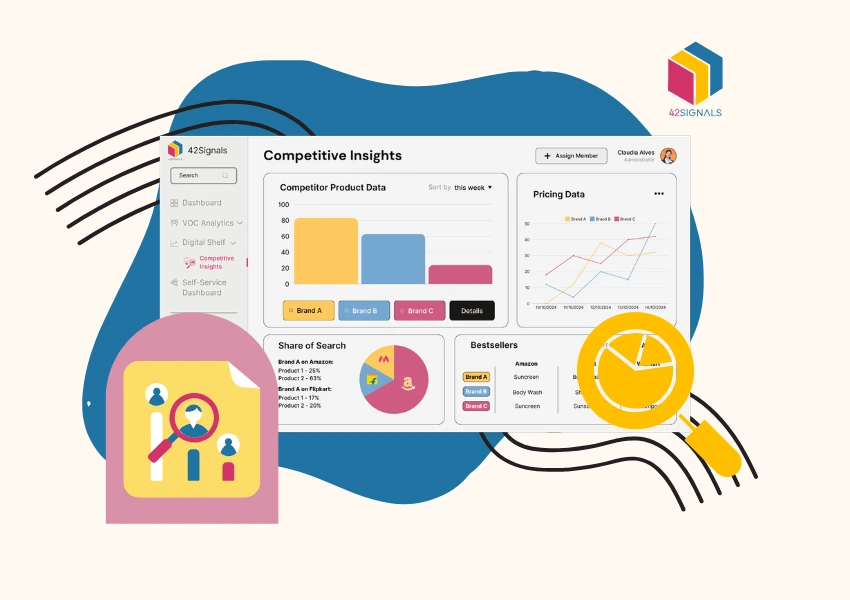
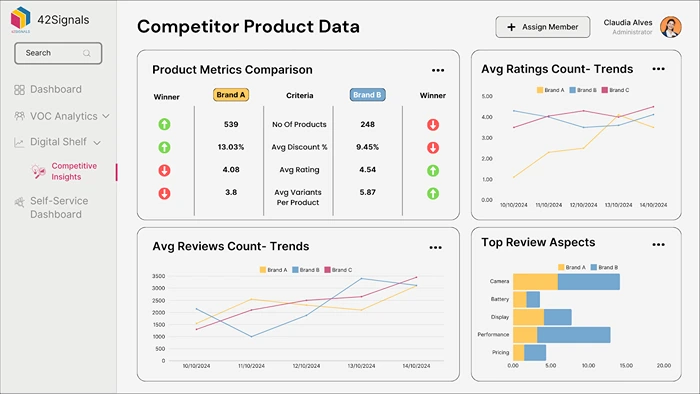
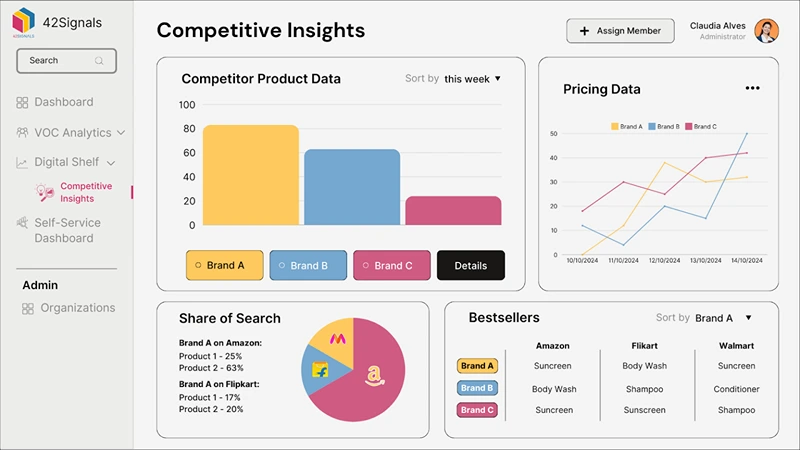
All this intel gets fed into a central command post, often called a competitor analysis dashboard. This is your crystal ball. Instead of a dozen confusing spreadsheets, you get one clean screen showing you exactly where you stand, where the threats are, and where the opportunities are hiding. The goal isn’t to let a robot run your store.
Ready to Take the Next Step?
See how our solutions can help you achieve your goals and drive measurable results.
Your Secret Weapon: Using a Price Tracking Solution
The most immediate game-changer is the humble alert. This is how you stop hunting for problems and let the right information find you.
You can set these alerts to be incredibly smart. You’re not getting buzzed every time a price changes by a penny. That’s just noise. You can tell the system: “Hey, only bother me if ‘Brand X’ drops the price on our premium blender below our absolute bottom-line price of $199.”
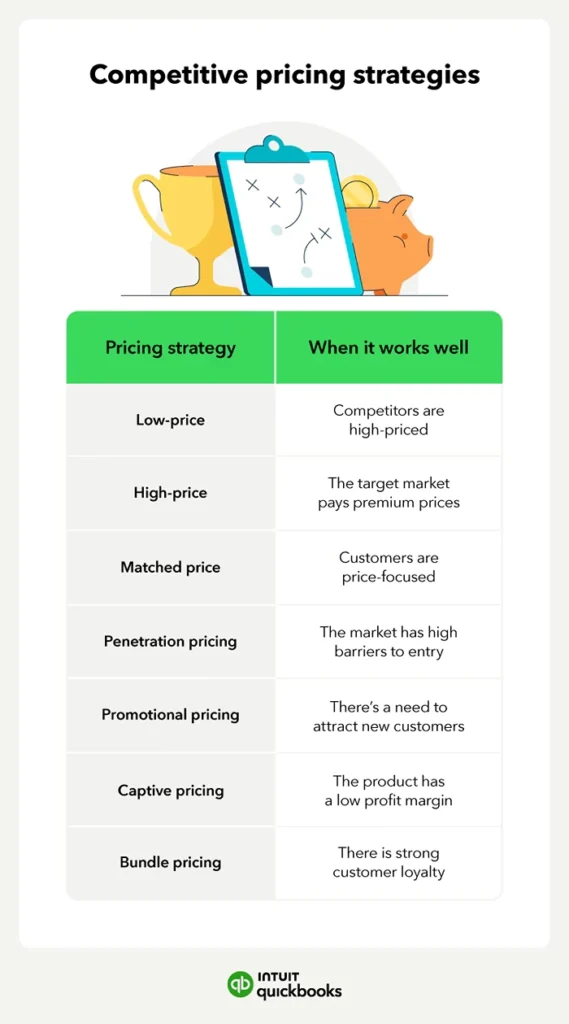
Image Source: Quick Books
You can also set alerts for inventory. Imagine getting a ping on your phone: “Heads up—your biggest rival just sold out of the black yoga mats.” That’s not just data. That’s an instant opportunity. You can hold your price firm and soak up their customers, or you can make a small, calculated price increase to boost your margin while you’re the only top seller left.
This is the critical part that most people miss.
- Product A is a new item you’re trying to gain market share with. Your rule might be aggressive: “For this product, stay within $0.50 of the lowest-priced legitimate competitor. Win the Buy Box at all costs, but never, ever drop below our cost of goods plus fees ($39.99).”
- Product B is your premium, branded hero product. Your rule is defensive: “Under no circumstances will this product’s price ever go below our MAP policy of $299. If competitors are out of stock, increase our price by 5% to maximize profitability.”
Automation Helps You Focus on What’s Important
Smart repricing automation is about being a brilliant strategist, not a lazy one. You are the brains. You set the rules based on what you want for each product.
For a new product, your rule might be: “For this item, stay within $1 of the lowest price to win the Buy Box at all costs.” For a established, branded product, your rule is: “Under no circumstances ever go below $149. Our brand is worth more.” The software is just your incredibly fast and obedient employee, executing your strategy perfectly, 24 hours a day.
It reacts in seconds, not hours. This is crucial on a place like Amazon, where winning the Buy Box is everything—it’s been reported that it can influence over 80% of sales.
The Real Game is Looking at What Customers Want
Someone will always be willing to make less money than you. The real battle is over perceived value.

This is where basic trackers fail and advanced retail pricing analytics come in. A good system helps you understand the story behind the numbers. It can show you that a certain competitor always drops their prices every quarter-end to meet sales goals. Knowing that pattern means you don’t panic; you anticipate it.
Even cooler is something called value perception scoring. This is a fancy term for a simple idea: it tries to see your product listing through a customer’s eyes. It considers your price, sure. But it also considers your shipping speed, your seller rating, your return policy, and your number of reviews.
The tool might give you this golden insight: “Yeah, Competitor A is $10 cheaper, but their overall value score is terrible because their shipping is slow and their reviews are awful. You can hold your price with confidence because your overall offer is superior.”
Making Sense of Competitive Pricing Solutions
A flood of data is useless. A great competitor analysis dashboard isn’t about showing you everything; it’s about showing you the right things.

This is your mission control. In one glance, you should be able to see:
- Which of your products are winning and which are getting crushed.
- Who currently owns the precious Buy Box and for what price.
- How your profit margins are holding up against your sales volume.
It lets you slice the data any way you want. You can zero in on one pesky competitor and dissect their entire strategy.
The End Goal: Stop Following, Start Leading
The point of all this isn’t to become the best follower. It’s to achieve price leadership. And let’s be clear: leading does NOT always mean having the lowest price.
With the right insights, you can lead in different ways:
- Lead with Profit: Be the higher-priced option that wins because your reviews and service are stellar.
- Lead with Availability: Be the reliable one who never runs out of stock.
- Lead with Value: Create bundles or better offers that make your slightly higher price a no-brainer.
You get to choose how you win.
How to Begin with a Competitor Analysis Dashboard
- This doesn’t need to be a huge project. Start small.
- Pick Your Top 3: Don’t try to monitor your entire 500-SKU catalog on day one. It’s too much. Start with your top 5 most important products. These are your cash cows, your best-sellers, or your most competitive items. Focus your energy here.
- Find Your Real Rivals: Who are the 2-3 competitors that actually cause you pain? The ones who constantly steal the Buy Box or who you’re always worried about? These are your primary targets. Tell your tool to watch them like a hawk.
- Build Your Guardrails: For each of your 5 products, determine your absolute bottom-line price. This is your cost of goods sold plus all marketplace fees and your absolute minimum acceptable profit. Program this in as your hard floor. This is non-negotiable. It’s your safety net that prevents automated mistakes.
- Set a Few Key Alerts: Start with just a few key alerts. Set one for if a primary competitor drops below your guardrail price. Set another to notify you if they go out of stock. Set a third for if a new competitor enters the fray. See how this flow of intelligence feels.
- Tweak Weekly: This is the most important step. Block out 20 minutes every Monday morning. Log into your dashboard. What happened last week? What surprised you? Did your rules work as expected? Use this insight to tweak and refine your strategy. The tool learns from data, but you learn from the strategy. This weekly habit is where the real magic happens.
Time to Take the Wheel
The market isn’t getting slower or easier. A competitive pricing solution is not an expense; it’s an investment in your time, your peace of mind, and your profitability.
Getting a true competitive pricing solution is one of the smartest moves you can make. It gives you back your time, protects your hard-earned profit, and most importantly, gives you the confidence that your prices are built on data, not desperation. The real question isn’t if you can afford the tool. It’s how much longer you can afford to be in the dark.
Try 42Signals today and see how our platform can help you understand competitor prices and industry pricing techniques.
Frequently Asked Questions
What is a competitive pricing method?
A competitive pricing method is a strategy where a business sets its prices based on what its competitors are charging for similar products or services. Instead of relying solely on production costs or customer demand, companies benchmark against market prices to remain attractive to buyers. This approach is especially common in highly saturated markets where small price differences can significantly influence purchasing decisions.
What are the 4 types of pricing strategies?
The four most widely recognized pricing strategies are:
- Cost-plus pricing – Adding a markup on top of production costs.
- Value-based pricing – Setting prices based on perceived value to customers rather than costs.
- Competition-based pricing – Adjusting prices according to competitors’ price points.
- Dynamic pricing – Continuously changing prices based on demand, seasonality, or market conditions.
Each method serves different business objectives, from maximizing profit margins to gaining market share.
What is an example of a competitive pricing company?
Retail giants like Walmart and Amazon are prime examples of companies that use competitive pricing. Both closely track competitor prices and adjust their own to ensure they remain either the cheapest option or provide better value for money. For instance, Amazon’s algorithms frequently update product prices multiple times a day to stay competitive against rival sellers.
How to ensure competitive pricing?
To ensure competitive pricing, businesses should:
- Monitor competitors regularly using price intelligence tools or automated trackers.
- Analyze customer preferences to understand where buyers are sensitive to price changes.
- Leverage technology like AI-driven pricing engines to update prices dynamically.
- Balance costs and margins, ensuring that price cuts don’t erode profitability.
- Differentiate with value, such as faster delivery, loyalty perks, or bundled offers, when competing purely on price isn’t sustainable.
Done well, competitive pricing not only attracts customers but also builds long-term market resilience.