

The holiday season is the most anticipated time of year for businesses across industries. With major events like Black Friday, Cyber Monday, and region-specific sales such as Amazon’s Great Indian Festival Sale, it’s a golden opportunity for brands to maximize their impact.
To truly stand out during this period, brands need to go beyond standard promotions and adopt a data-driven, omnichannel approach that leverages cutting-edge tools like digital shelf analytics, share of search insights, and comprehensive competitor analysis.
Here’s how your brand can rise above the noise and capture a greater share of the holiday season shopping rush.
Holiday Season 2026: The Key Dates
| Event | 2026 date | Primary market | Brand focus |
|---|---|---|---|
| Amazon Great Indian Festival | Late Sep – Oct (expected) | India | Electronics, appliances, fashion |
| Flipkart Big Billion Days | Late Sep – Oct (expected) | India | Smartphones, fashion |
| Singles’ Day | Wed, 11 Nov 2026 | China, SE Asia | Cross-border, beauty, electronics |
| Thanksgiving | Thu, 26 Nov 2026 | US | Deals begin the evening before |
| Black Friday | Fri, 27 Nov 2026 | US, UK, EU | Deepest discounting, peak traffic |
| Small Business Saturday | Sat, 28 Nov 2026 | US, UK | Positioning window for smaller D2C brands |
| Cyber Monday | Mon, 30 Nov 2026 | US, UK, EU | Online-first; electronics and D2C over-index |
| Christmas | Fri, 25 Dec 2026 | Global | Delivery cut-offs drive the final purchase window |
| Boxing Day | Sat, 26 Dec 2026 | UK, Canada, AU | Clearance and overstock movement |
The planning implication is that this is not a series of separate events. Black Friday through Cyber Monday is a single continuous four-day period, and the stock that moves on the Friday determines what is available on the Monday. Christmas delivery cut-offs then compress the final purchase window into early-to-mid December, and Boxing Day is where remaining inventory clears.
What Are the Best Strategies to Improve Holiday Season Sales?
1. Leverage Competitor Insights to Refine Your Strategy
Understanding what your competitors are doing is crucial to creating an effective holiday season strategy. Competitor analysis allows you to monitor pricing, promotions, and product placements in real time.
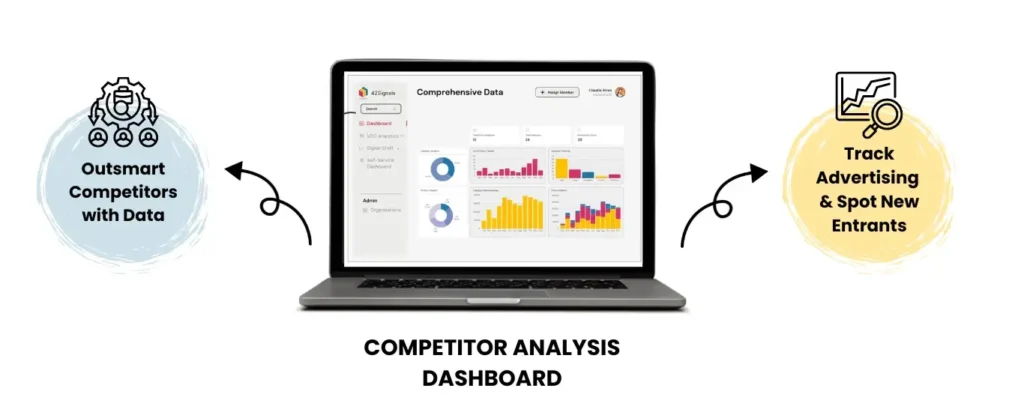
During key shopping days like Black Friday and Cyber Monday, knowing which products are trending among your competitors can help you adjust your own campaigns dynamically.
These insights also help you uncover gaps in the market that your brand can capitalize on. Are your competitors offering steep discounts, or are they holding steady on pricing to protect margins? By analyzing these trends, your brand can decide whether to compete on price or differentiate through value-added services like free shipping or extended returns.
Tools like digital shelf analytics provide valuable competitor insights by showing how your products perform relative to others across different online marketplaces. This enables brands to adjust their digital presence to meet or exceed the competition, especially during the holiday season.
Competitor pricing during peak season changes far faster than it does the rest of the year. A weekly competitive check that is adequate in September is nearly useless in the last week of November, when marketplace repricing runs continuously, and a competitor can move a price four times in a day. The practical threshold is monitoring that updates at least daily through peak, and hourly across the Black Friday to Cyber Monday window.
2. Optimize for Share of Search on Major Platforms
Share of search has emerged as a critical metric for brands to monitor. It measures how often your brand or products are searched for compared to competitors in your category. During high-traffic holiday season periods like Black Friday and the Amazon Great Indian Festival Sale, improving your share of search can directly boost your visibility and sales.

To maximize your brand’s share of search, ensure –
- your product listings are optimized with the right keywords
- are fully enriched with quality images, detailed descriptions
- and have customer reviews
Amazon, for instance, rewards listings that convert well by giving them better placement in search results, which is crucial during its high-volume sales events.
Additionally, brands should leverage paid search strategies, such as Amazon Sponsored Ads or Google Shopping campaigns, to ensure their products appear in relevant search queries. Optimizing bids and targeting the right keywords can place your products in front of holiday season shoppers at the right time, driving traffic and conversions.
The existing section covers paid search well but stops short of organic. Holiday SEO works on a longer lead time than paid, which is exactly why it gets neglected: changes made in November will not rank by December. Seasonal keyword work should be done by early September, building or refreshing gift-guide and category landing pages, updating seasonal keyword targeting on existing product pages, and ensuring last year’s holiday URLs are retained rather than rebuilt, so accumulated authority carries forward. Rebuilding a seasonal landing page from scratch each year is one of the most common self-inflicted holiday SEO problems.
3. Harness Digital Shelf Analytics to Win the Buy Box
Winning the Buy Box on e-commerce platforms like Amazon is critical for increasing sales, especially during high-demand holiday season periods like Cyber Monday. Digital shelf analytics tools allow brands to track how they’re performing in terms of pricing, stock levels, and delivery options compared to competitors.
These tools can show why your product might not be winning the Buy Box—whether it’s due to a higher price, longer delivery times, or lower seller ratings.
Armed with this data, you can make informed decisions on price adjustments, stock replenishments, or improving customer service to reclaim the Buy Box and boost sales.
4. Tailor Your Promotions to Specific Holiday Events
Each holiday sales event has a unique shopper mindset.
For example, Black Friday is typically associated with deep discounts and a sense of urgency, while Cyber Monday tends to attract more tech-savvy, online-first shoppers who are looking for great deals on gadgets and electronics.

Image Source: People
When planning your holiday season promotions, consider tailoring your offers to each event. For instance, you might offer steep discounts on Black Friday to capitalize on the frenzy of deal-seeking shoppers, while focusing on free shipping or bundles during Cyber Monday.
Similarly, for the Amazon Great Indian Festival Sale, brands should tailor their strategies to cater to Indian consumers, focusing on high-demand categories like electronics, fashion, and home appliances.
Incorporating regional preferences and nuances into your promotional strategies can help your brand resonate better with target audiences, leading to more conversions.
Christmas and Boxing Day have distinct shopper mindsets that deserve separate treatment. The Christmas window is defined by delivery cut-offs rather than discounts; shoppers in mid-December are buying on the confidence that the item will arrive in time, which means shipping promises, stock accuracy, and clear delivery dating matter more than price. Boxing Day flips this entirely: the urgency is gone, the shopper is self-gifting or spending gift money, and clearance depth is the primary driver. Brands that run the same promotion across both typically underperform on one of them.
5. Plan for Omnichannel Success
Shoppers are increasingly using multiple channels to browse, compare, and buy during the holiday season. Some might discover your products on social media, read reviews on an e-commerce site, and ultimately purchase in-store or on your website.
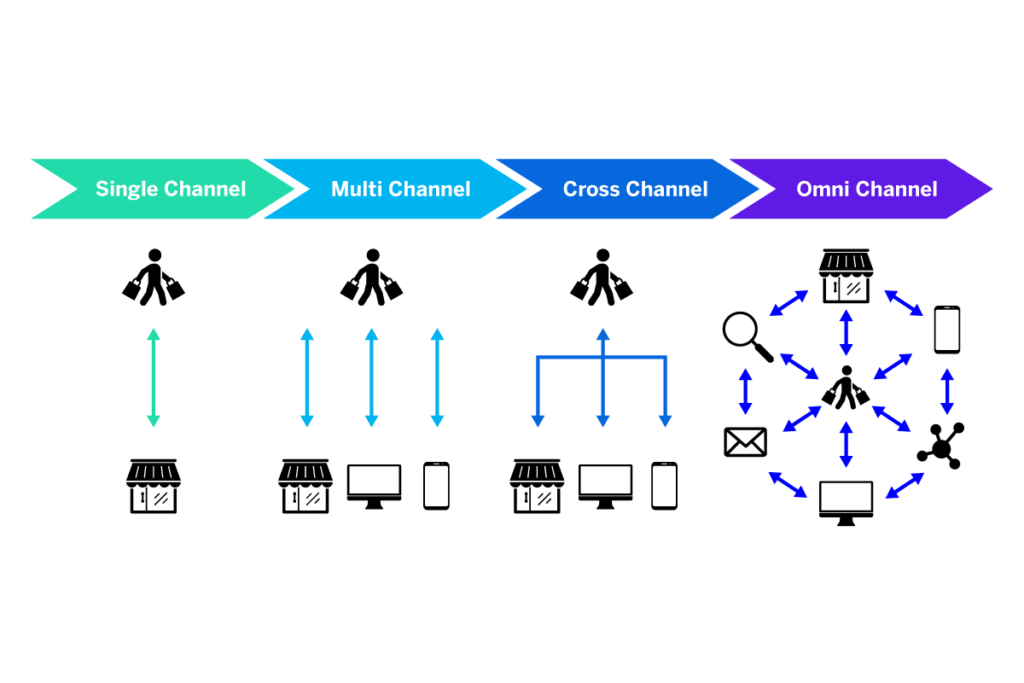
Image Source: Qualtrics
To ensure you’re reaching consumers at every touchpoint, it’s essential to adopt an omnichannel strategy that integrates your brand’s presence across platforms. This means ensuring consistent messaging, product availability, and promotions across all sales channels, from your website to Amazon to brick-and-mortar stores.
Using tools like digital shelf analytics, you can track product availability and performance across all platforms, ensuring that your products are visible and purchasable no matter where consumers look.
6. Monitor and Adapt in Real-Time
The holiday season is fast-paced, and consumer behavior can shift rapidly. Monitoring performance metrics like sales, stock levels, and customer feedback in real time allows brands to make quick adjustments.
For example, if a particular product is trending during Cyber Monday, increasing ad spend on that product or expanding its availability can maximize sales during the surge.
Similarly, DSA can help brands avoid stockouts, which are especially detrimental during peak holiday traffic. If a key item is running low, your brand can quickly reorder or adjust marketing focus to drive attention to other in-stock products.
Review velocity is one of the fastest-moving signals during peak season and one of the least monitored. A product that accumulates negative reviews during a high-volume week can see its rating drop faster than at any other point in the year, and that drop affects conversion for the remainder of the season. Watching review volume and sentiment daily through peak — rather than reviewing it monthly — gives enough warning to address a fulfilment or quality issue while it is still contained.
7. Take Advantage of Holiday Season Specific Marketplaces
With holiday-specific sales events, brands have the opportunity to tap into regionally focused consumer bases. If your products are sold on Amazon, ensuring they are featured prominently during these events is key to driving holiday revenue.

Image Source: WC Vendors
For brands looking to break into new markets or expand their presence in existing ones, these holiday events offer a way to increase visibility. Leverage Amazon’s advertising tools, such as Sponsored Brands or Sponsored Products, to highlight your products during these high-traffic periods.
Holiday Readiness: The Operational Checklist
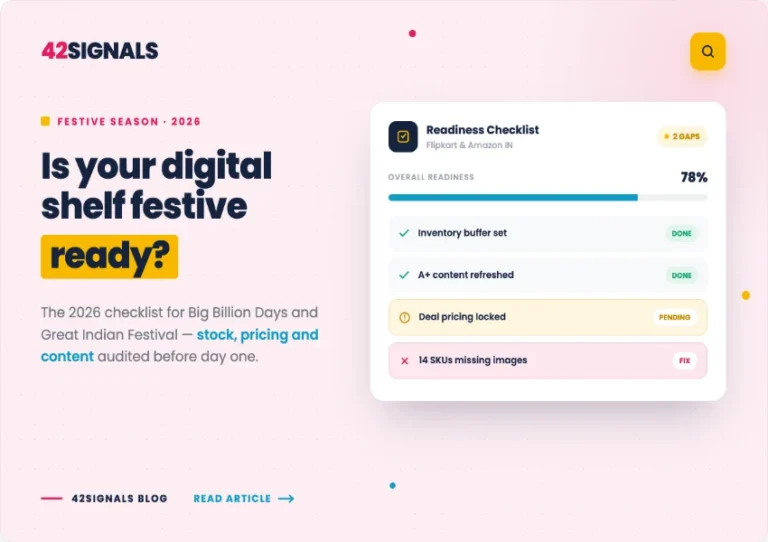
Most holiday failures are not strategic. They are operational, and they are visible weeks in advance if anyone looks. Work backwards from the first major event on your calendar:
| Timing | Task | Why this deadline |
|---|---|---|
| 8–10 weeks out | Seasonal SEO and landing page work | Organic changes need time to index and rank; November edits will not rank in December |
| 6–8 weeks out | Demand forecast at SKU and day level | Purchase orders need lead time; forecasting Cyber Monday separately from Black Friday is the most common planning error |
| 4–6 weeks out | Listing content audit across all channels | Errors cost most when traffic peaks, and marketplace changes need time to propagate |
| 4 weeks out | Price floors set and communicated to every channel and reseller | Establishes a clean baseline so breaches during the sale are visible |
| 3–4 weeks out | Site load testing at realistic peak multiples | Leaves time to fix what the test finds; testing the week before does not |
| 2 weeks out | Share-of-search baseline captured on priority keywords | Movement during peak is only measurable against a known starting point |
| 1 week out | Alert thresholds live; customer service briefed and staffed | Problems during a four-day event need hour-level detection, not daily reports |
Protecting Your Digital Shelf Through Peak Season
Everything above is about capturing demand. This is about not losing position while you do it. Three pressures compress into peak season, and each is far cheaper to prevent than to correct once the period is running.
Stockouts cost ranking position, not only revenue
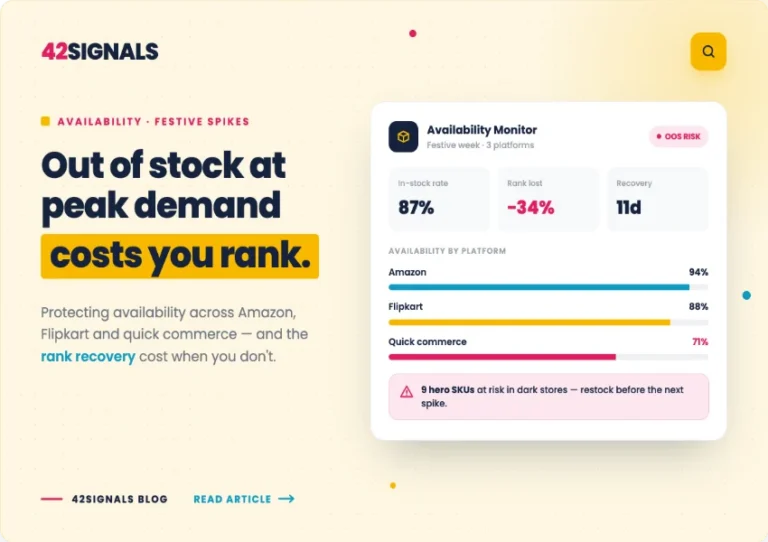
Peak season concentrates months of demand into weeks. A product with comfortable cover in October can sell through in hours once it enters a featured placement or flash deal. The lost orders are visible immediately; the ranking consequence is not. Marketplaces demote out-of-stock listings, and position does not return automatically when inventory does — recovery means rebuilding sales velocity from lower down, through the highest-traffic weeks of the year, against competitors who held cover.
Price floors break when discounts stack
Peak season is where pricing discipline is hardest to hold, because legitimate discounting provides cover for prices nobody approved. Marketplace promotions, seller repricing, coupon stacking, and card-partner offers combine in ways that are difficult to see from inside a single channel, and the effective price a customer sees can sit well below the floor you set. The anchor persists into the new year, while the retailers who held the line watch volume move to whoever did not.
Category visibility compresses when everyone bids at once
Every brand in your category competes for the same placements across the same weeks. Paid costs rise as bidding intensifies, and organic positions reshuffle daily as sales velocity reorders rankings. This is the pressure most often missed, because absolute traffic rises for everyone during peak — a brand can lose meaningful relative position while its own dashboard shows growth. Tracking share of search against competitors, rather than tracking your own traffic in isolation, is what separates a brand that gained ground over the season from one that simply rose with the tide.
42Signals monitors availability, pricing and price-floor compliance, competitor movement, and share of search in real time across Amazon, Flipkart, Walmart and direct retail channels — so issues during peak surface while there is still season left to act on.
Conclusion on Holiday Season Strategies
The holiday season offers a unique opportunity for brands to boost their visibility and sales.
Sales like Black Friday, Cyber Monday, and the rest require advance preparation, and the right insights are required to see success.
Tailoring your promotions and adopting an omnichannel approach will ensure that your brand is not only seen but remembered by shoppers during this lucrative time of year.
Peak season is where a year of pricing discipline and shelf position is either protected or undone in a few weeks. Book a demo to see where your category stands going into the 2026 holiday season, stock risk on your top SKUs, price-floor exposure across channels, and where your share of search sits against competitors right now.
Frequently Asked Questions
When does the 2026 holiday shopping season start?
For most Western markets, the season effectively opens in early November, several weeks before Black Friday, as retailers begin running early promotions. The key 2026 dates are: Singles’ Day on 11 November, Thanksgiving on 26 November, Black Friday on 27 November, Cyber Monday on 30 November, Christmas on 25 December, and Boxing Day on 26 December. In India, the season starts earlier, with the Amazon Great Indian Festival and Flipkart Big Billion Days both expected in late September or early October. For brands planning inventory and campaigns, the practical start date is eight to ten weeks before the first event on their calendar.
What is the best holiday ecommerce strategy for brands?
The strategy that separates brands that grow during peak from those that simply ride the seasonal tide comes down to preparation rather than promotion. Specifically: forecast demand at SKU and day level across the full peak period rather than event by event, since what sells through on Black Friday determines what is available on Cyber Monday; complete seasonal SEO and listing work eight to ten weeks out, because organic changes made in November will not rank in December; set price floors across every channel before discounting begins so breaches are visible against a clean baseline; and establish a share-of-search baseline so competitive movement during peak is measurable rather than inferred. Promotion design matters, but it is downstream of whether the operational groundwork was done.
How do brands prepare for peak season ecommerce traffic?
Work backwards from the first major event. Eight to ten weeks out: seasonal SEO and landing page work, since organic changes need time to index. Six to eight weeks out: demand forecasting at SKU level, because purchase orders need lead time. Four to six weeks out: listing content audit across all channels. Four weeks out: price floors set and communicated. Three to four weeks out: site load testing at realistic peak multiples, leaving time to fix what the test finds. Two weeks out: share-of-search baseline captured. One week out: alert thresholds live and customer service staffed. The common failure is compressing all of this into the final fortnight, at which point the SEO work cannot rank and the inventory cannot be reordered.
How should brands approach holiday SEO?
Holiday SEO runs on a longer lead time than any other seasonal activity, which is why it is the most frequently neglected. Seasonal keyword research and landing page work should be complete by early September for a December peak, because new or substantially changed pages need time to index and accumulate ranking signals. Three practical rules: retain last year’s seasonal URLs rather than rebuilding them, so accumulated authority carries forward instead of resetting; update seasonal keyword targeting on existing high-authority product and category pages rather than creating new thin pages; and refresh rather than republish, keeping the same URL and updating the content, dates, and internal links. Rebuilding a seasonal landing page from scratch each year is one of the most common self-inflicted holiday SEO problems.
How do Black Friday, Cyber Monday and Christmas differ for brands?
Black Friday is driven by discount depth and urgency, with the deepest cuts typically in electronics and appliances. Cyber Monday arrives at the end of the same four-day period, over-indexes on electronics and D2C, and is shaped by what already sold through on the Friday — which is why forecasting it separately is a common error. Christmas is defined by delivery cut-offs rather than discounts: shoppers in mid-December are buying on the confidence the item will arrive, so shipping promises and stock accuracy matter more than price. Boxing Day inverts this again, with clearance depth as the primary driver and no urgency, since the shopper is self-gifting or spending gift money. Running the same promotion mechanic across all four typically underperforms on at least two of them.
How do brands track competitors during the holiday season?
Competitive monitoring needs to run continuously through peak rather than on the weekly cadence that works the rest of the year. Marketplace repricing runs constantly during the season, and a competitor can move a price several times in a day. The signals worth tracking: competitor pricing and promotional depth by SKU, which reveals whether a discount is genuine or an inflated reference price; competitor stock status, since a rival going out of stock opens a short window to capture rank and volume; share of search movement, which shows whether you are gaining or losing category visibility while absolute traffic rises for everyone; and listing content changes, which often signal repositioning ahead of a major event.