

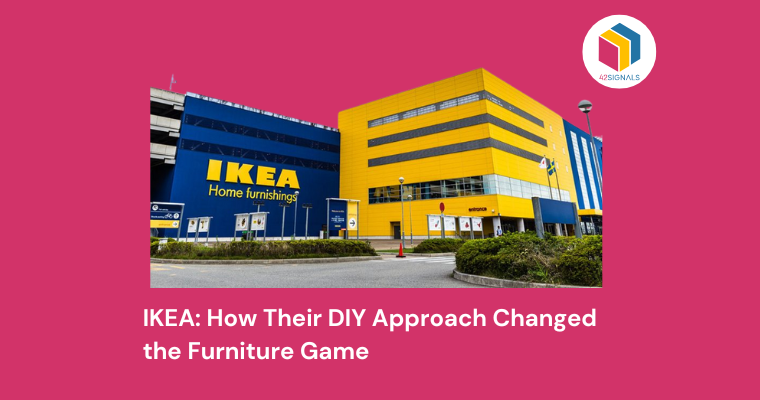
When IKEA introduced the concept of “do-it-yourself” (DIY) furniture, it revolutionized the way people furnish their homes. In an era when ready-made furniture dominated the market, IKEA’s approach of offering flat-pack furniture that customers could assemble themselves was not just innovative—it was transformative.
The Origins of the IKEA DIY Concept

Image Source: IKEA Website
Founded in 1943 by Ingvar Kamprad in Sweden, IKEA began as a small mail-order business selling household goods. The idea of DIY furniture came about in the early 1950s when one of Kamprad’s designers removed the legs of a table to fit it into a car, sparking the concept of flat-pack furniture.
This idea quickly grew into a business model that would make IKEA a global household name. Offering customers affordable, stylish furniture that they could transport and assemble themselves was groundbreaking at the time.
Customer-Centric Research and Design
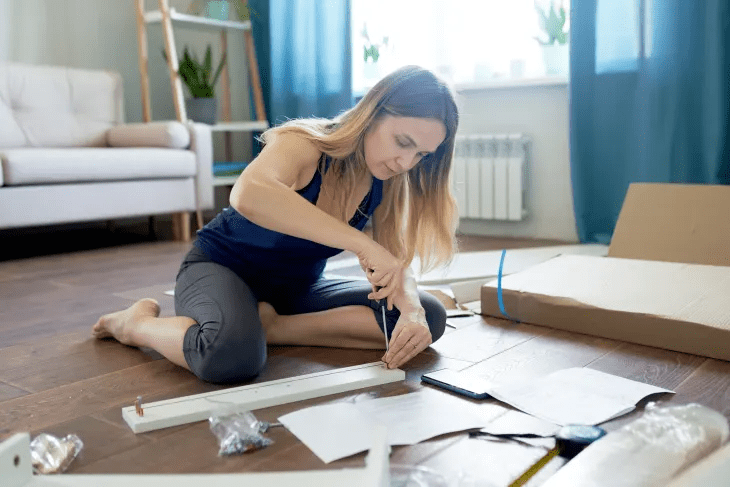
Image Source: Apartment Therapy
IKEA’s success is not just a product of their DIY philosophy but also their commitment to understanding their customers. From the very beginning, IKEA invested heavily in research to analyze consumer behavior, preferences, and challenges. They didn’t just design furniture; they designed experiences.
The company studies how people live in different parts of the world, which informs everything from product design to store layouts. For example, they noticed that in urban areas, space is often limited, so they developed furniture that is not only compact but also multifunctional. They understood that modern consumers value both aesthetics and functionality, leading to the creation of furniture that is stylish, practical, and easy to assemble.
The IKEA Store Experience: A Masterclass in Retail Design
Walking into an IKEA store is an experience in itself. The layout is carefully crafted to optimize spending and create an immersive shopping journey. The store’s design subtly encourages customers to explore every corner, ensuring that no product goes unnoticed.
The stores are designed in a maze-like pattern, with arrows on the floor guiding customers through a predetermined path. This path ensures that customers see a vast array of products, often leading to impulse purchases. The design of IKEA stores is so effective that it’s easy to lose track of time; the absence of windows and clocks contributes to this effect, making it possible to spend hours without realizing it.

Image Source: LinkedIn
Bringing Rooms to Life
One of IKEA’s most successful strategies is the way they display their products. Unlike traditional furniture stores, where items are often displayed individually, IKEA recreates entire rooms within their stores. Customers can walk through these rooms and see how different pieces of furniture and accessories work together, providing inspiration for their own homes.
This approach allows customers to visualize how a piece of furniture will look in a real-world setting, complete with complementary items. It’s a subtle but powerful way to encourage additional purchases—if you like the sofa, you might also pick up the coffee table, throw pillows, and rug that completes the look.
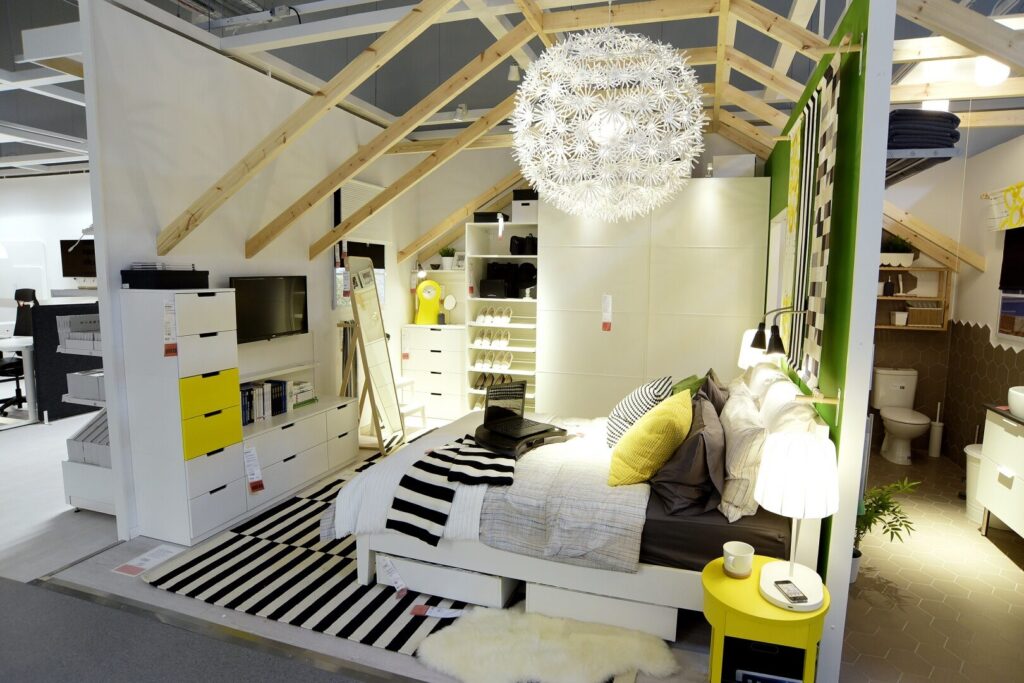
Image Source: Design Week
Decoding the Maze: The Strategy Behind IKEA’s Store Layout
The iconic IKEA store layout, often described as a “one-way maze,” is a deliberate and powerful psychological design. This “long natural way” isn’t just for aesthetics; it’s a calculated retail strategy to maximize exposure and sales. The winding path guides customers through a carefully sequenced narrative: starting in model rooms for inspiration, moving through marketplace aisles for smaller impulse purchases, and ending in the self-serve warehouse.
This journey ensures shoppers see the entire product range, increasing the likelihood of unplanned purchases. Key elements like the arrows on the floor, the absence of windows and clocks, and strategically placed shortcuts (for the initiated) are all designed to manage traffic flow and dwell time. This layout transforms shopping from a task into an immersive experience, subtly encouraging customers to buy into a complete lifestyle rather than just a single item.
From Physical to Digital: IKEA’s E-commerce Evolution
While the massive blue-box store is its hallmark, IKEA has been aggressively adapting to the digital age. Its ecommerce strategy aims to replicate the inspirational store experience online while solving for convenience. The website and app feature extensive room inspiration, detailed product information, and planning tools. However, the core logistical challenge has been adapting its vast, heavy flat-pack model for direct-to-consumer shipping. I
IKEA has invested heavily in new distribution centers, parcel networks, and digital tools like augmented reality (IKEA Place app) to help customers visualize products in their homes. This shift represents a significant company change, balancing its physical retail legacy with the demand for online accessibility. While not “the Amazon of furniture,” IKEA is leveraging its unique strengths—cohesive design, low prices, and brand trust—to build a formidable omnichannel presence.
Vertical Integration: Does IKEA Make Its Own Furniture?
A key driver of IKEA’s affordability and quality control is its high degree of vertical integration. Unlike a traditional retailer that buys from suppliers, IKEA operates as a manufacturer-retailer. The company owns its design process, controls its supply chain, and in many cases, owns the factories or has exclusive partnerships with manufacturers. IKEA designers work closely with production teams from the outset to create items that are cost-effective to manufacture, pack, and transport.
It also owns forestry and manages material sourcing to secure sustainable wood at stable prices. This control over the entire chain—from raw material to the customer’s living room—allows IKEA to relentlessly drive down costs, ensure consistency across global markets, and maintain the distinctive Scandinavian aesthetic that defines its brand.
The Engine of Affordability: How the IKEA Flat-Pack Model Works
The iconic IKEA business model hinges on its flat-pack, self-assembly furniture system. This is not merely a quirky characteristic but a brilliantly engineered supply chain and cost-saving strategy. The process begins with designers creating products with assembly and efficient packaging as primary constraints. Furniture is engineered to be disassembled into flat components, dramatically reducing the volume of each package.
This flat-pack system creates a domino effect of efficiencies:
- Supply Chain & Logistics: Maximizing space in shipping containers and trucks reduces transportation costs per item by up to 80% compared to pre-assembled furniture.
- Storage & Retail: More stock can be stored in warehouses and in-store inventory areas. The famous self-serve warehouse aisles allow customers to retrieve their own flat packs, significantly reducing IKEA’s labor costs for stocking and handling.
- Customer Role: The final assembly is delegated to the customer, completing the cycle of cost reduction. This “do-it-yourself” component is the final step in a model designed to deliver Scandinavian design at an unparalleled price point. The standardized, pictogram-based instructions are a crucial part of making this process universally accessible, minimizing language barriers and support calls.
Evaluating the IKEA Dominance in Home Design Aesthetics and Trends
IKEA’s influence extends far beyond low prices and DIY assembly; it is a global tastemaker in home decor. The company’s strength lies in its ability to democratize and popularize specific design aesthetics, making high-end trends accessible to the mass market.
- Modern & Minimalist: This is IKEA’s core aesthetic. The company has mastered clean lines, functional simplicity, and light, airy spaces—a style synonymous with modern living. Its consistent output in this category sets the benchmark for affordable contemporary furniture worldwide.
- Small-Space Solutions: IKEA is arguably the leading authority on innovative furniture for compact living. From multi-functional sofa beds and expandable dining tables to ingenious storage solutions like the KALLAX series, they provide the blueprint for optimizing square footage without sacrificing style.
- Rustic & Scandinavian Traditional: Through lines like the SÖDERHAMN or JÄTTEBO, IKEA interprets the “rustic” or “cottagecore” trend with a signature Scandinavian twist. It offers warmth and texture through wood finishes, cozy textiles, and earthy colors, making rustic charm achievable in any apartment.
- Trend Adoption & democratization: Whether it’s the rise of bold colors, sustainable materials (like bamboo and recycled wood), or specific items like modular bookshelves or statement coffee tables, IKEA’s vast reach allows it to spot, refine, and mass-produce trending designs, accelerating their adoption globally. While not a haute couture designer, IKEA’s power is in its role as the world’s most effective translator of home decor trends into affordable, functional reality.
The Indian Twist: Collaborating with Urban Company
While IKEA’s DIY approach has been embraced globally, the company recognized that the Indian market posed unique challenges. In a country where the concept of assembling furniture at home was not as widely accepted, IKEA needed to adapt its strategy. To bridge this gap, IKEA collaborated with Urban Company, a leading platform for home services in India.
This partnership allowed IKEA to offer assembly services through Urban Company, making their DIY furniture more appealing to Indian consumers. Customers could purchase flat-pack furniture from IKEA and have it professionally assembled in their homes, ensuring that the DIY approach did not deter potential buyers. This localized strategy was crucial in making IKEA’s products more accessible and acceptable in the Indian market, where convenience and service play a significant role in consumer decisions.

Image Source: Hindustan Times
Conclusion
IKEA’s DIY approach has fundamentally changed the furniture industry. By offering affordable, stylish, and functional products that customers can assemble themselves, they democratized design and made it accessible to millions of people around the world. Their deep understanding of consumer behavior, coupled with their innovative store design, has made IKEA a leader in the global furniture market.
Today, IKEA is more than just a furniture store; it’s a cultural phenomenon. Their DIY ethos, combined with their commitment to customer experience, has not only changed the way we shop for furniture but also how we think about our living spaces.
Read our other brand teardowns –
Crumbl Cookies Case Study: Using Consumer Insights to Enhance Product Development and Sales
From $100,000 investment to $20 million/month: Olipop’s Journey to Soaring Success in 5 Years
How Drunk Elephant Revolutionized the Skincare Industry with One Key Idea
Frequently Asked Questions (FAQs)
1. What does IKEA stand for, and what is its core concept?
IKEA is an acronym founded on the initials of its founder, Ingvar Kamprad, along with the first letters of the farm and village where he grew up (Elmtaryd and Agunnaryd). Its core concept is to offer a wide range of well-designed, functional home furnishing products at prices so low that as many people as possible can afford them, primarily through its flat-pack, self-assembly model.
2. Why is IKEA furniture so cheap?
The low cost is a result of an integrated business model: flat-pack design minimizes shipping and storage costs, high-volume production reduces unit costs, and customers contribute labor through self-assembly and self-service in stores. This entire system is designed to maximize efficiency from factory to home.
3. Do I have to assemble IKEA furniture myself?
While the famous DIY model is central to IKEA, assembly services are available in most markets. You can often purchase assembly as an add-on service at checkout or through partnered service providers, as seen with their collaboration with Urban Company in India.
4. What is the strategy behind IKEA’s store layout?
IKEA stores use a “one-way” layout to guide customers along a predetermined path. This maze-like design ensures shoppers are exposed to every product category, from fully decorated showrooms to marketplace impulse items, before reaching the self-serve warehouse. It’s designed to inspire and increase the average spend.
5. Does IKEA design and manufacture all its own products?
Yes, IKEA practices significant vertical integration. Its in-house design team creates all products specifically for manufacturing, and the company works with a controlled network of manufacturing partners, often owning its own production facilities for key materials. This ensures cost control, quality, and cohesive aesthetics.
6. How is IKEA adapting to online shopping (e-commerce)?
IKEA is investing heavily in its digital channels to complement its physical stores. This includes e-commerce websites with full catalogs, planning tools, and the IKEA Place AR app for visualizing products at home. They are also developing new logistics networks to handle the challenge of shipping flat-pack furniture directly to consumers.
7. What are IKEA’s main design aesthetics?
IKEA is best known for democratizing modern, minimalist, and Scandinavian design—clean lines, light woods, and functional simplicity. It also consistently leads in small-space solutions and regularly introduces collections that tap into broader trends like rustic, industrial, or bold, colorful styles.
8. What does “flat-pack” mean, and what are its benefits?
Flat-pack means furniture is sold in a disassembled state, with all parts packed into flat, compact boxes. The benefits are immense: it reduces shipping costs, lowers damage rates, optimizes storage space in warehouses and stores, and makes it easier for customers to transport items home.