

** TL;DR ** A premium skincare brand facing rampant unauthorized discounting on Amazon implemented an automated MAP monitoring and enforcement system. This move allowed them to identify violations instantly and enforce their pricing policy consistently, leading to a 71% reduction in violations within 60 days. This restored their brand reputation, protected profit margins, and strengthened relationships with authorized retailers.
Imagine spending years, and millions of dollars, carefully building a skincare brand. You’ve sourced the finest ingredients, designed elegant packaging, and crafted a story of luxury and efficacy that resonates with a discerning clientele. Your products are sold in high-end department stores and through authorized online retailers. Then, you do a quick search on Amazon and your heart sinks. There it is: your signature $150 serum, being sold for $89.99 by a seller you’ve never even heard of. That’s the need for Amazon MAP monitoring.
This isn’t just a one-off discount. It’s a direct violation of your Minimum Advertised Price (MAP) policy, and it’s happening everywhere. For premium skincare brands, this scenario is more than an annoyance; it’s a silent killer of profit margins and brand reputation. Unauthorized discounting creates a race to the bottom, alienates your loyal retail partners, and cheapens the perceived value of your products in the eyes of consumers.
Let’s explore how one premium skincare brand, which we’ll call “Luminary Skin,” faced this exact crisis and, within just 60 days, managed to cut their MAP violations by a staggering 71%.
Understanding the Need for Amazon MAP Monitoring
Before we get into the solution, it’s crucial to understand why unauthorized discounting is so damaging. Many business owners see it as a simple pricing issue, but the ramifications run much deeper. It’s a fundamental challenge to your brand protection efforts.
First, there’s the direct financial impact: profit margin erosion. When one seller drastically undercuts the price, others are forced to follow suit to stay competitive. This creates a downward spiral that squeezes the profitability out of your products for everyone, including your brand.
Second, and perhaps more dangerously, it damages consumer trust. A customer who buys your product at full price from an authorized retailer will feel cheated when they see it for half the cost on another site. They start to question the product’s true value. Is it really worth $150? Or was the brand just overcharging them? This cognitive dissonance can permanently sever their relationship with you.
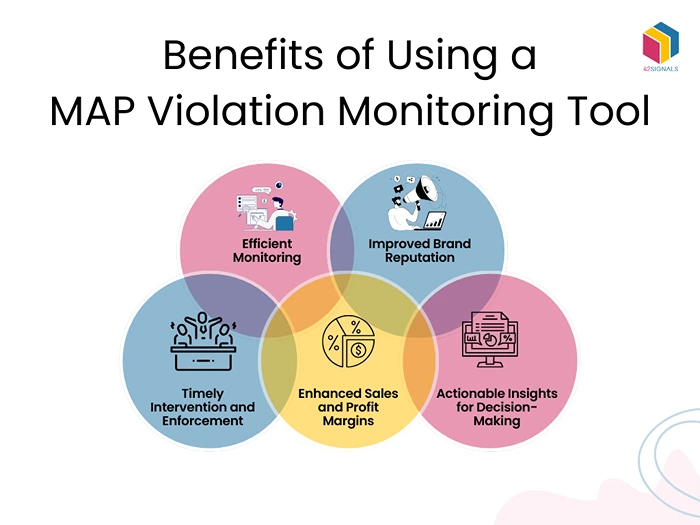
42Signals Essentials of MAP Monitoring
Finally, it strains or breaks your relationships with your authorized retailers. These partners have invested in your brand, trained their staff, and marketed your products correctly. When they see rogue sellers undercutting them with impunity, their faith in your ability to manage your own distribution channel shatters. They may eventually stop carrying your products altogether, deeming you a liability. A study by the Harvard Business Review highlighted that consistent brand pricing is a key factor in maintaining strong retailer partnerships and perceived brand equity.
Ready to Take the Next Step?
See how our solutions can help you achieve your goals and drive measurable results.
The Luminary Skin Case Study: A Brand Under Siege
Luminary Skin was, by all accounts, a success story. They had a cult following and products that really worked. But success attracts attention, and not all of it is good. Their products started popping up everywhere online, sold by distributors they didn’t know and had never authorized.
Their small team was trying to fight this fire with a squirt gun. Someone would manually search for their products on Amazon and other big sites, jot down offending prices, and send out emails. It was a hopeless task. They were constantly behind, and the problem was only getting worse.
Their hero product, the “Rejuvenate Elixir,” had an MAP of $150. But on a good day, you could find it for $130. On a bad day, it was $110. Their boutique partners were furious. The marketing team was demoralized—how can you sell a story of luxury and exclusivity when your product is being discounted like a common household cleaner?
They had reached a breaking point. The manual approach was a losing battle. They needed a real strategy and the right technology for Amazon map monitoring and enforcement. They needed to move from being victims to being the ones in charge.
Ready to Take the Next Step?
See how our solutions can help you achieve your goals and drive measurable results.
The Game Plan: Building a Fortress Around Their Brand
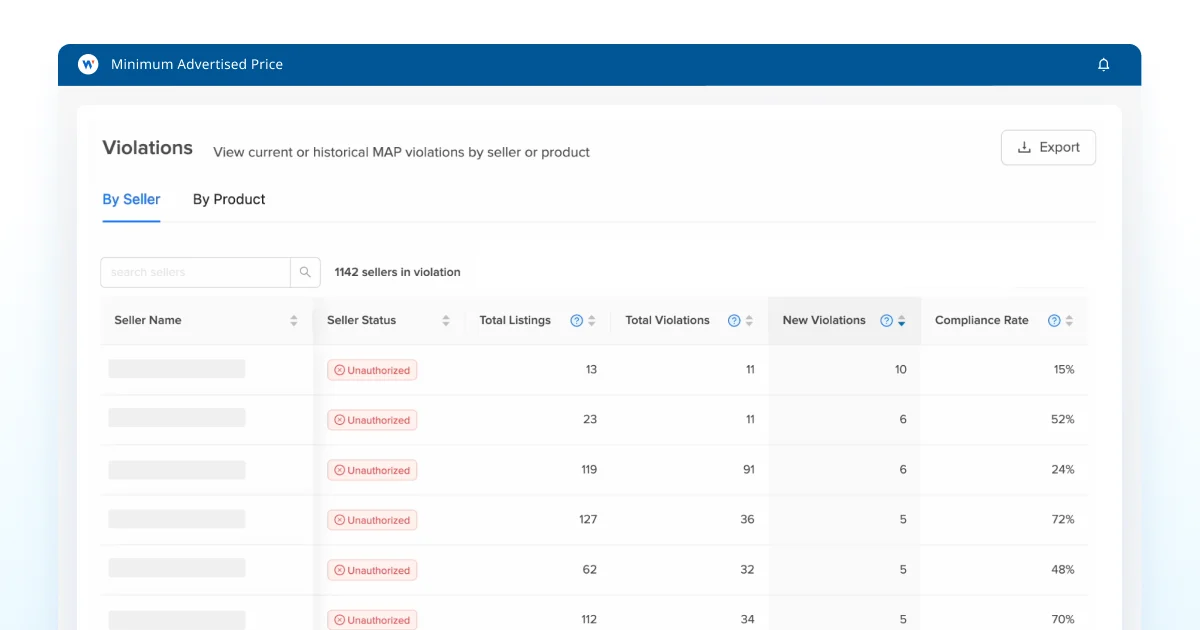
Image Source: wiser
Luminary Skin decided to stop reacting and start building a system. Their goal was simple: find violations instantly and enforce their policy consistently. No exceptions.
- Step one was getting their own house in order. They took their old, vague MAP policy and threw it out. The new one was a rock-solid document. It spelled out everything—what counted as an advertisement, exactly what would happen if someone broke the rules, and how a seller could even become authorized in the first place. This wasn’t just a memo; it was the law of the land for their brand.
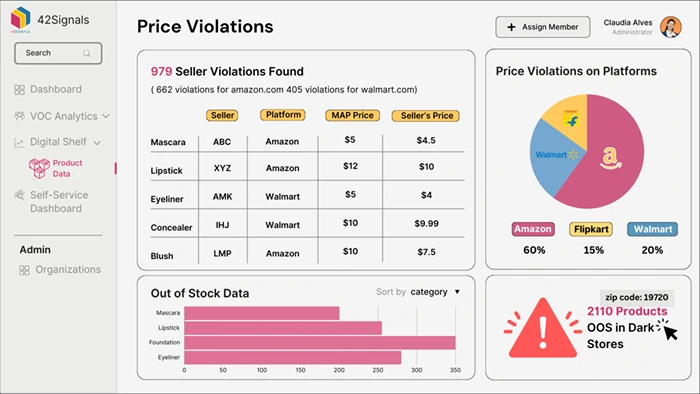
- Step two was bringing in the technology. They implemented a dedicated MAP monitoring service. Think of it like a 24/7 security guard for their online prices. This software automatically scanned all the major marketplaces, tracking every single seller. It wasn’t just looking at the list price; it was smart enough to catch sneaky tricks like hidden coupons or discounts applied at checkout that broke the MAP rules. Finally, they had a clear, real-time view of the battlefield.
- The final, and most important, step was their enforcement process. They set up a clear, tiered system. A first-time violator got an automated, but polite, warning. If they ignored it, they got a much sterner, formal cease-and-desist letter. For the real bad actors who still didn’t comply, Luminary Skin didn’t hesitate to escalate to formal complaints with Amazon or even legal action. This wasn’t about being bullies; it was about being consistently firm.
The 60-Day Turnaround: A Breakdown of the Amazon MAP Monitoring Strategy in Action
The results did not happen overnight, but they were swift and measurable. The first 30 days were about data collection and aggressive initial enforcement.
Weeks 1-2: Discovery and First Strike
The monitoring system immediately identified over 200 active violations across various platforms that the internal team had completely missed. On day one, automated, polite but firm first notices were sent to every single violator. This initial wave alone resolved nearly 30% of the issues, as many sellers were simply unaware of the policy or were testing the waters.
Weeks 3-4: Escalation and Takedowns
For the sellers who ignored the first warning, a second, more formal notice was sent. This communication often included evidence screenshots from the monitoring software and referenced the legal ramifications of a continued violation. Simultaneously, the brand began working with Amazon’s brand registry and other platforms to file formal complaints against sellers who were clearly unauthorized and selling potentially counterfeit or diverted goods. This phase saw another significant drop in violations.
Weeks 5-8: Building a New Normal
By this time, the constant, automated enforcement had created a new market standard. Sellers now knew that Luminary Skin was actively watching and would not tolerate unauthorized discounting. The number of new violations began to plummet. The brand’s focus shifted from putting out fires to maintaining this new level of price compliance. They used the monitoring dashboard to generate weekly reports, giving them a clear, at-a-glance view of their brand’s pricing health.
At the end of this 60-day period, the data was undeniable. Luminary Skin had reduced its overall MAP violations by 71%. The average advertised price for their “Rejuvenate Elixir” on Amazon had risen from a low of $122 back to the MAP of $150.
Ready to Take the Next Step?
See how our solutions can help you achieve your goals and drive measurable results.
What They Really Gained: The ROI Beyond the Number
That 71% figure is fantastic, but the real win was how the change impacted the entire business.
The most immediate benefit was stopping the financial bleeding. The profit margin erosion was over. Their authorized retailers could breathe easy and actually make a profit. In fact, one of their biggest retail partners was so impressed with the turnaround that they increased their next order by 15%. That’s a direct result of restored confidence.
The marketing team could finally do their jobs. They could invest in beautiful campaigns and content without the constant fear that a rogue seller would make their messaging look ridiculous and hypocritical.
And here’s a benefit people don’t talk about enough: they got their time back. The employees who were once dedicated to the soul-crushing task of manual price checking were now freed up to work on real growth projects—like developing new products and building customer communities. The cost of the MAP monitoring service paid for itself not just in recovered revenue, but in recovered human potential.
Key Takeaways for Your Brand Amazon MAP Monitoring Strategy
The story of Luminary Skin is not unique in its problems, but it is exemplary in its solution. Any brand selling online can learn from their experience.
- First, a manual approach to MAP enforcement is not a strategy; it is a recipe for failure. The scale and speed of the modern e-commerce landscape demand an automated technological solution. You cannot outmaneuver thousands of sellers with a spreadsheet and a few Google searches.
- Second, consistency is everything. The reason the 71% reduction was possible was that the enforcement was relentless and automatic. Violators received a notice the moment they were detected, every single time. This consistency sends an unambiguous message to the market that your policies are to be taken seriously.
- Finally, view brand protection not as a cost center, but as a strategic investment in your company’s long-term value. Protecting your brand’s reputation and profit margins is one of the highest-return activities you can undertake. It safeguards the relationships with your best retail partners and ensures that your customers perceive your products as being worth the price you ask.
Regaining Control in a Digital Marketplace
The journey for Luminary Skin from being a victim of unauthorized discounting to becoming the undisputed master of its own pricing was transformative. It proved that with the right tools and a determined strategy, brands can fight back and win. The challenges of the digital marketplace are significant, but they are not insurmountable.
The core of their success lay in a powerful combination: a watertight MAP policy, a sophisticated Amazon map monitoring system that provided real-time intelligence, and a disciplined, automated process for MAP enforcement. This three-pronged approach allowed them to move from a defensive, reactive posture to an offensive, proactive one.
If your premium brand is seeing its value diluted by online discounting, know that you have a path forward. The question is no longer if you can stop profit margin erosion, but how quickly you can implement the systems to do so.
By learning from case studies like this one, you can take decisive action to protect what you have worked so hard to build and secure a more profitable, sustainable future for your brand.
Try 42Signals today to monitor your product listings on multiple platforms, especially Amazon.
Frequently Asked Questions
What is MAP monitoring?
MAP monitoring refers to the process of tracking and enforcing Minimum Advertised Price (MAP) agreements between brands and their resellers or distributors.
MAP is the lowest price a retailer can publicly advertise for a product, as set by the manufacturer or brand owner. Retailers can sell below that price in some cases, but they can’t promote or display it lower than the MAP.
MAP monitoring involves:
Continuously scanning online marketplaces, e-commerce stores, and price comparison sites.
Identifying sellers or marketplaces that are advertising prices below the agreed MAP.
Sending alerts or initiating enforcement actions to maintain pricing integrity.
This practice helps brands:
Protect perceived product value.
Maintain fair competition among resellers.
Prevent aggressive undercutting that can damage margins and brand reputation.
Example:
If a brand sets the MAP for a product at $100 and a reseller advertises it at $85, MAP monitoring tools detect the violation and alert the brand for action.
What is the formula for MAP monitoring?
There’s no single universal “mathematical formula” for MAP monitoring because it’s more of a process-driven calculation. However, a simple MAP compliance check formula can be expressed as:
MAP Violation = MAP Price – Advertised Price
If the result > 0, it indicates a violation.
If the result ≤ 0, the retailer is compliant.
You can also calculate violation percentage to measure how far below the MAP a seller is pricing:
\text{Violation %} = \frac{\text{MAP Price} – \text{Advertised Price}}{\text{MAP Price}} \times 100
Example:
MAP Price: $100
Advertised Price: $85
\text{Violation %} = \frac{100 – 85}{100} \times 100 = 15\%
This kind of calculation is commonly used in MAP monitoring dashboards and automated tools to prioritize high-impact violations for quick action.